Discworld for Kids: Age-Appropriate Reading Guide for Young Readers
Is Discworld OK for kids? An age-by-age guide for parents: which Terry Pratchett books suit 8-year-olds, tweens and teens, and which to save for later.
Discworld for Kids: Age-Appropriate Reading Guide for Young Readers
Your kid has found a book with a turtle on the cover and four elephants holding up the world. Maybe it was on your shelf. Maybe a friend lent it. Now you're wondering: is Discworld actually OK for kids, or did Terry Pratchett write the sort of fantasy that looks cartoonish and then blindsides a ten-year-old with something grim?
Here's the honest answer. Some of Discworld was written for young readers, and it's brilliant. The rest was written for adults, and most of it is fine for teenagers. The trick is knowing which is which, because the covers won't tell you.
This guide sorts the series by age, flags the handful of scenes worth knowing about in advance, and gives you a clear place to start for every stage, from a picture book for bedtime to the novels a 14-year-old can devour on their own.
The Short Answer: Discworld Age Guide at a Glance
Pratchett wrote six Discworld novels specifically for younger readers, plus a picture book. Those are your safe, purpose-built entry points. Everything else is the main adult series.
| Age | Best Discworld picks | Why |
|---|---|---|
| 3-7 (read aloud) | Where's My Cow? | A picture book, nothing more alarming than a confused farmyard |
| 9-11 | The Wee Free Men, The Amazing Maurice | Written for this age, with child heroes and real stakes |
| 11-13 | A Hat Full of Sky, Wintersmith | Tiffany grows up as the reader does |
| 13+ | I Shall Wear Midnight, The Shepherd's Crown, Guards! Guards!, Mort | Darker themes, or adult books with mild content |
| 15+ | Most of the main series | Satire, innuendo and some violence, nothing explicit |
Retailers don't agree on exact ages. LoveReading4Kids lists The Wee Free Men as suitable for "9+ readers, 11+ readers", while other shops file the same book under teen. That spread is the point: a lot depends on your particular child.
What Makes a Discworld Book "For Kids"?
The children's Discworld books aren't watered-down versions of the adult ones. They're the same writer at full strength, with young protagonists and a little more care about what goes on the page.
The young-reader books carry the label "A Story of Discworld" to set them apart from the main sequence. They also handle swearing cleverly. In The Amazing Maurice, the rats' swearing is translated into rat language. In the Tiffany books, it's buried in the impenetrable dialect of the Nac Mac Feegle, so a kid gets the joke without learning any new words. (They'll learn "Crivens!" instead. You've been warned.)
What they don't do is talk down. Pratchett respected young readers too much for that. These books deal with grief, cruelty, responsibility and fear, and they trust children to handle it. That's exactly why so many adults love them too.
"The best test of a children's book: do the adults keep borrowing it back?"
If your child is a confident reader who's already enjoyed something like Harry Potter or Philip Pullman, they're ready for the young-reader Discworld books. If they've only read gentler stuff, start with Maurice and read the first few chapters together.
Ages 3-7: Read-Aloud Discworld
Where's My Cow? (2005)
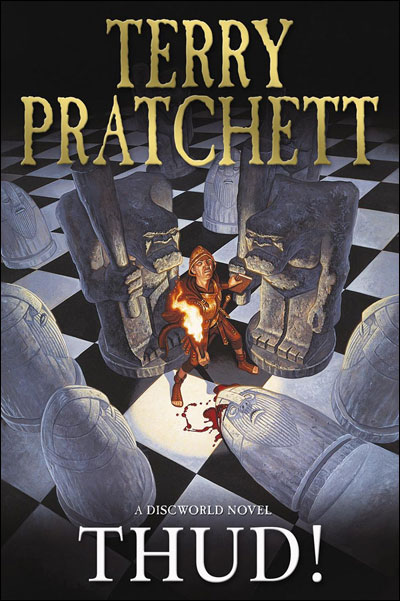
Discworld's only true picture book, illustrated by Melvyn Grant and released alongside Thud!. In the novel, Sam Vimes reads a picture book called Where's My Cow? to his son every evening at six o'clock, without fail. Pratchett then published it for real.
It's short, silly and perfect for bedtime. Bonus: if your child grows up to read the City Watch books, they'll hit that scene in Thud! and realise they had the same book as Young Sam. We've written about how the fictional book became a real one if you want the story behind it.
Not Discworld, but worth knowing: Dragons at Crumbling Castle (2014)
Strictly speaking, this isn't Discworld. It collects fourteen stories Pratchett wrote as a teenager for a local paper, the Bucks Free Press, illustrated by Mark Beech. Dragons, cavemen, time-travelling buses: it's the best way to give a 7-year-old Pratchett's voice before they're ready for a full novel. Read it aloud and watch them pick up his rhythm.
Ages 9-11: The Perfect Starting Point
The Amazing Maurice and His Educated Rodents (2001)
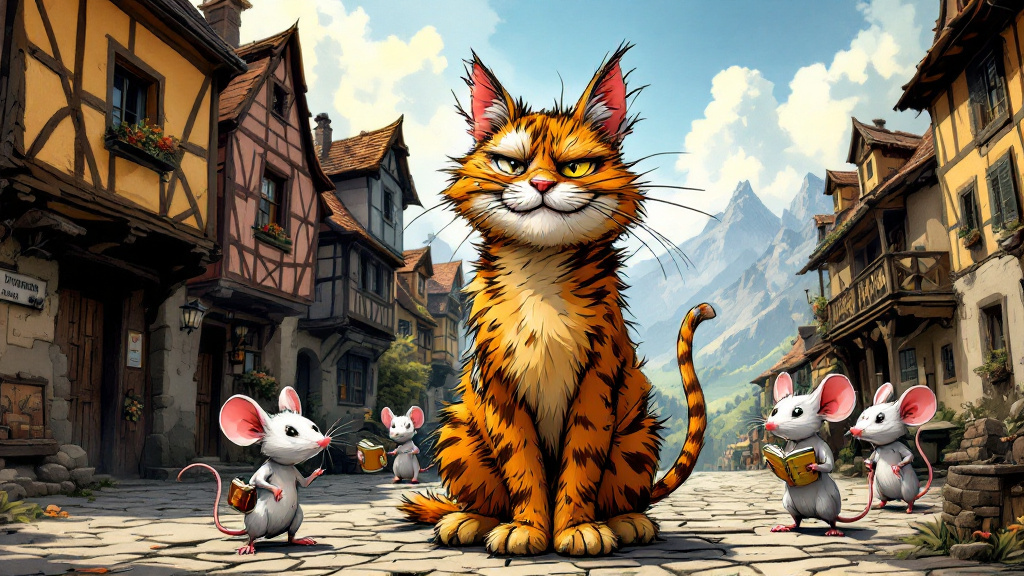
The first Discworld novel written for younger readers, and the one that finally won Pratchett a major prize: the Carnegie Medal in 2001. It's a twist on the Pied Piper. Maurice is a talking cat who runs a scam with a gang of educated rats and a dim-looking boy with a pipe: the rats fake a plague, the boy leads them away, and everyone splits the money.
Then they arrive in a town where something has gone badly wrong.


What parents should know: the Carnegie judges called it "funny and irreverent, but also dark and subversive", and they weren't wrong. There are rat traps, rat-catchers, a fight in a rat pit, and a genuinely creepy villain lurking under the town. One of the rats dies. A sensitive 9-year-old might want you nearby for the second half. A typical 10- or 11-year-old will think it's the best thing they've ever read.
There's also a 2022 animated film with Hugh Laurie voicing Maurice, which makes a nice reward after finishing the book.
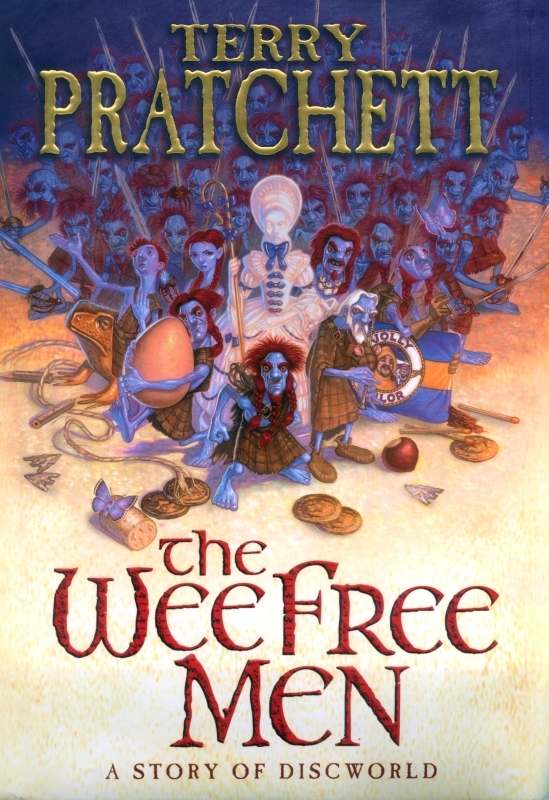
The Wee Free Men (2003)
If you only buy one Discworld book for a child, make it this one.
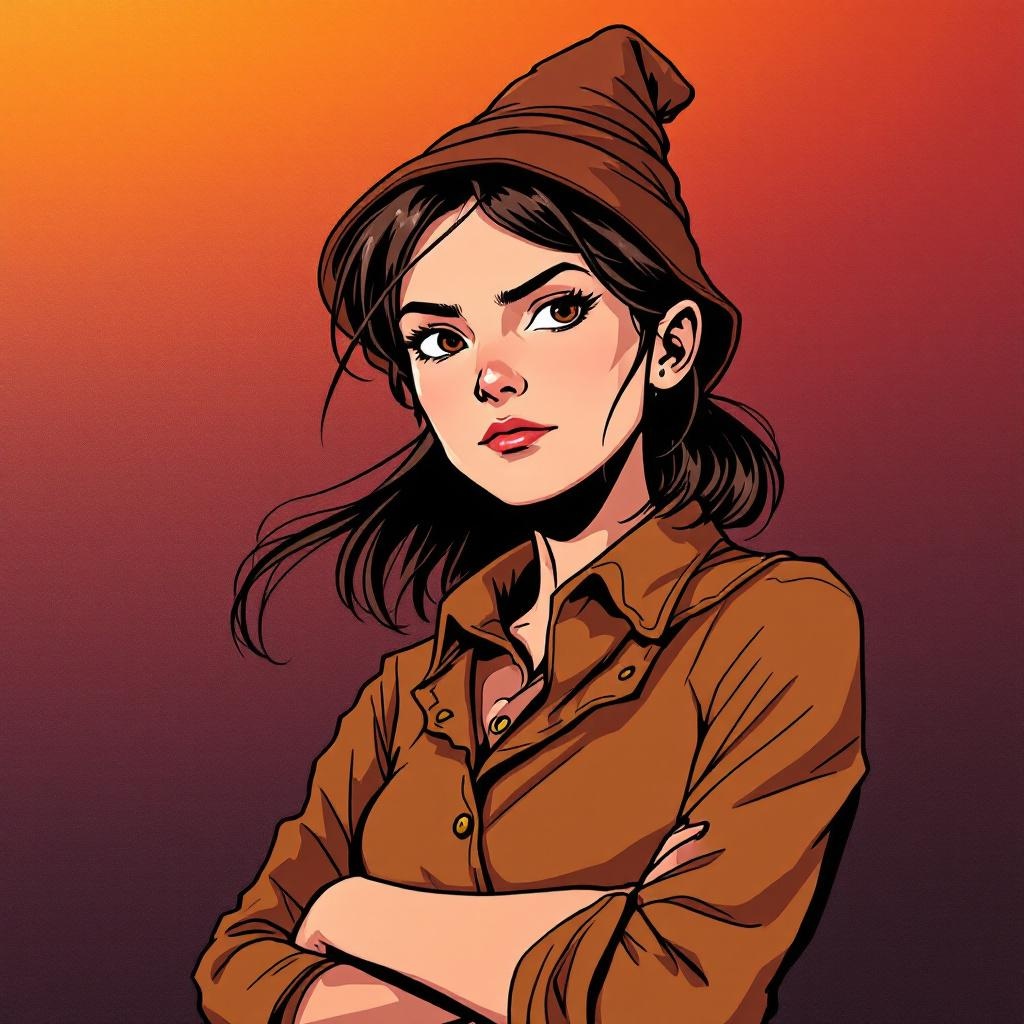
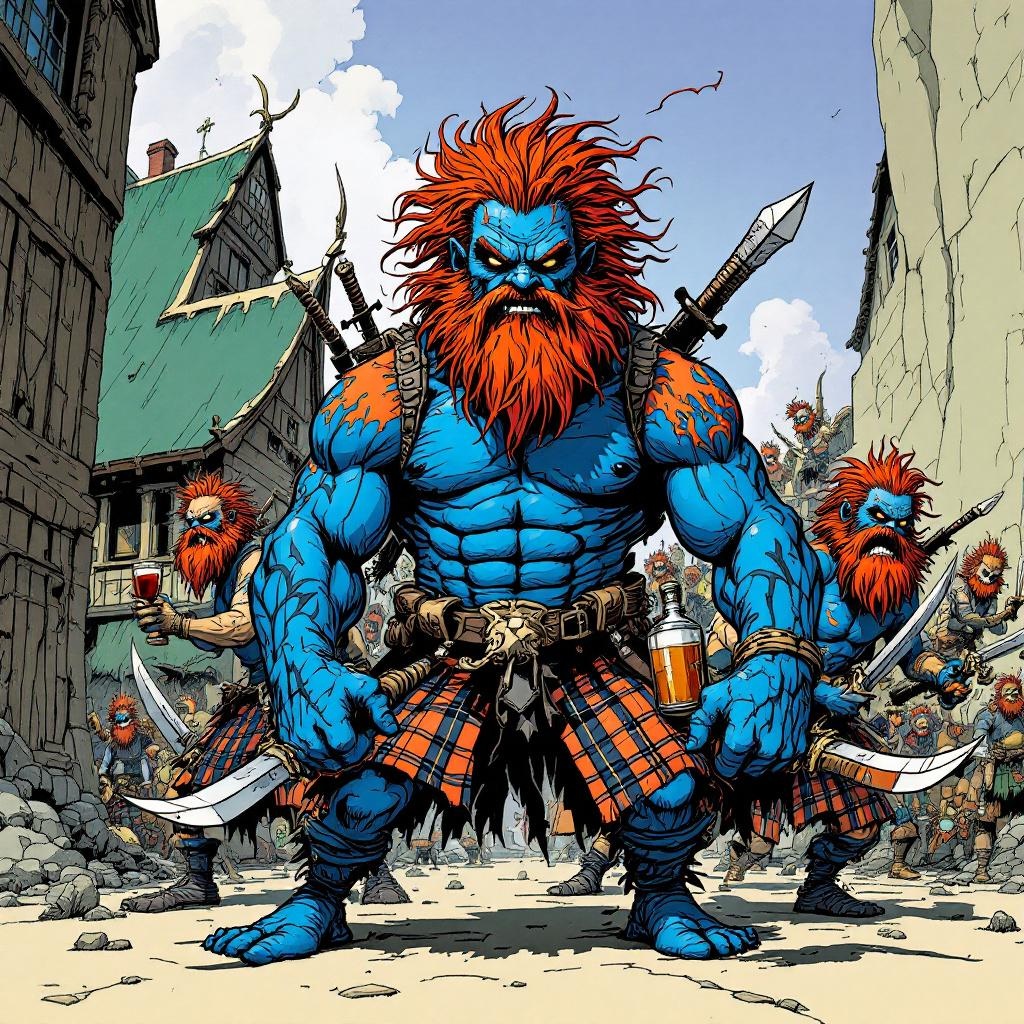
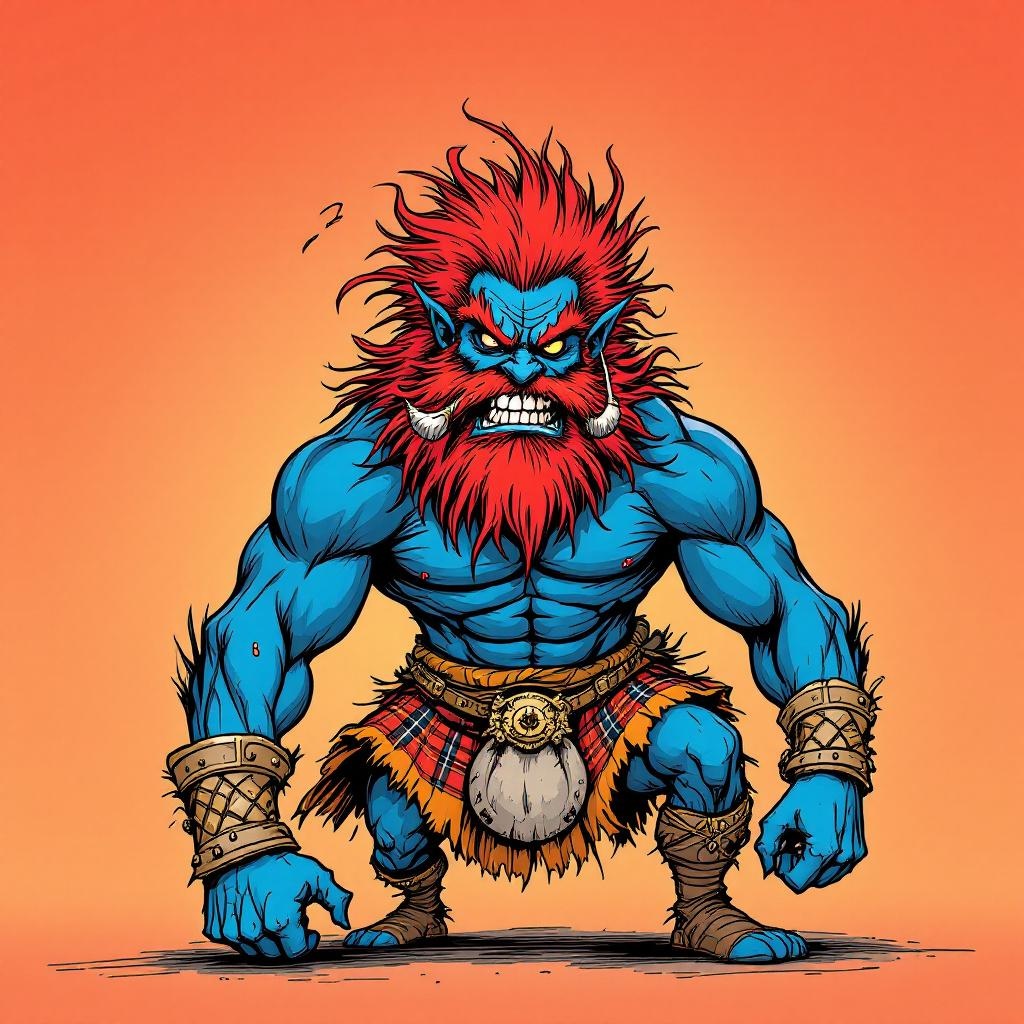
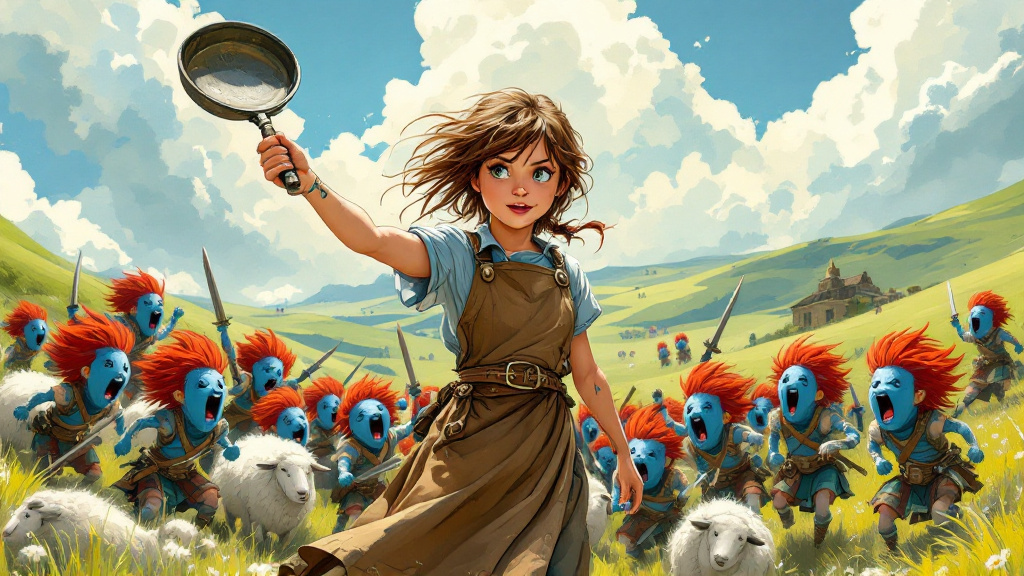
Tiffany Aching is nine years old, lives on a sheep farm, and wants to be a witch. When the Queen of Fairyland steals her little brother, Tiffany goes in after him, armed with a frying pan and backed by the Nac Mac Feegle: tiny, blue, kilted, sheep-stealing warriors led by Rob Anybody, who fight everything and are terrified only of lawyers.
It won a shelf of awards, including the American Library Association's Best Book for Young Adults and the Locus Award for Best Young Adult Book. More importantly, it hands kids a heroine who wins by paying attention and thinking clearly. Tiffany's whole philosophy fits in one of Pratchett's lines: "Them as can do has to do for them as can't. And someone has to speak up for them as has no voices."
"No prophecy, no magic sword. Just a frying pan and a very clear head."
What parents should know: there are monsters (a headless horseman, nightmare dogs, a dream world that turns sinister), and Tiffany's grandmother has died before the book begins. Granny Aching's memory is woven through the whole story, which is lovely for a kid who has lost a grandparent and maybe a little tender too. Mild Feegle violence is constant and cartoonish.
For the life lessons hidden in Tiffany's witchcraft, see our piece on First Sight and Second Thoughts.
Ages 11-13: Growing Up With Tiffany
The Tiffany Aching books age with their heroine, which is quietly genius. Tiffany is 9 in the first book and about 15 by the fourth, so a reader who starts at 9 or 10 and reads one a year grows up alongside her.
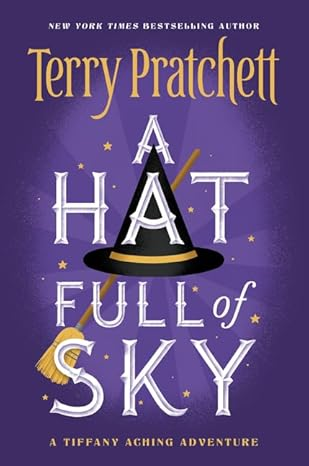
A Hat Full of Sky (2004)
Tiffany, now 11, leaves home to become an apprentice witch, and something invisible starts following her. The threat here is more psychological: being taken over, losing yourself. It's scarier in an idea-y way than a jumpy way, and it's where Tiffany meets Granny Weatherwax properly. The humour is still there, but the book asks bigger questions about who you are when no one is looking.
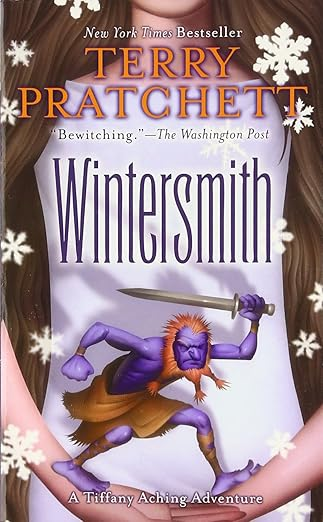
Wintersmith (2006)
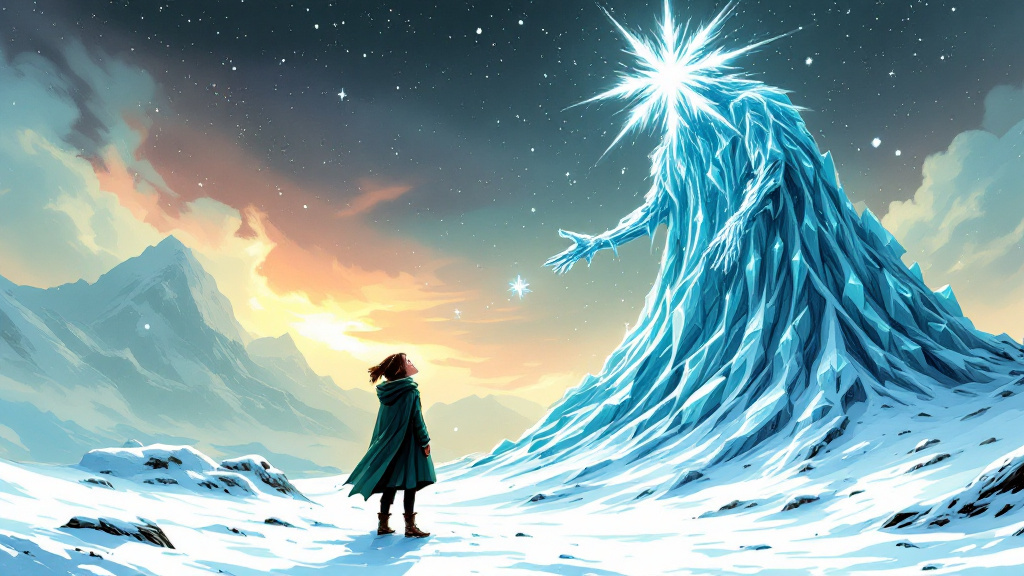
At 13, Tiffany accidentally catches the attention of the spirit of winter, who decides he's in love with her. It's funny and full of snowflakes, but it's also a smart, age-appropriate look at unwanted attention and the difference between being admired and being respected. There's nothing explicit. We dig into that theme in When Winter Falls in Love.
Ages 13+: The Darker Tiffany Books
The last two Tiffany books are still marketed as young adult, but they're noticeably heavier. Read the opening chapters yourself first if your child is on the younger end.
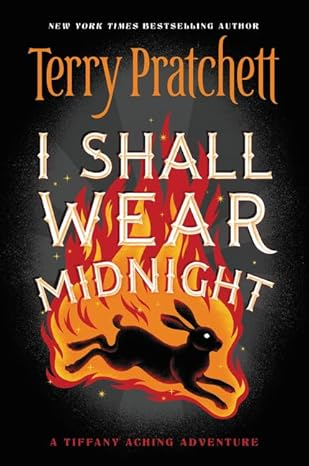
I Shall Wear Midnight (2010)
Tiffany is fifteen and working as the witch of the Chalk, and it's the darkest of the young-reader books. Heads-up: early on, a girl named Amber is beaten by her drunken father so badly that she miscarries. It isn't graphic, but it's direct, and it's the first thing many parents mention about this book. The rest of the novel deals with a spirit of pure hatred turning ordinary people against witches, with mob violence close behind.
It's a great book about doing a thankless job well, and a good one for talking through with a teen. It's not for a 10-year-old who loved The Wee Free Men and wants more of the same.
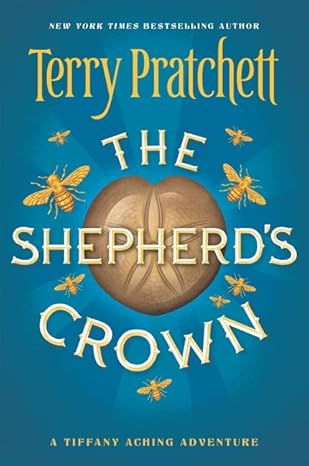
The Shepherd's Crown (2015)
Pratchett's final novel, published after his death. It opens with a major loss that will hit hard for anyone who has followed the witches, and it's about endings, grief and stepping up. Lovely, bittersweet, and best for a teen who has read the earlier Tiffany books. (Our Witches reading order guide explains how it fits with the adult witch novels.)
Ages 13-15: Moving Into the Main Series
Teens who've finished Tiffany usually want more, and the adult Discworld books are a natural next step. They're not explicit: there's no on-page sex, and violence is rarely gory. What you'll find is grown-up innuendo (much of it from Nanny Ogg), satire about politics and religion, and the occasional dark theme.
The best adult books for a young teen:
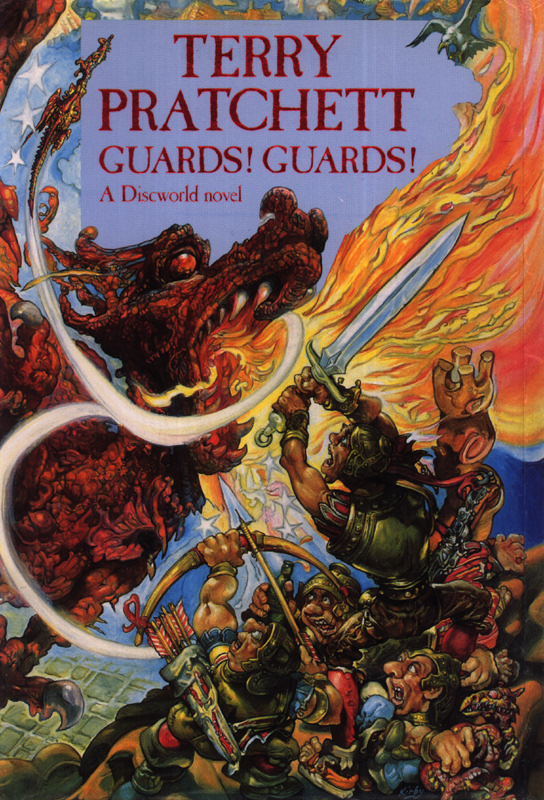
- Guards! Guards! – a dragon, a bunch of hopeless city guards and a lot of jokes. The ideal first adult Discworld book.
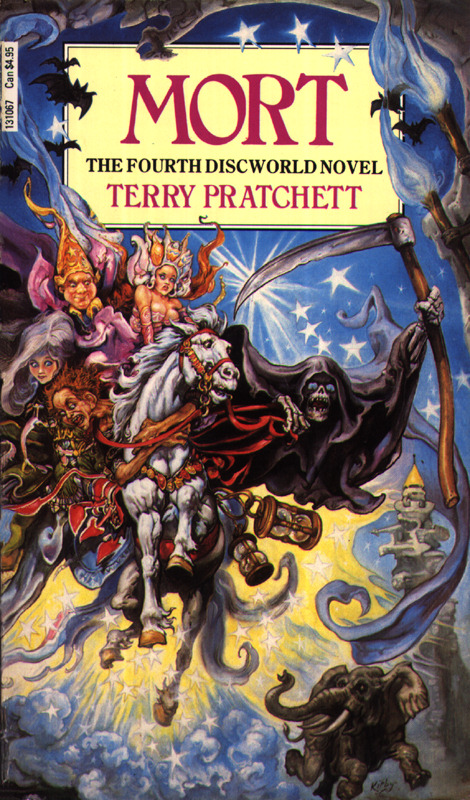
- Mort – Death takes on a teenage apprentice. Funny and surprisingly sweet, with a hero close to their age.
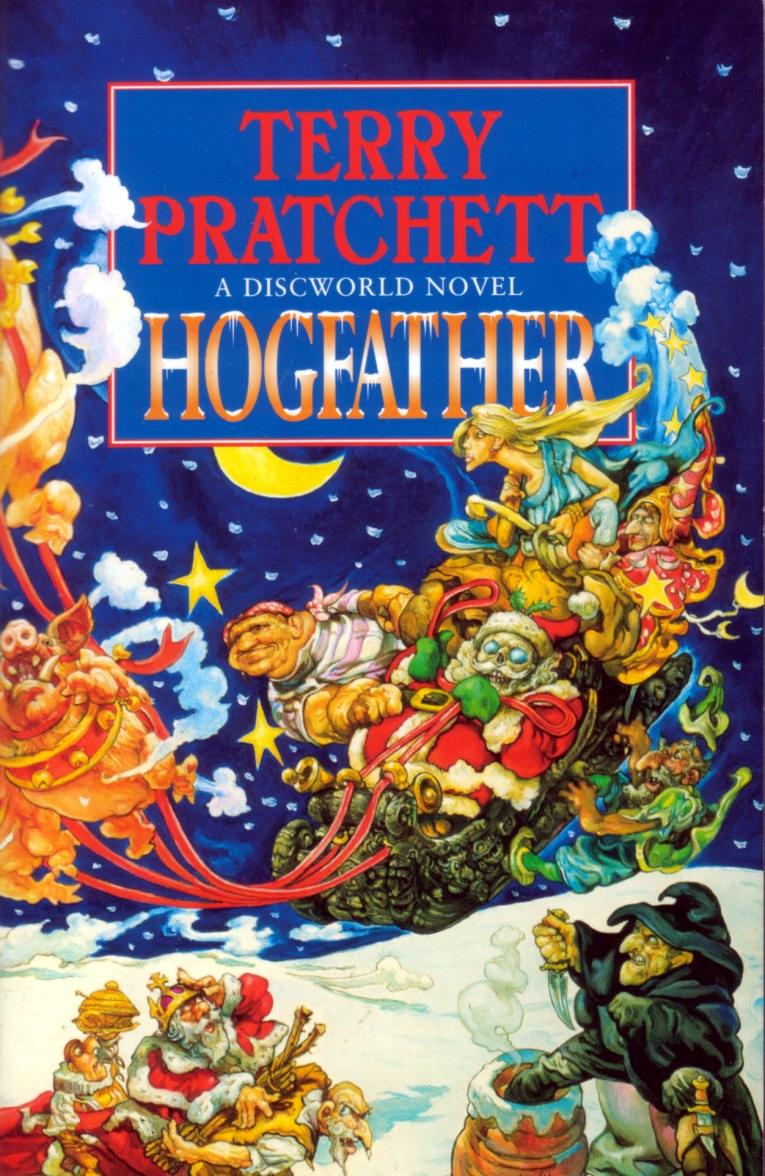
- Hogfather – Death fills in for the Discworld's Santa. A great winter read, though one assassin is properly sinister.
- Equal Rites – a girl who wants to be a wizard. Shorter and simpler than the later books.
Our where to start guide covers the main series in more depth.
Books to Save for Later
None of Discworld is unsuitable in the way some YA fiction can be, but a few books hit harder or lean on themes that work better with some life experience. Save these for 15+ or read them alongside your teen:
- Night Watch – a revolution, a secret police force and torture (mostly off-page). One of the best books in the series, but a heavy one.
- Small Gods – religious persecution, an inquisition and torture, all in service of a god almost nobody really believes in any more.
- Monstrous Regiment – war, and soldiers who aren't what they seem.
- Snuff – slavery, cruelty to the goblins, and grimmer police work.
- Carpe Jugulum – vampires with real menace, and one of Granny Weatherwax's darkest trials.
None of these will traumatise a 14-year-old reader. They'll just get more out of them at 17. Our darkest Discworld books article goes into each one in detail.
Tips for Parents
- Read the first chapter together. Pratchett's footnotes, jokes and dialects can throw a new reader. Five minutes of reading aloud fixes that.
- The Feegle dialect is a hurdle for some kids. If The Wee Free Men stalls, try Maurice first. Then come back.
- Try the audiobooks. Feegle speech is far easier to follow aloud, and lots of kids get hooked that way.
- Ask about the jokes. Many land on two levels: one for kids, one for grown-ups. Ask what they thought was funny. You'll find out a lot.
The Bottom Line
Discworld is one of the best fantasy series you can give a young reader, provided you start in the right place. Here's what we suggest:
- Under 8: Where's My Cow?, then Dragons at Crumbling Castle read aloud.
- 9-11: The Amazing Maurice, then The Wee Free Men.
- 11-13: the next two Tiffany books, A Hat Full of Sky and Wintersmith.
- 13+: finish Tiffany, then move to Guards! Guards! or Mort.
- 15+: the whole Disc is theirs.
The best books for children don't patronise them, and Pratchett's trust kids with real ideas. Hand your child The Wee Free Men, and you might just find yourself borrowing it back.
Welcome to the Disc. Happy reading.