When Winter Falls in Love: Tiffany Aching and the Wintersmith

Wintersmith looks like a winter romance. Read closely, it's Pratchett showing teenagers that obsessive attention isn't love, even when it comes from a god.
When Winter Falls in Love: Tiffany Aching and the Wintersmith
On paper, it sounds like the start of every paranormal romance of the 2000s. A thirteen-year-old girl catches the eye of an ancient, powerful, impossibly beautiful being. He's never felt anything like this before. He'll move heaven and earth for her. Literally, in this case: mostly earth, and a great deal of snow.
The publisher's own blurb plays it light. The spirit of winter is in love with Tiffany Aching, and he gives her roses and icebergs, says it with avalanches and showers her with snowflakes. Tough when you're thirteen, the blurb admits, but also a little bit cool.
Then you actually read Wintersmith, and the cool wears off fast. Because what Pratchett wrote isn't a love story. It's a story about a girl being followed, watched, tracked and courted by something that cannot understand the word "no", and about how she gets herself out of it. It's one of the smartest books about unwanted attention ever written for teenagers, and it's smart precisely because it never once pretends the attention isn't flattering.
One Foot Wrong: The Dark Morris
It starts with a dance. Tiffany Aching, now apprenticed to the 113-year-old Miss Treason, is taken to watch the Dark Morris: the midwinter mirror of the cheerful May Day Morris, danced in black, with silent bells, to welcome the winter in. Miss Treason explains the point of it in the book's best piece of folk theology:
"The year is round! The wheel of the world must spin! That is why up here they dance the Dark Morris, to balance it. They welcome the winter because of the new summer deep inside it!"
Tiffany is told to watch, not join. But her feet feel the rhythm, and the hills she grew up on feel it too, and before she knows what she's doing she has stepped into the dance, into the exact place where the Summer Lady should be.
The Wintersmith turns up for his dance with Summer, as he does every year. And instead of Summer, he finds a girl with chalk in her bones. He's never met anything like her. From that moment, he decides she's his.
The Gifts: Snowflakes, Roses, and Icebergs With Her Face
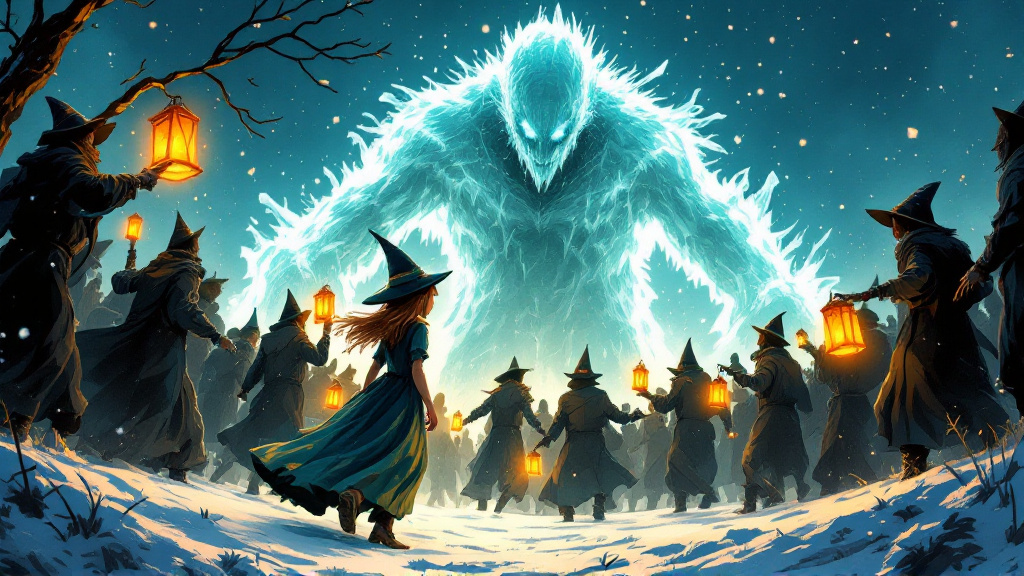
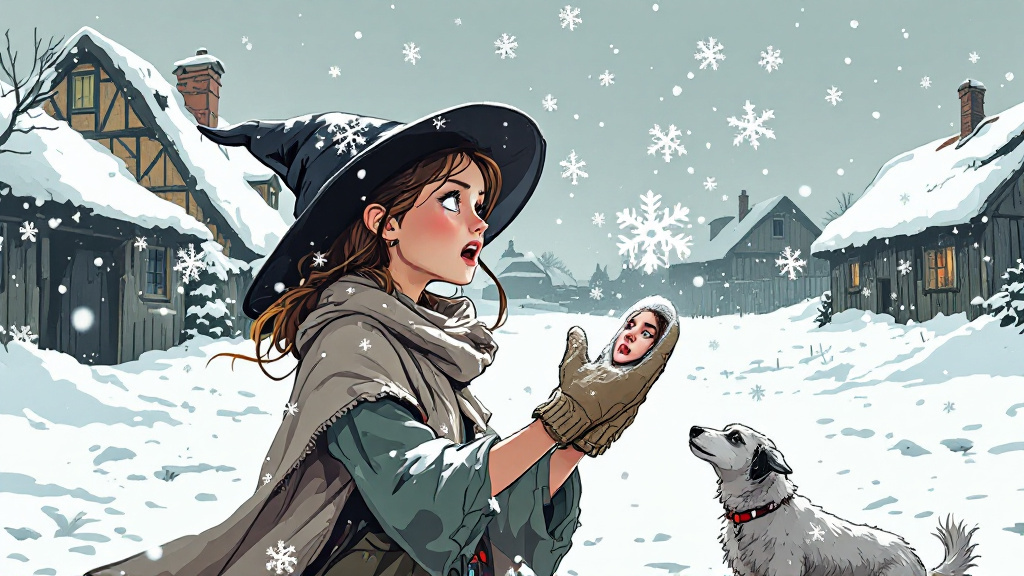
What follows is a courtship, if you squint. The Wintersmith sends Tiffany gifts. Roses made of frost. Snowflakes that carry her face, every single one of them. Icebergs in her shape. Eventually a blizzard of Tiffany-shaped snow that buries the land.
Pratchett lets you feel why a thirteen-year-old would be dazzled. Nobody has ever made icebergs about her before. There's a narrator's aside that sums up the comedy of it: "They say that there can never be two snowflakes that are exactly alike, but has anyone checked lately?" Well, the Wintersmith has made sure there are millions of them alike now. They all look like Tiffany.
And this is where the book quietly turns. Every one of those gifts is also a message: I know where you are. I'm thinking about you. I'm everywhere you look. The snow is a love letter and a surveillance network at the same time.
How He Finds Her
Pratchett is very precise about the mechanics, and the mechanics are the creepy part.
During the dance, Tiffany drops the little silver horse pendant that Roland gave her. The Wintersmith keeps it, and uses it to find her again and again, wherever she goes. When Granny Weatherwax and Nanny Ogg work out what's going on, they make her throw it into Lancre Gorge, which is the witch equivalent of turning off location sharing on your phone.
"Grand gestures are easy when you're a weather system."
It doesn't end there, of course. It never does with this kind of thing. The pendant turns up again, inside a fish Tiffany's little brother catches, and it leads the Wintersmith straight to her father's house. You can be careful, the book is saying. You can do all the right things. A determined pursuer will still find a way back in.
Notice, too, how the older witches handle it. They're sharp with her about the dance, but they treat the Wintersmith as a problem to be solved, not a romance to be indulged. Nobody suggests she should be grateful a god noticed her. And Tiffany's own resolve, as the narration puts it, is plain: "Yes, she'd made a mistake... but she wasn't going to be bullied."
An Elemental Who Can't Hear "No"
The real horror of the Wintersmith isn't that he's cruel. It's that he isn't. He genuinely thinks he's in love. He just has no idea what love involves, and no interest in what Tiffany wants.
He's a force of nature, and forces of nature don't negotiate. When she doesn't respond the way he hopes, he doesn't reconsider. He escalates. Winter gets longer and harsher. The Chalk's lambing season is buried in snow. Spring stops coming. A whole country suffers so that one being can keep courting a girl who never agreed to be courted.
Eventually he decides the problem must be his shape. If Tiffany won't love an elemental, he'll become a man. He learns a children's rhyme that lists what a man is made of, from iron enough to make a nail down to the last and hardest lines:
"Strength enough to build a home, Time enough to hold a child, Love enough to break a heart."
He gathers up the iron and the lime and the water and builds himself a body. And it's a perfect diagnosis of his whole character. He can assemble the ingredients of a person. He can't supply the parts that make one. He has the chemistry of a man and none of the humanity, which is exactly why he can't understand why she keeps saying no.
Why This Works for Teenage Readers
Here's what makes Wintersmith so good, and so unusual among young adult books of its era: it takes the flattery seriously.
A lazier book would make the Wintersmith a monster from page one, and the lesson would be easy. Don't date monsters. But nobody needs that lesson. The pursuer who's hard to recognise is the one who's beautiful, powerful, and devoted, the one who makes you feel chosen. Tiffany is thrilled and frightened at once, often in the same paragraph. Pratchett doesn't shame her for the thrill. He just keeps showing her, and us, what the devotion costs.
That's the honesty at the core of the book. Being wanted that intensely does feel like something. It can even feel like the most important thing that's ever happened to you. Wintersmith says: that feeling is real, and it's still not love. Love would care whether you're frightened. Love would notice the frozen lambs.
"He has the chemistry of a man and none of the humanity."
The Feegles, naturally, have their own take on courtship. One of them explains with total confidence that romancin' is a way for the boy to get close to the girl without her attacking him and scratching his eyes out. It's played for laughs, but it's quietly another lesson in the same key: romance is supposed to be something both people are in on.
And the contrast with Roland is pointed. Roland is clumsy, awkward, and very much a teenage boy. But his feelings come with patience and effort, and he's willing to walk into the Underworld for someone else's sake. The Wintersmith offers spectacle. Roland offers work.
Into the Underworld: The Orpheus Inversion
Because Tiffany took the Summer Lady's place in the dance, the real Summer Lady is stuck in the Underworld, and summer can't return. Granny Weatherwax decides that the story needs a Hero, and the Nac Mac Feegle are dispatched to make one out of Roland, a project you can read about in more detail in our piece on how Roland subverts the fairy tale hero.
Roland himself spots the shape of the story they're in:
"Oh, you mean like Orpheo rescuing Euniphon from the Underworld?" said Roland.
He points out that it's supposed to be a love story but is really a metaphor for the annual return of summer. Billy Bigchin answers him: "A metaphor is a kind o' lie to help people understand what's true."
That line could stand as a summary of the whole book. Wintersmith borrows the shape of two great myths. There's Orpheus going down to bring someone back, and there's Persephone, the girl whose absence below ground is winter. Then Pratchett turns both inside out. The Persephone figure isn't kidnapped and kept. The girl who's being pursued by a winter power is the one who ends it.

The Kiss That Ends Winter
The climax comes at the Wintersmith's palace of ice, and it's here that Pratchett lands his point most cleanly.
Tiffany doesn't win by being rescued. She doesn't win by fighting, either. She wins by understanding the balance that the Dark Morris was danced to keep, and by choosing to use it. Her mentors have spent the book teaching her that magic is mostly a matter of balance, of being the still point in the middle of the see-saw while everything else swings around you. So she becomes that still point, and draws down the warmth of the sun.
Then she kisses him.
It's the kiss he's been wanting all along, and it's what destroys him. Fire meets frost, the Wintersmith melts, and spring finally comes to the Chalk. The Dance of the Seasons is completed the way it was always meant to be: Summer and Winter, each dying and returning in turn.
It's a brilliant reversal of the fairy tale kiss. In the old stories, a kiss is where the girl's story ends and her happily-ever-after begins. Here the kiss is Tiffany's decision, on her terms, and it ends his story instead. The thing he demanded becomes the thing that breaks his hold on her. She isn't claimed. She's free.
What Tiffany Takes Away
What makes the ending land is that Tiffany doesn't come out of it ashamed. She made a mistake when she stepped into the dance, and she owns that. But she never accepts the idea that making a mistake means she owes the Wintersmith anything. That's a distinction a lot of thirteen-year-olds need to hear, and a lot of adults too.
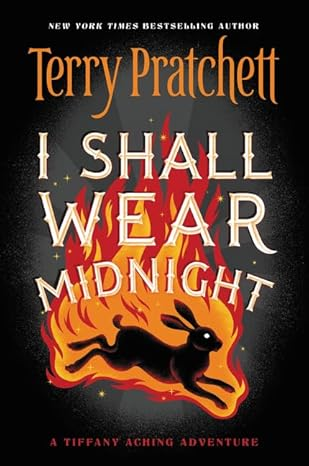
It also sets up everything that follows. In I Shall Wear Midnight, Tiffany is older, harder, and far more alone, and some of the steel she carries there was forged in this book. A girl who's faced down the personification of winter doesn't easily mistake attention for affection again.





The Verdict
So, is Wintersmith a romance? Only in the way a horror film is a story about a nice house in the country. The romance is the disguise. Underneath, it's a careful, kind, very funny book about what it feels like to be pursued by someone who won't take no for an answer, and how to get yourself out.
Pratchett's message to his teenage readers is simple and it's never preachy. Being adored isn't the same as being loved. A grand gesture isn't the same as respect. And if the person courting you is making the whole world colder to get your attention, it doesn't matter how beautiful the snowflakes are.
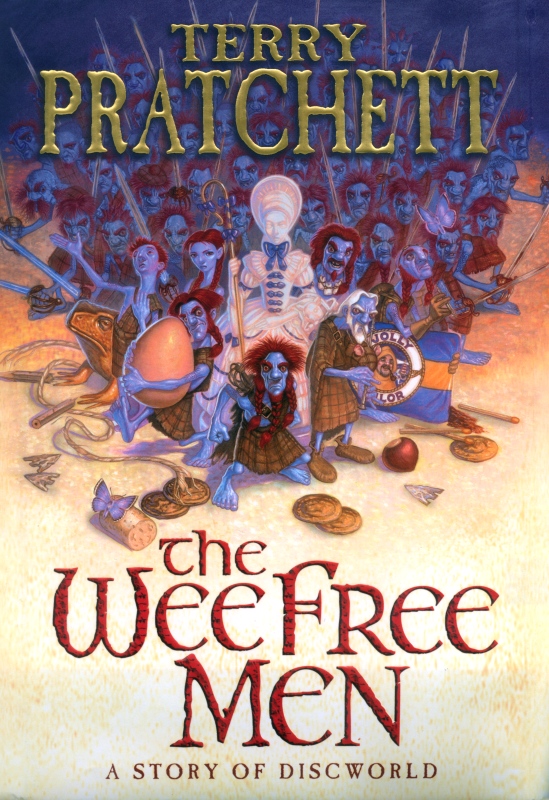
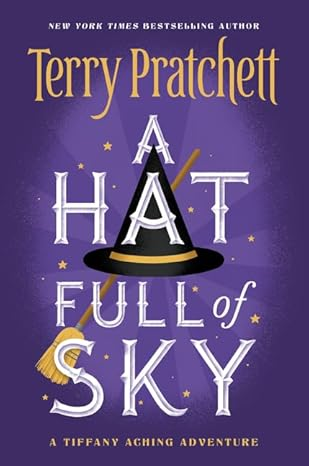
If you haven't read the Tiffany books yet, start with The Wee Free Men and A Hat Full of Sky before you get to this one. Our Witches series reading order shows how they fit into the wider story, and our piece on Tiffany's First Sight and Second Thoughts explains the clear-eyed way of seeing that gets her through the long winter.