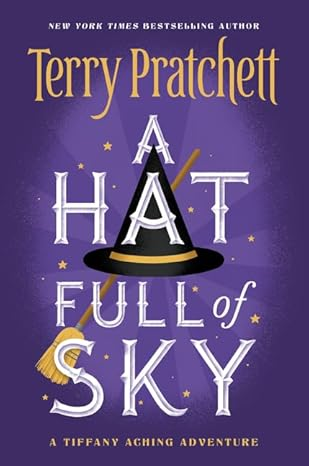
First Sight and Second Thoughts: Tiffany Aching's Guide to Thinking Clearly

Terry Pratchett's Tiffany Aching books teach critical thinking through witchcraft. First Sight and Second Thoughts are her secret powers—and they're more relevant than ever.
First Sight and Second Thoughts: Tiffany Aching's Guide to Thinking Clearly
Here's what most fantasy heroes get: a prophecy, a magic sword, a destiny.
Here's what Tiffany Aching gets: the ability to see what's actually in front of her and think about her own thinking.
It doesn't sound like much. No fireballs. No flying. No telepathy. Just clear perception and metacognition—skills any real person could theoretically develop.
That's exactly the point. Terry Pratchett wasn't writing a power fantasy. He was writing a thinking fantasy. And in an age of misinformation, algorithm-driven reality tunnels, and people arguing about what photographs actually show, Tiffany's abilities might be the most relevant superpowers in all of fantasy fiction.

What First Sight Actually Means
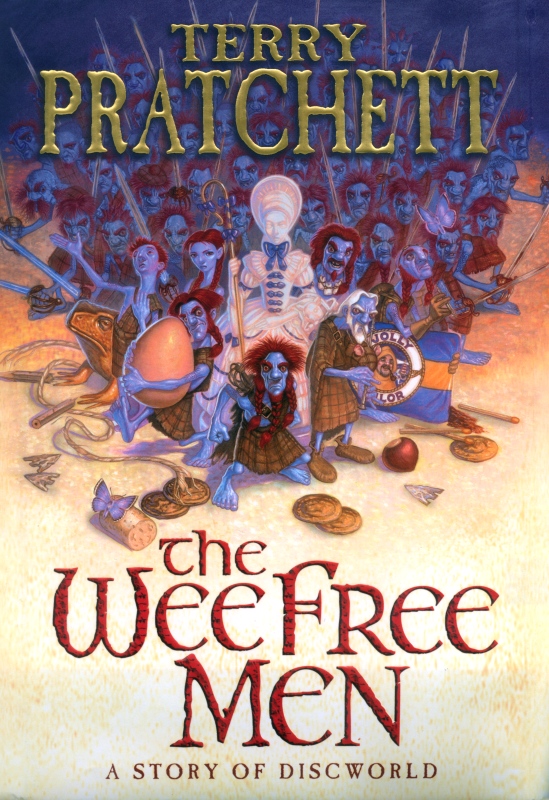
In The Wee Free Men, the Kelda of the Nac Mac Feegle explains First Sight to Tiffany:
"First Sight means you can see what really is there, not what your heid tells you ought to be there."
Notice that it's not called Second Sight. That's the mystical, prophetic vision you find in folklore—seeing the future, perceiving spirits, knowing things you shouldn't. Pratchett deliberately inverted the term. First Sight isn't about seeing more than reality. It's about seeing reality without the filter.
Most people don't have First Sight. They see what they expect to see. What they hope to see. What they've been told to see. The elf queen's glamour works on ordinary people because they want to believe in beautiful fairy tales. They see the gorgeous maiden rather than the cold, cruel thing underneath.
"First Sight means you can see what really is there, not what your head tells you ought to be there."
Tiffany sees through it. Not because she's special or chosen, but because she's trained herself to look without preconceptions. She asks the question that most people never ask: What if what I'm seeing isn't actually what's there?
This is harder than it sounds. Our brains are pattern-completion machines. They fill in gaps, smooth over inconsistencies, and construct a coherent narrative from fragmentary data. Usually, this is useful—it helps us navigate the world quickly without processing every detail. But it also means we regularly see things that aren't there and miss things that are.
First Sight is the discipline of noticing the difference.
The Thoughts You Think About Thinking
If First Sight is about perception, Second Thoughts are about cognition.
"Second Thoughts are the thoughts you think about the way you think."
Psychologists have a term for this: metacognition. It's the ability to observe your own mental processes, to step back from a thought and examine where it came from and whether it's valid. It's the internal voice that says, "Wait, why did I just assume that?" or "Am I believing this because it's true, or because I want it to be true?"
In Tiffany's case, there are also Third Thoughts—the thoughts you think about the way you think about the way you think. And Fourth Thoughts, which, as Pratchett notes with characteristic humor, "sometimes led her to walk into doors."
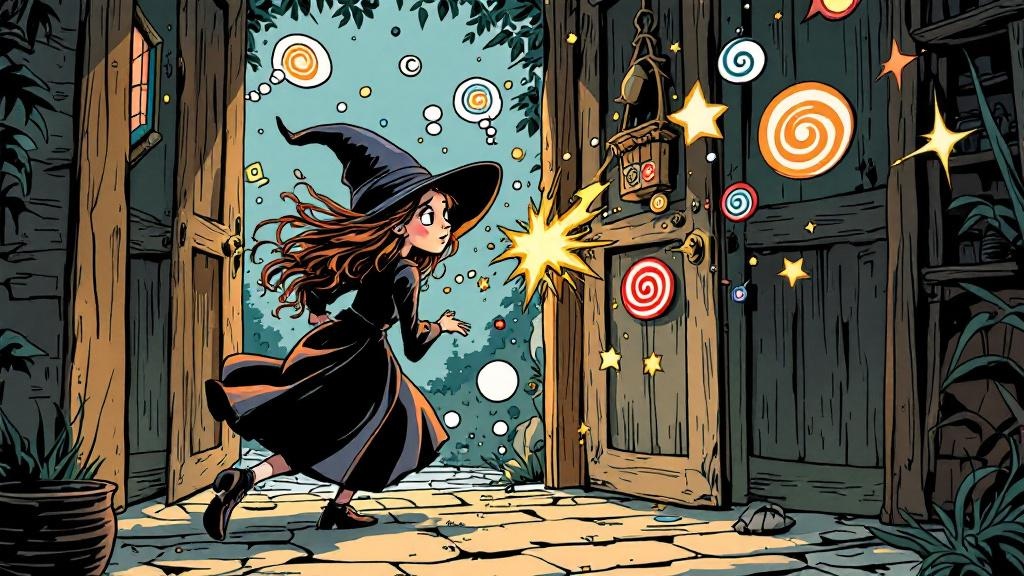
This isn't just a joke. (Well, it is a joke—Pratchett never missed a chance for one.) But it's also an insight into the cost of self-awareness. The more layers of reflection you add, the more processing power you consume. You can analyze yourself into paralysis. You can think so hard about thinking that you forget to actually do anything.
The trick, which Tiffany learns through five books of practice, is to deploy the right level of thinking for the situation. First Sight and Second Thoughts during the Queen's glamour. Immediate action when someone's dying. The ability to switch between modes is itself a skill that requires—yes—thinking about how you're thinking.
Where Granny Aching Fits In
Tiffany didn't invent these abilities. She inherited them.
Her grandmother, Granny Aching, was "the hag o' the hills"—a shepherd who never called herself a witch but clearly possessed all the essential qualities. She could look at a sheep and know it was sick before it showed symptoms. She could read the weather in ways no instrument could match. She saw the Chalk as it actually was, not as maps or politics defined it.
"Open your eyes," Granny Aching taught Tiffany. "And then open your eyes again."
The first opening is physical—you're awake, your eyes work, light is entering. The second opening is mental—you're actually seeing, not just looking. You're processing what's in front of you without immediately categorizing it into what you already know.
"Open your eyes. And then open your eyes again."
Granny Aching died before the first book begins. But her influence shapes everything Tiffany becomes. When the Nac Mac Feegle recognize Tiffany as their new "hag," it's because they see Granny Aching's clear-eyed perception continuing in her granddaughter. The ability to see truth wasn't something Granny wrote in a book or explained in lectures. She demonstrated it through a lifetime of practice, and Tiffany absorbed it the way children absorb everything—by watching and imitating.
This is another of Pratchett's insights: you can't really teach someone to think clearly. You can only model it and hope they catch on. Critical thinking isn't a set of rules to memorize. It's a habit of mind that develops through repeated practice.
The Battle That Really Matters
A Hat Full of Sky puts Tiffany's mental abilities to the ultimate test.
A hiver—an ancient, formless thing that hungers for experience—takes control of her mind. It's been doing this since the dawn of creation, jumping from body to body, wearing people like clothes until it uses them up. It feeds on desires, amplifies emotions, and turns its hosts into monsters.
When it possesses Tiffany, she seems lost. The hiver is more powerful than any human mind. It's been practicing this for longer than humans have existed. By all logic, it should win.
But Tiffany has something the hiver has never encountered: the ability to think about her own thinking.
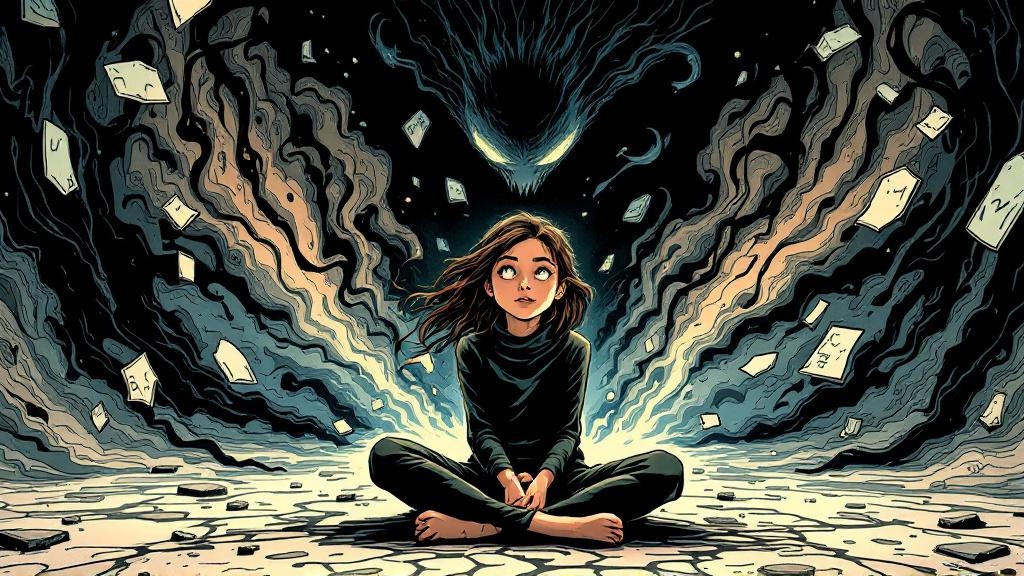
While the hiver runs rampant, some part of Tiffany remains observing. Her Second Thoughts notice what's happening. Her Third Thoughts analyze how the hiver is doing it. Her Fourth Thoughts—somewhere, beneath layers of metacognition—maintain her identity despite the possession.
The hiver can't consume what it can't grasp. And it can't grasp a mind that's perpetually stepping back to observe itself. Every time it thinks it has her, another layer of Tiffany is watching from further back.
This is Pratchett making an argument about consciousness itself. Identity isn't just our thoughts—it's our capacity to observe our thoughts. The hiver can steal Tiffany's surface mind, but it can't steal the observer who notices the theft. That observer is irreducible. That observer is her.
Why This Matters Now
Pratchett wrote the Tiffany Aching books between 2003 and 2015. He didn't anticipate social media algorithms, deepfakes, or AI-generated misinformation. But he understood something fundamental about human cognition that makes First Sight and Second Thoughts more relevant, not less.
The glamour is everywhere now.
Scroll through any social media feed and you'll encounter dozens of attempts to make you see what someone wants you to see. Carefully framed photos. Edited videos. Headlines designed to trigger emotion before thought. Algorithms that learn your biases and feed them back to you.
Most people don't have First Sight. They see what the feed tells them is there.
First Sight means stopping to ask: What am I actually looking at? Not what is it supposed to make me feel—what is it? It means noticing when something is too perfect, too precisely aligned with what you want to believe. It means remembering that every image has a frame, and everything outside the frame is invisible.
Second Thoughts mean asking: Why am I reacting this way? Is this response coming from evidence, or from emotion the content was designed to trigger? It means catching yourself mid-outrage and wondering if the outrage serves someone else's purpose.
None of this is easy. The door frames remain a problem. But it's the only defense against a world increasingly optimized to show you what your head tells you ought to be there.
The Secret Is to Wake Up
Near the end of The Wee Free Men, Tiffany confronts the Queen of the Elves in a dream world. The Queen offers her dreams—beautiful, seductive fantasies where everything is perfect and nothing hurts.
Tiffany's response is one of Pratchett's most quoted lines:
"The secret is not to dream. The secret is to wake up. Waking up is harder. I have woken up and I am real."
Dreams are comfortable. Reality is messy. But reality is also where you actually live, where your actions actually matter, where you can actually change things. Choosing to wake up—again and again, every time the glamour tries to put you back to sleep—is the fundamental witch's choice.
This is what Pratchett meant when he said Tiffany had "the power to see things as they really are." Not mystical second sight but the harder, more valuable ability to reject comfortable illusions in favor of uncomfortable truths.
The elves are beautiful and they're also monsters. The world is complicated and it also has rules. Other people are difficult and they also deserve respect. First Sight doesn't simplify reality—it complicates it by removing the convenient stories we tell ourselves.
How to Practice First Sight and Second Thoughts
Pratchett never wrote a self-help book. He would probably have made fun of anyone who tried to turn his novels into one. But if you wanted to develop Tiffany's abilities, here's what the books suggest:
Start with what you expect to see. Before looking at something—an article, a photograph, a person—notice your assumptions. What do you think you'll find? What do you want to find? Now look, and notice the difference.
Watch your reactions. When you feel a strong emotion—anger, fear, certainty—that's a signal to engage Second Thoughts. The emotion might be valid. But it might also be manipulated. Ask where it's coming from.
Open your eyes again. Look at things you think you already understand as if you've never seen them before. Your street. Your job. Your relationships. What do you actually see, versus what you've told yourself is there?
Accept the door frames. Sometimes thinking about your thinking will make you miss obvious things. That's the price. It's still worth paying.





The Witch Who Thought Clearly
Tiffany Aching grows from age nine to her late teens across five books. She saves her brother from elves, defeats a mind-stealing entity, survives an elemental stalker, faces down witch-hunters, and inherits the mantle of Discworld's greatest witch.
All of it with two basic powers: seeing what's really there and thinking about thinking.
Granny Weatherwax, the most powerful witch in Pratchett's universe, recognizes a kindred spirit. She gives Tiffany an invisible hat that somehow keeps off the rain—a gift that makes no logical sense but perfect symbolic sense. The invisible hat is headology at work: people treat you like a witch if you believe you're a witch, and the rain stays off because you expect it to.
But underneath the headology, underneath the Nac Mac Feegle and the cheese-wheel lessons and the dramatic confrontations, Tiffany's real power is exactly what Pratchett said it was. First Sight. Second Thoughts. The ability to remain awake when everyone else is dreaming.
In a world full of glamour, that's not nothing.
That's everything.
Want to explore more of Tiffany Aching? Read about the legacy Granny Aching left behind, or discover how Tiffany's connection to the Chalk shapes her witchcraft.