Where's My Cow: The Discworld Book That Became Real
Terry Pratchett published Where's My Cow? as an actual children's book. Here's how a fictional bedtime ritual became something you can hold in your hands.
Where's My Cow: The Discworld Book That Became Real
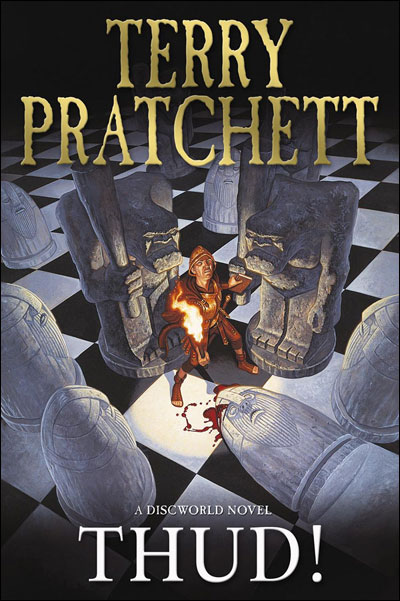
Here's a thing Terry Pratchett did that nobody talks about enough: he wrote a fictional children's book inside a novel about murder, racial hatred, and demonic possession—and then he published it as an actual children's book.
Not as a joke. Not as cheap merchandise. As a genuine picture book, illustrated by Melvyn Grant, that you could buy in a bookshop and read to your kids. The same book that Sam Vimes reads to Young Sam at six o'clock every night in Thud! exists on shelves in our world, and parents have been reading it to their children for over twenty years.
That's not normal. And the fact that it works—that it actually works—tells you something remarkable about what Pratchett understood about the relationship between fiction and life.
The Book Inside the Book
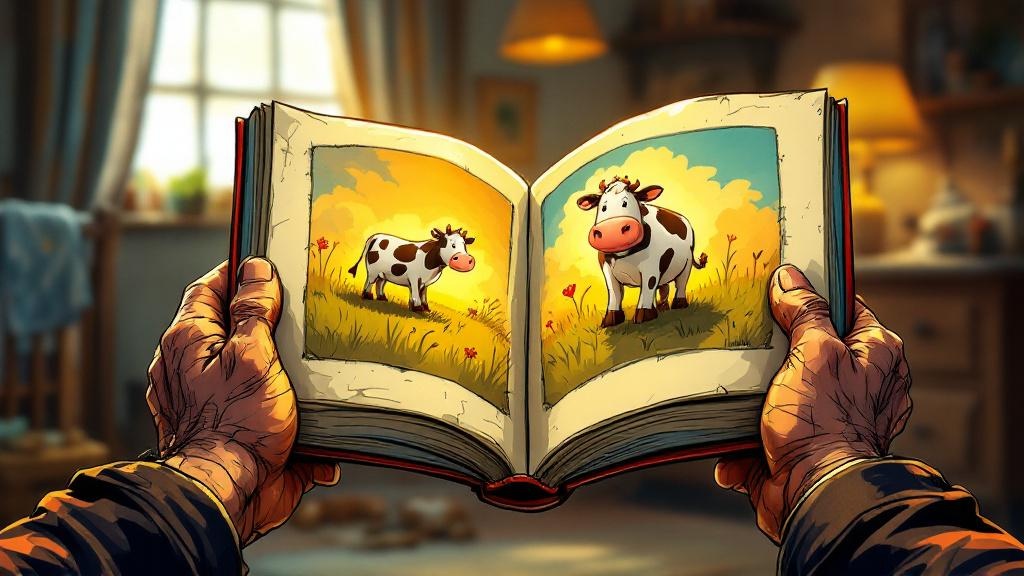
In Thud!, Where's My Cow? is a simple call-and-response picture book. A cow has gone missing. Various animals are encountered—a sheep, a horse, a pig—and each time, the refrain: "That's not my cow!" It's exactly the kind of repetitive, rhythmic book that toddlers demand to hear forty-seven times in a row until the pages go soft and you can recite it in your sleep.
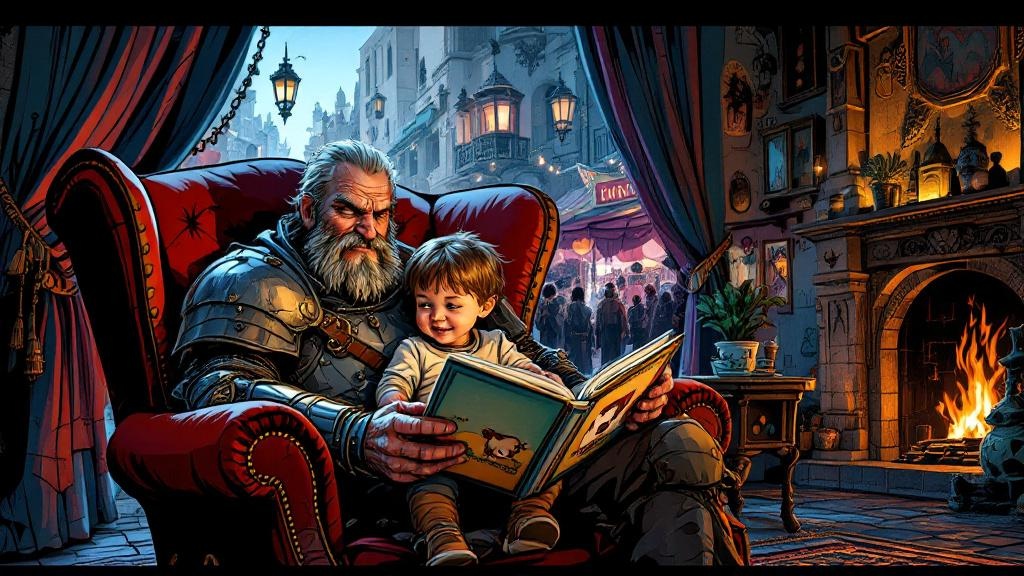
Vimes reads it to Young Sam every evening at six. Without fail. This is non-negotiable. Riots, murders, diplomatic incidents, the end of the world—nothing overrides the reading. We've written about why that matters, about how the ritual is Vimes' anchor and how it becomes the emotional core of Thud!'s devastating climax.
But here's the thing the novel doesn't dwell on, and it's fascinating: Vimes hates the book.
Not the ritual. The book. Because it's about farmyard animals, and Young Sam lives in a city. Vimes' son isn't going to encounter sheep and horses on the streets of Ankh-Morpork. He's going to encounter Foul Ole Ron and his cart of mysterious smells. He's going to hear Cut-Me-Own-Throat Dibbler hawking sausages of dubious provenance. He's going to see the tanners' quarter and the Shades and the river with its occasional hippopotamus.
So Vimes does what any copper-turned-father would do: he rewrites the book on the fly.
Vimes' Street Version
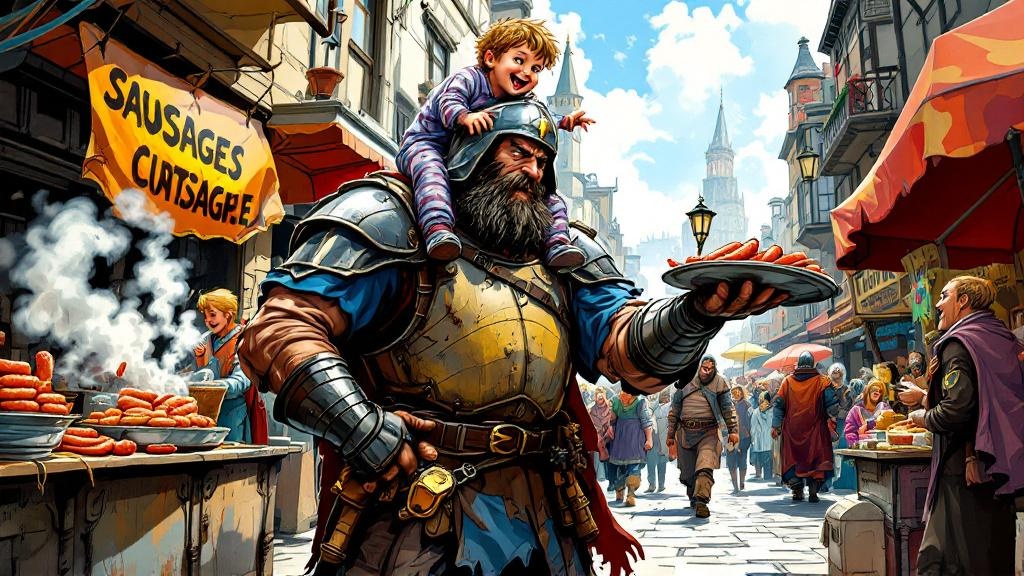
"Is that my cow? It goes "Buggrit! Millennium hand and shrimp!" That's not my cow!"
The improvised version of Where's My Cow? is pure Pratchett comedy. Instead of "Is that my cow? It goes 'baa!' That's not my cow!", Vimes takes Young Sam on a tour of Ankh-Morpork's finest characters. Foul Ole Ron with his legendary smell. Dibbler with his desperate sales patter. Lord Vetinari with his silken "Don't let me detain you."
It's a roll call of the city, delivered in the cadence of a nursery rhyme. And Young Sam loves it. Lady Sybil, naturally, does not approve.
What Vimes is actually doing is teaching his son to know the city. He's passing down the cop's instinct—the ability to read a street by its sounds and smells, to know who's around the corner before you see them. He's wrapping Ankh-Morpork in a bedtime story and handing it to the next generation. Every parent does this, in their own way. You don't just read to your children. You read them into the world they'll actually inhabit.
The genius of it is that Pratchett lets Vimes do both. The pastoral version—sheep, cows, horses—teaches rhythm and participation. The city version teaches Young Sam where he actually lives. Both are acts of love.
Then Pratchett Published It For Real
In September 2005, the same month Thud! was released, Pratchett and illustrator Melvyn Grant published Where's My Cow? as an actual, physical picture book. Thirty-two pages. Full colour. Available in the children's section of your local bookshop, right between Where the Wild Things Are and The Very Hungry Caterpillar.
This was a bold move, and not just commercially. By making the fictional book real, Pratchett created something genuinely unusual in literature: a prop that escaped its story.
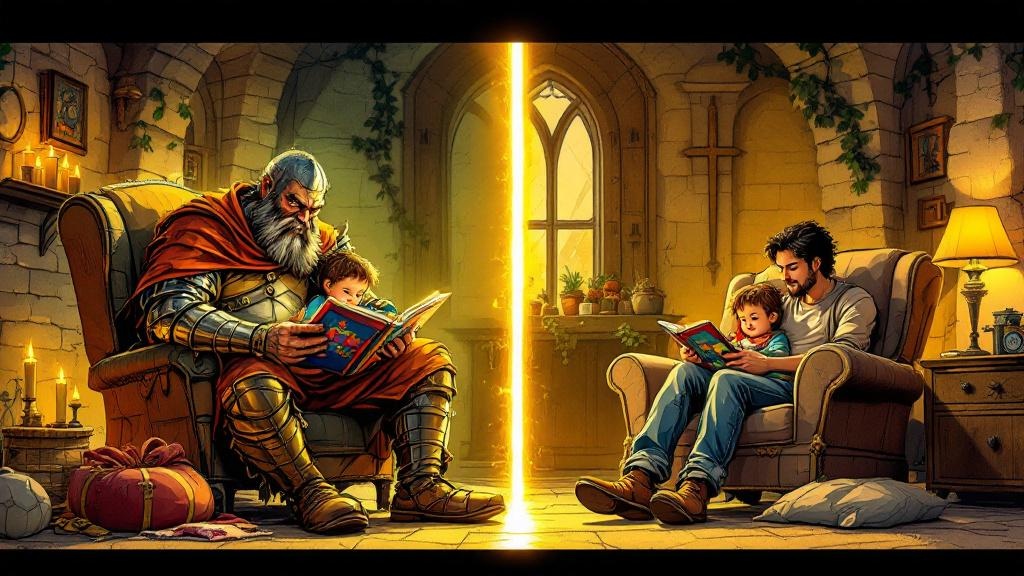
Think about what this means. When you read Thud! and reach the cave scene—Vimes screaming "THAT! IS!! NOT!!! MY!!!! COW!!!!!" while fighting through an army of dwarfs—you can go to your shelf and pick up the actual book he's shouting from. You can hold it in your hands. You can read the same words to your own child at six o'clock, and you're doing exactly what Sam Vimes does.
"A prop that escaped its story."
That's not merchandising. That's metafiction made physical. Pratchett collapsed the distance between reader and character into a single object that exists in both worlds simultaneously.
Three Art Styles, One Story
Melvyn Grant's illustrations for the published Where's My Cow? deserve more attention than they get. Grant used three distinct visual styles to capture the layers of the story:
The "real world" scenes—Vimes and Young Sam together in the nursery—are rendered in a warm, detailed, realistic-cartoon style. These are the anchoring images, the father and son you can believe in.
The book-within-the-book—the pastoral animals—uses a deliberately simpler style. Thick lines, soft pastel colours, the kind of gentle shapes you'd expect in a book for very young children. The sheep are cotton balls. The pigs are pink ovals. It's intentionally generic, which is exactly the point—this is a mass-produced children's book, not a work of art.
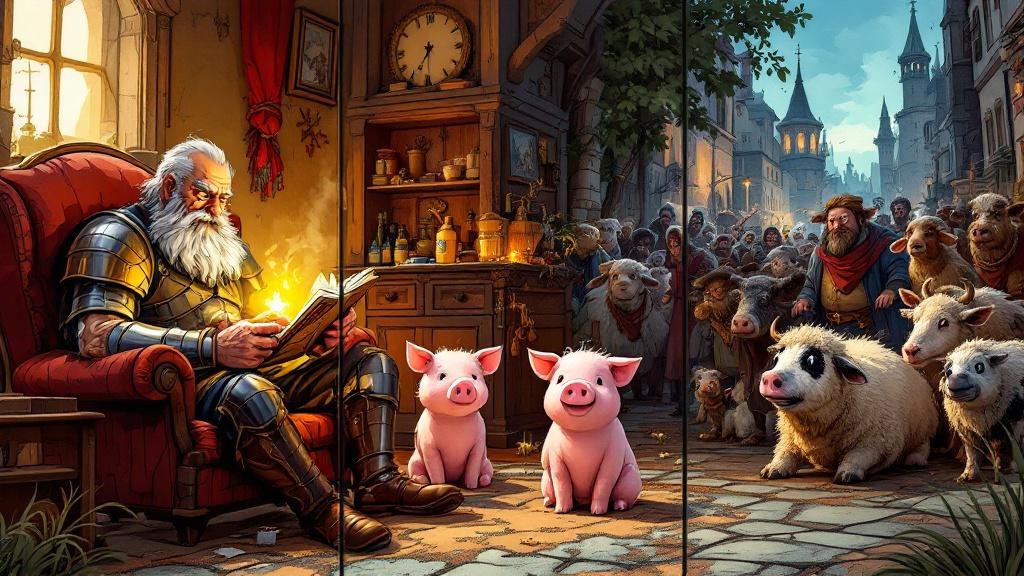
The hybrid style emerges when Vimes starts improvising. Suddenly Ankh-Morpork's characters begin appearing in the same visual space as the pastel animals, rendered in Vimes' more detailed style. The two worlds blur. Foul Ole Ron slouches past a startled lamb. The city invades the countryside, just as Vimes' personality invades the text.
Grant also hid a clever visual trick throughout: the various "not-my-cow" animals are drawn so their outlines, combined with their surroundings, subtly form cow shapes. The sheep has tree branches for horns. A rabbit chewing greenery suggests an udder. You have to look for it, but once you see it, it's everywhere—the cow is always present, hidden in plain sight, waiting to be found.
Why It Works as a Children's Book
Here's the surprise: Where's My Cow? is actually a decent children's book on its own merits. You don't need to know who Sam Vimes is. You don't need to have read Thud!. A three-year-old doesn't care about metafiction or character development or the poverty of the Cockbill Street upbringing.
What they care about is the rhythm. "Is that my cow? It goes BAAAA! That's not my cow!" It's got call-and-response, animal noises, a mystery with a satisfying resolution, and enough repetition to feel like a warm blanket. Young children request it over and over—which, if you think about it, makes every parent who reads it a version of Vimes performing the nightly ritual.
The Goodreads rating sits around 4.0 stars, which is respectable for what is essentially a tie-in book. But the reviews tell the real story. Parents write about reading it to their children and suddenly understanding Vimes' devotion to the ritual on a visceral level. Pratchett fans write about buying it as adults and keeping it on the shelf next to Thud!, a physical connection between two worlds that aren't supposed to touch.
Some fans have adopted the tradition. Six o'clock reading. No excuses. The fictional ritual became a real one, which is either deeply touching or mildly terrifying, depending on your relationship with obsessive Discworld fandom.
The Cave Scene Hits Different Now
"He's screaming the words of a book you own, and your kid probably loves it too."
If you read Thud! before the picture book, the cave scene is powerful because of what it represents—a father's love weaponised against ancient evil, the mundane defeating the mythic, routine as spiritual practice.
But if you read Thud! after reading Where's My Cow? to your own child fifty times, the scene becomes almost unbearable. Because now you know those words. You've said them in the same singsong voice. You've done the animal noises. You've felt the weight of a small person leaning against you who doesn't care about anything except that you're there and the cow is missing and eventually, gloriously, it will be found.
And then you read about Vimes, underground, possessed, screaming those same words while tearing through an army—and it's not fictional anymore. Not entirely. He's screaming the words of a book you own, and your kid probably loves it too.
This is what Pratchett did by publishing the physical book. He didn't just create a piece of merchandising. He created an emotional amplifier. The real Where's My Cow? makes the fictional Where's My Cow? hit harder, and vice versa. Each version makes the other more real.
A Pratchett Kind of Magic
There's a word for what Pratchett achieved here, and it's not "marketing." It's narrative magic—the same kind he wrote about constantly in the Discworld novels. On the Disc, belief shapes reality. Stories have power. If enough people believe something, it becomes true.
Where's My Cow? is that principle made literal. A fictional book, believed in by millions of readers, became a real book. A fictional ritual, described in a novel, became a real ritual performed in real nurseries. The story escaped its container and started happening in the world.
Pratchett would have appreciated the irony. He spent forty-one novels exploring how stories shape reality—and then he proved it with a picture book about a missing cow.
Where to Find Your Cow
If you want the full experience, here's the reading order:


If you're already a Vimes reader and want to understand how the reading ritual fits into his larger character arc, we've written about why the six o'clock promise matters so much, about the beast he keeps locked inside, and about the boots that keep him connected to the streets.
But honestly? Start with the picture book. Read it out loud. Do the voices. Find the cow.
Then read Thud! and try not to cry in the cave.
The cow is found. It was always going to be found. That's the point.