Why Sam Vimes Reads to His Son at 6pm Every Night
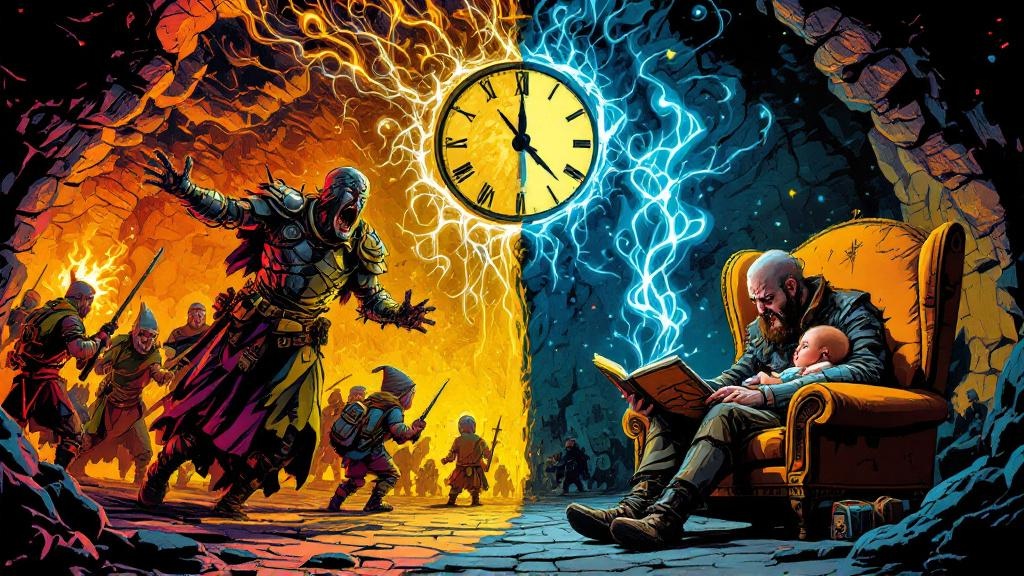
The Where's My Cow ritual in Thud! isn't just bedtime reading—it's Sam Vimes' anchor to everything good. Here's why this scene hits so hard.
Why Sam Vimes Reads to His Son at 6pm Every Night
There's a man in Ankh-Morpork who has arrested a dragon, stopped wars, faced down werewolves with his bare hands, and carries law like a lamp through the darkest streets on the Disc. He is also home by six o'clock every evening to read a picture book about farmyard animals.
This is not a contradiction. It might be the most important thing Sam Vimes does.
In Thud!, Terry Pratchett introduced a detail so small and so mundane it shouldn't work as a plot device at all—a bedtime reading routine. But by the time the novel reaches its climax, that routine has become the most emotionally devastating weapon in Discworld. A man screaming the words of a children's book while fighting through an army of armed dwarfs underground, miles from home, possessed by an ancient demonic entity of pure vengeance.
And it works. God help us, it works.
The Promise
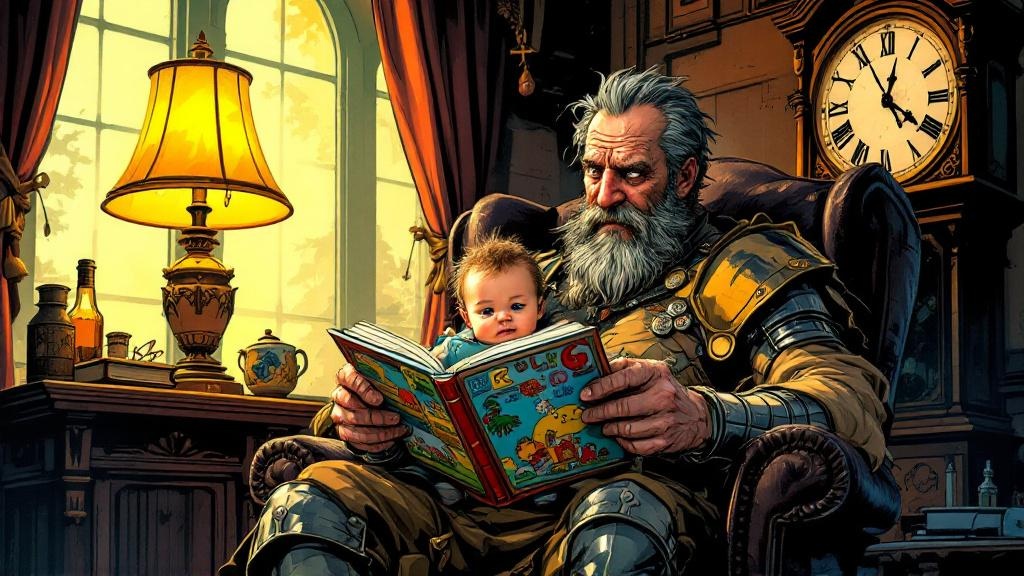
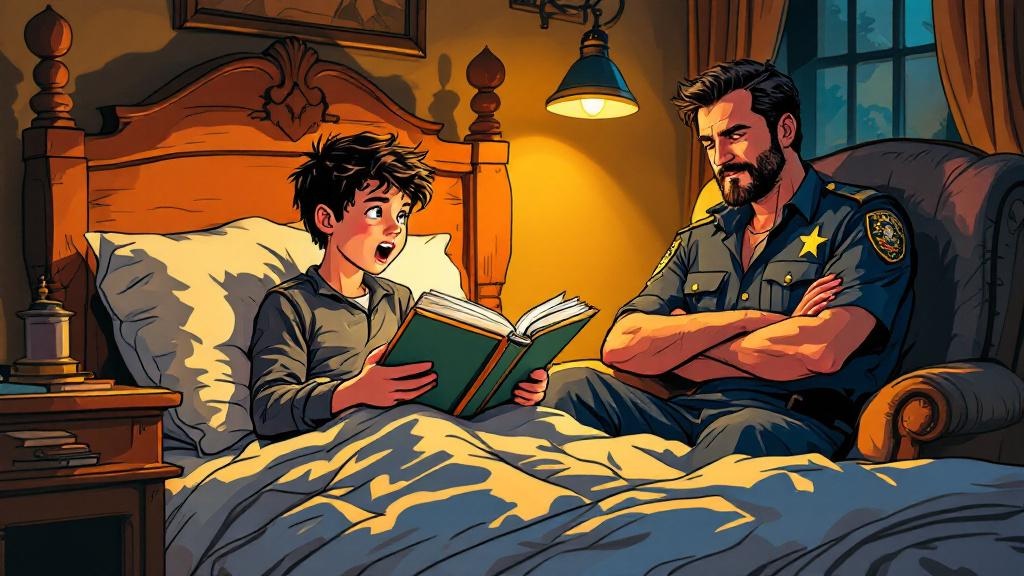
The ritual is simple. Every day at six o'clock, Commander Sir Samuel Vimes, Duke of Ankh, reads Where's My Cow? to his son, Young Sam. The book is a simple call-and-response affair—a cow goes missing, various animals are encountered, none of them are the cow. It's the kind of thing you read forty times until the pages go soft and the words lose all meaning.
Except they never lose meaning for Vimes. Because the reading isn't really about the book.
Here's the passage from Thud! that explains everything:
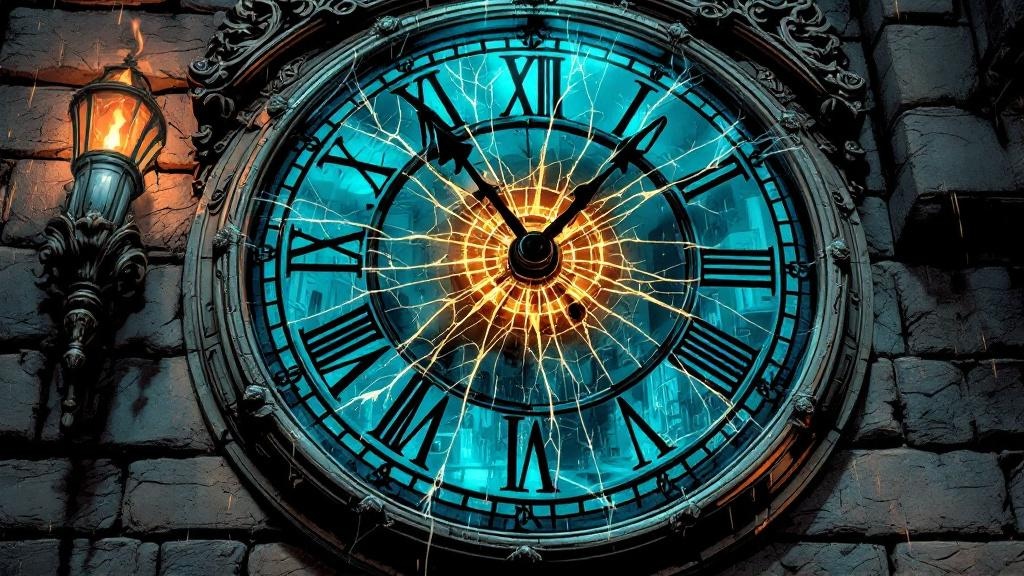
"Would a minute have mattered? No, probably not, although his young son appeared to have a very accurate internal clock. Possibly even two minutes would be okay. Three minutes, even. You could go to five minutes, perhaps. But that was just it. If you could go for five minutes, then you'd go to ten, then half an hour, a couple of hours... and not see your son all evening. So that was that. Six o'clock, prompt. Every day. Read to Young Sam. No excuses. He'd promised himself that. No excuses. No excuses at all."
"If you could go for five minutes, then you'd go to ten, then half an hour, a couple of hours... and not see your son all evening."
That's not a parenting tip. That's a recovering alcoholic's logic applied to fatherhood. And it's no coincidence. The first time we meet Sam Vimes in Guards! Guards!, he's lying in a gutter, drunk beyond reason. His entire life since then has been an exercise in drawing lines and refusing to cross them—the unopened bottle in the desk drawer, the badge that keeps the beast inside him caged, the belief that the law applies to everyone including himself.
The six o'clock reading is the newest line, and the most personal one. Because Vimes knows himself. He knows that his job will always have one more emergency, one more conspiracy, one more reason to stay late. He knows that "just this once" is how every failure begins. So he doesn't allow "just this once." Not ever.
The Slippery Slope Vimes Knows Too Well
What makes this philosophy so powerful is that Pratchett doesn't present it as noble discipline. He presents it as fear.
Vimes is afraid of himself. He always has been. He's afraid of the darkness inside him—the thing that wants to hurt people who deserve it, the rage that could eat him alive if he let it. He's afraid of the bottle. He's afraid that everything good in his life exists because he drew arbitrary lines and held them through sheer stubbornness, and that relaxing any of them even slightly would start an avalanche.
The reading ritual is built on the same foundation as his sobriety: the understanding that he is not the kind of person who can afford to be flexible. Other fathers might miss bedtime occasionally and make it up tomorrow. Vimes can't, because Vimes knows where "occasionally" leads. It leads to the gutter.
This is why parents who've struggled with addiction find this storyline particularly devastating. Pratchett understood, with the quiet precision that defined his best work, that some people's relationship with discipline isn't about strength. It's about the honest acknowledgement of weakness. Vimes reads at six because he knows what happens if he doesn't. Not to Young Sam—Young Sam would be fine. To Vimes.
"THAT! IS!! NOT!!! MY!!!! COW!!!!!"
And then Pratchett takes this quiet domestic ritual and weaponises it.
"Possessed by an ancient demonic entity of pure vengeance, the only thing Sam Vimes can reach for is a picture book about farmyard animals."
The climax of Thud! finds Vimes trapped deep underground in the ancient dwarf mines beneath Koom Valley. He's been pursuing a case involving dwarfish extremists, he's been separated from his squad, and—worst of all—he's been infected by the Summoning Dark, a ten-thousand-year-old quasi-demonic entity that feeds on vengeance and normally drives its hosts into murderous fury.
It's six o'clock. He's miles from home. His son is waiting.
What happens next is one of the most discussed scenes in all of Discworld. Vimes, possessed and raging, fights his way through a crowd of heavily armed deep-down dwarfs. But he's not fighting with tactics or training. He's fighting with the rhythm of a children's book. Each blow lands with a word:
"THAT! IS!! NOT!!! MY!!!! COW!!!!!"
He's shouting the lines of Where's My Cow? at the top of his lungs while single-handedly demolishing everything in his path. The Summoning Dark wanted to use his anger as fuel. Instead, it got something it didn't expect—Vimes' anger redirected by love, channelled through the most mundane and sacred thing in his life.
And here's the detail that breaks readers apart: Young Sam, miles away on the surface, hears him. The bond between father and son is strong enough that the baby stops crying and begins crowing along with the rhythm. It shouldn't be possible. It is.
The Guarding Dark Reads Bedtime Stories
What the Summoning Dark discovers, to its ancient horror, is that Vimes' mind is already occupied.
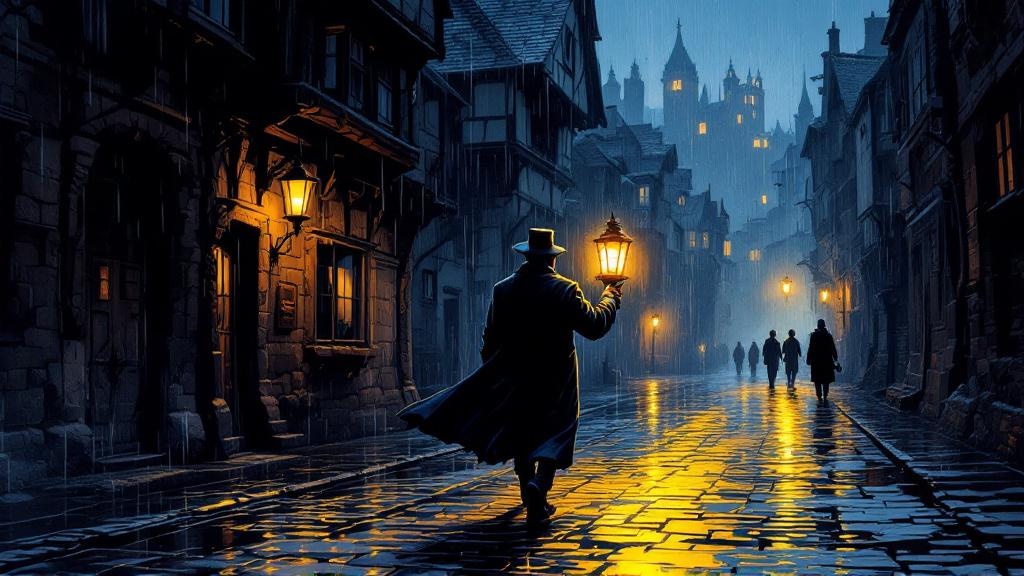
It expects to find the usual human mental furniture—fears, desires, weaknesses to exploit. Instead, it finds a city. Ankh-Morpork at night, in the rain, lit by the glow of a watchman's lamp. And walking those mental streets is something the Summoning Dark has never encountered before: the Guarding Dark. Vimes' inner watchman. The part of him that patrols even his own thoughts, keeping everything safe, keeping everything in order.
The six o'clock reading is part of that patrol. It's not a soft moment shoved into an action sequence for emotional contrast. It's the core mechanism by which Vimes maintains his humanity. The Summoning Dark feeds on hatred and the desire for revenge. The Guarding Dark feeds on promises kept, on routine, on the absolute refusal to let anything—not ancient evil, not the pressures of command, not his own inner beast—interfere with being home for his son.
Pratchett is making his most explicit statement about what goodness actually is. It's not a feeling. It's not a natural disposition. It's a practice. It's something you do at six o'clock every evening whether you feel like it or not, until it becomes the thing that holds you together when everything else falls apart.
Why Vimes Changes the Words
There's a wonderful secondary detail about the reading ritual that often gets overlooked. Vimes doesn't just read Where's My Cow? straight. He improvises.
The original book asks "Where's my cow? Is that my cow? It goes 'baa!' That's not my cow!" Vimes, unable to help himself, starts replacing the farmyard animals with things from Ankh-Morpork's streets. Instead of sheep and horses, Young Sam gets hippopotamuses from the river, the distinctive smell of the tanners' quarter, and the sound of Foul Ole Ron pushing his cart through the Shades.
"He's not just reading to his son. He's teaching him the city."
He's not just reading to his son. He's teaching him the city. The real city, with its smells and sounds and peculiar characters. He's passing down the knowledge that made him a great copper—the intimate familiarity with every cobblestone, every alley, every face. He's doing what parents have always done: wrapping the world in a story and handing it to the next generation.
Pratchett actually wrote and published Where's My Cow? as a real picture book in 2005, illustrated by Melvyn Grant. It features three art styles—one for Young Sam's reality, one for the book-within-the-book, and a third hybrid style for when Vimes starts improvising. It's a children's book that adults buy for themselves, which is about the most Pratchett thing imaginable.
Fatherhood as Anchor
What's remarkable about the reading ritual is how completely it redefines Vimes as a character. Before Young Sam, his anchors were Sybil, sobriety, and the badge. All external. All things that could theoretically be taken away. The reading adds something different: a daily, active choice that depends on nothing but his own will.
Nobody makes him go home at six. There's no magical compulsion, no contractual obligation. Vetinari would understand if he stayed late. Sybil would forgive him. Young Sam wouldn't even remember. The only person holding Vimes to this standard is Vimes himself, and that's what makes it so powerful.
It also, quietly, makes him a better commander. A man who leaves work at six, every day, without exception, sends a message to every copper under his command: there are things more important than the job. Go home. See your families. The Watch will still be here tomorrow.
In Snuff, the payoff arrives. Young Sam has grown old enough to do the reading himself while Vimes listens. The ritual has evolved—it's no longer Vimes anchoring himself through his son, but a genuine shared tradition between father and child. The promise kept for years has become something bigger than its original purpose. It's become the foundation of a relationship.
The Scene That Defines Discworld
Ask Discworld fans to name the single most emotionally powerful moment in forty-one novels, and a significant number will point to a possessed man screaming about farmyard animals in a cave. Not the death of a major character. Not a grand philosophical speech. A bedtime story.
That's because Pratchett understood something fundamental about what makes stories resonate. It's not the scale that matters. It's the specificity. A man reading to his son at six o'clock is small and ordinary and completely universal. Every parent knows the weight of that commitment—the days you're exhausted, the evenings you'd rather collapse, the voice in your head saying "just this once, they'll be fine."
And Vimes says no. Not just tonight. Every night. Even when he's possessed by an ancient evil in a cave miles underground.
That's not a superhero moment. That's a parenting moment. And Pratchett made it the climax of an entire novel because he knew—as he always knew—that the smallest commitments are the ones that matter most.
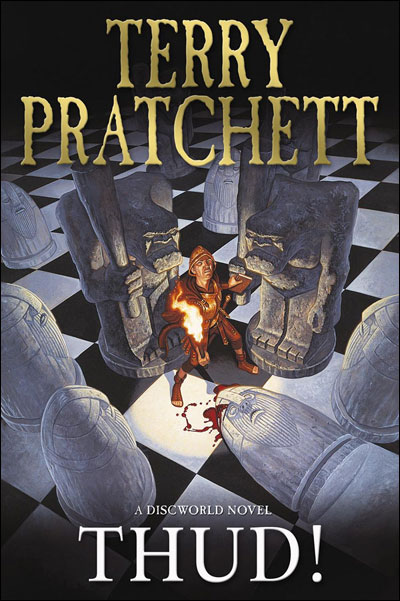

If you've read Thud! and want more of Vimes as a father, Snuff continues the story beautifully—Young Sam has developed a passionate interest in poo (the book kind and the real kind), and watching Vimes navigate the countryside with his family is a joy. And if you want to understand the darkness that makes the reading ritual necessary, read about the beast Vimes keeps caged and the Guarding Dark that patrols his mind.
Six o'clock. No excuses. That's the whole philosophy, and it's enough.