Terry Pratchett's Writing Evolution: Early vs Late Discworld
How Terry Pratchett evolved from slapstick fantasy parody to literary satirist across 41 Discworld novels. A guide to the tonal shifts that shaped the series.
Terry Pratchett's Writing Evolution: Early vs Late Discworld
Pick up The Colour of Magic and then pick up Night Watch. Same author. Same world. Same giant turtle swimming through space. And yet they read like they were written by two completely different people.
In a sense, they were. The Terry Pratchett who wrote his first Discworld novel in 1983 was a former journalist having fun with fantasy clichés. The one who wrote Night Watch twenty years later was a literary satirist using a flat world on the back of a turtle to say things about revolution, justice, and grief that most "serious" novelists couldn't manage.
That transformation didn't happen overnight. It happened across forty-one books, and understanding how Pratchett's writing evolved isn't just interesting literary trivia—it's the key to getting the most out of Discworld as a reader.
Phase One: The Parody Years (Books 1-7)
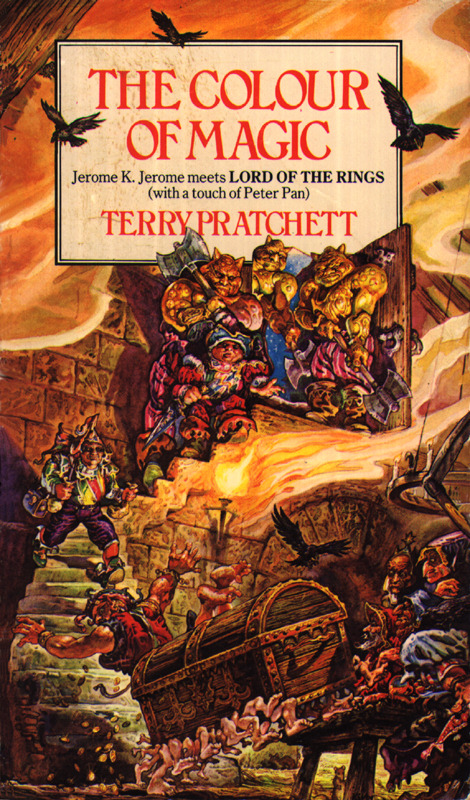
The earliest Discworld novels are, by Pratchett's own admission, extended jokes. The Colour of Magic parodies Fritz Leiber's Fafhrd and the Gray Mouser. The Light Fantastic spoofs Anne McCaffrey's dragons. Equal Rites takes aim at gendered magic systems. Each book is essentially a series of sketches held together by a protagonist who stumbles from one set piece to the next.
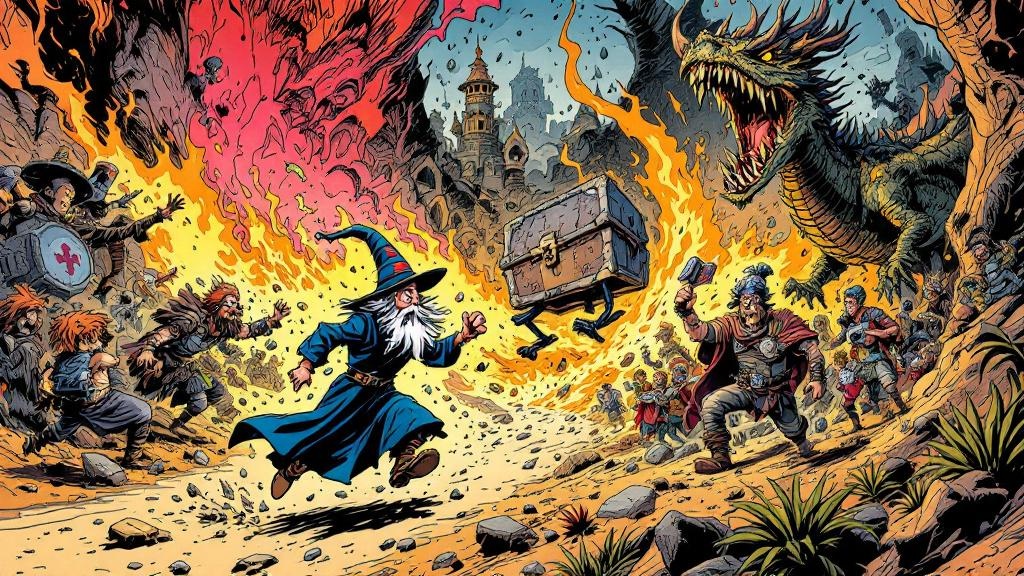
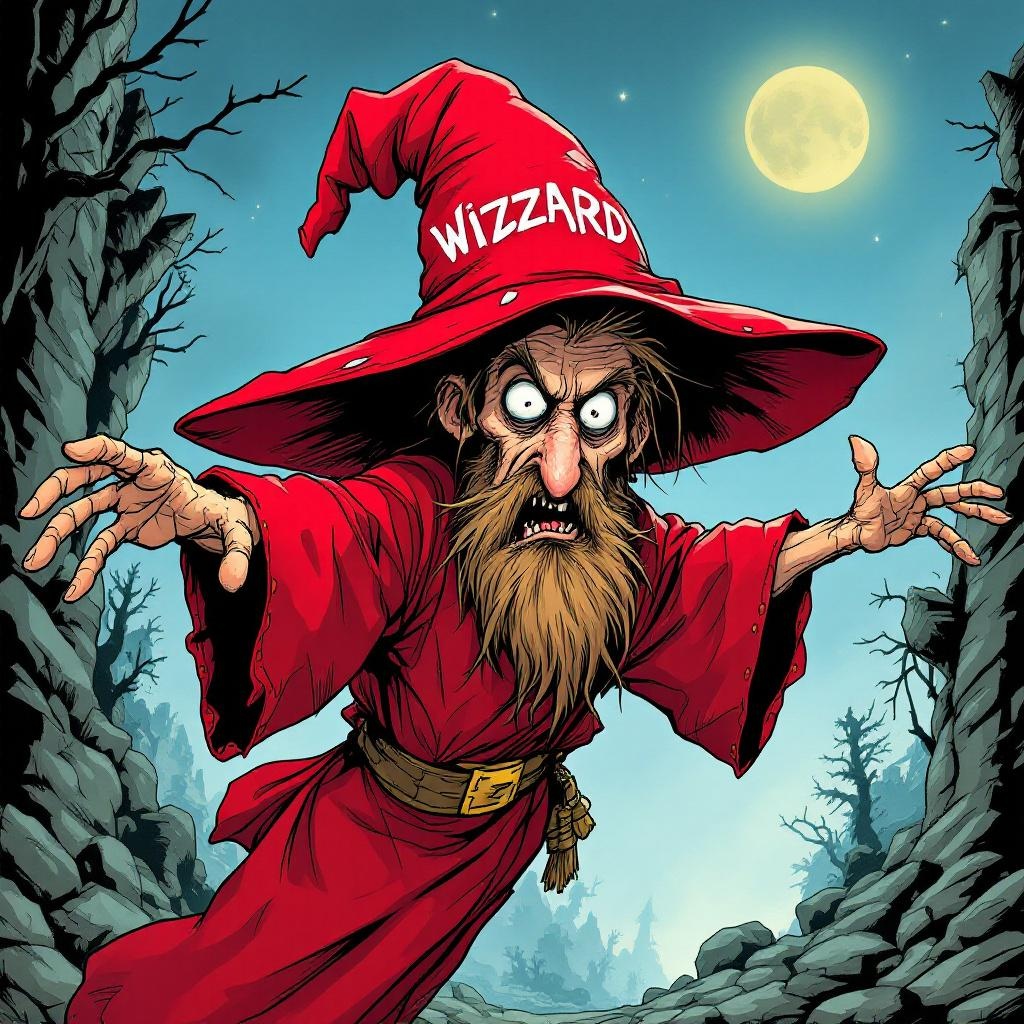
The comedy in this period is broad and referential. If you've read the works being parodied, the jokes land. If you haven't, you're left with enjoyable slapstick but not much else. Rincewind runs away from things. Twoflower takes pictures. The Luggage eats people. It's fun, but it's fun in the way a good sketch show is fun—entertaining in the moment, hard to remember a week later.
The characters in this phase are types, not people. Rincewind is The Coward. Cohen the Barbarian is The Parody. Even Death—who would later become one of literature's most beloved characters—appears mainly as a punchline.
"Sourcery actually marked the boundary line. The books before that were "old Discworld"; the books after that were "New Discworld.""— Terry Pratchett
Pratchett himself drew the line at Sourcery. Everything before it was "old Discworld"—broad parody, lightweight characterisation, jokes as the primary engine. Everything after was something new. Not immediately. Not all at once. But the shift had begun, and it would change everything.
What's remarkable about this phase isn't the quality—it's the speed of improvement. Compare the episodic chaos of The Colour of Magic with the more structured Mort, published just four years later. Mort still has the jokes, but it also has a genuine emotional arc: a young man learning that even Death needs an apprentice, and that the job is harder than it looks. You can feel Pratchett discovering what Discworld could actually do.
Phase Two: The Golden Age (Books 8-25)
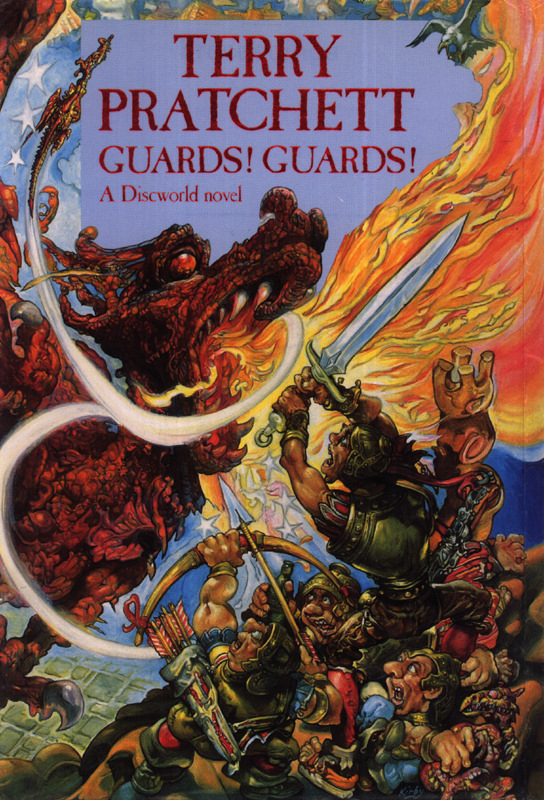
Then Guards! Guards! happened, and the Discworld we know was born.
The eighth Discworld novel introduced Sam Vimes—a drunk, cynical night watchman in a city that doesn't want protecting—and with him, something the earlier books never quite had: a protagonist you genuinely cared about. Not because he was funny (though he was), but because he felt real. Vimes had flaws that cost him things. He had a worldview shaped by poverty and disappointment. He grew.
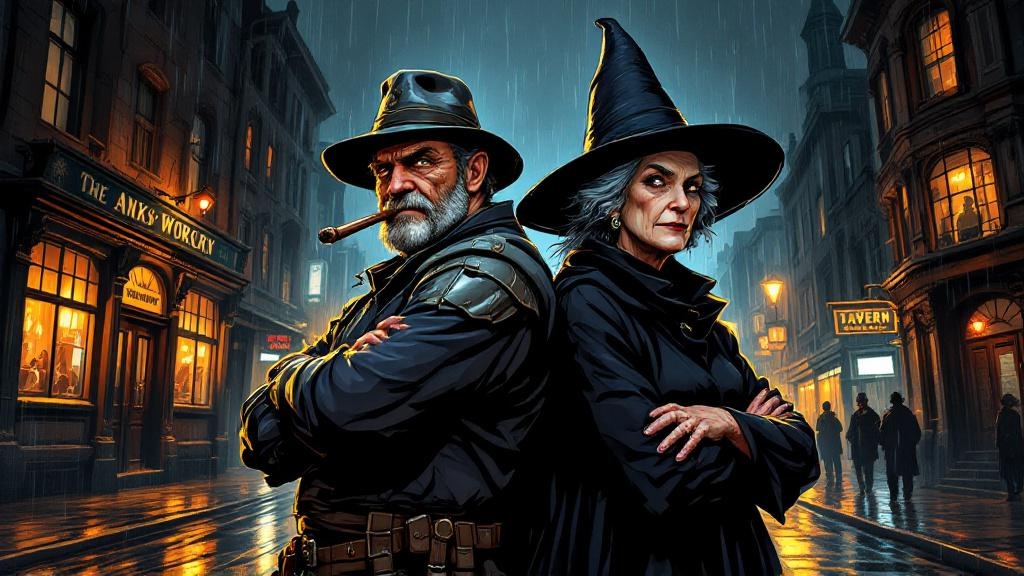
This is the period where Pratchett stopped being a parodist and became a satirist. The difference matters. Parody points at something and says "look how silly this is." Satire points at something and says "look how broken this is, and here's why it matters." The early books mocked fantasy conventions. The golden age books used fantasy to illuminate the real world.
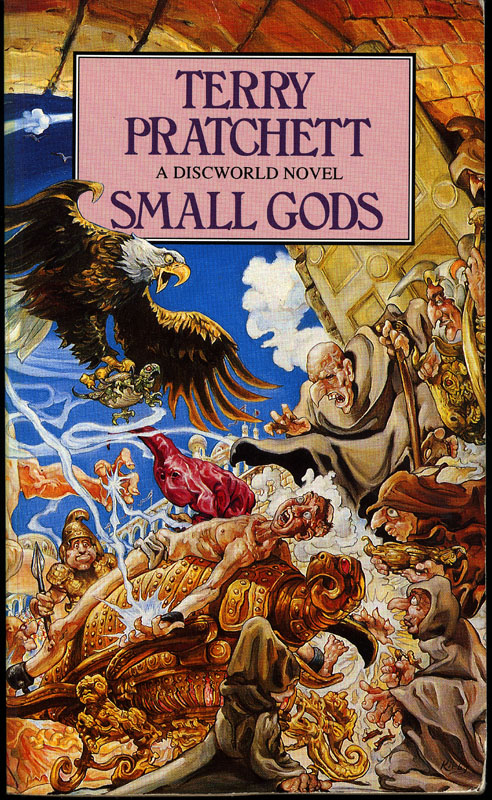
Small Gods examined what happens when organised religion forgets its own purpose. Feet of Clay explored slavery and personhood through clay workers. Jingo dissected how easily politicians manufacture wars. The Fifth Elephant tackled cultural identity and political espionage. Each book used the Disc's absurd premise—the turtle, the elephants, the flat world—as permission to say things that would feel preachy in a realistic setting.
The comedy evolved too. Early Pratchett relied on wordplay, footnotes, and pop culture references. Golden age Pratchett built comedy from character—Vimes's barely-contained fury, Nanny Ogg's cheerful vulgarity, Lord Vetinari's devastating understatement. The jokes got quieter but cut deeper.
"The early books mocked fantasy conventions. The golden age books used fantasy to illuminate the real world."
The footnotes didn't disappear, but they became less frequent and more purposeful. In the early books, footnotes were the comedy. In the golden age, they were the seasoning.
This period also saw Pratchett develop what might be his greatest technical skill: the ability to be genuinely angry about injustice while remaining genuinely funny. Jingo is furious about xenophobia. It's also hilarious. Monstrous Regiment is devastating about how wars destroy their own soldiers. It also features one of the great comic reveals in fantasy literature. Holding those two things in tension—rage and wit, tragedy and comedy—is extraordinarily difficult. Pratchett made it look easy.
Phase Three: The Mature Works (Books 26-41)
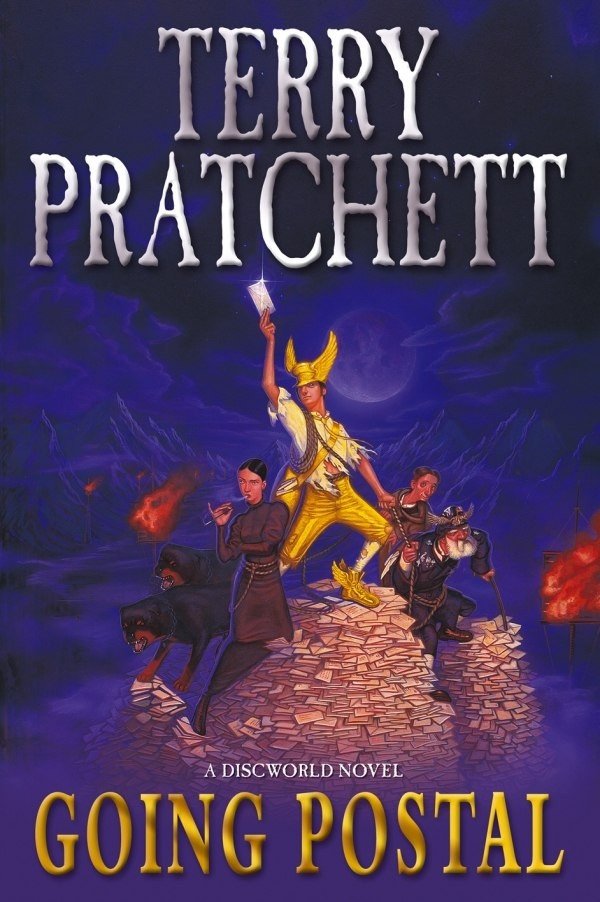
Around Going Postal, the writing shifted again. The satire remained sharp, but the energy changed. Where the golden age books crackled with invention—new characters, new corners of Ankh-Morpork, new ways to make the Disc feel alive—the later books became more reflective. More concerned with legacy, change, and what happens when the world moves on without you.
Going Postal and Making Money introduced Moist von Lipwig, a con man forced to go straight, and used him to explore how institutions work (or fail to). Thud! took Vimes's rage about injustice and turned it inward—asking what happens when the man who fights monsters starts becoming one. I Shall Wear Midnight put Tiffany Aching face-to-face with persecution so raw it made readers forget they were reading fantasy.
The prose in this period is noticeably different. Sentences are longer, more contemplative. The rapid-fire joke density of the golden age gives way to passages that sit with an idea, turn it over, examine it from multiple angles. When Pratchett lands a joke in the late books, it tends to be the kind that makes you stop reading and stare at the wall for a moment.

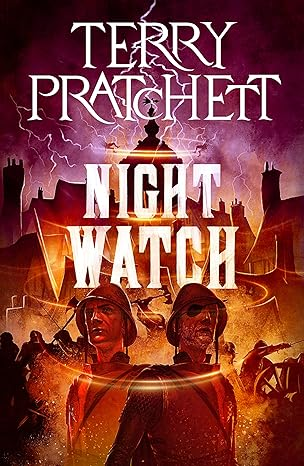
Night Watch, published in 2002, is often cited as the peak—the book where everything Pratchett had learned about character, satire, pacing, and emotional weight came together perfectly. It won the Prometheus Award and sits comfortably alongside the best literary fiction of its decade. It's also, to be clear, set in a world that rides on a turtle.
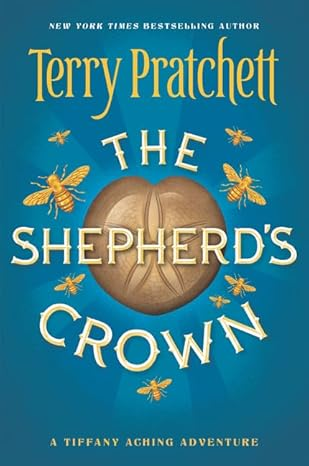
The final books—Raising Steam, The Shepherd's Crown—are marked by Pratchett's battle with posterior cortical atrophy, a form of early-onset Alzheimer's diagnosed in 2007. Linguistic studies have found that his vocabulary diversity began declining as early as 1998, long before the formal diagnosis. The later prose is sometimes more discursive, occasionally repetitive.
But here's what matters: even in the final books, the moral vision never wavered. Raising Steam is about progress and whether it can be humane. The Shepherd's Crown is about grief, inheritance, and saying goodbye. Pratchett's technical abilities may have been diminished, but his ability to see the world clearly—to care about the right things—remained intact until the end.
What Changed (And What Didn't)
The easiest way to understand Pratchett's evolution is through what each phase treats as the engine of storytelling:
| Phase | Books | Engine | Comedy Style |
|---|---|---|---|
| Parody Era | 1-7 | Spoofing fantasy tropes | Broad, referential, footnote-heavy |
| Golden Age | 8-25 | Character-driven social satire | Situational, character-based, subtle |
| Mature Works | 26-41 | Reflective, thematic exploration | Quieter, rarer, more devastating |
Across all three phases, certain things stayed constant. Pratchett never lost his belief that ordinary people matter. He never stopped insisting that decency is worth fighting for. He never wrote a book that didn't, somewhere in its pages, defend the underdog against the powerful.
The Disc itself evolved alongside its creator. Ankh-Morpork gained a post office, a bank, a railway. The Watch grew from three sad men in a leaking building to a modern police force. The wizards of Unseen University settled into comfortable academic irrelevance. The world aged in real time, and that gave the later books a weight the early ones couldn't have achieved.
What This Means for Readers
If you're new to Discworld and you start with The Colour of Magic, you're reading Pratchett's rough draft. It's not bad—it's just not representative. Starting there and judging the series is like judging a band by their demo tape when they went on to make Abbey Road.
If you start with Guards! Guards! or Mort or Small Gods, you're getting Pratchett at the point where he understood what he was doing and was doing it brilliantly. That's why most reading guides recommend skipping ahead—not because the early books are worthless, but because the later ones are so much more.
And if you've read the golden age books and think you've seen everything Pratchett can do, try Night Watch or Going Postal. The mature works don't just continue the series—they elevate it into something you didn't know comic fantasy could be.
The journey from The Colour of Magic to The Shepherd's Crown is the journey of a writer who started by making fun of stories and ended by telling some of the best ones ever written. The turtle moves. So did Pratchett—always forward, always getting better, right up until he couldn't anymore.
Want to find your ideal starting point? Check our beginner's guide or explore the reading order flowchart. For more on the series' emotional depth, see our guide to Discworld's darkest books.