The Ultimate Discworld Reading Order Flowchart Explained
Confused by those Discworld reading order flowcharts? We break down every path, explain the sub-series, and help you pick the right starting point.
The Ultimate Discworld Reading Order Flowchart Explained
You've seen it. That famous flowchart—color-coded lines branching in every direction, 41 books arranged like a fantasy subway map, arrows pointing everywhere and nowhere at once. It's been shared on Reddit thousands of times, pinned to bookshop walls, and referenced in every "where do I start?" thread since the early 2000s.
And it probably made you more confused, not less.
Here's the thing: the Discworld reading order flowchart is genuinely useful. But only if someone actually explains what it means. Most people share it without context, which is a bit like handing someone a map of the London Underground and saying "have fun" without telling them where they're trying to go.
Let's fix that.
What the Flowchart Actually Shows
The standard Discworld flowchart—whether you've seen the official one from discworld.com or one of the many fan-made versions—organizes Terry Pratchett's 41 novels by character sub-series. Each color represents a different storyline threading through the Disc.
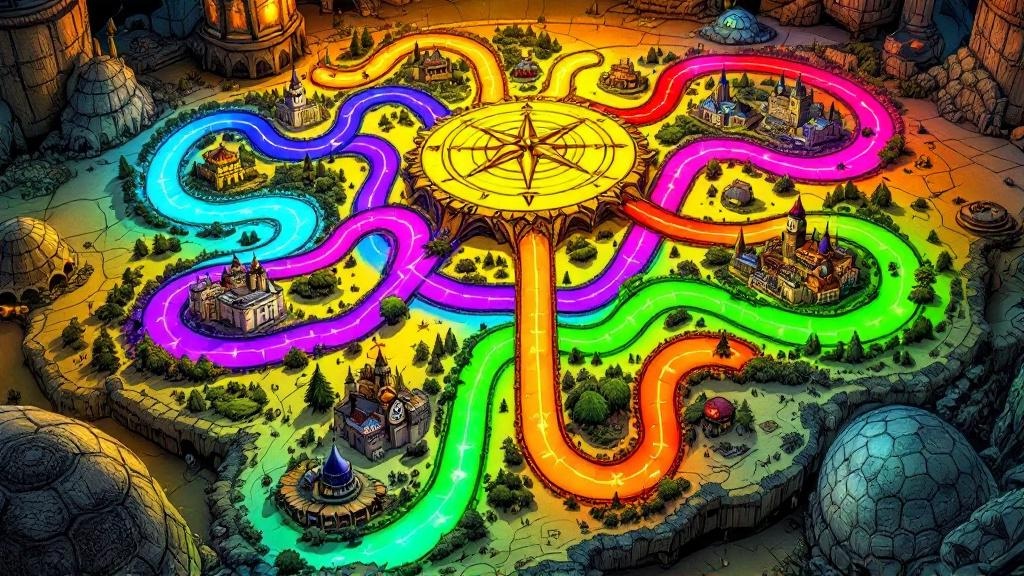
Think of it like this: Discworld isn't one long story. It's a shared universe containing several smaller series, each following different characters through different kinds of adventures. The flowchart maps these series so you can follow the characters you like without getting lost.
The main paths are:
- City Watch (8 books) — Police procedural meets fantasy
- Witches (6 books) — Shakespeare, fairy tales, and headology
- Death (5 books) — Philosophy with a scythe
- Rincewind & Wizards (8 books) — Cowardice as a survival strategy
- Tiffany Aching (5 books) — Coming-of-age witchcraft
- Moist von Lipwig (3 books) — Con man saves the world
- Standalones (6 books) — Self-contained stories
Let's walk through each one.
The City Watch Path
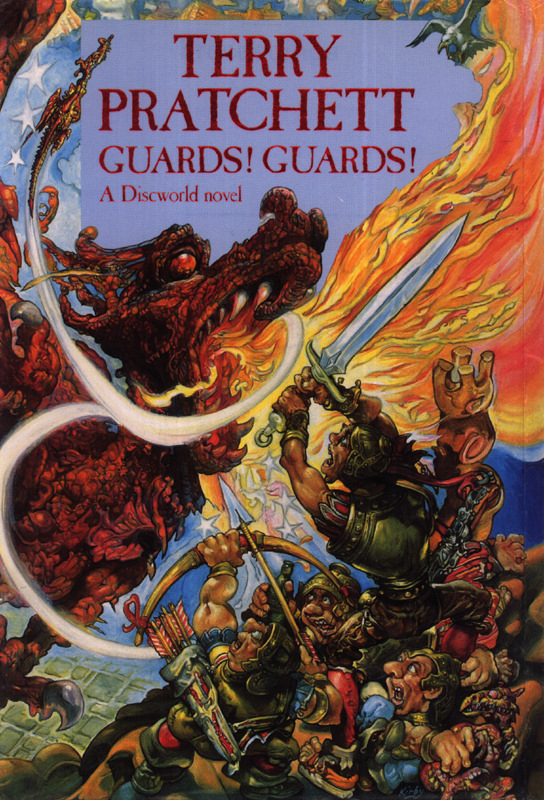
Books: Guards! Guards! → Men at Arms → Feet of Clay → Jingo → The Fifth Elephant → Night Watch → Thud! → Snuff
Best for: Readers who love crime fiction, character development, and social commentary.
This is the most popular path on the flowchart for good reason. It follows Sam Vimes, a broken-down drunk who commands a three-person night watch in Ankh-Morpork, the Disc's largest and most corrupt city. Over eight books, Vimes transforms from a cynical failure into one of the most powerful men on the Disc—without ever losing his contempt for privilege or his instinct for justice.
"Vimes's arc across eight books is one of the most satisfying character journeys in all of fantasy."
The Watch books work like a great TV crime drama. Each one tells a self-contained mystery while the characters, relationships, and world evolve around it. You'll watch Vimes build a modern police force from nothing, recruit species that were previously enemies, and navigate increasingly dangerous political territory.
Why this path works: The Watch books showcase Pratchett at his most structurally tight. Every book has a crime, a villain, a theme, and a resolution. If you want the clearest demonstration of why Discworld is more than "just comedy," start here.
The payoff: Night Watch, widely considered Pratchett's masterpiece, hits like an emotional freight train—but only if you've watched Vimes grow through the earlier books. Don't skip ahead.
The Witches Path
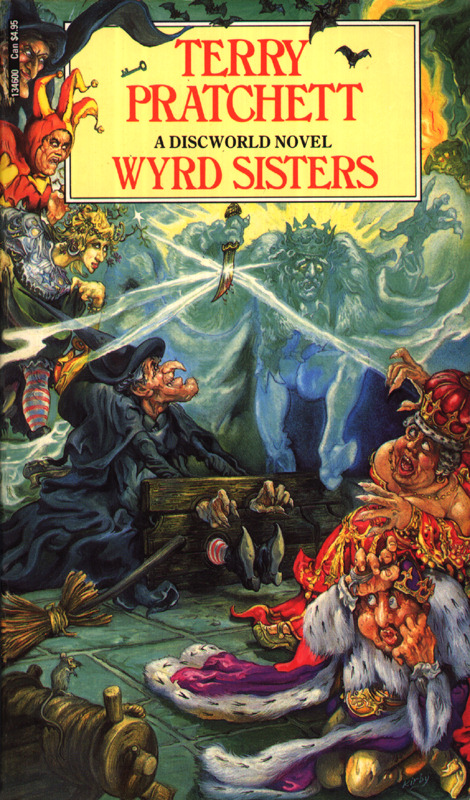
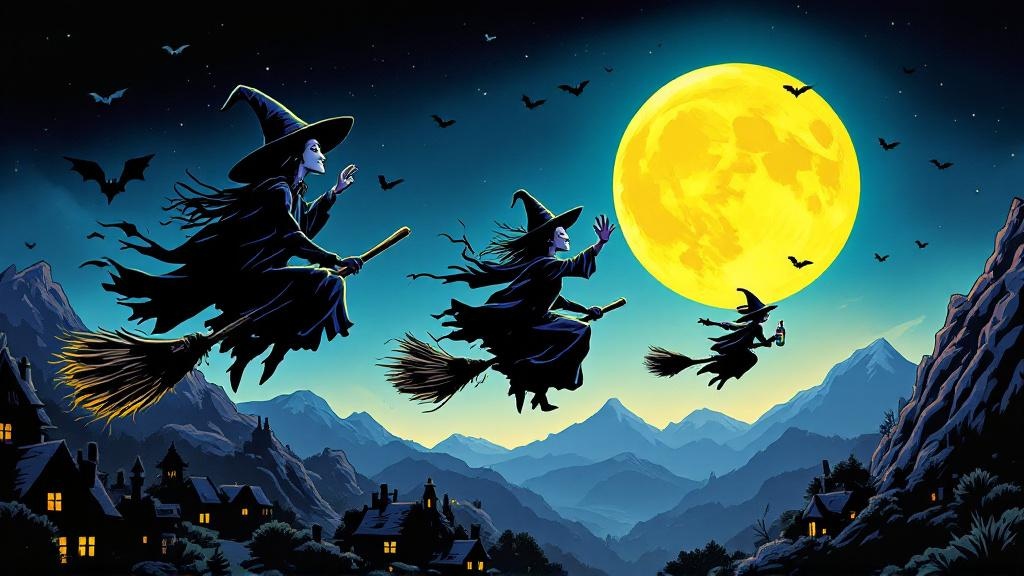
Books: Equal Rites → Wyrd Sisters → Witches Abroad → Lords and Ladies → Maskerade → Carpe Jugulum
Best for: Readers who enjoy Shakespeare, fairy tales, and stories about women who don't suffer fools.
The Witches path follows Granny Weatherwax and Nanny Ogg, two very different women who together form one of fiction's greatest double acts. Granny is iron-willed, terrifyingly competent, and convinced she's always right (usually because she is). Nanny is cheerfully bawdy, socially brilliant, and far more cunning than she lets on.
A note on Equal Rites: this is technically the first Witches book, but it features a very different Granny Weatherwax and a storyline that's never followed up. Many fans—and the flowchart itself—suggest starting with Wyrd Sisters, which establishes the Granny-Nanny dynamic that powers the rest of the series. You won't miss anything essential by skipping Equal Rites initially.
Why this path works: The Witches books are Pratchett's most literary. Wyrd Sisters riffs on Macbeth. Witches Abroad deconstructs fairy tales. Lords and Ladies takes on A Midsummer Night's Dream. If you love stories about stories, this is your path.
The payoff: Watching Granny Weatherwax maintain her principles across increasingly impossible situations—and understanding the cost—is one of Discworld's most powerful experiences.
The Death Path
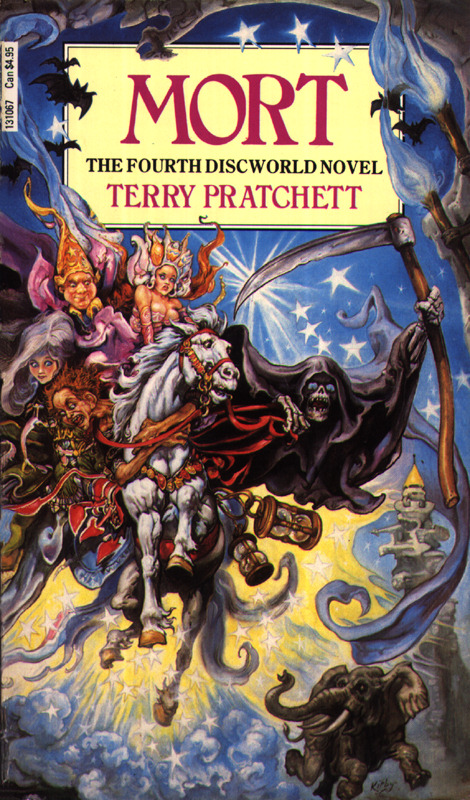
Books: Mort → Reaper Man → Soul Music → Hogfather → Thief of Time
Best for: Readers who want philosophy, humor, and genuine warmth.
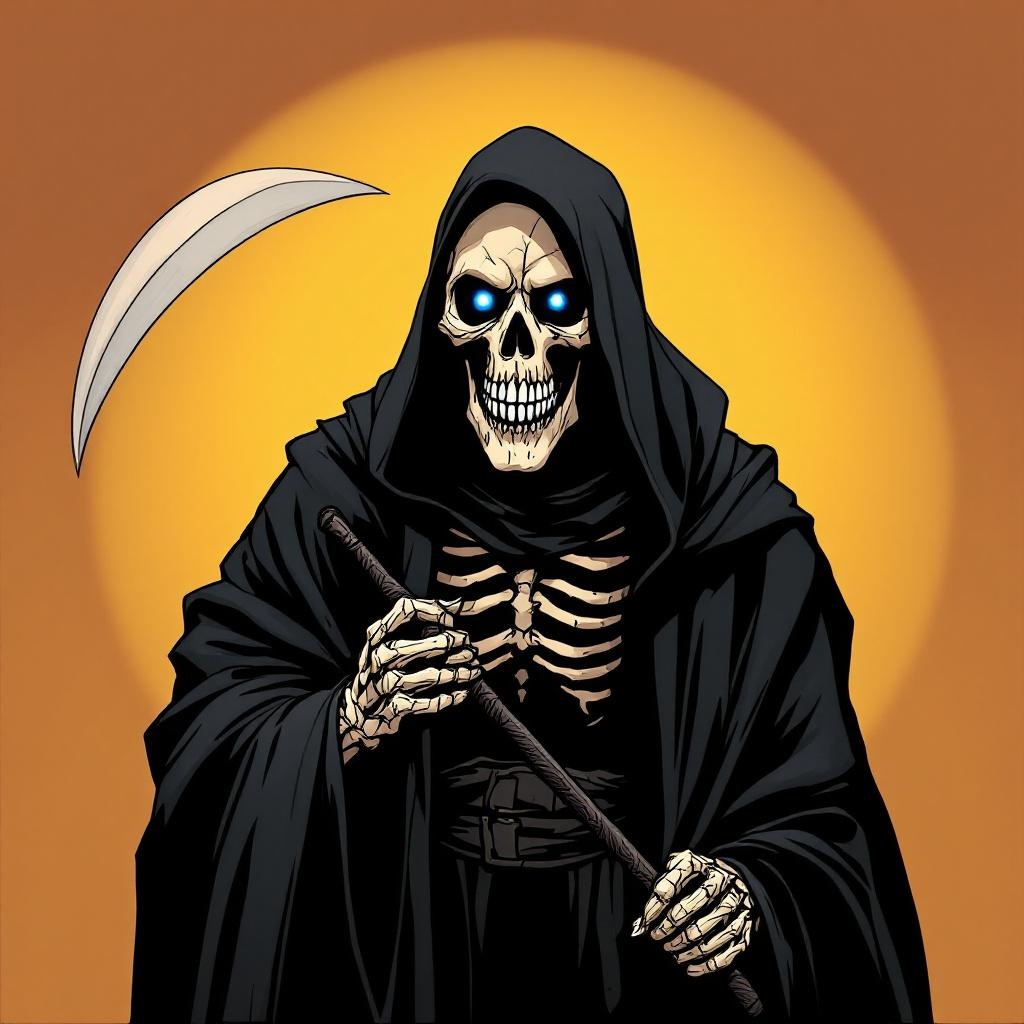
Death is Discworld's breakout character—a seven-foot skeleton in a black robe who speaks IN CAPITAL LETTERS, rides a white horse named Binky, and is fascinated by humanity. He's not evil. He's not even unkind. He's just... inevitable. And deeply curious about what makes humans tick.
"THERE IS NO JUSTICE. THERE IS JUST ME."— Death
The Death books explore what it means to be alive by examining mortality from the perspective of the one being who is always there at the end. Mort introduces the premise: Death takes an apprentice, a young man named Mort who falls in love with Death's adopted daughter. From there, each book explores a different philosophical question—the nature of time, the purpose of belief, the meaning of music.
Hogfather asks why humans need to believe in things that aren't real. Thief of Time questions the nature of time itself. And through it all, Death is learning about humanity by trying (and endearingly failing) to participate in it.
Why this path works: Death's books are the most emotionally accessible entry point for readers who don't usually read fantasy. They're funny, philosophical, and surprisingly moving.
The payoff: Death cutting the corn with his scythe at the end of Reaper Man. If you know, you know.
The Rincewind & Wizards Path
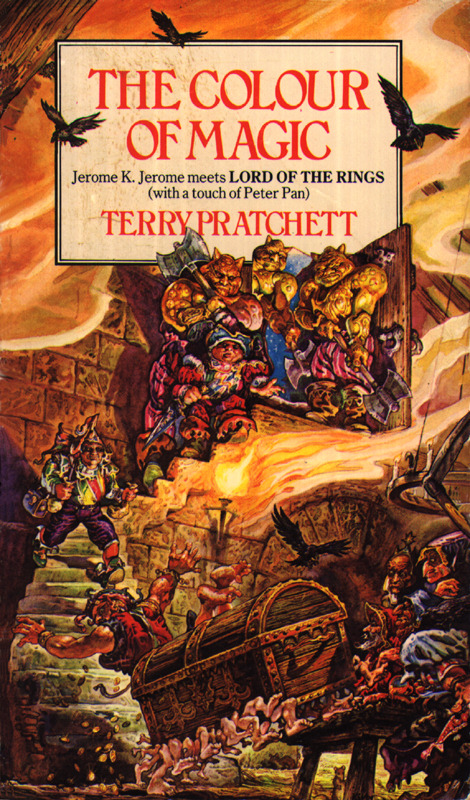
Books: The Colour of Magic → The Light Fantastic → Sourcery → Eric → Interesting Times → The Last Continent → The Last Hero → Unseen Academicals
Best for: Readers who want slapstick adventure and pure Pratchett parody.
Here's the path most people are warned about. Rincewind is Discworld's original hero—a wizard who can't do magic and whose primary talent is running away very fast. The early Rincewind books are where Pratchett started, and they're the roughest around the edges.
That's not to say they're bad. The Colour of Magic is funny, inventive, and crammed with genre parody. It's just a very different beast from the Pratchett who wrote Night Watch or Small Gods. The humor is broader, the characters thinner, and the satire less precise.
Why this path can work: If you love Terry Pratchett's worldbuilding, The Colour of Magic and The Light Fantastic establish the Disc's fundamental rules. The later Wizards books—particularly Unseen Academicals—are much stronger. And The Last Hero is a gorgeous illustrated novella.
Why the flowchart often steers people away: The Rincewind books are Pratchett's weakest sub-series overall. Starting here risks bouncing off before you reach the good stuff. Most flowcharts color-code this path with a "start here only if you're committed" caveat.

The Tiffany Aching Path
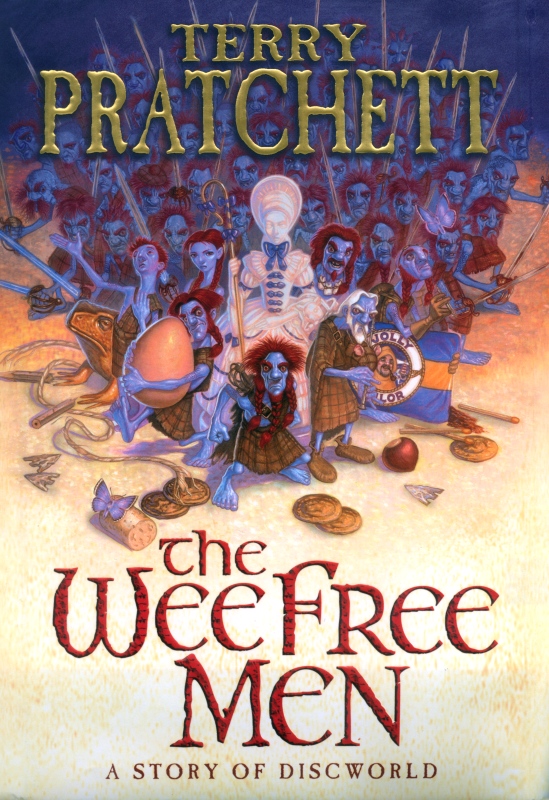
Books: The Wee Free Men → A Hat Full of Sky → Wintersmith → I Shall Wear Midnight → The Shepherd's Crown
Best for: YA readers, anyone who loves coming-of-age stories, and existing fans who want to see Pratchett's later work.
Tiffany Aching is a young witch from the Chalk—a farming region that doesn't believe in witches. She's practical, brave, and armed with a frying pan and an army of six-inch-tall blue pictsies called the Nac Mac Feegle who solve problems mainly through headbutting.
These books were marketed as young adult, but they're some of Pratchett's most mature writing. I Shall Wear Midnight deals with domestic abuse and mob mentality. The Shepherd's Crown—Pratchett's final novel—is a meditation on death, legacy, and letting go.
Why this path works: The Tiffany books are the one sub-series where reading order genuinely matters. They form a true coming-of-age arc, and each book builds directly on the last. Start with The Wee Free Men and don't skip ahead.
The payoff: By The Shepherd's Crown, you're not just saying goodbye to Tiffany—you're saying goodbye to Pratchett himself. It's devastating and beautiful.
The Moist von Lipwig Path
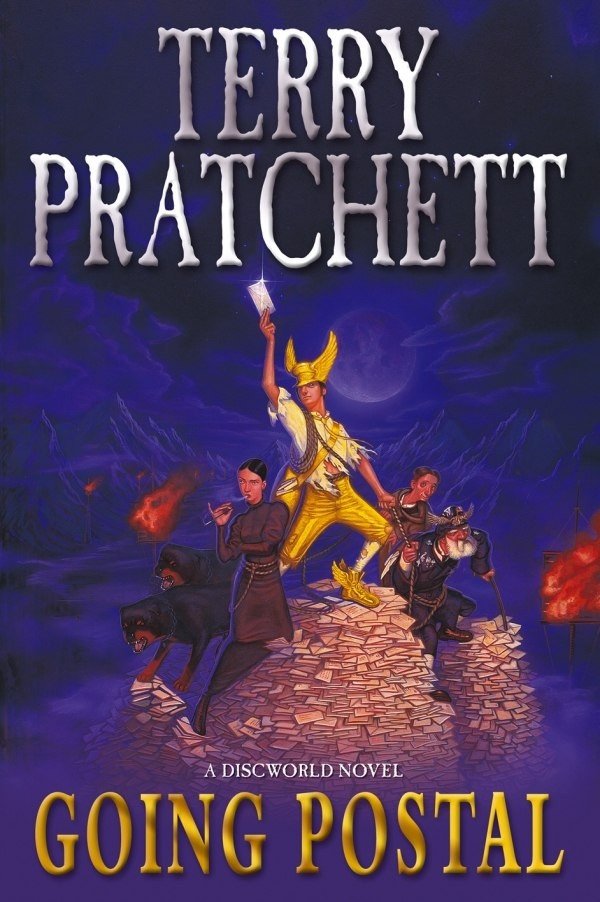
Books: Going Postal → Making Money → Raising Steam
Best for: Readers who like heist stories, workplace comedy, and late-stage Pratchett.
Moist von Lipwig is a con man who gets caught, hanged, and then un-hanged by Lord Vetinari with a proposition: revive Ankh-Morpork's Post Office, or die (this time for real). Each book puts Moist in charge of a different failing institution—the post office, then the bank, then the railway.
Why this path works: Going Postal is one of the best entry points in the entire series. It's a late Pratchett book, so the writing is polished and the satire razor-sharp. It features a charming protagonist, a great villain, and a love story that actually works. You need zero prior knowledge.
The payoff: Watching a lifelong liar discover he actually cares about something.
The Standalone Books
Books: Pyramids, Moving Pictures, Small Gods, The Truth, Monstrous Regiment, The Amazing Maurice and His Educated Rodents
The flowchart usually shows these as isolated dots—books not connected to any major character thread. They're perfect for sampling Pratchett's range without committing to a series.
""Small Gods" alone is worth the price of admission to the entire Disc."
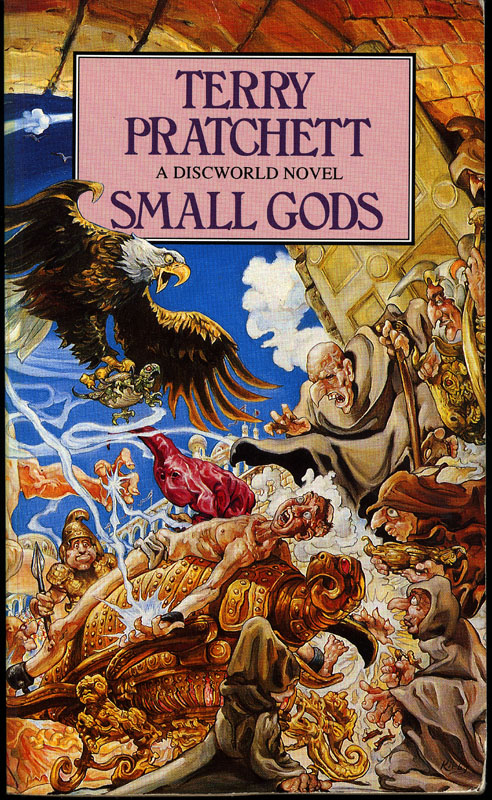
Small Gods is the standout: a philosophical novel about religion, belief, and the difference between faith and obedience. It's set in a distant theocracy with entirely unique characters, and many fans consider it Pratchett's single best book. If you only ever read one Discworld novel, make it this one.
The Connections Between Paths
Here's what the flowchart doesn't show clearly: the paths cross. Characters from one sub-series appear in another. Events ripple across storylines. Ankh-Morpork evolves over the course of the series regardless of which path you're following.
Some notable crossovers:
| Connection | What Happens |
|---|---|
| Watch ↔ Witches | Granny Weatherwax and Vimes never meet, but their parallel approaches to power mirror each other |
| Death ↔ Everything | Death appears in nearly every book, even if only for a line or two |
| Moist ↔ Watch | Lord Vetinari connects both series; Ankh-Morpork's institutions interweave |
| Witches → Tiffany | The Tiffany books are a direct continuation of the Witches' legacy |
| Standalones ↔ Watch | Characters from The Truth and Monstrous Regiment cross over with Watch characters |
These connections are bonuses, not requirements. You won't be confused by missing them—you'll just get an extra thrill of recognition when you encounter them.
How to Actually Use the Flowchart
Now that you understand what each path contains, here's the practical advice:
Step 1: Pick Your Starting Path
Ask yourself what kind of story you want:
- Crime and politics? → City Watch, starting with Guards! Guards!
- Philosophy and humanity? → Death, starting with Mort
- Literary riffs and feminism? → Witches, starting with Wyrd Sisters
- Heists and satire? → Moist, starting with Going Postal
- Coming of age? → Tiffany, starting with The Wee Free Men
- Just give me the best single book? → Small Gods
Step 2: Follow Your Path for 2-3 Books
Don't try to read an entire sub-series straight through unless you want to. Read two or three books, get a feel for the characters, then decide if you want to continue or try a different path.
Step 3: Branch Out
Once you've found your footing, try a different color on the flowchart. Most fans end up reading across multiple paths, bouncing between sub-series as the mood takes them.

Step 4: Don't Stress About It
The flowchart is a guide, not a rulebook. Pratchett wrote every book to be readable on its own. If you accidentally read book 5 of the Watch before book 3, you'll still enjoy it. You might miss a reference or two, but you won't be lost.
The Three Most Common Starting Points
If you're still unsure, here are the three books that appear most often as recommended starting points—and why:
Guards! Guards! (Watch Book 1)
Guards! Guards! is the most-recommended starting point for a reason. It's Pratchett hitting his stride: the humor is sharp, the characters are immediately compelling, and the plot—a secret society summoning a dragon to overthrow the government—is propulsive. It introduces Ankh-Morpork at its best and sets up the series' most beloved character arc.
Mort (Death Book 1)
Mort is the shortest and most focused entry point. Death takes an apprentice. The apprentice screws up. Consequences ensue. It's a tight, funny, emotionally resonant novel that showcases Pratchett's unique ability to be hilarious and profound on the same page.
Small Gods (Standalone)
Small Gods requires zero context and delivers Pratchett's most ambitious philosophical argument. If you want to know what Discworld is really about—what drives the satire, what makes it more than comedy—this is the book that shows you.
When to Ignore the Flowchart Entirely
The flowchart has one major limitation: it implies you need a plan. You don't.
Some of the most devoted Discworld fans discovered the series by grabbing whichever book was on the library shelf, reading it out of order, and falling in love. Pratchett built the Disc to reward exploration, not punish it.
If the flowchart helps you, use it. If it overwhelms you, ignore it. The only wrong approach is the one that stops you from picking up a book.
The Bottom Line
The Discworld reading order flowchart is a map of six interconnected storylines running through 41 books. Each path follows different characters, different genres, and different aspects of the human condition—all filtered through Pratchett's unmatched wit and compassion.
Pick the path that sounds like you. Follow it for a few books. Branch out when you're ready. And remember: the Disc is flat, but the reading experience is anything but.
Not sure which starting book to pick? Read our detailed comparison of Guards! Guards! vs Mort vs Small Gods, or check out Publication Order vs Series Order for a different take on navigating the Disc.