Publication Order vs Series Order: How to Read Discworld
Should you read Discworld in publication order or follow the sub-series? We break down both approaches so you can pick the right reading order for you.
Publication Order vs Series Order: How to Read Discworld
So you've decided to read Discworld. You've done the research, seen the flowcharts, scrolled through countless Reddit threads. And now you're stuck on a question that has divided fans for decades: do you read the 41 books in the order Terry Pratchett wrote them, or do you follow a character sub-series?
Here's what nobody tells you upfront: both approaches work. Neither is wrong. But one will probably suit you better than the other.
"You're not choosing between right and wrong—you're choosing between different kinds of right."
Let's break down exactly what you get with each approach, so you can stop agonizing and start reading.
The Two Approaches, Explained
Before we dive into the pros and cons, let's clarify what we're actually talking about.
Publication Order
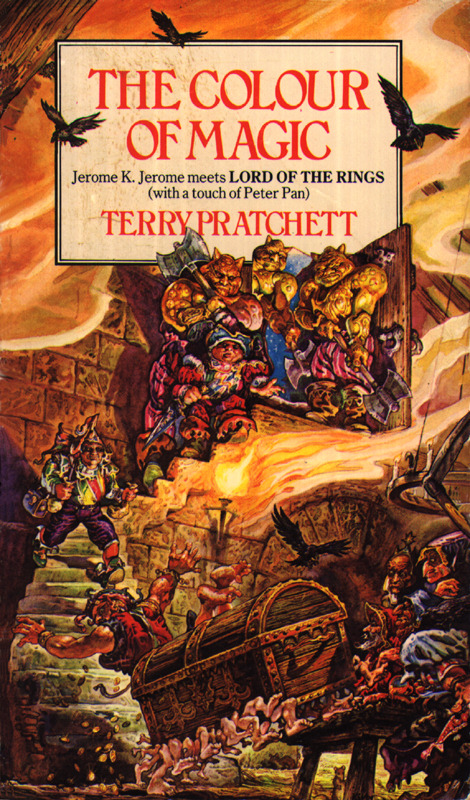
This means reading the books in the order Pratchett wrote them: The Colour of Magic (1983) through The Shepherd's Crown (2015). All 41 books, one after another, as originally published.
Series Order (Sub-Series or Thematic)
Discworld contains several overlapping sub-series, each following different characters:
| Sub-Series | Books | Starting Point |
|---|---|---|
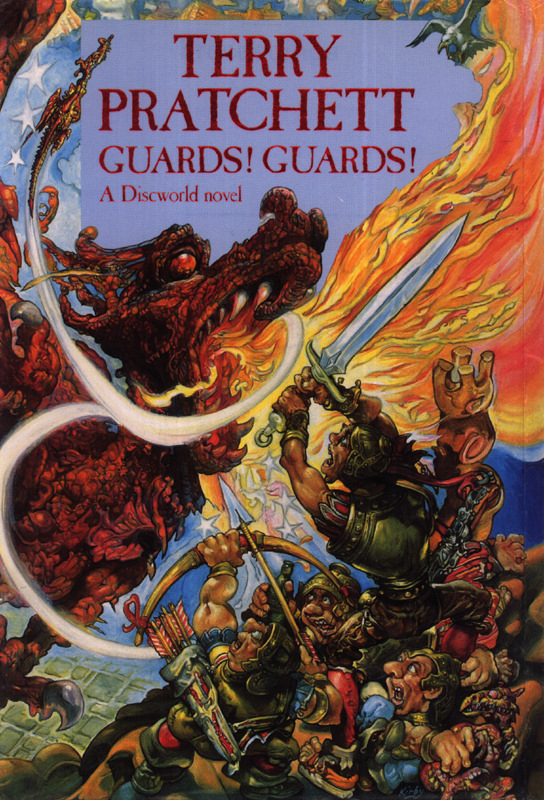
| City Watch | 8 books | Guards! Guards! |
| Witches | 6 books | Equal Rites |
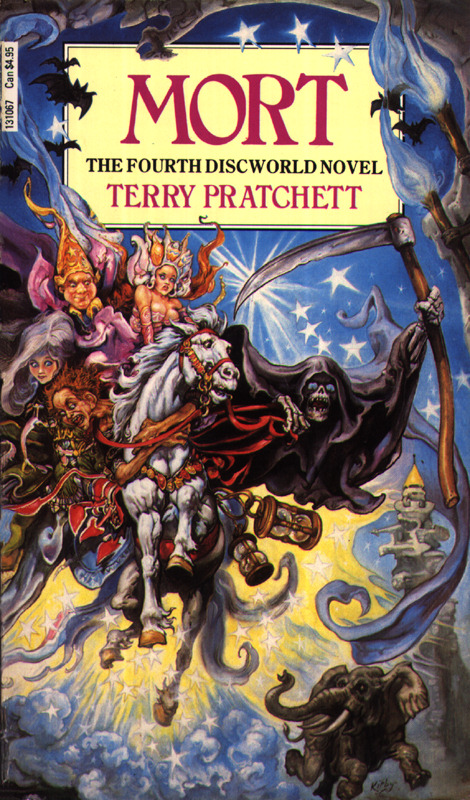
| Death | 5 books | Mort |
| Tiffany Aching | 5 books | The Wee Free Men |
| Moist von Lipwig | 3 books | Going Postal |
| Rincewind/Wizards | 8 books | The Colour of Magic |
| Standalones | 6 books | Any one you like |
With series order, you pick a sub-series that interests you, read those books in sequence, then move to another sub-series. Some readers follow a famous flowchart that maps out these connections.
The Case for Publication Order
Let's start with the original way—reading the books as Pratchett wrote them.
You Experience Pratchett's Growth as a Writer
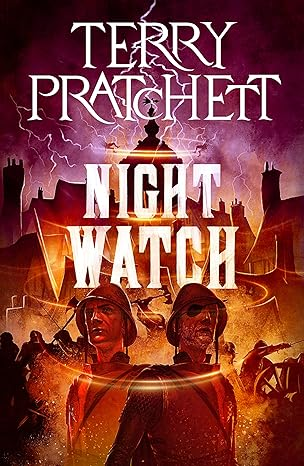
This is the strongest argument for publication order. Pratchett didn't arrive fully formed. The Colour of Magic is funny and clever, but it's mostly genre parody—a satirical romp through fantasy clichés. By Night Watch, twenty years later, Pratchett was writing something closer to literature with a capital L.
Reading in publication order, you experience that evolution firsthand. You see how the jokes get sharper, how the characters deepen, how Ankh-Morpork transforms from a generic fantasy city into one of fiction's most vivid urban landscapes. It's like watching a band go from garage recordings to stadium albums.
You Never Miss Cross-Series References
Discworld is one interconnected world. Characters from one sub-series appear in another. Events in the Watch books affect the Witches books. Lord Vetinari shows up everywhere. The Ankh-Morpork Post Office, introduced in Going Postal, becomes important in books featuring other characters.
Publication order means you catch every reference. You know who people are when they make cameos. You understand the running jokes.
The World Builds Naturally
Pratchett introduced concepts gradually. The Unseen University, the Patrician's Ankh-Morpork, the nature of gods and belief—these ideas layer on top of each other, book by book. Publication order lets you absorb them the way Pratchett intended: one revelation at a time.
The Downsides
Here's the catch: the early books are the weakest. Not bad—just rougher around the edges. The first two books are primarily Rincewind adventures, which are the least popular sub-series among fans. Some readers bounce off The Colour of Magic and never return.
That's a real loss. Because Discworld gets so much better.
The Case for Series Order
Now let's look at the alternative: picking a sub-series and following it through.
You Start With Peak Pratchett
Most sub-series reading orders recommend starting with Guards! Guards! or Mort—books 8 and 4 respectively. These are where Pratchett hit his stride. The writing is confident, the characters are memorable, and the satire is sharper.
If your goal is to experience the best of Discworld first and decide if you want more, series order front-loads quality.
Character Arcs Stay Cohesive
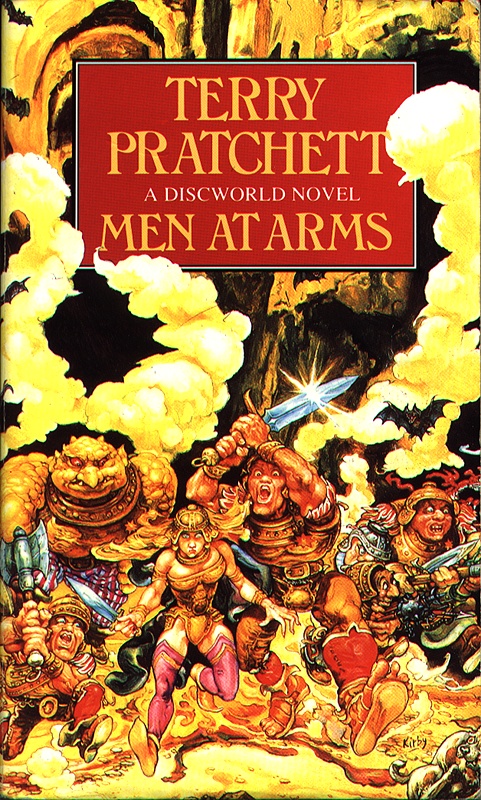
Sam Vimes's journey from drunk, broken cop to Duke of Ankh-Morpork spans eight books. Reading them in sequence—Guards! Guards!, Men at Arms, Feet of Clay, and so on—gives you that arc without interruption.
In publication order, you'd read Guards! Guards!, then two Rincewind books, then Men at Arms, then a Witches book, then Feet of Clay... The character development comes in chunks separated by months or years.
For readers who connect with characters, following one arc completely before moving to another can be deeply satisfying.
You Can Curate Your Experience
Not every sub-series appeals to everyone. If you love crime fiction, the Watch books will feel like home. If you want philosophy disguised as fantasy, the Death books deliver. If you enjoy feminist narratives and stories about community, the Witches are waiting.
Series order lets you play to your tastes. And if one sub-series doesn't click? You can try another without feeling like you "failed" at Discworld.
The Downsides
The interconnected nature of Discworld means you'll occasionally miss references. Characters will appear and you won't know their history. The city will change between books in ways that feel abrupt.
More importantly, you might develop a skewed view of what Discworld is. If you only read the Watch books, you might think Discworld is urban fantasy noir. Only reading Death books might make you think it's all philosophical meditation. The full experience requires variety.
The Hybrid Approach (What Most Fans Actually Do)
Here's a secret: very few people actually read all 41 books in strict publication order or follow sub-series completely separately. Most readers do something in between.
"The real question isn't which order is correct. It's what kind of reader you are."
The Common Hybrid Path
- Start with a recommended entry point: Guards! Guards!, Mort, or Small Gods
- Follow that sub-series for 2-3 books to see if you love it
- Branch out to another sub-series when you want variety
- Eventually circle back to fill in gaps, including the early books
This gives you the best of both worlds: quality first, character continuity where it matters, and gradual discovery of the whole Disc.
Our Recommended Sequence
If you want a specific suggestion:
- Start with Guards! Guards! (Watch 1)
- Read Men at Arms (Watch 2)
- Try Mort (Death 1) for variety
- Return to Feet of Clay (Watch 3)
- Try Wyrd Sisters (Witches 2) for another flavor
- Continue exploring, using the flowchart as a loose guide
By this point, you'll have a sense of what you love. Follow that instinct.
Which Approach Is Right for You?
Let's make this practical. Answer these questions:
Choose Publication Order if:
- You're a completionist who wants to catch every reference
- You enjoy watching artists develop over their careers
- You don't mind starting with "good" to reach "great"
- You have patience for 2-3 books of warm-up
- You read quickly and want a single defined path
Choose Series Order if:
- You want to be hooked immediately
- You connect strongly with specific characters
- You have limited time and want guaranteed quality
- You might not read all 41 books—and that's okay
- You prefer to curate your reading experience
Choose the Hybrid Approach if:
- You're somewhere in between (most people are)
- You want flexibility to follow your interests
- You're comfortable with some ambiguity
- You trust yourself to figure it out as you go
The Books That Matter Most for Either Approach
Whichever path you take, certain books serve as important anchors:
Must-Read Foundation Books
- Guards! Guards! — Introduces Ankh-Morpork's greatest characters
- Mort — Establishes Death as a beloved figure
- Wyrd Sisters — Defines the Witches and their dynamic
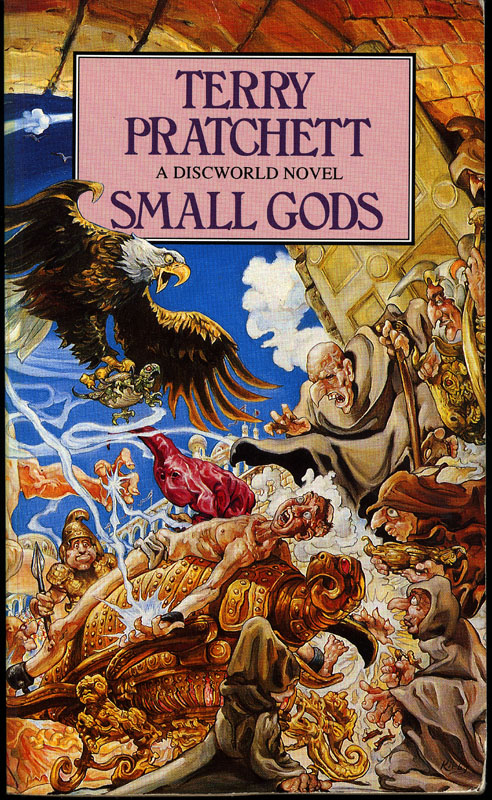
- Small Gods — Pratchett's most philosophical standalone
Books That Improve Either Approach
- Night Watch — Widely considered Pratchett's masterpiece, but requires Watch setup
- Going Postal — Perfect entry for readers who want modern Discworld
- Hogfather — Death at his most human
Books to Save for Later
- The Colour of Magic and The Light Fantastic — Important historically, but best enjoyed after you already love the Disc
- The Shepherd's Crown — Pratchett's final book, and a fitting farewell—but you need to know Tiffany first
The Only Wrong Answer
Here's what actually matters: the only wrong reading order is the one that stops you from reading at all.
If you spend six months researching the optimal path and never pick up a book, you've failed at Discworld. If you grab Pyramids because it has a nice cover and fall in love, you've succeeded.
The debates about reading order exist because people love these books and want others to love them too. The underlying message is: there's something here for you. All roads lead to the Disc.
The Bottom Line
Publication order gives you the complete experience, including Pratchett's development as a writer. Series order gives you quality first and character coherence. The hybrid approach gives you flexibility.
All of them work. Pick the one that sounds like you, start reading, and adjust as you go. The Disc isn't going anywhere.
Ready to start? Check out our comparison of Guards! Guards! vs Mort vs Small Gods to pick your entry point, or see our complete Where to Start with Discworld guide for more options.