The Vimes Boots Theory Explained: Terry Pratchett's Insight on Poverty That Went Viral
What is the Sam Vimes Boots Theory of socioeconomic unfairness? The original passage, the maths, the evidence, the critics, and how it reached UK inflation data.
The Vimes Boots Theory Explained: Terry Pratchett's Insight on Poverty That Went Viral
Every few months, somebody on the internet discovers that being poor is expensive. Shortly afterwards, somebody else replies with a screenshot of a paragraph about boots, written in 1993 by a fantasy novelist, about a policeman in a city that doesn't exist.
That paragraph is the Sam Vimes "Boots" Theory of Socio-Economic Unfairness, and it's probably the most widely shared thing Terry Pratchett ever wrote. Economists argue about it, campaigners have named a price index after it, and a lot of people who have never opened a Discworld novel can recite it.
If you've arrived here from an economics thread rather than a bookshop, welcome. This guide covers what the theory actually says, how the numbers work, where the real-world evidence backs it up, where the critics have a point, and how a joke about wet feet ended up in a conversation with the UK's Office for National Statistics.
What Is the Boots Theory?
The theory comes from Men at Arms, the fifteenth Discworld novel and the second about the Ankh-Morpork City Watch. The man doing the thinking is Captain Sam Vimes: a career copper, born in the slums, who is about to marry Lady Sybil Ramkin, one of the richest women in the city. Standing at the edge of that much money, he starts doing sums.
It opens with a line that sounds backwards:
"The reason that the rich were so rich, Vimes reasoned, was because they managed to spend less money."
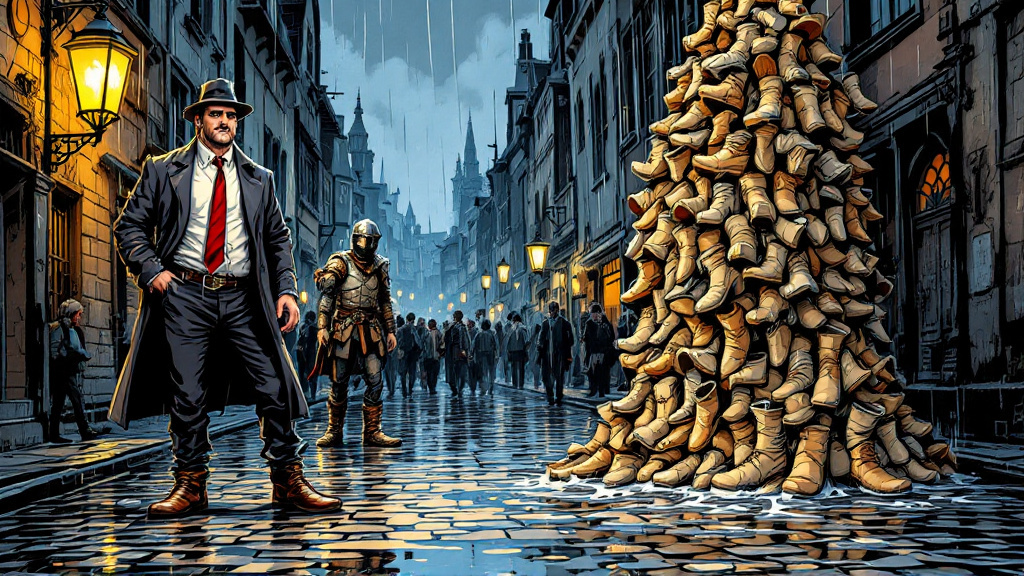
Then Pratchett gets specific. Vimes earns thirty-eight dollars a month plus allowances. A really good pair of leather boots costs fifty dollars. A cheap pair costs about ten, lasts a season or two, and leaks once the cardboard gives way. Vimes has always bought the cheap ones. And here's the punchline:
"A man who could afford fifty dollars had a pair of boots that'd still be keeping his feet dry in ten years' time, while the poor man who could only afford cheap boots would have spent a hundred dollars on boots in the same time and would still have wet feet."
The novel then gives the idea its grand, slightly mock-academic name: "This was the Captain Samuel Vimes 'Boots' theory of socio-economic unfairness."
That's the whole theory. It fits on an index card, which is a big part of why it travels.
The Maths, Step by Step
It's worth slowing down on the numbers, because they're doing more work than they first appear to.
| Rich man | Poor man | |
|---|---|---|
| Price per pair | $50 | $10 |
| How long a pair lasts | About ten years | A season or two |
| Spent over ten years | $50 | About $100 |
| State of feet | Dry | Wet |
The poor man pays twice as much and gets a worse result. That's the bit that sticks.
But look at Vimes's salary. Fifty dollars is more than a month's pay. He can't save up for the good boots, because every month the money goes on rent, food and, yes, the current pair of cheap boots. The problem isn't that he doesn't understand the arithmetic. He understands it perfectly. The problem is that the cheaper long-term option has a price of entry he can never reach.
Economists would call that a liquidity constraint. Vimes would call it Tuesday.
Pratchett doesn't stop at boots, either. Vimes goes on to think about Sybil's mansion, full of solid furniture her ancestors bought generations ago, which never wears out. He reckons she lives comfortably on about half as much as he did. Wealth, in this telling, isn't just a bigger income. It's an accumulated stock of good things that no longer need paying for.
"The poor man doesn't misunderstand the maths. He just can't afford the first step."
That second observation gets quoted far less than the boots, and it's arguably the sharper one. A boot is a single purchase. An inheritance of durable things is a whole life where certain bills simply never arrive.
Why It Went Viral (Again and Again)
The boots passage has been passed around since the early internet days, but it surges whenever money gets tight. The official Terry Pratchett website notes that the theory often goes viral during times of austerity and whenever cuts hit the poorest hardest. When Pratchett died in March 2015, tributes like The Billfold's led with the boots rather than the turtle.
There are a few reasons it outperforms a stack of academic papers:
- It's concrete. Everyone knows what wet socks feel like.
- It's counterintuitive. "The rich spend less" sounds wrong until you've done the sums, and then it sounds obvious.
- It isn't a lecture. Vimes isn't blaming anyone. He's just a tired man looking at his feet.
- It has a name. Calling an idea a "theory" with a person's name on it makes it shareable, citable and argued-over.
Writers have also gone looking for its roots. In the New Statesman in January 2022, Marc Burrows suggested Pratchett may have drawn on Robert Tressell's 1914 novel The Ragged-Trousered Philanthropists, the classic British novel about working-class poverty.
From Fiction to Inflation Statistics: The Vimes Boots Index
The theory's biggest real-world moment came in January 2022. UK inflation had just hit 5.4%, and the anti-poverty campaigner and cookery writer Jack Monroe argued that the headline figure "grossly underestimates the real cost of inflation as it happens to people with the least."
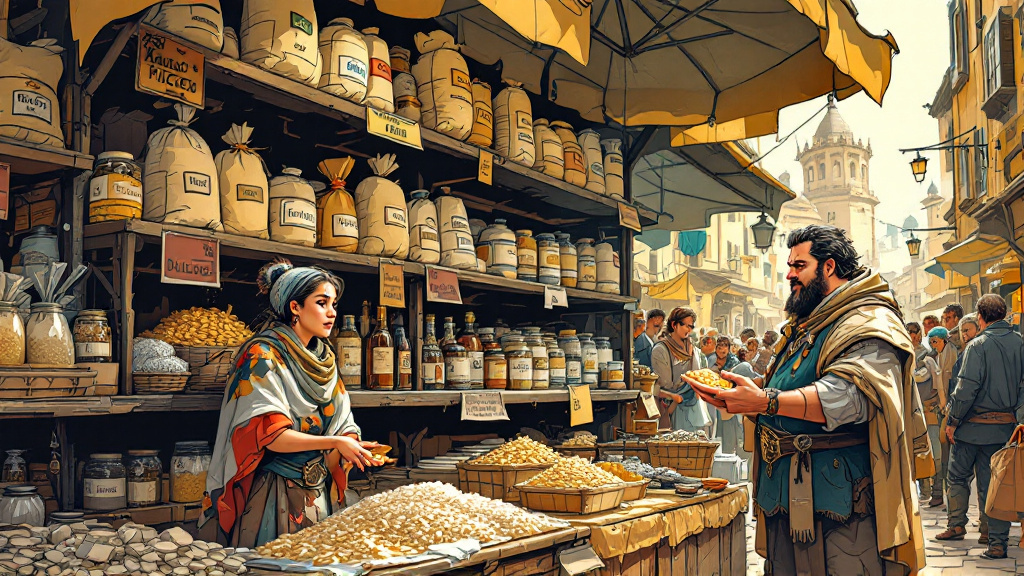
Monroe's evidence came from the supermarket shelves. The cheapest "value" lines were disappearing or shrinking, so someone who always bought the cheapest rice or pasta was facing much steeper rises than the average basket suggested. The Guardian reported one example from Monroe's local supermarket: rice that had cost 45p for a kilogram bag the previous year was now £1 for 500g.
Monroe's answer was a new price tracker for the cheapest staples, named the Vimes Boots Index. The Pratchett estate authorised the name, and Terry's daughter, the writer Rhianna Pratchett, said her father would have been proud to see his work used that way.
Then the official statisticians responded. The Office for National Statistics acknowledged that, in the Guardian's words, "one inflation rate doesn't fit all," and said it would look at how price changes hit different households. On 25 October 2022, the ONS published an experimental analysis, Tracking the price of the lowest-cost grocery items, covering 30 everyday items across seven major supermarkets from April 2021 to September 2022.
What did it find? The lowest-cost items had risen by around 17% in the year to September 2022, against 15% for official food and non-alcoholic drink inflation. The spread between items was huge: four items had fallen in price, while vegetable oil, pasta and tea had shot up by 46% to 65%. As L-Space notes, the ONS work largely did the job Monroe's own index set out to do, and the independent index was never published.
"A paragraph about a fictional copper's footwear changed what a national statistics agency chose to measure."
One honest caveat: as of October 2026, the ONS still lists that October 2022 release as the latest edition of the analysis. So it was a real, measurable change in how the poorest households' inflation got looked at, but not a permanent new monthly statistic.
For the character side of this story (what the theory reveals about Vimes himself), see our deep dive on the Boots Theory and Sam Vimes.
Is the Boots Theory Actually True?
Here's where it gets interesting, because the theory has serious critics, and some of them are right.
Where the evidence backs it up
The general idea that poor people pay more for the same essentials has a name in research circles: the poverty premium. In June 2022, a University of Bristol study with the campaign group Fair By Design put the average poverty premium at £430 a year for a low-income UK household, or £2.8 billion across the economy.
The examples rarely involve boots. They look like this:
- Energy: prepayment meters and pay-as-you-go tariffs have often cost more than direct debit.
- Insurance: living in a poorer postcode can push up car and home insurance premiums.
- Credit: the less money you have, the higher the interest you're charged to borrow it.
- Bulk buying: the big pack is cheaper per unit, but only if you can afford it and have somewhere to store it.
Every one of these is a boots problem in different clothes. The cheaper option exists, but it needs money, credit history or stability up front.
What the critics say
The most careful critique is a 2020 essay called "Against Boots Theory" by the writer philh. It splits the theory into three claims:
- Having money lets you spend less on some things. (True, the essay agrees.)
- Rich people actually do spend less overall. (Almost certainly false: UK spending data shows richer households spend more in nearly every category.)
- Spending less is why the rich are rich. (Very obviously wrong, it argues. Income differences swamp any savings on boots.)
That's a fair hit on Vimes's opening line taken literally. Sybil isn't rich because she skimped on boots. She's rich because she inherited a fortune.
A second line of attack is that cheap goods are actually a good thing. In an August 2026 piece for the Mises Institute, Wesley Davenport calls the theory "as evocative as it is mistaken," arguing that cheap options keep cash free for emergencies, and that affordable goods at every price point have raised living standards.
There's also a practical quibble that comes up in almost every online thread: real work boots rarely last ten years, however much they cost, and some expensive brands aren't better made than cheap ones.
So who's right?
Both sides, mostly, because they're arguing about different things. The critics are right that the theory doesn't explain why people are rich or poor. Income, inheritance, health, housing and luck do that. But the core observation (that a lack of money up front makes many essentials cost more over time) is well documented, and it's what most people mean when they share the passage.
Read in context, it's also worth remembering who's talking. This is Vimes's reasoning, not a peer-reviewed paper. He's a bitter, observant, working-class man standing at the door of a mansion, and his theory is as much about how unfairness feels as about how it adds up. That's why it works in a novel, and why it slightly overreaches as economics.
Reading the Boots Theory in Context
If the boots brought you here, the best thing you can do is read the book they came from. The passage works even better when you know the man thinking it.
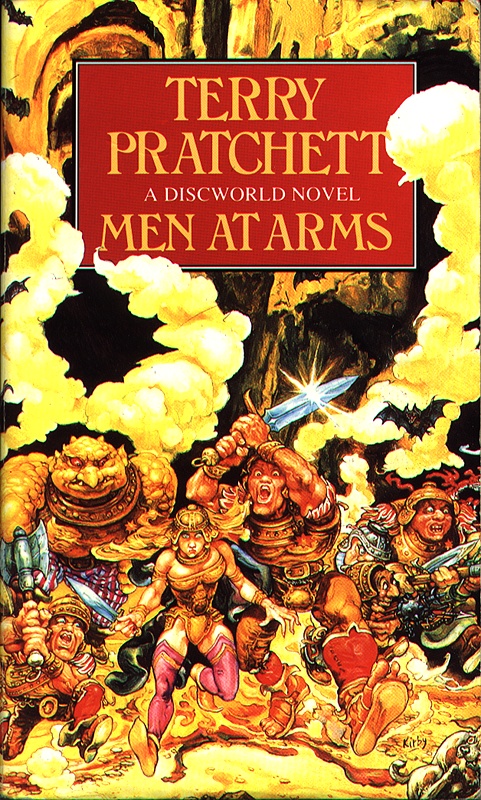




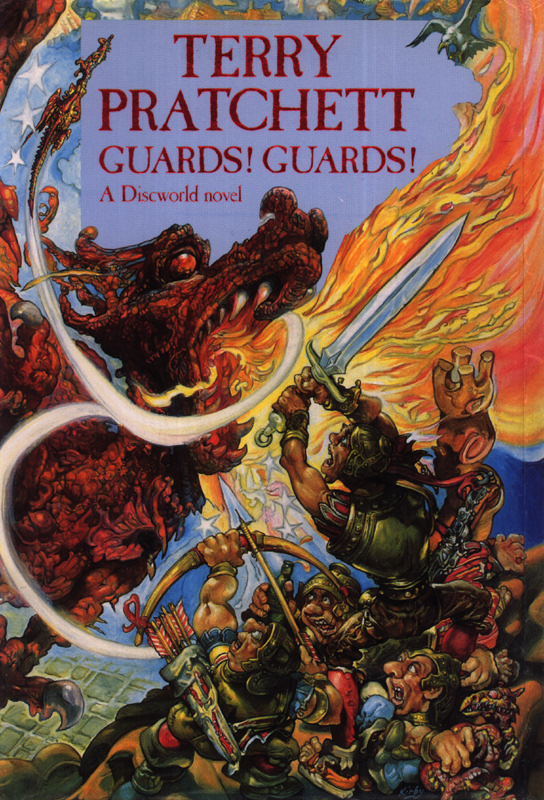
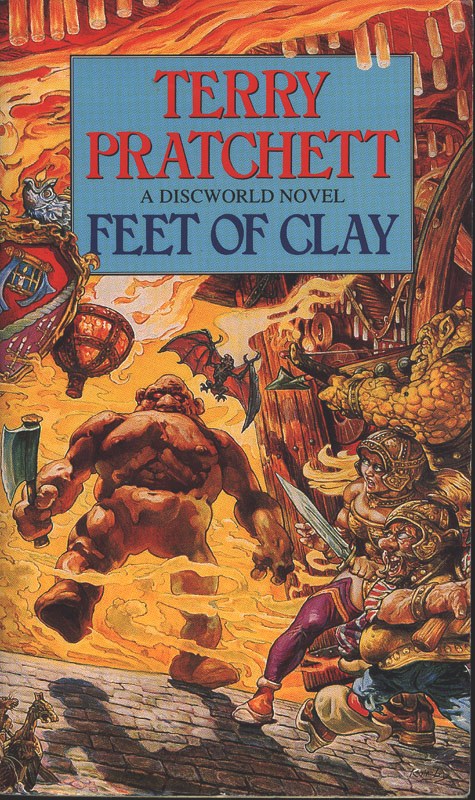
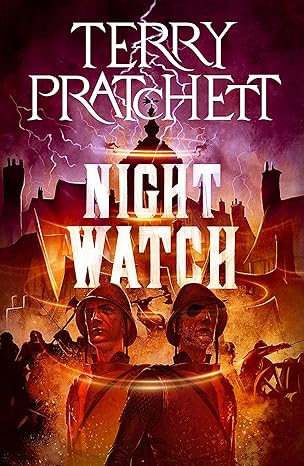
You don't need to read anything first, but Guards! Guards! introduces Vimes at his lowest point and makes his journey hit harder. After that, Feet of Clay and Night Watch push his class anger and his conscience into much darker territory. Our City Watch reading order lays out the full run.
And here's a final twist that rarely makes it into the viral screenshots: once he's wealthy, Vimes keeps wearing cheap, thin-soled boots anyway, because they let him feel the streets he's policing. We've written about that in Why Sam Vimes Refuses Good Boots.
The Bottom Line
The Vimes Boots Theory is not a complete theory of wealth, and the people who say so have a point. But as a description of what it's like to be short of money, of how the cheaper long-term option keeps sitting just out of reach, it's still the clearest paragraph anyone has written on the subject. It was clear enough that a campaigner could name a price index after it, and the ONS changed what it measured.
Not bad for a scene about a policeman's footwear. If you've only met Vimes in a screenshot, go and read the whole book.
New to Discworld? Start with our guide to where to start reading Discworld, or meet Sam Vimes properly on his character page.