The Watch Series Reading Order: Sam Vimes' Complete Character Arc
The definitive guide to Discworld's City Watch books. Follow Sam Vimes from drunk captain to Duke of Ankh across 8 novels that represent Pratchett at his best.
The Watch Series Reading Order: Sam Vimes' Complete Character Arc
If you're going to read one Discworld sub-series, make it the Watch.
That's not a controversial opinion. Terry Pratchett created many beloved storylines—the Witches, Death, the Wizards, Moist von Lipwig—but the City Watch books represent something special. They're where Pratchett's satirical wit meets genuine emotional depth. Where fantasy tropes get demolished alongside commentary on policing, justice, class, and what it means to be a good person in a corrupt world.
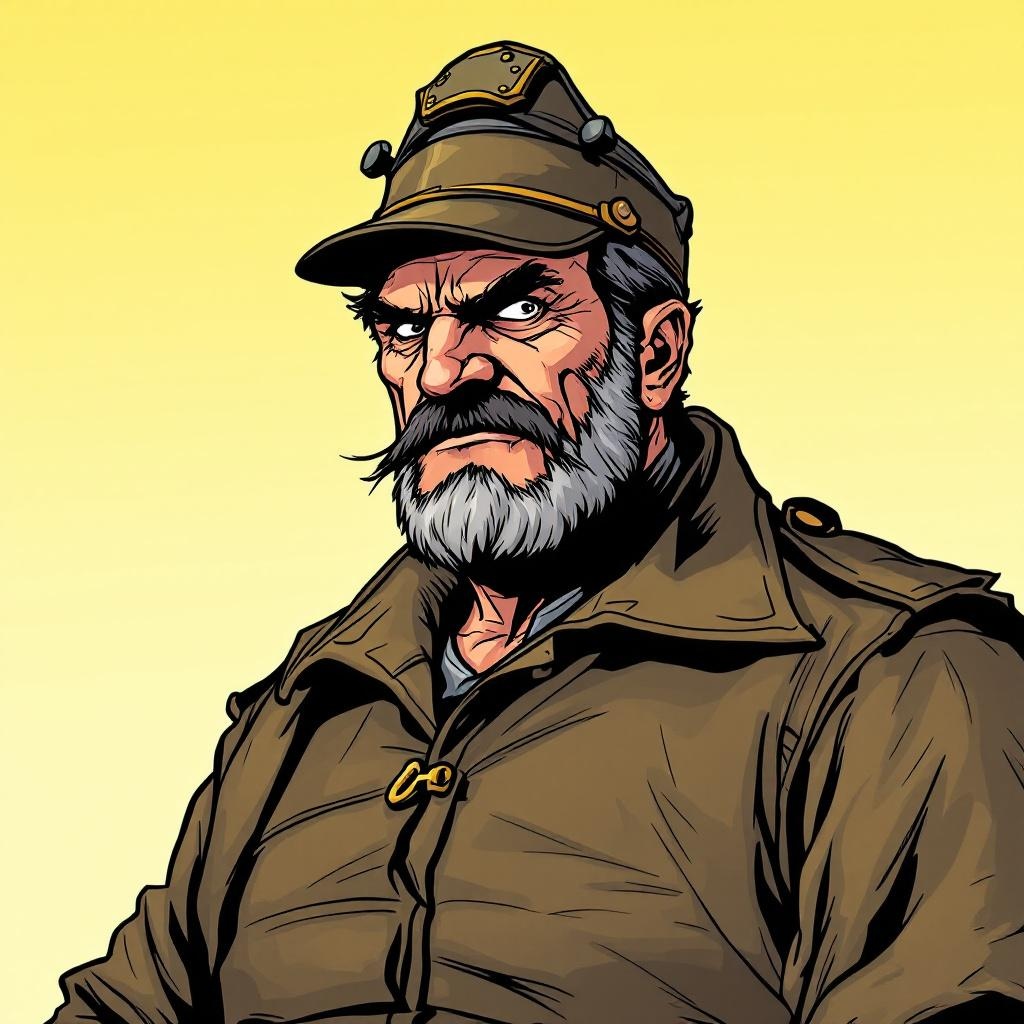
At the center of it all stands Sam Vimes, a character who wasn't supposed to be the hero. Pratchett planned for young Carrot Ironfoundersson to take center stage. But Vimes refused to stay in the background, and Pratchett was wise enough to follow where the character led.
Here's everything you need to know about reading the Watch series in order, what makes each book special, and how to watch one of fantasy's greatest character arcs unfold.
The Watch Series at a Glance
The City Watch books follow the Ankh-Morpork City Watch—essentially the police force of Discworld's largest city—as they grow from a handful of drunks and misfits into a professional law enforcement organization. Kind of.
| Order | Title | Year | Key Focus |
|---|---|---|---|
| 1 | Guards! Guards! | 1989 | A dragon threatens the city |
| 2 | Men at Arms | 1993 | A serial killer with a deadly weapon |
| 3 | Feet of Clay | 1996 | Golem uprising and assassination plots |
| 4 | Jingo | 1997 | War, nationalism, and xenophobia |
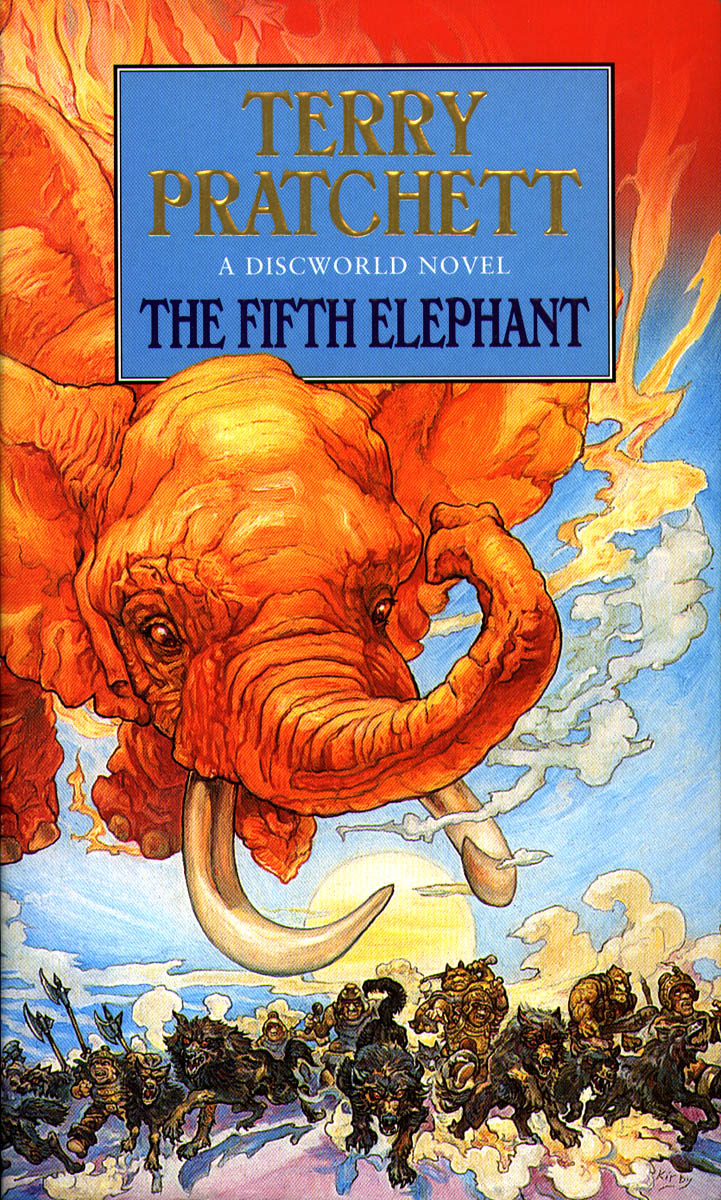
| 5 | The Fifth Elephant | 1999 | Diplomatic intrigue in Uberwald |
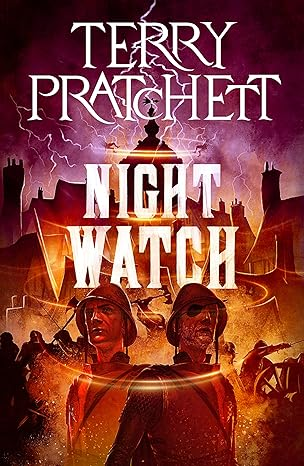
| 6 | Night Watch | 2002 | Time travel and personal history |
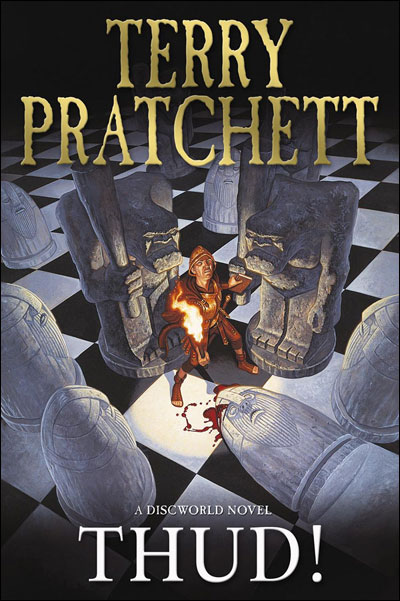
| 7 | Thud! | 2005 | Dwarf-troll racial tensions |
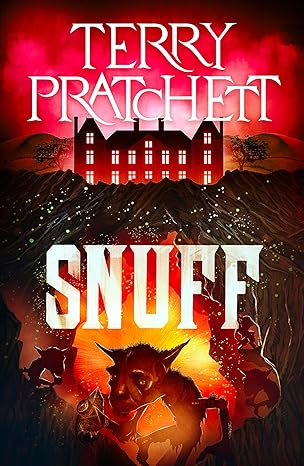
| 8 | Snuff | 2011 | Goblin rights and rural justice |
Eight books spanning over two decades. That's not just a series—it's a commitment from Pratchett to these characters and their world.
Should You Read in Order?
Yes. The Watch series benefits from sequential reading more than most Discworld sub-series.
Unlike the Death books or Witches novels, which work well as standalone reads, the Watch books form a continuous narrative of character development and world-building. You can technically start anywhere and follow the plot, but you'll miss something important: watching Sam Vimes become who he is.
"Vimes starts as a drunk who's given up. He ends as something remarkable."
The Watch itself evolves too. New recruits join. Old characters grow. The organization transforms from a joke into something feared and respected. Reading out of order means seeing these versions disconnected from their history.
That said, if you want to sample before committing, Guards! Guards! works perfectly as a standalone novel while setting up everything that follows.
Book-by-Book Guide
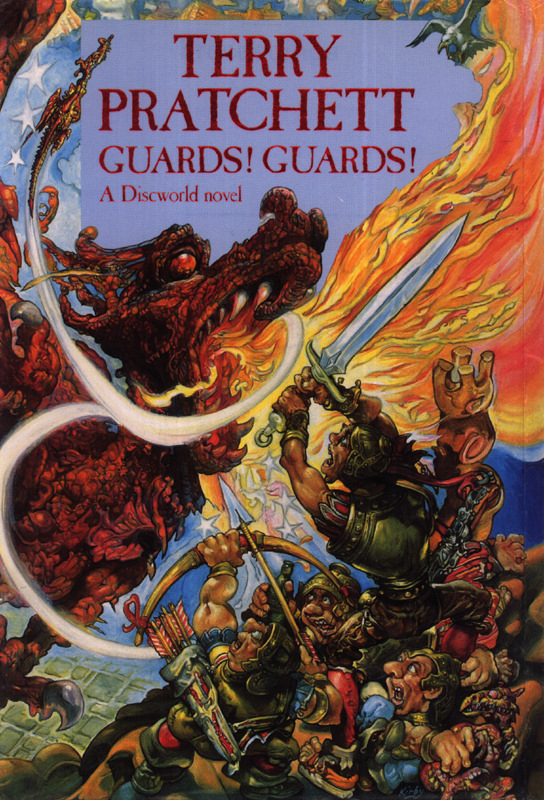
1. Guards! Guards! (1989)
Where it starts: Sam Vimes is the captain of the Night Watch—a three-man operation consisting of himself, the cowardly Sergeant Colon, and the possibly-not-entirely-human Corporal Nobbs. They're a laughingstock. They don't arrest anyone because arresting people is dangerous and, frankly, they're not sure they're allowed to.
Then a dragon shows up.
Also showing up: Carrot Ironfoundersson, a six-foot-tall dwarf (adopted) who believes in the law with terrifying sincerity, and Lady Sybil Ramkin, a dragon breeder who becomes far more important than anyone initially expects.
Why it matters: This is where Vimes remembers why he became a copper. Watching him claw his way from alcoholic despair to genuine heroism establishes everything the series builds on. It's funny, exciting, and unexpectedly moving.
Start here if: You want to experience the complete journey from the beginning.
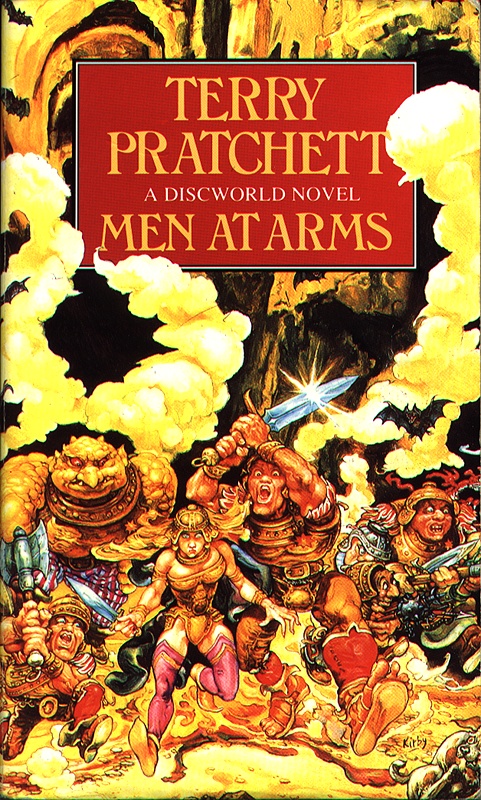
2. Men at Arms (1993)
Where we're at: The Watch is expanding. Lord Vetinari, Ankh-Morpork's cunning ruler, orders the recruitment of minorities: a dwarf, a troll, and a werewolf. Vimes is getting married and planning to retire. Everything's changing.
Then someone invents the "gonne"—Discworld's first firearm. Bodies start piling up. And Vimes learns that retirement might have to wait.
"Personal isn't the same as important."— Sam Vimes
This book introduces Angua, the werewolf who becomes one of the series' best characters, and Detritus, a troll whose intelligence increases dramatically at low temperatures. The Watch starts becoming a real organization.
Why it matters: Pratchett explores prejudice through the lens of species integration. It's also where the Watch novels start tackling serious themes beneath the comedy. The commentary on gun violence remains remarkably sharp.
Start here if: You want solid action and don't mind missing Vimes's origin story.
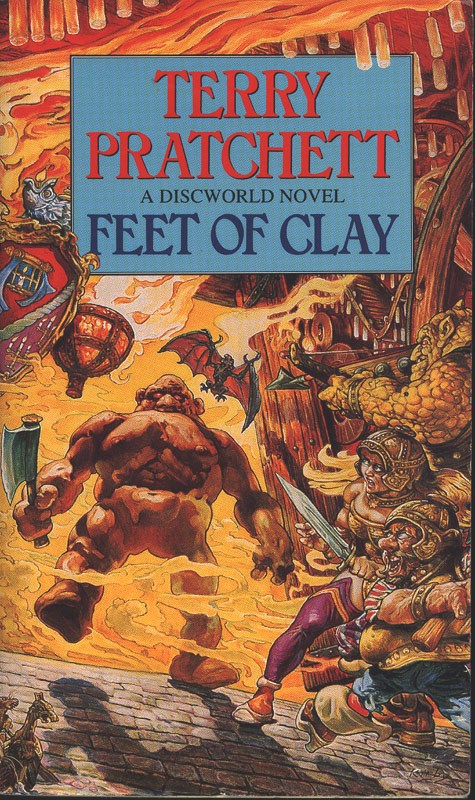
3. Feet of Clay (1996)
Where we're at: Someone's trying to poison Vetinari. The golems—animated clay workers who do the city's dirtiest jobs—are acting strangely. And Vimes has to navigate both mysteries while dealing with a city that increasingly depends on him.
New recruit Cheery Littlebottom, a forensics-minded dwarf who dares to be openly female in dwarf society, joins the Watch and revolutionizes crime investigation.
Why it matters: The golems represent artificial intelligence, slave labor, and the question of what makes someone a person. Feet of Clay is Pratchett at his most philosophically ambitious while still delivering a cracking mystery.
Don't miss: The golem Dorfl's theological arguments after gaining free will. Some of Pratchett's sharpest writing about religion and personhood.
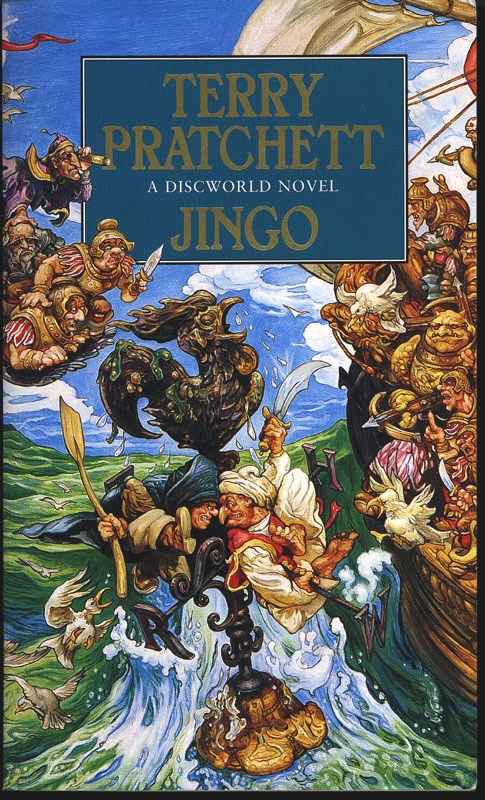
4. Jingo (1997)
Where we're at: An island rises from the sea between Ankh-Morpork and the nation of Klatch. War seems inevitable. Patriotic fervor sweeps the city. Vimes watches people he thought he knew become willing to kill strangers they've never met.
This is Pratchett's war novel—specifically, his anti-war novel. The satire cuts deep into nationalism, propaganda, and how easily ordinary people embrace violence against perceived enemies.
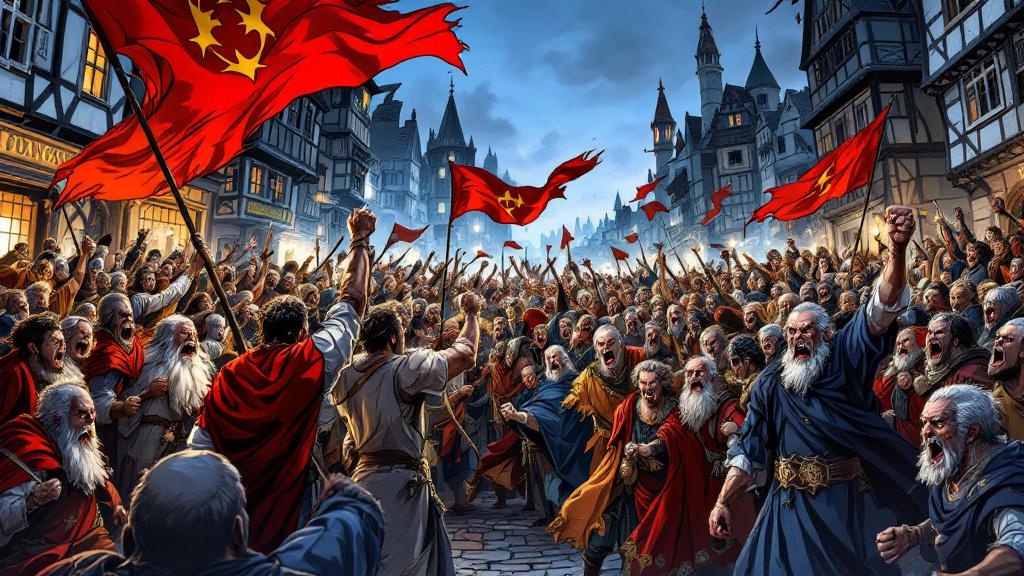
Why it matters: Published in 1997, Jingo predicted the way media and politicians manipulate public fear with uncomfortable accuracy. It's also the funniest anti-war book you'll ever read.
Don't miss: 71-Hour Ahmed, the Klatchian cop who serves as Vimes's mirror image.
5. The Fifth Elephant (1999)
Where we're at: Vimes becomes a diplomat. He's sent to Uberwald—a region of vampires, werewolves, and dwarfs—to attend a coronation and negotiate trade agreements. Politics, murder, and very large wolves ensue.
Sybil accompanies him. Angua confronts her werewolf family. And Vimes discovers that being the law works differently when you're far from home and nobody recognizes your authority.
Why it matters: This is where Vimes becomes fully himself—forced to operate without his city, his backup, or his comfortable moral certainties. The finale involves Vimes, snow, and werewolves. It's magnificent.
"There are no good guys and bad guys. There's just us."
Don't miss: Vimes's confrontation with Wolfgang, one of the series' most genuinely threatening villains.
6. Night Watch (2002)
Where we're at: Through magical accident, Vimes is sent back thirty years to the time of the Glorious Revolution—a failed uprising that shaped his youth. To survive and return home, he must become John Keel, the mentor who taught young Sam Vimes everything he knows about being a copper.
This is the masterpiece.
Night Watch works as a Discworld novel, a time travel story, a political thriller, and a meditation on revolution, history, and what we owe to the people who shaped us. It's dark—darker than anything Pratchett had written before—but it earns every shadow.
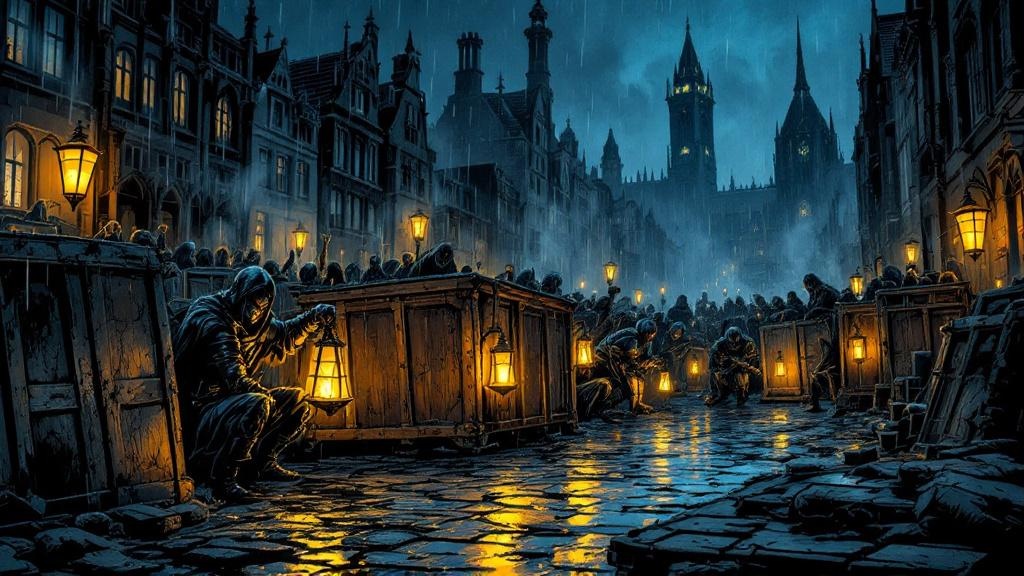
Why it matters: If you read only one Watch book, make it this one. If you read the whole series, this is the emotional climax. Vimes meets his younger self, mentors him, and discovers that his mentor was... himself. It's a paradox that Pratchett handles with devastating skill.
Warning: You'll appreciate this more with the earlier books under your belt. The callbacks and character moments hit harder when you know the history.
7. Thud! (2005)
Where we're at: Dwarfs and trolls are at each other's throats over the anniversary of the Battle of Koom Valley—an ancient conflict where, depending on who you ask, either the dwarfs ambushed the trolls or the trolls ambushed the dwarfs. A dwarf religious leader is murdered. Extremists on both sides are pushing for war.
Vimes must solve the crime before the city explodes.
He also has a new ritual: reading Where's My Cow? to his son Sam Jr. at exactly 6 PM every night. No exceptions. Not even for riots, murders, or potentially world-ending conflicts.
Why it matters: Thud! is about fatherhood as much as policing. Vimes's relationship with his son grounds the book's exploration of hatred, prejudice, and whether peace is even possible when both sides prefer their grievances to the truth.
Don't miss: The scene where Vimes reads Where's My Cow? under extremely unusual circumstances. You'll know it when you get there.
8. Snuff (2011)
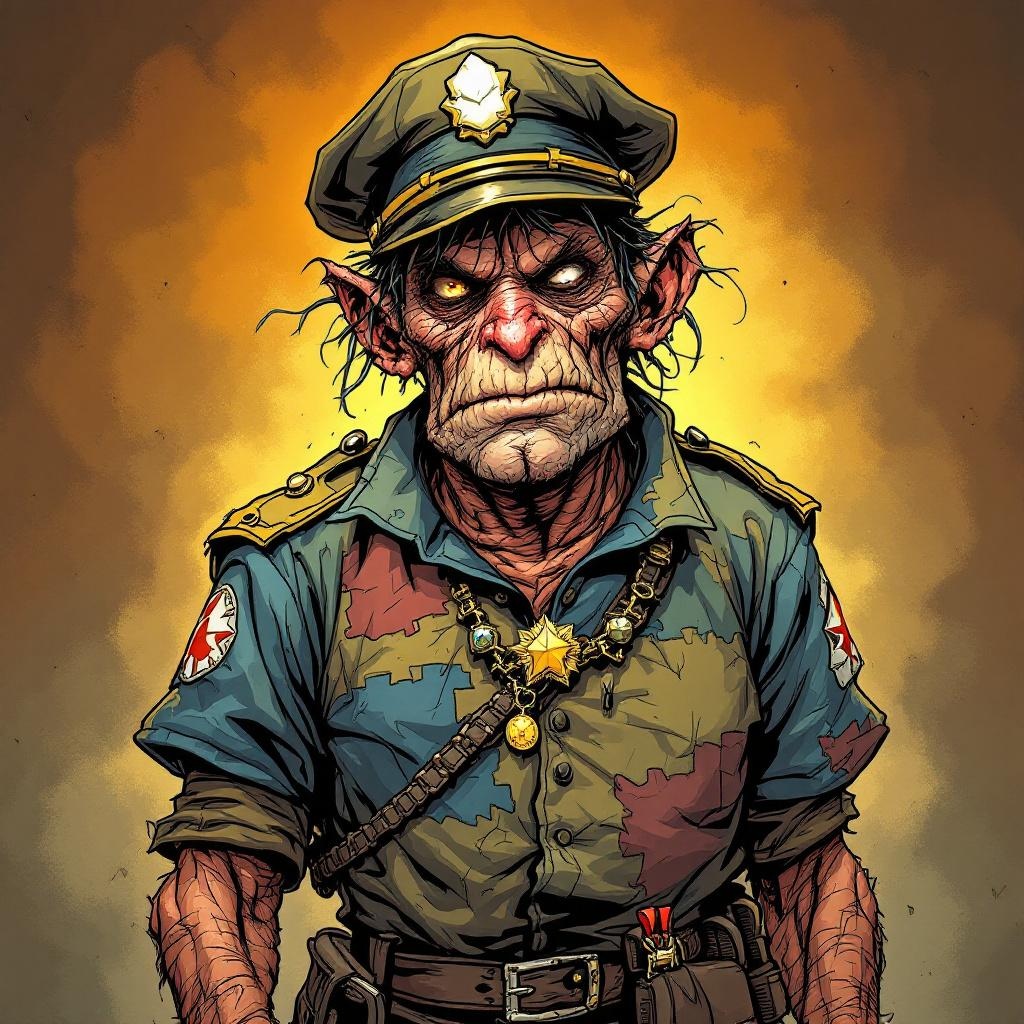
Where we're at: Vimes goes on vacation. Lady Sybil drags him to the countryside, where he has nothing to do except... well, solve a murder involving the systematic abuse of goblins, society's most despised minority.
It wouldn't be a vacation without crime.
"He was stone cold sober, and would stay that way. He had a badge."
Snuff addresses slavery, class, and the treatment of those considered "lesser." Vimes, now a Duke, uses his power and privilege to fight for people who have neither.
Why it matters: It's Vimes's final substantial appearance (he has a cameo in Raising Steam). Watching him apply everything he's learned across eight books—his rage channeled into justice, his cynicism tempered by genuine goodness—provides a satisfying culmination to his arc.
Be aware: Some readers find Snuff less polished than earlier entries. Pratchett was dealing with early Alzheimer's symptoms during writing. The story still works; the prose occasionally doesn't match his peak.
The Vimes Character Arc
Here's what makes the Watch series special: Sam Vimes's transformation.
He starts as a drunk. A failure. A man who joined the Watch with ideals and watched those ideals get crushed by a city that doesn't care about justice. He's given up on everything, including himself.
But then a dragon threatens his city. And Vimes discovers something buried beneath the cynicism: he still believes in the law. Not the law as it exists—corrupt, bought, serving the powerful—but the law as it should be. The idea that everyone deserves protection. That justice matters.
Through eight books, we watch him:
- Sober up and find purpose (Guards! Guards!)
- Build a team that shares his values (Men at Arms)
- Grapple with what personhood means (Feet of Clay)
- Resist the seduction of patriotic violence (Jingo)
- Operate without institutional support (The Fifth Elephant)
- Confront his own history and legacy (Night Watch)
- Balance fatherhood with duty (Thud!)
- Use privilege to fight injustice (Snuff)
The city promotes him. He becomes Sir Samuel Vimes, Duke of Ankh. He marries into wealth. He gains power, status, everything he once scorned. And here's the remarkable thing: he doesn't change. Not fundamentally. He uses what he's gained to do more of what he always wanted to do—protect people who can't protect themselves.
That's not common in fiction. Characters who gain power usually get corrupted by it, or use it cynically, or become villains to be overthrown by the next hero. Vimes accumulates power and stays angry on behalf of the powerless. He's a fantasy for anyone who's ever wanted authority figures to actually protect people.
Supporting Cast
No character exists in isolation, and Vimes's growth happens alongside an ensemble worth celebrating:
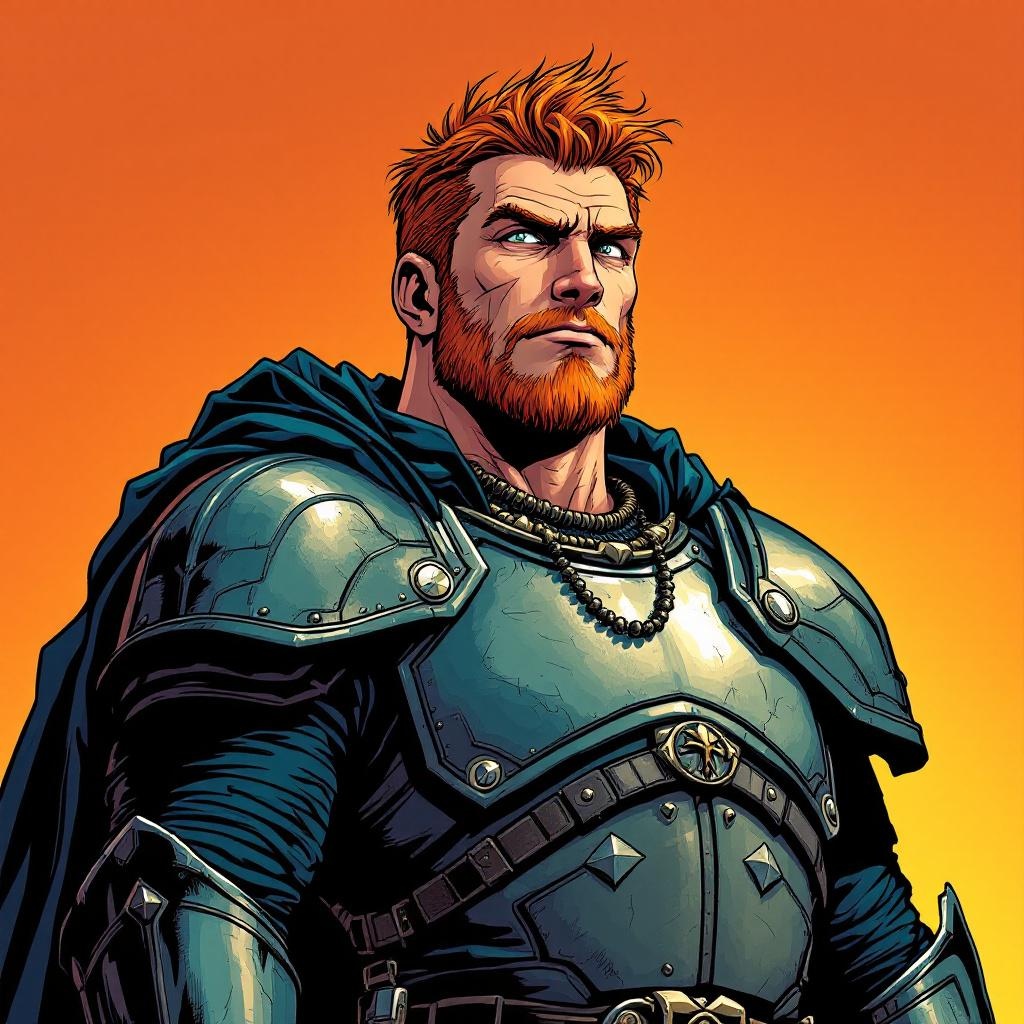
Carrot Ironfoundersson: The six-foot dwarf who might be the rightful king of Ankh-Morpork, and who absolutely does not want to be. His genuine belief in justice inspires Vimes; his refusal to claim power keeps him humble.
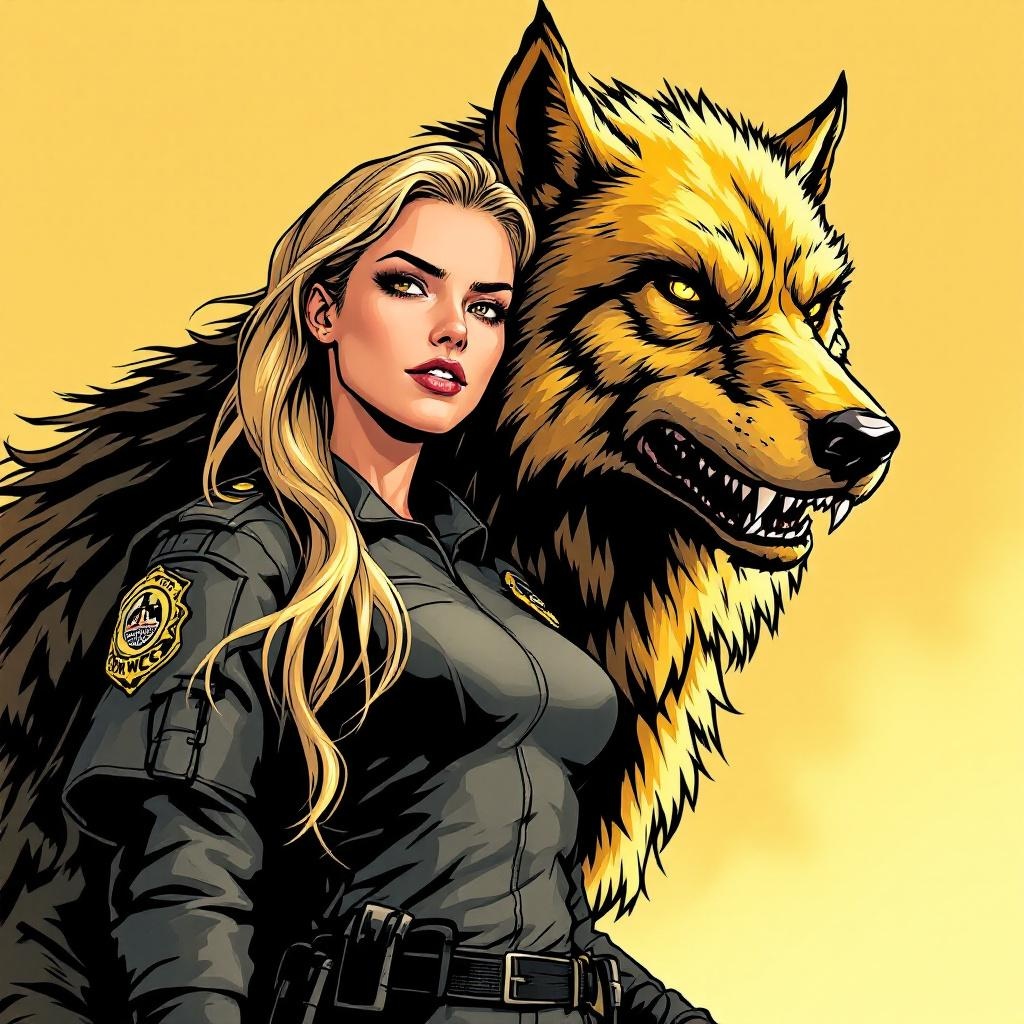
Angua: A werewolf dealing with her own dual nature while being extremely good at police work. Her relationship with Carrot provides romantic interest without ever undermining her agency.
Nobby Nobbs and Fred Colon: The comic relief duo who gradually reveal unexpected depths. Colon's prejudices get challenged throughout the series; Nobby's humanity shines through despite his appearance.
Lord Vetinari: The tyrant who understands that a functional Watch serves his purposes. His chess game with Vimes—mutual respect, mutual wariness—provides some of the series' sharpest dialogue.
Lady Sybil: Vimes's wife, who sees what he could be and loves who he is. Her unshakeable kindness and breeding dragons make her uniquely suited to handle a man made of sharp edges.
Where to Start (If You're Hesitant)
The full eight-book commitment can feel daunting. Here are some entry strategies:
The Full Journey: Start with Guards! Guards! and read in order. This is the recommended approach if you think you might love Discworld. You get everything—the comedy, the character development, the gradually deepening themes.
The Sample Platter: Read Guards! Guards! as a standalone. It works perfectly as a single novel. If you love it, continue. If not, you've experienced a complete story.
The Masterpiece Route: Read Guards! Guards!, Men at Arms, and then jump to Night Watch. You'll miss some character development, but you'll get Pratchett's best Watch writing with minimal commitment.
The Deep End: Start with Night Watch. It's technically readable alone, and if it grabs you, you'll want to go back and read everything. Warning: some moments won't hit as hard without context.
The Bottom Line
The City Watch series represents Terry Pratchett at his finest. Sharp comedy, sharper social commentary, and characters so well-drawn that readers genuinely mourn them.
Sam Vimes's journey from drunken failure to principled authority figure is one of fantasy's great character arcs. Not because he becomes powerful—plenty of characters do that—but because he stays good. He stays angry. He keeps choosing justice when cynicism would be easier.
Eight books. One copper. A city that doesn't deserve him but gets him anyway.
The turtle moves, and so does the Watch—one crime at a time, one night at a time, keeping the streets safe for everyone including the people nobody else protects.
Ready to meet Sam Vimes? Start with Guards! Guards! or check out our guide to Where to Start with Discworld for more options.