Cardboard Soles and Cobblestones: Why Sam Vimes Refuses Good Boots
Sam Vimes can afford the best boots in Ankh-Morpork. He won't wear them. Here's why his cardboard soles are the most important thing about him.
Cardboard Soles and Cobblestones: Why Sam Vimes Refuses Good Boots
Here is a man who could buy every cobbler's shop in Ankh-Morpork and still have change for a small country estate. His wife is one of the richest women on the Disc. He is Duke of Ankh, Commander of the City Watch, Blackboard Monitor, and holder of more titles than he can be bothered to remember.
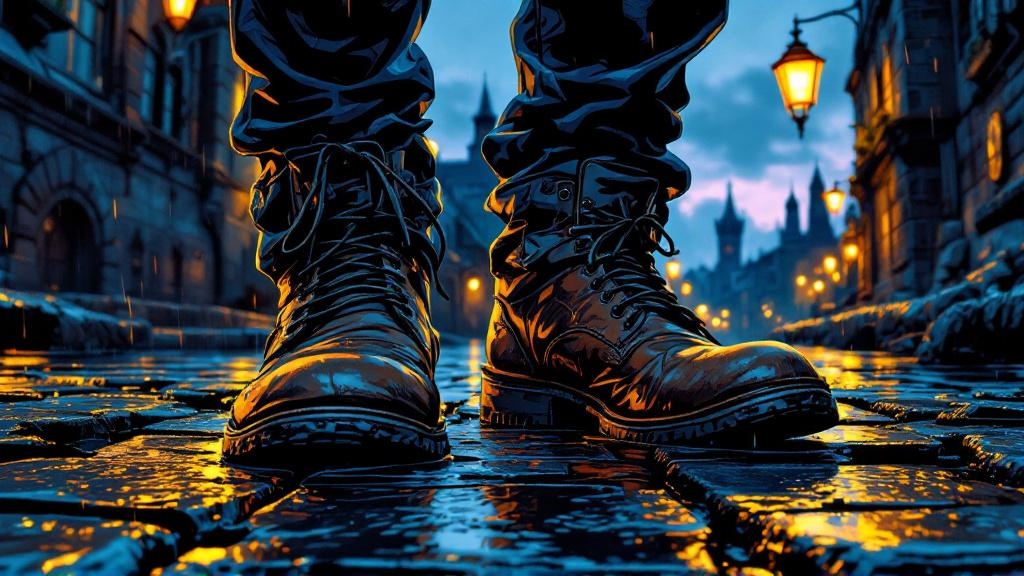
He wears boots with cardboard soles.
Not because he has to. Not because he's forgotten he's rich. Not even because he's stubborn, though he absolutely is. Sam Vimes wears cheap boots because they are the most important piece of equipment he owns—more important than his badge, his sword, or the small but vicious dog of authority that comes with being Commander. Those thin, worn, water-letting soles are how he reads the city.
The Man Who Reads With His Feet
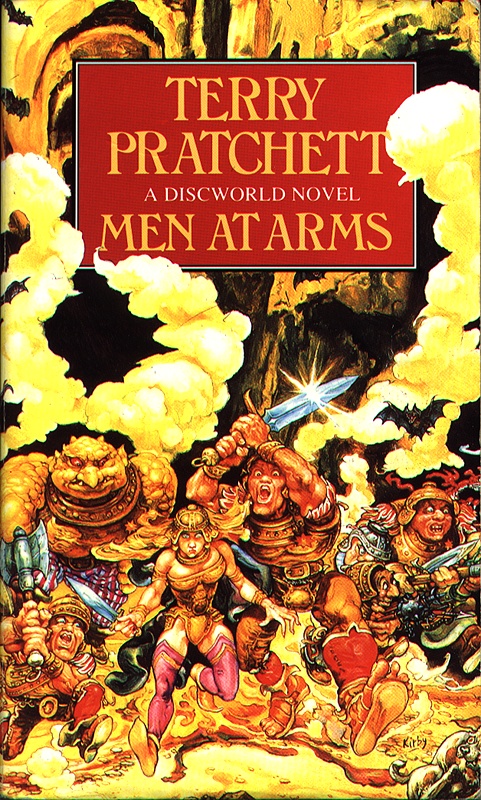
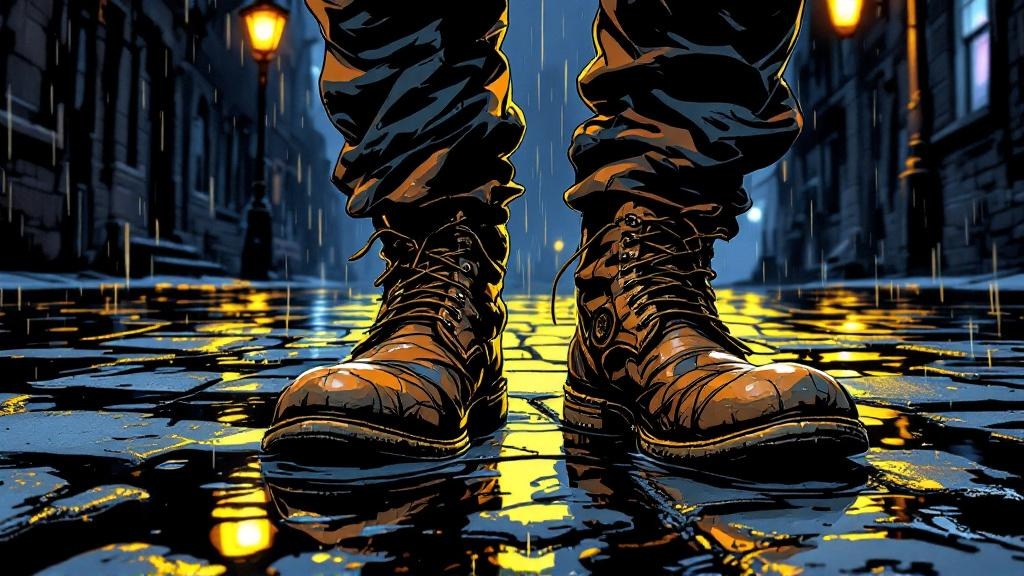
In Men at Arms, Pratchett gives us one of the most quietly brilliant character details in all of Discworld. Vimes has worn cheap boots for so long—boots that leak when the cardboard gives out, boots that cost ten dollars and last a season—that the soles have worn down to almost nothing. And through those paper-thin soles, he can tell where he is in Ankh-Morpork on a foggy night just by the feel of the cobbles beneath his feet.
Think about that for a moment. Not a map. Not a compass. Not magic. His feet.
"He could tell where he was in Ankh-Morpork on a foggy night by the feel of the cobbles."
He knows the broad, smooth flagstones of the Palace district. He knows the uneven, tooth-rattling cobbles of the Shades. He knows where the road surface changes from stone to packed earth near the cattle market, and where the cobbles run out entirely in the poorest stretches of his old neighbourhood. Vimes has walked every street in this city so many times, in such terrible boots, that the geography has been transcribed directly into his nervous system.
This isn't a superpower. It's the opposite of a superpower. It's what happens when you're too poor for good boots and too dedicated to stop walking. It's decades of night patrols compressed into muscle memory and calluses. It's the city, written in scar tissue.
The Boots Sybil Buys
And then he marries Lady Sybil Ramkin, and suddenly there is no financial reason for thin soles.
Sybil, being Sybil, buys him good boots. Expensive boots. The kind that cost fifty dollars and last ten years with dry feet the whole time—the exact boots from his own famous economic observation. She means well. She loves him. She wants him comfortable.
Vimes wears them, and he can't feel a thing.
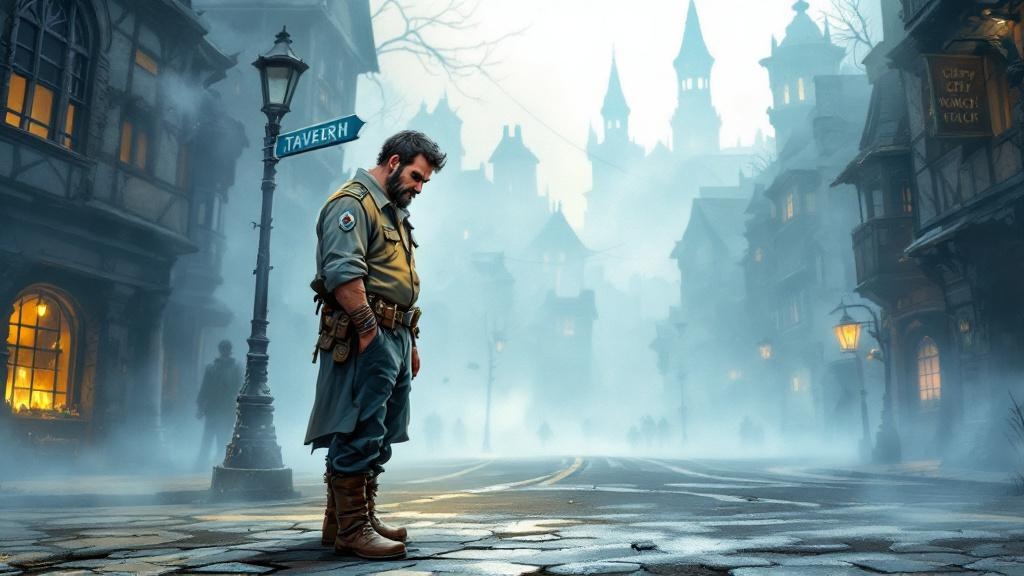
This is the quietly devastating detail that elevates the boots from a cute character quirk to something much deeper. The expensive boots don't just block water. They block information. They put a layer of premium leather between Vimes and the thing that makes him good at his job—his intimate, physical, bone-deep knowledge of Ankh-Morpork's streets.
In Feet of Clay, Vimes takes this to its logical conclusion. He swaps his expensive new boots for a lackey's pair. Not out of fashion. Not out of spite. Because he needs to feel the cobbles under his feet to do his job properly. He needs to be the copper who knows the city through the soles of his shoes, not the Duke who glides over it in comfort.
"The very boots that proved poverty is expensive became the boots he chose to keep wearing after he wasn't poor anymore."— The Boots Paradox
There's a beautiful irony here that Pratchett never explicitly points out, which is how you know it's deliberate. The Boots Theory—Vimes' own observation—argues that cheap boots are a trap, that good boots are the rational choice. And yet Vimes, who can now afford the rational choice, deliberately rejects it. The man who articulated the cost of poverty chooses to keep paying it. Not because he doesn't understand. Because he does.
What the City Feels Like
Pratchett was a walker. He understood what it means to know a place through your feet, through repeated contact, through the way your body adjusts to familiar ground without your brain needing to get involved. And he gave that understanding to Vimes.
The cobblestones of Ankh-Morpork aren't just scenery. They're Vimes' filing system. They tell him whether he's near the docks (large, irregular, often slippery), the merchant quarter (newer, evenly laid, slightly raised), or Cockbill Street (barely cobbled at all, more packed mud than stone, because nobody spends money on road surfaces in neighbourhoods where voters don't matter).
Every street has a texture. Every texture has a memory. And Vimes carries all of them in the nerve endings of his feet.
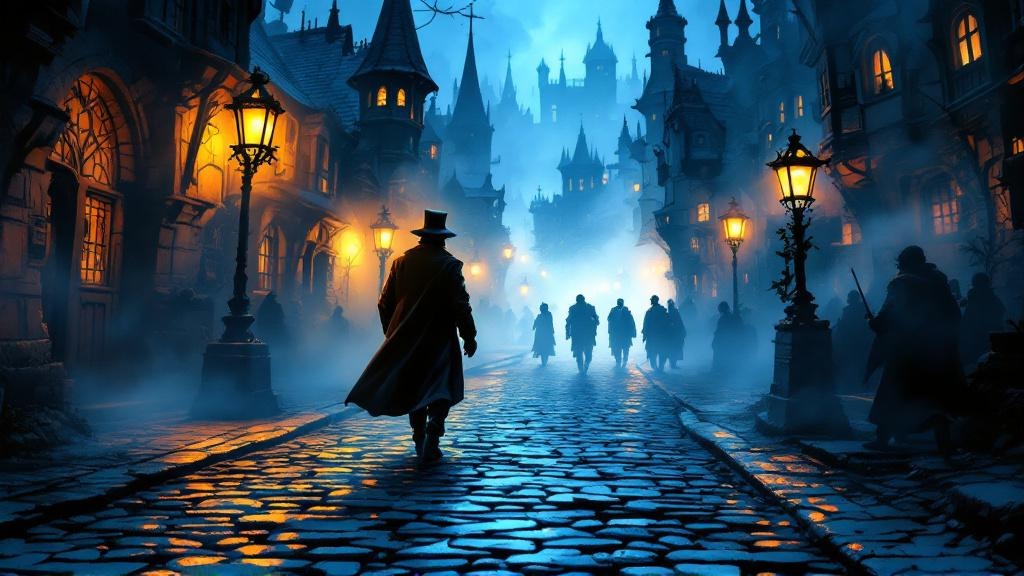
This is what gets lost when you put on good boots. Not comfort—Vimes has never cared about comfort. What gets lost is connection. The expensive soles don't just protect his feet from the cold and wet. They protect him from the city. And Vimes doesn't want to be protected from the city. The city is his job, his identity, and his life's work. He needs to feel it to serve it.
Cockbill Street Never Leaves
There's another layer here, and it's the one that makes this more than a professional quirk.
Sam Vimes grew up on Cockbill Street, in the Shades, in the poorest part of Ankh-Morpork. A neighbourhood so poor there was barely any crime—because there was nothing worth stealing. His father was a blacksmith who died when Vimes was young. He ran with a street gang called the Cockbill Street Roaring Lads, which sounds romantic until you learn they were too poor to be properly dangerous.
The cardboard-soled boots aren't just professional equipment. They're a tether to his origins. Vimes knows, with the clarity that only comes from growing up hungry, that wealth is a kind of anaesthetic. It dulls your perception. It rounds off the sharp edges of reality. It makes you forget what the city actually feels like for most of the people living in it.
"Wealth is a kind of anaesthetic. It dulls your perception."
He sees it in other nobles—the way they glide through the city without ever touching it, without ever feeling the broken cobbles or smelling the tanneries or stepping in whatever Foul Ole Ron left behind. They live in Ankh-Morpork the way tourists live in a city: passing through, never connecting, always one layer of money removed from reality.
Vimes refuses that removal. The thin soles are his way of staying poor in the one way that matters—perceptually. He can afford to be rich in every material sense, but he will not afford to lose the information that being poor once gave him. He will not stop feeling the streets.
The Copper's Navigation System
What makes this work as more than symbolism is that it's practical. Pratchett never lets his metaphors be purely metaphorical.
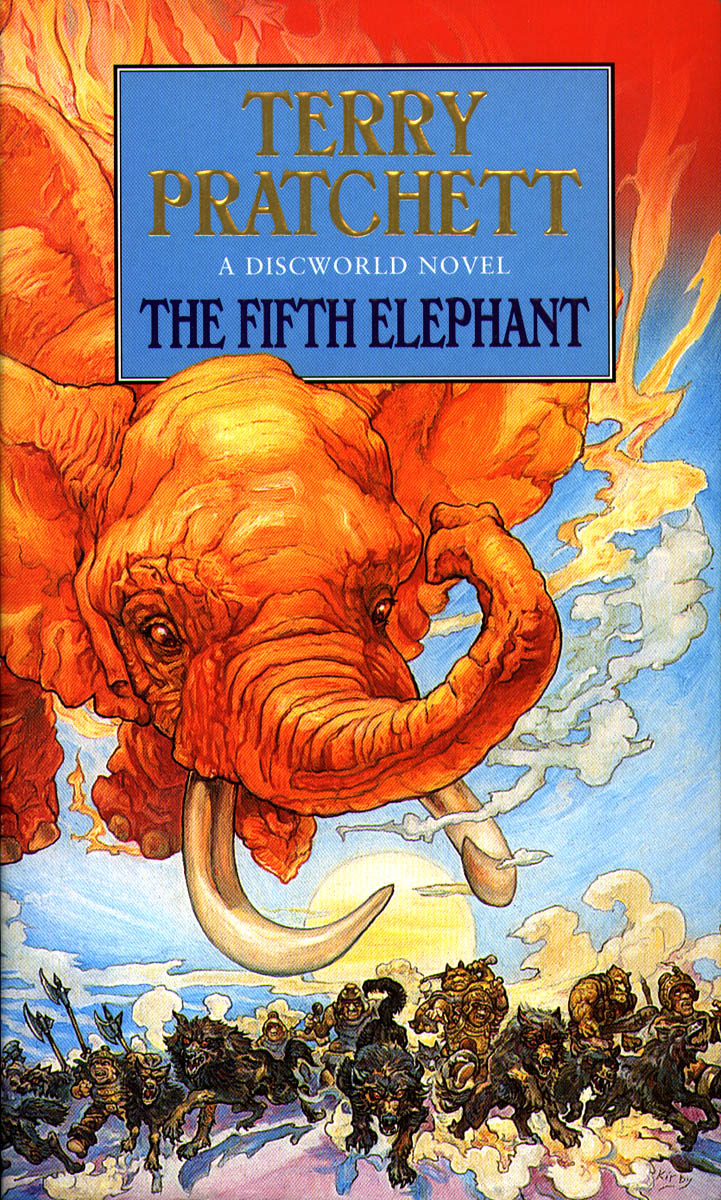
Vimes' ability to navigate by cobblestone is a genuine tactical advantage. In The Fifth Elephant, when he's alone and hunted in Uberwald—far from Ankh-Morpork, far from any familiar cobblestone—part of what makes the situation so dire is that he's lost his primary navigation system. The ground is wrong. The streets don't speak to him. He's a copper without his city, and it nearly kills him.
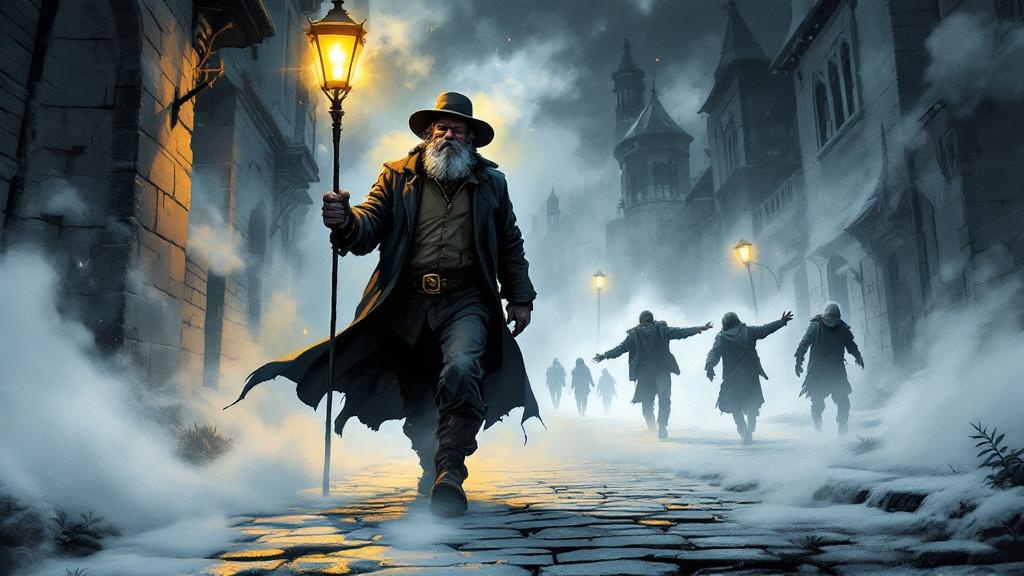
Back home, though, the thin soles make him something close to superhuman in the most mundane possible way. He can track suspects through fog. He knows which streets have been recently repaved (and therefore which alderman has been taking bribes from which contractor). He can tell from the feel of the ground whether he's near water, near a market, or near trouble.
It's the opposite of the flashy detective with high-tech gadgets and forensic laboratories. Vimes solves crimes with cardboard boots and decades of wet feet. And he's better at it than anyone.
The Paradox That Defines Him
This is the central tension of Sam Vimes as a character, and the boots are its clearest expression: he is a rich man who needs to be poor to function.
Not theatrically poor. Not performatively poor. Functionally poor—in the specific, narrow, critically important sense that his effectiveness as a policeman depends on maintaining the sensory relationship with the city that poverty forced on him.
Lord Vetinari understands this, which is why he never comments on Vimes' footwear choices. Vetinari sees the city from above—from the Oblong Office, from the chessboard, from the thousand-foot view where people are pieces and streets are lines on a map. Vimes sees it from below. From the cobblestones. From the mud and the muck and the places where the road surface gives out entirely.
They need each other precisely because they see different things. And Vimes can only see what he sees because his boots let the city in.
Why This Matters
There's a reason readers remember the boots.
It's not because they're a clever metaphor, though they are. It's not because they connect to the Boots Theory of economics, though they do. It's because they capture something true about how identity works.
We are, at least partly, what we've suffered. The calluses we develop, the instincts we hone, the knowledge that only comes from long exposure to difficult conditions—these aren't just scars. They're capabilities. And when comfort arrives, as it eventually might, we face a choice: let it smooth away everything the hard years taught us, or find ways to keep those lessons alive.
Vimes keeps his lessons alive through cardboard soles. He chooses discomfort not because he's masochistic, but because the alternative—comfort that costs him his connection to reality—is more dangerous than wet feet have ever been.
That's not stubbornness. That's wisdom. And it's the kind of wisdom that only comes from Cockbill Street.
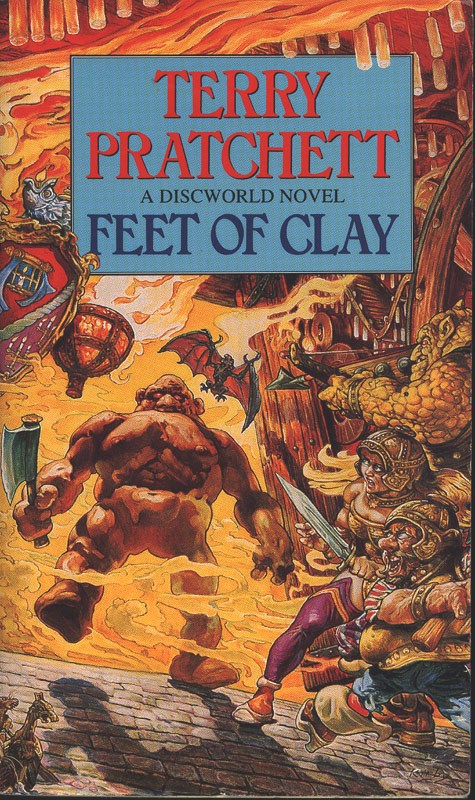

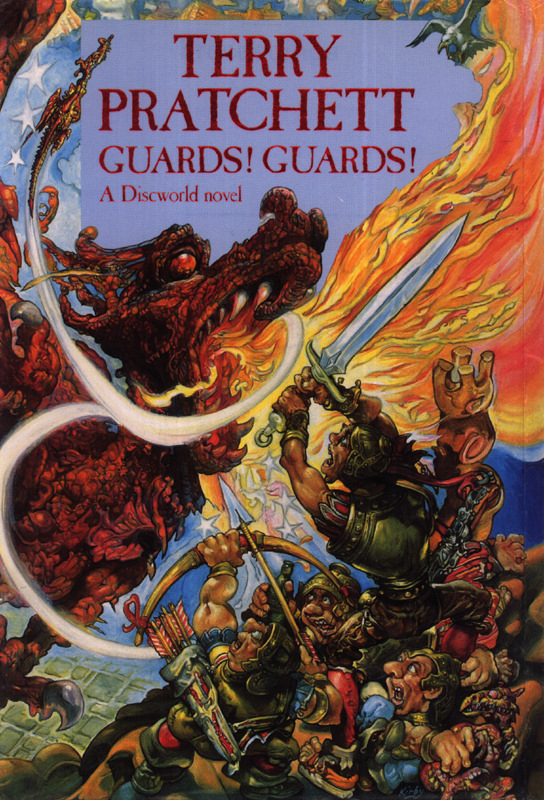
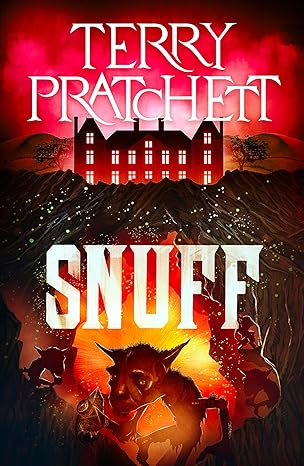
If you want the full progression, start with Guards! Guards! where Vimes is still in the gutter, wearing the only boots he can afford. Then read through to Snuff, where he's the richest man in the room but still the one with the thinnest soles. The journey between those two books is the story of a man who gained everything and refused to lose the one thing that mattered.
Want more Vimes? Read about the beast he keeps caged, how the Boots Theory changed real-world economics, or why he reads to his son at exactly six o'clock every night.