Discworld Books You Can Skip: The Honest Truth About Weaker Entries
Which Discworld books are worth skipping? An honest look at the weakest entries in Terry Pratchett's 41-book series and whether you should actually skip them.
Discworld Books You Can Skip: The Honest Truth About Weaker Entries
You've seen the number. Forty-one books. That's a lot of Discworld, and if you're staring down the complete series wondering whether every single one is essential reading, you deserve an honest answer.
Here it is: no. Not every Discworld book is a masterpiece. Some are weaker than others, and depending on how you're reading the series, a few can be skipped without losing anything critical. Pratchett himself was writing across three decades, experimenting with form and finding his voice, and not every experiment landed equally well.
But here's the catch—and there's always a catch—"skippable" doesn't mean "bad." This isn't a series where the weak entries are painful to read. They're just less brilliant than the brilliant ones. That distinction matters, and we're going to be honest about it.
The Early Books: Finding His Feet
The first few Discworld novels are the most commonly cited candidates for skipping, and with good reason. Pratchett admitted he was "learning to write novels in public" during this period, and it shows.
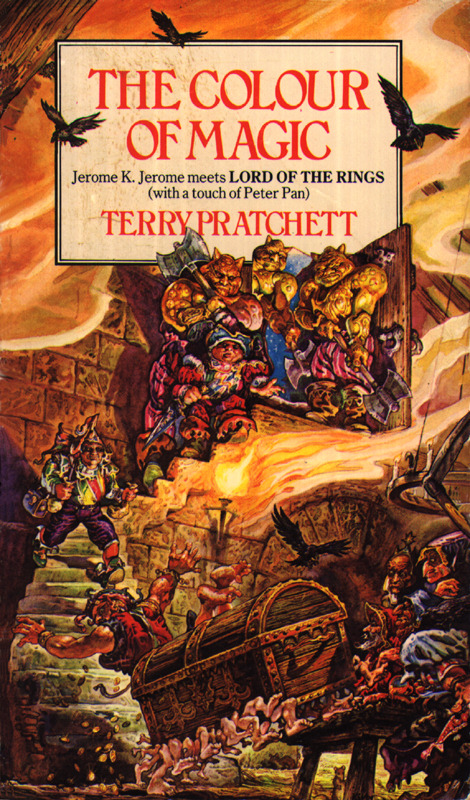
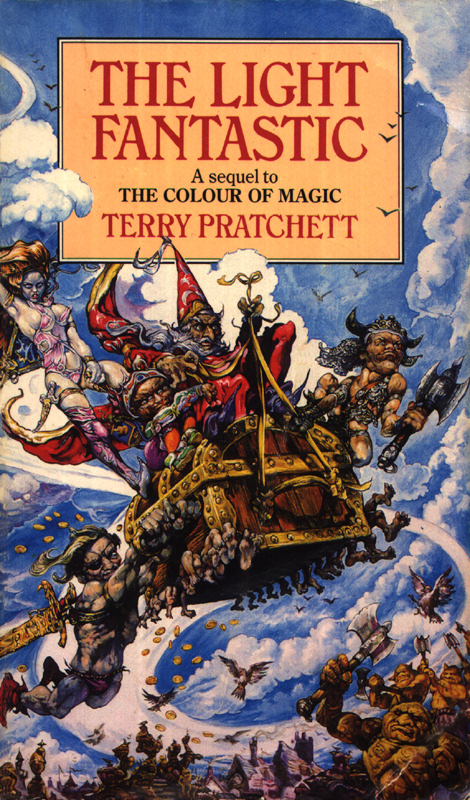
The Colour of Magic and The Light Fantastic
The Colour of Magic and The Light Fantastic are essentially one story split across two books. They're parodies of 1970s and 80s fantasy—Conan, Leiber's Fafhrd and the Gray Mouser, Anne McCaffrey's dragons—and if you haven't read those works, half the jokes miss entirely.
Rincewind runs. Twoflower takes pictures. Things explode. It's entertaining in a lightweight way, but it's not the Discworld that made Pratchett a literary icon. The tight plotting, the social commentary, the characters who make you feel things—none of that has arrived yet.
Skip or read? Skip if you want Pratchett at his best. Come back later if you get hooked and want to see where it all started.
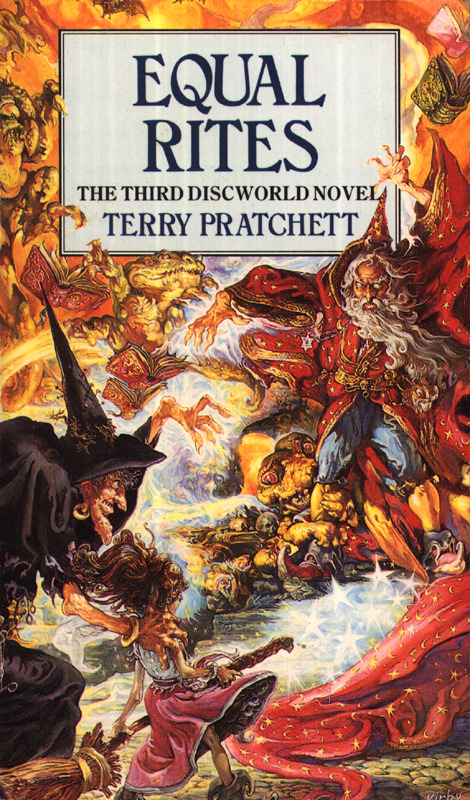
Equal Rites
Equal Rites introduces Granny Weatherwax, which is significant, but she's not yet the formidable force she becomes in later books. The story—a girl born with wizard magic in a world that says only men can be wizards—has a great premise that doesn't quite deliver on its promise. The climax feels rushed, and the protagonist Eskarina essentially disappears from the series afterward.
Skip or read? Skip it. Granny Weatherwax gets a much better introduction in Wyrd Sisters, which is where the Witches sub-series really begins.
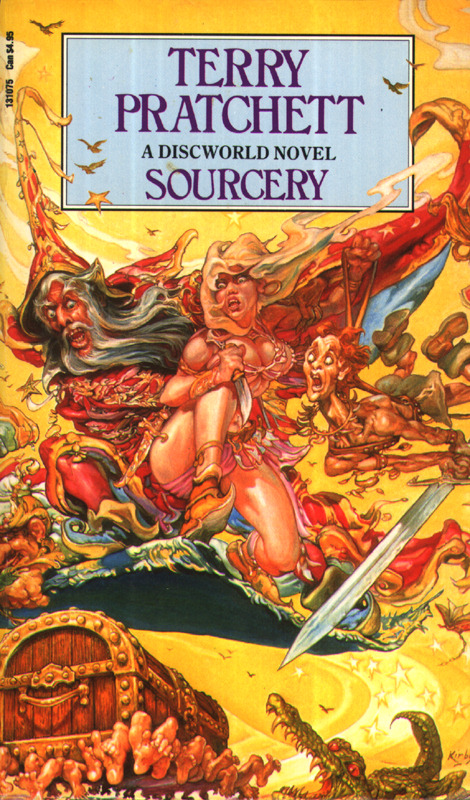
Sourcery
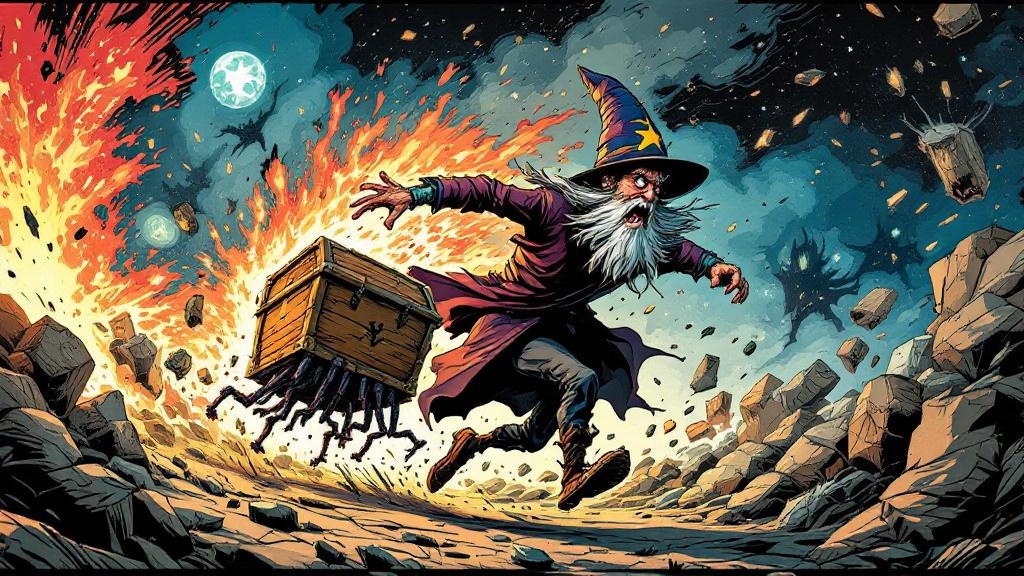
Sourcery is Rincewind's third outing and it feels like a retread. Powerful magic threatens to destroy everything, Rincewind runs away from things, and the world is saved mostly by accident. Fans regularly describe it as "forgettable," which is about the worst thing you can say about a Pratchett novel.
There are good scenes—there are always good scenes—but they don't cohere into something greater. It's the book equivalent of a sketch show where some sketches work and others don't.
Skip or read? Skip it unless you're a Rincewind completionist.
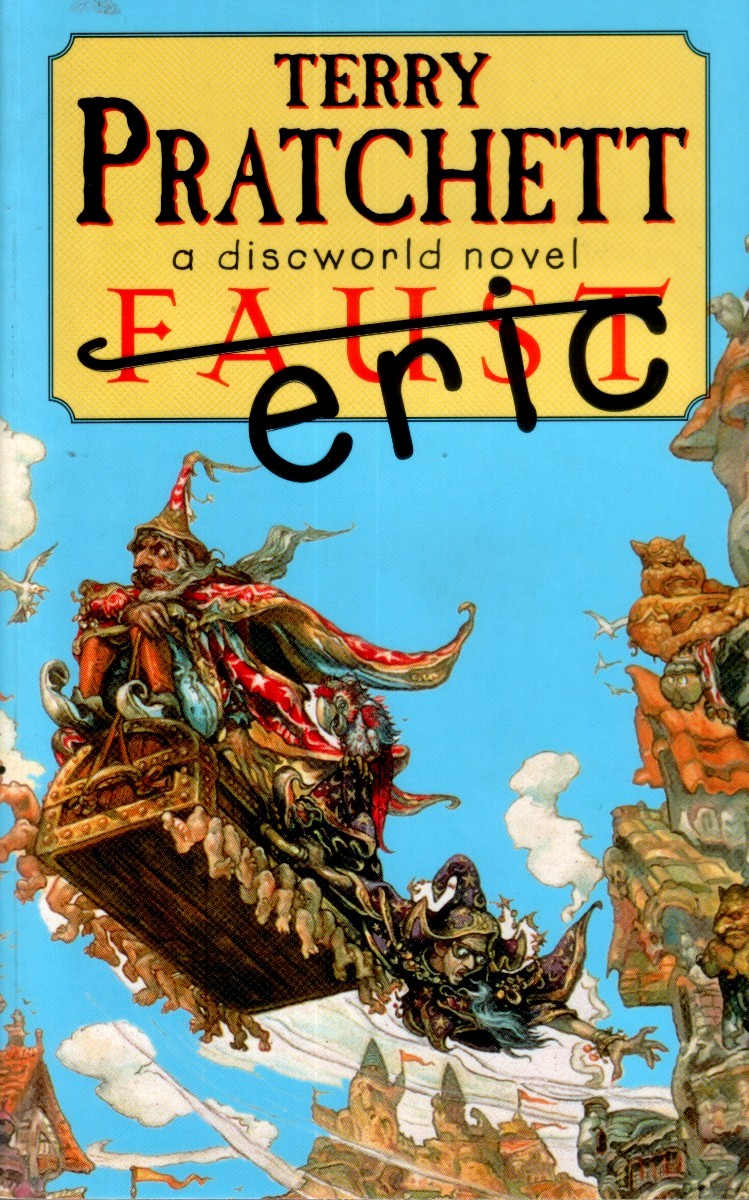
Eric (Faust Eric)
Eric was originally published as an illustrated novella, and it reads like one. At under 200 pages, it's the shortest Discworld book and feels more like a Rincewind short story than a full novel. The Faust parody is fun but thin, and the book doesn't add much to Rincewind's character or the wider Discworld.
"A weak Pratchett novel is still better than most writers' best work. The question isn't whether these books are good—it's whether your time is better spent elsewhere in the series."
Skip or read? Skip it. You won't miss anything, and the time is better spent on any of the Watch or Witches novels.
The Rincewind Problem
You'll notice a pattern above: most of the weakest early books are Rincewind stories. That's not a coincidence.
Rincewind is a one-joke character. He's a cowardly wizard who can't do magic, and his response to everything is to run. That's funny the first time. It's still amusing the second time. By the fourth or fifth book, you're watching the same gag with different scenery.
Compare that to Sam Vimes, who grows from a drunk night watchman into a duke who still can't stop being a copper. Or Tiffany Aching, who evolves from a fierce girl with a frying pan into the most powerful witch on the Chalk. Rincewind stays Rincewind. That's the joke, and it's a joke with diminishing returns.
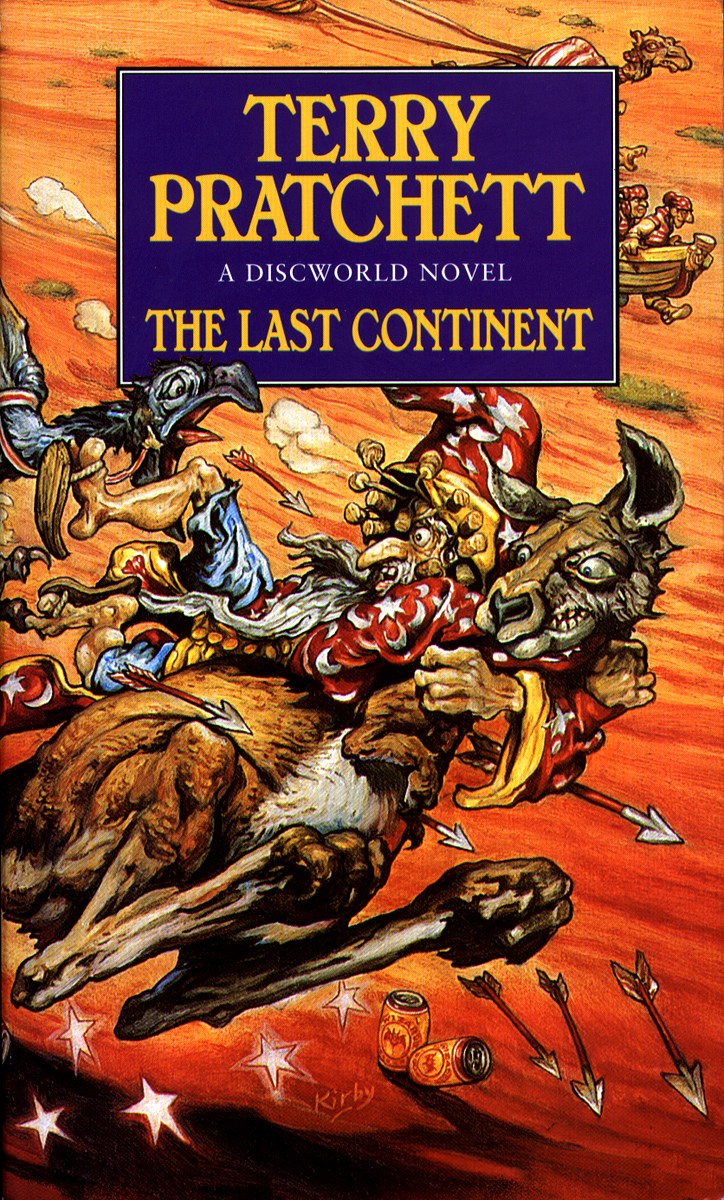
This is why The Last Continent—Rincewind's Australian adventure—divides readers. The Australia parodies are occasionally sharp but sometimes feel like extended sketch comedy. If you love Rincewind, you'll enjoy it. If you've had enough of his particular schtick, it's safe to skip.
Interesting Times, by contrast, is the best of the Rincewind books and worth reading for the return of Cohen the Barbarian and the Silver Horde alone.
The Late-Period Wobbles
Here's where the conversation gets more delicate. Pratchett's later books—roughly from book 37 onwards—were written while he was battling posterior cortical atrophy, a form of early-onset Alzheimer's disease. This context matters. It doesn't make the books immune from criticism, but it deserves acknowledgment.
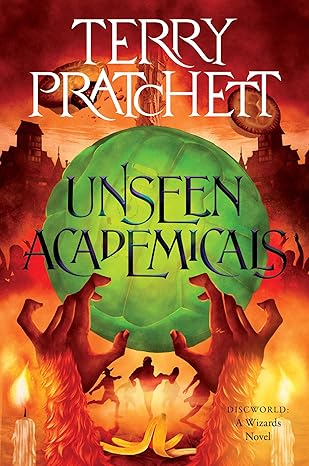
Unseen Academicals
Unseen Academicals is Pratchett's football novel, and it struggles to find its footing. The Mr. Nutt storyline has genuine depth—a character discovering his own worth despite society's prejudice—but it's buried under subplots that don't generate enough momentum. The football match itself, when it finally arrives, can't carry the weight of everything the book has been building toward.
Skip or read? Your call. Mr. Nutt's arc is worth experiencing, but the book tests your patience getting there.
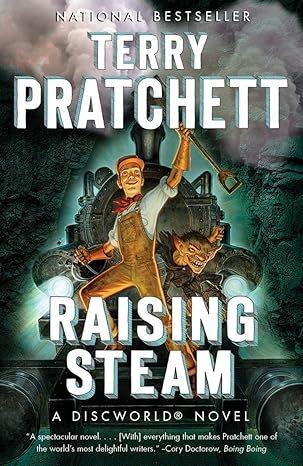
Raising Steam
Raising Steam brings steam trains to Discworld, and it's the most divisive late-period entry. The prose is noticeably different from peak Pratchett—longer, more discursive, occasionally repetitive. The plot doesn't have the tight construction of Going Postal, even though it shares Moist von Lipwig as a protagonist.
What it does have is a real sense of Pratchett wanting to write one more big story about progress and change. The dwarf extremism subplot connects to themes he'd been exploring for decades. It's a fitting thematic capstone even if the execution isn't at his best.
Skip or read? Read it if you've come this far. By book 40, you're not optimising—you're completing a journey.
The Shepherd's Crown
The Shepherd's Crown is the last Discworld novel and was published posthumously. Pratchett's assistant confirmed there would have been at least one more draft. It shows—the pacing is uneven, some plotlines feel compressed, and the prose occasionally lacks the polish of Pratchett at full strength.
But you cannot skip this book. The opening chapters contain one of the most moving sequences in the entire series. This is Pratchett saying goodbye, and it earns every moment it asks of you.
Skip or read? Read it. Non-negotiable.
The Ones People Argue About
Some Discworld books are genuinely polarising—not weak, just divisive.
Pyramids is a standalone that some readers adore for its sharp satire of tradition and religion, while others find it forgettable because it doesn't connect to any ongoing character arcs.
Moving Pictures has the same standalone quality. It's a Hollywood parody set in Discworld, and your enjoyment depends entirely on whether that premise sounds delightful or exhausting.
Monstrous Regiment is probably the least funny Discworld novel, but it's also one of the most powerful. Its examination of war, gender, and institutional madness is devastating. Whether you consider that a reason to read it or skip it says a lot about what you want from Discworld.
Maskerade is Phantom of the Opera meets the Witches, and it's lighter than the other Witches books. Agnes Nitt is a great character, but the opera setting doesn't give Pratchett as much to work with thematically as, say, the Shakespeare references in Wyrd Sisters or the fairy tales in Witches Abroad.
None of these are bad books. They're books where your mileage will vary, and that's fine.
The Real Answer: What You Should Actually Do
Here's what most experienced Discworld readers won't tell you straight: the "skippable" books are skippable precisely because the rest of the series is so extraordinary.
"You're not saving time by skipping books. You're losing stories. Whether that trade-off is worth it depends entirely on you."
In any other fantasy series, Sourcery would be a perfectly decent novel. The Last Continent would be an enjoyable comic fantasy. Eric would be a pleasant afternoon read. They only look weak because they're standing next to Night Watch, Small Gods, and Going Postal.
If you're a new reader with limited time, here's the practical advice:
- Start with one of the strong entry points: Guards! Guards!, Mort, or Small Gods
- Follow the sub-series that grabs you: Watch, Witches, Death, or Industrial Revolution
- Skip the early Rincewind books unless you specifically enjoy that style of comedy
- Read the late-period books in order once you're committed to the series
- Never skip The Shepherd's Crown if you've read any other Tiffany Aching books
And if you've got the time? Read them all. Even the weaker entries have moments of genuine Pratchett brilliance—a sentence that stops you cold, a joke that makes you think, a paragraph that says something true about being human.
Forty-one books is a lot. But there are worse problems than having too much Terry Pratchett to read.
Not sure where to begin? Check our complete beginner's guide or explore the Discworld reading order flowchart. If you want to start with the best, see our guide to the funniest Discworld books or dive into Discworld's darkest novels.