Sam Vimes and the Bottle: Discworld's Best Recovery Story
The first time we meet Sam Vimes, he's drunk in a gutter. His journey to sobriety—and the love that enabled it—is one of fantasy's best recovery arcs.
Sam Vimes and the Bottle: Discworld's Best Recovery Story
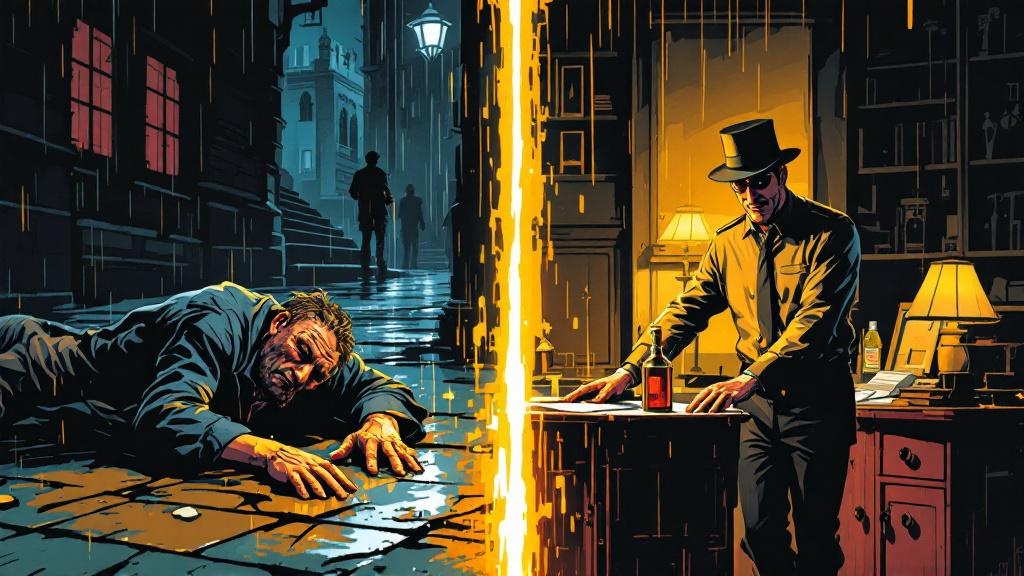
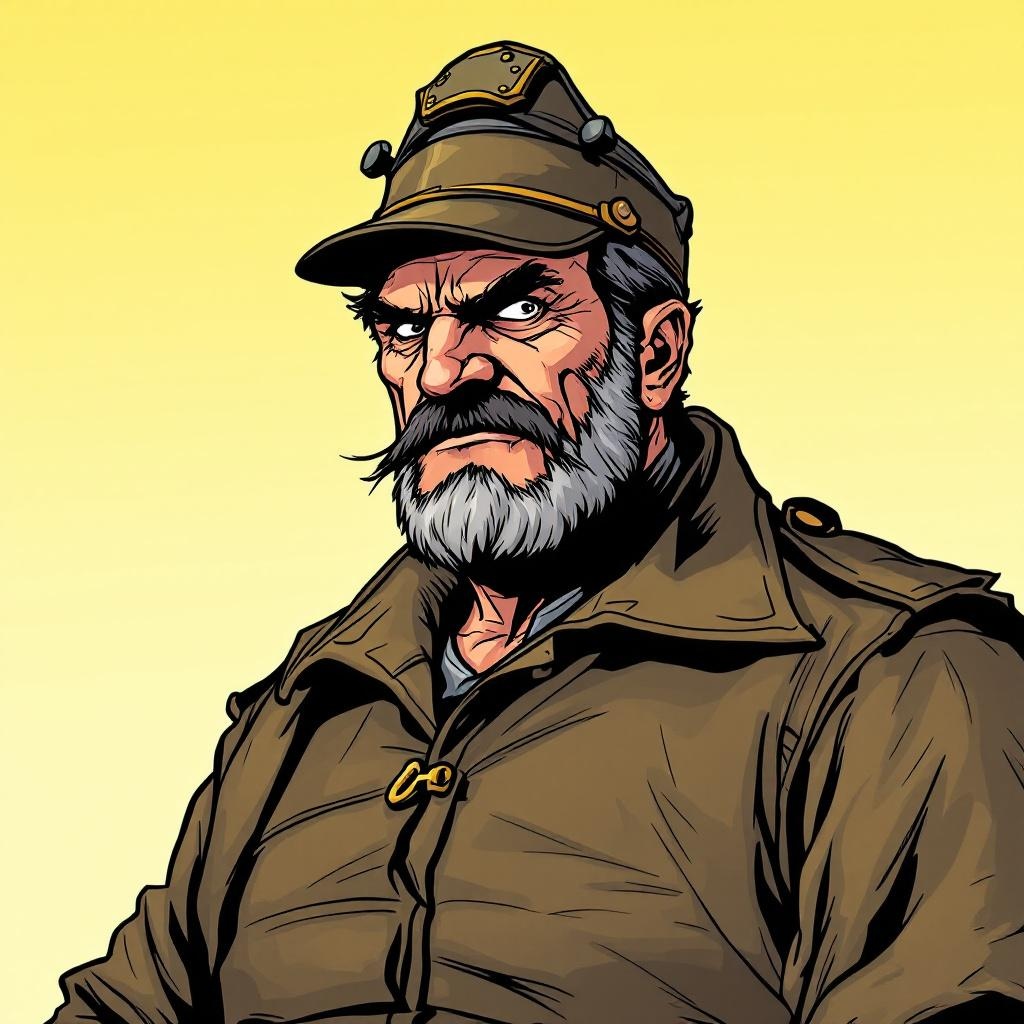
The first image we ever get of Sam Vimes is not of a hero. He's not patrolling the streets, drawing his sword, or giving a speech about justice. He's lying face-down in a gutter, drunk, in the rain, convinced that the city he's supposed to protect has forgotten him.
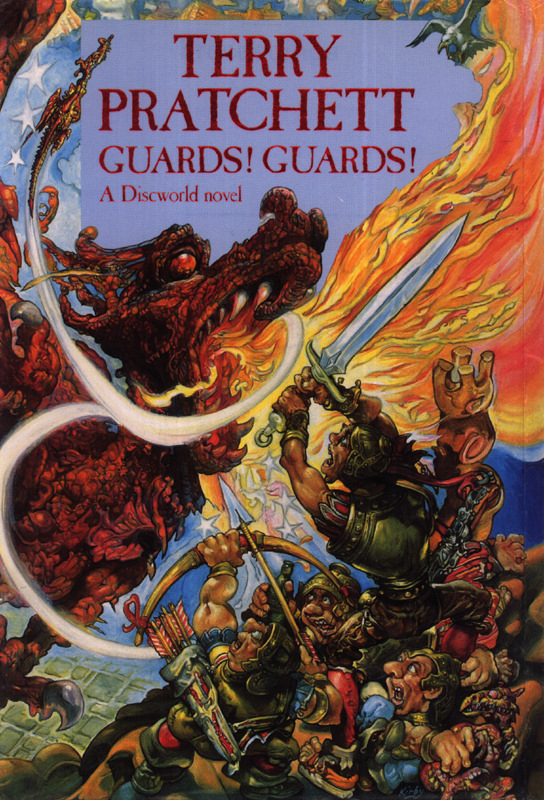
That's page one of Guards! Guards!. That's our hero.
What happens over the next nine novels is one of the most honest, unsentimental recovery arcs in fantasy fiction. Pratchett doesn't sanitize it. He doesn't turn it into a triumphant narrative of willpower. Instead, he gives us something rarer: a man who stays sober because he's found a reason to, and a wife who is the reason.
This is Sam Vimes' sobriety arc, and it's the foundation everything else in the Watch series is built on.
The Man in the Gutter
When Pratchett introduces Sam Vimes in Guards! Guards!, he's giving us a particular kind of fantasy character we don't see much: the washed-up authority figure at the end of his rope.
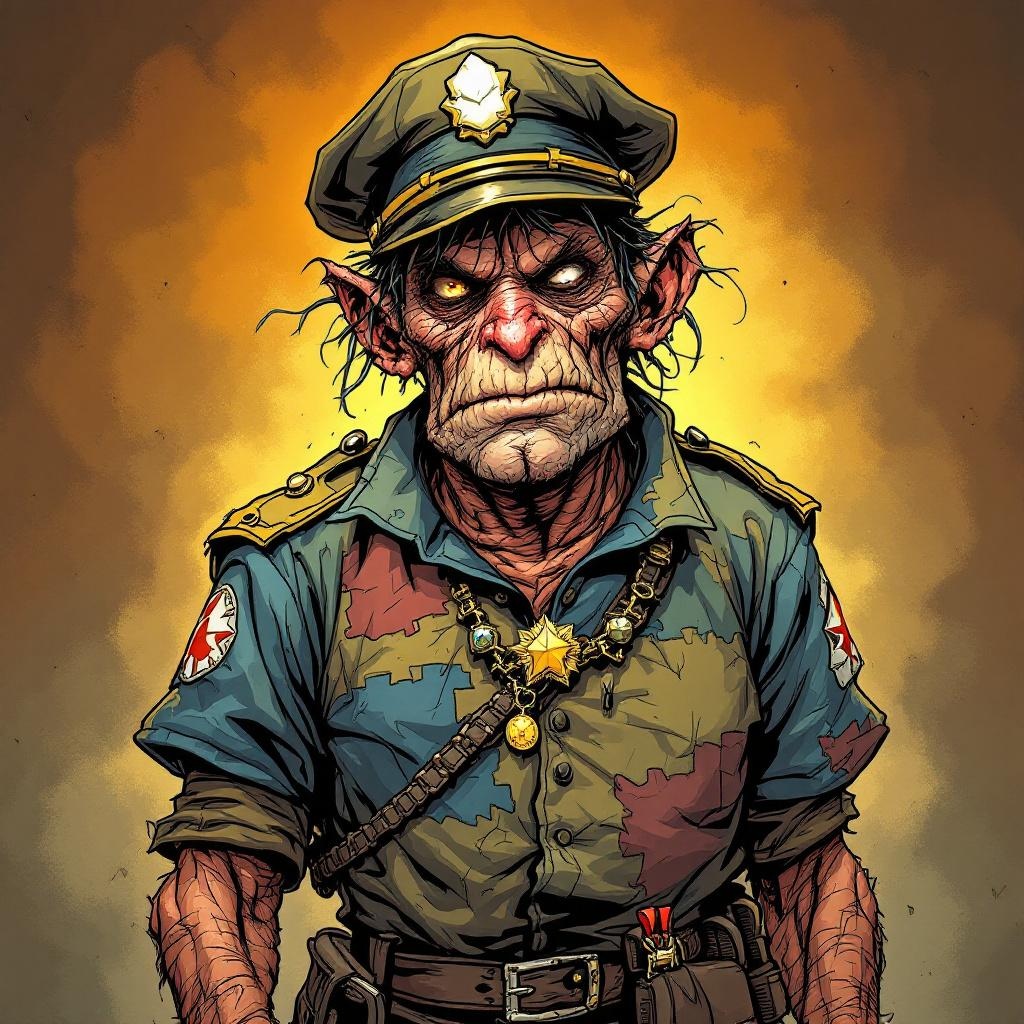
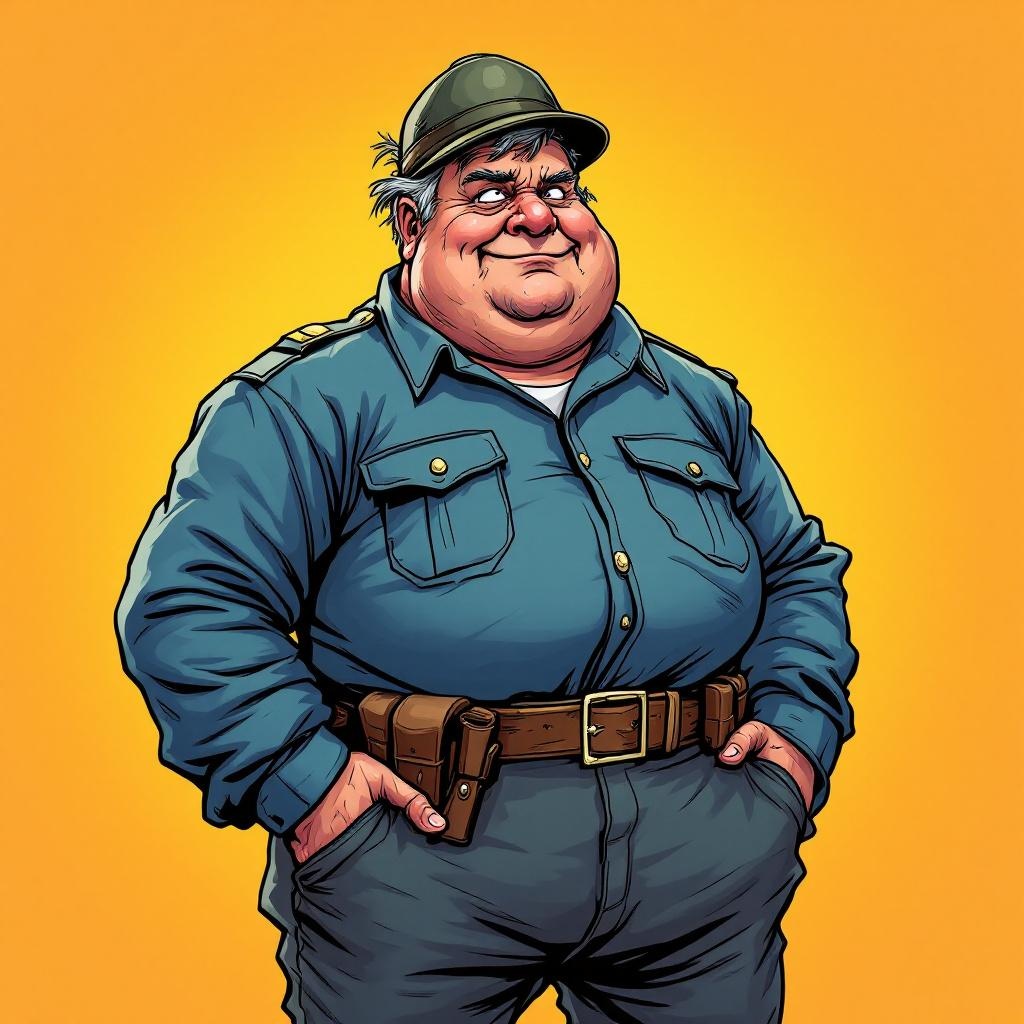
Vimes is Captain of the Night Watch, which is less a police force and more a joke the city tells itself. The Watch has been deliberately made irrelevant by generations of Patricians who prefer the Thieves' Guild and Assassins' Guild to handle "crime" officially. What's left for Vimes to command is Sergeant Colon (a coward), Corporal Nobbs (a thief), and himself (a drunk).
So he drinks. Because what else is there?

Pratchett isn't coy about what Vimes' drinking actually is. It's not rakish, or charming, or the sort of tasteful "functional alcoholism" fantasy often romanticizes. It's pathetic. He wakes up in gutters. His uniform is a mess. He's functional only in the narrowest sense—he can still put one foot in front of the other, eventually, and that's the only qualification his job currently requires.
"Sam Vimes drank because the world was unbearable when he was sober."
The genius move here is that Pratchett establishes Vimes' alcoholism before giving us any reason to love him. We meet the drunk first, and then slowly, through nine books, we earn the right to see the man underneath. Most fantasy protagonists are heroic first and flawed second. Vimes is flawed first, heroic only because he keeps choosing to be.
Knurd: Why Sobriety Was the Problem
To understand why Vimes drinks, you have to understand a concept Pratchett invented specifically for him: knurd.
Knurd is "drunk" spelled backwards, and it's a state Pratchett describes as the opposite of drunkenness—not the absence of drunkenness, which is merely sobriety, but actual opposite. Just as far from sobriety in the wrong direction.
Most people, according to Pratchett's thoroughly made-up but emotionally true neurology, produce a small amount of natural alcohol in their bodies. This natural buzz is what allows ordinary humans to ignore the full horror of existence. It's how you get through the day without curling into a ball at the realization that everything is finite and mostly awful.
Vimes' body doesn't produce enough of this natural buffer. He's running about two drinks below everyone else, all the time. Where a normal person sees a cheerful pub, Vimes sees desperation and failed lives. Where a normal person sees a city, Vimes sees the full weight of every crime that ever happened on these cobblestones.
Sobriety, for Vimes, isn't neutral. It's unbearable clarity.
So he drinks. Not to get happy—to get to the baseline that other people start from. The problem, as he himself admits, is that he can never get the dose right. Either he's knurd or he's drunk. There's no middle ground.
This is one of Pratchett's most sympathetic portrayals of addiction. He's not saying Vimes drinks because he's weak or because he enjoys it. He's saying Vimes drinks because being awake inside Sam Vimes' head without chemical help is a kind of torture. The alcoholism is self-medication for a condition the Disc has no name for, because the Disc can't see it, because nobody else feels it.
If that sounds familiar, it's because it is. Pratchett is writing about a certain kind of depression without ever using the word.
Sybil Changes Everything
The turning point in Vimes' life doesn't happen on the page. We see the before (Vimes in the gutter) and we see the after (Vimes married, sober, commanding a functional Watch), but the transformation happens in the gaps between books.
What Pratchett gives us instead is the reason: Lady Sybil Ramkin.
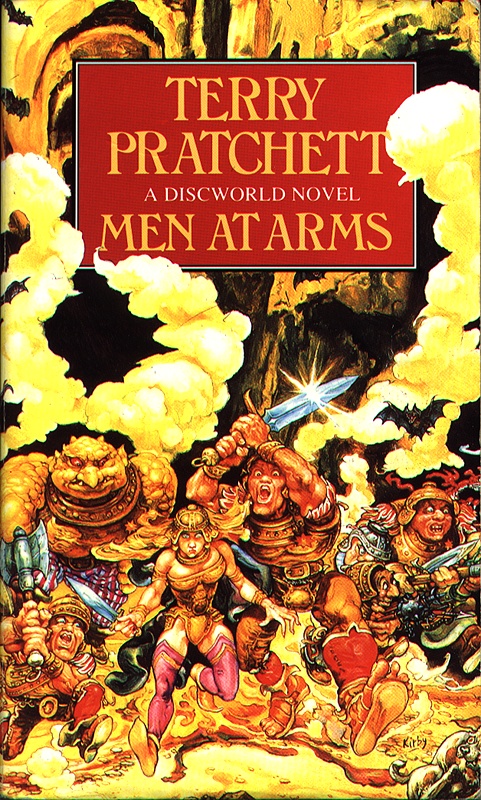
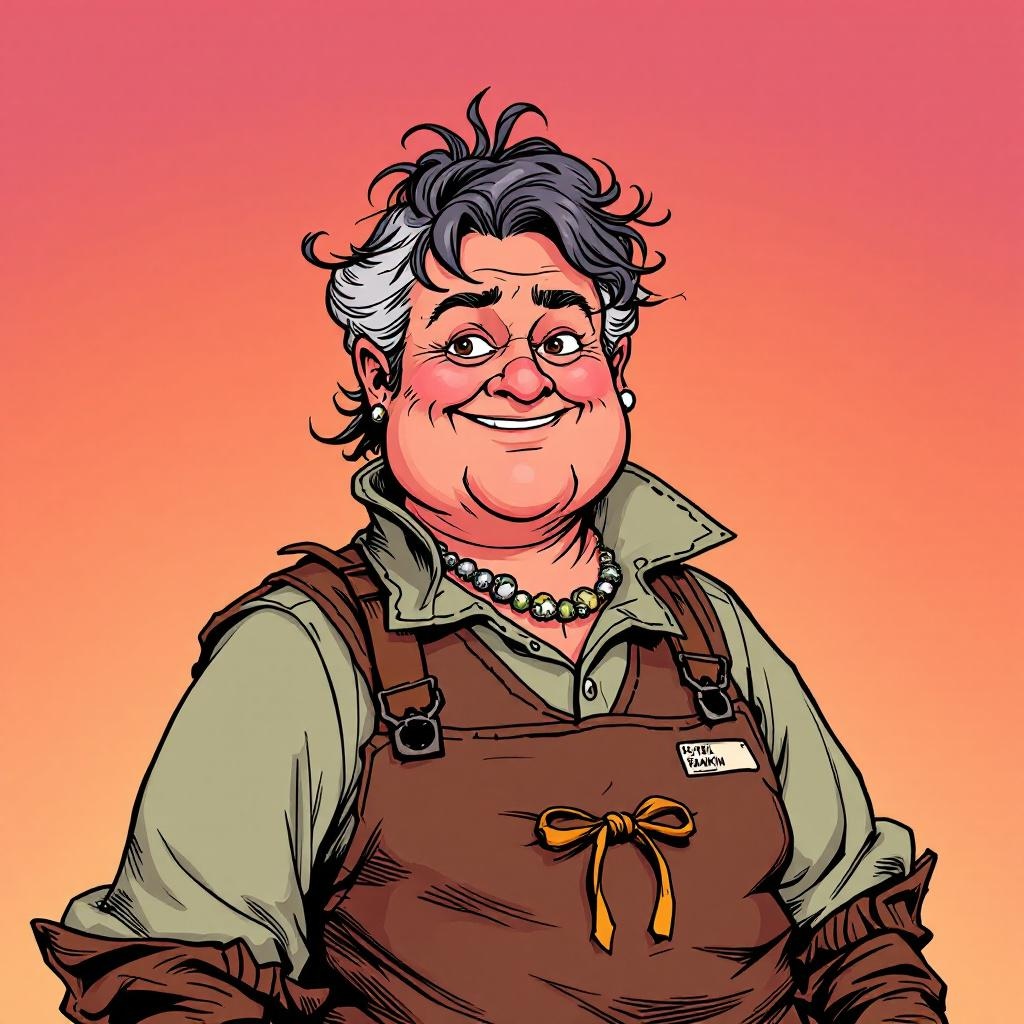
Sybil is one of the most important characters in Discworld, and her importance is often underestimated because she's quiet about it. She's the richest woman in Ankh-Morpork. She breeds swamp dragons. She marries Sam Vimes in Men at Arms—the second Watch book—and by the time that happens, he has already, mostly, stopped drinking.
Pratchett is very careful about this. Vimes doesn't get sober to deserve Sybil. He gets sober because he has Sybil. The causality matters.

In the prevailing cultural narrative around addiction, sobriety is often framed as an individual moral achievement—white-knuckled willpower, rock bottom, finding God, pulling yourself up by your bootstraps. Pratchett quietly rejects this. Vimes' willpower is not the thing that saves him. His willpower is, if anything, what got him into the gutter: the stubborn refusal to stop doing a job nobody wanted him to do.
What saves Vimes is having someone to be sober for. Sybil doesn't demand his sobriety. She doesn't lecture. She just is—steady, loving, utterly unimpressed by his self-pity—and her presence makes the prospect of being knurd tolerable because he isn't facing it alone anymore.
This is what Alcoholics Anonymous literature sometimes calls "a reason to stay." Pratchett doesn't use the language of recovery programs, but he understands the principle better than most writers who do. You don't quit drinking for abstract reasons. You quit drinking because something in your life has gotten too valuable to risk.
The Bottle in the Drawer
Here's where Pratchett gets really honest about what recovery looks like.
Vimes keeps a bottle in his desk drawer.
It's never opened. It's never drunk. It's just there—a bottle of Bearhugger's Whisky, sitting in the bottom drawer of his desk at Pseudopolis Yard, waiting.

Vimes calls it his "permanent test." It's a detail Pratchett returns to repeatedly across the Watch books, and it's one of the most emotionally accurate things he ever wrote about addiction.
Why keep a bottle you're not going to drink? Why tempt yourself?
Because recovery isn't a finish line. It's a choice you have to keep making. A man who never has access to alcohol isn't sober—he's just inconvenienced. But a man who has a bottle an arm's length away, at his most stressful moments, and still doesn't drink? That man is actively sober. Every day the bottle stays closed is a day he's chosen not to open it.
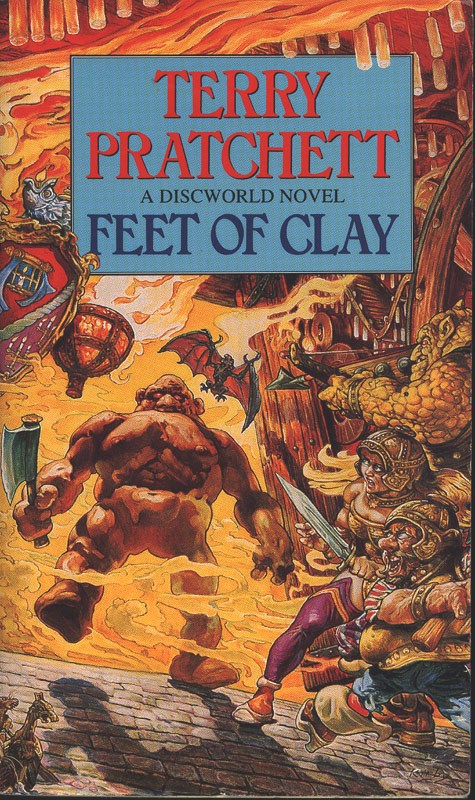
In Feet of Clay, we see how fragile this still is. Under enormous stress, Vimes reaches for the bottom desk drawer. The muscle memory is still there. His hand knows exactly where the bottle is. He doesn't open it. But he reaches. The reaching is important. Pratchett refuses to let us believe Vimes is "cured." He's never cured. He's just choosing, again and again, not to drink today.
Carrot and Fred Colon both know about the bottle. They both keep an eye on him. This is another thing Pratchett quietly gets right: recovery is a community project. Vimes isn't doing it alone. He has Sybil. He has the Watch. He has people who will notice if the bottle level changes—and who love him enough not to make a big deal of it while still making sure it doesn't.
The Willikins Cocktail
By the time of Snuff and Raising Steam, Vimes' sobriety has reached an interesting stage. It's stable. It's integrated. It's no longer a daily white-knuckle effort. But Pratchett still doesn't pretend the urge is gone.
Instead, he introduces a small, domestic solution: Willikins, Vimes' butler and sometime-bodyguard, mixes him non-alcoholic cocktails.
This is such a quiet, thoughtful detail. Willikins isn't a therapist. He's not running an intervention. He's just a competent butler who understands his employer and has found a way to give him the shape of the drink—the glass, the ice, the ritual of the evening unwinder—without the alcohol.
Vimes gets to have the thing he's always wanted at the end of a long day without the thing that would destroy him. And because it's Willikins handing him the glass, there's care built into it. Someone loves him enough to put effort into the mock-cocktail. Someone has thought about his comfort.
This is what sustained recovery looks like. Not dramatic. Not triumphant. Just a butler, a cocktail glass, and a man who is going to get through another evening as himself.
Why This Arc Matters
"Sobriety alone didn't save him. Love did."
Fantasy literature, like most genre fiction, has a weird relationship with alcohol. Heroes drink constantly and nothing ever seems to come of it. Dwarves have their ale, wizards have their wine, and nobody ever ends up in a gutter the morning after. When addiction does show up, it's usually as a plot device: the tortured detective with the whisky bottle, the mentor figure drinking himself to an early grave.
Vimes is different. His alcoholism is not a character trait for flavor. It's a condition he has to manage, every day, for the rest of his life. And Pratchett gives it the weight it deserves.
What makes this one of fantasy's best recovery stories isn't the drinking. It's the aftermath. Most stories about addiction end at rock bottom or at the decision to quit. Pratchett keeps writing, and keeps writing, and shows us what it actually looks like to stay sober for years—the bottle in the drawer, the urge to reach, the butler with the cocktail, the wife who never makes it a performance.
He shows us that recovery is:
- Specific: Vimes has Sybil. Vimes has the Watch. Recovery isn't a universal method, it's a particular life.
- Ongoing: There's no cure. The bottle stays in the drawer for a reason.
- Communal: Carrot watches. Colon watches. Willikins watches. Nobody does this alone.
- Unsentimental: Vimes doesn't have epiphanies about his sobriety. He just lives it.
- Unfinished: Even in the last Watch novels, the urge is still there. It never leaves.
This is how addiction actually works. Pratchett, who was never publicly identified as being in recovery himself but who had the empathy of someone who understood the territory, wrote it with a clarity that most "serious" literary fiction doesn't manage.
The Recovery That Built a Series
Here's the thing you realize, re-reading the Watch books with this in mind: every single thing Sam Vimes accomplishes across nine novels depends on him having gotten sober.
The Watch becomes a real police force because Vimes is present enough to lead it. He marries Sybil because he's not drunk enough to lose her. He becomes a father because he's functional enough to be one. He reads to Young Sam at six o'clock every night—a ritual that becomes sacred—and that ritual only works because Vimes can be counted on to be home, sober, at six.
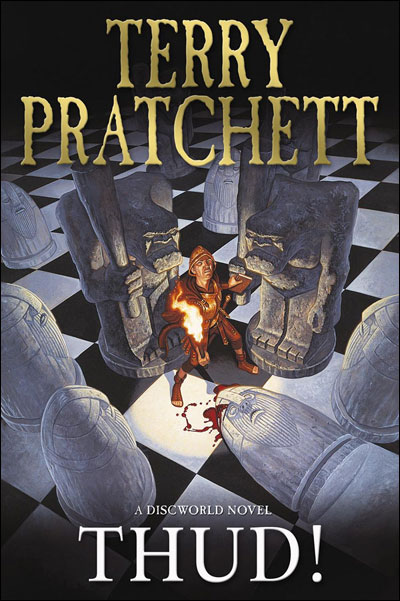
The boots theory, the Beast, the Guarding Dark, the moral crusades against slavery and prejudice, the hundreds of small moments of heroism across Men at Arms, Feet of Clay, Jingo, The Fifth Elephant, Night Watch, Thud!, Snuff, and Raising Steam—none of it happens if Vimes is still in the gutter.
Sobriety isn't the theme of any single Watch book. It's the foundation underneath all of them. It's the invisible thing that makes the visible things possible.
And Pratchett never forgets where it started. Even in the late novels, you can feel the shadow of the man in the gutter. Vimes himself never forgets. When things get hard, his hand still reaches for the drawer.

Where to Start If This Arc Intrigues You
If you want to experience Vimes' sobriety arc in full, the reading order matters more than you might think.
Start with Guards! Guards!. You have to see the gutter. You have to see the drunk. The later books only hit right if you've seen what Vimes was before Sybil.
Then read the Watch books in order: Men at Arms, Feet of Clay, Jingo, The Fifth Elephant, Night Watch, Thud!, Snuff, Raising Steam. Watch for the bottle in the drawer. Watch for the moments when his hand reaches toward it. Watch for Sybil in the background, calmly being the anchor that holds him in place.
You'll notice Pratchett never makes a big deal of it. There's no Very Special Episode where Vimes confronts his alcoholism directly. It's just there, threaded through every book, a quiet constant under everything else he does. Which is, again, what recovery actually looks like. Not a speech. A lifetime of small choices.
The Bottom Line
The first time we meet Sam Vimes, he's in a gutter. The last time we meet him, he's a duke, a commander, a husband, and a father—and there's still a bottle in his desk drawer that he's choosing, today, not to open.
That's Pratchett's recovery story. It doesn't promise you'll be cured. It promises that if you have something worth staying sober for, you can stay sober. And then it shows you, book after book, year after fictional year, what that actually looks like.
No triumphant speeches. No rock-bottom revelations. Just a woman who loves him, a job that needs him, a son who's waiting at six o'clock, and a bottle that stays closed.
That's the arc. It's one of the best things Pratchett ever wrote, and he wrote it so quietly that most readers don't realize it's there until they look for it.
The turtle moves. Vimes doesn't drink today.
Want to explore more of Sam Vimes' depths? Read about the Beast he keeps caged, or discover why he refuses to buy expensive boots even as Duke of Ankh.