The Eternal Coward: Death's Theory About Why Rincewind Can't Die
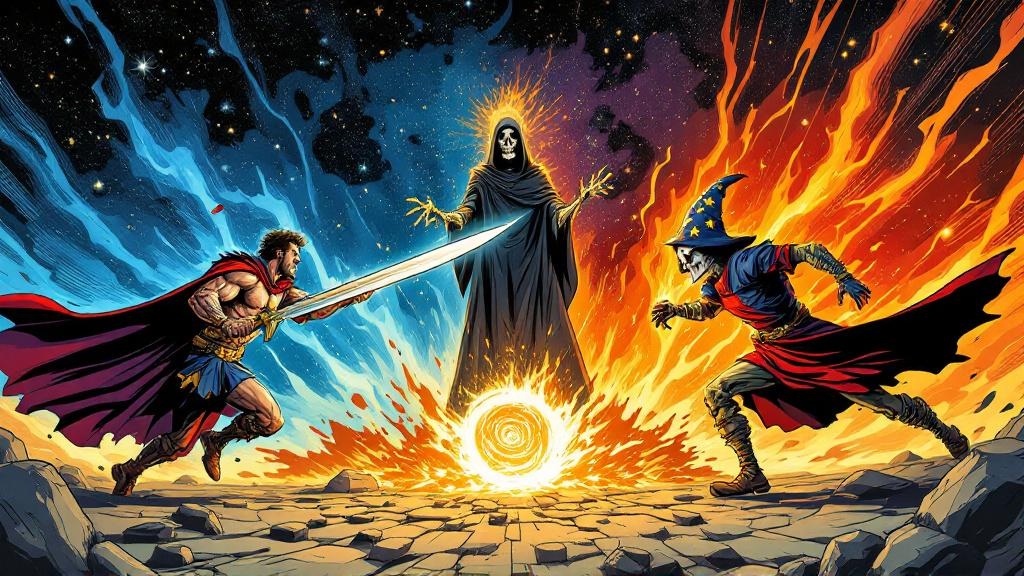
Death himself has a theory about Rincewind: if every culture has an Eternal Champion, maybe the Discworld needs an Eternal Coward. Here's what that means.
The Eternal Coward: Death's Theory About Why Rincewind Can't Die
Every culture on the Disc has a legend about the Eternal Champion—the great hero who'll be reborn in the hour of greatest need, sword raised, jaw set, ready to save the world.
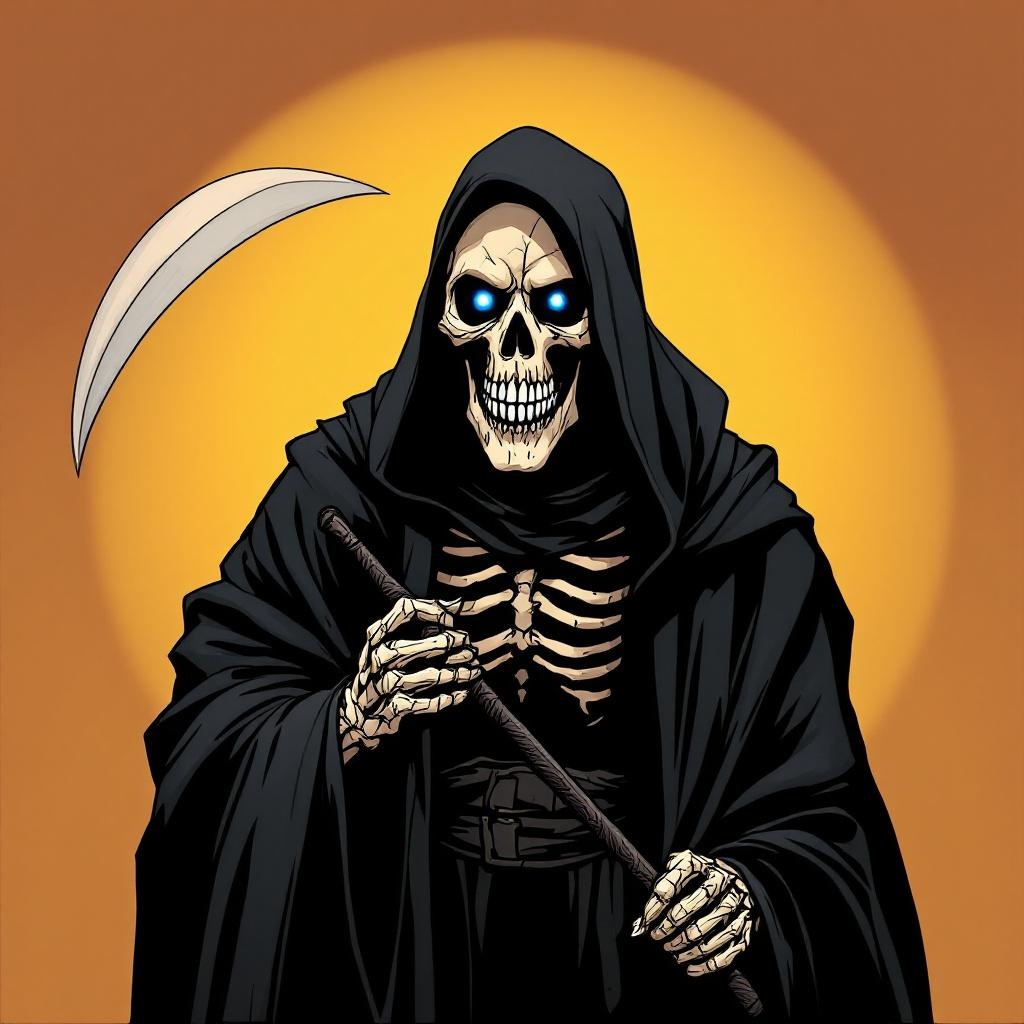
Death knows about all of them. He's met most of them. He's also collected them, eventually.
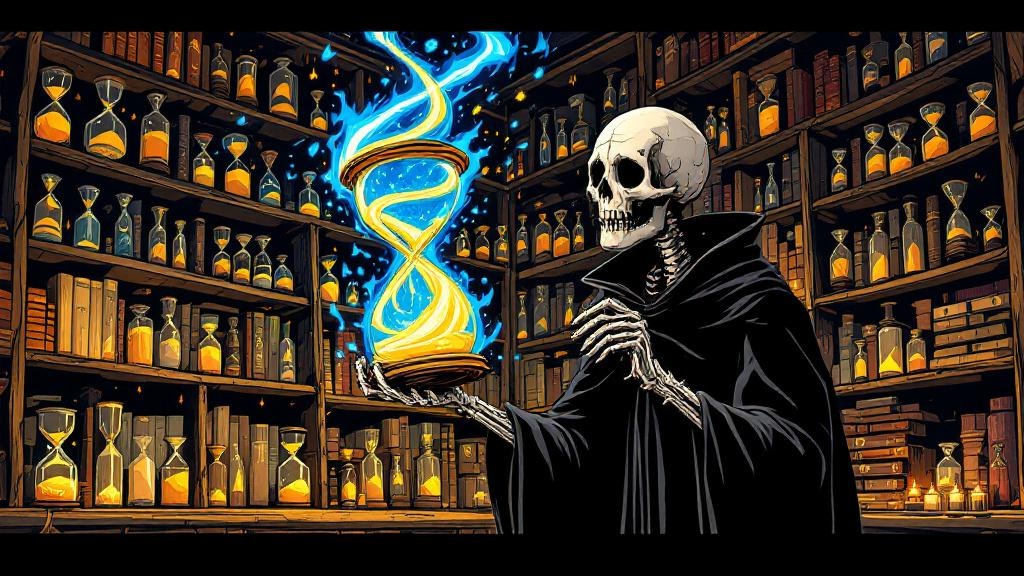
But Death has a problem. He keeps Rincewind's life-timer on a special shelf, and he can't make sense of it. The sand doesn't just flow—it stops, reverses, loops back on itself. Trying to read it is, as Death observes, like trying to find the starting point on a roll of really clear sticky tape.
And so, during the events of The Last Continent, Death arrives at a theory: if the Discworld operates on the principle that everything must have its opposite—Drunk and Knurd, Crime and Anticrime, Matter and Antimatter—then the Eternal Champion must have a counterpart. An Eternal Coward. The anti-hero with a thousand retreating backs.
He's looking at Rincewind's life-timer when he thinks this.
The Logic of Opposites
The beauty of Death's theory is that it's completely consistent with how the Discworld works.
"Dead is only for once, but running away is for ever."
Pratchett built his world on the principle of narrative causality—stories shape reality, and if enough people believe something, it becomes true. The Disc runs on patterns and archetypes. There must be a Chosen One, a Dark Lord, a Plucky Sidekick. The stories demand it.
So here's the question: if every mythology requires a hero who charges forward, doesn't every mythology also require someone running in the other direction?
It's not a joke. It's cosmology.
Michael Moorcock's Eternal Champion—the literary concept Pratchett is riffing on—is a figure reborn across infinite realities, always fighting, always suffering, always caught between the forces of Law and Chaos. The Champion with a Thousand Faces, as Joseph Campbell might put it.
Rincewind is the Champion with a Thousand Retreating Backs. He doesn't fight the forces of chaos. He runs from them. And somehow, improbably, the world keeps getting saved anyway.
The Life-Timer Problem
Here's what makes Death's theory more than idle speculation: the evidence.
Normal life-timers are hourglasses. Sand flows from top to bottom, and when it runs out, Death shows up. Simple. Reliable. Death likes reliable.
Rincewind's life-timer doesn't work that way. The sand reverses course. It stops. It changes speed. Death has watched it for years and cannot determine when Rincewind is supposed to die—or, for that matter, how old he actually is.
This isn't something that happens to ordinary cowards. Ordinary cowards die all the time. Rincewind has fallen off the edge of the world, been trapped in the Dungeon Dimensions, escaped Hell through a bureaucratic loophole, survived a war in which both sides were trying to kill him, and been launched into space in a wooden vessel powered by swamp dragons.
He should be dead a dozen times over. Instead, his life-timer just keeps... doing whatever it's doing.
If you were Death—omniscient, meticulous, a being who has collected every life since the beginning of time—and you encountered a life-timer that broke every rule you understood, you'd start forming theories too.
Pre-Emptive Karma and Cosmic Unfairness
Rincewind has his own theory about his impossible survival, and it's considerably bleaker than Death's.
He calls it pre-emptive karma. The root problem, as Rincewind sees it, is that if it even looks as though something nice is going to happen to him in the near future, something terrible happens right now. And it goes on happening to him right through the part where the good stuff should be happening, so he never actually experiences it.
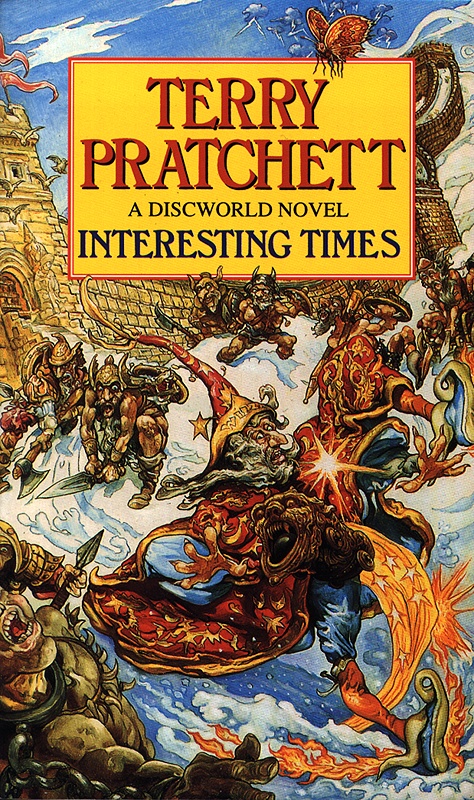
"The world had too many heroes and didn't need another one. Whereas the world had only one Rincewind and he owed it to the world to keep this one alive for as long as possible."— Rincewind, Interesting Times
It's like getting the indigestion before the meal and feeling so dreadful that you never actually eat anything. Somewhere in the world, he reasons, there must be someone to whom only good things happen—a person getting all his karmic rewards by mistake.
This is funny. It's also, if you think about it, exactly what you'd expect the Eternal Coward's life to look like.
The Eternal Champion gets glory, adoration, songs written about them. They also get cursed to fight forever, lose everyone they love, and die violently in every incarnation. The Eternal Coward gets... pre-emptive karma. No glory, no songs, no adoration. Just the constant cosmic guarantee that things will go wrong, forcing him to run, which somehow keeps him alive.
It's the universe's most unfair insurance policy. You never get to enjoy anything, but you never die either.
What Yossarian Would Recognize
You can't discuss the Eternal Coward without mentioning the character Rincewind most resembles from outside Pratchett's universe: Yossarian from Joseph Heller's Catch-22.
Yossarian is a bombardier in World War II who has figured out something his superiors consider treasonous: the enemy is trying to kill him. Not his country, not his side—him. And his response is entirely logical. He wants to stop flying missions. He wants to survive. He considers concepts like "courage" and "duty" to be inventions designed to get people like him killed for the benefit of people who'll never fly a mission themselves.
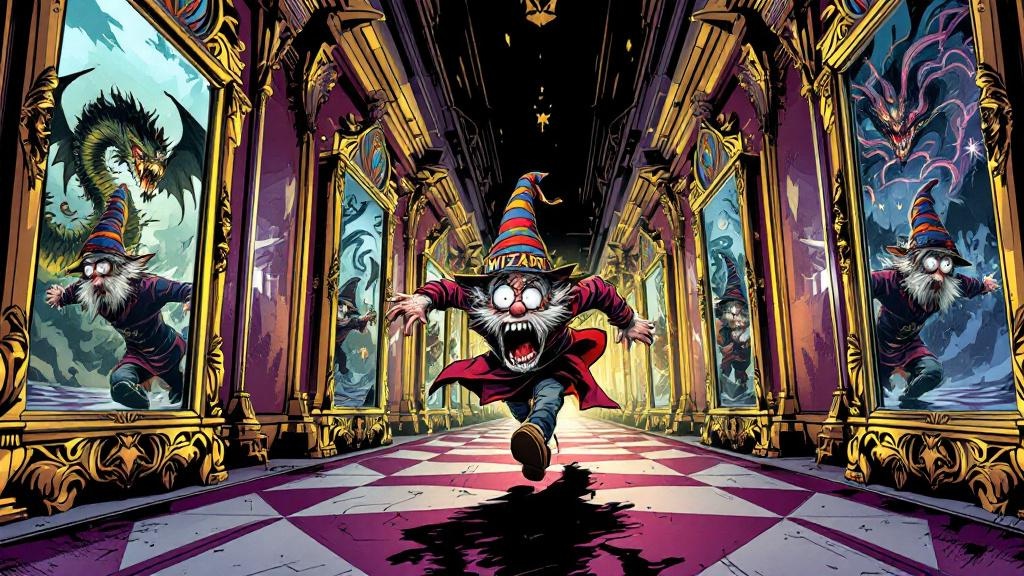
Rincewind would understand Yossarian immediately. "No, there aren't [causes worth dying for]!" he tells people in Interesting Times. "Because you've only got one life but you can pick up another five causes on any street corner!"
The difference is that Yossarian eventually deserts—he walks away from the war entirely. Rincewind can't. The universe won't let him. Every time he tries to settle down somewhere quiet, a new catastrophe finds him. He's dragged to the Counterweight Continent by magical summons. He's deposited on XXXX by cosmic forces. He's roped into a space mission because Lord Vetinari understands that Rincewind's self-preservation instinct makes him the most motivated crew member possible.
Yossarian is a coward who escapes the system. Rincewind is a coward the system refuses to release.
That's what makes Death's theory so compelling. Yossarian is one man making a rational choice. Rincewind might be something else entirely—a function of the universe, as necessary and permanent as gravity or narrativium.
The Resignation That Proves It
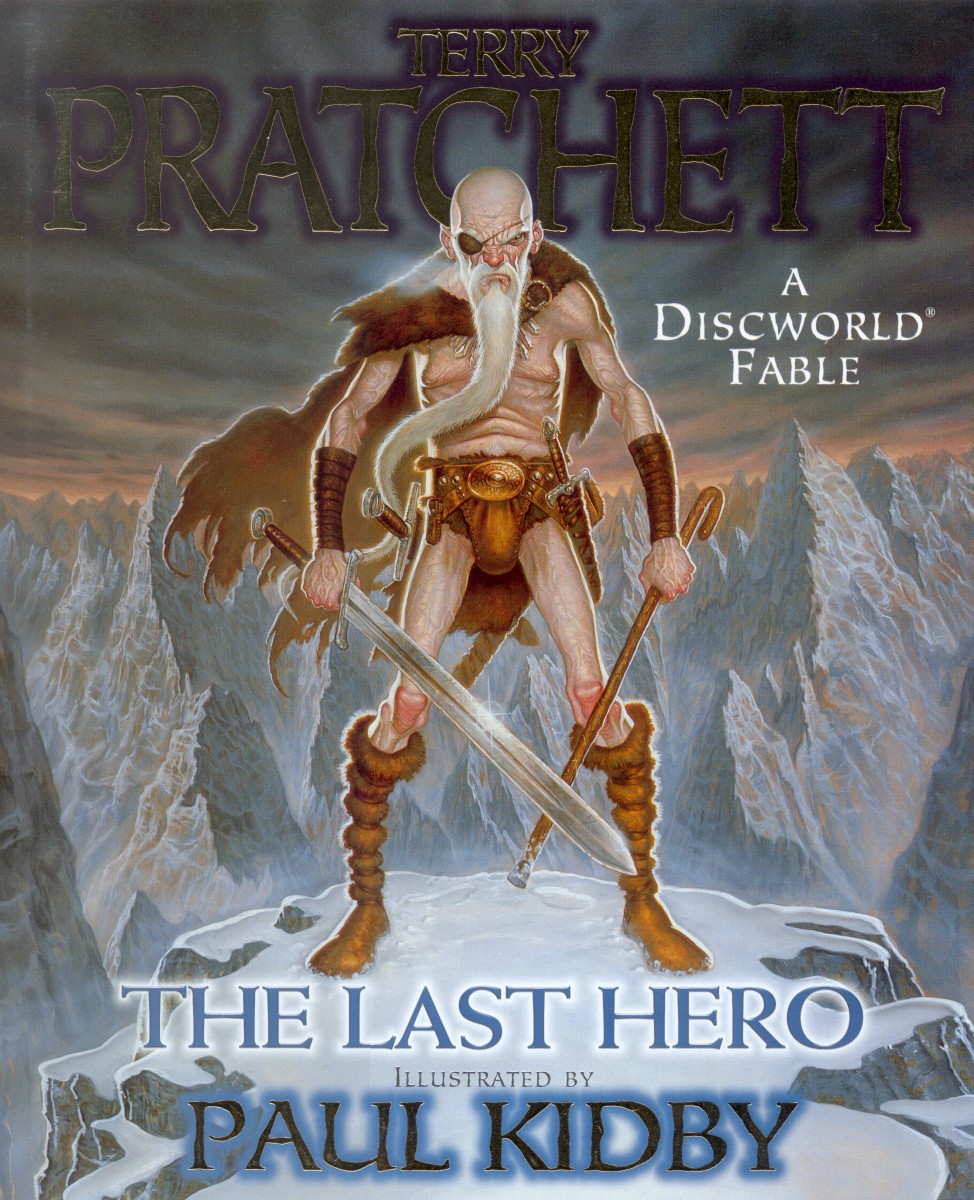
The strongest evidence for the Eternal Coward theory comes from The Last Hero, when Cohen the Barbarian and his Silver Horde decide to return fire to the gods—by blowing up Cori Celesti with a cart of explosives. If they succeed, the Disc's magical field collapses and everyone dies.
Someone has to stop them. This requires flying to the mountain of the gods in a wooden ship powered by swamp dragons—essentially strapping yourself to a bomb and hoping for the best.
Rincewind volunteers.
Not out of bravery. Out of resignation. He knows—with the bone-deep certainty of a man who has been conscripted by the universe eight times already—that if he doesn't volunteer, something will put him on that ship anyway. A magical summons. A collapsing floor. An improbable series of events ending with him in the pilot's seat wondering how it happened again.
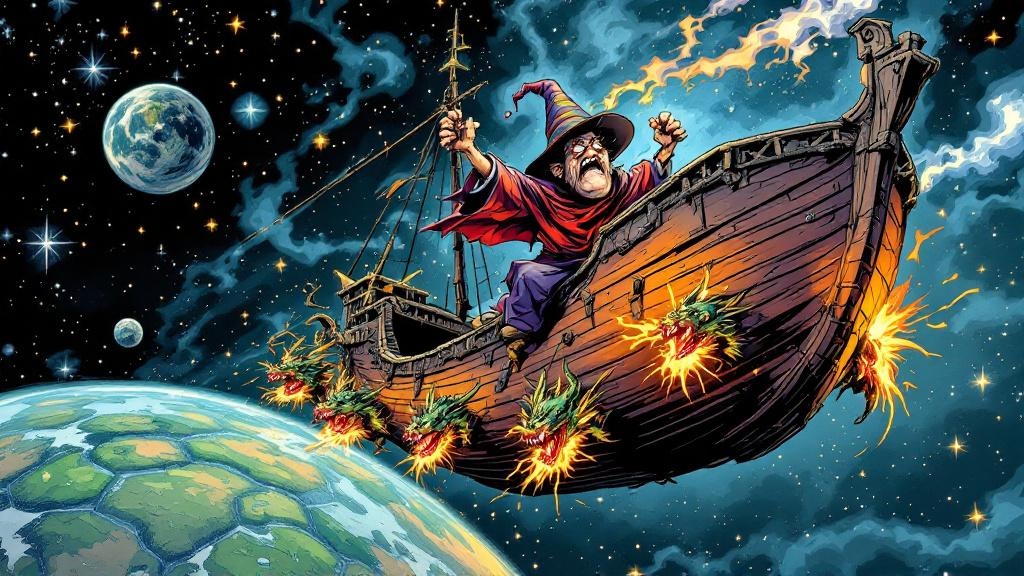
"It takes guts to run away, you know," he says in Interesting Times. "Lots of people would be as cowardly as me if they were brave enough."
That's not a punchline. That's the Eternal Coward recognizing what he is. He knows the pattern. He knows the story requires him. And he's too tired to fight the narrative anymore.
Lord Vetinari, naturally, finds a way to Catch-22 him into it regardless. When Rincewind suggests he might be too insane to go on such a dangerous mission, Vetinari replies that he'd only send the keenest, coolest minds on a vital errand of this kind. "I think there's a catch there," Rincewind mutters.
There always is.
The Cosmic Balance Sheet
So what does the Eternal Coward actually do for the universe?
If the Eternal Champion exists to charge toward danger, to face threats head-on, to embody humanity's belief that courage can overcome anything—then the Eternal Coward exists to embody the equal and opposite truth: that running away is also a valid survival strategy.
Think about it from an evolutionary perspective. Rincewind makes this argument himself in The Light Fantastic, discussing the arrival of saber-toothed tigers. Some proto-humans stood their ground to fight. Others panicked and ran. The runners lived to have children. The fighters became lunch.
The Discworld needs its heroes—your Carrot Ironfounderssons and Sam Vimeses and Granny Weatherwaxes. People who plant their feet and refuse to yield. But it also needs its Rincewinds. People who see the saber-toothed tiger and, through some deep cosmic wisdom that looks exactly like cowardice, run screaming in the opposite direction.
"He hated weapons. People shot you instantly if they thought you were going to shoot them. But if you were unarmed, they often stopped to talk."— Rincewind, The Last Continent
Both responses preserve life. Both serve the species. The hero saves others by standing firm. The coward saves himself by running—and somehow, in Rincewind's case, saves everyone else by accident along the way.
That's the joke, and it's also the point. The Eternal Coward doesn't intend to save the world. He doesn't even want to be in the same postcode as the world's problems. But by running away from danger, he keeps running into the solution. The universe uses his cowardice like a pinball machine, bouncing him off bumpers until he lands in exactly the right place at exactly the right time.
Why the Theory Matters
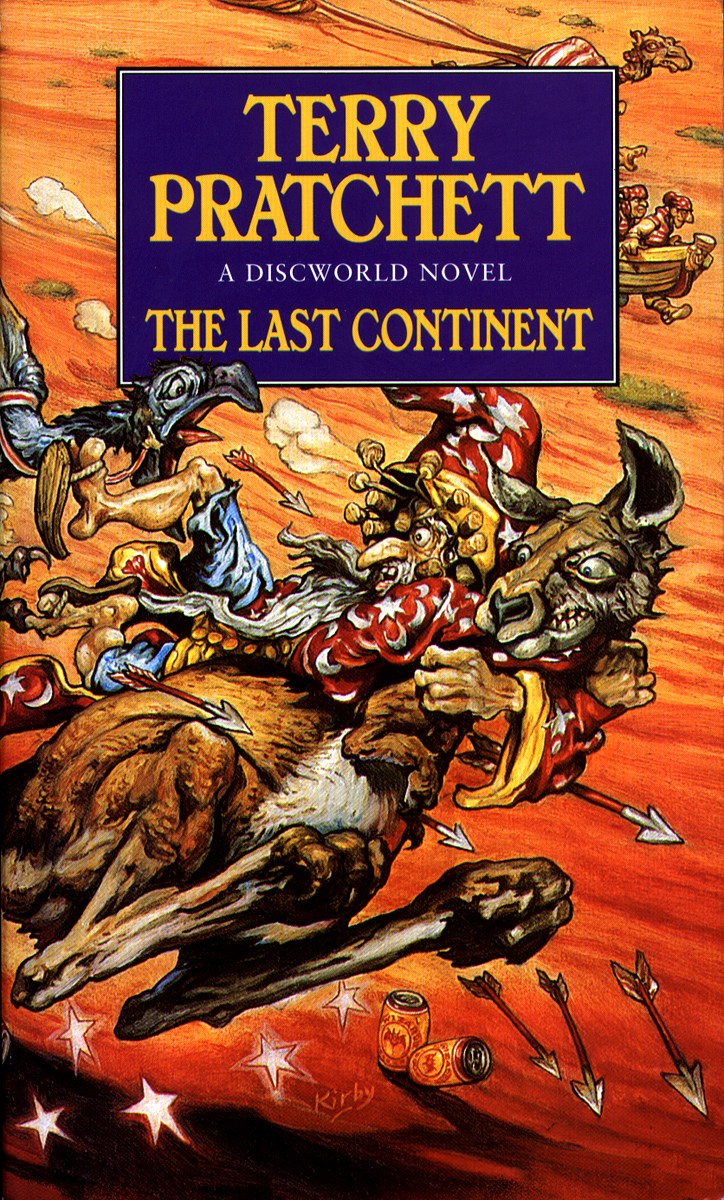
Death's theory about Rincewind is easy to miss. It's a brief observation in The Last Continent, buried between jokes about evolution and the Australian outback. But it reframes Rincewind's entire eight-book arc.
Without the theory, Rincewind is a comic character. He runs away. Funny things happen. He survives through implausible luck. Good times.
With the theory, Rincewind is something else: a cosmic archetype. His survival isn't luck—it's purpose. He can't die because the universe needs an Eternal Coward the way it needs an Eternal Champion. His life-timer is incomprehensible because he's not living one life. He's living all of them—every incarnation of the coward who runs, who screams, who survives because survival is its own form of heroism.
And pre-emptive karma isn't a curse. It's the price. The Champion pays with suffering and early death. The Coward pays with a life where nothing good happens but nothing final does either. Different archetypal contracts. Same cosmic employer.
Whether Death is right, we'll never know. Pratchett left it as a theory—an observation from a being who has watched billions of lives end and found one that simply... won't.
But the next time you read a Rincewind novel and marvel at another impossible escape, another improbable survival, another situation where running away somehow saves the day—remember that Death is watching too. And he's been taking notes.
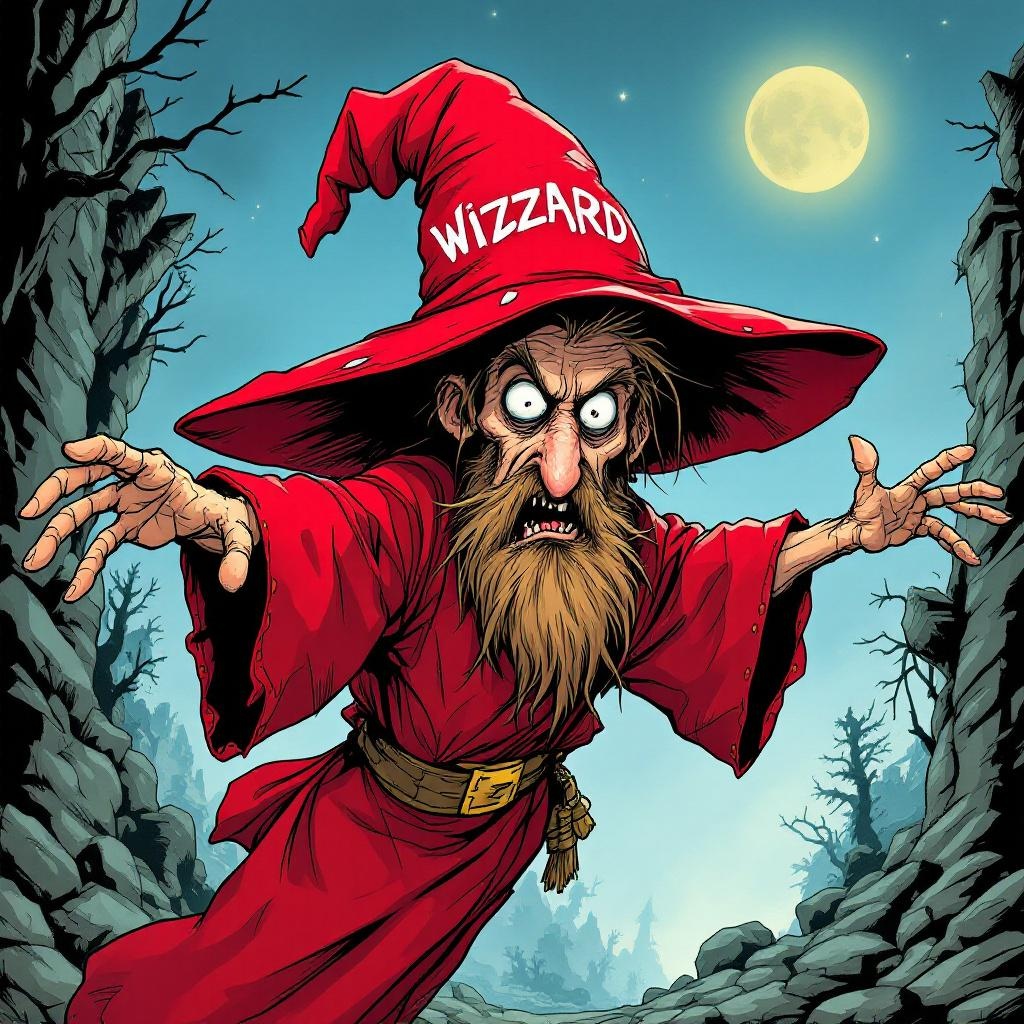

For Rincewind's fully articulated philosophy of survival through retreat, read Rincewind's Philosophy of Running Away. To see his one exception to the running-away rule, read A Half-Brick in a Sock: Rincewind's Only Act of Deliberate Heroism. And for his unlikely friendship with the Disc's first tourist, see Rincewind and Twoflower: The Discworld's Most Unlikely Friendship.