Rincewind's Philosophy of Running Away: A Survival Guide That Actually Works

While heroes die gloriously, Rincewind has survived dragons, demons, and the Dungeon Dimensions. His philosophy of strategic retreat might be the best survival guide ever written.
Rincewind's Philosophy of Running Away: A Survival Guide That Actually Works
Heroes charge into battle. Heroes face down dragons. Heroes die gloriously with their names etched in legend.
Rincewind has survived dragon attacks, the Dungeon Dimensions, the edge of the world, Hell itself, and a trip to space in a wooden vessel powered by swamp dragons. He's been at ground zero of at least four world-ending events and walked away from all of them.
Maybe the coward knows something the heroes don't.
The Evolutionary Argument
In The Light Fantastic, Pratchett gives us Rincewind's foundational theory of survival. When Twoflower asks what they should do in a crisis, Rincewind's hopeful answer is: "Panic?"
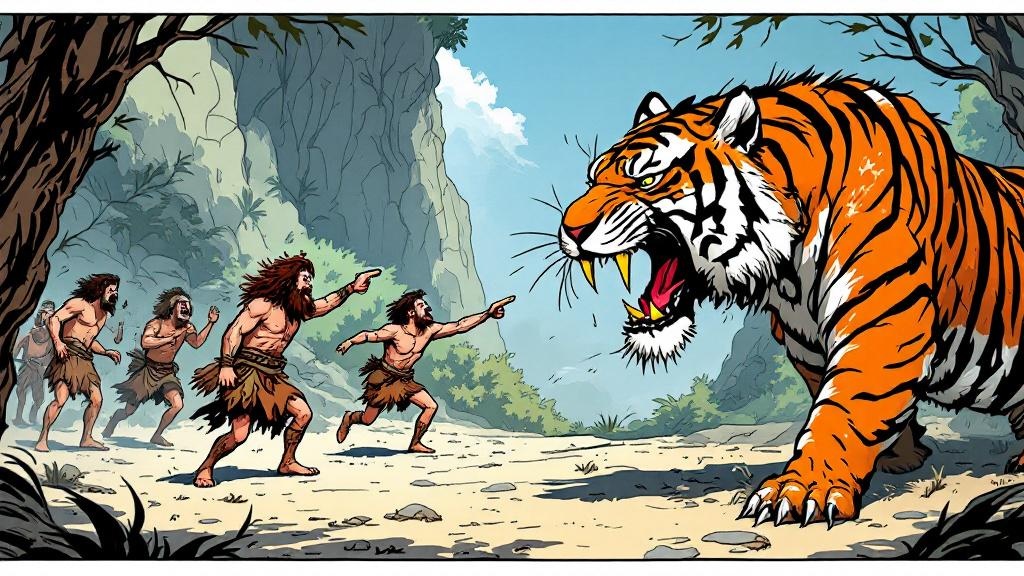
But there's genuine reasoning behind this. Rincewind has always held that panic is the best means of survival. Back in the olden days, his theory goes, people faced with hungry saber-toothed tigers could be divided very simply into those who panicked and those who stood there saying "What a magnificent brute!" and "Here, pussy."
The second group didn't pass on their genes.
This isn't just comedic deflection. It's an argument about natural selection that happens to be delivered by a terrified wizard in a floppy hat. The brave ones who stood their ground became tiger food. The cowards who ran are our ancestors.
"Dead Is Only for Once"
By The Last Continent, Rincewind has refined his survival philosophy into something approaching formal doctrine. When challenged on his constant fleeing, he delivers what might be Discworld's finest justification for cowardice:
"Haven't you noticed that by running away you end up in more trouble?"
"Yes, but, you see, you can run away from that, too. That's the beauty of the system. Dead is only for once, but running away is for ever."
When someone points out that a coward dies a thousand deaths while a hero dies only one, Rincewind has the perfect response: "Yes, but it's the important one."
There's no arguing with that logic. You can survive any number of close calls, embarrassments, and panic attacks. You only get one death. Rincewind has his priorities absolutely straight.
"Dead is only for once, but running away is for ever."
The Religion of Running
Over eight books, Rincewind transforms his cowardice from a character flaw into a fully articulated worldview. By The Last Hero, he's started describing running away as a religion:
It "might not give you eternal life, exactly, but it certainly gives you more life."
That's the key distinction. Other religions promise rewards after death. Rincewind's philosophy promises rewards instead of death. The math is simple: every moment you're running is a moment you're not dying.

The Practical Applications
Rincewind's philosophy isn't just abstract theory. He's developed specific tactical principles that have kept him alive through situations that killed everyone around him.
On Weapons
"He hated weapons, and not just because they'd so often been aimed at him. You got into more trouble if you had a weapon. People shot you instantly if they thought you were going to shoot them. But if you were unarmed, they often stopped to talk."
Admittedly, they tended to say things like "You'll never guess what we're going to do to you, pal," but that took time. And Rincewind could do a lot with a few more seconds. He could use them to live longer in.
This is genuine tactical thinking. An unarmed person is less threatening, which means more hesitation from attackers, which means more time to find an escape route. It's counterintuitive survival wisdom hidden inside a joke.
On Causes
When told there are causes worth dying for, Rincewind is unimpressed:
"No, there aren't! Because you've only got one life but you can pick up another five causes on any street corner!"
Again, the logic is sound. Causes are renewable. Your life isn't. Dying for something doesn't make that thing succeed—it just means you're dead. You can do a lot more for a cause while alive, including running away to fight (or more likely run) another day.
On Direction
In Rincewind's philosophy, "to" always takes care of itself. The important word is "from."
This might be his most practical insight. When you're fleeing danger, worrying about your destination wastes cognitive resources you need for the fleeing. Just run. The "where to" will sort itself out once you're no longer being chased by something with teeth.
The Universe Seems to Agree
Here's the strange thing about Rincewind: despite—or perhaps because of—his absolute commitment to running away, he keeps saving the world.
Death himself has noticed this. In his observation, if every culture has legends of an Eternal Champion who rises in times of need, perhaps there's also an Eternal Coward. Someone who, when faced with waking up one morning to face down a great threat, will pull the covers over his head and ignore the alarm clock.
The universe, it seems, needs both.
Voices have told Rincewind: "You run away a lot. That is good. You are a survivor." When he protests that he's nearly been killed dozens of times, they simply reply: "Exactly."
He's still here. That's the point.




The Librarian's Assessment
The Librarian at Unseen University has known Rincewind for years. His assessment captures something essential:
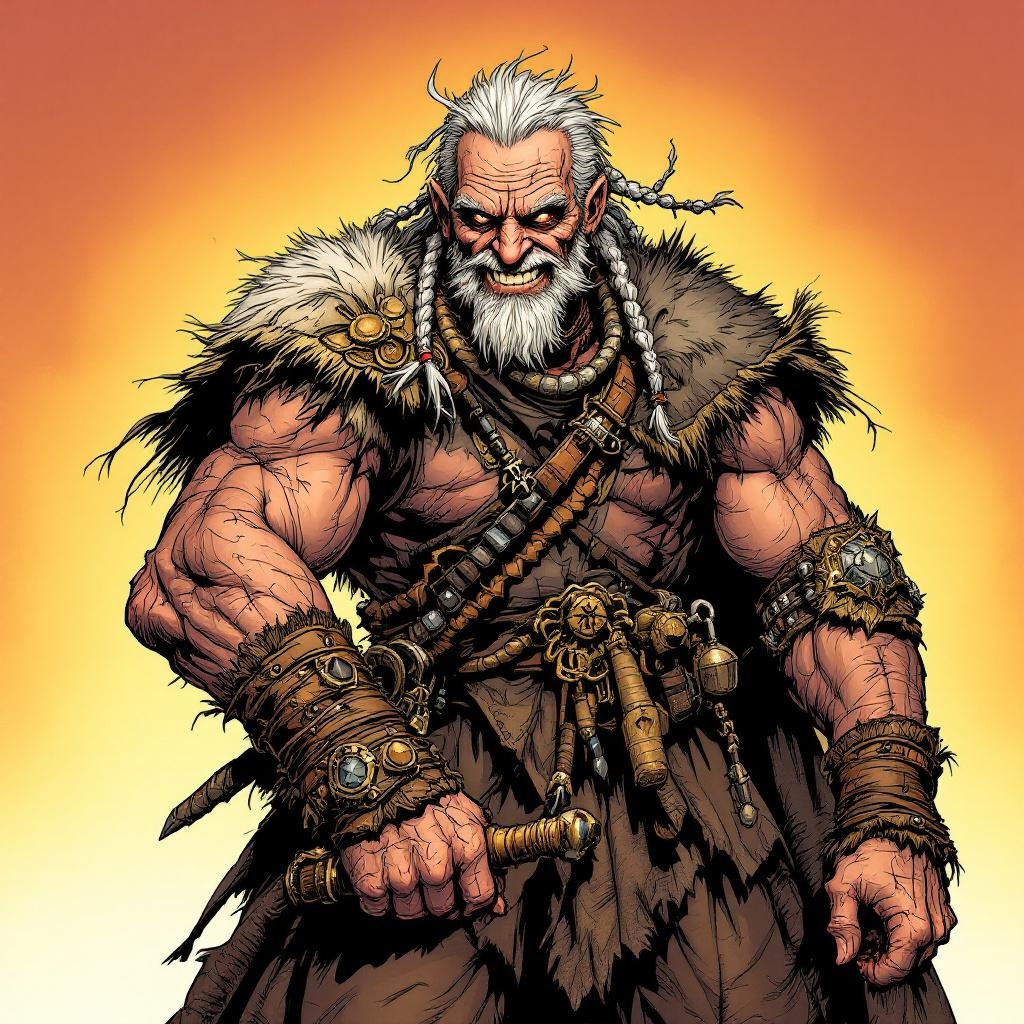
Rincewind "had been his assistant and his friend, and was a good man when it came to peeling a banana. He had also been uniquely good at running away from things. He was not the type to be easily caught."
"Uniquely good" is the key phrase. Most people think of running away as the absence of skill. Rincewind has elevated it to an art form. There's a reason he's still alive when so many heroes aren't.
The Misunderstanding
Not everyone grasps the sophistication of Rincewind's approach. One character tells him:
"You are a man of great cunning and artifice. You laugh in the face of Death. Your affected air of craven cowardice does not fool me."
The narrator notes: "It fooled Rincewind."
This is the beautiful irony. Rincewind's cowardice is entirely genuine. There's no hidden bravery, no secret competence waiting to emerge. He really is exactly as terrified as he appears. And yet he survives anyway. Perhaps because he doesn't pretend to be brave.
"He really is exactly as terrified as he appears. And yet he survives anyway."
What We Can Learn
The genius of Rincewind's philosophy is that it works both as comedy and as genuine wisdom. Pratchett was too clever to write pure parody.
Consider: How many problems in your life got worse because you stayed to fight when you should have walked away? How many arguments escalated because both parties refused to back down? How many situations became dangerous because someone felt they had to prove they weren't afraid?
Rincewind would have been out of there at the first sign of trouble. And he'd be alive to tell the story.
There's freedom in admitting you're scared. There's power in acknowledging that some situations are best handled by strategic retreat. There's wisdom in recognizing that your continued existence matters more than your ego.
"A coward dies a thousand deaths, a hero dies but one." Yes, but it's the important one.
The Racing Champion
Pratchett couldn't resist one more joke about Rincewind's talents:
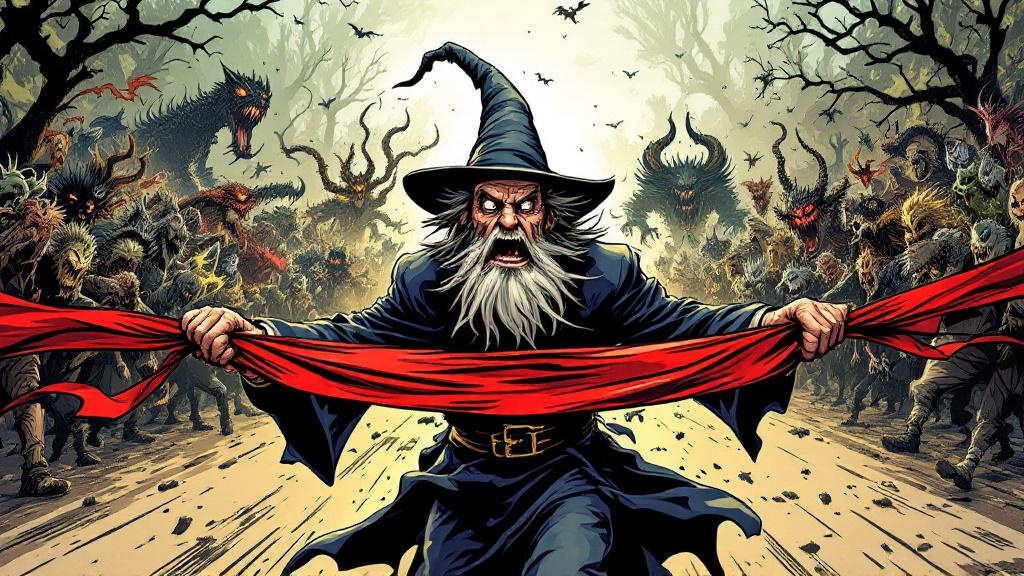
"Rincewind had always been happy to think of himself as a racist. The One Hundred Meters, the Mile, the Marathon—he'd run them all."
The wordplay is classic Pratchett. But there's truth underneath. Rincewind has competed in every distance running has to offer, not for medals or glory, but for survival. He's the most experienced endurance athlete on the Disc—he just didn't choose to be.
The Final Assessment
Death, who has looked Rincewind in the back of his rapidly-retreating head many times, understands something others miss. Despite everything—despite the cowardice, the panic, the undignified fleeing—Rincewind was "a coward and an unwitting clown, but he had several times saved the world in slightly puzzling circumstances."
That's his legacy. Not heroism. Not glory. Not even competence, really. Just survival, and somehow, accidentally, the salvation of everything.
Maybe that's enough. Maybe that's more than enough.




Where to Start Running
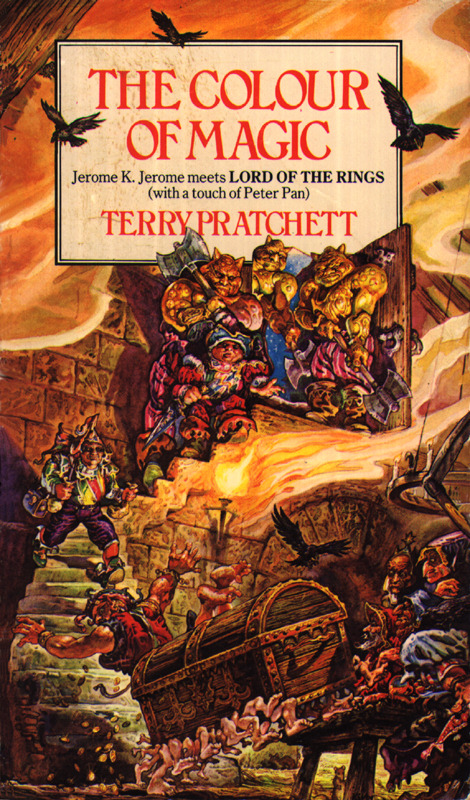
If you want to experience Rincewind's philosophy firsthand, start at the beginning with The Colour of Magic. Watch him flee from dangers in the opening pages and keep running for eight books. You'll see his survival tactics evolve from pure instinct to articulated doctrine.
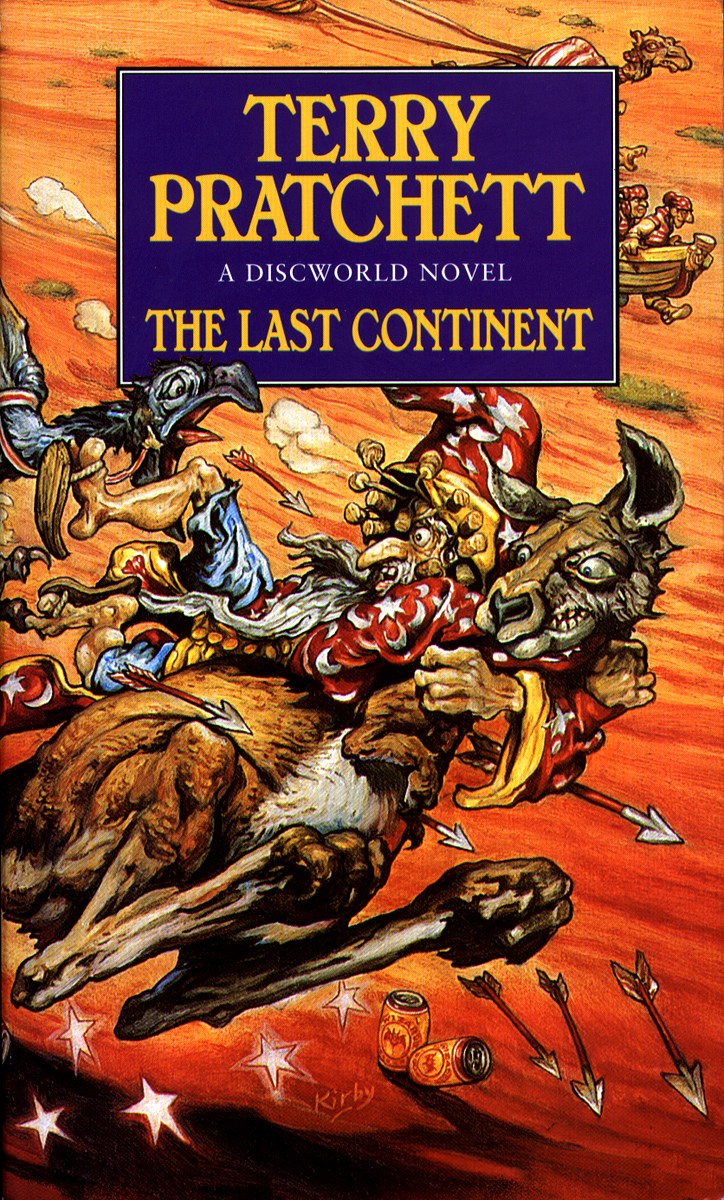
Or jump to The Last Continent, where his philosophy gets its fullest expression. Australia—sorry, XXXX—is a continent where everything is trying to kill you. It's the perfect testing ground for Rincewind's theories.
Either way, you'll meet a character who proves that sometimes the bravest thing you can do is admit you're terrified and start running.
The heroes might get the songs. But Rincewind gets to hear them.
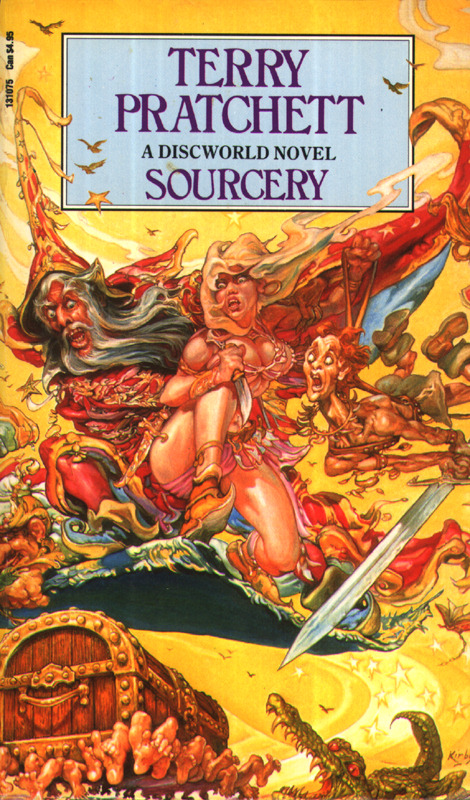
Want to explore more of Rincewind's adventures? Read about how the Octavo incident made him the magical equivalent of zero, or discover why Sourcery contains his one moment of true heroism.