The Octavo Incident: Why Rincewind Can Never Learn Magic
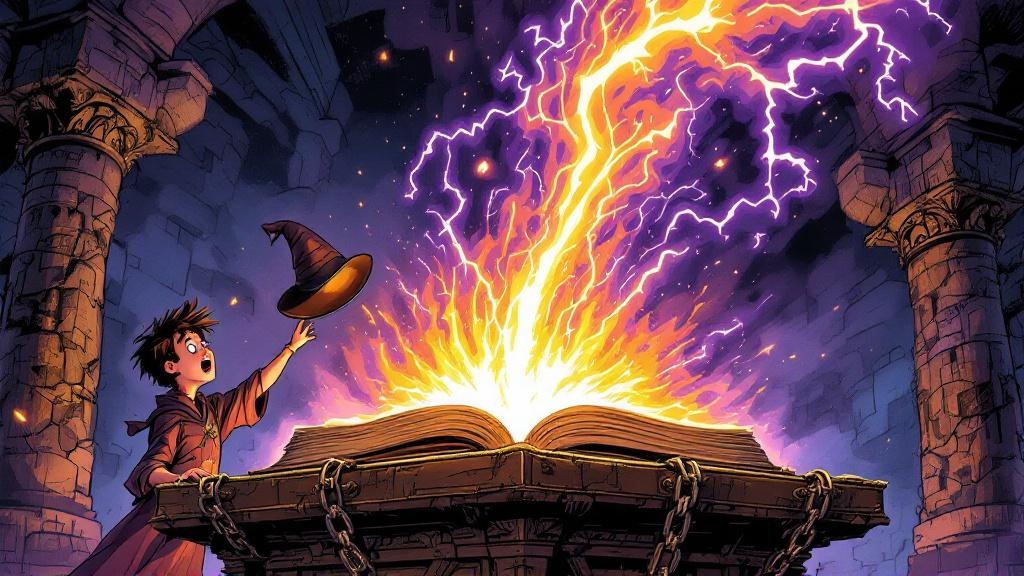
Rincewind opened the most dangerous book in the universe on a bet. One of eight great spells jumped into his head and refused to leave, making him the magical equivalent of zero.
The Octavo Incident: Why Rincewind Can Never Learn Magic
Rincewind once got negative marks in Basic Firestarting. This is an achievement the faculty at Unseen University still debates. How do you get negative marks? Did he actually manage to put fires out? His highest ever exam score was 2%, awarded for spelling his name right.
And yet there's a perfectly good reason why this wizard can't do magic. It isn't stupidity. It isn't laziness. It's because when he was fifteen years old, he opened the most dangerous book in the universe on a bet, and something got in.
The Most Dangerous Book Ever Written
The Octavo isn't just a spellbook. It's the spellbook—the Creator's own grimoire, containing the eight spells used to bring the Discworld into existence. When the Creator finished making a flat world balanced on four elephants on the back of a giant turtle, he left his notes behind. As you do.
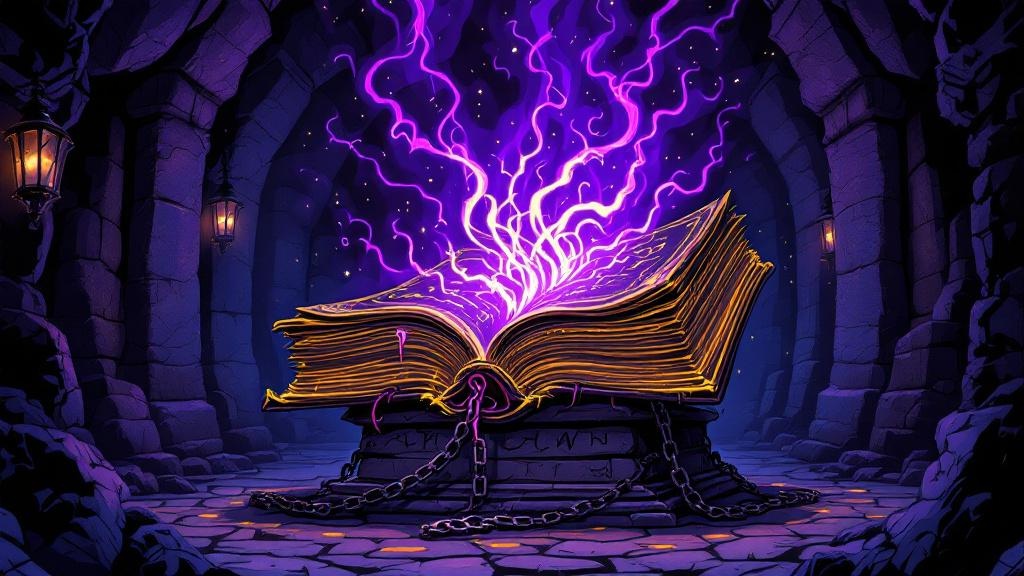
The book is kept in a locked room in the basement of Unseen University's library, chained to a lectern, protected by every ward and guard the wizards can muster. It's sentient, and it doesn't so much get read as do the reading itself. The spells inside aren't just words—they're intricately interwoven with the fabric of time and space. They have opinions. They have plans.
Nobody in their right mind opens the Octavo. Which brings us to young Rincewind.
A Fifteen-Year-Old and a Bet
The details of how it happened are almost comically mundane. Rincewind, in his first year at Unseen University, was challenged to a bet. The specific terms have been lost to history—or at least to Pratchett's deliberate vagueness—but the result is clear: Rincewind managed to bypass every safety measure protecting the Octavo and opened it.
He didn't do this because he was brave. He didn't do it because he was curious about the fundamental nature of reality. He did it because someone probably said he couldn't, and at fifteen, that's enough.
"The spells were afraid to be in the same head as one of the Eight Great Spells."
The moment the pages opened, one of the Eight Great Spells leapt from the book and burrowed deep into his mind. Not gently. Not with his permission. One of the eight words that created the universe simply decided Rincewind's head was where it wanted to be, and moved in.
Nobody knew which spell it was. Nobody could get it out. And from that moment on, no other spell dared stay in the same head. They were, in a very real sense, frightened. Imagine trying to memorize your times tables while something that helped build reality is squatting in your temporal lobe, glaring at everything else that tries to enter. That's Rincewind's magical education in a nutshell.
The Magical Equivalent of Zero
The university dismissed him. What else could they do? A wizard who can't learn spells is like a carpenter who can't touch wood. He's technically still part of the profession—he wears the hat, he knows the theory—but he can't actually do any of it.
But here's where it gets philosophically interesting. Rincewind isn't nothing. He's zero.
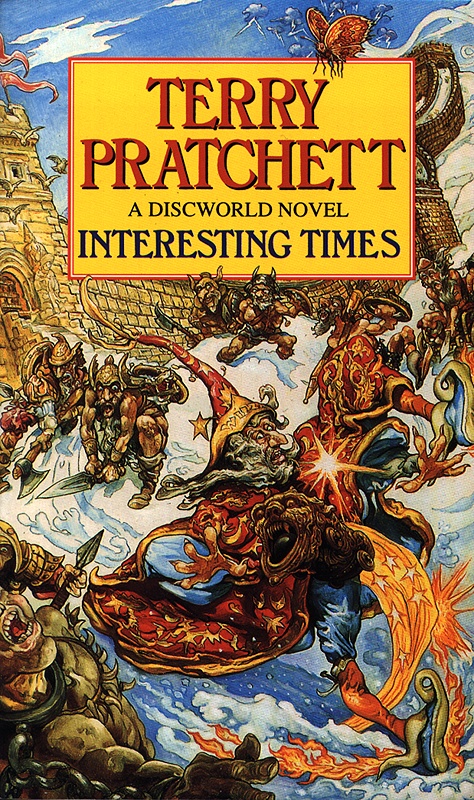
In Interesting Times, Rincewind reflects on this himself. He'd always felt he had a right to exist as a wizard "in the same way that you couldn't do proper maths without the number 0, which wasn't a number at all but, if it went away, would leave a lot of larger numbers looking bloody stupid."
It's a brilliant metaphor. Zero isn't an absence. It's a placeholder, a necessary concept that makes the entire number system work. Without zero, you can't have place value, can't do calculus, can't describe the void between things. Rincewind, the wizard who can't do magic, is somehow essential to how magic works on the Disc.
"He'd always felt he had a right to exist as a wizard in the same way that you couldn't do proper maths without the number zero."— Rincewind
And there's a deeper truth buried in there. Rincewind was born with what Pratchett describes as "a wizard's spirit." The magical ability was always there—the potential, the calling, the fundamental identity. The Octavo didn't remove his wizardness. It just made it impossible for him to express it. He is a wizard who cannot do wizardry, which is somehow worse than never having been one at all.
The Octavo's Plan
Here's the twist that transforms this from tragic backstory into cosmic chess: the Octavo arranged for it to happen.
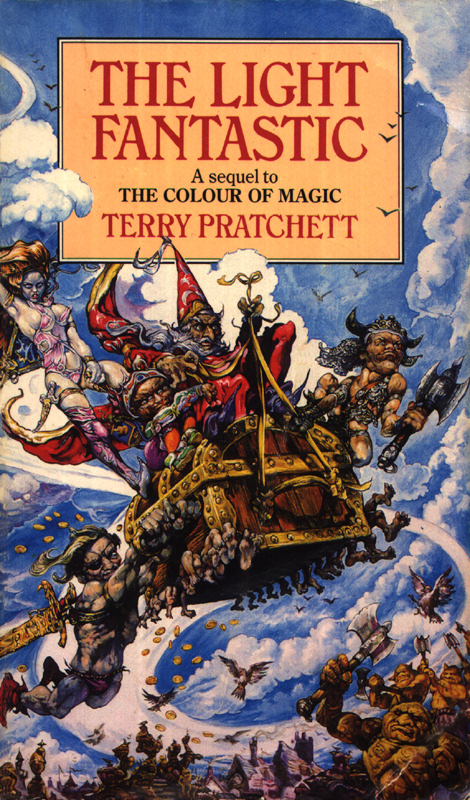
In The Light Fantastic, the Octavo itself reveals the truth. The eighth spell didn't accidentally escape into some unfortunate student's head. The book placed it there deliberately. It chose Rincewind.
Why? Because a red star was approaching the Disc, and the only way to avert catastrophe was to speak all eight spells together at the appointed time. Seven spells were safe in the book. But the Octavo needed insurance—a way to ensure the eighth spell couldn't be used prematurely by ambitious wizards. So it hid that spell in the head of someone so magically inept, so profoundly incapable, that no one would ever think to look there.
Rincewind was a magical safe-deposit box. The universe chose him not because he was worthy, but because he was overlooked.
This means that everything Rincewind suffered—sixteen years of being unable to learn magic, the humiliation, the dismissal from university, the decades of being called the worst wizard on the Disc—was by design. The Octavo needed him to be useless. His entire career of failure was someone else's contingency plan.
The Day the Spell Finally Left
When the red star finally approaches and the eight spells must be spoken, Rincewind's entire life snaps into terrible focus. He's not just the worst wizard alive. He's a critical component in saving the world, and he has been since he was fifteen.

The scene in The Light Fantastic where the eight spells are finally reunited is both triumphant and absurd—perfectly Pratchett. The seven spells in the Octavo join with the eighth in Rincewind's head. He speaks them, and reality reasserts itself. The red star's moons crack open to reveal eight tiny world-turtles, which swim away following Great A'Tuin. The Disc is saved.
And then the spell leaves. After sixteen years of squatting in his brain, frightening away any other magic, the eighth spell simply... goes. Rincewind's mind is empty. Clean. Theoretically ready to learn.
He re-enrolls at Unseen University.
He still can't do magic.
The Cruelest Joke
This is the part that makes the Octavo incident more than just clever plotting. The spell was never the only reason Rincewind couldn't do magic. It was the excuse.
When the eighth spell departs, Rincewind should theoretically be free to learn. The mental block is gone. The other spells have nothing to be afraid of anymore. The path is clear.
But Rincewind never becomes competent. He still gets negative marks. He still can't cast the simplest cantrip. The spell may have prevented him from learning for sixteen years, but it turns out those were also the sixteen years when he would have developed the foundational skills every wizard needs. He missed the window. By the time his mind was free, it was too late to catch up.
It's like being told you can finally learn to play piano after someone sat on your hands for your entire youth. The hands work now, technically. But the neural pathways that should have formed at age eight never did.
"The Octavo didn't remove his wizardness. It just made it impossible for him to express it."
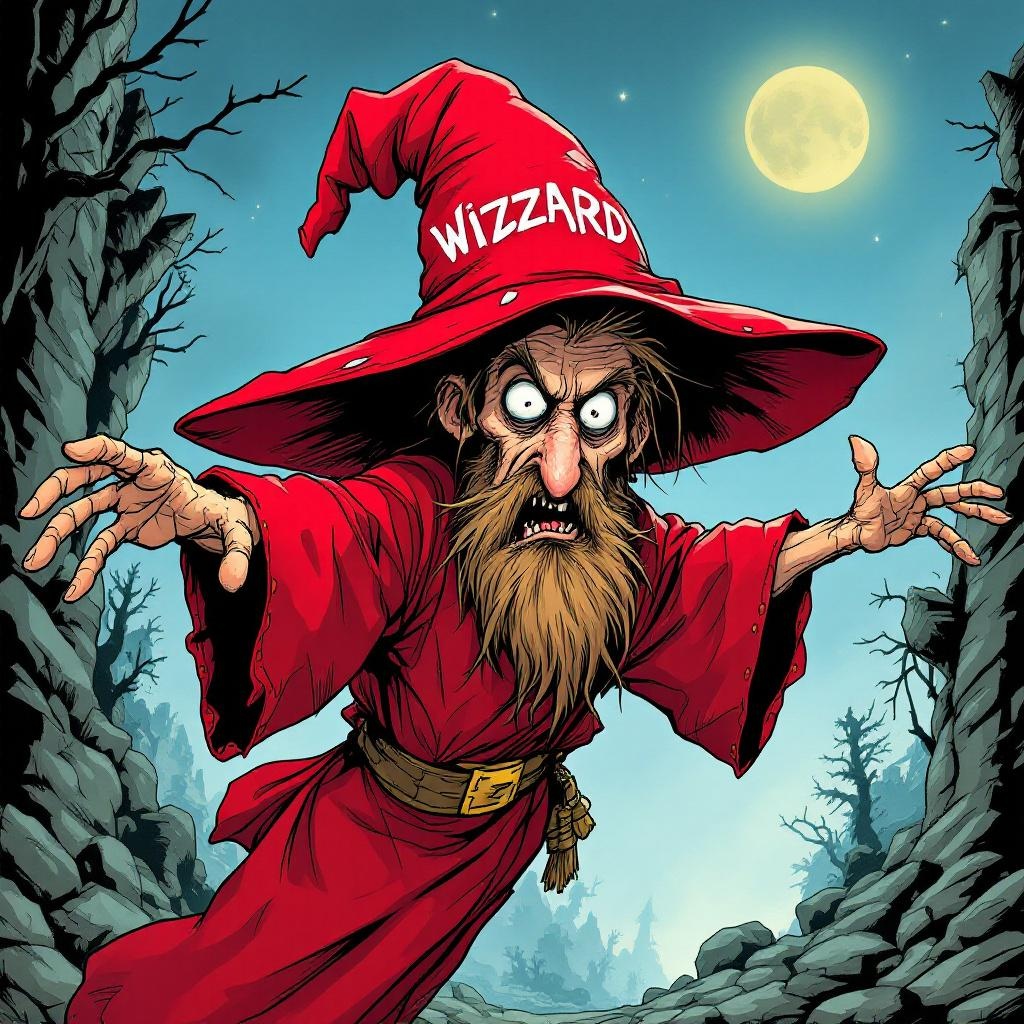
And yet Rincewind clings to the title. He wears a hat with "Wizzard" stitched on it—misspelled, because he's self-taught. He insists on being called a wizard. He will fight you, or more likely run away from you very aggressively, if you suggest he isn't one.
Because being a wizard is the only thing he has. He was born with the spirit for it. The universe confirmed his importance by choosing his head to store a world-saving spell. He is a wizard. He just can't do any wizardry. The identity is real even if the ability isn't.
What It All Means
The Octavo incident is one of Pratchett's most elegant pieces of character construction. In a single backstory event, he accomplishes three things:
First, it explains Rincewind's incompetence without making him stupid. Rincewind isn't a failed wizard because he lacks talent—he's a failed wizard because the universe sabotaged him for its own purposes. That's an important distinction.
Second, it gives Rincewind cosmic significance. He's not just some nobody. He carried one of the eight words that created reality in his head for sixteen years. The Disc exists partly because Rincewind was there to be a hiding place for a spell. That matters, even if no one thanks him for it.
Third, and most poignantly, it creates a character who knows exactly what he is and isn't. Rincewind understands he's zero. He understands he's the worst wizard alive. But he also understands that zero is a number, that "worst" still means "is one," and that the universe once needed him badly enough to ruin his life to keep him useful.
That's not nothing. That's everything, actually—expressed as nothing.

The Aftermath
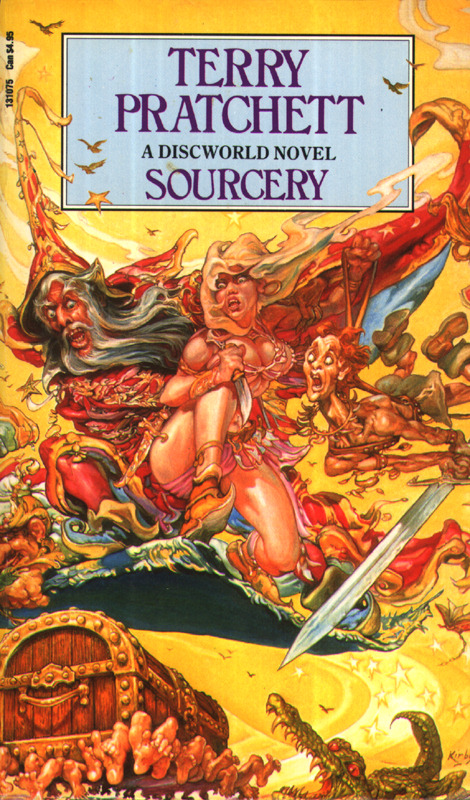
The Octavo incident casts a long shadow. In every subsequent book, Rincewind's inability to do magic drives the plot. In Sourcery, his powerlessness is precisely what lets him see Coin clearly—he has no magical ego to threaten, no power to defend. In Interesting Times, his zero-ness makes him invisible to magical detection. In The Last Hero, his lack of ability means he can go where powerful wizards can't without disrupting the magical field.
Every time, his weakness becomes his strength. Every time, the thing the Octavo did to him turns out to be useful.
Which raises an uncomfortable question: did the Octavo know? Not just about the red star, but about everything that would come after? Did it choose Rincewind not just as a hiding place for one spell and one crisis, but as a permanent zero in the magical equation—someone whose very absence of power would be needed again and again?
We'll never know. The Octavo isn't talking.
But Rincewind is still here, still wearing the misspelled hat, still unable to light a fire by magic, and still somehow essential to the way things work.
Zero, it turns out, is the most important number there is.
Want to see what Rincewind does with his fundamental incompetence? Read about how he saves the world by running away from it, or explore his fully developed philosophy of strategic retreat.