A Half-Brick in a Sock: Rincewind's Only Act of Deliberate Heroism
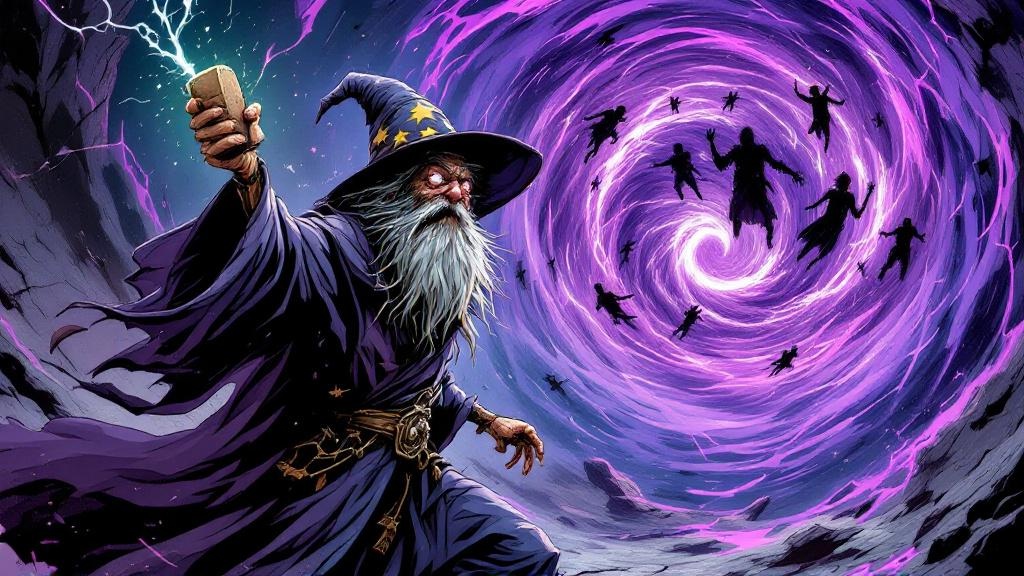
In every other book, Rincewind's heroism is accidental. In Sourcery, he deliberately sacrifices himself to save a child. What made this time different?
A Half-Brick in a Sock: Rincewind's Only Act of Deliberate Heroism
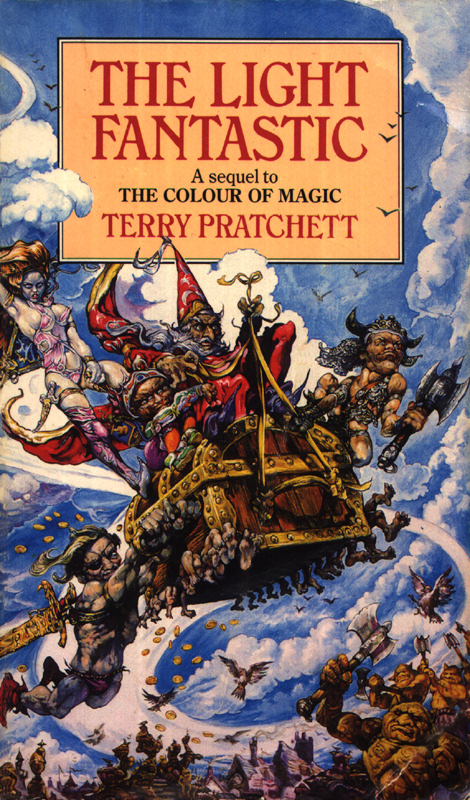
Here is a list of things Rincewind has used to save the world: the spell lodged in his head since childhood, a terracotta army he stumbled into while hiding, a wooden spaceship he boarded out of sheer resignation.
And once, just once, a half-brick in a sock.
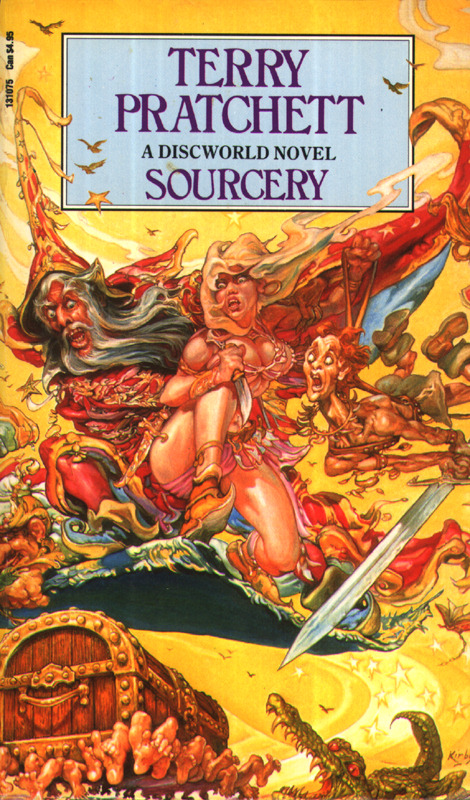
That's in Sourcery, the fifth Discworld novel and the most important book in Rincewind's entire arc. Not because of the world-ending threat or the sourcery-fueled apocalypse. Because it's the only time Rincewind chooses to be heroic. Deliberately. Knowing exactly what it will cost him.
In every other adventure, his heroism is accidental—the universe using his cowardice as a navigation system, bouncing him into the right place at the right time. But in Sourcery, armed with nothing but a sock containing half a brick, he walks toward the most powerful wizard who has ever lived. Not to fight. To save a child.
The Setup: When Wizards Go to War
The crisis in Sourcery starts with a loophole in the rules of magic. A wizard's eighth son is a wizard. A wizard's eighth son's eighth son is a sourcerer—not someone who channels magic, but someone who generates it. Raw, unlimited power. The kind of power that bends reality like wet cardboard.
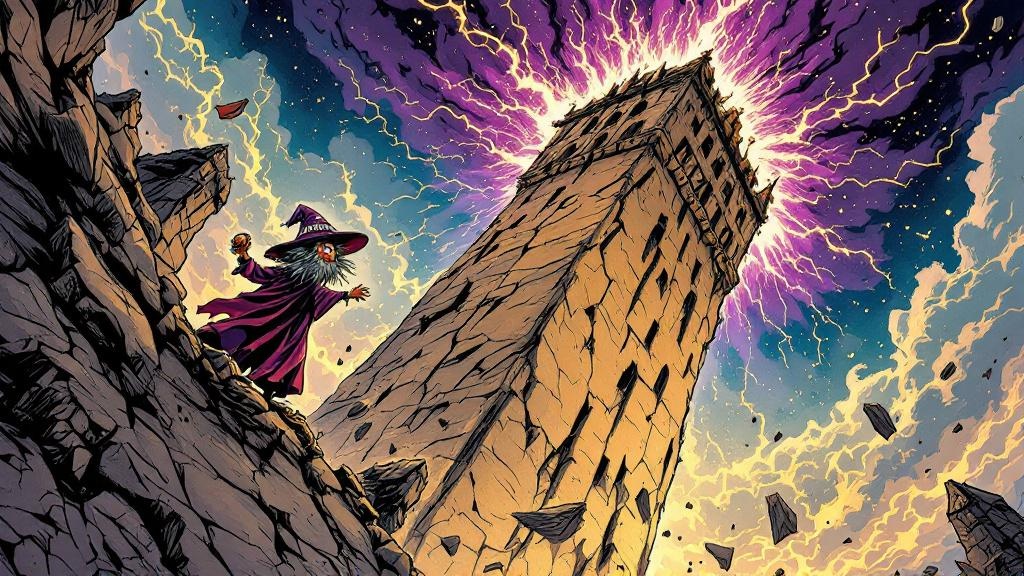
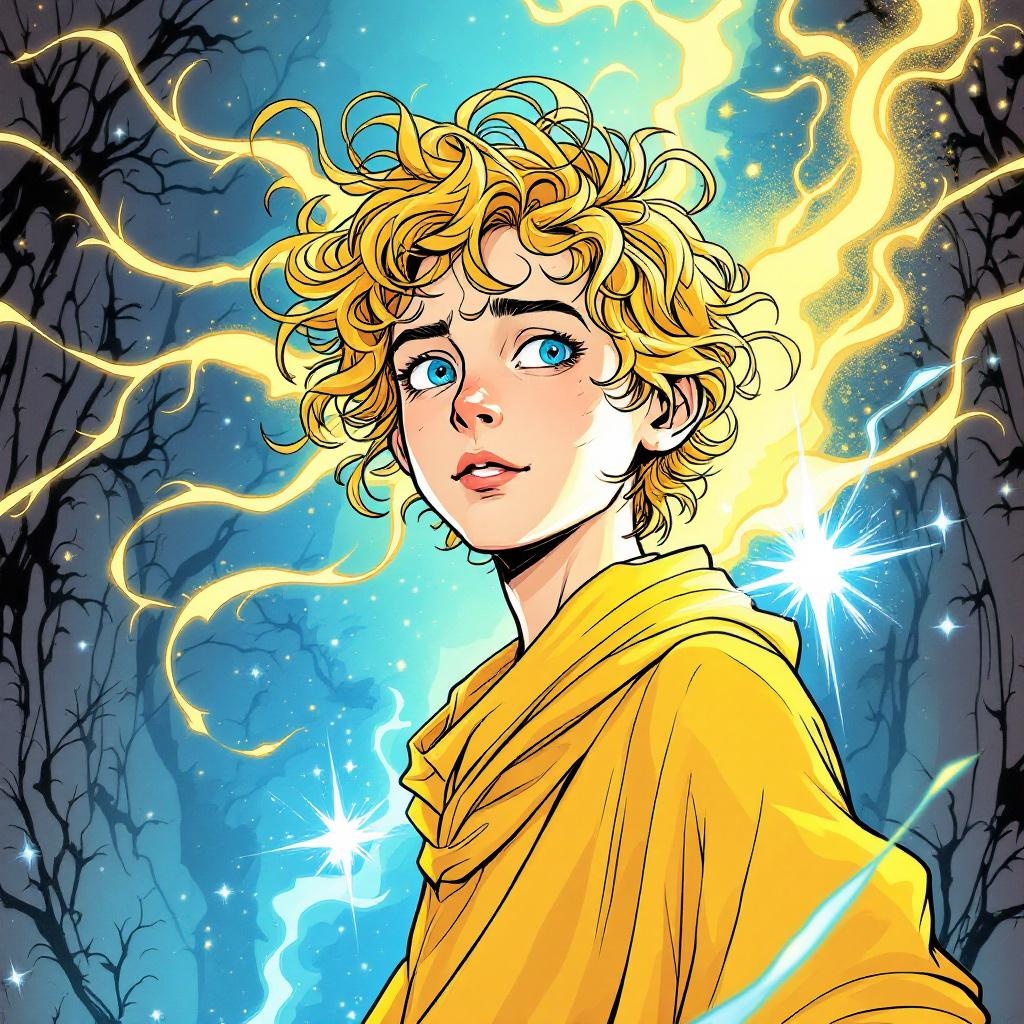
Coin is that sourcerer. He's also ten years old.
His father, Ipslore the Red, was an eighth son himself—a wizard who defied convention by marrying and having children, and was cast out by the University for it. When Death came for him, Ipslore bound his soul to his son's staff, cheating mortality so he could use Coin as an instrument of revenge against the wizards who rejected him.
So Coin overthrows Unseen University. The wizards, drunk on the sourcery he channels through them, declare war on the gods. Reality begins cracking at the seams. The Dungeon Dimensions—home to Things that want to eat reality—start leaking through.
And Rincewind, naturally, runs away.
The Weapon
Let's talk about the half-brick in a sock.
""Is it magical?" he said, curiously. "Perhaps it is the sock of an Archchancellor? A sock of force?""— Coin
When Coin asks about this weapon, genuinely puzzled by its nature, Rincewind has to admit: "I don't think so. I think I bought it in a shop or something." Coin presses: "But in the end it has something heavy?" And Rincewind, with the weary honesty that defines him, confirms: "It's a half-brick."
Rincewind also describes it as something that "kills people, but leaves buildings standing"—a sly nod to the neutron bomb that's pure Pratchett. It's absurd. It's mundane. And it's the most thematically perfect weapon Pratchett could have given him.
Because Rincewind doesn't fight with magic. He can't. The spell that lived in his head for sixteen years scared off every other piece of magic—he's "the magical equivalent to the number zero." When every other wizard in the world is channeling sourcery to burn cities and challenge gods, Rincewind goes into battle with construction debris in hosiery.
That's not a joke. That's a thesis statement.
What Made This Time Different
Rincewind has a very clear philosophy about causes: "No, there aren't [causes worth dying for]! Because you've only got one life but you can pick up another five causes on any street corner!"
It's entirely consistent with his survival religion. Running away is Rincewind's answer to everything, and honestly, it's kept him alive longer than bravery would have. He's survived falling off the Rim of the world, the Dungeon Dimensions, Hell itself. His track record speaks for itself.
So what changes in Sourcery?
He sees the villain.
Not the sourcerer. Not the world-destroying magical prodigy laying waste to reality. He sees a ten-year-old boy being puppeteered by his dead father's ghost, trapped inside a staff he never asked to carry. Coin isn't evil. Coin is used.
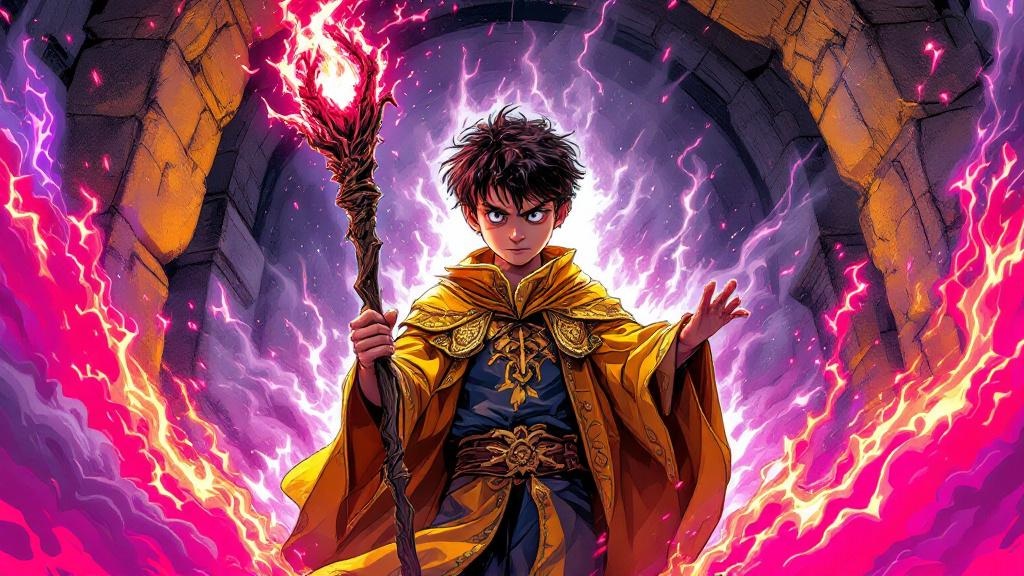
And that changes everything. Rincewind doesn't care about saving the world. He's been very clear about that. But a kid being manipulated by a vengeful parent? That's not a cause. That's a person.
The distinction matters enormously to Rincewind's character. He's not a nihilist—he's never said nothing matters. He's said causes don't matter. Abstractions. The greater good. All the things people use to justify sending other people to die. But a child in front of him, right now, who needs help? That bypasses his entire philosophical framework.
The Confrontation
"It's vital to remember who you really are. It's very important. It isn't a good idea to rely on other people or things to do it for you, you see. They always get it wrong."— Rincewind
What Rincewind says to Coin isn't a battle cry. It's advice: "It's vital to remember who you really are. It's very important. It isn't a good idea to rely on other people or things to do it for you, you see. They always get it wrong."
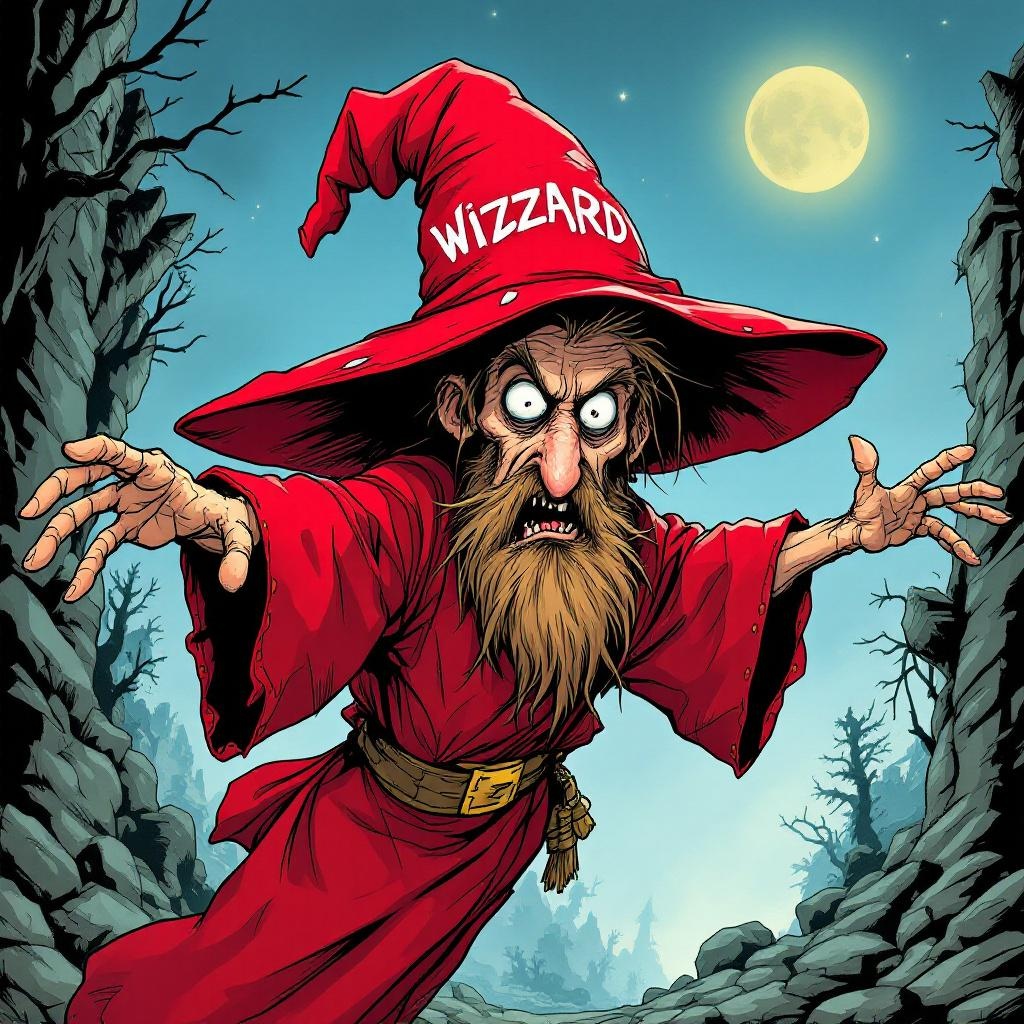
He's talking about the staff. About Ipslore. About how Coin has let his father's ambition become his identity. But he's also talking about himself—the wizard who can't do magic, who clings to a misspelled hat and the title "Wizzard" because it's the only identity he has. Rincewind knows something about being defined by forces beyond your control.
He swats the staff out of Coin's hands with the half-brick in the sock. Not with magic. Not with power. With a physical object that has no magical properties whatsoever, wielded by the least magical wizard in history.
It works. Not because of the brick, but because of the doubt. Rincewind is too powerless to threaten Coin, but that's precisely why Coin listens. Everyone else has been trying to use magic against a sourcerer—which is like trying to outswim the ocean. Rincewind just talks to a frightened child.
When Coin says "I don't know what to do," Rincewind's response is perfect: "No harm in that. I've never known what to do. Been completely at a loss my whole life. I think it's called being human, or something."
From anyone else, that would sound like false modesty. From Rincewind, it's the most honest thing anyone has said in the entire book.
The Price
This is where Pratchett twists the knife.
Coin throws away the staff. Ipslore's soul, trapped inside it, turns against his son. A battle erupts between them, the magic escalating until the tower itself begins dissolving and reality tears open. Death arrives to claim Ipslore at last, destroying the staff and freeing Coin.
But the rip in reality has let the Things through. The Dungeon Dimensions are spilling into the world, and the only way to stop it is for someone to distract the creatures long enough for Coin to escape back through the portal.
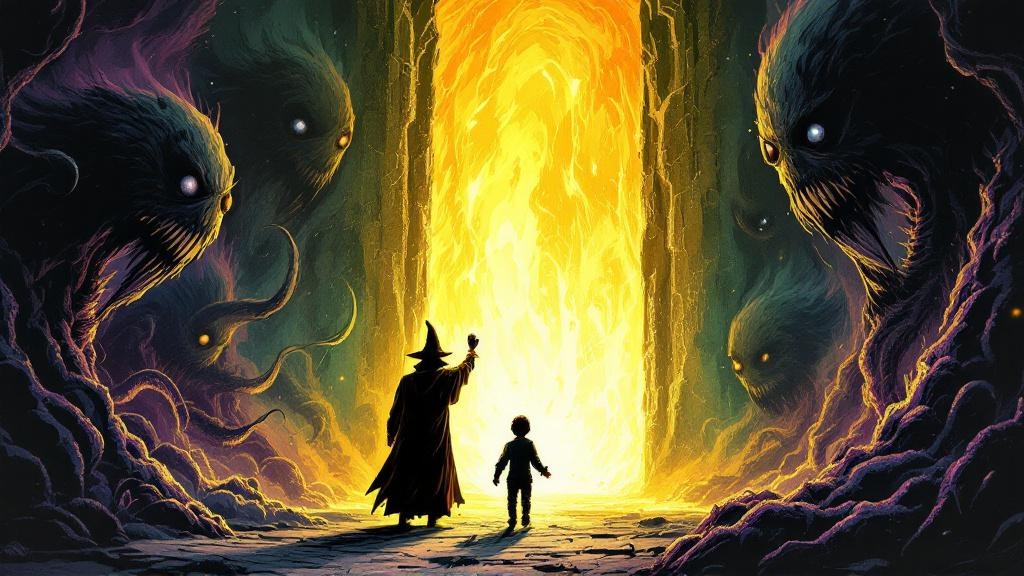
Rincewind tells Coin to run toward the light. Then he turns to face the Things—armed, again, with nothing but a sock filled with sand—and attacks.
This is the man who has spent every adventure running away. Who has elevated retreat to an art form. Who once observed that running away gives you "more life" than standing to fight. And he runs toward eldritch nightmares so a child can escape.
The portal closes. Coin returns to the Discworld. Reality heals. The wizards go back to being eccentric academics instead of world conquerors. Everything is fine.
Except Rincewind is trapped in the Dungeon Dimensions. Alone. With Things that want to eat reality and anything caught between the dimensions.
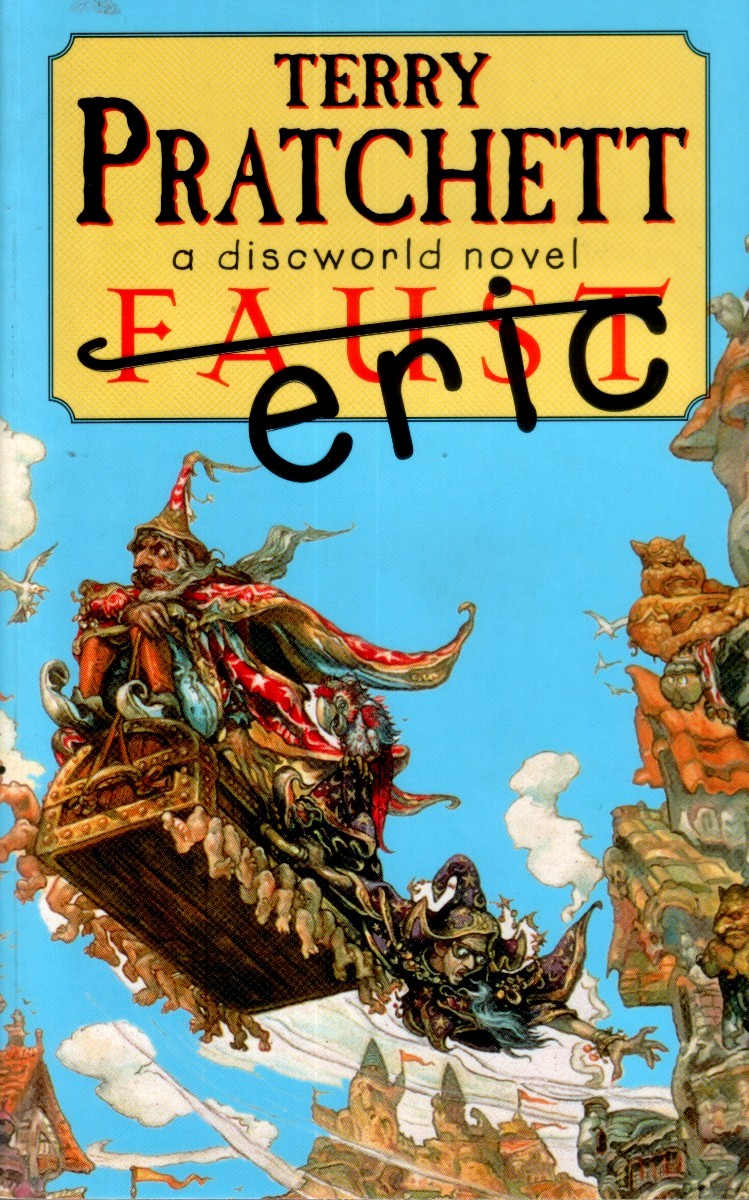
He stays there for years. He's not rescued until the events of Faust Eric, when a thirteen-year-old demonologist's botched summoning accidentally pulls him back to the Disc. The Librarian takes Rincewind's battered hat and places it on a pedestal in the Library, because "a wizard will always come back for his hat."
That's the cost of Rincewind's one moment of genuine heroism. Not a scratch or a scare. Years of imprisonment in a dimension of nightmares, with no guarantee of rescue.
Why Pratchett Never Made Him Do It Again
Here's the thing about Sourcery that separates it from every other Rincewind book: Pratchett never repeats it. In Interesting Times, Rincewind stumbles into saving a revolution while trying to hide. In The Last Hero, he shows up for a suicide mission out of weary resignation, knowing the universe will force him to go anyway.
But he never again makes a conscious, uncoerced decision to sacrifice himself.
Maybe Pratchett understood that the power of Sourcery's climax depends on it being singular. If Rincewind chose heroism regularly, he wouldn't be Rincewind anymore. He'd just be a hero with anxiety. The character works because cowardice is his default, and the one exception proves that there's something underneath the running—something he'll only access when a child is in danger and no one else is stepping up.
It's also worth noting what Rincewind doesn't do in this scene. He doesn't overcome his fear. He doesn't have a moment of transformation where he becomes brave. He's terrified the entire time. He confronts Coin while shaking. He attacks the Dungeon Dimensions Things while absolutely certain he's going to die.
That's not overcoming cowardice. That's acting despite it. And Pratchett's argument, throughout Rincewind's entire arc, is that acting despite fear is more meaningful than acting without it.
The Moral Clarity of a Coward
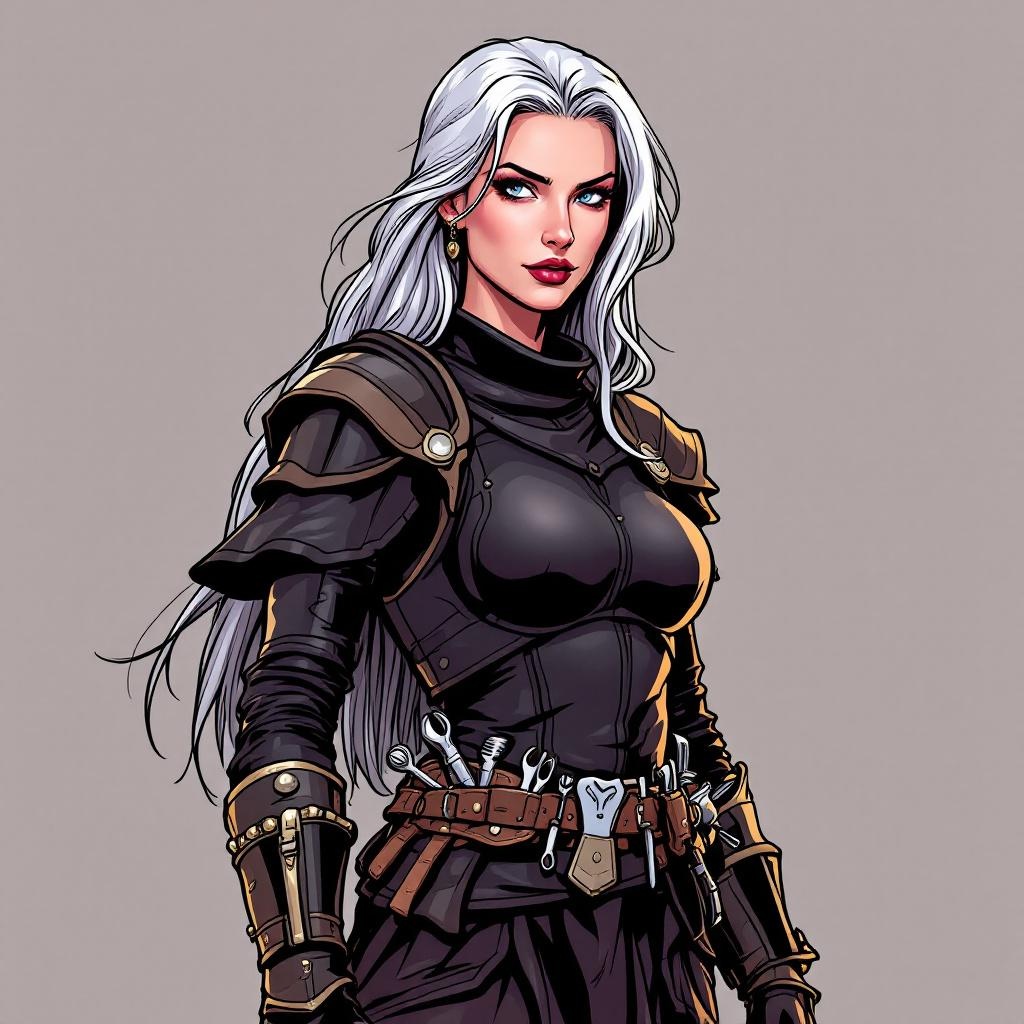
What makes Rincewind's moment in Sourcery work so well is his moral clarity. Every other character in the book sees Coin as a threat to be defeated—a sourcerer whose power must be countered with more power. The wizards try to fight him with magic. Conina, Cohen the Barbarian's daughter, tries to fight him with violence. The gods try to fight him with divine authority.
Rincewind is the only one who sees a kid.
It's an act of perception, not strength. And it's possible precisely because Rincewind has no power. He can't fight Coin, so he doesn't try. He can't match sourcery with magic, so he doesn't bother. All he can do is talk to a frightened boy and tell him the truth: you don't have to be what your father wants you to be.
For a character defined by his inability to do anything useful, that's the most useful thing anyone does in the entire book.
What the Hat Remembers
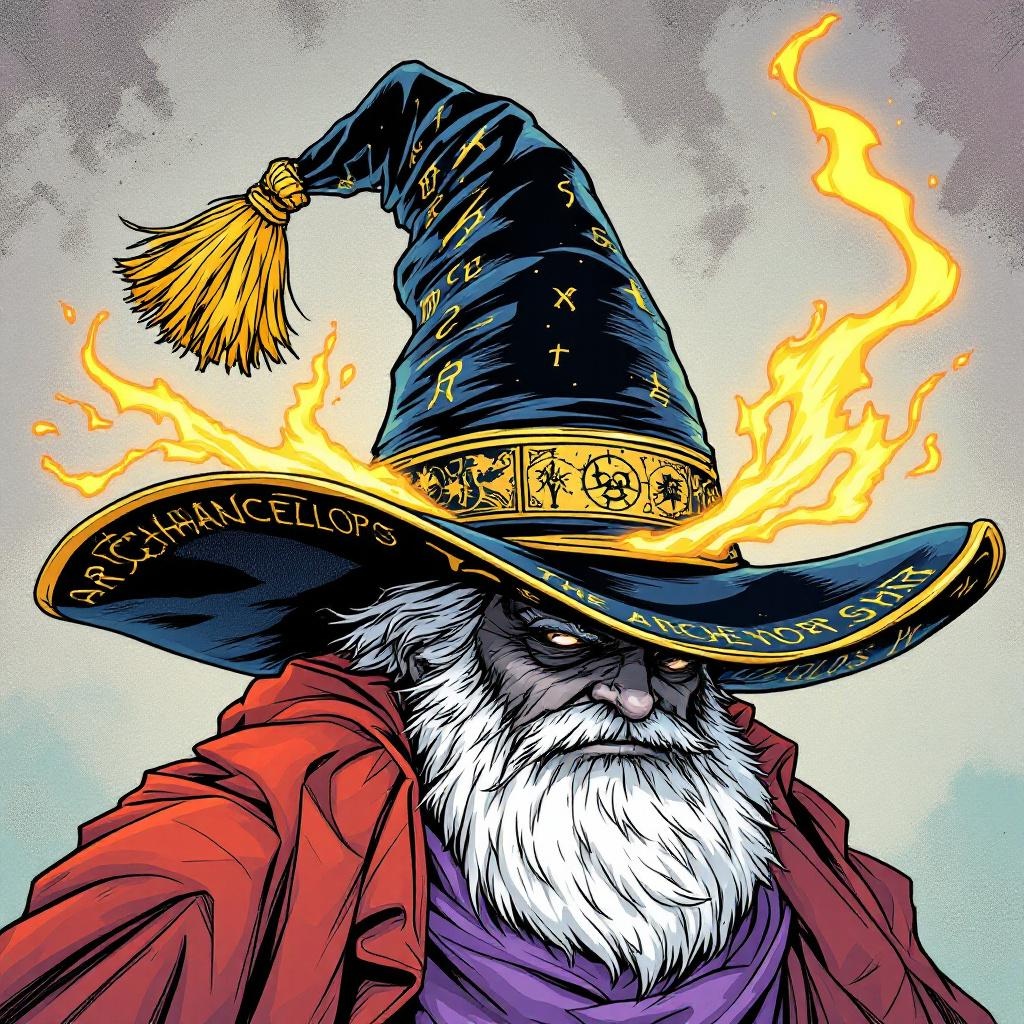
After Rincewind vanishes into the Dungeon Dimensions, the Librarian places his battered pointy hat—the one with "Wizzard" misspelled on it—on a pedestal in the Library. The narrator observes: "A wizard will always come back for his hat."
It takes years. But he does.
And when Rincewind returns in Faust Eric, he goes right back to running away from things. The heroism of Sourcery doesn't change him. He doesn't become brave or noble or any of the things heroes are supposed to become after their defining moment. He goes right back to being terrified, incompetent, and desperately alive.
That might be the most realistic thing Pratchett ever wrote about heroism. One brave act doesn't transform you. You don't become a new person. You're still you—scared, flawed, wearing a hat you can't spell. But you did the thing. Once, when it mattered, you did the thing.
And somewhere in the Library, a hat on a pedestal remembers.
For Rincewind's other world-saving adventures (all of them accidental), read The Reluctant Hero: How Rincewind Saves the World By Trying Not To. To understand why he can't do magic in the first place, see The Octavo Incident.