The Revolutionary Who Was Too Stubborn to Stay Dead
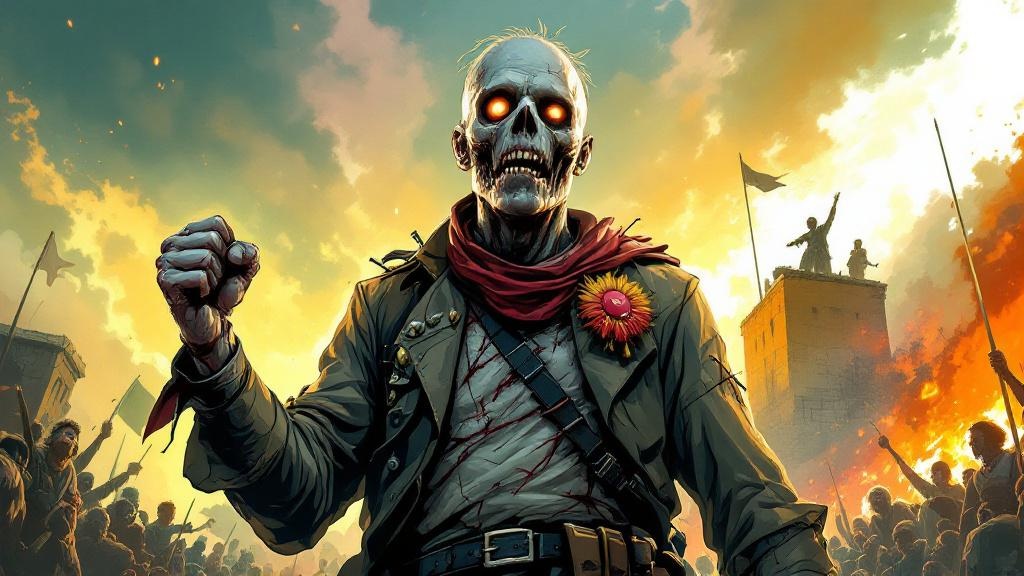
Reg Shoe died at the barricades and got back up. How Pratchett's zombie revolutionary became Discworld's most literal symbol of undying idealism.
The Revolutionary Who Was Too Stubborn to Stay Dead
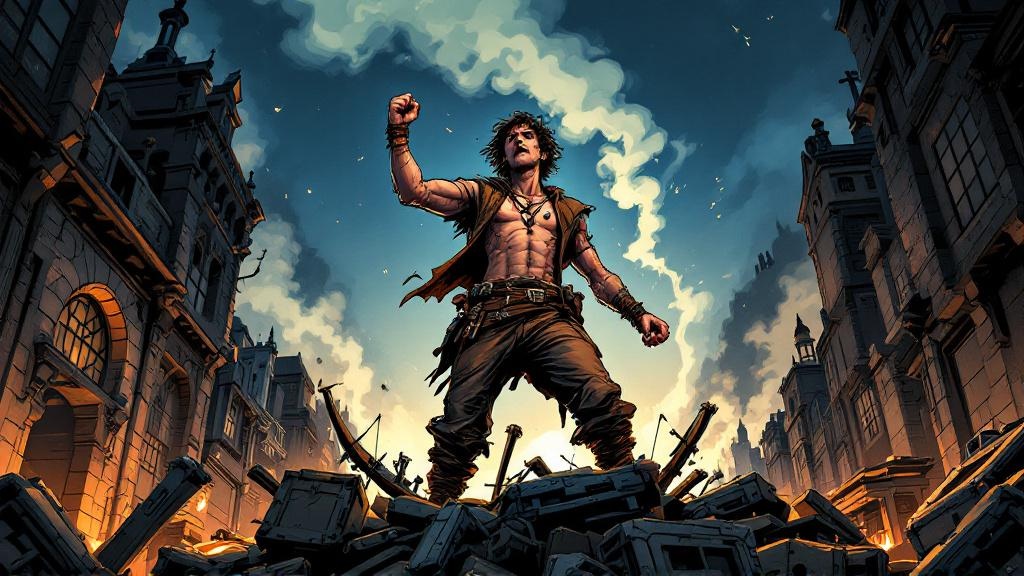
There's a moment in Night Watch where a young man stands on the barricades of the People's Republic of Treacle Mine Road and shouts, "You can take our lives but you'll never take our freedom!" It's a ridiculous slogan—even the villain Carcer tells him it's the dumbest battle cry ever uttered. Crossbow bolts hit him once, twice, three times. He keeps shouting. He keeps fighting. He dies.
Then he gets back up.
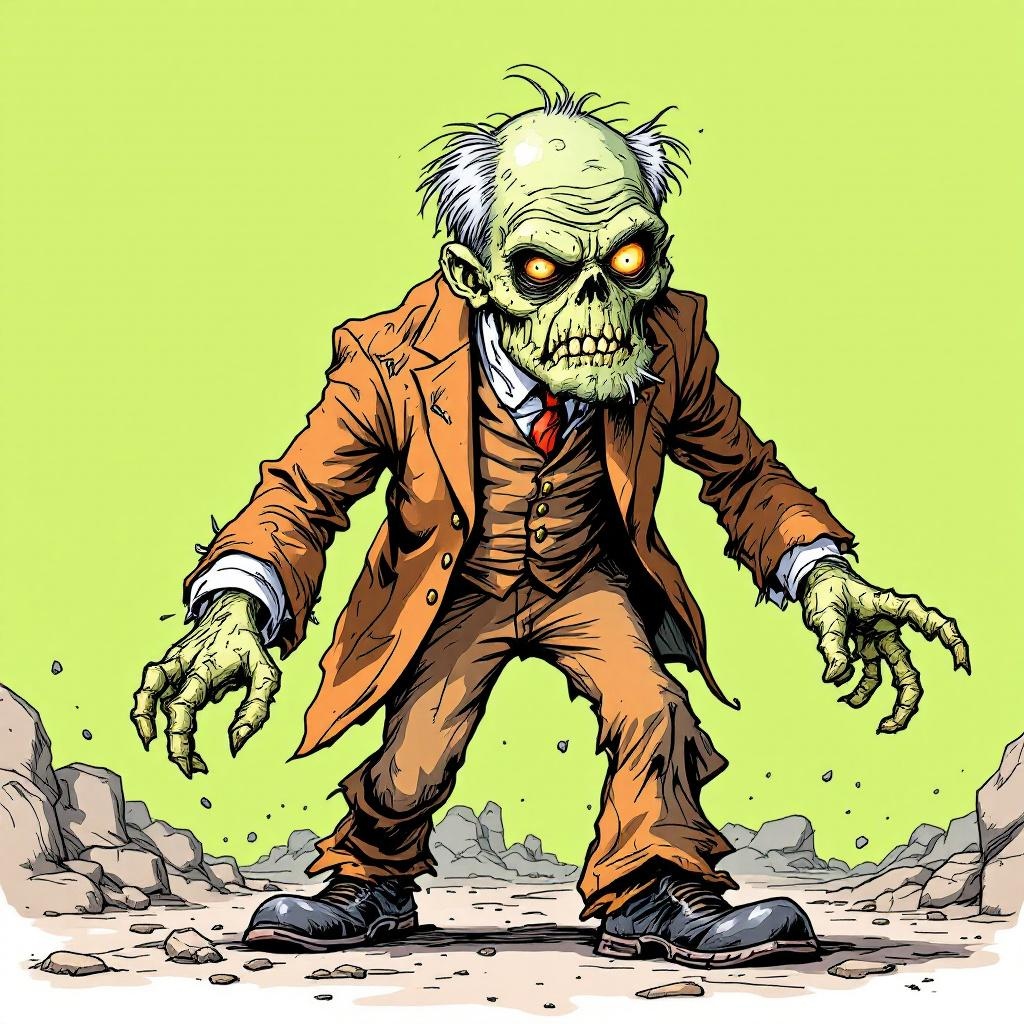
Reg Shoe is Terry Pratchett's most literal joke, and also one of his most poignant ones. A revolutionary whose commitment was so absolute that death itself couldn't put a dent in it. The bolts took his life. They did not, as advertised, take his freedom. That's not just a punchline. That's a thesis statement.
The Idealist at the Barricades
To understand what Reg Shoe means, you have to see him alive first.
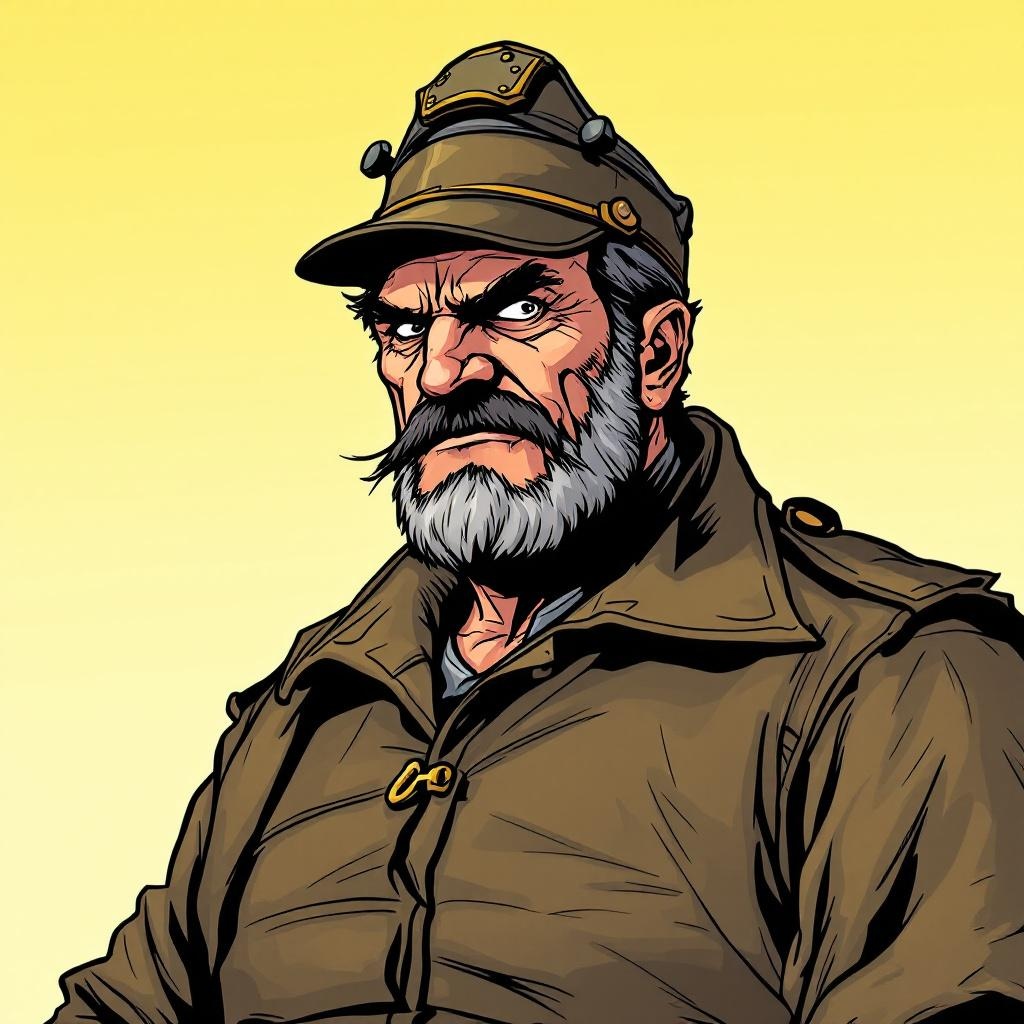
In Night Watch, Sam Vimes is thrown back in time to the Glorious Revolution of the Twenty-Fifth of May—the brief, chaotic uprising that toppled the tyrant Lord Winder. Young Reg is there, and Vimes recognises him immediately: a revolutionary cell of one, a graffiti writer, a pamphleteer, an angry young man who genuinely believes that if people just understood, if they just listened, the system would crumble and something better would rise from the ashes.
"He was basically an idiot. But he was an idiot with conviction, and on the Disc, that counts for something."
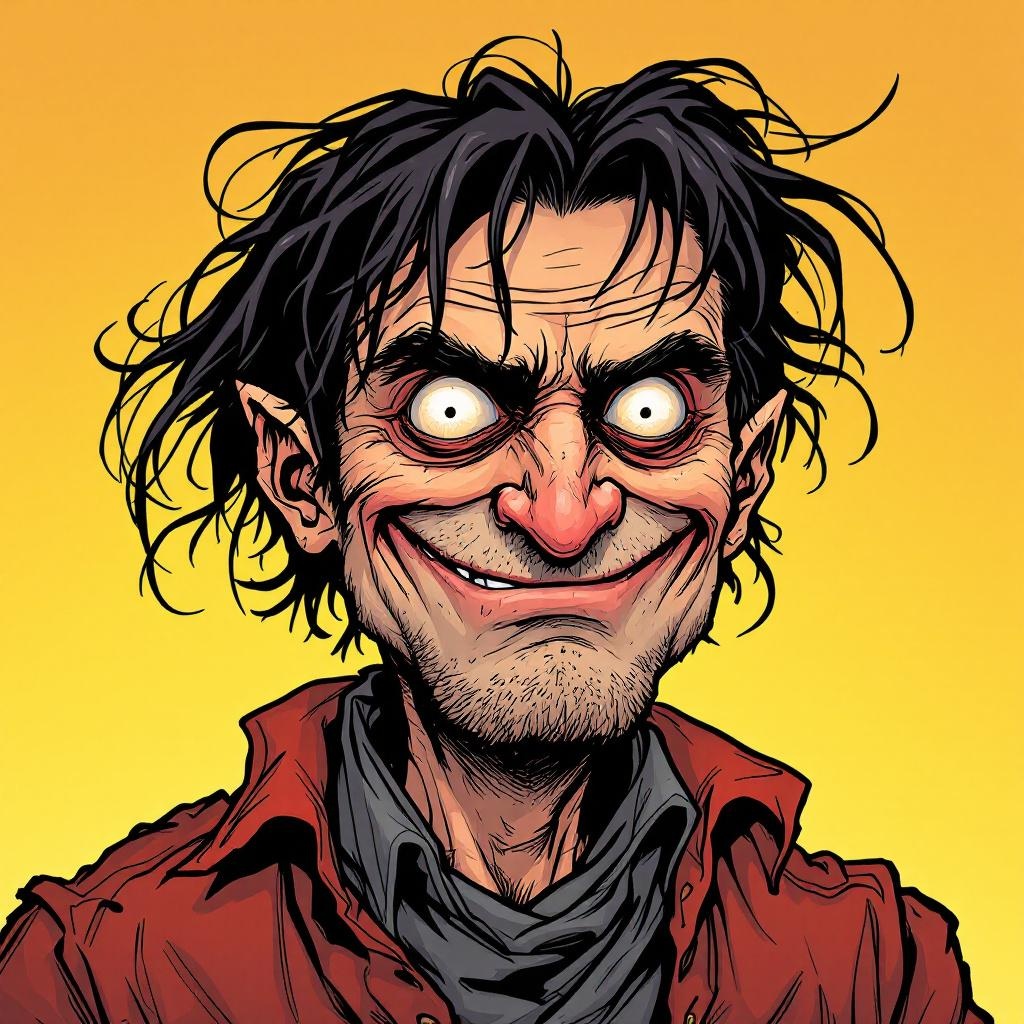
Vimes describes him as basically an idiot—someone other revolutionaries would smack over the head if they knew he existed. He's an Enjolras without a Les Amis. He writes pamphlets nobody reads. He paints slogans that get scrubbed off walls before morning. He is, in every measurable way, completely ineffective.
But when the barricades go up, Reg doesn't hesitate. He doesn't run. He doesn't discover, as so many armchair revolutionaries do, that he's actually quite fond of not being shot at. He stands on the barricade at Whalebone Lane, screaming defiance at armed men, and he takes bolt after bolt and does not stop.
His revolutionary zeal was so powerful, Pratchett tells us, that it caused him to ignore his injuries and continue fighting. That sentence is doing an extraordinary amount of work. On the surface, it's funny—the cartoon logic of someone too angry to notice they're dying. Underneath it, there's something genuinely moving about a person so committed to their cause that their body simply cannot override their conviction.
The Joke That Isn't
Here's where Pratchett does the thing that makes him Pratchett.
The Braveheart reference—"You can take our lives but you'll never take our freedom!"—is a joke. It's a deliberately absurd thing for a small-time agitator to shout on a barricade in a fantasy city. Carcer laughs at it. The reader laughs at it. And then Reg dies, comes back as a zombie, and the joke becomes literally, factually true.
They took his life. They couldn't take his freedom. He simply refused the terms of the transaction.
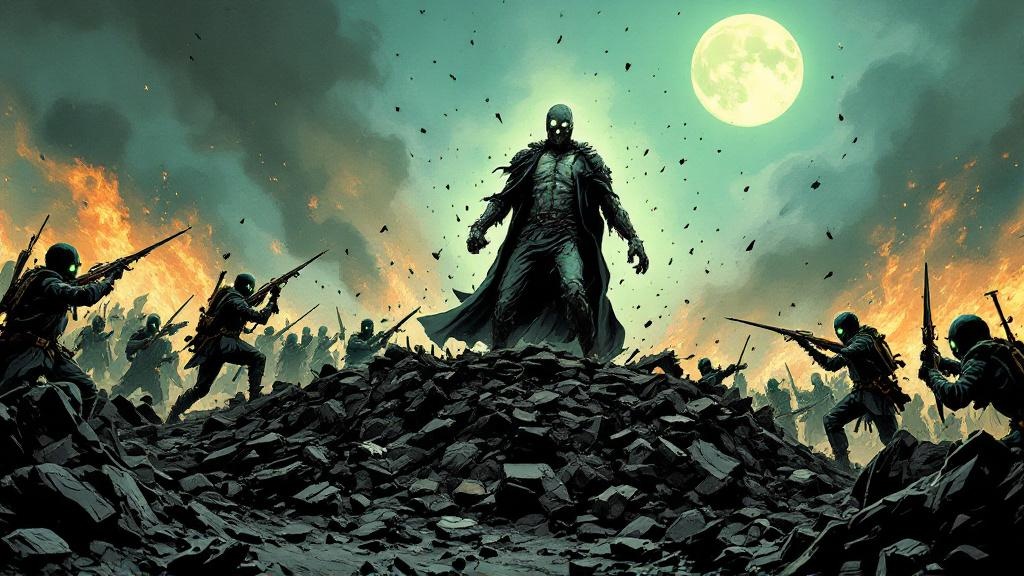
This is what Pratchett does better than almost any writer in the English language—he takes a joke and runs it forward until it stops being funny and starts being true. The punchline of Reg Shoe is that idealism doesn't die. Not because idealism is inherently noble or effective. Not because the revolution succeeded (it didn't—Winder was replaced by Snapcase, who was arguably worse). But because the kind of person who believes strongly enough to stand on a barricade isn't going to let a little thing like mortality change their mind.
"Pratchett takes a joke and runs it forward until it stops being funny and starts being true."
The People's Republic of Treacle Mine Road lasted less than a day. Seven people died for it. One of them was John Keel—actually a time-displaced Vimes, which makes the whole thing even more layered. Another was Reg Shoe, listed among "the seven killed" with the quiet, devastating parenthetical: "temporarily."
Temporarily. That one word carries thirty years of zombie activism in it.
What the Revolution Actually Taught Him
Here's the part of Reg's story that doesn't get talked about enough: the revolution failed.
Not in the dramatic, romantic way that revolutions fail in literature—not with a final stand and a stirring speech and a noble death. It failed in the boring, dispiriting way that real revolutions fail. Winder was overthrown. His replacement, Lord Snapcase, turned out to be just as bad. The People's Republic evaporated. The lilac-wearing idealists who'd fought for truth, justice, freedom, and reasonably priced love either died, got disillusioned, or quietly went home and tried to forget.
Pratchett tells us that Reg "learned that revolutions tend not to live up to the revolutionaries' expectations" and that "he doesn't take it well." That's one of the great understated lines in the entire series. Of course he doesn't take it well. He died for this revolution. Literally. And then he got back up and discovered that everything he'd died for had accomplished precisely nothing.
This is where a lesser writer would make Reg either bitter or enlightened. Pratchett makes him neither. Reg just... keeps going. He founds the Fresh Start Club. He writes more pamphlets. He advocates for the rights of the differently deceased. He swaps one revolution for another, because the alternative—accepting that the world doesn't change—is something his nature simply cannot accommodate.
The Monty Python in the Room
Reg Shoe's name is a deliberate reference to Reg from Monty Python's Life of Brian—the self-appointed leader of the People's Front of Judea, a revolutionary group that spends more time debating constitutional procedure than actually revolting against the Romans. Pratchett's Reg shares the DNA: he's an idealist who's better at slogans than strategy, better at rhetoric than results.
But Pratchett's version has a critical difference. Python's Reg is pure satire—a target. Pratchett's Reg is satire that bleeds.
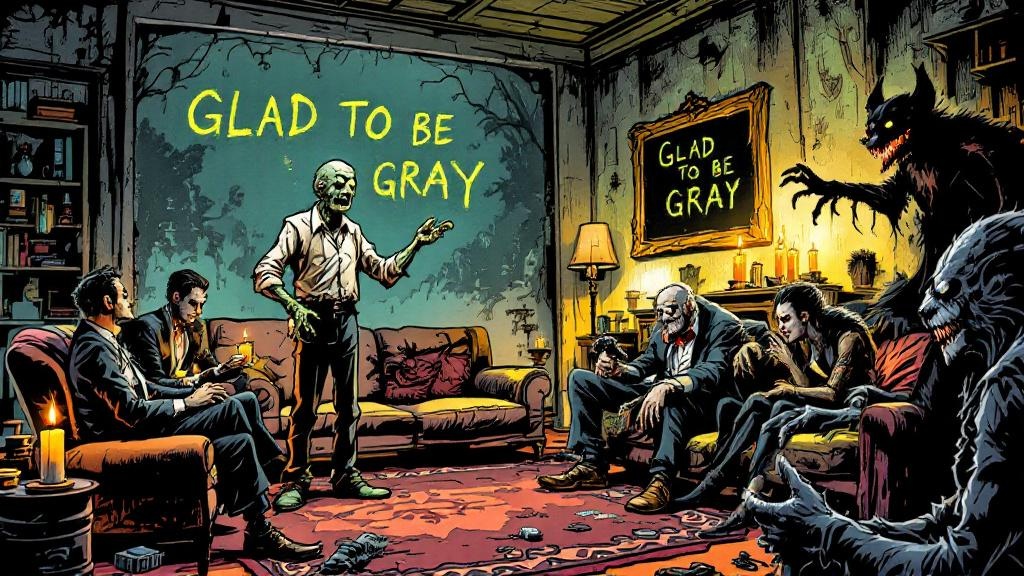
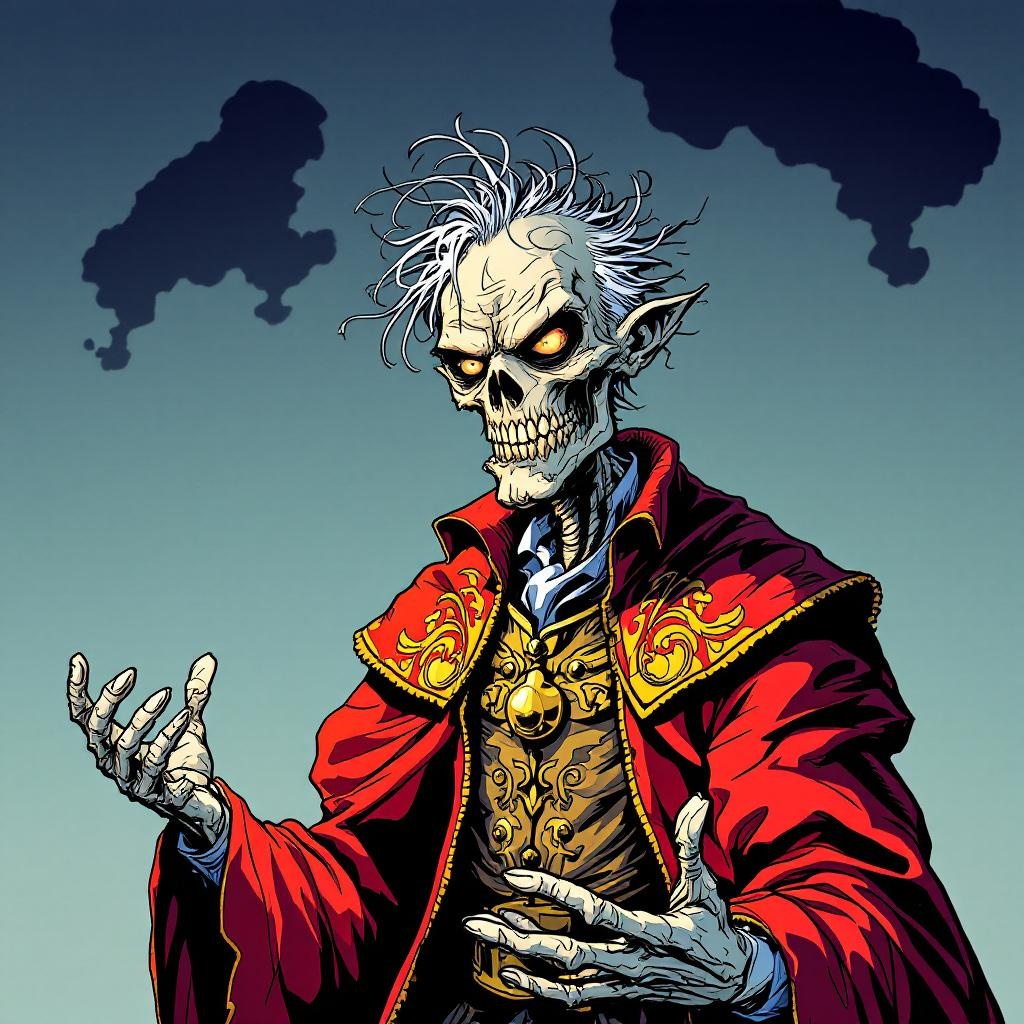
The Life of Brian Reg asks, "What have the Romans ever done for us?" and accidentally lists dozens of improvements until the joke eats itself. Pratchett's Reg asks what the establishment has ever done for the undead, and the answer is genuinely "nothing." The Fresh Start Club at 668 Elm Street—two doors from the number of the Beast, a nod to A Nightmare on Elm Street—is absurd in its makeup (a ghoul, a banshee, a bogeyman, vampire aristocrats) but completely sincere in its mission.
"Python's Reg is pure satire—a target. Pratchett's Reg is satire that bleeds."
The slogans say it all. "Glad to be Gray." "Coming Out of the Coffin." These aren't just jokes—they're direct echoes of late 20th-century civil rights and LGBT activism, transplanted onto walking corpses. Pratchett is doing something quite complicated here: using the absurdity of zombie rights to make the reader laugh, then using the sincerity of Reg's commitment to make them wonder why they're laughing. If a zombie fighting for acceptance seems ridiculous, what does that say about how we view people fighting for acceptance in the real world?
From Barricade to Beat Cop
And then comes the final, perfect irony of Reg Shoe's arc.
The revolutionary who died fighting the authorities becomes a copper.
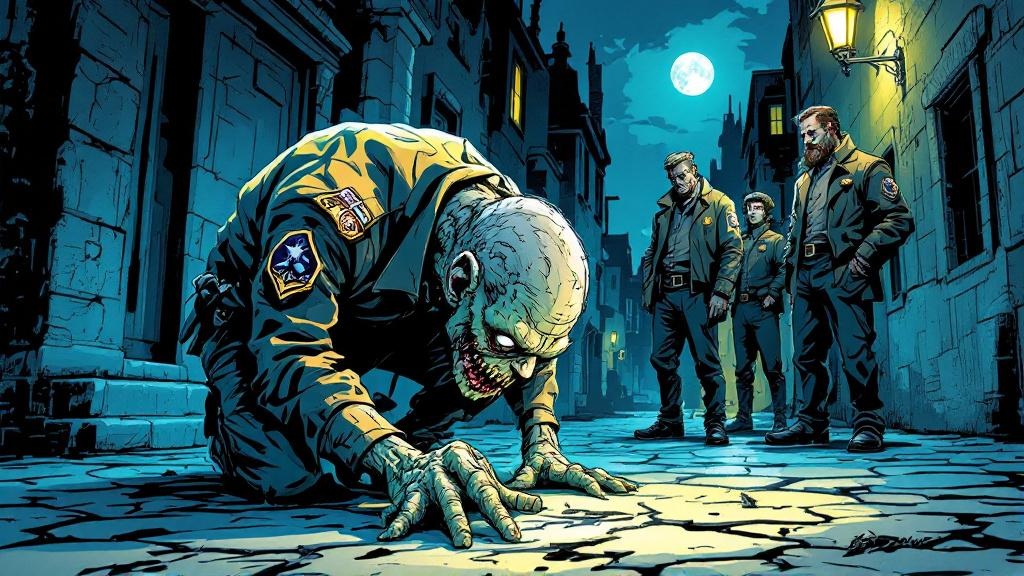
In Jingo, Reg complains to Captain Carrot about the Watch's treatment of undead citizens. Carrot, being Carrot, doesn't dismiss the complaint. He offers Reg a job. If the Watch maltreats the undead, the Watch needs someone who understands the problem from the inside. Reg accepts.
The firebrand becomes a constable. The man who stood on barricades and screamed defiance at armed men now is the armed man. And Commander Vimes—the same Vimes who watched Reg die at Whalebone Lane—considers him a good Watchman.
This isn't a betrayal of Reg's principles. It's an evolution. Young Reg believed you change the world by tearing it down. Zombie Reg, thirty years wiser and clinically dead, discovers that you can also change it by putting on a badge and working from the inside. He still runs the Fresh Start Club in his spare time. He never stops advocating. He's just added institutional access to his toolkit.
There's a beautiful piece of practical comedy in his police work, too. Zombies, as Reaper Man establishes, must consciously control every bodily function—breathing, blinking, the systolic-diastolic rhythm of a heart that has no medical reason to keep beating. This makes them extraordinarily detail-oriented. Reg Shoe, the hapless pamphleteer, turns out to be an excellent detective. The thing that killed him—his inability to stop paying attention to everything—is exactly what makes him good at his job.
The Twenty-Fifth of May
Every year, on the anniversary of the Glorious Revolution, a handful of people in Ankh-Morpork wear a sprig of lilac. Sam Vimes wears one. Fred Colon and Nobby Nobbs wear them. CMOT Dibbler wears one. Even Lord Vetinari, improbably, wears one.
And Reg Shoe goes to Small Gods' Cemetery. He lies down in his own grave, alongside the other fallen Heroes of the Revolution—John Keel, Cecil Clapman, Horace Nancyball, Billy Wiglet, Dai Dickins, Ned Coates. He lies there in solidarity with the dead.
Then he gets up and leaves. Because Reg Shoe does not stay down.
"He lies in his grave in solidarity with the dead. Then he gets up and leaves. Because Reg Shoe does not stay down."
That image—a zombie lying in his own grave once a year, commemorating his own death, then standing up and walking back to work—is one of the most quietly devastating things Pratchett ever wrote. It's funny, yes. It's absurd, absolutely. But it's also a portrait of someone who refuses to let grief or failure or even death itself be the final word. The revolution didn't work. The People's Republic is a memory. The people he fought beside are genuinely, permanently dead. Reg carries that, literally carries the weight of his own death, every single day. And he still shows up. He still fights. He still believes that things can be better, even if the evidence suggests otherwise.
The Point of Reg Shoe
Terry Pratchett was famously angry—angry at injustice, angry at cruelty, angry at the comfortable lie that things are the way they are because they have to be. He channeled that anger into every book he wrote. But in Reg Shoe, he did something slightly different. He created a character who embodies the absurdity of that anger—the sheer, irrational stubbornness of believing the world can change when all evidence points the other way.
Reg Shoe is Pratchett's answer to cynicism. Not because Reg is effective. Not because his pamphlets change minds or his slogans inspire the masses. But because he's still here. Still shambling forward. Still founding committees and filing complaints and standing on whatever barricade presents itself, thirty years dead and not one degree less furious about injustice.
They told him the revolution was pointless. He died for it anyway. They told him death was permanent. He disagreed. They told him zombies couldn't be coppers. He filed a complaint and got hired.
At some point, you have to wonder: is it stubbornness, or is it something else? Is it the refusal to accept defeat, or the bone-deep understanding that defeat is just another word for "not finished yet"?
The crossbow bolts couldn't stop him. Death couldn't stop him. Thirty years of failed revolutions and ignored pamphlets and meetings attended by a ghoul, a bogeyman, and two vampires who keep falling off the wagon couldn't stop him.
Reg Shoe keeps going. The turtle moves, and so does he.
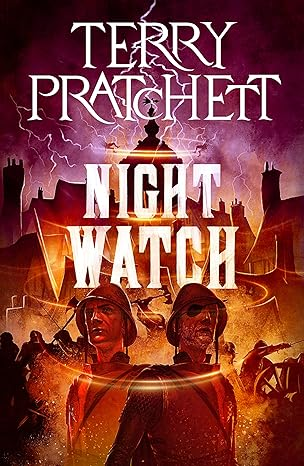

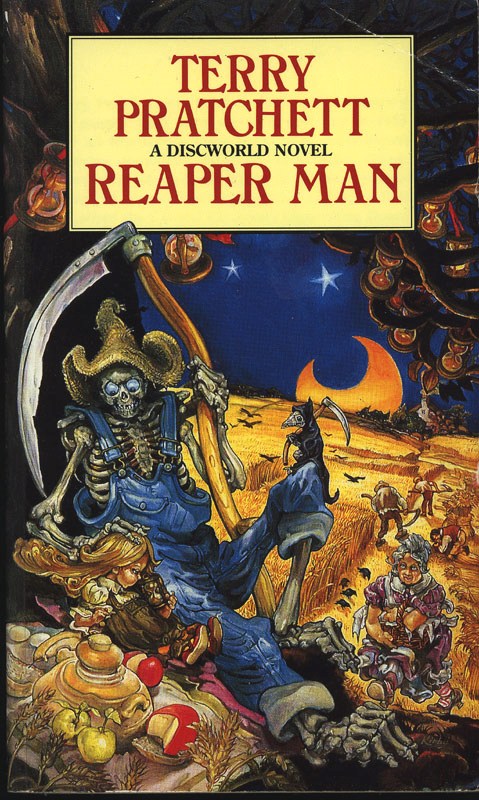
If you want the complete picture, pair Night Watch with Reaper Man, where you meet zombie Reg running the Fresh Start Club and discover what thirty years of undead activism looks like. Together, they tell the story of a man who died for his beliefs—and then kept believing anyway.
Want more from the Watch? Read about Sam Vimes' war with his own success, Detritus and Cuddy's unlikely partnership, or why Fred Colon is the Watch's secret weapon.