Lady Sybil and the Unapologetic Art of Taking Up Space
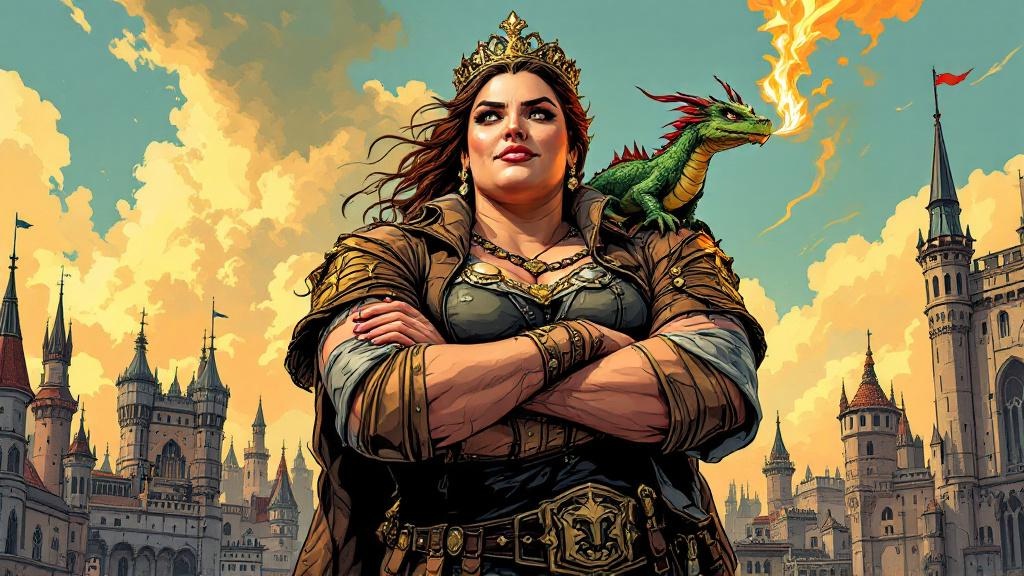
Lady Sybil Ramkin is one of fantasy's rarest creations: a fat woman who exists in a love story without apology. Here's why her bigness matters.
Lady Sybil and the Unapologetic Art of Taking Up Space
Here's a test. Think of a fat woman in a fantasy novel. Not a villain. Not a joke. Not a cautionary tale about gluttony or a before picture waiting for a magical transformation.
Think of a fat woman in a love story. One where her body isn't the obstacle, the punchline, or the thing she has to overcome before she deserves happiness.
You're probably thinking of Lady Sybil Ramkin.
If you can think of anyone else, I'd genuinely like to know—because after decades of fantasy fiction, she's still one of the only characters who fits that description. And the fact that Terry Pratchett wrote her in 1989 makes it all the more remarkable.
Toweringly Big
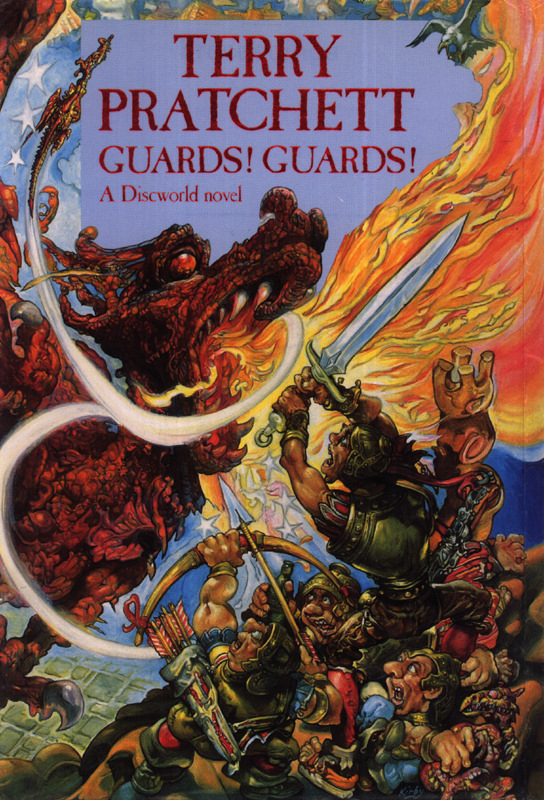
Pratchett introduces Sybil in Guards! Guards! with a description that tells you everything about how he sees her:
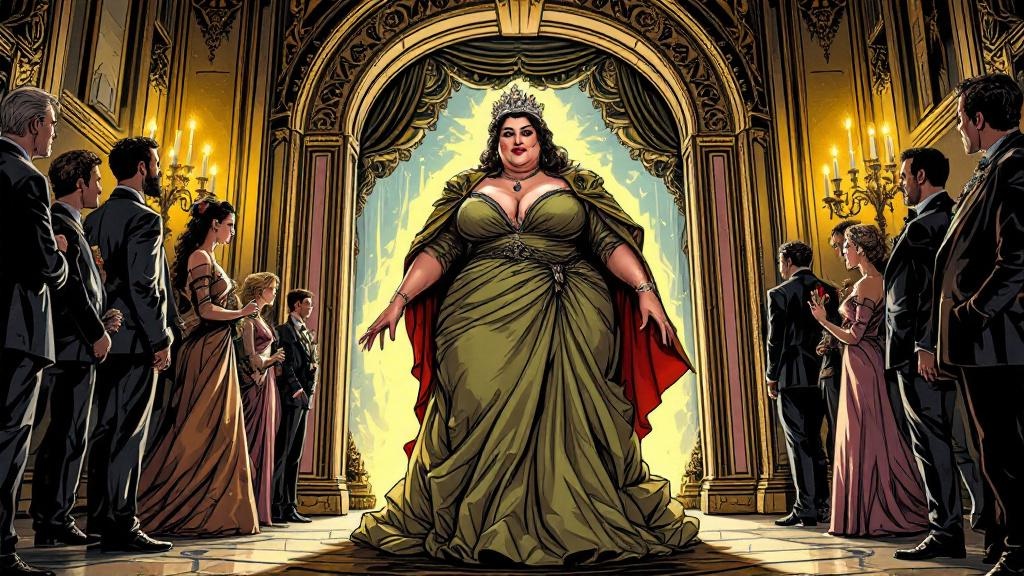
Lady Sybil Ramkin was toweringly big. Vimes knew that the barbarian hublander folk had legends about great chain-mailed, armor-bra'd, carthorse-riding maidens who swooped down on battlefields and carried off dead warriors on their cropper to a glorious roistering afterlife, while singing in a pleasing mezzo-soprano. Lady Ramkin could have been one of them. She could have led them. She could have carried off a battalion.
"She could have carried off a battalion."
Read that again. Pratchett reaches for a comparison and lands on Valkyries. Not a punchline. Not an insult wrapped in a compliment. He describes her the way you'd describe a force of nature—something magnificent and slightly terrifying.
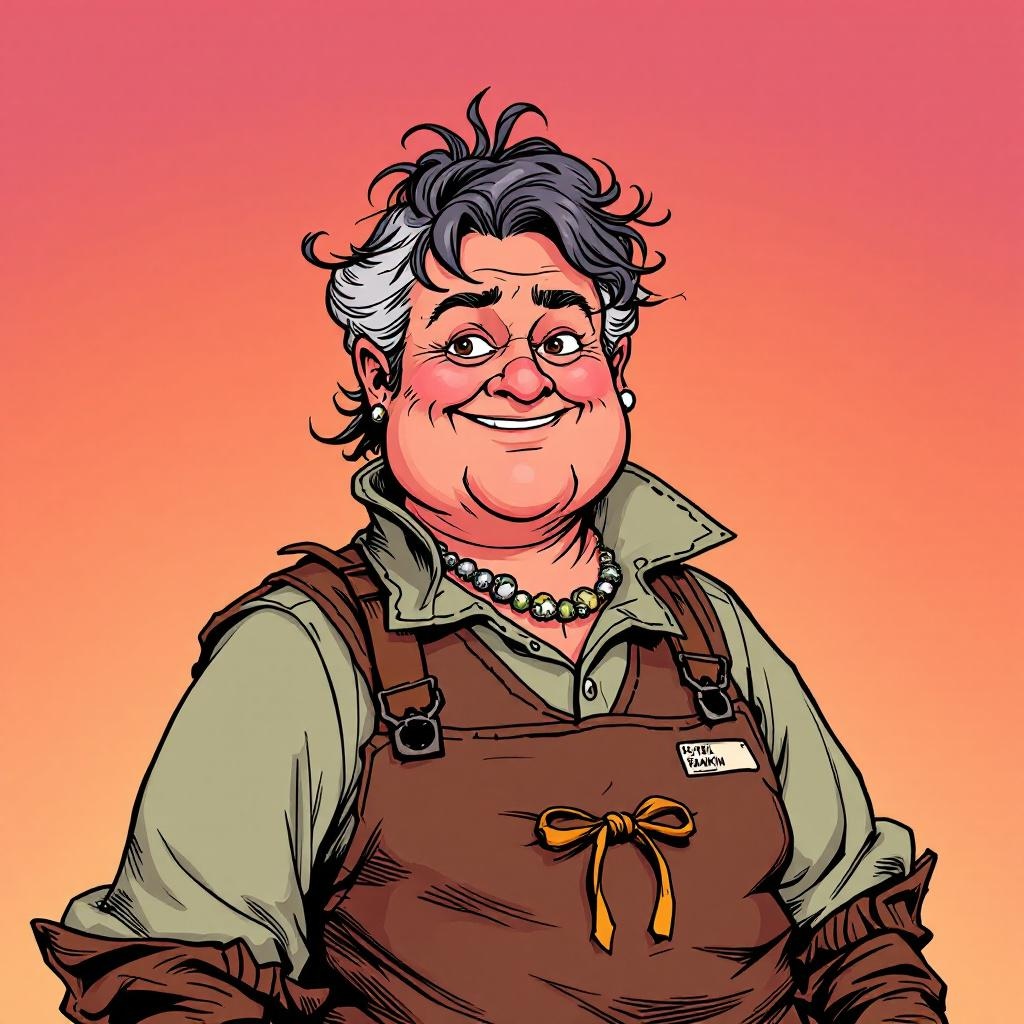
When she speaks, "every word was like a hearty slap on the back" and her vowel sounds "would have cut teak." When she draws herself up, it's "like watching continental drift in reverse as various sub-continents and islands pulled themselves together." She stomps around her dragon pens in rubber boots and a soot-stained apron, and at one point appears as "a furious vision in padded leather, gauntlets, tiara and thirty yards of damp pink tulle."
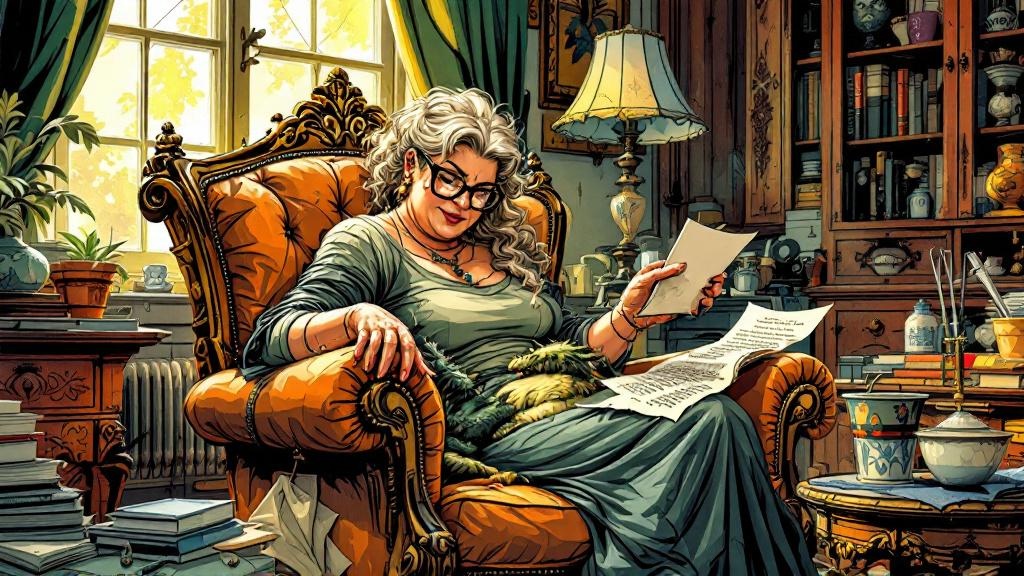
She's huge. She's tall, fat, bald (she shaves her head because of fire-breathing dragons), and she wears her dead mother's old tweed skirts. She is about as far from a conventional fantasy heroine as it's possible to get.
And Sam Vimes falls completely in love with her.
The Rarity of Just Existing
Here's what makes Sybil genuinely groundbreaking, and it's so simple it's almost embarrassing to point out: she's a fat woman who just exists.
She exists in a romantic capacity. She exists as desirable. She exists without her weight being a narrative problem that needs solving. There's no makeover montage. No magical transformation. No moment where she loses weight and finally gets the guy. She gets the guy—or rather, she chooses the guy—exactly as she is.
As writer Jasmine Collins put it in her widely-shared essay, Sybil is "one of the best examples I can think of of a fat woman just casually existing—in a romantic capacity—in a story. She's not fetishized, but she's not desexualized either."
That distinction matters. In most fiction, fat women get one of two treatments. Either their bodies are made into objects of fascination—look at the fat lady, isn't that interesting—or they're rendered sexless. The fat best friend. The comic relief. The warm maternal figure who exists to support the thin protagonist's love story.
Sybil is none of these. When she rolls over in bed, her weight causes the already very fluffy mattress to bury Vimes. It's a detail that's intimate, fond, and completely unashamed. Her body is part of her physical presence in the world, and that presence is treated as attractive, powerful, and entirely normal.
"She's attractive, and she takes up a lot of physical space, and it really feels like there was no conflict there for the author."
There's no scene where Vimes has to "get past" her appearance. No moment where he sees her inner beauty despite her outer reality. He finds her beautiful. Full stop. When he looks at her and thinks about all the women who've ever smiled at him, she's in "her own special category" of beauty—not despite her size, but inclusive of everything she is.
What Pratchett Understood
Terry Pratchett understood something about women's bodies that most male authors (and, frankly, most of popular culture) still haven't grasped: that women are almost exclusively rewarded for smallness.
Be small. Be delicate. Take up less space. Speak softly. Cross your legs. Don't eat too much in public. The message, delivered in a thousand small ways from childhood, is that your body should minimize itself—that largeness in a woman is inherently wrong, or at least something that requires constant management and apology.
Sybil Ramkin apologizes for nothing.
She takes up space physically—she's tall, she's wide, she fills rooms. She takes up space socially—her voice carries, her opinions matter, people defer to her. She takes up space politically—her network of Quirm College school friends spans continents and "could run the world, if they don't already."
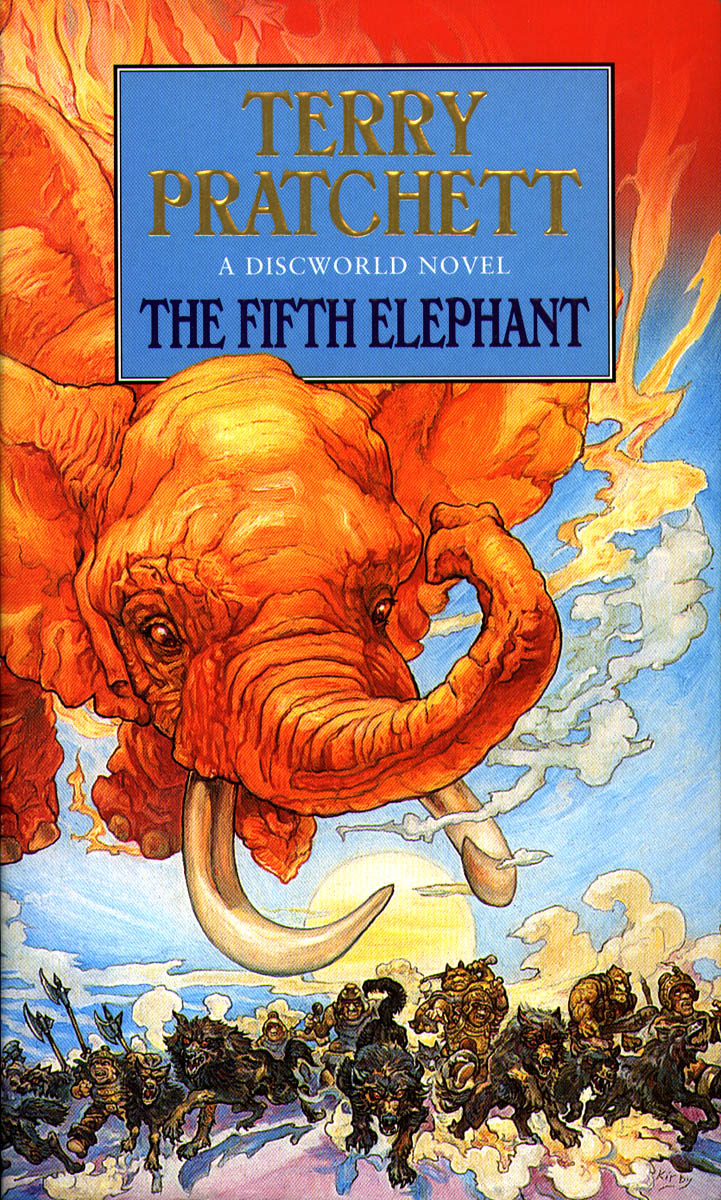
And Pratchett hints at what it cost her to become this way. In The Fifth Elephant, we get a flashback to young Sybil at the Quirm College for Young Ladies, where she learns that "a society of girls is not a good one in which to be large and kind, because people are inclined to interpret that as 'stupid' and worse, 'deaf.'" She was bullied. She was dismissed. And at some point—we don't know exactly when—she decided she was done caring about what people thought of her body.
That's not a small thing. That's not something that happens overnight. And Pratchett respects it enough to show us both the wound and the armor that grew over it.
The Descriptions That Celebrate
One of the most telling things about Sybil's characterization is how Pratchett describes her size. A lesser author would make her weight the butt of the joke. Pratchett makes it the source of her power.
Every physical description is written with admiration, even when it's funny. When she draws herself up, it's continental drift. When she charges into danger, she's dragging reluctant horses behind her. When she's angry, you feel "a momentary pang of sympathy for whoever else had been involved." She's compared to Valkyries, to cities, to natural forces.
The humor in Sybil's descriptions isn't at her—it's with her. Pratchett is delighted by her. You can feel it in every sentence. He loves writing a woman who enters a room like she owns it (and in Ankh-Morpork, she probably does own it), who intimidates armed guards without raising her voice, who breeds genetically unstable dragons that randomly explode and considers this a perfectly reasonable hobby.
Compare this to how other fantasy handles fat characters. In mainstream fiction, a large woman's body is typically presented as either tragedy, comedy, or fetish. The character either hates her body, provides comic relief through her body, or exists for someone else's complicated feelings about her body.
"Her bigness is never depicted as something wrong. It's just part of her presence."
Sybil has no complicated feelings about her body. She has things to do. Dragons need feeding. International crises need managing. Husbands need reminding about their diets.
Her body simply is, in the same way that Vimes' cynicism simply is or Death's skeleton simply is. It's a fact about her, not a problem about her.
The Watch Adaptation and What It Revealed
When the BBC's The Watch adaptation cast Lara Rossi—a slim, young actress—as Lady Sybil, the fan reaction was furious. And the specifics of that fury told us something important about what Sybil means to readers.
The complaints weren't just about accuracy. They were about representation. Fans pointed out that the show's diversity-conscious casting had, ironically, removed one of the most meaningful forms of diversity in the source material. In making the world "punk rock" and modern, they'd eliminated every fat character.
What the adaptation's choices revealed, perhaps unintentionally, was how radical Sybil's characterization really is. A large woman who is desirable, powerful, romantic, and heroic is apparently still too challenging for mainstream media to portray. Better to make her conventionally attractive and give her a sword—that's a kind of female empowerment television understands.
Pratchett understood a different kind. The kind where a woman doesn't need to look like an action hero to be one. Where strength comes from character, not from a slim waist and fighting skills. Where taking up space—literal, physical space—is itself an act of quiet rebellion.
Why She Matters to Readers
Every few months, someone discovers Lady Sybil Ramkin for the first time and writes about it online. The posts follow a remarkably consistent pattern: surprise, then recognition, then something close to grief.
Surprise that a fat character in a fantasy novel is written this way. Recognition of themselves in her unapologetic presence. And grief for all the years they spent thinking that characters who looked like them didn't get love stories.
The readers who connect most deeply with Sybil aren't responding to a political statement about representation. They're responding to something much simpler and more powerful: the experience of seeing someone who looks like them treated as worthy of love, respect, and admiration—by the narrative itself, not just by another character within it.
Pratchett didn't write Sybil as a body-positivity manifesto. He wrote her as a person. A brilliant, formidable, compassionate person who happens to be fat. And the revolutionary thing about that is how unrevolutionary he made it feel.
The Quiet Revolution of Being Enough
Here's the thing about Lady Sybil that sticks with you long after you've finished the books: she never changes.
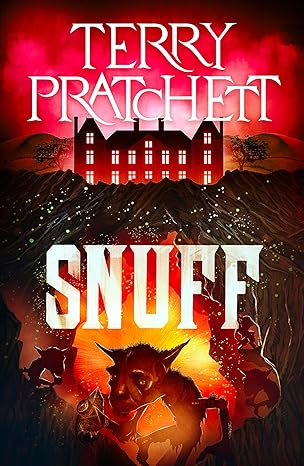
Not physically. She doesn't lose weight across the series. She doesn't have a makeover. In Snuff, seven books after her introduction, she's still big, still confident, still wearing practical clothes and caring more about dragons than fashion.
"She could engulf you; the woman was a city."— Terry Pratchett
And she doesn't change emotionally about her body, either. There's no arc where she learns to accept herself. She accepted herself before page one. The revolution already happened, offstage, sometime between being bullied at school and becoming the woman who proposes to a drunk watchman in her dragon pens.
That's Pratchett's real genius with this character. He doesn't write the journey to self-acceptance—he writes what happens after. He writes a woman who has already decided that she is enough. And then he gives her a love story, a political career, and the power to change the world.
Because that's what happens when you stop apologizing for your body. You have time and energy for everything else.
Reading Recommendations


The Bottom Line
Terry Pratchett created a fat woman who is beautiful, powerful, romantic, and heroic. He didn't make her beautiful despite her size. He didn't make her powerful in spite of her body. He just made her Sybil—toweringly big, unapologetically present, and worth every word he spent describing her.
In a genre full of slender elf-maidens and wasp-waisted warrior princesses, that's still a revolutionary act.
Want to explore more of Lady Sybil? Read about how Pratchett compared her to Ankh-Morpork itself, or discover what her dragons reveal about her character.