The Sunshine Sanctuary: What Lady Sybil's Dragons Reveal About Her Character
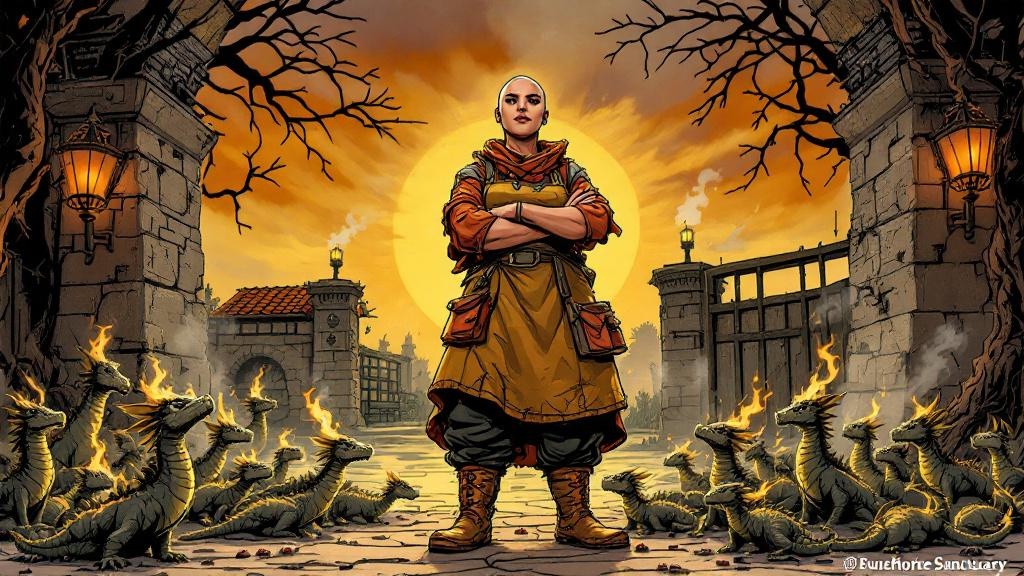
Before goblin rights, Lady Sybil championed exploding swamp dragons. Her Sunshine Sanctuary reveals the activist who was always hiding inside the aristocrat.
The Sunshine Sanctuary: What Lady Sybil's Dragons Reveal About Her Character
Let's talk about the worst pet in fantasy literature.
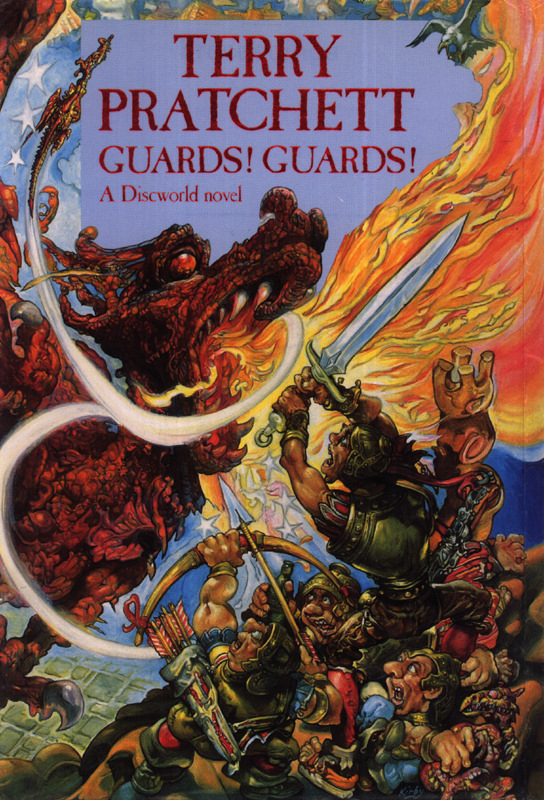
Swamp dragons are small, chronically ill, and their most common cause of death is spontaneous explosion. Their collective noun is "an embarrassment." They can rearrange their own internal organs to adjust their digestion, a biological trick that sounds impressive until you learn it mostly makes them sicker. They are, as Terry Pratchett writes in Guards! Guards!, "not very well-designed creatures."
And Lady Sybil Ramkin has devoted her entire life to them.
This isn't a throwaway detail. It isn't comic relief, though it's certainly funny. Sybil's relationship with swamp dragons is the key to understanding everything she does across seven novels—from opening her home to a drunk watchman to changing the legal status of an entire species.
An Embarrassment of Dragons
"The collective noun for swamp dragons is "a slump" or "an embarrassment.""
Swamp dragons—Draco vulgaris—are the biological opposite of their noble cousins. Where noble dragons are vast, terrifying, and powerful, swamp dragons grow to about two feet long, have functional but mostly useless wings, and spend most of their short lives dealing with catastrophic digestive problems.
The fire-breathing mechanism is the root of everything wrong with them. They evolved in swamps, where combustible material is scarce, so they developed the ability to eat almost anything and rearrange their internal plumbing to produce the hottest flame possible from whatever they've consumed. The result is a creature in a permanent state of gastric crisis. Feed them the wrong thing and they don't just get sick—they detonate.
Pratchett describes their biology with the gleeful detail of someone who has thought far too hard about reptilian combustion. They suffer from conditions with names like "Slab Throat" and "The Staggers." Two dragon varieties are named after Sybil herself, a testament to her breeding expertise with creatures that view survival as optional.
Wealthy people keep them as fashionable pets. There are breeding associations and competitions, because of course there are—this is Ankh-Morpork, where anything can be turned into a status symbol. But the fashion comes and goes, and when it goes, the dragons end up at the Sunshine Sanctuary.
The Woman in Rubber Boots
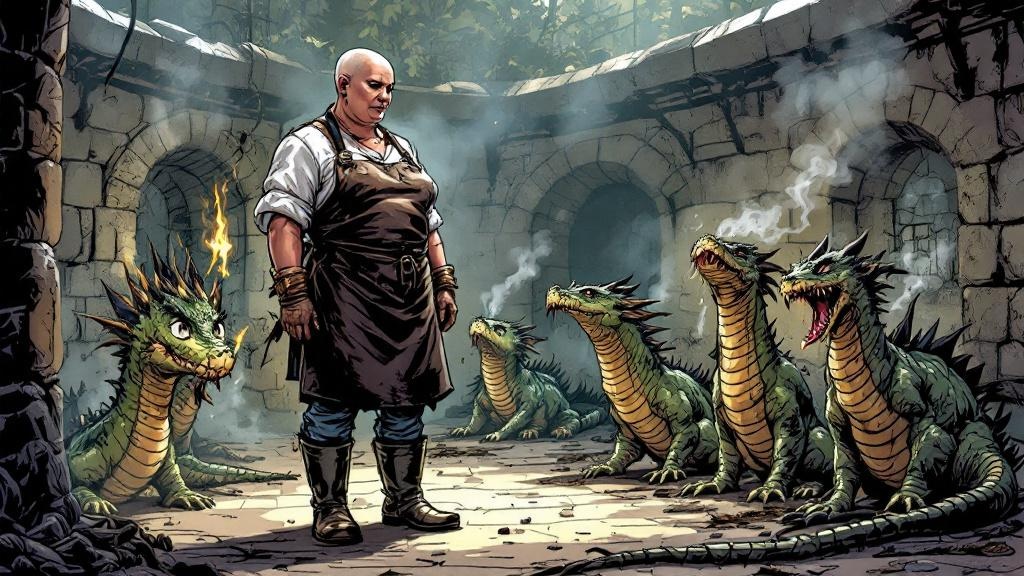
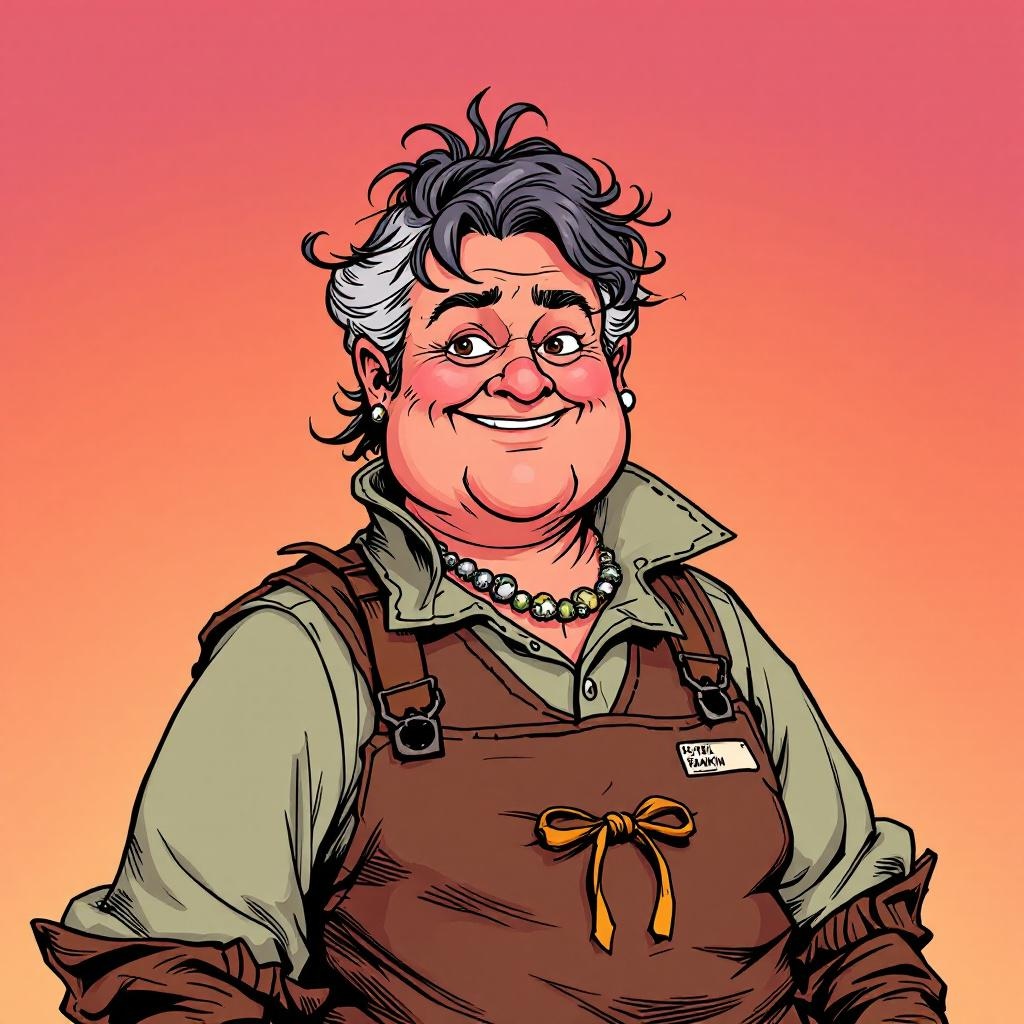
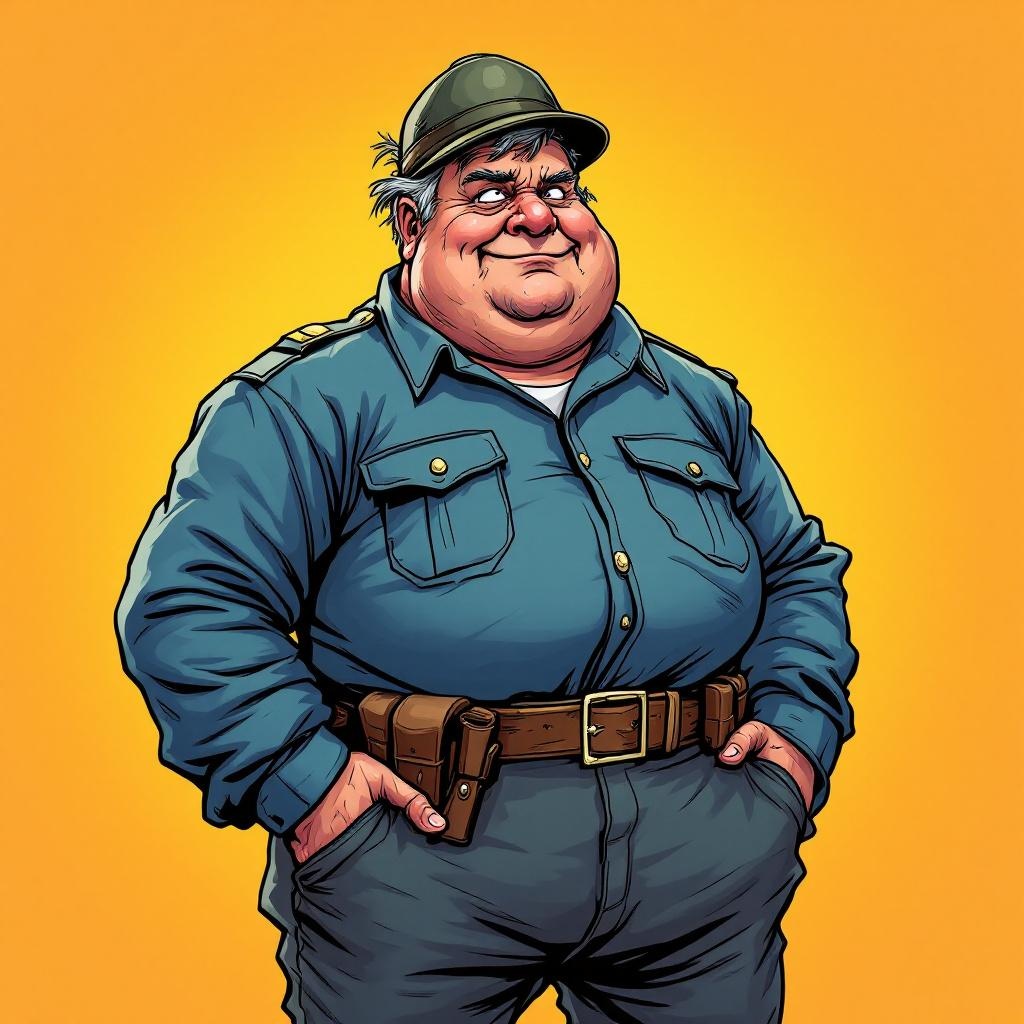
When we first meet Sybil in Guards! Guards!, she's in her dragon pens, covered in soot, wearing rubber boots and her dead mother's tweed skirt. She shaves her head and wears a wig because swamp dragons are, predictably, a fire hazard. She considers this a perfectly reasonable accommodation.
This is the richest woman in Ankh-Morpork. She owns half the city. She could do anything—travel, collect art, throw lavish parties. Instead, she runs a sanctuary for creatures that most people consider pests at best and hazards at worst.
The Sunshine Sanctuary for Sick Dragons takes in abandoned, abused, and sick swamp dragons. It's staffed by volunteers—upper-class young ladies from the dragon-breeding set who haven't found anything else to do with their time yet. Sybil wrote the definitive book on swamp dragon diseases, symptoms, and treatments, cataloguing every ailment that can afflict a creature whose default state is "about to explode."
"To her, the murder of a swamp dragon is equivalent to the murder of a human."
Here's what matters: Sybil doesn't see swamp dragons as charity cases. She sees them as beings with inherent worth. To her, the murder of a swamp dragon is equivalent to the murder of a human. This isn't sentimentality—it's a moral position. She treats creatures that society considers disposable as though they deserve the same care and protection as anyone else.
Sound familiar? It should. Because twenty-two years and six books later, she'll do exactly the same thing for goblins.
Errol and the Triumph of the Misfit
The climax of Guards! Guards! brings Sybil's philosophy into sharp focus.
A noble dragon—the real thing, vast and terrifying—is terrorizing Ankh-Morpork. Meanwhile, Sam Vimes and the Night Watch have been saddled with Errol, a swamp dragon so pathetic that Sybil gave him to the Watch because he wasn't thriving at the Sanctuary. He's small, sickly, and makes strange noises. He is, by every standard, a failure.
And then Errol defeats the noble dragon.

His internal plumbing, that genetic lottery of tubes and chambers that makes swamp dragons so volatile, turns out to be his greatest asset. He rearranges himself into something unprecedented—a living jet engine, channeling all his fire backward for propulsion rather than forward for attack. He doesn't fight the noble dragon with fire. He fights her with pure, screaming speed.
And it turns out the noble dragon is female. The "battle" is a courtship. Errol doesn't defeat her—he wins her. The genetic mishap, the runt of the litter, the dragon too broken for the Sanctuary, turns out to be exactly what was needed.
Pratchett is making a point here, and it's the same point Sybil makes every day she wakes up and puts on her rubber boots. The things society discards aren't worthless. They're just waiting for the right moment, the right context, the right person to believe in them.
Sybil believed in Errol when no one else did. And Sybil will keep believing in the unwanted and the overlooked for the rest of her life.
The Pattern of Advocacy
Here's what's easy to miss if you only read Guards! Guards!: the dragon sanctuary isn't a quirk. It's a preview.
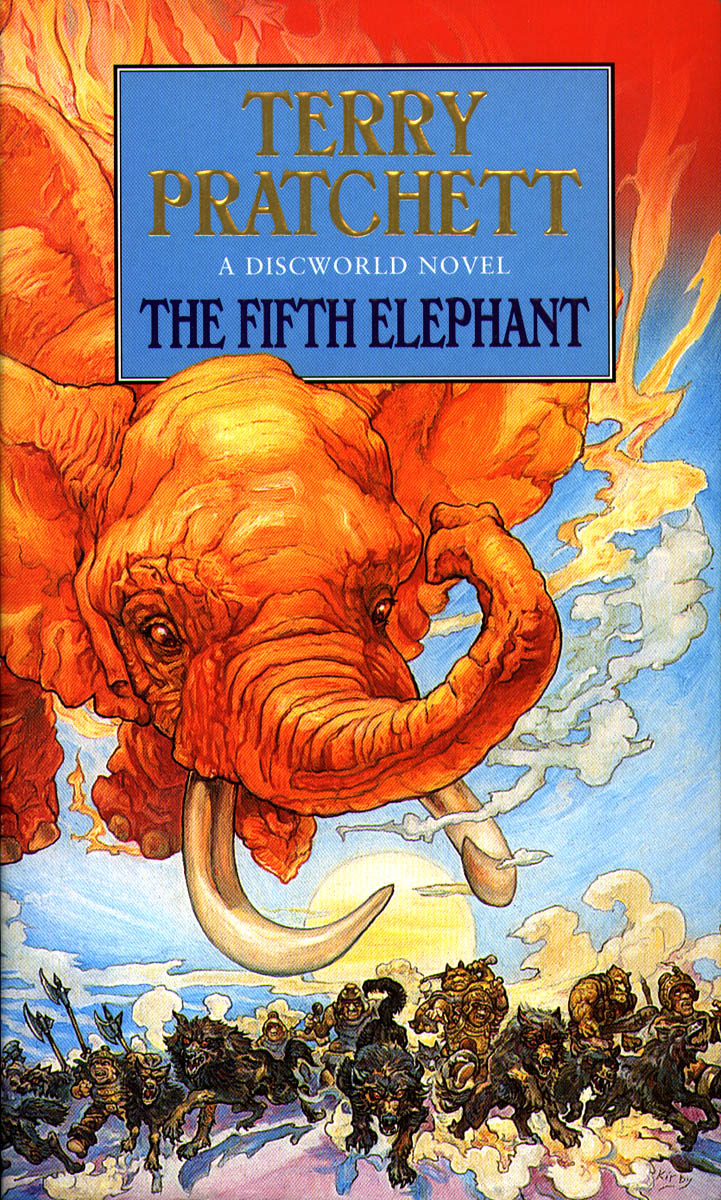
Across the Watch novels, Sybil's instinct to champion the undervalued keeps expanding in scope. In Guards! Guards!, she advocates for swamp dragons—creatures most people view as expensive nuisances. By The Fifth Elephant, she's learned to speak Dwarfish and sings a dwarf opera aria so beautifully that hardened miners weep. She doesn't learn dwarf culture because it's fashionable or useful. She learns it because she's genuinely interested in people who aren't like her.
And then there's Snuff.
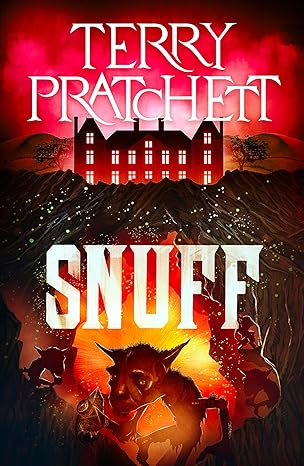
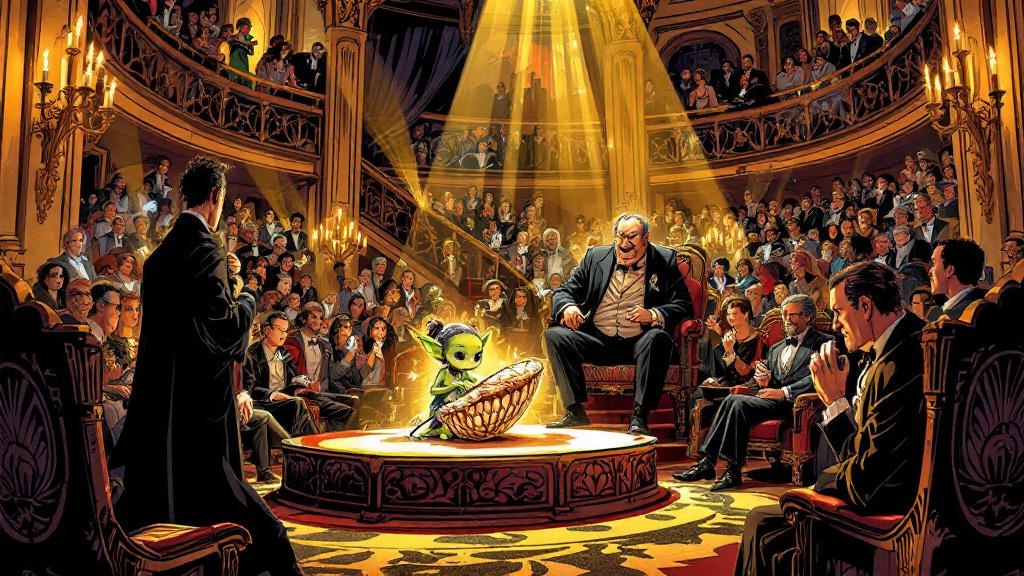
In the final Watch novel, Sybil arranges a concert in Ankh-Morpork. She invites Lord Vetinari, Lady Margalotta, ambassadors to the Diamond King of Trolls and the Low King of Dwarves. She fills the room with the most powerful people on the Disc, and then she puts a goblin girl named Tears of the Mushroom on stage to play music.
The music is so beautiful that it changes everything. The audience—the people who make laws, who decide which species count as "people"—hear something undeniable. Goblins aren't vermin. They're artists. They're people. And the laws change.
"She didn't protest. She didn't give speeches. She arranged the right people to witness the right thing."
This is Sybil's method. She didn't protest. She didn't give speeches. She didn't march in the streets. She used her wealth, her connections, her social standing—all the tools of privilege that she was born with—to create a moment where the truth couldn't be ignored.
It's the Sunshine Sanctuary all over again, scaled up to geopolitics. Find the creatures that nobody values. Believe they matter. Then make everyone else see it too.
What the Dragons Really Mean
There's a line that runs from the Sunshine Sanctuary to that concert hall, and it tells you everything about who Sybil is.
She's not a radical. She doesn't want to tear down the system. She's the richest woman in Ankh-Morpork, and she's perfectly comfortable with that. She stomps around in rubber boots and her mother's old clothes, but she never renounces her wealth or her title.
What she does is use it.
The Sunshine Sanctuary exists because Sybil has money and land and the social standing to say "these creatures matter" and have people listen. The goblin concert works because Sybil has the kind of address book that gets Vetinari to show up. Her advocacy isn't despite her privilege—it's through it.
Pratchett understood something that a lot of fiction gets wrong: privilege isn't inherently evil. It's a tool. What matters is what you do with it. And what Sybil does, consistently, from the first moment we meet her to the last, is use her position to extend protection to things that can't protect themselves.
Swamp dragons can't advocate for themselves. They can barely stop themselves from exploding. Goblins are treated as vermin, denied personhood, and hunted for sport. In both cases, Sybil steps into the gap—not because she has to, but because she's the one who can.
The Activist in the Aristocrat
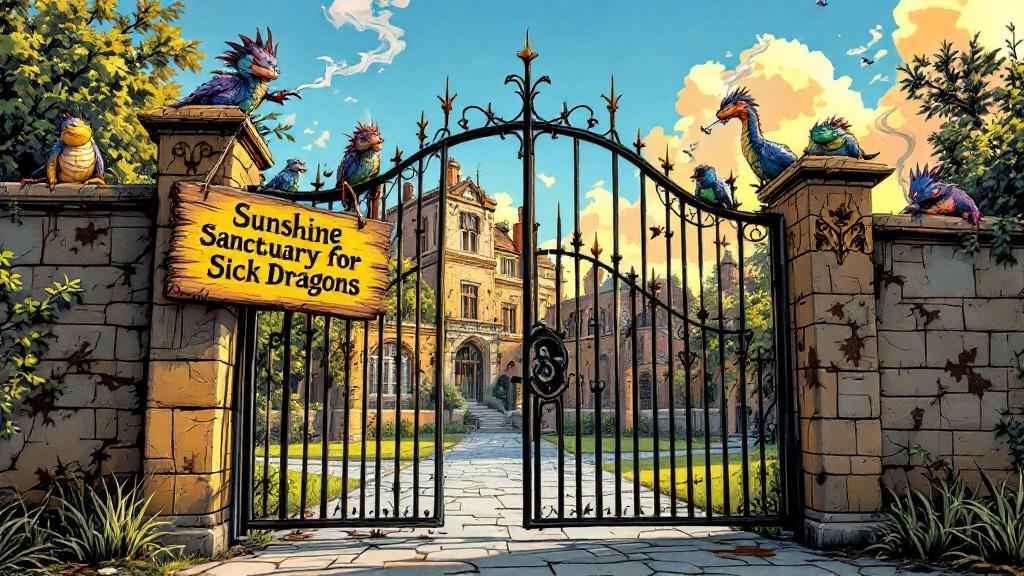
There's a reason the Sunshine Sanctuary isn't called the Sunshine Sanctuary for Healthy Dragons. Every dragon there is broken in some way—abandoned, sick, explosive, unwanted. And Sybil takes them all in, not because she can fix them (she can't always fix them; they do still explode), but because she believes the attempt matters.
That's her defining trait, and it predates Vimes, predates the Watch, predates everything. Before she rescued a cynical cop from the bottle, before she sang dwarfs to tears, before she changed the law for goblins, she was in her pens at dawn, feeding explosive reptiles and writing meticulous notes about their diseases.
The dragons came first. The dragons always came first.
And if you want to understand Lady Sybil Ramkin—not just the body-positive icon, not just the woman who conquered Vimes, not just the Duchess—start with the dragons. Start with a woman who looked at the most pathetic creatures on the Disc and decided they deserved better.
Everything else follows from there.