The Vampire Who Got 'Weatherwaxed': Granny's Greatest Gambit
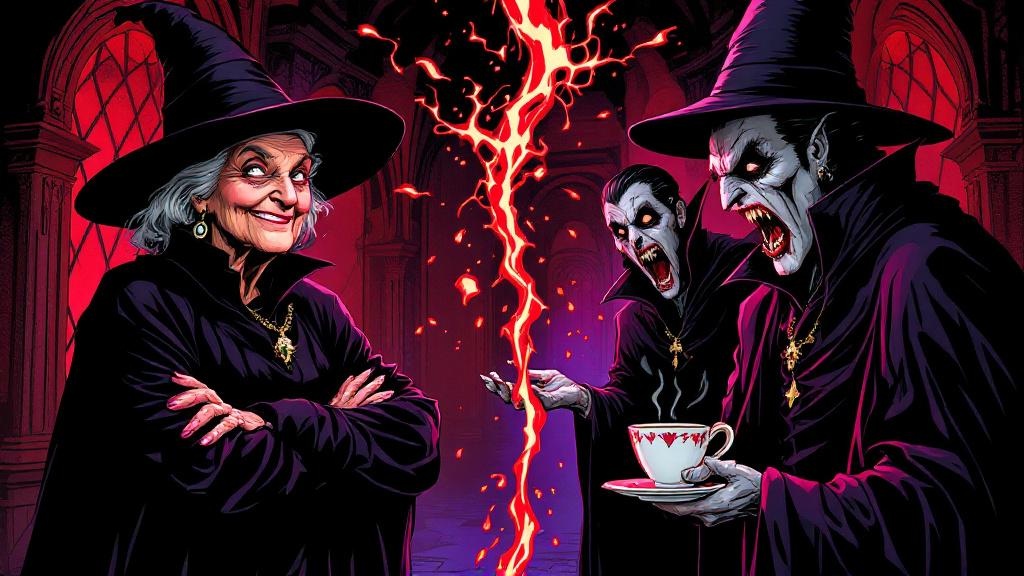
How Granny Weatherwax let vampires bite her in Carpe Jugulum—then used her own blood to defeat them from the inside. Her darkest hour became her greatest victory.
The Vampire Who Got 'Weatherwaxed': Granny's Greatest Gambit
Most vampire stories end the same way. Stake through the heart, garlic around the neck, sunlight through the window, hero walks away dusting off their hands. Boring. Predictable. The vampires always lose because they're vulnerable, and the heroes always win because they exploit that vulnerability.
So what happens when the vampires aren't vulnerable anymore?
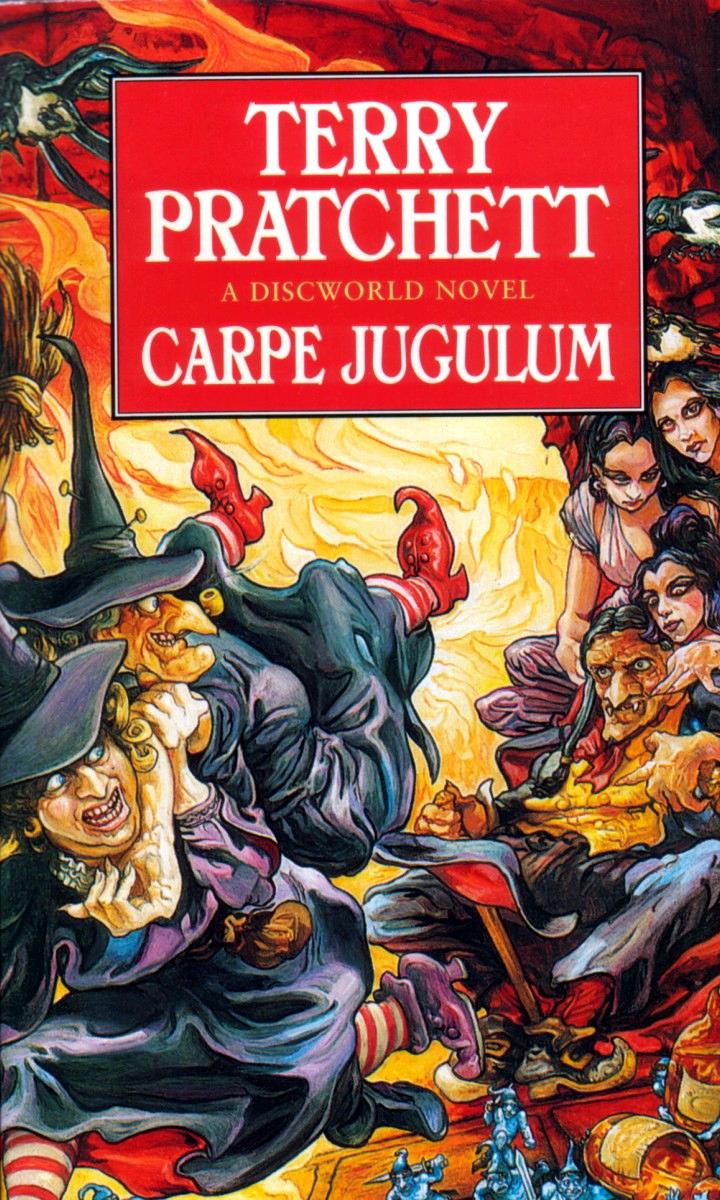
Carpe Jugulum poses this question with the Magpyr family—a clan of modern, sophisticated vampires who've systematically trained themselves out of every traditional weakness. Garlic? They eat it like candy. Holy symbols? Immunized through careful exposure. Sunlight? They've built up a tolerance. Running water? They cross it without flinching. They are, for all practical purposes, unstoppable.
And then they met Granny Weatherwax.
What she did to them is one of the most brilliant reversals in all of Discworld. Not a battle. Not a spell. A trap—baited with the only thing she had left to offer: herself.
The Magpyrs: Vampires Who Read the Manual
"They trained themselves out of every weakness. They forgot that the biggest weakness was arrogance."
Before we get to the gambit, you need to understand what made the Magpyrs different. Traditional Discworld vampires are a known quantity. They've got all the classic weaknesses, and everybody knows the drill. The old Count de Magpyr was practically a collaborator in his own defeats—he left easily-snapped curtain rails, objects that could be broken into crosses, copious supplies of holy water lying around. Getting staked was almost a hobby. It was a game, and both sides knew the rules.
His family found this pathetic.
The younger Magpyrs—Count, Countess, and their children Vlad and Lacrimosa—took a different approach. They desensitized themselves methodically, the way you'd build immunity to a poison. A little garlic today, a bit more tomorrow. Flash cards with holy symbols until the flinch response died. They didn't just overcome their weaknesses—they contempted them. They saw themselves as the next evolution of vampirism: rational, progressive, unstoppable.
They arrived in Lancre not to terrorize it in the traditional sense but to run it. Subtle mind control. Political maneuvering. Making the king invite them in—because vampires still need an invitation, and what better invitation than a royal christening? They weren't monsters from a horror novel. They were management consultants with fangs.

Granny's Crisis
Here's what makes Carpe Jugulum different from every other Granny Weatherwax story: she's losing.
Not just the fight against the vampires. She's losing herself. The book opens with Granny in crisis—she wasn't invited to the royal christening, an insult that cuts deeper than it should because it suggests she's becoming irrelevant. Magrat is queen now. Agnes Nitt is the new third witch. The coven has moved on.
And when the vampires arrive and start bending minds across Lancre, Granny can't stop them. The Magpyrs are too strong, too modern, too immune to the old tricks. They bite her. They get inside her head. For the first time in the entire series, Granny Weatherwax appears genuinely defeated. Not playing possum. Not hiding in a swarm of bees. Actually, properly beaten.
She wanders into the woods. She doubts herself. She questions whether she's been doing good or just being stubborn. This is the woman who pointed to herself without hesitation in a hall of infinite reflections—and now she's not sure who she is anymore.
It's terrifying, because if Granny Weatherwax doesn't know who she is, then nothing in the Discworld is safe.
Oats in the Fire
Into this crisis walks Mightily Oats, an Omnian priest who couldn't have been less aptly named. Oats is everything Granny isn't—uncertain, apologetic, riddled with doubt. He'd written a paper on the crisis of religion in a pluralistic society, which tells you everything about the kind of clergyman he is. He came to Lancre for the christening and ended up on a journey through the mountains with the most formidable witch on the Disc.
"Sin, young man, is when you treat people as things. Including yourself. That's what sin is."— Granny Weatherwax
Their conversations during that journey are some of the best writing in all of Discworld. Granny, who doesn't believe in any god—"I know they exist, I just don't believe in them"—helps a priest find his faith. Not by arguing theology. Not by offering evidence. By asking the right questions and refusing the easy answers.
"There's no grays, only white that's got grubby," she tells him. It sounds simplistic. It's not. It's a woman who has spent her entire life choosing to be good, every single day, telling a man who can't decide what he believes that the decision is what matters. Not the certainty. The choosing.
Oats asks if she's ever been tempted by the dark. She tells him she's always tempted. That's the point. If it were easy, it wouldn't be goodness. It would just be habit.
And somewhere in those conversations, while she's supposedly defeated and wandering and lost, Granny Weatherwax is doing what she always does: planning.

"It's in the Blood"
Nanny Ogg gives Granny the key without knowing it. Talking about the Weatherwax family, she says that stubbornness is "in the blood." The Weatherwax women have always had one foot in shadow. It's in the blood. And most of their power comes from denying it.
In the blood.
The vampires drank Granny's blood. They thought they were turning her into one of them. They thought the blood was theirs now—that by taking it from her body, they'd taken her power, her identity, her stubborn refusal to be anything other than what she is.
They forgot what Borrowing is.
Borrowing—the witchcraft art of overlaying your consciousness onto another mind—normally requires proximity and line of sight. You ride behind the eyes of a hawk, a fox, a hive of bees. But the rules assume your consciousness stays in your body. Nobody ever considered what would happen if a witch's consciousness was already in the blood when someone drank it.
Nobody except Granny Weatherwax.
The Weatherwaxing
The scene, when it finally plays out, is one of Discworld's great reversals.
The Magpyrs are triumphant. They've taken Lancre. They've bent the king to their will. They've bitten the most powerful witch on the Disc and walked away stronger for it. Everything is going according to plan.
Then their plan starts to unravel.
They can't fly anymore. They feel uncomfortable doing certain things. They're developing strange cravings—for hot, sweet, strong tea. With biscuits. They're starting to sound different, think different. They're being nagged from the inside by a voice that sounds suspiciously like an elderly woman from Lancre who has very strong opinions about how things ought to be done.
"I ain't been vampired," Granny tells them, when the truth finally comes out. "You've been Weatherwaxed."
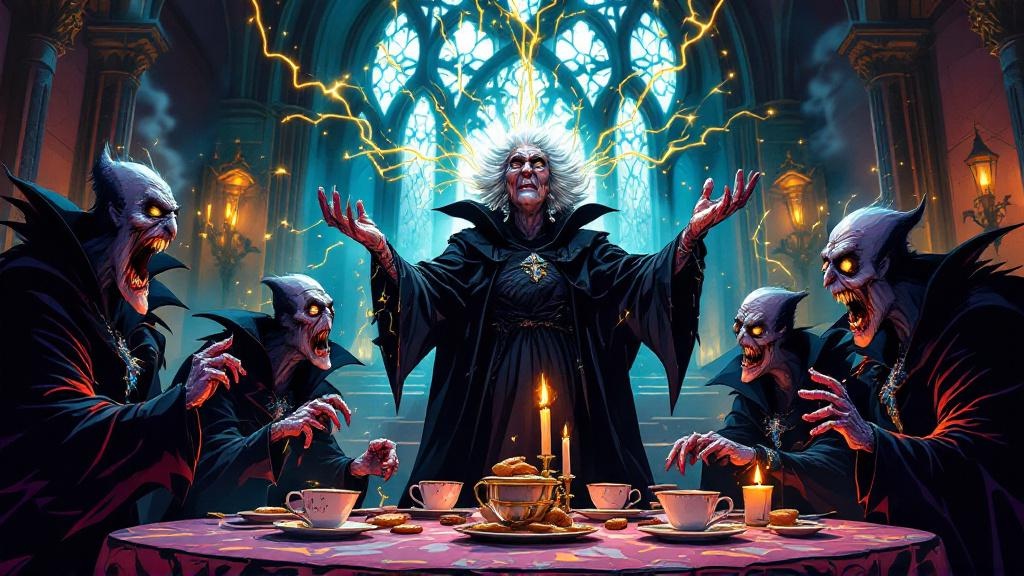
She'd Borrowed her own blood. Ridden her consciousness into it before they drank. And when they took her blood into their bodies, they didn't just get plasma and iron. They got Granny Weatherwax—every stubborn, uncompromising, tea-drinking, nonsense-refusing ounce of her. She was inside them now, rewriting their impulses the way they'd tried to rewrite hers. Except she was better at it, because she'd been practicing self-control for seventy years and they'd been practicing self-indulgence.
"Far from turning her into a vampire, they had instead been Weatherwaxed."
The vampires who'd trained themselves out of every external weakness had overlooked the most dangerous vulnerability of all: what happens when you invite Granny Weatherwax inside your head.
Why This Gambit Is Different
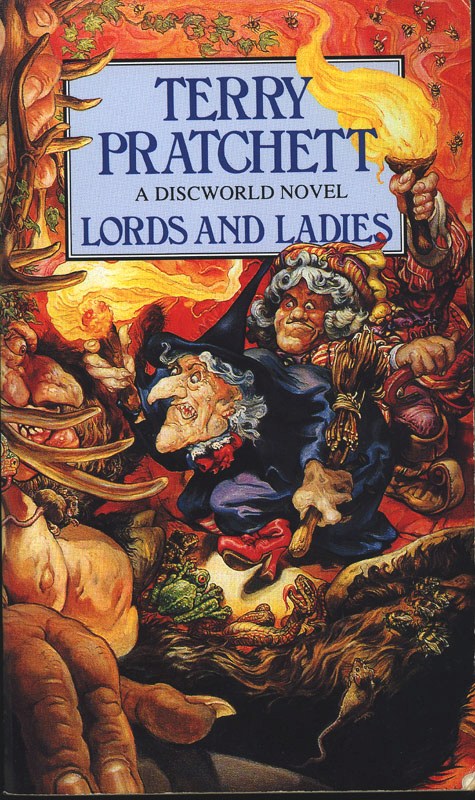
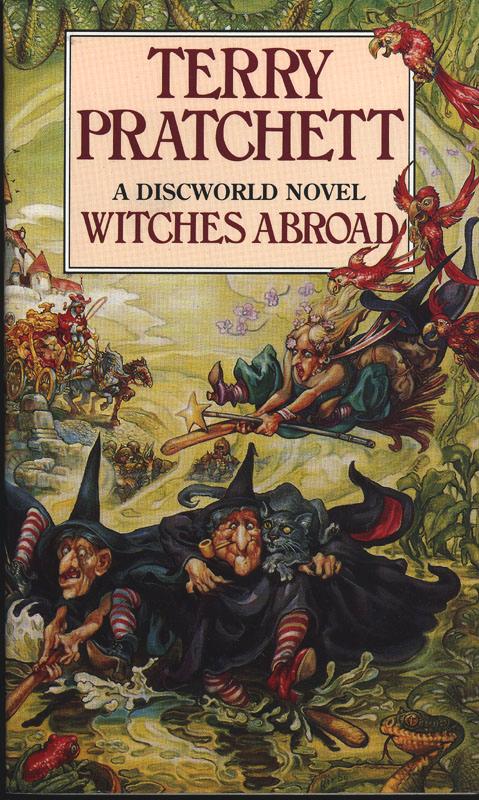
Look at Granny's greatest hits across the series, and you'll notice a pattern. In Witches Abroad, she defeated Lilith through self-knowledge—knowing which reflection was real. In Lords and Ladies, she defeated the Elf Queen by Borrowing a swarm of bees—hiding where nobody thought to look. Both victories relied on her unshakeable sense of identity.
The Carpe Jugulum gambit does something more. It uses her identity as a weapon offensively. She doesn't just resist the vampires' attempt to change her. She changes them. She takes the thing they tried to steal—her blood, her essence—and turns it into a Trojan horse. They wanted her power? Fine. They can have it. All of it. Including the parts that make her Esmerelda Weatherwax: the self-discipline, the refusal to take shortcuts, the absolute insistence on tea at proper intervals.
This isn't a defensive move dressed up as offense. It's a genuine escalation. In Witches Abroad, she survived. In Lords and Ladies, she came back. In Carpe Jugulum, she conquered—from the inside.
The Real Crisis
But here's what makes the gambit truly remarkable: Granny executed it while genuinely doubting herself.
This isn't a story about a confident hero pulling off a clever plan. This is a story about a woman in genuine crisis—questioning her relevance, her goodness, her identity—who somehow uses that crisis as fuel. The doubt was real. The wandering was real. The pain of not being invited to the christening, of feeling displaced, of wondering if she'd spent her whole life being stubborn rather than good—all of it was real.
She just did the job anyway.
That's the Pratchett philosophy in its purest form. Courage isn't the absence of doubt. It's doing the right thing while the doubt screams at you that you can't, you shouldn't, you're not good enough. Granny didn't defeat the Magpyrs because she was certain of herself. She defeated them because certainty was never the point. The choosing was the point. The getting-up-and-doing-it was the point.
Even when it hurt. Especially when it hurt.
The Old Count's Lesson
There's a wonderful coda to the whole affair. After the Magpyrs are defeated, they're handed over to the old Count de Magpyr—the one they mocked for his old-fashioned ways, his easy-to-find weaknesses, his collaborative relationship with vampire hunters.
The old Count, it turns out, understood something his descendants didn't: the weaknesses were the point. By maintaining vulnerabilities—by leaving the curtain rails and the holy water and the convenient stakes—the old Count had created a system of balance. Vampires who could be defeated were vampires who could coexist. The game kept both sides alive.
The Magpyrs' "improvement" wasn't progress. It was an arms race that could only end in extinction—theirs or everyone else's. By removing every check on their power, they'd removed every reason for anyone to tolerate them. And when the backlash came, it came from inside their own stolen blood.

What This Means
Carpe Jugulum is about modernity and tradition. It's about the arrogance of thinking you can optimize your way out of every vulnerability. It's about the Magpyrs training themselves to be immune to garlic and sunlight while forgetting that the real danger was always an eighty-year-old woman with opinions about tea.
"You can immunize yourself against garlic, sunlight, and holy water. You cannot immunize yourself against Granny Weatherwax."
But mostly it's about Granny Weatherwax doing the impossible one more time—not through power or cleverness alone, but through the sheer bloody-minded refusal to stop being herself, even when being herself was the hardest thing she'd ever done.
The Magpyrs thought they were drinking an old woman's blood. They were drinking distilled stubbornness, concentrated willpower, and seventy years of choosing good over easy, all delivered in a single dose, straight to the bloodstream.
They didn't stand a chance.





For more on Granny's impossible victories, read about how she borrowed a swarm of bees and the mirror test that proved her identity. To understand the philosophy behind her choices, explore why goodness is a burden she chose to carry. And for her war against another kind of glamour, discover how she saw through the elves.