The Bee Hive Mind: Granny Weatherwax's Most Impossible Feat
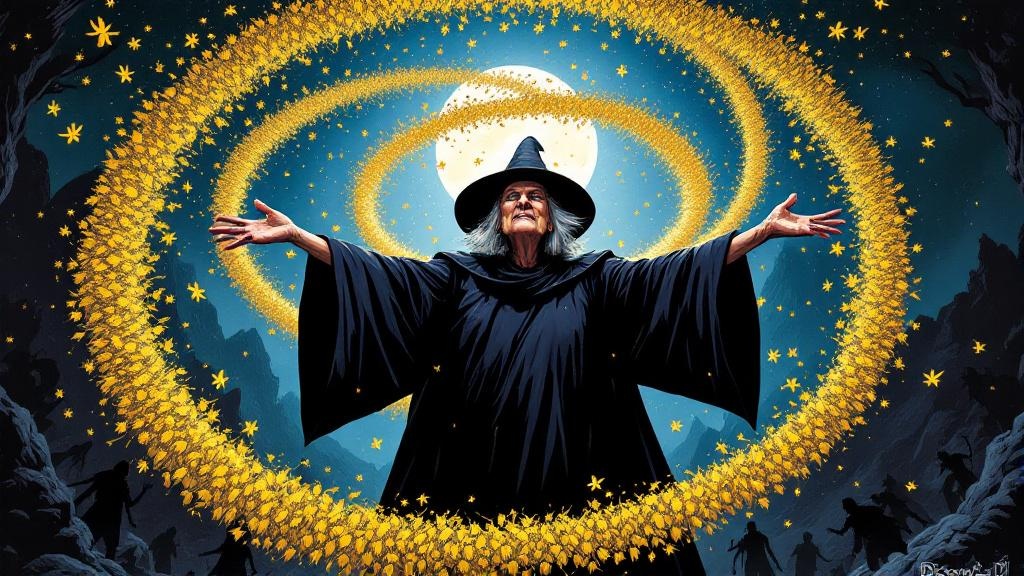
Granny Weatherwax borrowed an entire swarm of bees in Lords and Ladies—a feat no witch had ever achieved. Here's why it matters and what it reveals about her.
The Bee Hive Mind: Granny Weatherwax's Most Impossible Feat
There are rules to magic on the Discworld. Not the sort of rules written in books—witches don't have much patience for those—but the deep, fundamental kind. The kind that exist because the universe insists on them. And one of the most fundamental rules of Borrowing is this: you can share a mind with one creature. One mind. One body. One consciousness at a time.
Granny Weatherwax broke that rule in Lords and Ladies. She didn't just bend it or find a clever loophole. She took the most fundamental limitation of one of witchcraft's most dangerous arts and shattered it through sheer, bloody-minded refusal to accept that it applied to her.
She borrowed an entire swarm of bees. Thousands of minds. One hive consciousness. And she did it while elves were invading Lancre and everyone thought she was dead.
That's not a magic trick. That's a thesis statement about who Esmeralda Weatherwax really is.
What Borrowing Actually Is
Before we get to the bees, you need to understand what Borrowing means in Discworld's magical system—and why it's terrifying.
"Borrowing isn't possession. It's more like becoming a passenger in someone else's skull."
Borrowing is the witch's art of sending your mind out of your body and into the mind of another creature. Not possession—Granny would be quick to correct you on that. Possession is what bad witches do. Borrowing is more like becoming a passenger in someone else's skull. You see through their eyes, feel through their skin, ride along with their instincts.
Granny can Borrow hawks, horses, hares, bats, and worms. She's done it so often it's practically routine—slip out of your own head, slide into a hawk's mind, soar over the Ramtops to see what's happening three valleys over, then slip back home.
But there's a catch. There's always a catch.
While your mind is out riding around in a badger, your body is lying wherever you left it. Completely still. Not breathing much. Cold skin, grey face, no pulse worth mentioning. To anyone walking into your cottage, you look definitively, unambiguously dead.
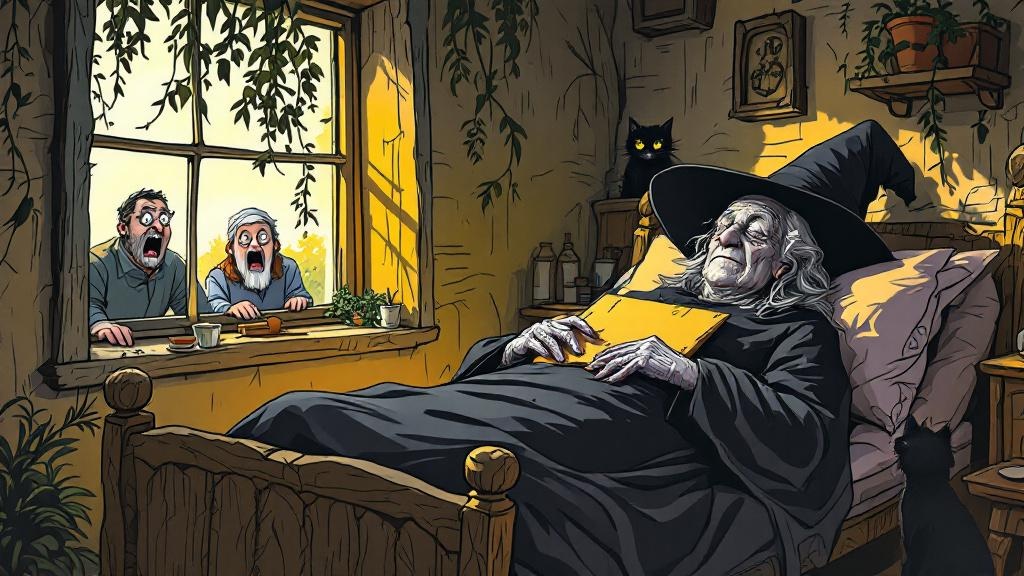
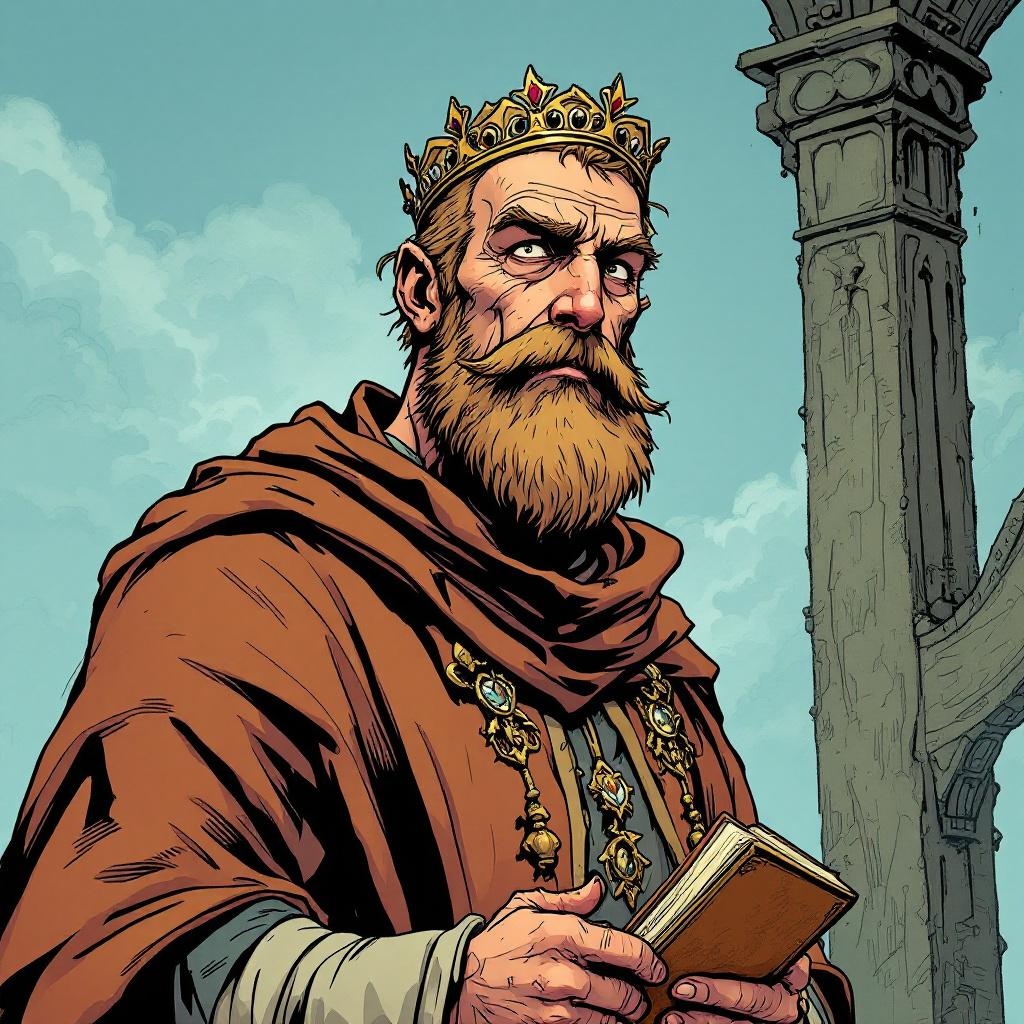
This had caused problems. More than once, well-meaning neighbors had discovered Granny stretched rigid on her bed and started making funeral arrangements. Which is why she developed a practical, no-nonsense, deeply Granny solution: a small cardboard sign, held in her folded hands, reading "I ATE'NT DEAD."
Not "I'm in a magical trance" or "Do not disturb—astral projection in progress." Just three words in Granny's handwriting, with the spelling that suggests she learned to write from other people who also couldn't spell very well. It's the most Granny Weatherwax object in the entire series—practical, blunt, slightly ridiculous, and absolutely effective.
The Rule She Broke
Here's the thing about Borrowing that makes the bee incident extraordinary: it's a one-to-one relationship. One witch's mind, one animal's mind. That's how it works because that's how minds work. You are one person, you inhabit one consciousness, you can share space with one other consciousness.
"Never ever with bees."
Bees don't work that way.
A bee doesn't have a mind in the way a hawk does. A single bee is barely a creature at all—it's a component. A cell in a larger organism. The hive has a mind, distributed across thousands of tiny bodies, each one carrying a fragment of a collective intelligence that no individual bee possesses. The swarm thinks, but no single bee does the thinking.
Witches knew this. It was established wisdom, the kind that gets repeated with emphasis: you can Borrow hares and horses and bats and worms, but not bees. Never ever with bees. Because how do you overlay your single, unified mind onto something that isn't a mind at all, but rather thousands of partial minds that only become a mind when they're all buzzing together?
You can't. That was the answer.
Until Granny Weatherwax decided that "can't" was a word that applied to other people.
The Elves Come to Lancre
To understand why she did it, you need to understand what she was fighting.
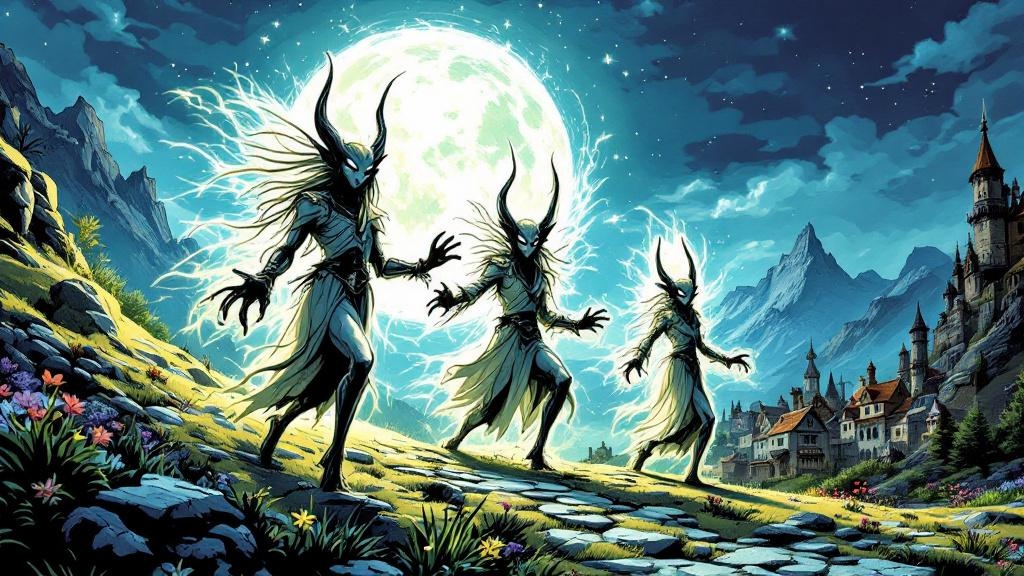
In Lords and Ladies, the barriers between Discworld and the parasite universe of the elves have been weakened. The elves come through—and they're nothing like the graceful, noble creatures of human myth. That's the point. They created those myths. Elves project glamour, a kind of psychic charisma that rewrites your perceptions, makes you see beauty where there's cruelty, nobility where there's sadism.
"Elves are wonderful," Pratchett writes. "They provoke wonder. Elves are marvellous. They cause marvels. Elves are fantastic. They create fantasies. Elves are glamorous. They project glamour." The words mean what they mean, stripped of the positive connotations centuries of fairy tales have layered on top.
Granny stands against them because she can see through glamour. Not through any magical defense—through self-knowledge. She knows exactly who she is and what's real, and no amount of psychic charisma can override that certainty. She's the iron in the soul of Lancre.
But even iron can be overwhelmed by numbers. The elves pour in. They glamour the population. They take the castle. And in the climactic confrontation, the Elf Queen focuses her full power on the one person who can actually resist her.
Granny goes down.
The Death That Wasn't
Here's where it gets brilliant.
Granny collapses under the Queen's assault. She's carried to the castle, laid out reverently by Ridcully—the Archchancellor of Unseen University, who happens to be in Lancre for Magrat's wedding and who carries decades of unspoken feelings for the woman now lying cold and still before him.
She looks dead. Properly dead, this time. No sign around her neck. No "I ATE'NT DEAD" to reassure anyone. Just a still, grey woman who appears to have lost her final battle.
Nanny Ogg isn't buying it.
Nanny has known Granny for decades. She's found her "dead" before. She knows—knows—in that bone-deep way that comes from a lifetime of friendship, that Granny Weatherwax does not simply die because an elf told her to. The universe doesn't work that way. But even Nanny can't explain where Granny's mind has gone, because there's no animal nearby that could be harboring it.
And then someone opens a window.
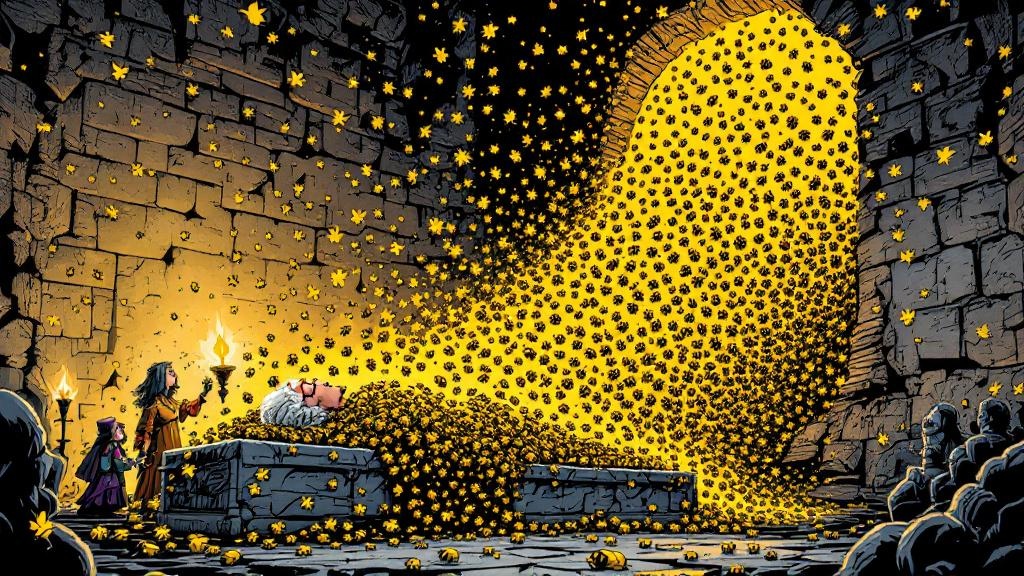
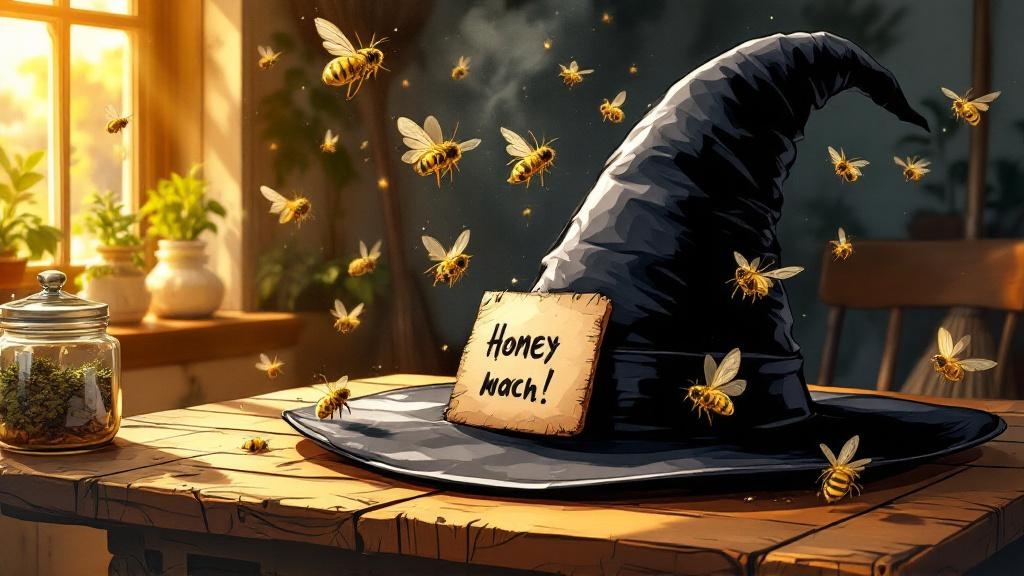
The bees come in. Thousands of them, a roaring golden cloud pouring through the shattered window and covering Granny's body completely. They settle on her like a living blanket, buzzing in perfect unison.
And she wakes up.
She'd been in the bees the whole time. Not in a bee—in all of them. In the swarm itself. In the collective intelligence that emerges when thousands of individual insects synchronize into a single distributed mind. She had Borrowed the hive.
Why It Should Have Been Impossible
Let's be clear about the magnitude of this achievement, because the book treats it with the kind of understated awe that Pratchett reserved for things that genuinely mattered.
"An unheard of feat among witches, of which Granny is insufferably proud for a good long while thereafter."— The narration, on Granny's bee borrowing
Borrowing a hawk means mapping your consciousness onto another consciousness. It's like learning a foreign language—difficult, but the grammar is recognizable. One mind, one body, one set of senses. The hawk thinks in hawk, but it thinks.
Borrowing a bee swarm means mapping your consciousness onto something that isn't a consciousness at all, or rather, something that's a consciousness built from thousands of non-consciousnesses. It's not learning a foreign language. It's learning a language that only exists when ten thousand people speak simultaneously, where no individual word means anything and meaning only emerges from the chorus.
Every other witch who'd considered it had concluded it was impossible. Not practically impossible, like climbing a very tall mountain. Theoretically impossible, like being in two places at once. Your mind is singular. A hive mind is plural. The math doesn't work.
Granny's response, if she'd bothered to articulate it, would probably have been: "I never was one for math."
The Identity Connection
Here's what connects the bee incident to everything else we know about Granny Weatherwax, and why it matters beyond being an impressive magical stunt.
The reason other witches can't Borrow bees is fundamentally a problem of identity. When you send your mind into an animal, you risk losing yourself in it. Hawks think about hunting. Wolves think about pack. The animal's instincts pull at you, try to absorb you into their worldview. Every Borrowing is a small battle between the witch's sense of self and the creature's.
With bees, that battle is unwinnable—for anyone else. Because a swarm doesn't try to absorb you into its identity. It tries to dissolve yours. A hive mind doesn't think "I am a hawk who hunts." It thinks "we are a function. We serve. We are components." There's no identity to negotiate with, just a relentless pull toward dissolution into the collective.
For a witch who has even a moment's uncertainty about who she is—even a flicker of doubt about where she ends and the world begins—the swarm would absorb her completely. She'd become a buzzing component in a honey-making machine, her sense of self diffused across ten thousand tiny bodies until there was nothing left to call back.
Granny Weatherwax has no such uncertainty.
This is the same woman who walked out of a mirror maze with two words. The same woman whose sense of self is so concrete that elves can't glamour her, vampires can't turn her, and Death himself treats her with something that looks remarkably like respect.
She can Borrow the bees because she knows—with the kind of certainty that doesn't need evidence or argument—exactly who she is. The swarm can pull all it likes. The hive mind can try to dissolve her into its collective. She will not be dissolved. She is Granny Weatherwax, and the bees can adjust.
The Strategic Genius of It
There's another layer to this that's easy to miss: the bee borrowing wasn't just a survival mechanism. It was a tactical masterstroke.
The elves hate bees. More precisely, they hate iron—and bees are associated with iron discipline, with collective purpose, with the unglamorous reality of hard work and cooperation. Everything elves aren't. Glamour doesn't work on a swarm because a swarm doesn't have the kind of individual consciousness that glamour targets. You can't make a bee think you're beautiful. A bee doesn't care about beautiful. A bee cares about pollen and the hive and the dance that communicates distance and direction.
So when Granny Borrowed the swarm, she didn't just hide her consciousness somewhere safe while her body played dead. She turned herself into a weapon that the elves couldn't counter. A living cloud of iron-willed, glamour-proof, thoroughly practical insects guided by the most powerful witch on the Disc.
The Queen thought she'd won. She'd knocked down the one person who could resist her glamour. And then that person came back as ten thousand stinging points of reality that no amount of fairy charm could deflect.
That's not just power. That's the kind of strategic thinking that makes Granny Weatherwax dangerous in ways that go far beyond raw magical ability.
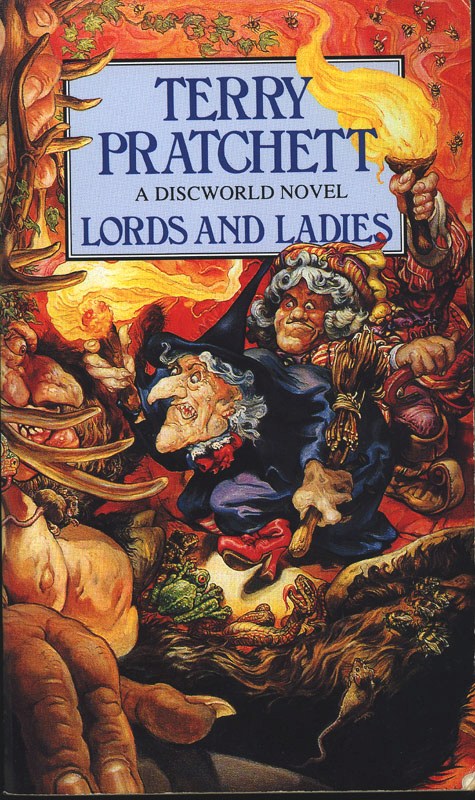
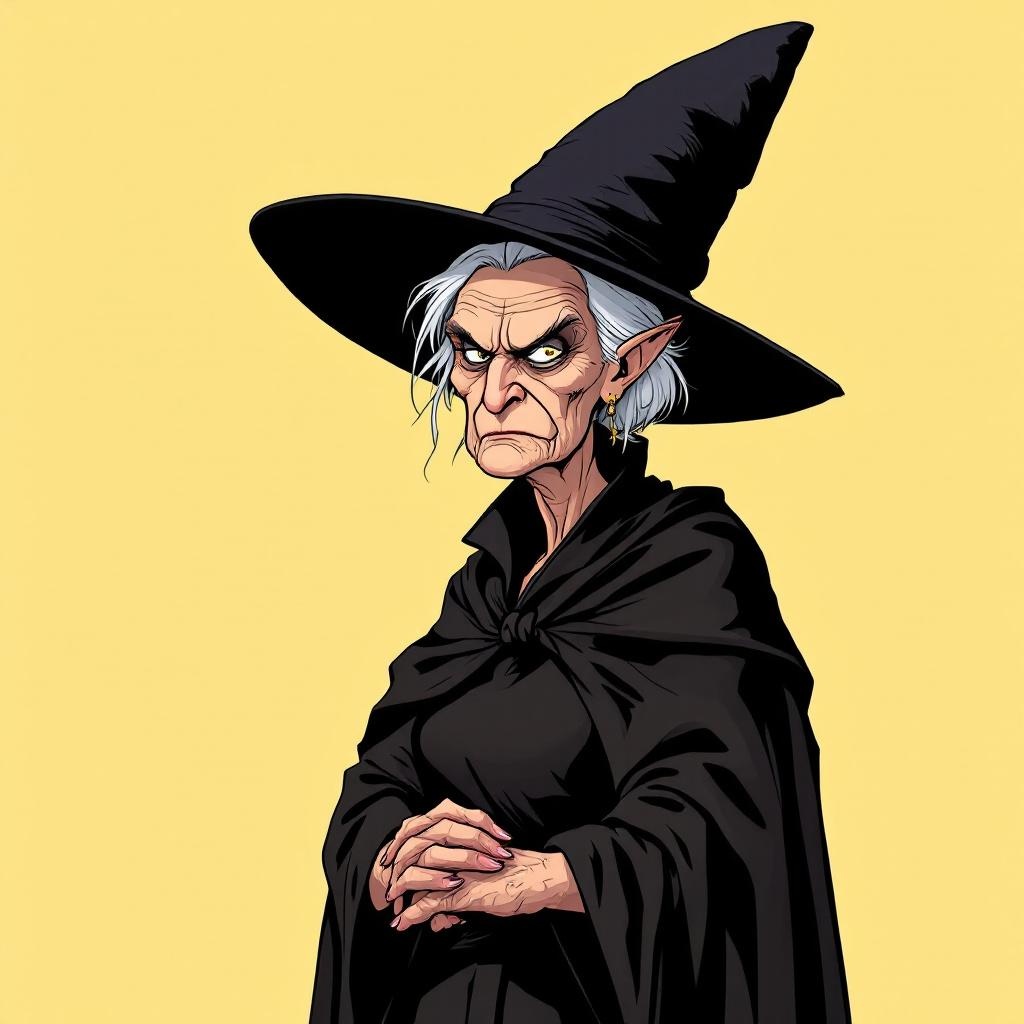



"I ATE'NT DEAD": The Sign That Became a Symbol
Let's talk about that sign for a moment, because it's become something much bigger than a plot device.
"I ATE'NT DEAD" started as a practical solution to a comic problem: how do you stop people from burying you while your mind is off riding around in a hawk? You write them a note. In Granny's handwriting. With Granny's spelling.
But the phrase has taken on a life of its own. After Terry Pratchett's death in 2015, fans adopted "I Aten't Dead" as a kind of rallying cry—a way of insisting that his work, his ideas, and his characters remain very much alive. You'll find it on necklaces, badges, cross-stitch patterns, bumper stickers, and tattoos. The Discworld Emporium sells official "I Still Aten't Dead" merchandise. The phrase shows up on forums and social media whenever someone returns after a long absence, or when something thought finished proves to have life in it yet.
It's a three-word philosophy: don't count me out. Don't assume the fight is over. Don't mistake stillness for defeat.
Which is, when you think about it, exactly what Granny was demonstrating in that castle room. Laid out cold and still. Everyone mourning. And all the while, she was out there in ten thousand buzzing bodies, preparing to shatter a window and win.
What the Bees Tell Us About Magic
Pratchett's magic system in the witches' books has never been about fireballs and lightning. It's about understanding people, seeing clearly, and—when all else fails—having a will strong enough to reshape what's possible.
Granny's bee borrowing is the ultimate expression of this. She didn't discover a new spell. She didn't find an ancient artifact. She didn't unlock a hidden power. She took an existing skill—one that every moderately talented witch can do—and pushed it past its known limits through nothing more than the force of who she is.
"The greatest magical achievement in Discworld didn't require a spell. It required a self."
That's Pratchett's argument about magic, and it's also his argument about people: the limits we accept are often just the limits nobody's bothered to break yet. Not because breaking them requires some special gift or secret knowledge, but because it requires the kind of absolute self-certainty that most people never develop.
Granny could Borrow the bees because she was more herself than anyone had ever been. The collective couldn't dissolve her because there was nothing tentative about her identity, nothing conditional, nothing up for negotiation. She was Esmeralda Weatherwax, and if the rules of magic disagreed, the rules of magic could take it up with her directly.
The Aftermath: Insufferable Pride
The book tells us that Granny was "insufferably proud" of the achievement "for a good long while thereafter." This is classic Pratchett—after building one of the most thematically rich scenes in the entire series, he punctures it with the image of Granny smugly bringing it up in conversation at every opportunity.
Because of course she does. This is a woman who entered a village baking competition and insisted on winning first prize for jam she didn't even make, purely on principle. A woman who turned up at an Ankh-Morpork opera house and took over the investigation through sheer force of being Granny Weatherwax. Humility is not her department.
But the pride is earned. She did what no witch had ever done. She did it while fighting elves, while everyone thought she was dead, while the fate of Lancre hung in the balance. And she did it not because she had more power than other witches, but because she had more self.

The Bee Hive Mind as Metaphor
There's one more thing worth noting, because Pratchett never wrote anything with just one layer of meaning.
The bee hive is a collective that works. Every bee contributes. No bee is in charge in the way that humans understand authority. The hive functions through distributed intelligence—thousands of small decisions aggregating into something that looks like wisdom. It's practical, productive, and entirely unglamorous.
In other words, it's everything the elves aren't.
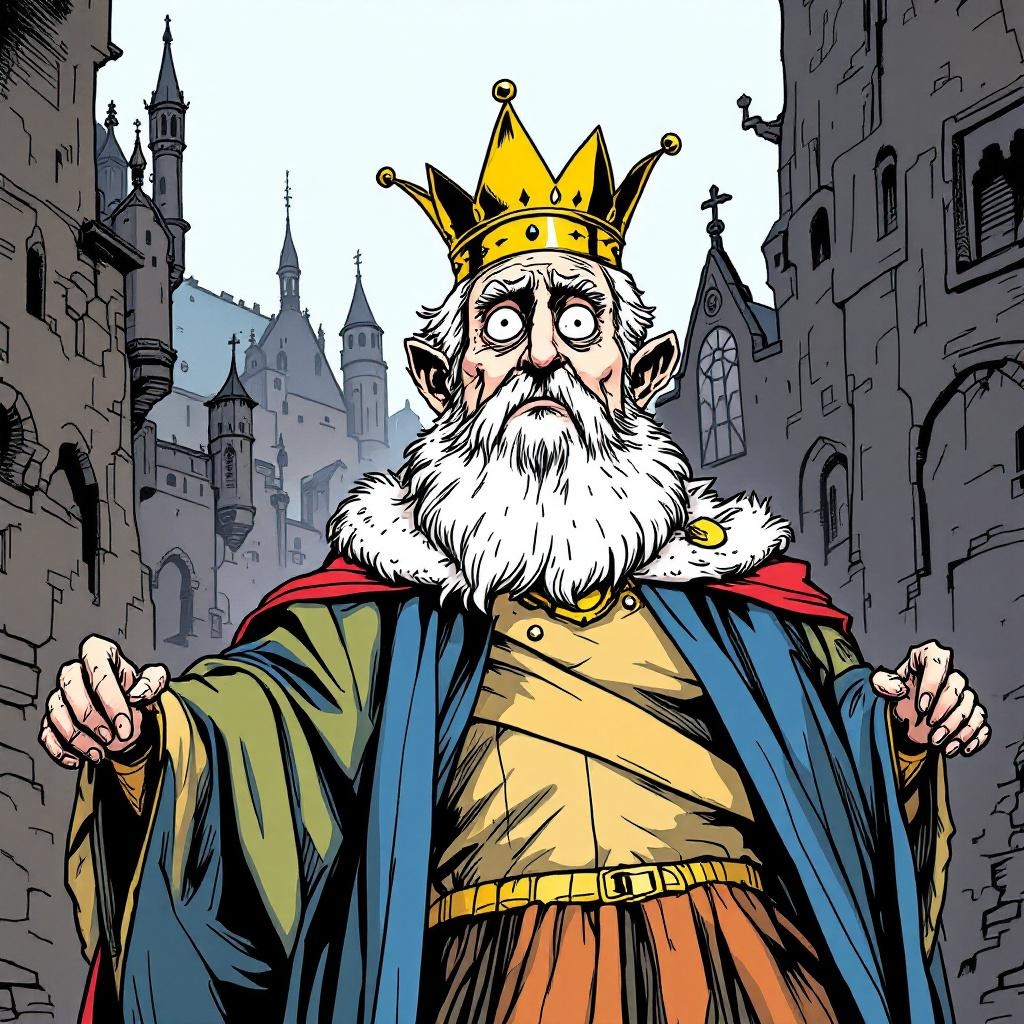
The elves operate through hierarchy and glamour. One Queen, absolute authority, everyone else dazzled into compliance. It's beautiful and useless and cruel.
Granny didn't just Borrow the bees. She chose them. She aligned herself with the honest, cooperative, unglamorous alternative to fairy-tale enchantment. The bees make honey and sting intruders and don't care one bit whether you think they're beautiful. Granny makes medicine and stares down evil and doesn't care one bit whether you like her.
She was always the bees. The Borrowing just made it literal.
Want more Granny Weatherwax? Discover how self-knowledge saved her in the mirror maze, or read about the impossible choice that made her good. For her approach to psychology-as-magic, explore headology explained.