'This One': How Granny Weatherwax Passed the Ultimate Test of Self-Knowledge

In Witches Abroad, Granny Weatherwax escapes a mirror trap with two words. Her instant answer reveals why self-knowledge beats self-discovery every time.
"This One": How Granny Weatherwax Passed the Ultimate Test of Self-Knowledge
"Find the real one."
Three words. A billion reflections. One woman standing in an infinite hall of mirrors with no way out.
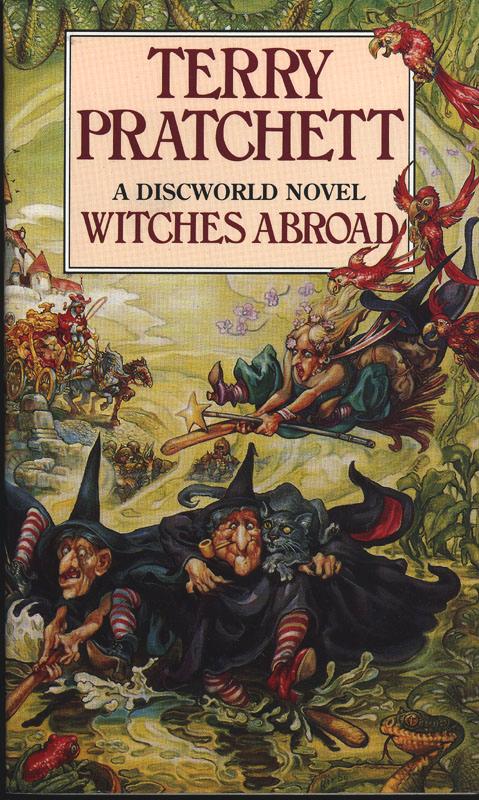
This is the climax of Witches Abroad, and it's the moment that reveals everything essential about Granny Weatherwax. Not her power—though she has plenty. Not her stubbornness—though that's legendary. But something deeper: the absolute certainty of identity that makes her unstoppable.
Her sister Lilith, trapped in the same maze, is still searching. She'll search forever. Granny? She points at herself and says two words.
"This one."
No hesitation. No philosophical crisis. Just the answer.

The Setup: Lilith's Mirror Maze
To understand why this moment matters, you need to understand what Granny's sister built.
Lily Weatherwax—later known as Lilith de Tempscire—discovered early that mirrors amplify power. "Images of images can amplify you," Pratchett writes. "Your image extends forever, in reflections of reflections." With enough mirrors, a witch can be everywhere at once, see everything, control entire kingdoms through sheer omnipresence.
Lilith used this to become the fairy godmother of Genua, arranging everyone's lives into the stories she thought they should be living. She wasn't a cackling villain—at least, not in her own mind. She genuinely believed she was the good one. The one making everything right. The one who knew best.
"Mirrors give plenty, but they take away lots."
But mirrors, as Pratchett notes, "give plenty, but they take away lots."
The more Lilith spread herself across reflections, the less certain she became of which reflection was real. She'd been everywhere and everyone for so long that she'd lost track of where the original ended and the copies began. Power had diluted her identity into a billion fragments.
When Granny arrived to stop her sister's tyrannical fairy-tale enforcement, the confrontation inevitably led to the mirrors. And in Lilith's mirror maze, both sisters faced the same trap.
The Test
Death appears—because of course he does; this is Discworld.
He poses a question that sounds simple: find the real one among all these reflections. Escape the maze by locating your true self.
For most people, this would be a death sentence. How do you distinguish the original from a billion perfect copies? How do you know which reflection is really you when they all move when you move, think when you think, believe themselves to be real?
Lilith starts searching. She examines reflection after reflection, looking for some quality that marks the authentic from the imitation. She's been arranging other people's stories for so long that she's become a character in her own narrative—and characters don't know they're not real.
The maze gives her eternity to look. She'll need it.

The Answer
Granny Weatherwax faces the same test. A billion reflections. Death waiting. The same impossible question.
"Is this a trick question?" she asks.
It isn't.
"This one."
She points at herself. Not a reflection. Herself. The one doing the looking, not the ones being looked at.
"She never needed to find herself because she always knew who was doing the looking."
And she walks out.
Pratchett describes Granny's self-knowledge earlier in the book with a line that explains everything: "She never needed to find herself because she always knew who was doing the looking."
That's it. That's the answer to the mirror test and to a thousand self-help books. Granny doesn't need to examine reflections for authenticity because she's not confused about which one is doing the examining. The question "which reflection is real?" contains its own answer: the one asking.
Why Lilith Fails
The contrast between the sisters makes Pratchett's point with surgical precision.
Lilith spent decades convinced she was the good one. She left home at thirteen, certain she knew better than everyone else. She built an empire of manipulation justified by her belief that she was making things right. She was the fairy godmother. The one in charge of happy endings.
But here's the thing about constantly playing a role: you forget there's someone playing it.
Lilith had been the fairy godmother for so long that she'd stopped being Lily Weatherwax entirely. She was a function, not a person. A story, not its author. When forced to locate her authentic self, she discovered she'd traded it away for power, one mirror at a time.
Granny, by contrast, spent those same decades being aggressively, uncompromisingly herself. She didn't play roles—she played Granny Weatherwax, and the world could adjust. She never softened her edges for approval. Never pretended to be nicer than she was. Never diluted her identity for acceptance or power.
When she stands in the mirror maze, there's no confusion. The prickly, competitive, prideful, sharp-tongued witch looking at the reflections is obviously the real one. Everything else is just glass.
The Philosophy Behind the Scene
Pratchett wasn't just writing a clever confrontation. He was making an argument about identity that cuts against almost everything our culture tells us.
We're constantly encouraged to "find ourselves." To "discover our true selves." To go on journeys of self-exploration that will reveal who we really are underneath all the social conditioning and expectations.
Granny Weatherwax finds this deeply puzzling.
She doesn't go searching for her identity because she built it deliberately. She knows exactly who she is because she decided who to be and then executed that decision for fifty years. Her self isn't something buried that needs excavation—it's something constructed through daily choices and lived experience.
"This never happened to Granny Weatherwax," Pratchett writes. "She went straight from fast asleep to instant operation on all six cylinders. She never needed to find herself because she always knew who was doing the looking."
There's no gap between Granny's self-image and her actual self because she doesn't maintain a gap. She doesn't perform a version of herself for public consumption while hiding the "real" her somewhere private. The woman who stares down elves is the same woman who makes tea in the morning. All the way down.

The Modern Mirror Maze
This is where Pratchett's 1991 novel becomes startlingly relevant to 2026.
We live in an age of infinite reflection. Social media lets us project images of ourselves across countless platforms, each one slightly curated, slightly optimized for different audiences. LinkedIn you. Instagram you. The you your parents see. The you your friends see. The you you want your ex to think you've become.
Which one is real?
The modern answer, increasingly, is "all of them" or "none of them" or "identity is fluid and contextual." We're encouraged to think of selfhood as performance—something constructed fresh in each interaction, adjusted for audience and platform.
Granny would spit on the floor.
Not because she's a dinosaur who doesn't understand complexity, but because she understands something the postmodern approach misses: the person doing all that construction is real. The one deciding which image to project, the one adjusting for audience, the one maintaining all those different presentations—that's the authentic self.
The danger isn't having multiple faces for multiple contexts. It's forgetting there's a face behind the faces. Losing track of who's doing the performing. Getting so invested in your Instagram aesthetic that you forget it's a choice you're making.
Lilith's mirror maze is a metaphor for anyone who's lost themselves in their own projections. She didn't wake up evil—she woke up dispersed, fragments of identity scattered across a billion reflections with no center to call them home.
The Real Test of Self-Knowledge
Here's what the mirror scene reveals: self-knowledge isn't about introspection.
The modern approach to identity encourages endless examination. Look inward. Analyze your feelings. Discover your authentic preferences. Excavate the real you from under the social conditioning.
But that's exactly what Lilith was doing—and she's still doing it, somewhere in that maze, examining reflection after reflection looking for the authentic one.
Granny's approach is different. She doesn't examine herself much because she's too busy being herself. Her identity isn't a mystery to solve; it's a practice to maintain. She knows who she is the same way she knows how to brew a potion: through decades of daily repetition until it becomes automatic.





This is why she can answer Death's question instantly. It's not that she's thought deeply about which reflection is real—she's never needed to think about it at all. The answer is obvious to anyone who hasn't spent decades fragmenting themselves across mirrors.
The Connection to Her Sister
There's deep sadness in this scene if you look for it.
Lilith is Lily Weatherwax, Granny's older sister. They grew up together in Lancre. They shared parents, experiences, formative years. And when they finally meet again after decades apart, one walks out of the mirror maze in seconds while the other is trapped for eternity.
What made the difference?
Granny answered that question earlier in the book: "When you left, I had to be the good one."
When Lily left home at thirteen to pursue power and mirrors, young Esme was forced into a role she didn't choose. Someone had to be the responsible one, the good witch, the sister who stayed. She could have resented it enough to abandon the role—but she didn't. She leaned into it, made it hers, became it so completely that there's no separation between Esme Weatherwax and the role.
Lilith, by contrast, left to become something—a fairy godmother, a wielder of mirror magic, the good one (in her own estimation). She pursued an identity rather than building one. And when you pursue an external identity, you're always chasing reflections.
The tragedy is that Lilith probably thinks she has stronger self-knowledge than Granny. She's examined herself endlessly. Refined her self-image. Convinced herself completely of her own goodness. But all that examination happened in mirrors—and mirrors lie.
What This Means for You
You're probably not trapped in a magical mirror maze. But you might be trapped in something similar.
Every time you curate an image for external consumption—every time you present a version of yourself optimized for a specific audience—you create a reflection. That's not inherently bad. We all adjust for context.
The danger comes when you lose track of who's doing the adjusting.
If you can't answer "who am I?" without reference to what other people see—if your identity exists primarily in your reflections—you're in Lilith's position. Maybe not trapped yet. But building the maze.


Granny's approach offers an alternative: build an identity through action and commitment. Don't search for who you really are—decide who you're going to be and then practice it until the decision becomes reflex.
This isn't about being rigid or never changing. Granny has changed—she started the series opposing a girl's right to be a wizard and ended up championing her. Change based on new information is growth. But change based on which reflection looks best today is dissolution.
The Two Words That Matter
"This one."
No philosophy lecture. No existential crisis. Just two words and an exit.
That's what absolute self-knowledge looks like. Not complicated. Not mystical. Just so obvious that the question seems almost silly.
Granny Weatherwax walks out of the mirror maze because she never lost track of who was walking. She passes Death's test because there's no separation between herself and her sense of self. She defeats her sister—more powerful, more experienced with mirror magic—through the simple expedient of knowing what she is.
The mirrors are still there. Lilith is still searching. Somewhere in the infinite recursion of reflection, she's examining another image, wondering if this one might be real.
And Granny Weatherwax is already home, making tea, being herself.
Same as always. Same as ever.
Want to explore more of Granny Weatherwax? Read about the burden of goodness she carries, or discover headology, her signature approach to psychological magic.