From Splatter to Sergeant: Detritus and Discworld's Greatest Redemption Arc
Detritus went from being chained to a pub wall to becoming one of the Watch's finest officers. Here's how a troll's transformation rivals even Sam Vimes.
From Splatter to Sergeant: Detritus and Discworld's Greatest Redemption Arc
Here's a question: who has the most dramatic transformation in all of Discworld?
Most readers would say Sam Vimes—the drunk in the gutter who becomes Duke of Ankh. And that's a fair answer. But there's a strong argument for someone else. Someone whose journey goes even further, from an even lower starting point.
Meet Detritus, the troll who was literally chained to a pub wall.
The Lowest Rung
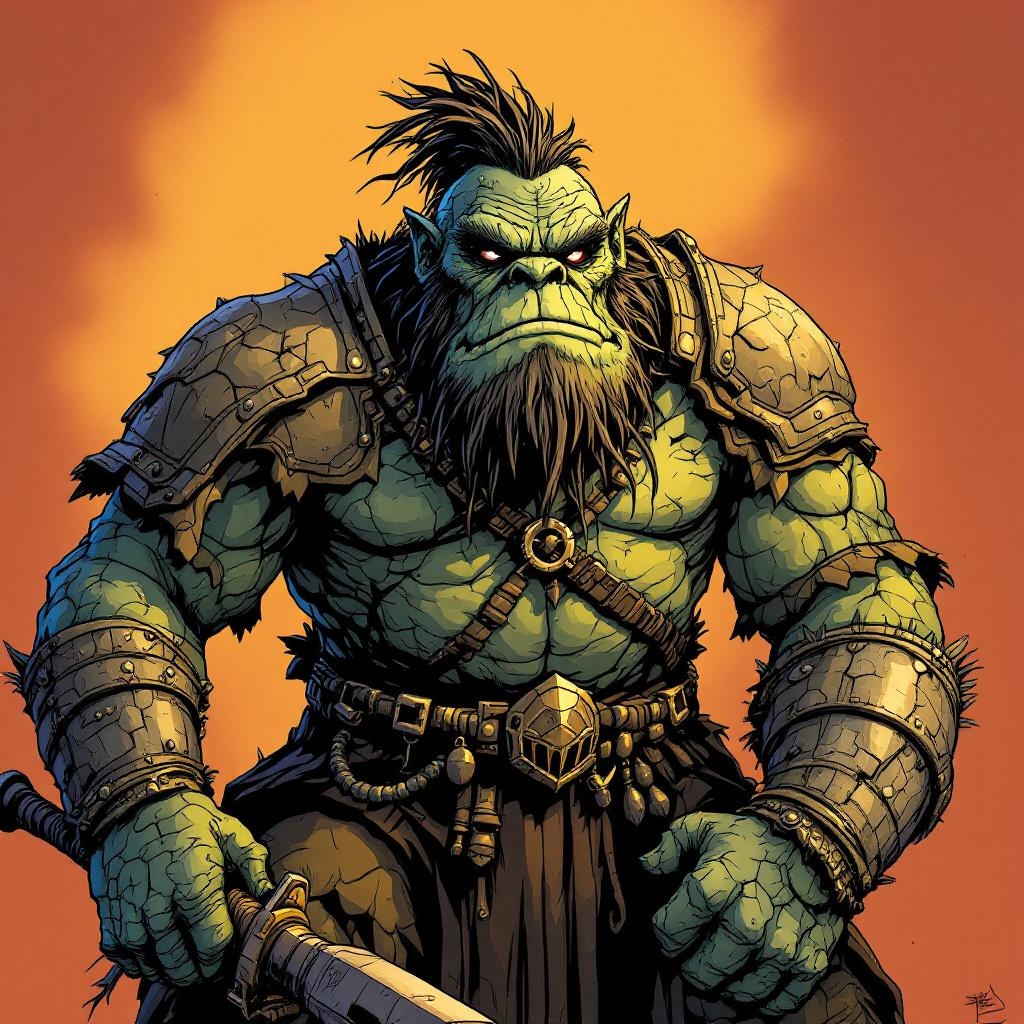
When we first encounter Detritus properly in Moving Pictures, he's working as a "splatter"—like a bouncer, but with more violence. The term comes from what happens to people who don't take the hint. He's hired muscle for Ankh-Morpork's seedier establishments, the kind of troll that gives trolls a bad name.
This is barely a step above his earlier appearance in Guards! Guards!, where he's chained to the doorway of the Mended Drum. Not employed by the Drum—chained to it. Like an ornament. Like furniture with fists.
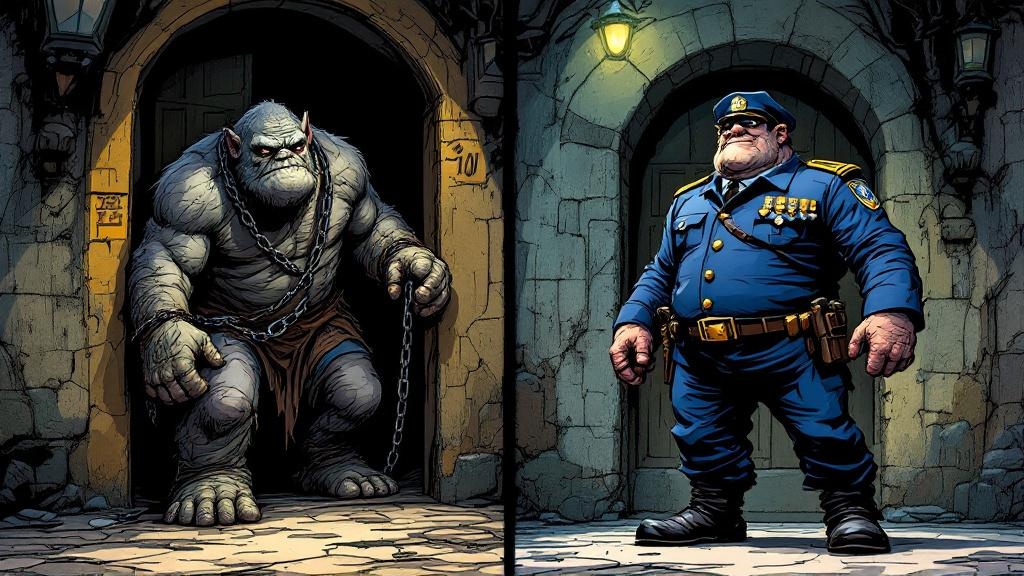
This is where Detritus starts. Not just poor, not just uneducated—barely recognized as a person at all. Trolls in early Discworld are viewed as walking rock formations with violent tendencies, useful for hitting things but not much else.
And here's where Detritus ends up: senior sergeant of the Ankh-Morpork City Watch. Trusted advisor to Commander Vimes. Specialist in troll affairs and weapons training. Happily married. Adoptive father.
That's not a character arc. That's a complete metamorphosis.
The Woman Who Believed in Him
Every redemption story needs a catalyst. For Sam Vimes, it was Lady Sybil seeing something in him worth saving. For Detritus, it was Ruby.
In Moving Pictures, Detritus falls for Ruby, a troll singer working in Holy Wood's cantina. And Ruby has standards. She doesn't want a traditional troll courtship—the kind that involves hitting your beloved with increasingly large rocks. She wants something more.
"If you want a respectable husband, you don't look for one chained to a pub wall."
"Get a better job than hitting people for money," she tells him. And Detritus, besotted and bewildered, actually listens.
The Holy Wood magic complicates things. Under its influence, Ruby keeps rejecting his attempts at "human" romance, growing more upset with his efforts. But when the magic fades, she does what any self-respecting troll woman would do: she smashes a rock on his head, knocking him unconscious.
That's troll for "I do."
What makes this romance significant isn't just that it's sweet (in a concussion-inducing way). It's that Ruby's belief in Detritus becomes the engine for everything that follows. He joins the Watch specifically because she demanded he find respectable work. Every promotion, every achievement, every moment of growth—it all traces back to a troll singer who refused to settle for a splatter.
The Partnership That Changed Everything
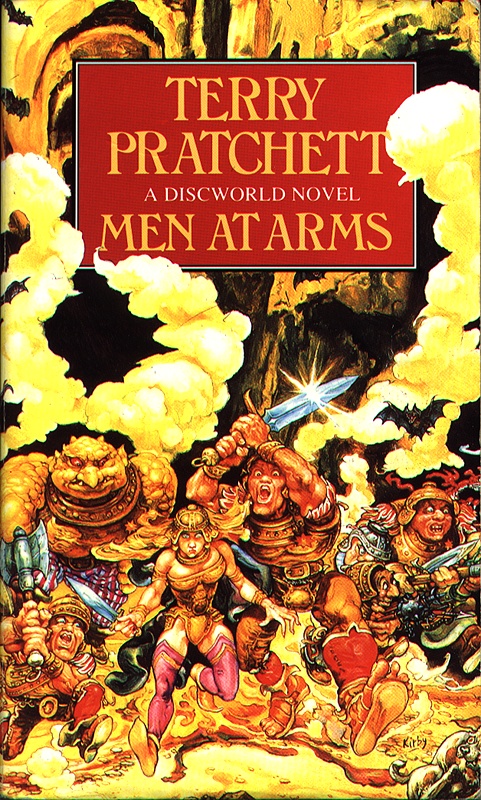
When Detritus joins the City Watch in Men at Arms, he's still essentially the troll everyone expects: big, slow, prone to violence. Lord Vetinari's "special hiring procedures" pair him with Cuddy, a dwarf—the natural enemy of trolls since the Battle of Koom Valley.
The partnership is a disaster at first. They bicker constantly. Cuddy calls Detritus "fick." Detritus responds with anti-dwarf slurs that have been festering for centuries. It's everything wrong with troll-dwarf relations, compressed into two constables who can barely stand being in the same room.
And then the Pork Futures Warehouse happens.
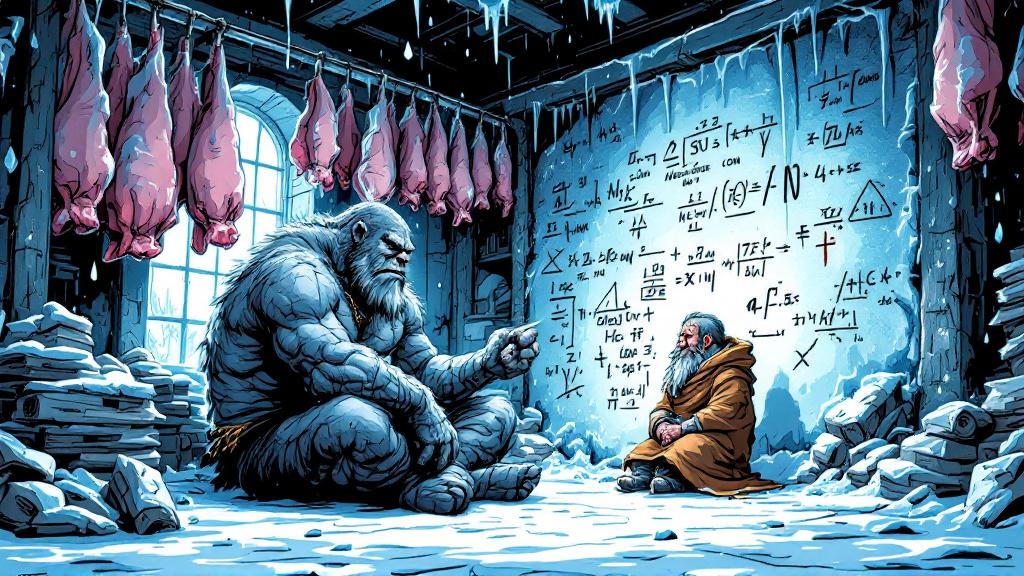
Trapped in a freezing warehouse, Detritus starts to change. Troll brains are made of silicon, and silicon works better when it's cold. As the temperature plummets, Detritus becomes... a genius. He scratches equations on the walls. He contemplates the nature of the universe. He very nearly derives a grand unified theory of everything.
He's also dying. Silicon thinks faster when cold, but trolls can't survive those temperatures for long.
Cuddy saves him. The dwarf who spent weeks insulting Detritus's intelligence drags him out of that warehouse and then does something that changes everything: he builds Detritus a cooling helmet. A fan system that keeps his brain at optimal temperature without killing him.
Cuddy dies before the novel ends. But his gift—that helmet—stays on Detritus's head through every subsequent book. Every time Detritus thinks clearly, solves a problem, makes a connection his younger self never could have managed, he's doing it with help from a dead dwarf who saw past species hatred to the troll underneath.
The Depth No One Expected
The cooling helmet helps, but it doesn't create intelligence from nothing. It reveals what was always there.
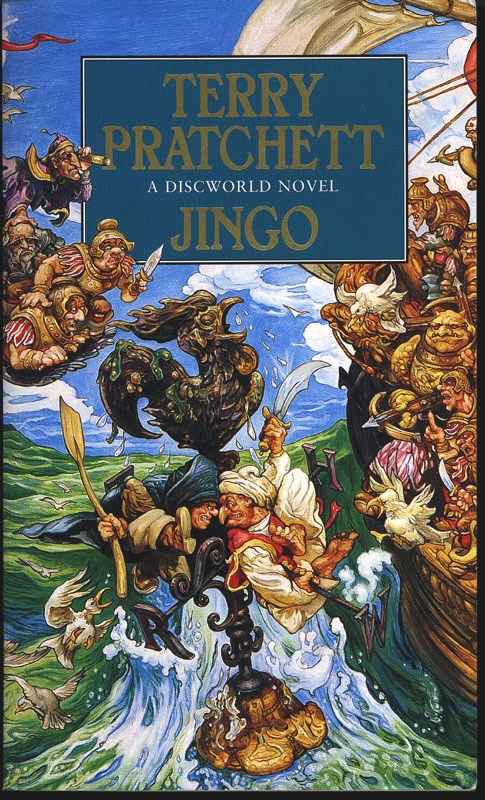
Consider the "aagragaah" scene in Jingo. Detritus explains a troll word to his fellow watchmen: "Aagragaah. It der time when you see dem little pebbles an' you know der big avalanche is comin' but it too late to run."
He pauses. "Sometimes it named after der soun' you make jus' before a t'ousand ton of rock hit you."
That's not a stupid character. That's someone with dark humor, poetic instinct, and an understanding of inevitability that most philosophers would envy. The grammar might be unconventional, but the thought is anything but simple.
Or take The Fifth Elephant, where Vimes tests Detritus by ordering him to shoot an unarmed man. Detritus refuses.
"I ain't dat fick, sir."
When Vimes presses, Detritus tells him exactly what he can do with that order—using a troll idiom involving a bag of gravel that we probably shouldn't examine too closely. This is a troll who understands the difference between lawful and unlawful orders, who has the moral courage to defy authority when authority is wrong.
"I ain't dat fick, sir."
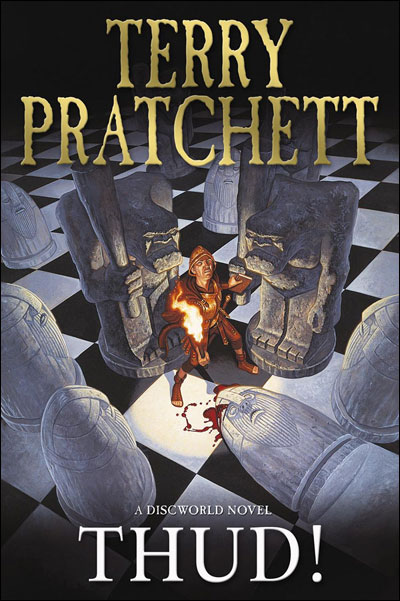
And in Thud!, when deep-down dwarfs capture Detritus in thin shackles he could easily break, he doesn't break them. He understands that escaping would give the dwarfs an excuse to kill him, would escalate tensions, would make everything worse. The troll who used to solve every problem with violence now sees the bigger picture clearly enough to choose restraint.
These moments aren't flukes. They're the real Detritus, finally visible now that his brain isn't cooking itself.
The Son He Found
In Thud!, we learn that Detritus and Ruby's marriage is happy but childless. And then Detritus meets Brick.
Brick is a gutter troll—the loser's loser, as Vimes classifies him. Emaciated by troll standards. Brain fried from scrape (a troll drug). Living in conditions even worse than Detritus's early life.
Detritus sees something in Brick that nobody else does. Despite the drug damage, Brick is still functioning—that takes underlying strength. Despite life on the streets, Brick survived—that takes resilience. Detritus recognizes these qualities because he lived them.
So Detritus takes Brick in. Not officially—paperwork isn't really his strength—but effectively. He forces the young troll to clean up, to dry out, to imagine a different future.
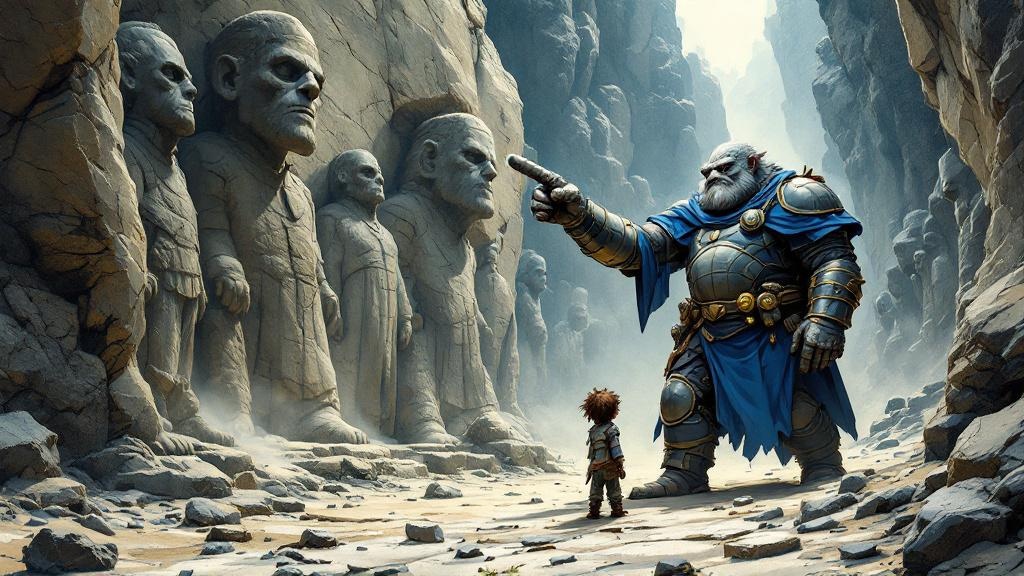
There's a moment near the end of Thud! that reduces readers to tears. In the deep-down tunnels, Detritus points to ancient statues—the troll and dwarf kings who came to Koom Valley not to fight but to make peace, a truth lost for centuries.
He thumps Brick on the back of the head and says one word: "Remember."
That's it. That's the whole lesson. Remember that the war was built on a lie. Remember that trolls and dwarfs once tried for peace. Remember that things can be different.
It's the same thing Detritus's father once said to him. Now he's passing it forward.
Why Detritus Matters
Terry Pratchett once explained why he wrote trolls the way he did: "It offended me that the stories I was reading portrayed trolls as big and fick and therefore bad. Don't ogres love their children too?"
Detritus is Pratchett's answer to every fantasy story where trolls exist only to be killed by heroes. He's proof that the "monster" under the bridge might have dreams, might fall in love, might be capable of growth that puts most humans to shame.


More than that, Detritus represents something Pratchett believed deeply: that intelligence isn't fixed, that potential isn't determined by birth, that the right circumstances and the right support can unlock capabilities nobody suspected.
A cooling helmet doesn't create genius. It just removes the obstacle that was hiding it.
The Vimes Parallel
It's worth noting how closely Detritus's arc mirrors Sam Vimes's. Both start at the bottom—Vimes drunk in the gutter, Detritus chained to a wall. Both transform through the Watch, through relationships that see their potential, through adversity that reveals their character.
Both carry their origins with them. Vimes never forgets Cockbill Street. Detritus never forgets being treated as property. That memory fuels their commitment to justice—they know what it's like to be powerless, so they fight for those who still are.
But here's the difference: Vimes had to overcome his alcoholism and his bitterness. Detritus had to overcome being literally viewed as subsentient. In a world that barely considered trolls people, he had to prove his personhood from scratch.
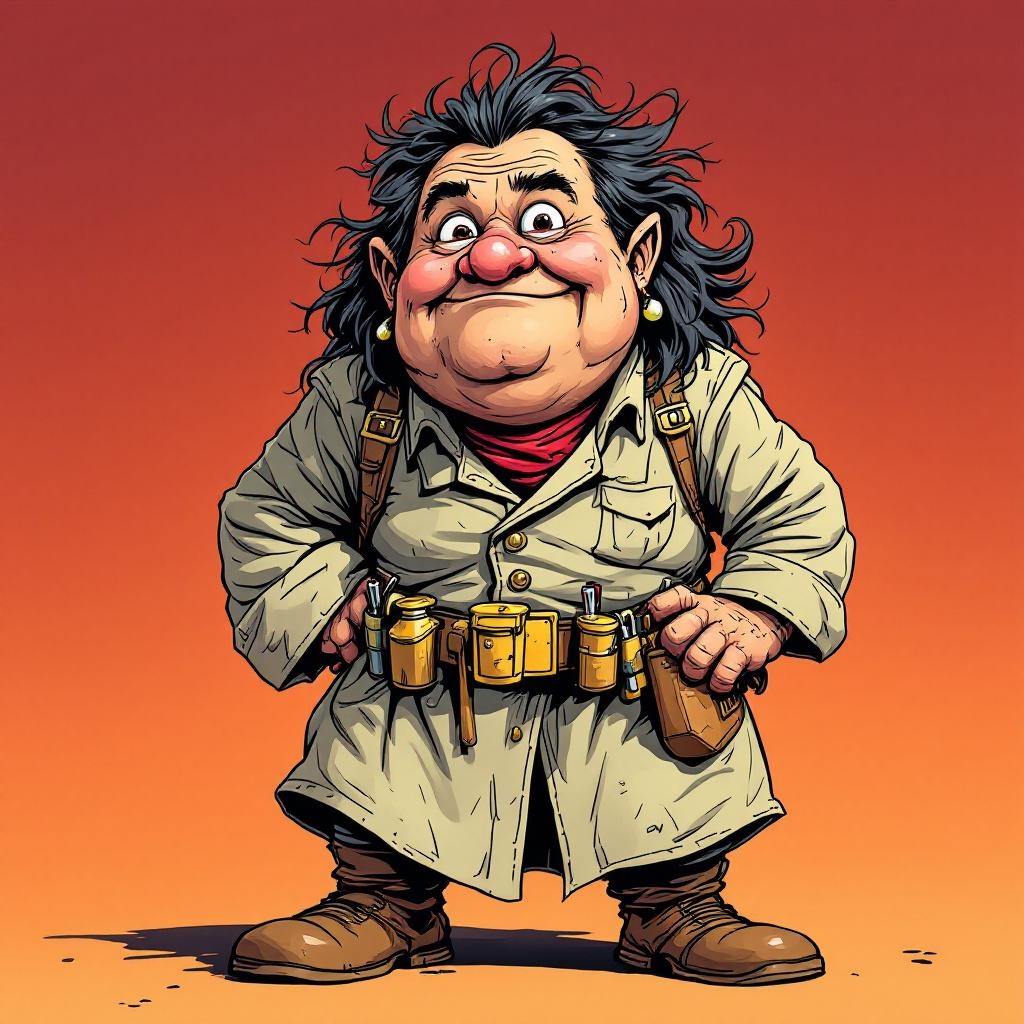
That makes his achievement, in some ways, even more remarkable. Vimes climbed from the gutter to the palace. Detritus climbed from the pub wall to the soul.
The Legacy
By the end of the Watch novels, Detritus is one of the most trusted officers in Ankh-Morpork. He trains new recruits—including trolls, dwarfs, vampires, and humans—with a fairness that would have been unimaginable from the splatter in the Mended Drum. He shakes hands with the Low King of the Dwarfs. He helps broker peace at Koom Valley.
And somewhere in the city, Brick is making his way through Watch training, following in the footsteps of the troll who saw him when nobody else did.
Sergeant Detritus, who started life as furniture with fists, became a model of what integration and opportunity can achieve. Not because anyone gave him anything—he earned every promotion, proved himself in every crisis—but because someone finally gave him the chance to try.
Where to Start
If you want to experience Detritus's full transformation, the reading order matters:
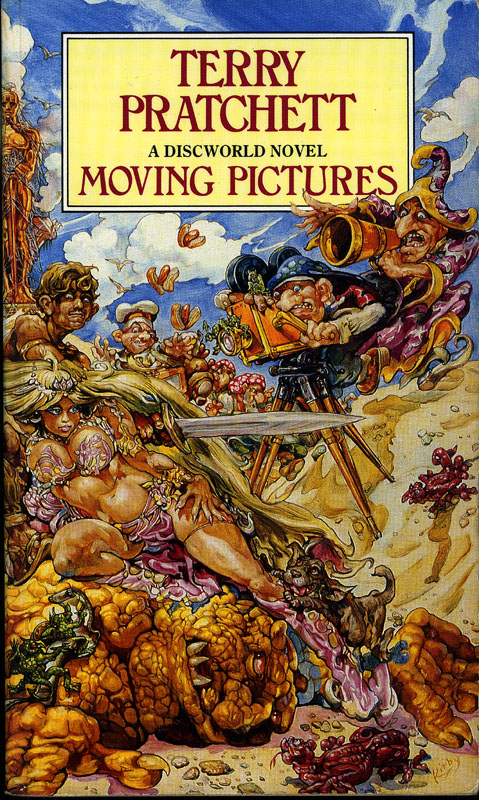
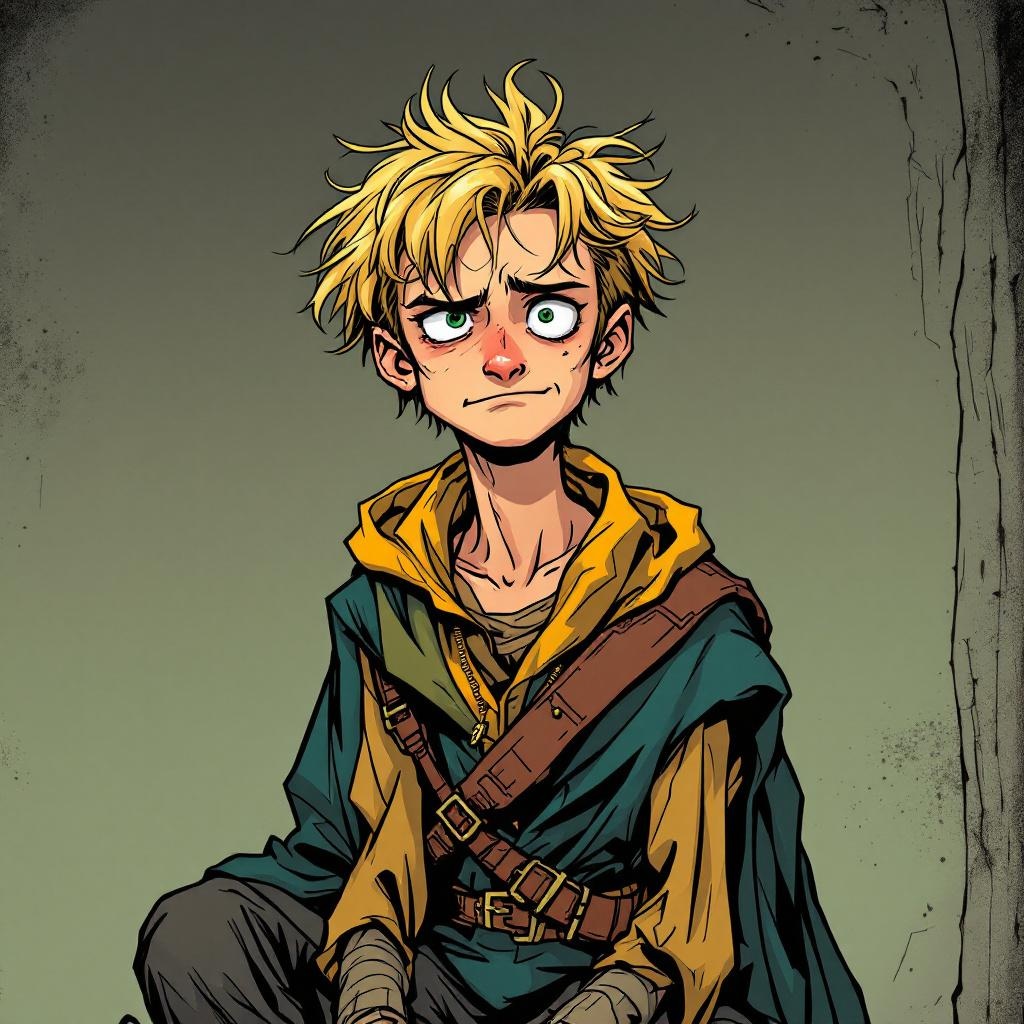


Start with Moving Pictures to see him fall for Ruby, then Men at Arms for his Watch initiation and the Cuddy partnership. Jingo and The Fifth Elephant show his growing depth, and Thud! brings everything together with the Brick storyline.
It's a long journey. But then, the best ones are.
The Bottom Line
Detritus went from being chained to a pub wall to becoming a father, a sergeant, and a bridge-builder between species that have hated each other for millennia.
That's not just a character arc. That's Terry Pratchett's thesis statement about fantasy, about prejudice, about the unlimited potential that exists in everyone we've been taught to underestimate.
The stories told Pratchett that trolls were big and thick and therefore bad. Pratchett wrote Detritus to prove them wrong.
Don't ogres love their children too? Watch Detritus with Brick, and you'll have your answer.
Want to explore more of the City Watch? Read about Sam Vimes and the Boots Theory, or discover why Night Watch is considered Pratchett's masterpiece.