Nobby and Fred: The Best Double Act in Fantasy Literature
How Pratchett uses Colon and Nobbs as Discworld's sharpest social commentators, disguised as the Watch's most useless officers.
Nobby and Fred: The Best Double Act in Fantasy Literature
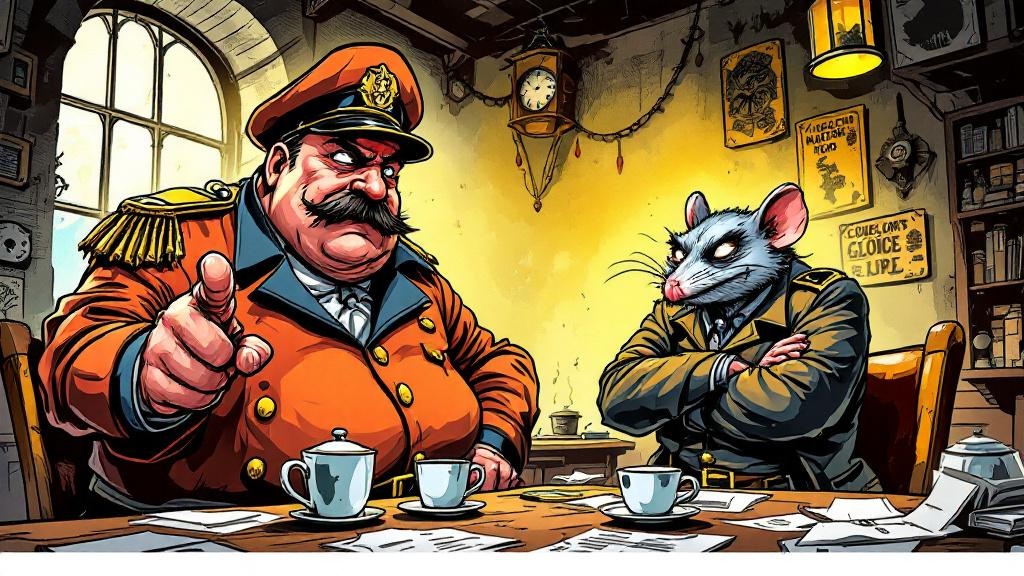
"War, Nobby. Huh! What is it good for?" says Sergeant Colon, settling into his chair with the comfortable authority of a man who's never actually been in a real fight.
"Freeing slaves, maybe?" says Nobby.
"Defending yourself against a totalitarian aggressor?" Nobby adds, after a moment's thought.
That exchange, from Jingo, tells you everything you need to know about the Colon-Nobbs dynamic. One of them thinks he's the brains. The other one actually is.
The Setup
Every great comedy duo needs a formula. Laurel needs Hardy. Abbott needs Costello. The straight man needs the comic. The one who sets up the joke needs the one who lands it.
Fred Colon and Nobby Nobbs follow this pattern—then subvert it completely. Fred thinks he's the straight man. He's the sergeant, after all. He's the one who's been to the School of My Dad Always Said, the College of It Stands to Reason, and is now a post-graduate student at the University of What Some Bloke In the Pub Told Me.
He has opinions. Lots of opinions. Strong, confident, absolutely wrong opinions.
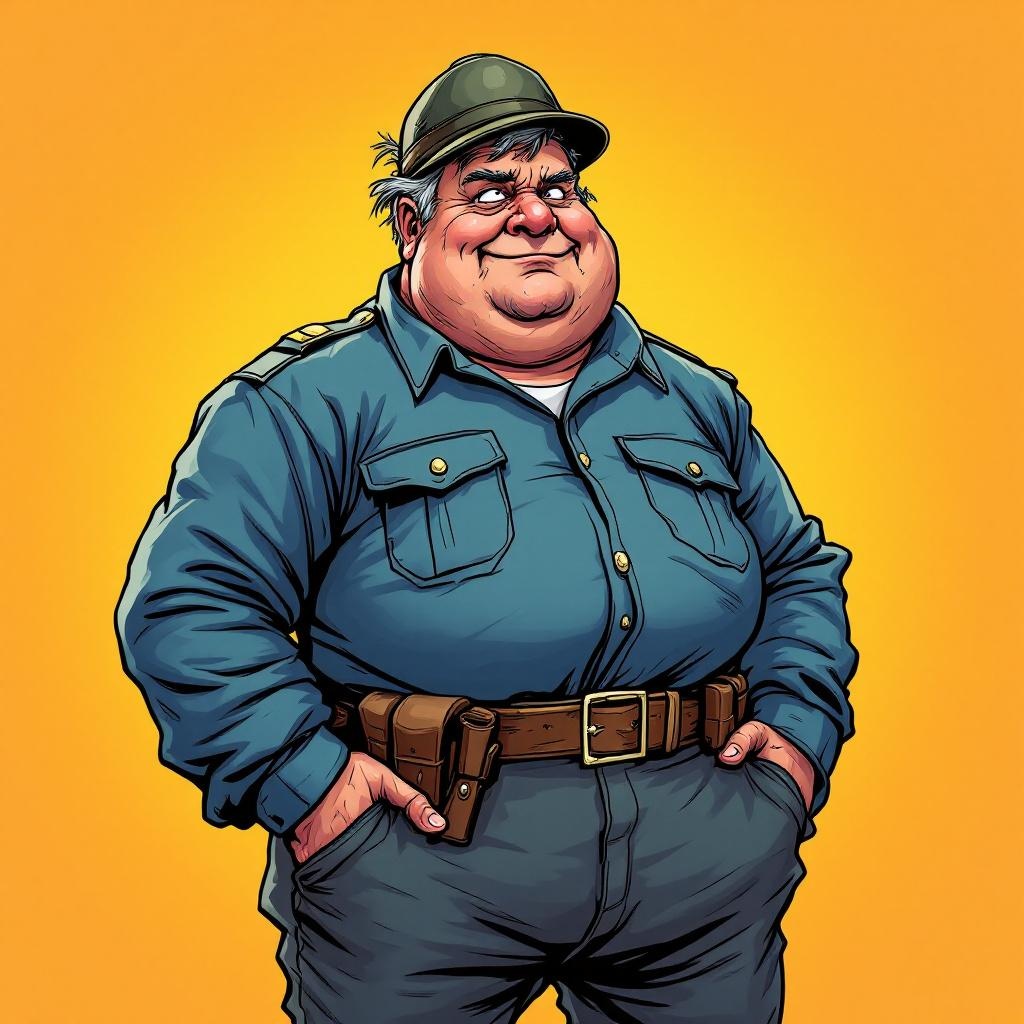
And Nobby—grubby, four-foot-tall, species-ambiguous Nobby—quietly dismantles every one of them with a question that sounds innocent but lands like a brick.
"Fred thinks he's the brains. Nobby knows he isn't. That's the joke. That's also the point."
This is what makes them different from every other comedy duo in fantasy. In most double acts, the audience is in on the joke with the clever one. With Colon and Nobbs, the audience doesn't always realise which one is the clever one until the punchline lands. Fred delivers wisdom with total confidence. Nobby pokes one hole in it. And the whole thing collapses like a soufflé in an earthquake.
The Jingo Conversations
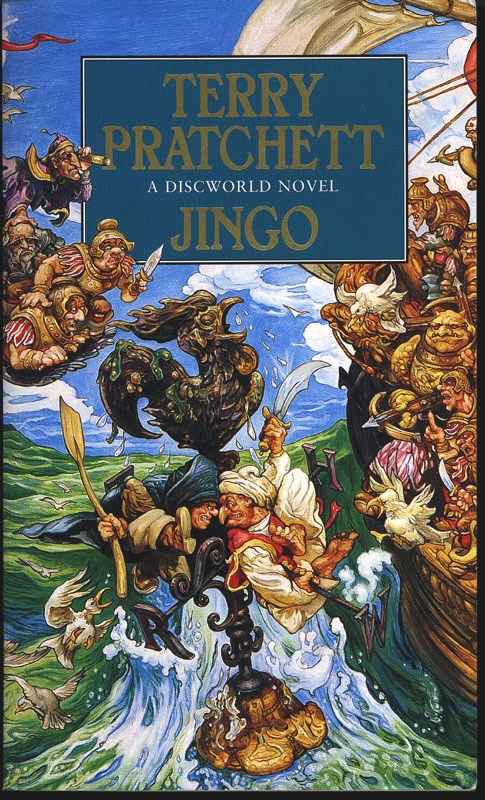
If you want to see the double act at its absolute peak, Jingo is where you go.
Ankh-Morpork is going to war with Klatch. The city is gripped by jingoism, xenophobia, and the kind of patriotic fervour that makes people forget they couldn't point to Klatch on a map last week. And Pratchett channels all of this through Colon and Nobbs sitting in the Watch House, talking.
"Look, Nobby, when all's said and done they ain't the right colour, and there's an end to it," says Colon, with the breezy certainty of a man who's never examined a single belief in his life.
"Good job you found out, Fred!" says Nobby, so cheerfully that Sergeant Colon was almost sure he meant it.
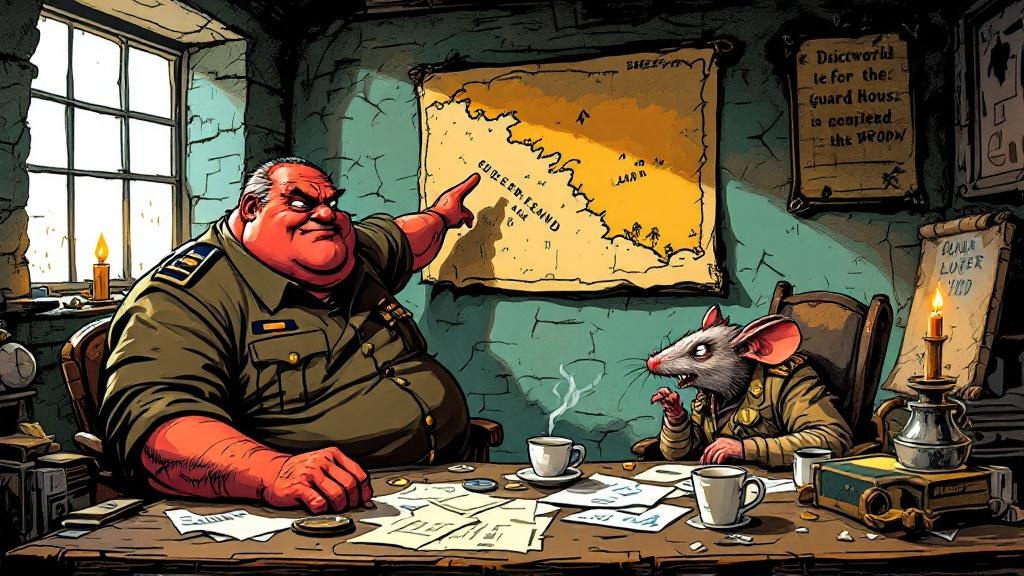
When Colon insists the "right colour" is white, Nobby asks what colour he himself is. Colon scrambles: "White's... white's a state of, you know... mind." And there it is. The full absurdity of racism, exposed by a man who probably can't spell "racism," in three lines of dialogue.
It's not just comedy. It's surgery. Pratchett uses Colon as the voice of comfortable prejudice—the kind that doesn't think of itself as prejudice at all—and Nobby as the scalpel that opens it up.
"I dunno. I've only been a woman ten minutes and already I hate you male bastards."— Nobby Nobbs
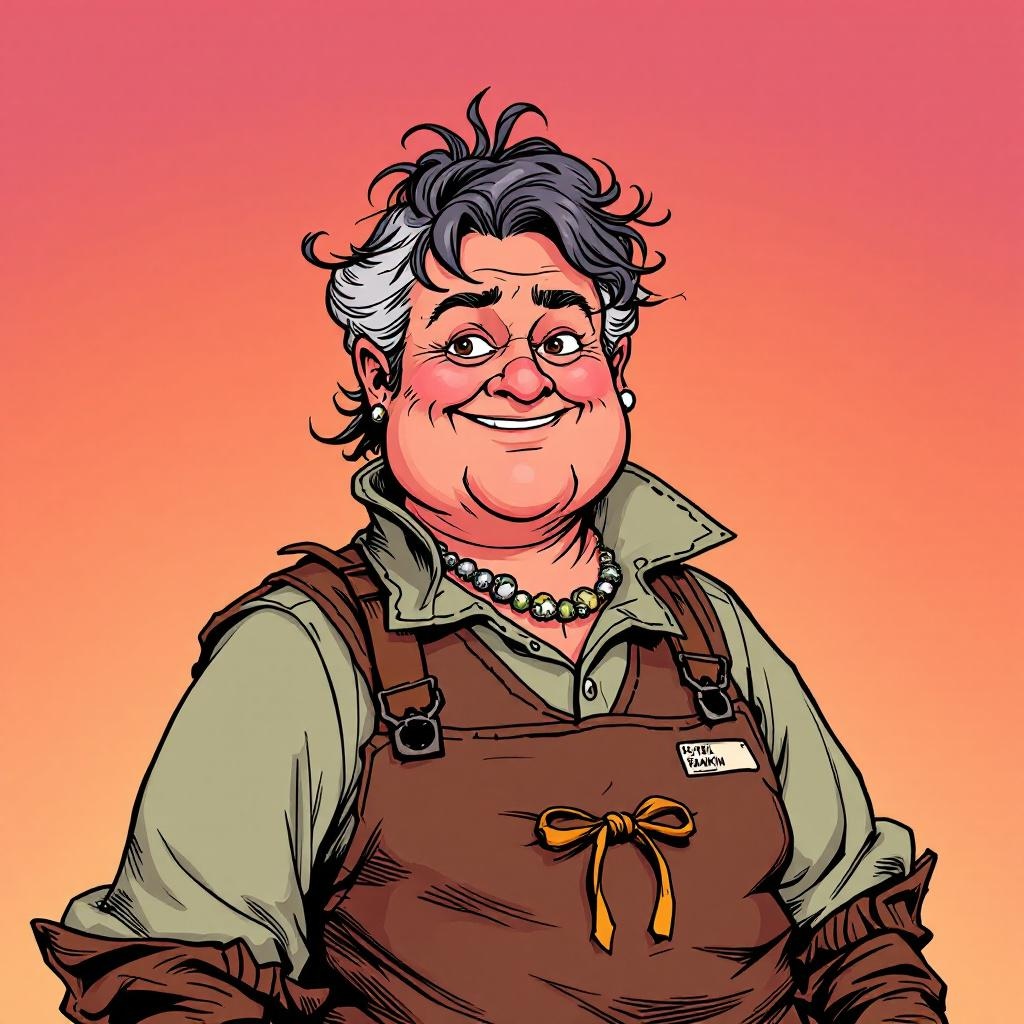
And then there's the undercover operation. Colon and Nobby accompany Vetinari to Klatch in disguise. Nobby, naturally, ends up dressed as a woman named "Beti." He wears "a gauzy, filmy garment designed for a woman about a foot taller, with far more to conceal which other people might actually like to see."
But here's the thing: Nobby doesn't just endure the disguise. He finds it liberating. Something about being Beti lets him access a part of himself he didn't know was there. And when he comes back, he's still enthusiastic about undercover work involving dresses. It's a comedy subplot that quietly becomes something more—Pratchett slipping genuine exploration of gender expression into what looks like a cheap gag.
The Everyman View
Commander Vimes is the hero. Carrot is the myth. Angua is the moral compass. But Fred and Nobby? They're us.
They're the ordinary people caught up in extraordinary events. The bystanders with opinions. The watchers at the back of the crowd who don't quite understand what's happening but have strong feelings about it anyway.
Pratchett uses them the way Shakespeare used Rosencrantz and Guildenstern—as witnesses to the main action who accidentally stumble into profundity. Their conversations about whether Death has a first name, or what counts as a war crime, or whether you can be racist against someone whose colour you can't actually identify, are the scenes that stick in your head long after the plot fades.
And here's the subtle genius: Vimes knows exactly what he's got. He considers the cost of doughnuts on an expense voucher a very favourable trade for the free-flowing source of information their office provides. Fred and Nobby know Ankh-Morpork at street level—every rumour, every grudge, every shift in the city's mood. They can sense tension in a crowd before it becomes a riot.
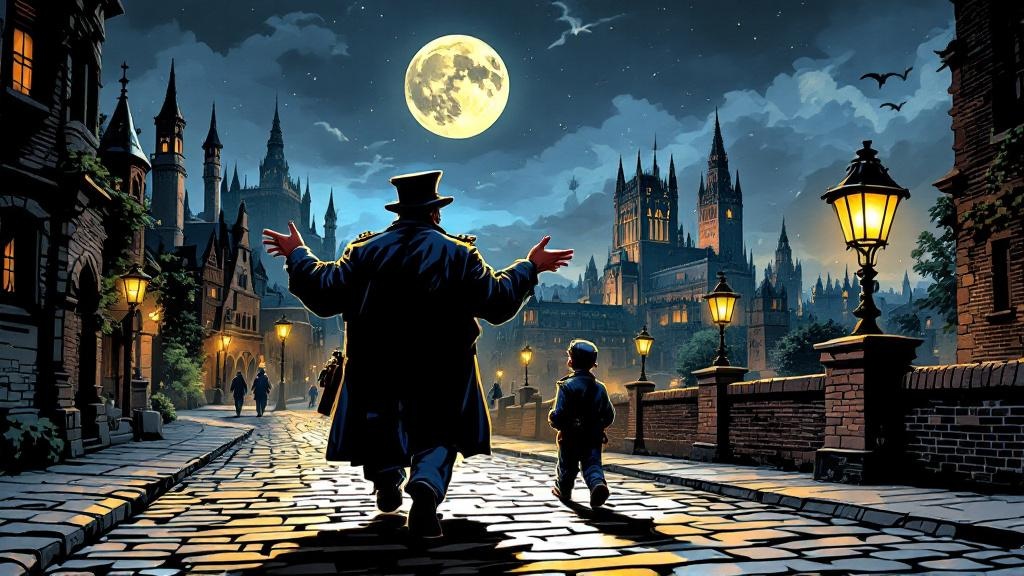
They're useless as cops, brilliant as sensors, and occasionally devastating as philosophers. You just have to catch them on the right night.
The Intelligence Reversal
Here's what most people miss on a first read: Nobby is smarter than Fred.
Not book-smart. Not Ponder Stibbons smart. But street smart—the kind of intelligence that comes from growing up as a street urchin who had to play every angle just to survive. Nobby has a talent for setting up Fred with questions that sound like genuine curiosity but are actually logical traps.
Consider this exchange about military service:
"Well, I always came back with my shield. No problem there," says Nobby.
"Nobby, you used to come back with your shield, everyone else's shield, a sack of teeth and fifteen pairs of still-warm boots. On a cart," says Colon.
"We-ell, no point going to war unless you're on the winning side," says Nobby.
"Nobby doesn't argue. He just asks questions until the argument argues with itself."
Fred is the one stating positions. Nobby is the one gently demonstrating that those positions don't hold up. It's a Dunning-Kruger double act: Colon has supreme confidence in his ignorance, while Nobby plays the fool and lets the truth emerge on its own.
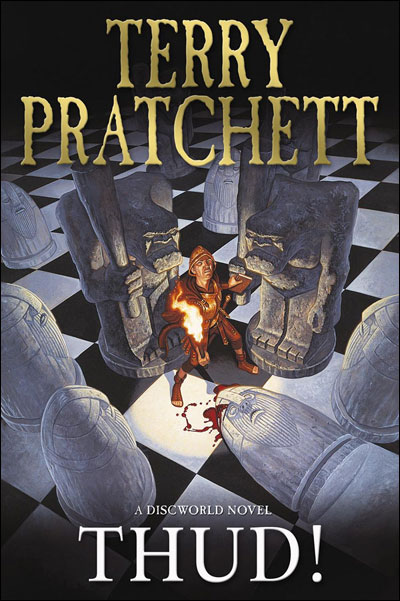
In Thud!, Nobby says: "I know you like to point the finger of scoff, Sarge, but there's a lot goes on that we don't know about." Colon fires back: "Like what, exactly? Name me one thing that's going on that you don't know about. There—you can't, can you?"
He says this with triumph. He thinks he's won. Nobby just looks at him. The reader does the rest.
More Than Comic Relief
The temptation with comedy duos is to treat them as disposable. They make you laugh, they break up the tension, they go away so the serious characters can get on with things. Pratchett refuses to let Colon and Nobbs be that simple.
In Snuff, both characters face genuine moral tests. Nobby, the man whose own species is legally ambiguous, shows instinctive sympathy for goblins—the Disc's most despised creatures. He helps remove an unggue pot from Fred's hand with surprising gentleness. He ends up with a goblin girlfriend, Shine of the Rainbow, who gazes at him adoringly and cooks him snails.
Fred, meanwhile, requires having a goblin soul accidentally shoved into his head before he can overcome his prejudices. It's a sharp contrast: Nobby, who's experienced exclusion his whole life, recognises it in others instinctively. Fred, who's never questioned his place in the world, needs supernatural intervention to develop empathy.
That's not comic relief. That's character development dressed up as a punchline.
The Comedy of Recognition
Here's why the Colon-Nobbs double act works better than almost any other comedic partnership in modern fantasy.
It's not that they're funny—though they're very funny. It's that they're recognisable. Everyone knows a Fred Colon. The man at work who has strong opinions about things he read half a headline about. The uncle at Christmas who starts sentences with "Well, I heard that..." and finishes them with something that isn't true.
And everyone—if they're honest—has been Nobby. The person who sees the flaw in the argument but doesn't always bother to point it out. Who knows the other person won't listen anyway. Who chooses their battles and lets the rest go with a cheerful "Good job you found out, Fred!"
The reason these scenes hit so hard is that Pratchett isn't writing about prejudice. He's writing prejudice as it actually sounds—banal, confident, and utterly unexamined. Colon isn't a villain. He's a decent man with unexamined assumptions. And Nobby isn't a hero. He's just paying enough attention to notice.
That's more devastating than any speech. More effective than any lecture. Pratchett makes you laugh at Colon, and then makes you wonder how many of your own opinions came from the University of What Some Bloke In the Pub Told Me.
The Gate Abides
Fred and Nobby will never save the world. They'll never lead a charge. They'll never have a dramatic speech that changes the course of history.
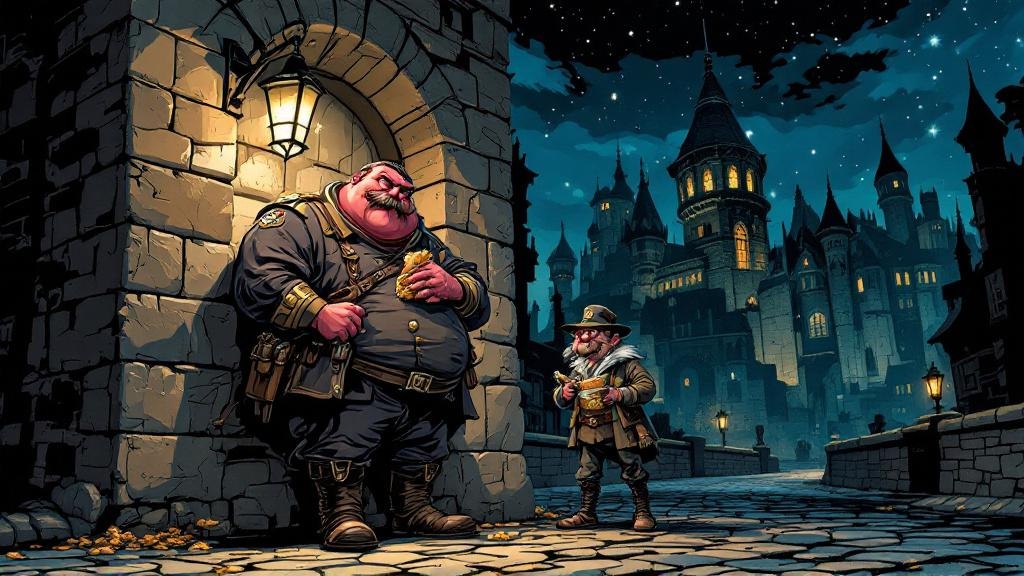
What they'll do is lean against a gate, share a cigarette, and have a conversation about something they don't fully understand. And in the process, they'll accidentally reveal more truth about the human condition than characters ten times more heroic.
"You don't mind what people call you, do you Nobby?"
"I'd be minding the whole time if I minded that, sarge."
That's the partnership. One man confident in his ignorance. One man cheerful in his wisdom. And between them, some of the best comedy writing in the English language.