The Pork Futures Warehouse: When Detritus Nearly Solved Everything
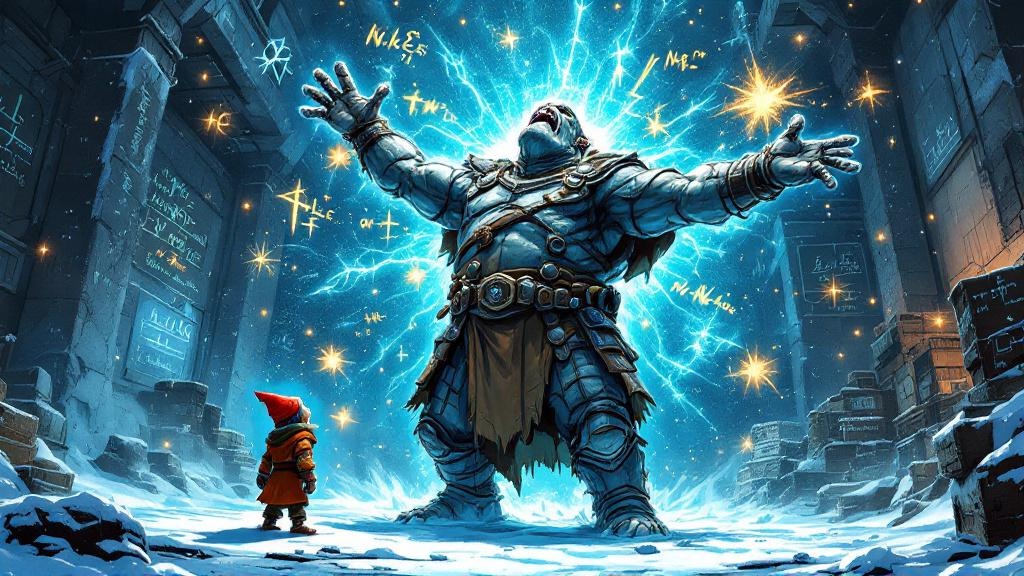
In Men at Arms, Detritus becomes a genius in a freezing warehouse - then loses it all. Here's why Pratchett's superconductivity scene is Discworld's most profound moment.
The Pork Futures Warehouse: When Detritus Nearly Solved Everything
There's a scene in Men at Arms that readers describe as one of the most beautiful and heartbreaking in all of Discworld. It doesn't involve a battle. Nobody dies (though someone nearly does). It takes place in a warehouse that stores pork that doesn't exist yet—because this is Ankh-Morpork, and of course that's a thing.
In a freezing room full of imaginary pork, a troll everyone dismisses as stupid nearly discovers the meaning of the universe.
And then the door opens, and it all goes away.
The Setup
Detritus and his partner Cuddy—a dwarf, because Lord Vetinari has a very particular sense of humor about diversity hiring—are investigating a murder case when they end up trapped in the Pork Futures Warehouse. This is essentially a massive freezer, cold enough to preserve theoretical meat products.
For Cuddy, the cold is uncomfortable. For Detritus, it's transformative.
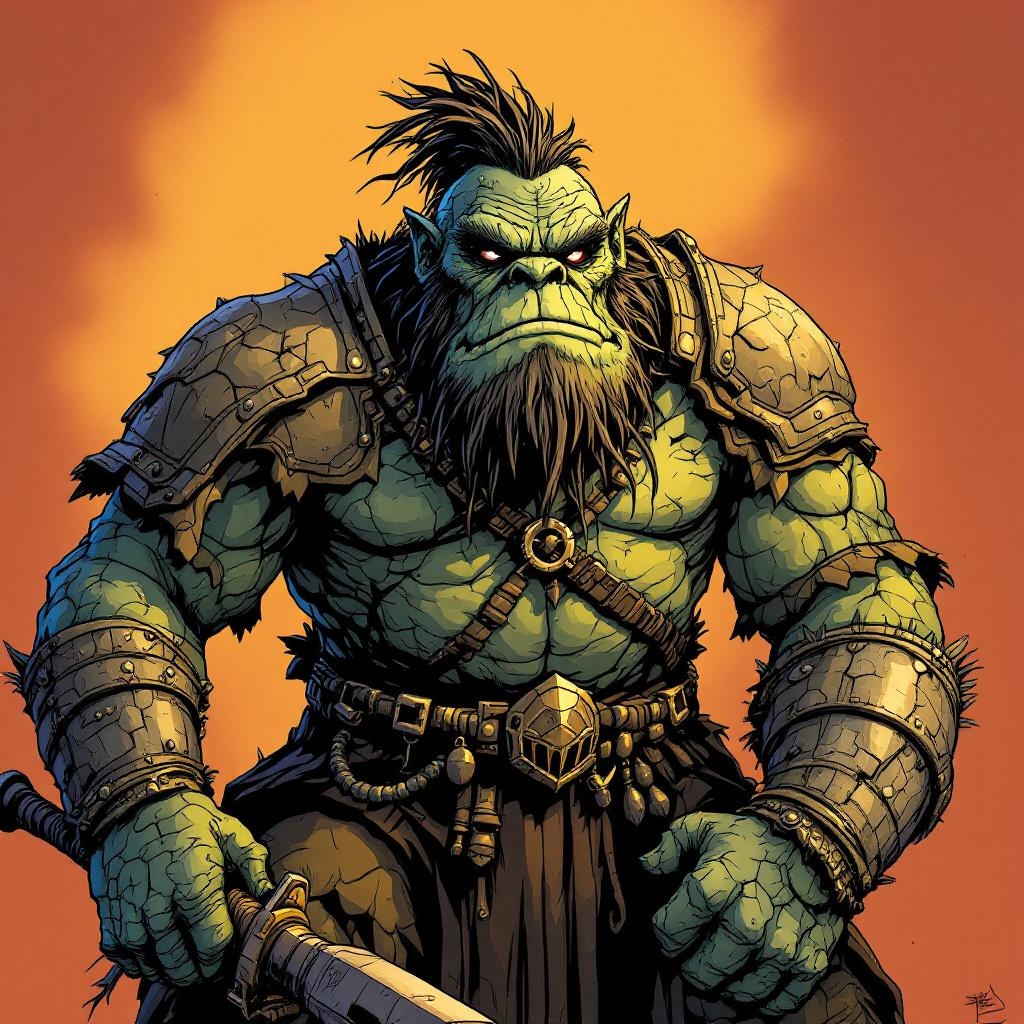
See, troll brains are made of silicon. And silicon, like the chips in your computer, works better when it's cold. Much better. Your laptop has a fan for exactly this reason—heat is the enemy of processing power. Detritus has been walking around Ankh-Morpork, one of the warmest cities on the Disc, with a brain that's essentially overheating.
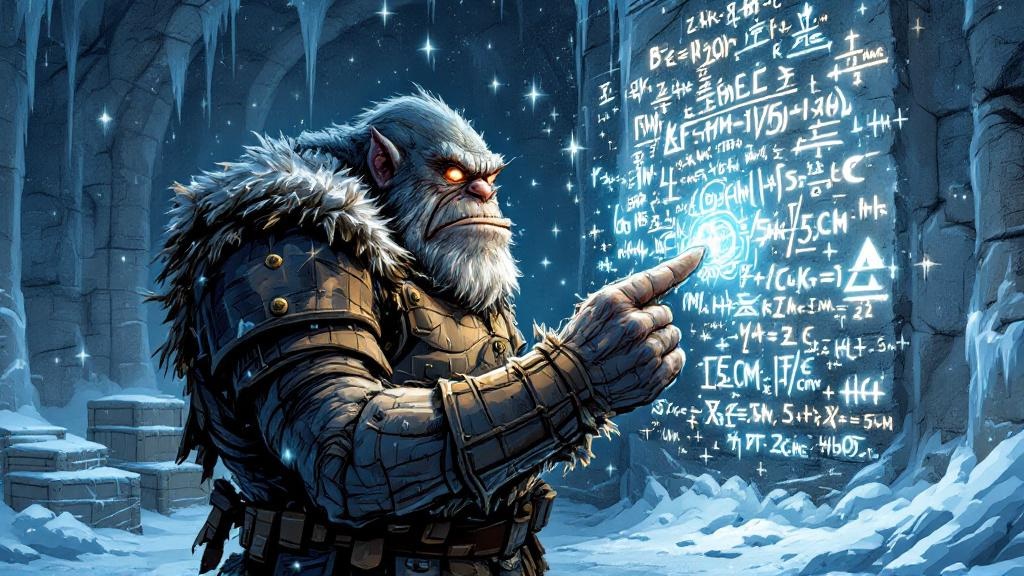
The moment the temperature drops far enough, Detritus's silicon brain becomes a superconductor. And what happens next is extraordinary.
The Equations on the Wall
First, Detritus counts the bricks in the wall. In twos, because that's how trolls count—one, two, many, lots. Then in tens. Then in sixteens. The numbers, Pratchett writes, "formed up and marched past his brain in terrified obedience."
Division and multiplication are discovered. Algebra is invented and provides an interesting diversion for a minute or two. And then—calculus. The "sparkling, distant mountains of calculus."
He begins scratching equations on the frost-covered walls. "Equations as complex as a neural network," covering every surface. At first he uses numbers. Then numbers aren't enough, so he switches to letters. Then letters aren't enough either, and he creates entirely new notation—"brackets like cages enclosed expressions which were to normal mathematics what a city is to a map."
"What a city is to a map—that's the gap between Detritus's equations and normal mathematics."
Think about that metaphor for a moment. A map is a simplified representation. A city is the living, breathing, impossibly complex reality. Detritus isn't doing math anymore. He's doing something beyond math, something that contains math the way a city contains its own street plan.
The equations grow simpler as they approach their goal. Simpler, "yet containing in the flowing lines of their simplicity a spartan and wonderful complexity." He's converging on something—a grand unified theory of everything, scratched in frost by a troll that nobody thought could count past two.
And the final equation? It narrows down to a single, elegant equals sign. We never learn what it equates. Fans have speculated it might have been 42—Douglas Adams's answer to the ultimate question—but Pratchett never said. Maybe the joke is that we'll never know. Maybe the joke is that Detritus nearly found out and then forgot.
The Price of Genius
Here's the thing about Detritus's superconductivity: the temperature that makes him brilliant is also killing him.
As his mind races through mathematical landscapes that would make the faculty at Unseen University weep, his body is freezing solid. Cuddy, shivering beside him, realizes that his partner is dying. The troll who just reinvented calculus from scratch can't save himself, because his magnificent brain is too busy solving the universe to notice that it's about to be switched off permanently.
This is where Cuddy proves he's more than just a grumpy dwarf with a height complex. He drags Detritus toward the door. The cold that's killing the dwarf is enlightening the troll, and Cuddy has to choose between letting Detritus finish his grand equation and saving his life.
He chooses the troll.
When the warm air hits Detritus's thoughts, Pratchett describes it as "a flame-thrower caressing a snowflake." Towers of intellect collapse. The fire roars through his brain. He can feel "the cracking up of the marvelous universe of numbers."
And just like that, it's over. Detritus is back to counting in twos. The equations on the wall are meaningless frost patterns that will melt by morning. The answer to everything, if it was ever there, is gone.
The Helmet
But Cuddy doesn't just save Detritus's life. He does something even more important.
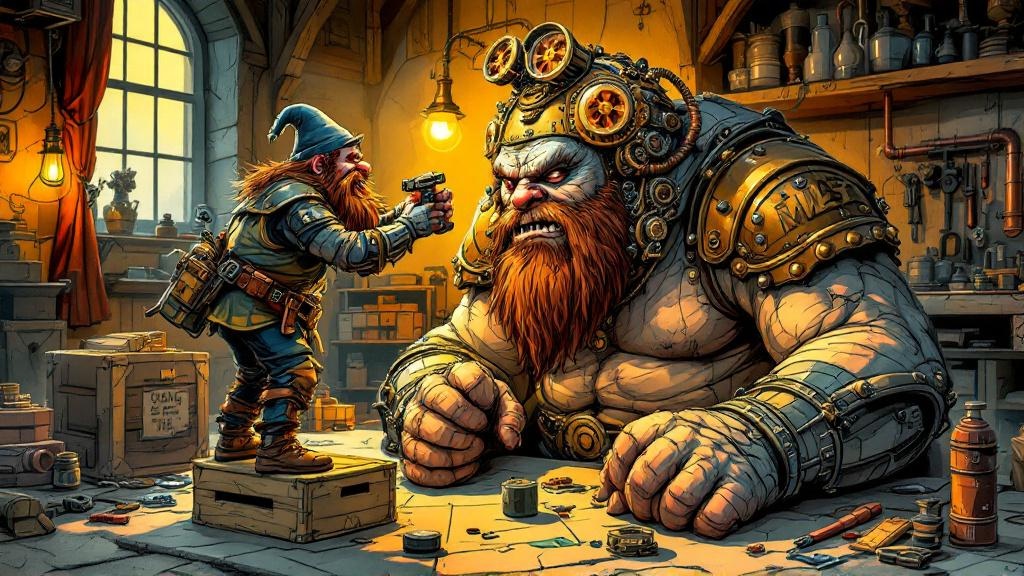
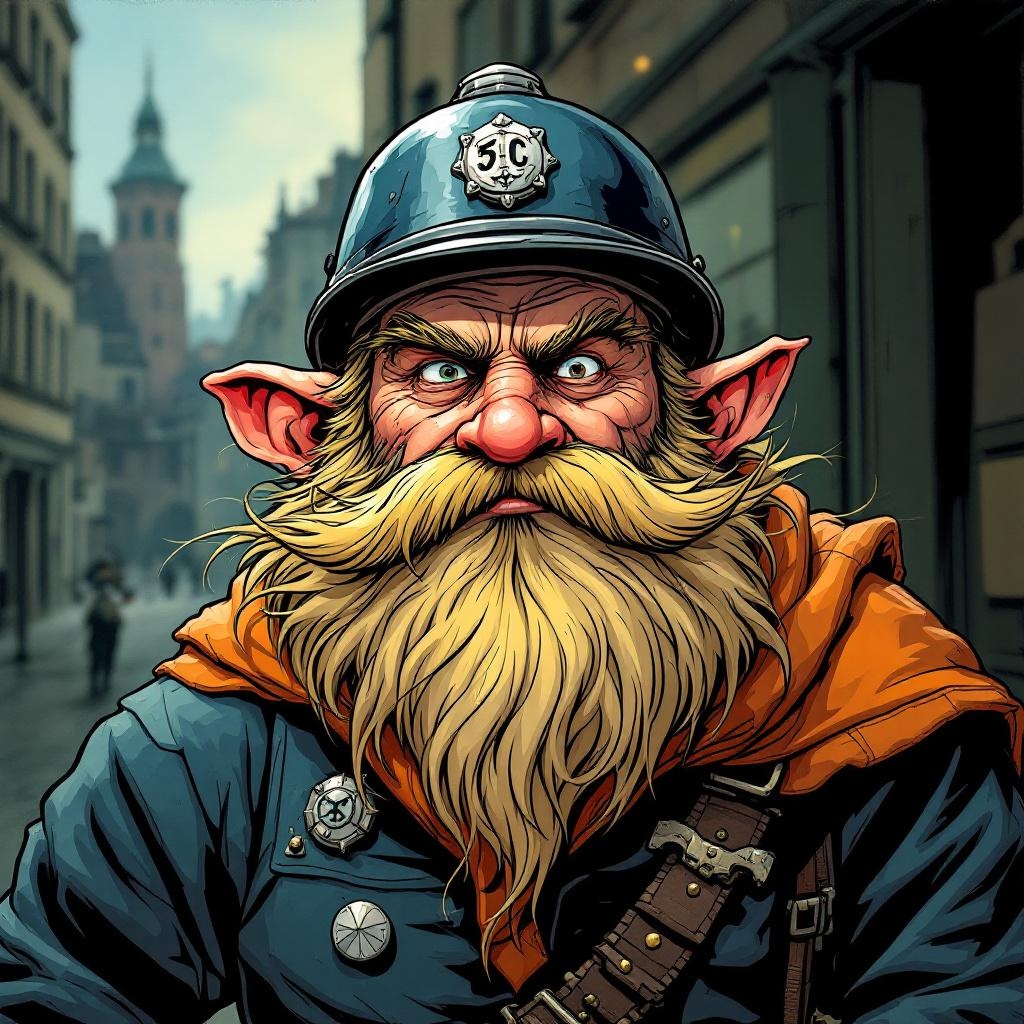
He builds him a cooling helmet.
It's a clockwork contraption with fans that keep Detritus's brain at a manageable temperature—not cold enough for superconductivity, not warm enough for total fog. It's a compromise. Detritus won't be solving the meaning of the universe anytime soon, but he can think clearly enough to be a proper copper. To learn. To grow. To become someone.
When Vimes sees it, his reaction is pure Watch: "Oh, so now we've got a clockwork soldier? We're a real model army, we are." But the helmet stays. Through every subsequent book, through every investigation and battle and political crisis, Detritus wears the cooling helmet that a dead dwarf built for him.
Because Cuddy dies later in Men at Arms. The first real friend Detritus ever had—the person who saw past "big and thick" to something worth saving—doesn't survive the novel.
"Every clear thought Detritus has for the rest of the series, he owes to a dead dwarf who built him a clockwork hat."
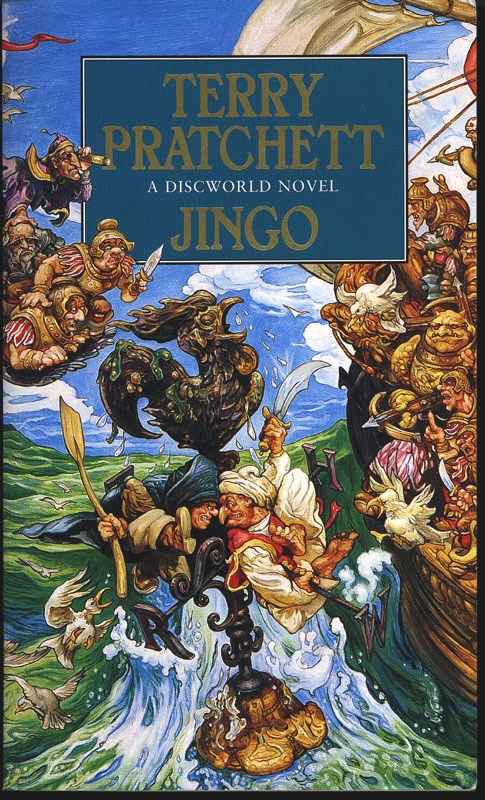
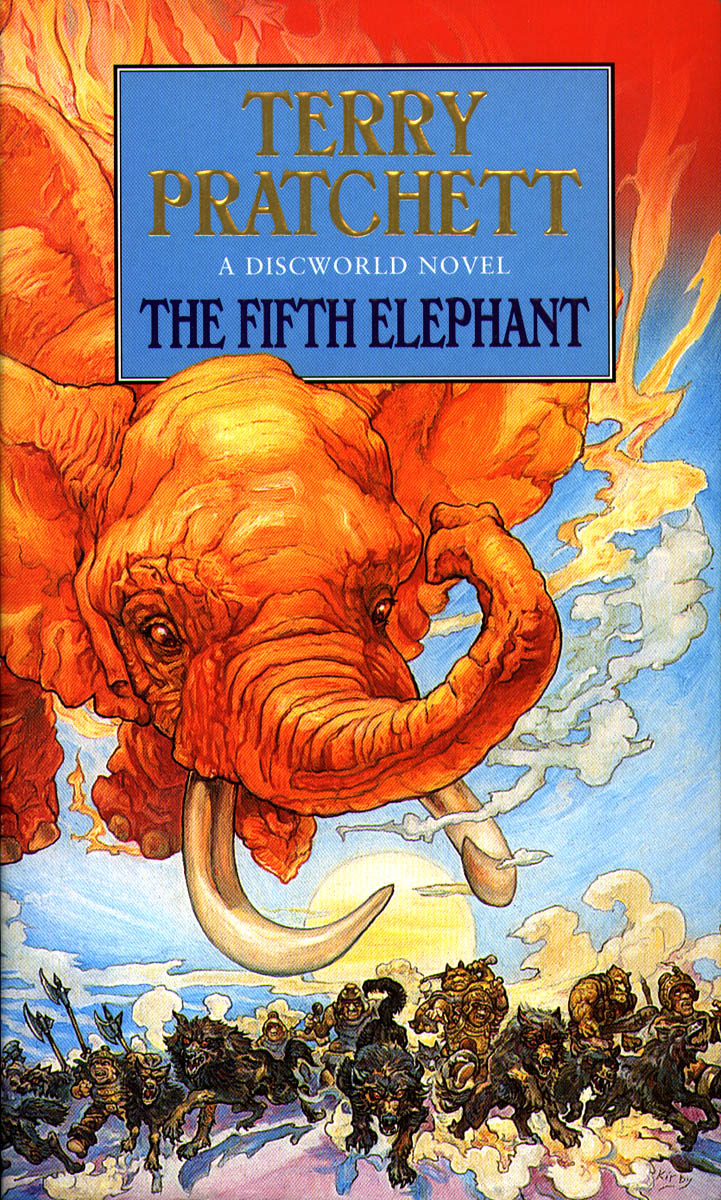
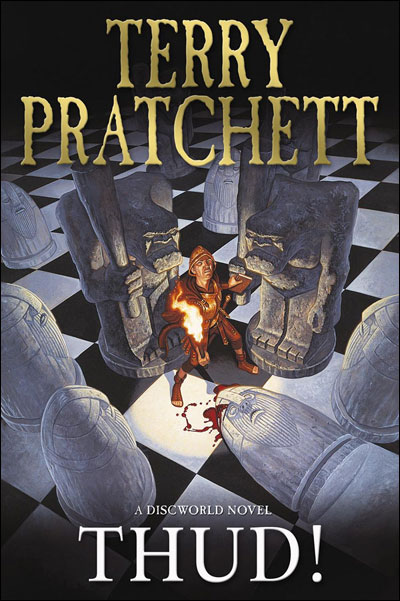
But every clear thought Detritus has for the rest of the series, from the "aagragaah" speech in Jingo to refusing the unlawful order in The Fifth Elephant to his political awareness in Thud!, happens because of that helmet. Cuddy's legacy isn't a monument or a memorial. It's a ticking clockwork fan on a troll's head, quietly making the impossible possible.
Flowers for Algernon, Discworld-Style
Fans have drawn a devastating parallel between the Pork Futures scene and Daniel Keyes's Flowers for Algernon—the story of Charlie Gordon, a man with an intellectual disability who undergoes an experimental procedure that temporarily makes him a genius, only to watch his newfound intelligence fade away.
The parallels are striking. Both characters experience a temporary window of brilliance that depends on conditions they can't sustain. Both glimpse a version of themselves that the world denied them. Both lose it.
But there's a crucial difference. Charlie Gordon knows what he's losing. The tragedy of Flowers for Algernon is awareness—watching yourself become less than you were, sentence by sentence.
Detritus doesn't remember. The warm air wipes the equations clean, and he goes back to being the troll who struggles with multi-syllabic words. He doesn't know what he lost. He doesn't mourn a genius he can't recall having.
Is that better or worse? Pratchett doesn't say. But the cooling helmet suggests his answer: you don't need to be a supergenius. You just need to think clearly enough. Cuddy's gift isn't the restoration of brilliance—it's the removal of a barrier that was hiding competence.
And that's a very different story from Flowers for Algernon. Keyes wrote about the tragedy of losing what you've gained. Pratchett wrote about the tragedy of never knowing what circumstances have stolen from you—and the quiet heroism of someone who tries to give a little of it back.
What It Really Means
Here's the thing Pratchett is actually saying with this scene: Detritus isn't stupid. He's overheating.
That's not just a joke about silicon brains. It's a thesis statement about how we judge intelligence.
Think about it in real-world terms. We measure intelligence with tests designed for specific cultural contexts, in specific languages, under specific conditions. A child who can't read in a classroom might be a mechanical genius in a workshop. A person who struggles with standardized tests might navigate social situations with extraordinary sophistication. Someone who seems slow in one environment might flourish in another.
Detritus's brain works perfectly. It's his environment that's wrong.
Pratchett made this explicit in interviews: "It offended me that the stories I was reading portrayed trolls as big and fick and therefore bad. Don't ogres love their children too?" He created Detritus specifically to challenge the fantasy genre's habit of treating non-human races as inherently lesser—which is, of course, a not-very-subtle mirror of how real societies treat outsiders.
The Pork Futures Warehouse is the proof of concept. For one freezing, miraculous hour, we see what Detritus could be if the world were built for him instead of against him. The equations on the wall aren't just mathematics. They're an accusation. This is what you've been wasting. This is what your prejudice costs.
The Troll Who Kept Going
What makes Detritus remarkable isn't the genius. It's what happens after.
He doesn't get to keep the superconductivity. He doesn't get to solve the universe. He gets a clockwork hat and a dead friend and a world that still mostly thinks he's thick.
And he becomes a sergeant anyway.
He learns to count in tens. He masters the difference between lawful and unlawful orders. He develops political awareness, emotional intelligence, and the kind of moral courage that makes him tell Commander Vimes—his commanding officer, the most powerful copper in the city—exactly where to shove an unethical order.
None of this comes easily. The helmet helps, but it's not magic. Detritus works for every bit of it, in a city where trolls are still routinely treated as second-class citizens.
That's the real story of the Pork Futures Warehouse. Not the genius—the aftermath. Not what Detritus could have been in a perfect world, but what he chose to become in this imperfect one. The equations may have melted, but the troll who wrote them kept going.
Where to Read It
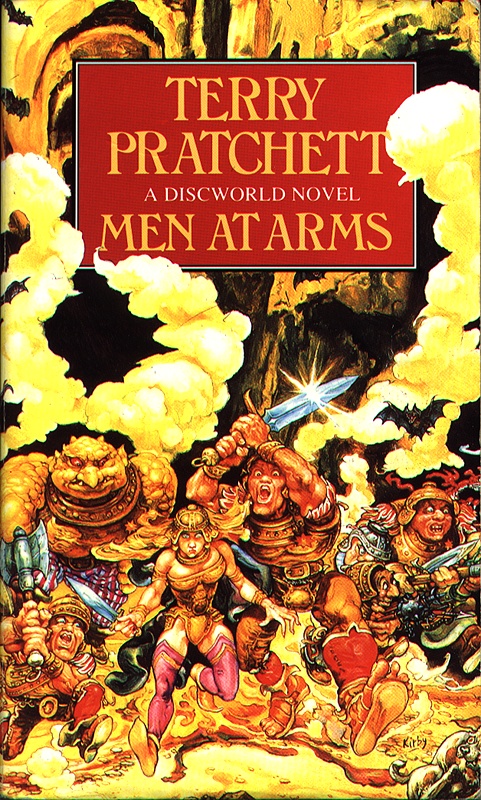

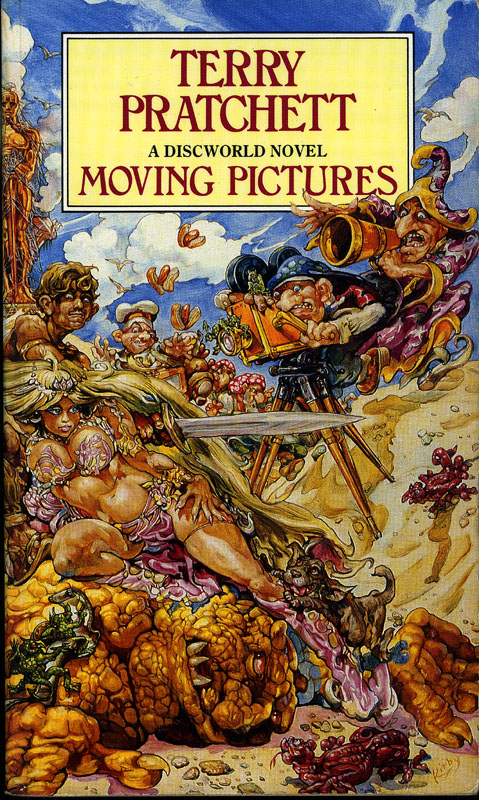
The Pork Futures scene hits hardest if you've already met Detritus in Moving Pictures, where he's still working as a splatter and pining for Ruby. But Men at Arms works perfectly as a starting point—you'll understand what you need to know about trolls within the first few chapters.
For the full payoff of everything the cooling helmet makes possible, continue through Jingo, The Fifth Elephant, and Thud!. Watch the troll who nearly solved everything settle for something better: becoming someone who matters.
For more on Detritus's full journey, read From Splatter to Sergeant: Discworld's Greatest Redemption Arc. To explore the dwarf-troll tensions that define his story, check out Cuddy and Detritus: The Friendship That Shouldn't Have Worked (coming soon).