Simple Like a Sword: The Genius of Carrot's Linear Thinking
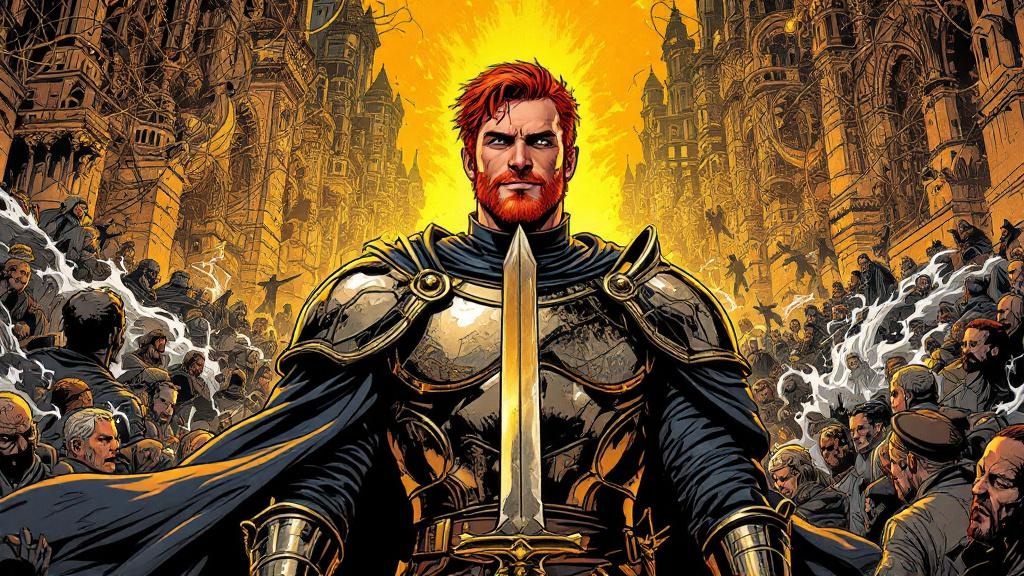
Carrot Ironfoundersson isn't stupid—he's simple like an ambush is simple. How Discworld's most literal thinker weaponizes directness and sincerity.
Simple Like a Sword: The Genius of Carrot's Linear Thinking
Here's a riddle for you. A six-foot-six man with the build of a barn door walks into the most corrupt city on the Disc, reads its ancient law book cover to cover, and then arrests the head of the Thieves' Guild. On his first day.
Is he stupid? Naive? A danger to himself?
Terry Pratchett spent nine novels answering that question, and the answer is one of the cleverest character studies in fantasy fiction. Carrot Ironfoundersson is simple. But simple, as Pratchett made very clear, is not the same thing as stupid.

Simple Like an Ambush Is Simple
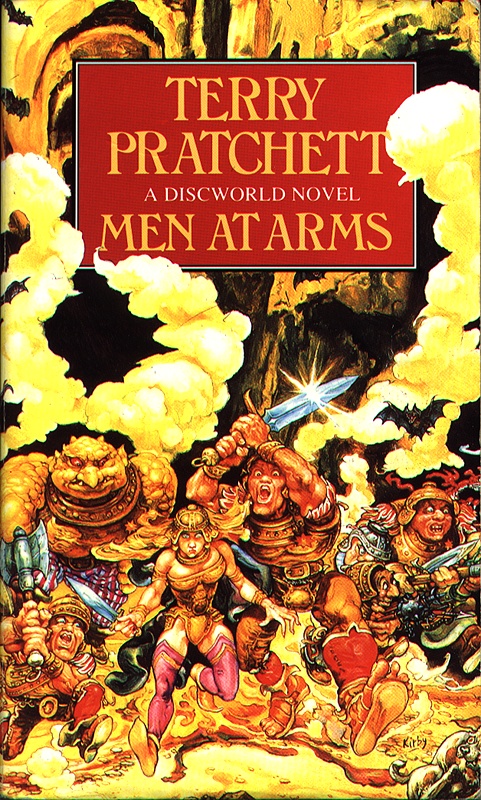
The definitive description comes in Men at Arms:
"Colon thought Carrot was simple. Carrot often struck people as simple. And he was. Where people went wrong was thinking that simple meant the same thing as stupid."
Pratchett goes further. Carrot was "incredibly simple, but in the same way that a sword is simple, or an ambush is simple." He was "possibly the most linear thinker in the history of the universe."
That phrase—"the most linear thinker"—gets treated like a punchline. It isn't. It's a thesis statement.
"Incredibly simple, but in the same way that a sword is simple, or an ambush is simple."
Think about what a sword actually does. It takes all the force of a swing and concentrates it on one thin edge. There's nothing complicated about a sword. No gears, no moving parts, no subtlety. Just a line of sharpened metal that goes where you point it.
That's Carrot. He sees the world with absolute clarity—not because he's too dull to perceive complexity, but because he cuts straight through it. He identifies the right thing to do and then does it. No second-guessing. No political calculations. No wondering what other people might think.
In a city where everyone is playing three-dimensional chess, Carrot walks in a straight line from A to B. And somehow, he keeps winning.
The Thieves' Guild Incident
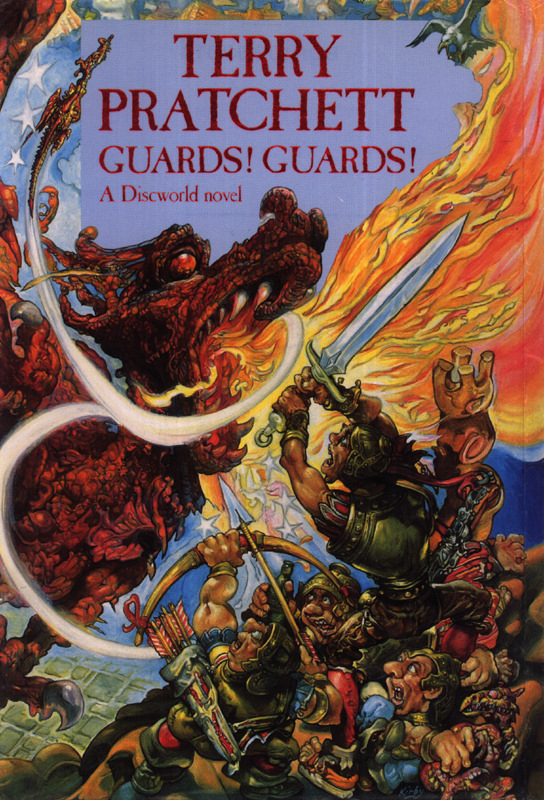
The best place to see this in action is Carrot's first day in Ankh-Morpork, in Guards! Guards!.
Before arriving, Carrot's adoptive dwarf father gives him the Laws and Ordinances of the Cities of Ankh and Morpork. Carrot does what any dwarf would do with an important text: he reads the whole thing. Memorizes it, probably.
The problem is, nobody else has read this book. Not the Watch. Not the guilds. Not even the Patrician. The laws of Ankh-Morpork are technically still in effect—they've just been politely ignored for centuries while the city developed its own pragmatic system of licensed crime.
Carrot doesn't know about pragmatic systems. He knows what the book says. The book says theft is illegal. The man in front of him is the head of the Thieves' Guild. Theft is what the Thieves' Guild does. Therefore: arrest.
Everyone around him—Vimes, Colon, Nobby—knows this is insane. The Thieves' Guild is a licensed institution. You don't arrest its head any more than you'd arrest the Postmaster General. The whole city runs on the understanding that certain crimes are sanctioned.
Carrot arrests him anyway. Because the law says.
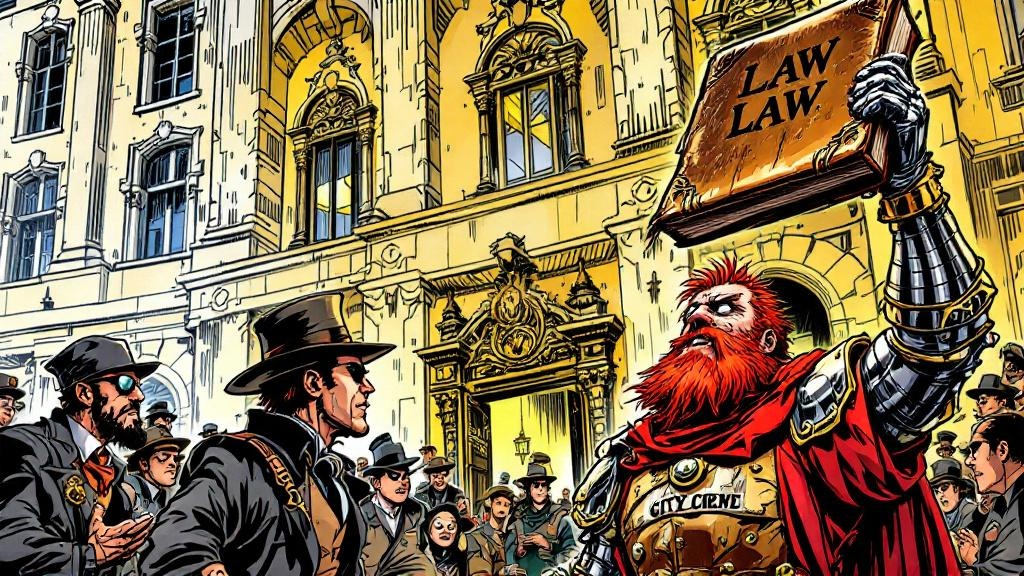
And here's the thing that makes this more than a joke: Carrot is right. The law does say theft is illegal. Everyone else has simply agreed to pretend otherwise. Carrot's simplicity exposes the absurdity of the system—not because he's trying to make a point, but because he genuinely doesn't see why the law shouldn't apply.
It's the most honest act in the history of Ankh-Morpork. It's also, from a certain angle, the most subversive.
The Quiz Machine Gambit
If the Thieves' Guild arrest were the only example, you might write Carrot off as a well-meaning fool who got lucky. But Pratchett keeps showing us that Carrot's directness is a strategy—one that works precisely because nobody expects it.
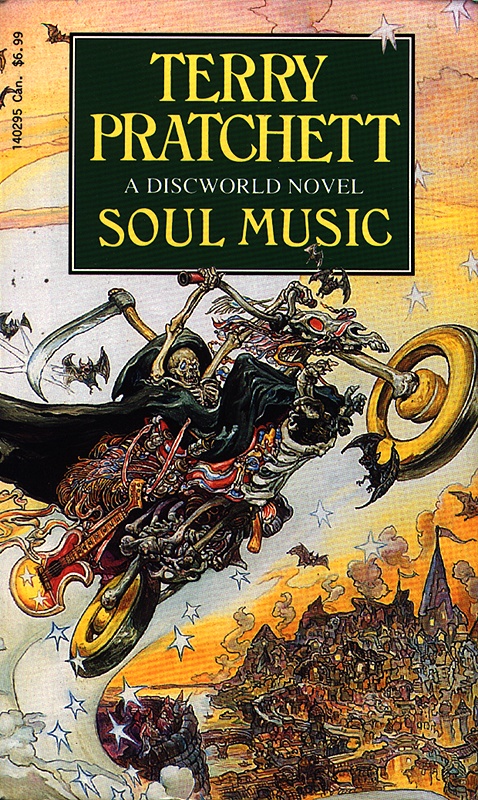
In Soul Music, there's a quiz machine in the Mended Drum—Ankh-Morpork's most disreputable pub, where asking the wrong question can get you killed. Carrot adds his own supplementary questions to the machine. Questions like: "Who was responsible for the robbery on Gleam Street last Tuesday?"
"He identified the right thing to do and then did it. No second-guessing. No political calculations."
Drunk criminals, competing for quiz glory, answer honestly. Carrot makes several arrests before anyone catches on.
Think about that for a moment. This is a man who took the most obvious, unsophisticated approach imaginable—literally just asking criminals if they committed crimes—and it worked. Not because the criminals were unusually stupid, but because they couldn't conceive of anyone being that direct. The idea that a copper would simply ask "did you do it?" and expect an honest answer was so far outside their experience that they answered before their brains caught up.
Carrot doesn't outwit people. He under-wits them. He operates on a level of simplicity so fundamental that everyone else's complicated defenses don't apply.
The Appointment and the Morningstar
No discussion of Carrot's literalism would be complete without the most famous exchange in Men at Arms:
"Have—have you got an appointment?"
"I don't know. Have we got an appointment?"
"I've got an iron ball with spikes on."
"That's a morningstar, Nobby."
"Yes. An appointment is an engagement to see someone, while a morningstar is a large lump of metal used for viciously crushing skulls. It is important not to confuse the two."
Read that again. On the surface, it's a joke about Carrot taking things literally—confusing "appointment" the meeting with "appointment" the weapon, which isn't even the right word anyway.
But look at what's actually happening. A guard has just tried to deny them entry by hiding behind bureaucratic language. "Have you got an appointment?" is the genteel gatekeeper's phrase, designed to make you feel like the problem for not having one. It's a verbal trick—a way of saying "go away" while sounding reasonable.
Carrot dismantles it by treating the words as what they actually mean. He strips away the social game and reduces the exchange to its literal components. There's an appointment (a meeting) and there's a morningstar (a weapon). Which one are we here for?
The guard knows the answer. So does everyone else. The door opens.
Football in the Desert
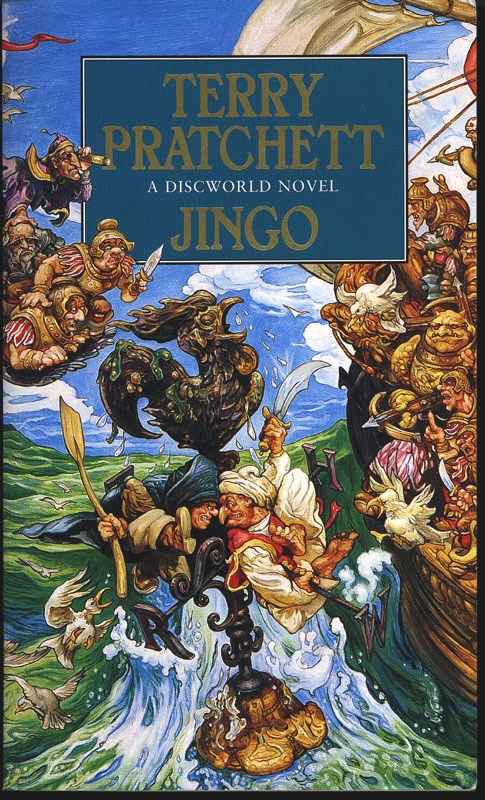
In Jingo, Ankh-Morpork goes to war. The city's political establishment whips up patriotic fervour over a tiny island. Armies march. Diplomacy fails. Vimes tries to arrest the opposing commanders for various offenses.
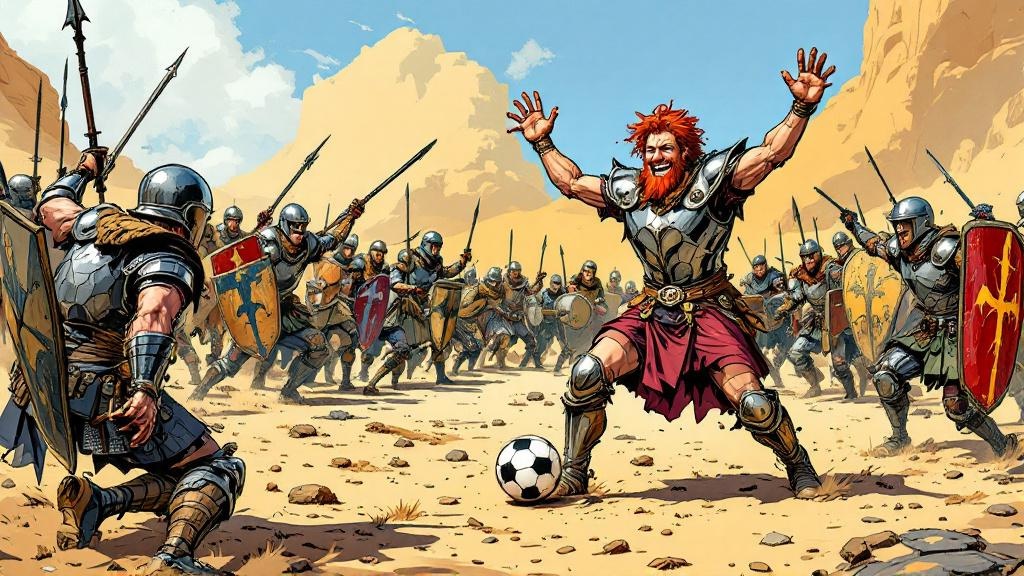
And while Vimes is busy being cynical about the impossibility of peace, Carrot organizes a football match between the two armies.
This scene echoes the famous Christmas Truce of World War I, when enemy soldiers spontaneously stopped shooting and played football in no man's land. It's one of the most powerful anti-war images in history—the idea that ordinary people, left to their own devices, would rather play than fight.
Carrot doesn't reference this. He probably doesn't know the history. He just sees two groups of people standing around with nothing to do, and thinks: football. Because that's what you do when you've got people and a ball and some free time. It's simple.
And it works. Because Carrot's simplicity isn't naivety—it's a refusal to accept that the complicated, terrible things people do to each other are inevitable. If you just don't play the game—the political game, the war game, the game of cynicism and compromised principles—sometimes you find that nobody else wanted to play either.
The Weapon of Sincerity
Here's what Carrot's critics—both in-universe and among readers—get wrong. They assume his literalism is a limitation. That he takes things at face value because he can't see beneath the surface.
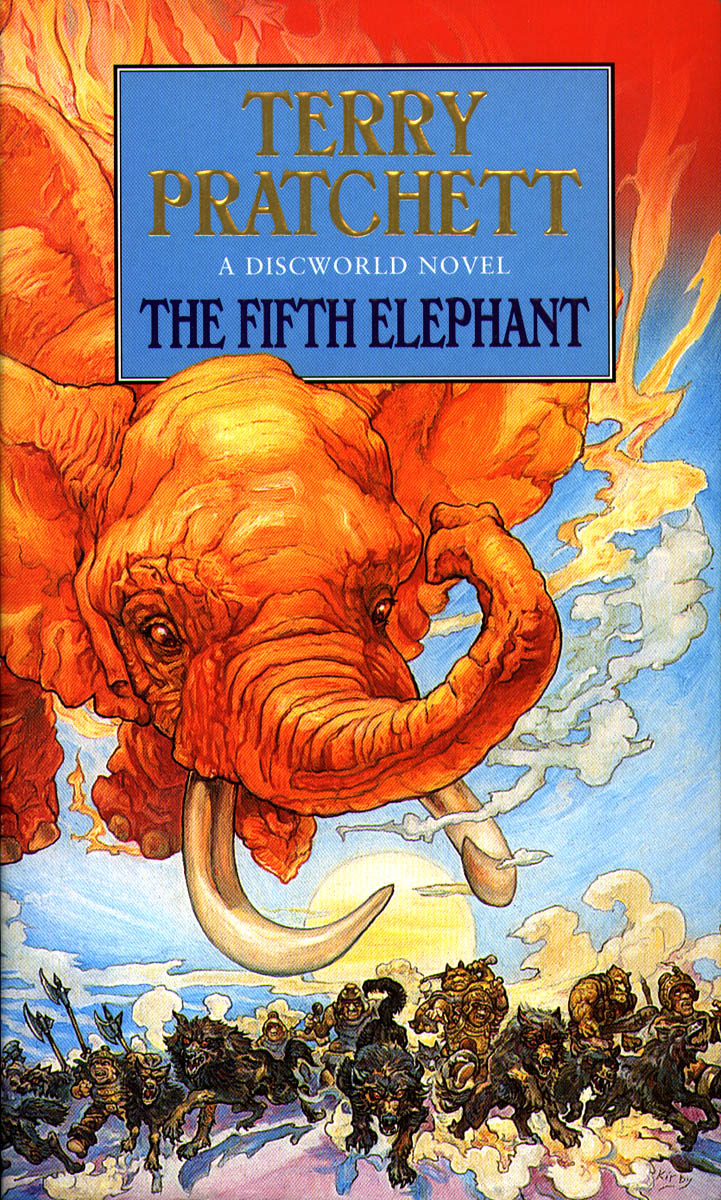
But Pratchett tells us otherwise. By The Fifth Elephant, Carrot has been in Ankh-Morpork for years. He understands metaphor. He gets irony. He's watched Vetinari operate and worked alongside the most cynical man on the Disc.
He chooses to be direct anyway.
"People only think for themselves if you tell them to."— Terry Pratchett, Men at Arms
That's what separates Carrot from a genuine innocent. A genuine innocent doesn't understand the game. Carrot understands the game perfectly—he just refuses to play it. He keeps being direct, keeps being literal, keeps expecting the best from people, because he's figured out something that all the sophisticated operators in Ankh-Morpork haven't.
Sincerity is a weapon. And nobody knows how to defend against it.
When you expect the worst from people, they meet your expectations. When you expect the best—genuinely, unshakably expect it—something strange happens. People start wanting to live up to it. Not because they're good, necessarily, but because disappointing Carrot Ironfoundersson feels like kicking the biggest puppy in the universe.
Why Complexity Is Overrated
There's a reason Carrot makes sophisticated people uncomfortable. He challenges the assumption that complexity equals intelligence—that the right answer must be the clever answer, the subtle answer, the answer that accounts for seventeen different variables.
Sometimes the right answer is: theft is illegal, so arrest the thief.
Sometimes the right answer is: these people don't want to fight, so give them a football.
Sometimes the right answer is: just ask the criminals if they did it.
We live in a world that rewards complexity. We praise people for "nuanced" thinking, for seeing "both sides," for understanding the "bigger picture." And often that's valuable. But sometimes—more often than we'd like to admit—complexity is just a way of avoiding action. A way of talking yourself out of doing the obvious right thing because you've thought of twelve reasons why it won't work.
Carrot doesn't think of twelve reasons. He sees the straight line and walks it. And when he arrives at B, everyone who was still debating whether to leave A looks up in surprise and says: how did he do that?
He did it by being simple. Like a sword is simple. Like an ambush is simple.
Where to See Carrot's Mind at Work
Start with Guards! Guards! for the Thieves' Guild arrest and Carrot's introduction to Ankh-Morpork—the book where his simplicity first collides with the city's corruption. Then read Men at Arms for the morningstar exchange and the deeper exploration of how that simplicity conceals sharpness.



If you want to see his directness deployed as a force for good on the largest scale, Jingo puts his philosophy in direct contrast with the cynicism of war. And for the moment when Carrot's straight-line thinking finally encounters a problem it can't solve—when the personal collides with the important—The Fifth Elephant shows what happens when the most linear thinker in history has to navigate the one thing that can't be walked in a straight line: love.
But that's a different article.
Curious about Carrot's other dimensions? Explore why he chose to be a copper instead of a king, or discover how his unique identity as a human-raised dwarf shaped everything about who he is.