Don't Call Him a Monkey: The Librarian's Transformation and Why He Refused to Change Back
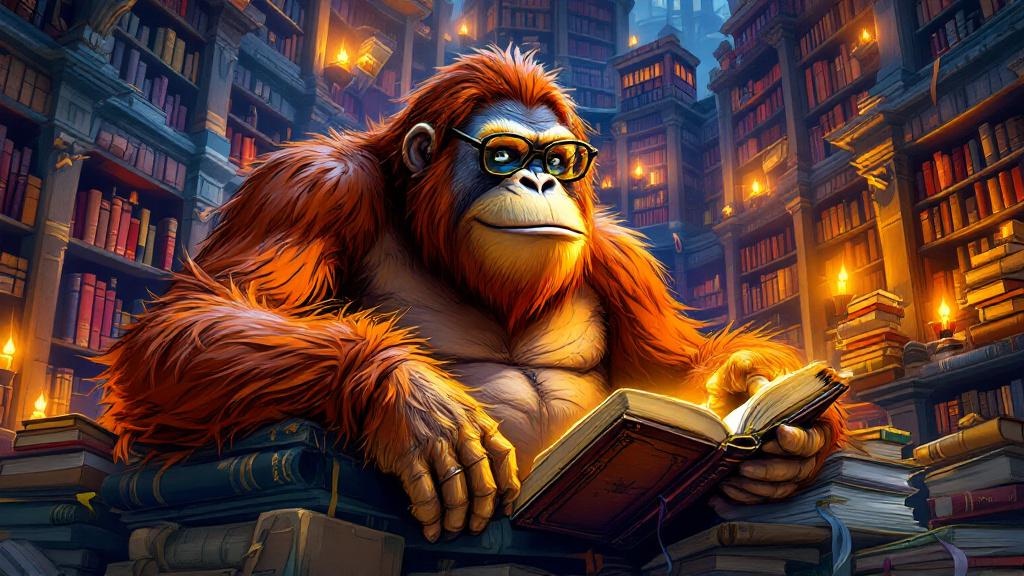
When a magical accident turned Dr. Horace Worblehat into an orangutan, Unseen University tried to fix him. He said no. Here's the story of Discworld's most beloved ape.
When a magical accident turned a wizard into an orangutan, Unseen University scrambled to reverse the spell. They prepared countermeasures. They consulted grimoires. They were ready to restore their colleague to his proper human form.
And then the Librarian said "Ook."
He meant it.
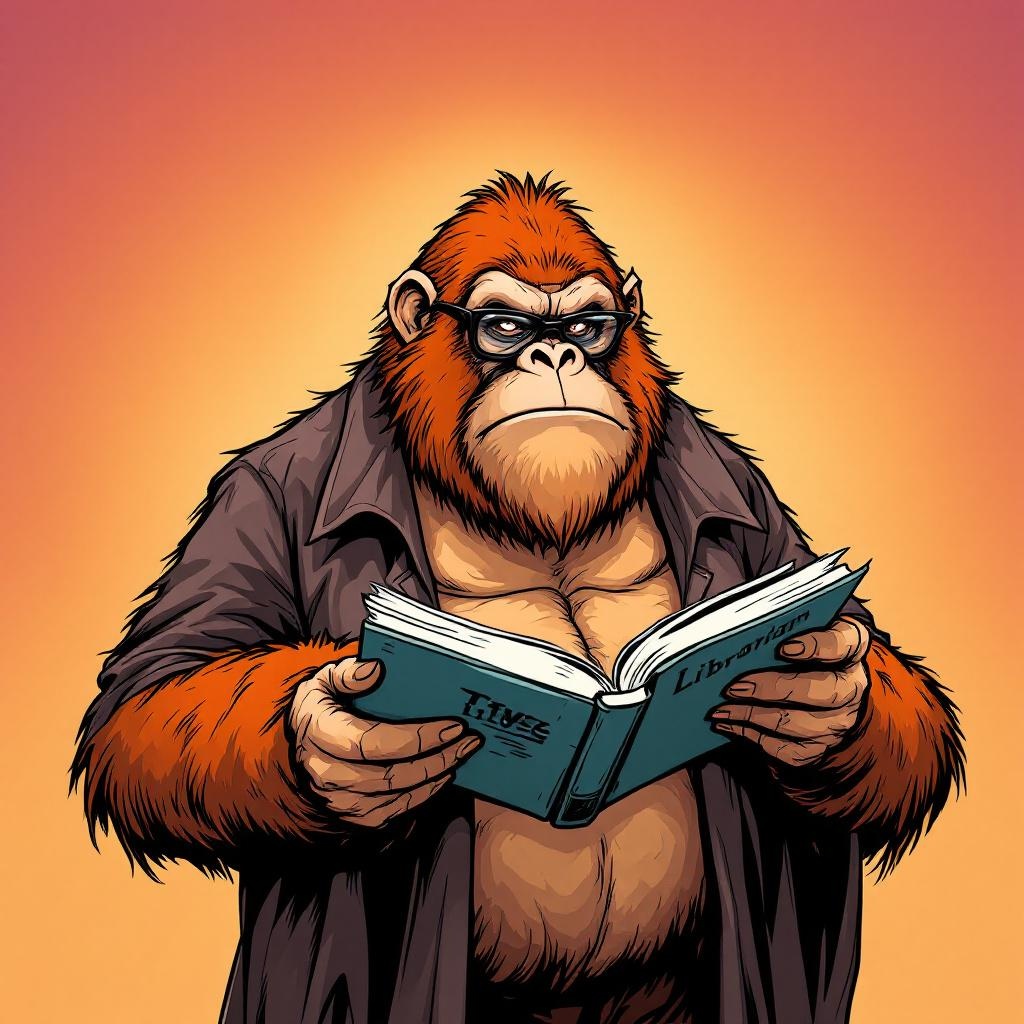
He didn't want to be changed back. He'd found his true form, and he was keeping it—whatever the other wizards thought about it. This wasn't Stockholm syndrome or magical confusion. It was a choice. And more than four decades later, Dr. Horace Worblehat remains happily, contentedly, and very deliberately an orangutan.
The Transformation
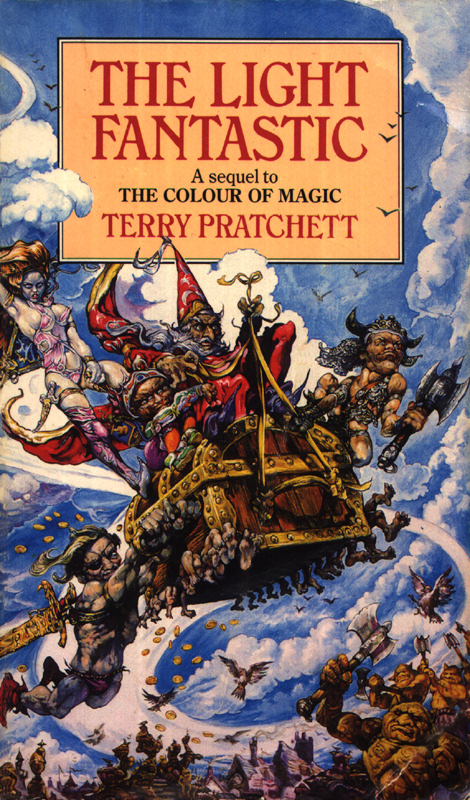
The moment of change happens in The Light Fantastic, the second Discworld novel. The Octavo—the most powerful magical book in existence, containing the eight spells that created the universe—fires a beam of raw magic upward as part of a system-wide reality update designed to save the world from destruction.
The magic passes through the library of Unseen University. Reality gets... rearranged.
"The room had been part of the library until the magic had drifted through, violently reassembling the possibility particles of everything in its path," Pratchett writes. "So it was reasonable to assume that the small purple newts had been part of the floor and the pineapple custard may once have been some books."
"Discovering that being an orang-utan has certain advantages for a librarian, he refused to be transformed back into a human."
And in the middle of it all? A small, sad orangutan, looking very much like the head librarian.
Because it was.
Terry Pratchett later admitted the transformation was created "for a joke." He needed to do something funny with a librarian, and an orangutan seemed amusing enough. "Having met real male orangutans in the wild," he added in The Art of Discworld, "I now know that laughing or exposing your teeth in any way is not a sensible thing to do."
What started as a gag became one of the series' most enduring characters. The Librarian appears in more Discworld novels than almost anyone except Death, and he's become a symbol of the series itself.
Why He Stayed an Orangutan
Here's the thing about the Librarian's transformation: Unseen University is full of powerful wizards. They absolutely could have turned him back. They prepared to turn him back. They expected to turn him back.
But Dr. Worblehat discovered something in his new form. Being an orangutan, it turns out, has certain advantages for a librarian.
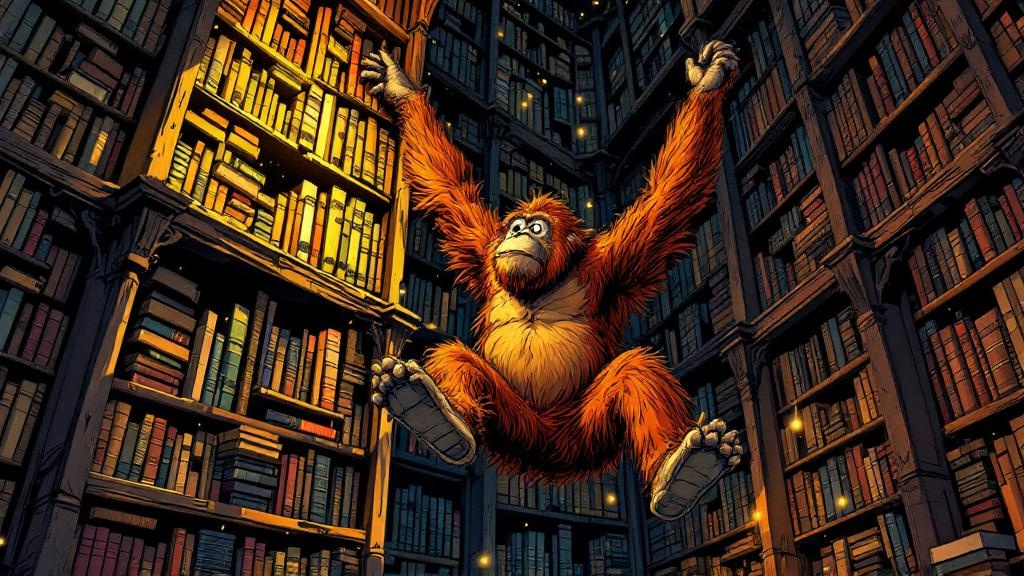
Think about what a library requires: climbing shelves, reaching high places, carrying stacks of books, sorting volumes into their proper locations. Now think about what an orangutan can do: climb effortlessly, reach with arms longer than a human's entire body, use four hands to sort and organize, swing between stacks.
The physical advantages are obvious. But there's something else.
Wizard politics at Unseen University are notoriously deadly. Throughout the early Discworld novels, advancement typically came through assassination. A wizard wanting to become Head of a department would traditionally remove his predecessor through creative application of magic—fireballs being popular, along with the occasional transmutation into something small and edible.
The Librarian, as an orangutan, floats above all of this. He's technically a faculty member, but nobody expects an ape to attend committee meetings. Nobody plots against him for his position. Nobody asks him to participate in the elaborate games of status and backstabbing that make up wizard social life.
He gets to just... be a librarian. He gets to care for his books, organize his collection, drink quietly at the Mended Drum, play Cripple Mr Onion with the regulars, and exist outside the exhausting hierarchy of human (or wizard) ambition.
Freedom. That's what the transformation gave him. Freedom to be exactly what he wanted to be.
Ape, Not Monkey
There's one thing you should never, ever call the Librarian.
Monkey.
"The Librarian is known for his violent reaction whenever he hears anyone refer to him as a "monkey"—orang-utans are apes."
Orangutans are great apes, not monkeys. The Librarian is extremely eager to correct people on this point. "Uncharacteristically violent" is how the Discworld texts describe his reaction. Uncharacteristically, because the Librarian is usually gentle, easy-going, happy to share a pint and a bag of peanuts.
But call him a monkey? You'll find yourself embedded in a wall. Or the ceiling. Or wherever a 300-pound angry ape decides to throw you.
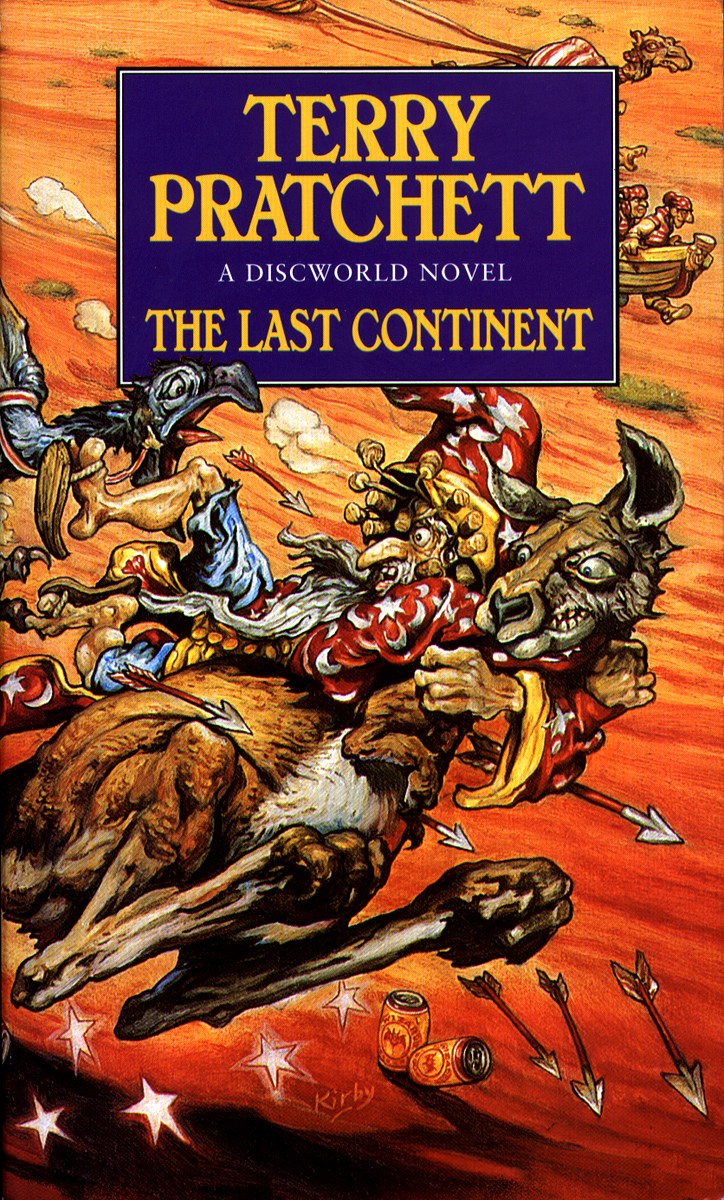
This becomes a plot point in The Last Continent. The Librarian is deathly ill with a magical strain of the flu. His morphic field—the magical template that defines his physical form—has become unstable. Every time he sneezes, he transforms into whatever shape best suits his immediate surroundings: a book, a deck chair, a dolphin.
The Senior Wrangler, testing whether the Librarian is truly beyond hope, deliberately says the word "monkey."
Nothing.
No reaction at all.
That's when the wizards know he's dying. The Librarian not responding to the m-word is like Rincewind volunteering for danger—a sign that reality itself has broken down. They immediately begin their desperate quest to find Rincewind, the one wizard who remembers the Librarian's true name and might be able to save him.
The Name That Vanished
If the Librarian's true name were known, he could be changed back into a human.
He doesn't want that. So he made certain it couldn't happen.
"The Librarian's actual name has never been given in any of the books," notes the Discworld Companion. "He is always simply 'the Librarian.' If his name were known, he could be changed back into a human, and he has therefore carefully excised his name from the records of the University."
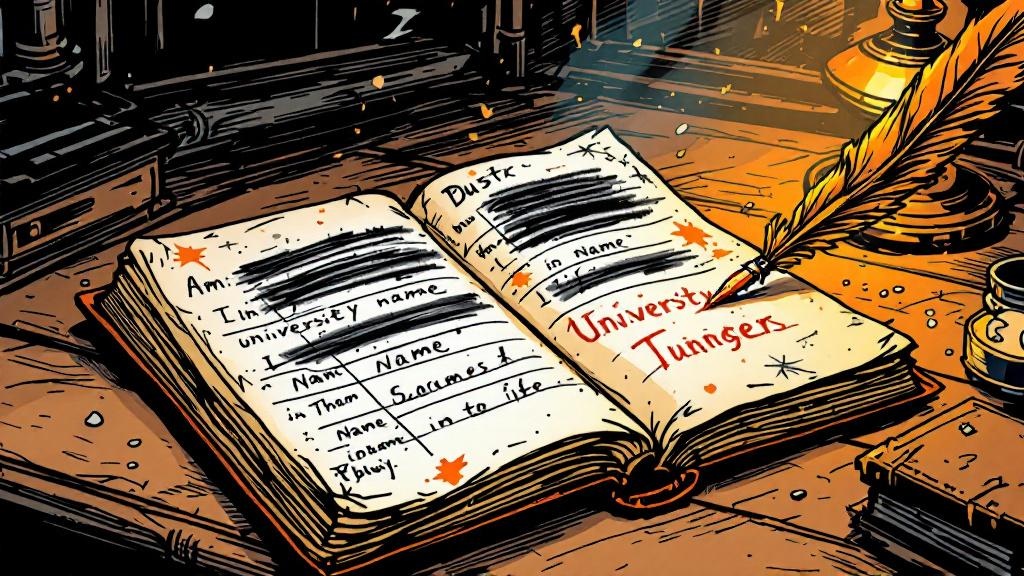
This is remarkably thorough work. The Librarian went through decades of university records—the enrollment documents, the exam results, the faculty appointments, the disciplinary notes—and systematically removed every trace of his former identity. His name appears nowhere in the archives.
Well. Almost nowhere.
Rincewind knows. As the former Assistant Librarian, he remembers who the Librarian used to be. He's the only one. And he's agreed to keep the secret.
This becomes important in The Last Continent, when the wizards realize they need the name to cure the Librarian's magical illness. By the time they finally track down Rincewind (who is stranded on the other side of the world), the Librarian has recovered anyway. The name remains unspoken.
What was that name?
The Discworld Companion offers a hint: Dr. Horace Worblehat.
The Art of Discworld confirms it.
As Pratchett noted, this "goes a long way to explaining why he's happier as an orang-utan than as a human."
Imagine being Dr. Horace Worblehat. Imagine introducing yourself to people. Imagine seeing that name on your office door every day. Imagine the jokes.
Now imagine being given the opportunity to become someone—something—entirely different. To leave Horace Worblehat behind forever. To become simply the Librarian, no surname, no history, no baggage.
Would you take that chance?
He did.
Not Just a Running Gag
Terry Pratchett created the Librarian as a throwaway joke. An orangutan librarian—funny, absurd, the kind of thing you put in a comic fantasy and don't think too hard about.
But Pratchett thought too hard about everything. And as he did, the Librarian became something more than a sight gag.
He became a character study in accidental self-discovery.
How many people stumble into who they were always meant to be? How many discover their true selves only through accident, crisis, or catastrophe? The transformation narrative usually runs in the opposite direction—person becomes monster, loses themselves, fights to return to normal.
The Librarian's story inverts this completely. Monster becomes person. Or rather: person becomes more themselves through a change they never chose but immediately recognized as right.
That's not Stockholm syndrome. That's not making peace with circumstances. That's genuine self-actualization—finding, by accident, the form that fits your soul.
The Wizards Adapted
Here's the detail that makes the Librarian's transformation story complete: Unseen University adjusted.
"The other wizards have gradually become used to the situation," the texts note, "to the extent that if someone ever reported that there was an orang-utan in the Library, the wizards would probably go and ask the Librarian if he'd seen it."
He's not a novelty. He's not a pet. He's not even remarkable anymore. He's just the Librarian, who happens to be an orangutan, who has always been an orangutan as far as institutional memory is concerned.
The bureaucracy of Unseen University—and it is absolutely a bureaucracy, complete with interdepartmental rivalries and annual budgets and the occasional magical apocalypse—simply absorbed the change. The Librarian attends faculty meetings when he feels like it. He has an operating budget. He keeps the Library secure against everything from students to eldritch horrors.
He's a colleague, not a curiosity.
This says something rather kind about Unseen University, actually. For all their pomposity and their occasional attempts to destroy reality, the wizards accepted their transformed colleague entirely. They gave him a vote on the university council. They respect his expertise. They know better than to say the m-word.
They adapted to him. They didn't demand he adapt back to them.
Choosing Your Own Form
There's a lesson in the Librarian's story, if you want to find one. It's not subtle.
Sometimes the life you were born into isn't the life that fits you. Sometimes an accident—a crisis, a change, a bolt from the blue—can shake you out of who you thought you were supposed to be and into who you actually are.
The important thing is recognizing the difference. The Librarian could have fought to return to his human form. The other wizards would have helped. He could have been Dr. Horace Worblehat again, with all the responsibilities and expectations and awkward introductions that came with that name.
He said no.
He chose the orangutan. He chose the prehensile feet and the long arms and the simple vocabulary and the freedom from wizard politics. He chose to leave Horace Worblehat behind and become something new.
And then he erased the evidence of who he'd been, so no one could ever force him back.
That's not running from yourself. That's finding yourself, and protecting what you found.
The Librarian communicates almost entirely through "Ook." His antonym is "Eek." Most people seem to understand him perfectly anyway, because what he means is always clear even when the words aren't.
And what he means, more than anything, is this: I am exactly what I want to be, and I am staying this way.
Ook.
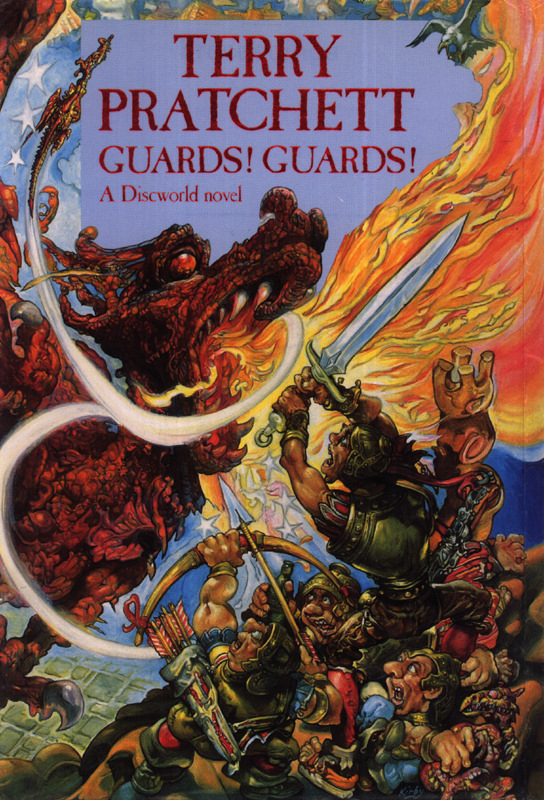
For more on the Librarian's adventures, read about his role helping Sam Vimes in Guards! Guards!, where he first becomes an honorary member of the City Watch. Or explore L-Space, the dimension connecting all libraries, which only the Librarian can navigate.