The Poker and the Assassin: How Susan Sto Helit Deals with Monsters (Including Human Ones)
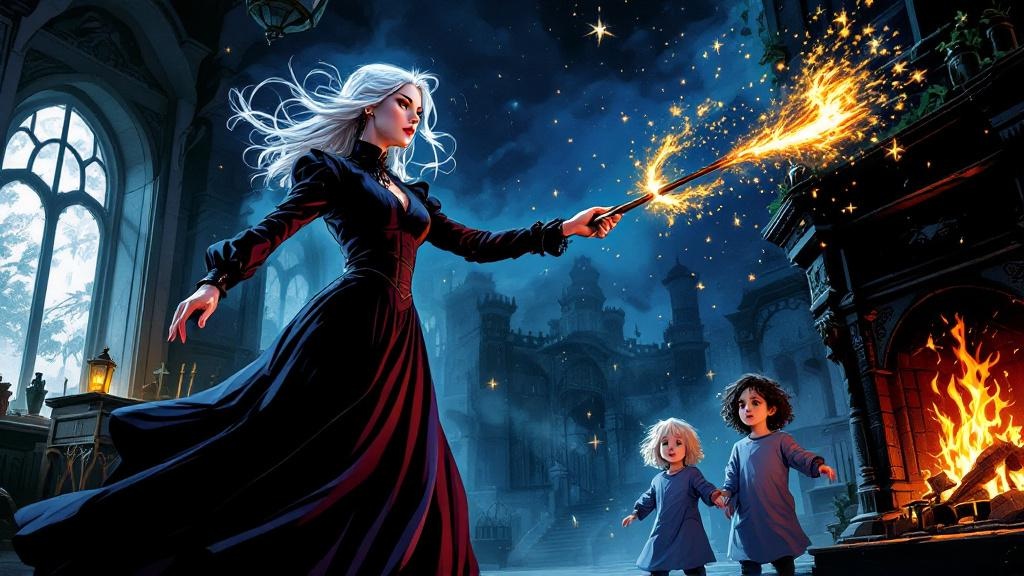
Susan Sto Helit doesn't tell children monsters aren't real. She hands them a poker. Here's how Discworld's Goth Mary Poppins redefines protecting children.
The Poker and the Assassin: How Susan Sto Helit Deals with Monsters (Including Human Ones)
Most governesses, when a child says there's a monster in the closet, will do the sensible thing. They'll check the closet, show the child it's empty, tuck the covers back in, and explain that monsters aren't real.
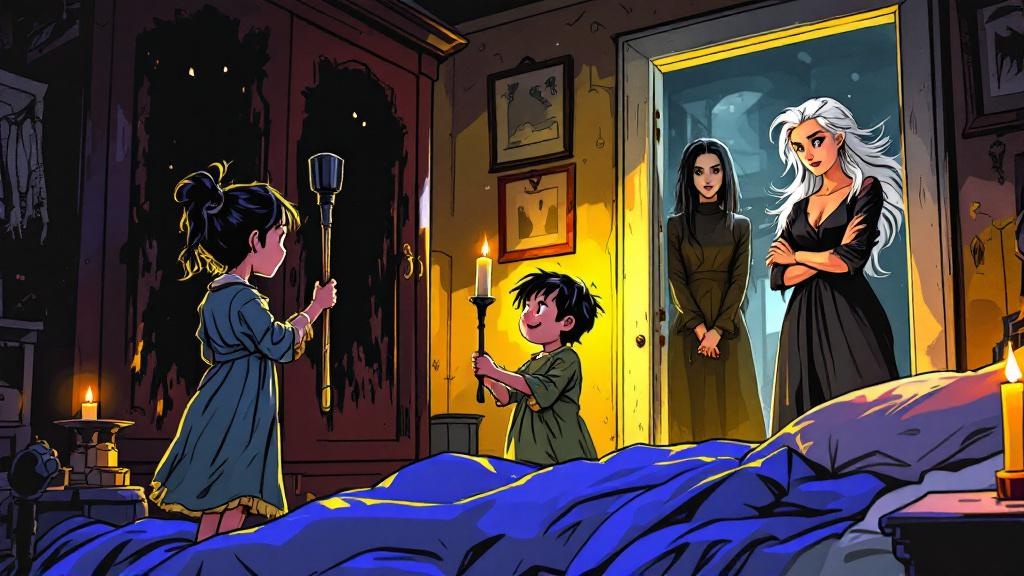
Susan Sto Helit pulls the monster out of the closet, beats it senseless with a fireplace poker, dislocates its shoulder "as a means of emphasis," and kicks it out the back door.
That's not a joke. Well, it is—this is Discworld, everything's a joke—but it's also one of the most interesting approaches to childhood fear in fantasy literature. Because Susan doesn't comfort children with lies. She arms them with truth. And occasionally with actual weapons.
The Governess Who Hits Back
When we meet Susan in her governess role in Hogfather, she's looking after the Gaiter children—Twyla and Gawain—and she's already established a reputation. Not with the parents, who think she's a perfectly normal if somewhat intense young woman. With the monsters.
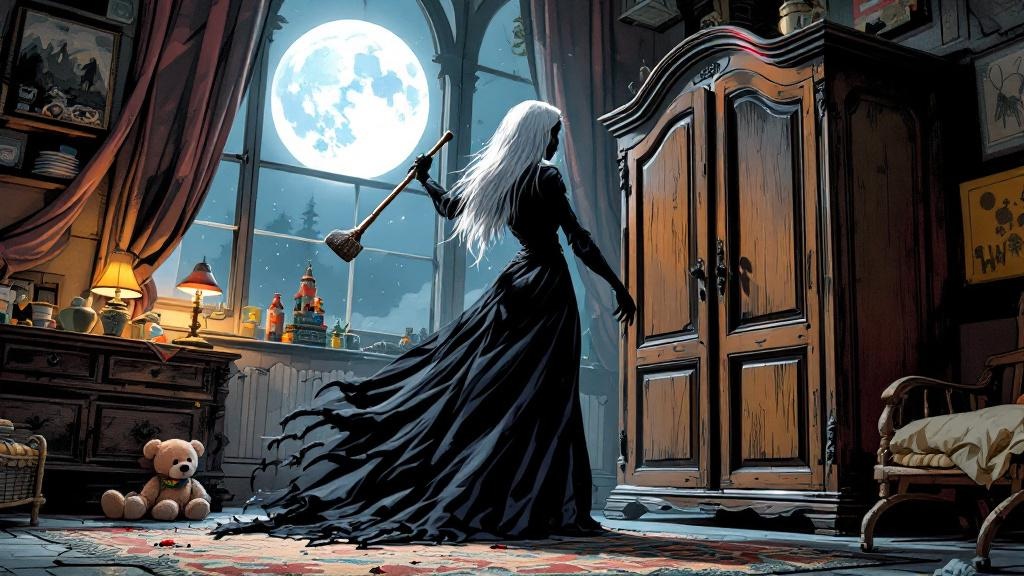
Word has spread among Ankh-Morpork's resident bogeymen, closet monsters, and things-under-the-bed: stay away from Susan's territory. She's beaten so many of them with that poker that the city's monster population has learned to give the Gaiter household a wide berth. Only newcomers—monsters who haven't heard the stories yet—still make the mistake of lurking in her children's rooms.
Think about that for a moment. In a world where monsters are objectively real, where bogeymen genuinely hide in wardrobes and things with too many legs actually do live under beds, Susan has become the one thing they're afraid of. A governess with a poker and absolutely no patience.
"She'd sworn that if she did indeed ever find herself dancing on rooftops with chimney sweeps, she'd beat herself to death with her own umbrella."
Terry Pratchett himself described Susan as having evolved into "a kind of Goth Mary Poppins." It's a perfect description, but it undersells what makes her approach radical. Mary Poppins uses magic to solve problems gently—a spoonful of sugar, a trip into a chalk painting, general whimsy. Susan uses a fireplace poker and controlled violence. Both are effective. Only one acknowledges that the monster was actually there.
The Philosophy of the Poker
Here's where it gets interesting. Susan's approach isn't just funny—it's a genuine philosophical position on how to deal with fear.
The standard parental approach to childhood monsters is denial. "There's nothing in the closet, darling. Monsters aren't real. Go back to sleep." It's well-intentioned, but Susan sees a fundamental problem with it: the children know the monsters are real. They can hear them. They've seen them. Telling a child their experience isn't valid doesn't make the fear go away. It just teaches them that adults can't be trusted when things get frightening.
Susan's alternative is radical honesty followed by practical action. Yes, there's a monster. Here's how we deal with it. She doesn't tell children the monsters aren't real. She tells them the poker is.
And in Discworld, where belief has literal power, this matters enormously. If children believe a fireplace poker can defeat monsters, then it can. The children refuse to disbelieve in the monsters because they know the things are there—but they can very firmly believe in the poker. Susan hasn't removed the fear. She's given them the tools to handle it.
There's a real-world echo here that Pratchett was clearly aware of. We debate endlessly about how to help anxious children—whether to shield them from their fears or expose them gradually. Susan's approach is exposure therapy with a poker. Acknowledge the fear is real, equip the child to face it, and stand behind them while they do.
The Monster Who Changed His Mind
But Pratchett, being Pratchett, doesn't leave the philosophy simple.
"Some things were inherited through more than genetics... some things were inherited through the soul."
Deep in the Tooth Fairy's castle in Hogfather, Susan discovers something that reframes everything. The original Bogeyman—the first and oldest monster, the terror that haunted the nightmares of primitive humanity—is lying in a bed. And he tells Susan his story.
He started off scaring children. That's what bogeymen do. But over the centuries, something changed. He started observing the children instead of just frightening them. He began to care about them. And eventually, he realized that there were far worse things in the world than a monster under the bed.
So the first Bogeyman became the Tooth Fairy—collecting children's teeth to lock them away safely, because a piece of someone's body can be used to control them. The creature that once personified childhood fear became the guardian against something far more dangerous: people who would weaponize belief itself.
It's a twist that adds complexity to Susan's poker-wielding certainties. Not all monsters stay monstrous. Fear itself can transform into protection. But the threats that require protection? Those tend to come from humans.
Enter Teatime
Which brings us to the assassin.
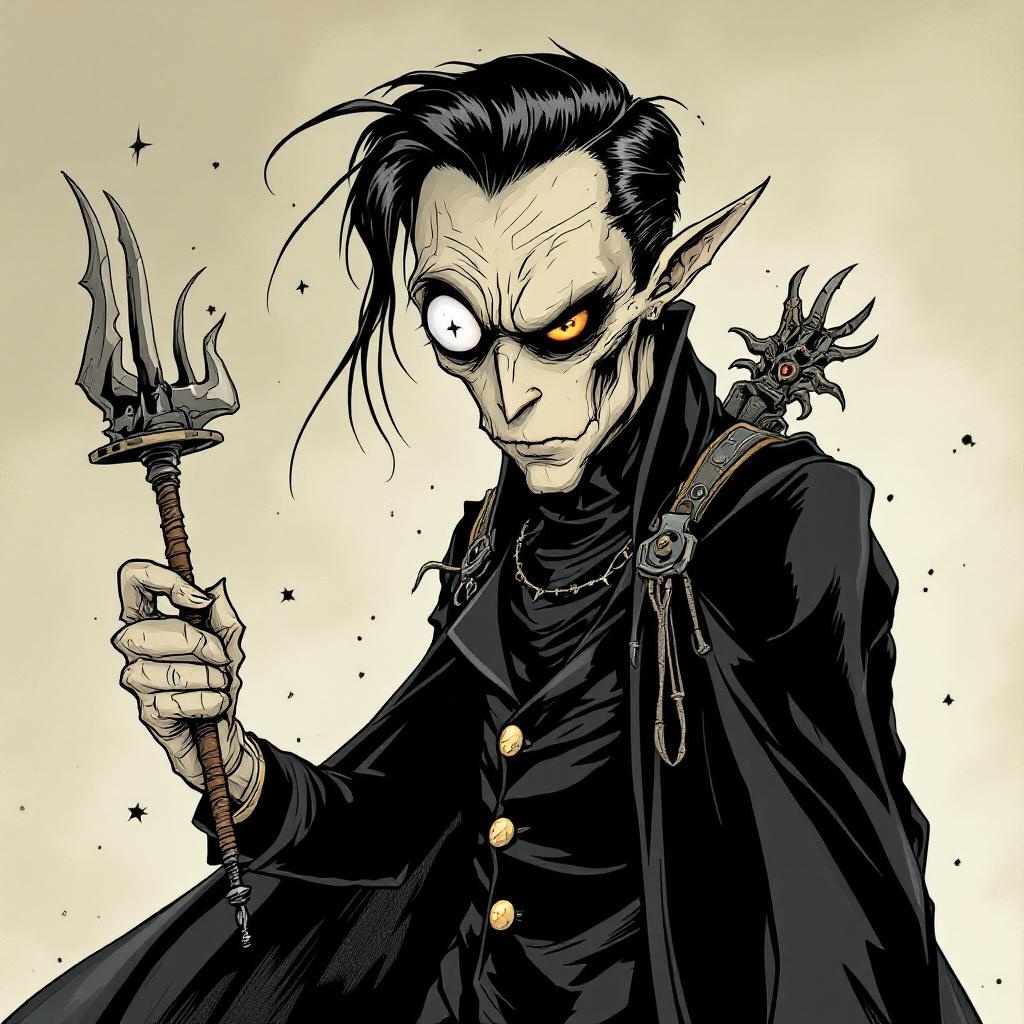
Mr. Jonathan Teatime (it's pronounced Teh-ah-tim-eh, and he gets irritated when people get it wrong) is one of the most unsettling villains in Discworld. He's a student at the Assassins' Guild who was given the contract to "inhume" the Hogfather—Discworld's equivalent of Santa Claus. Where most assassins would say that's impossible, Teatime says he's been thinking about it since he was a boy.
That's the detail that makes your skin crawl. Not the assassination itself, but the fact that a child sat in class at the Assassins' Guild, thinking about how to kill Father Christmas. Teatime has plans for killing Death too, and the Sandman, and probably the Tooth Fairy. He's been cataloguing ways to destroy childhood belief since he was a child himself.
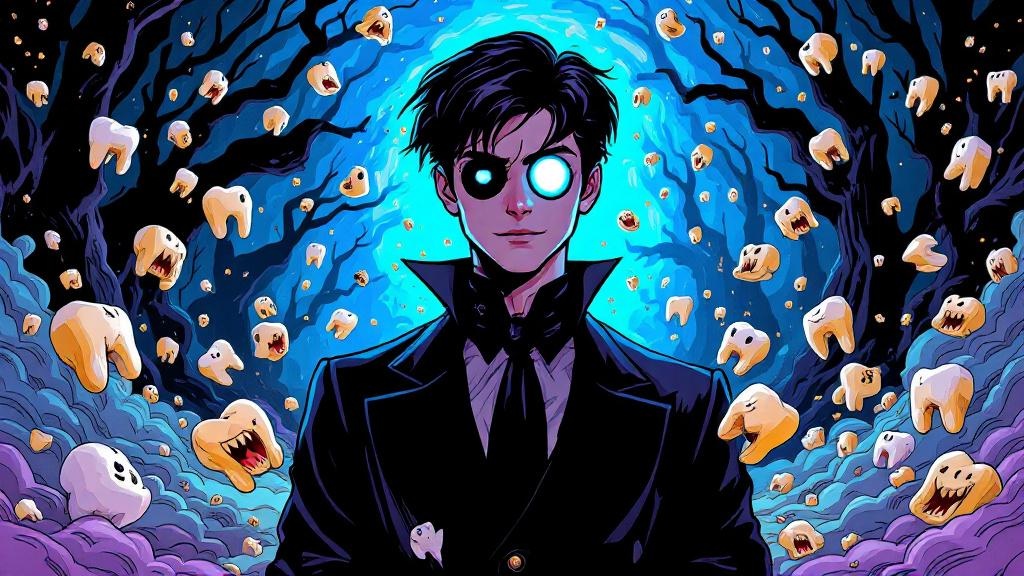
His plan is horrifyingly elegant. By collecting millions of children's teeth, he can use the sympathetic magic connection to control the children's beliefs—forcing them to stop believing in the Hogfather. No belief means no Hogfather. Contract fulfilled.
What makes Teatime a perfect foil for Susan is that he represents the thing her poker philosophy can't easily address. Bogeymen are straightforward. They lurk, they scare, you hit them. Teatime is a human being who has turned childhood itself into a weapon. He terrorizes children not by hiding in their closets but by dismantling the structure of belief that gives their world meaning.
He's the ultimate monster—the kind that looks human and acts with human intelligence and human cruelty. The kind you can't solve by teaching a child to be brave, because the child never sees him coming.
The Throw That Defines a Character
"It only kills monsters."
The climax of Hogfather gives Susan one of the defining moments in Discworld. Teatime has found his way back from the Tooth Fairy's realm. The children—Twyla and Gawain—are present, terrified. Death is there too, but in this realm of belief and childhood, his sword has no power. The rules are different here.
Susan picks up her poker. She throws it at Teatime.
And here's the detail that elevates the entire scene from exciting to thematically perfect: the poker passes straight through Death—who was standing between them—and impales Teatime. Death himself added sparks and a glow as it went through, because he felt it was "appropriate."
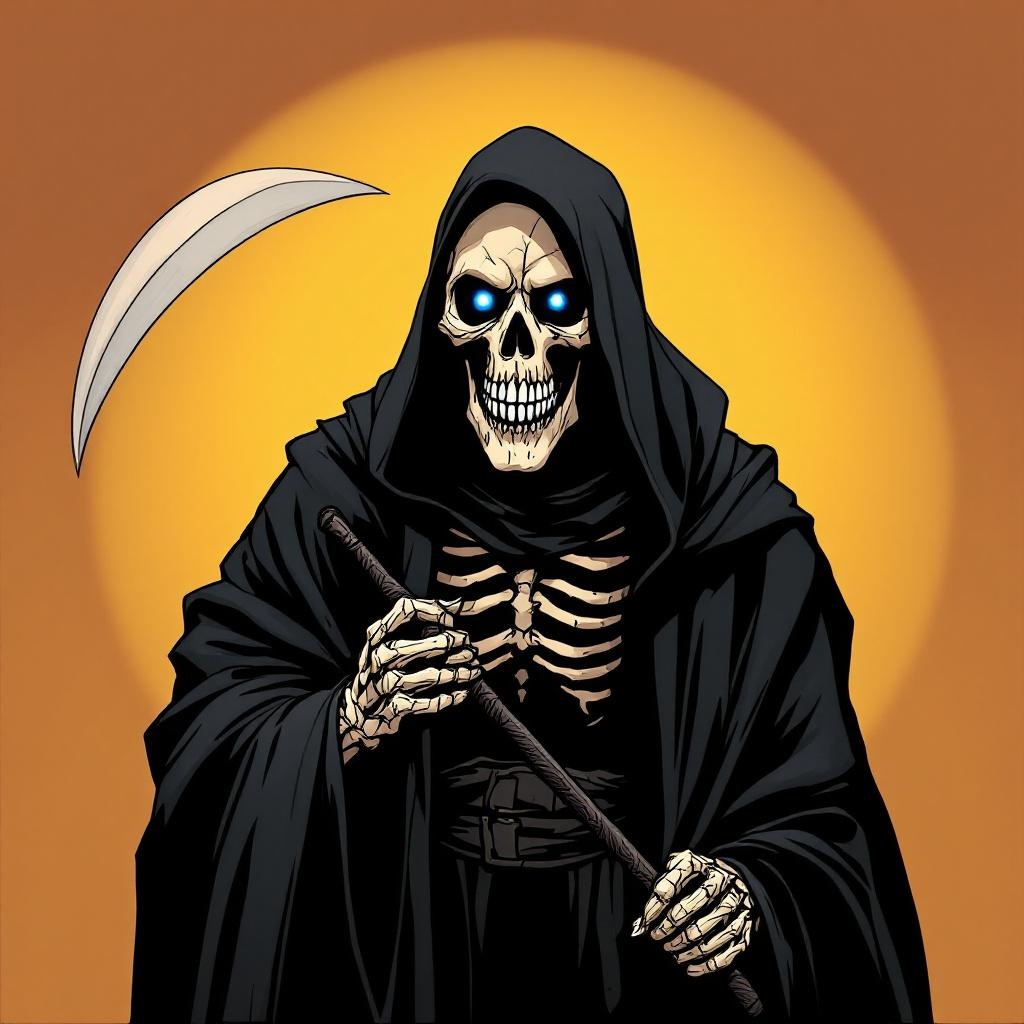
The poker passes through Death because Death isn't a monster. He's family. He's the grandfather who reads Where's My Cow? in his own way, who takes over the Hogfather's round because someone has to deliver the presents, who tries so hard to understand humanity that he's become something like human himself.
But it kills Teatime. Because Teatime, for all his human appearance and human intelligence, has placed himself in the category of things that terrorize children. He's a bogeyman in an expensive suit. And Susan's poker doesn't care about appearances—it only kills monsters.
The children knew it. They were more afraid of Teatime and his unnerving glass eye than of Death, who was just sitting there eating a biscuit. Children, in Discworld, see things as they really are. They knew which one was the monster.
The Goth Mary Poppins Difference
So what makes Susan's approach actually work as philosophy, rather than just as comedy?
It's this: Susan never lies.
She doesn't tell children monsters aren't real. She doesn't tell them the world is safe. She doesn't pretend that bad things only happen to people who deserve them. She tells the truth—there are scary things out there, some of them are real, and here's what we do about it.
But she also shows up. That's the other half of the equation, and it's the part that separates Susan's approach from mere cynicism. She doesn't just hand children a poker and walk away. She fights the monsters herself. She goes into the Tooth Fairy's realm alone. She confronts Teatime. She does the terrifying, dangerous work of keeping children safe, even though she'd rather be living a normal life and pretending she doesn't have supernatural powers.
"Because I wish someone had helped me," she says, when asked why she bothers. And there it is—the beating heart beneath the Goth exterior. Susan was raised by parents who denied her heritage, who told her the Hogfather and Tooth Fairy weren't real, who tried to give her a normal childhood by lying about what she was. She found out the truth the hard way, when her parents died and her grandfather abandoned his post and she had to take over Death's duties at sixteen.
Nobody handed Susan a poker. Nobody told her the monsters were real and here's how you fight them. She had to figure it out alone, and she's furious about it, and she's determined that no child in her care will ever have to do the same.
The Weapon That Matters
There's a final layer to the poker that's worth noting. Susan could fight monsters with Death's sword. She could use her inherited powers—walking through walls, stopping time, The Voice that makes reality sit up and pay attention. She has access to cosmic weapons that would make a fireplace poker look ridiculous.
She chooses the poker anyway.
Because the poker is domestic. It belongs in a nursery. It's a household object that any child could pick up. When Susan fights monsters with a poker, she's not using supernatural power—she's demonstrating that ordinary courage, applied directly to the problem, is enough. You don't need to be Death's granddaughter to protect a child. You need to acknowledge the monster, refuse to be afraid, and hit it with whatever's handy.
That's the message Susan's poker delivers, again and again: the ordinary can defeat the terrible, as long as you believe it can. It's Pratchett's philosophy of practical goodness distilled into a single weapon—blunt, effective, and available to anyone brave enough to pick it up.
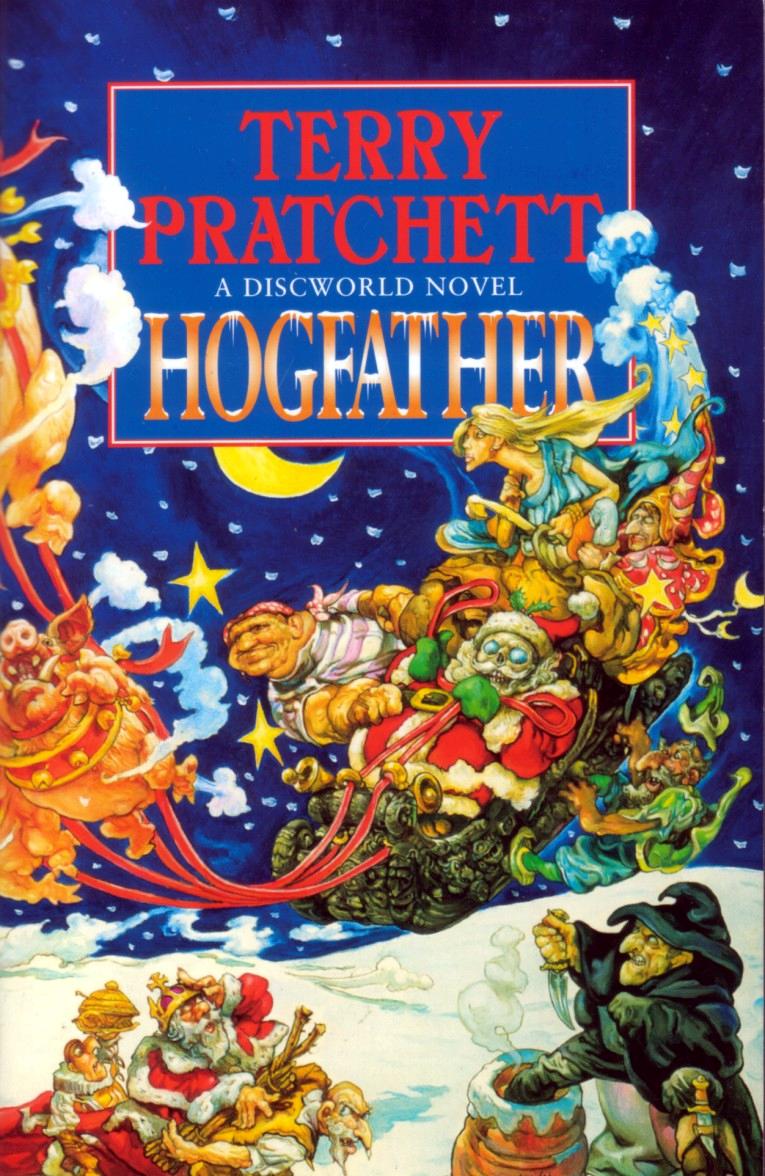


Explore Death's famous Hogfather speech about belief, or learn about the complicated grandfather whose legacy Susan carries.