The Hogfather Speech: Death's Defense of Fantasy and What Makes Us Human
Death's famous speech from Hogfather about believing in things that aren't true is Terry Pratchett's clearest statement of philosophy. Here's what it means.
The Hogfather Speech: Death's Defense of Fantasy and What Makes Us Human
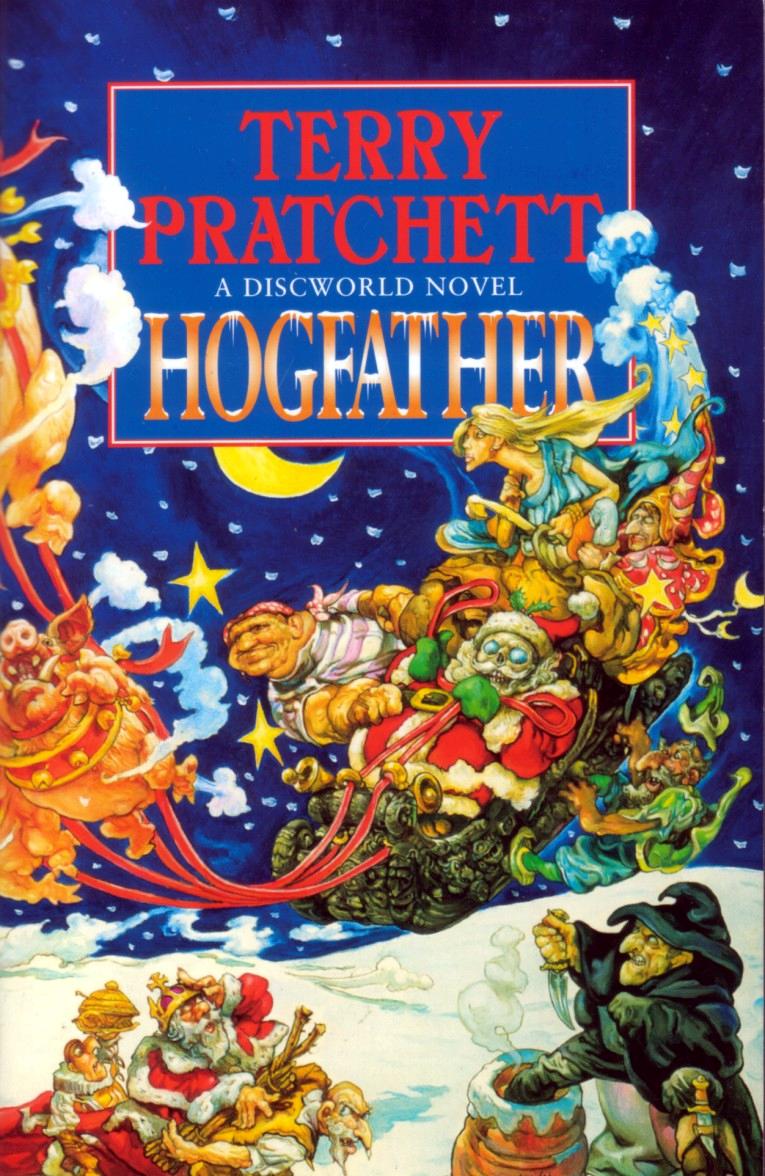
Near the end of Hogfather, after the crisis is resolved and the sun has risen, Death has a conversation with his granddaughter Susan that has become one of the most quoted passages in all of literature. Not just fantasy literature. All literature.
Susan, ever the pragmatist, challenges her grandfather on what they've just been through. Surely, she suggests, humans need fantasy because it makes life more bearable?
Death's response cuts to something deeper.
REALLY? AS IF IT WAS SOME KIND OF PINK PILL? NO. HUMANS NEED FANTASY TO BE HUMAN. TO BE THE PLACE WHERE THE FALLING ANGEL MEETS THE RISING APE.
That single line—"the place where the falling angel meets the rising ape"—contains Terry Pratchett's entire philosophy of human nature. But the speech doesn't stop there. It goes on to challenge everything we think we know about truth, belief, and what makes justice real.
The Full Speech
Here's the exchange as it appears in the book:
"All right," said Susan. "I'm not stupid. You're saying humans need... fantasies to make life bearable."
REALLY? AS IF IT WAS SOME KIND OF PINK PILL? NO. HUMANS NEED FANTASY TO BE HUMAN. TO BE THE PLACE WHERE THE FALLING ANGEL MEETS THE RISING APE.
"Tooth fairies? Hogfathers? Little—"
YES. AS PRACTICE. YOU HAVE TO START OUT LEARNING TO BELIEVE THE LITTLE LIES.
"So we can believe the big ones?"
YES. JUSTICE. MERCY. DUTY. THAT SORT OF THING.
"They're not the same at all!"
YOU THINK SO? THEN TAKE THE UNIVERSE AND GRIND IT DOWN TO THE FINEST POWDER AND SIEVE IT THROUGH THE FINEST SIEVE AND THEN SHOW ME ONE ATOM OF JUSTICE, ONE MOLECULE OF MERCY. AND YET— Death waved a hand. AND YET YOU ACT AS IF THERE IS SOME IDEAL ORDER IN THE WORLD, AS IF THERE IS SOME... SOME RIGHTNESS IN THE UNIVERSE BY WHICH IT MAY BE JUDGED.
"But people have got to believe that, or what's the point?"
MY POINT EXACTLY. YOU NEED TO BELIEVE IN THINGS THAT AREN'T TRUE. HOW ELSE CAN THEY BECOME?
What Makes This Speech So Powerful
Most philosophical arguments about belief fall into two camps. Either they defend faith by claiming the supernatural is real, or they dismiss it as comforting delusion for the weak-minded. Pratchett does neither.
Death's argument is radically different: believing in things that "aren't true" isn't weakness—it's the mechanism by which humanity creates meaning. The Tooth Fairy and the Hogfather are practice runs. They exercise our capacity for abstraction, for believing in things that have no physical form.
And that capacity? It's the same one we use to believe in justice.
"You need to believe in things that aren't true. How else can they become?"
Justice doesn't exist as a physical property of the universe. You can't find it in atoms or molecules. It's not written into the fabric of reality. And yet we act as if it does exist—and by acting that way, we make it real. Not real in the sense that it was always there waiting to be discovered, but real in the sense that it now shapes how we treat each other.
The magic isn't the Hogfather. The magic is us.
Not One Atom of Justice
The challenge Death poses to Susan is one of the most elegant thought experiments in fantasy fiction:
TAKE THE UNIVERSE AND GRIND IT DOWN TO THE FINEST POWDER AND SIEVE IT THROUGH THE FINEST SIEVE AND THEN SHOW ME ONE ATOM OF JUSTICE, ONE MOLECULE OF MERCY.
This is pure materialism taken to its logical conclusion. If you're a strict empiricist—if you believe only in what can be measured and observed—then justice, mercy, and duty are illusions. They're not properties of matter. They don't show up in particle physics.
But here's where Pratchett's argument gets interesting. Death isn't saying these things don't matter. He's saying they don't have independent existence—they exist because we make them exist through belief.
The sun rising on Hogswatchday depends on belief in the Hogfather. That's the plot engine of the book. But it's also a metaphor: the "sun" of human civilization—justice, mercy, the basic decency that lets us live together—rises because we collectively choose to believe in it.
Kill that belief and the sun stays down.
Why Death Understands This Better Than Anyone
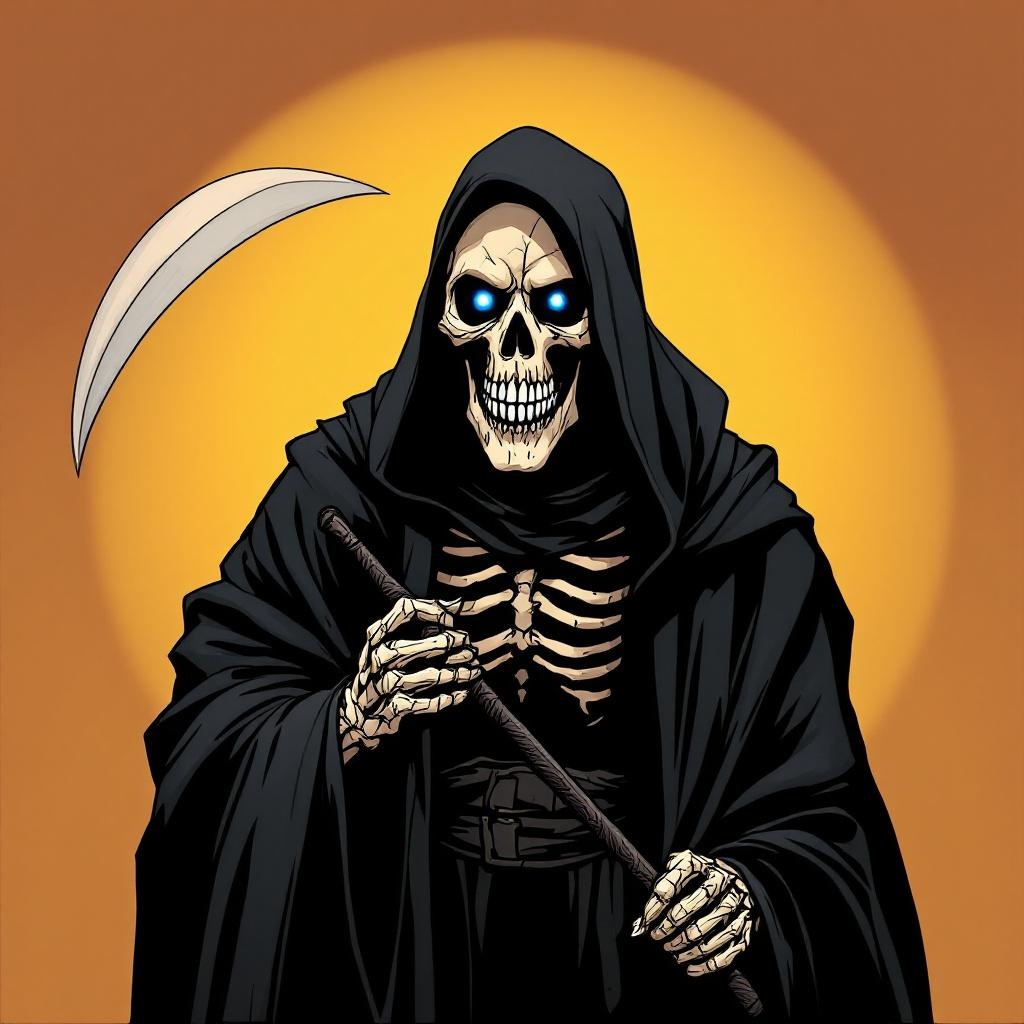
There's something profound about having Death deliver this speech. He's the one character who exists because humans believe in him. He's an anthropomorphic personification—literally a concept made flesh by collective human belief.
Death knows firsthand that belief has power. He experiences his own existence as proof.
But there's more to it than that. Death has spent eternity watching humans. He's seen every death, every moment of grief, every act of heroism and cruelty. He's watched people die for abstract principles—for justice, for duty, for love—and he's watched people live by them.
He understands something Susan, for all her intelligence, is still learning: humans aren't purely rational animals. We're creatures who need to invest the universe with meaning that isn't there. Not as a weakness to be overcome, but as our defining strength.
"Take the universe and grind it down to the finest powder and sieve it through the finest sieve and then show me one atom of justice, one molecule of mercy."— Death, Hogfather
Susan's Role: The Skeptic Who Learns
Susan Sto Helit is the perfect foil for this speech. She's spent her life trying to be normal—to reject her supernatural heritage and live by pure reason. She became a governess specifically because it's such a sensible, grounded profession.
She approaches her grandfather's world with annoyance more than wonder. When children at her school ask about monsters under the bed, she kills the monsters with a poker. Very practical. Very no-nonsense.
But Susan's rigid rationality is its own kind of fantasy—the fantasy that you can live by logic alone, that you can strip away all the myths and still have a functional human life.
Death's speech isn't just philosophy. It's a lesson for Susan specifically. She can't escape her nature by pretending belief doesn't matter. The belief is the thing.
The Stakes: Why the Sun Wouldn't Rise
The plot of Hogfather centers on the Auditors of Reality—those grey bureaucrats who hate anything that disrupts orderly cosmic function—trying to assassinate the Hogfather. They hire the Assassins' Guild, and the task falls to the terrifyingly creative Mr. Teatime.
Death takes on the Hogfather's role to keep belief alive. He dresses in the red suit, rides the sleigh, goes down chimneys. Albert is horrified: "Master, you can't ho ho ho."
But Death understands the stakes. Without belief in the Hogfather, the sun won't rise.
This seems absurd on the surface—surely the sun is a physical object that doesn't care what anyone believes? But that's the point. On the Disc, belief shapes reality directly. And in our world, belief shapes human reality just as powerfully.
What is society but collective belief in institutions? What is money but shared belief that paper has value? What is law but the collective agreement to act as if certain rules are binding?
Kill those beliefs and see how long the "sun" keeps rising.
The Little Match Girl: Death in Action
One of the most powerful scenes in Hogfather shows Death putting this philosophy into practice. He encounters a Little Match Girl—a direct reference to the Hans Christian Andersen fairy tale—freezing to death on Hogswatch night.
Albert protests: little match girls dying in the snow is part of what Hogswatch is all about. People hear about it and feel better about their own situations.
Death refuses. He saves her. Albert reminds him that Death isn't allowed to do this.
THE HOGFATHER CAN. THE HOGFATHER GIVES PRESENTS. THERE'S NO BETTER PRESENT THAN A FUTURE.
This is Death demonstrating exactly what he means about belief becoming real. By acting as the Hogfather, he can do things Death cannot. The role he's playing allows him to create justice where none existed in the cold equations of fate.
It's also Pratchett's critique of how we use tragedy as entertainment. The Little Match Girl story is designed to make readers feel good—the poor child dies but goes to heaven, isn't that lovely? Pratchett finds this grotesque. Death finds it offensive.
A child freezing to death shouldn't be a heartwarming holiday story. And if you have the power to stop it, you should stop it.
The Falling Angel and the Rising Ape
"The place where the falling angel meets the rising ape" is Pratchett's thesis statement on human nature.
We're animals—apes, evolved, biological, subject to all the selfish instincts that evolution bred into us. But we're also reaching for something higher. We're falling angels in the sense that we carry an ideal within us that we can never fully live up to, something transcendent that our animal nature keeps pulling down.
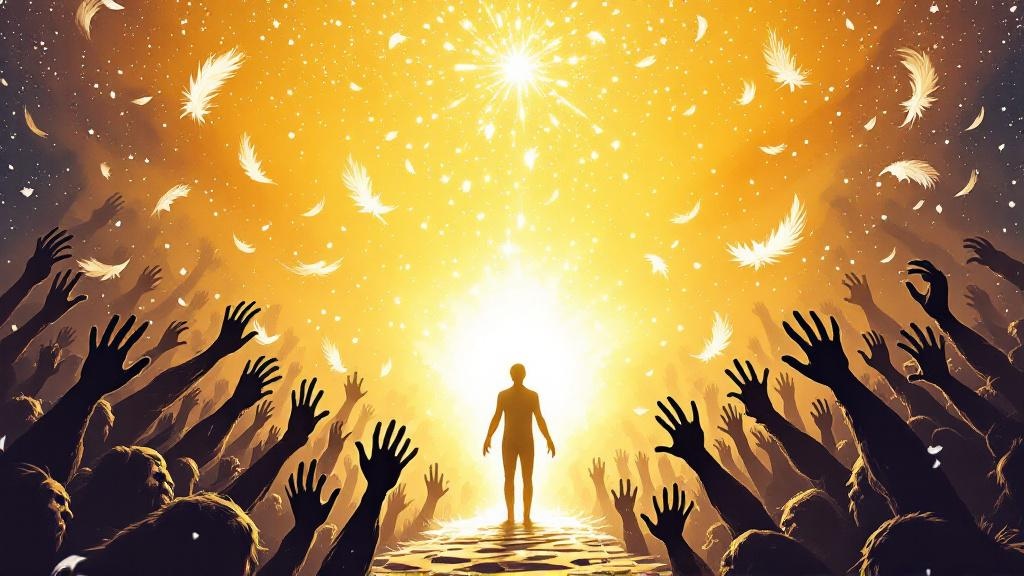
The meeting point between these two—between our animal nature and our aspiration toward something better—is humanity. We're neither beast nor angel, but something stranger: a creature capable of imagining justice even while acting unjustly, capable of believing in mercy even when showing none.
Fantasy—the ability to believe in things that aren't empirically real—is the bridge between the ape and the angel. It's how we reach beyond what we are toward what we want to become.
Why This Matters Beyond Discworld
Pratchett was an atheist. He didn't believe in an afterlife or a divine plan. This makes the speech even more striking: here's a non-believer making one of the most eloquent cases for the necessity of belief.
But he's not arguing for religious belief specifically. He's arguing for the human capacity to invest the universe with meaning—to treat justice as real even though you can't weigh it, to act as if mercy matters even though no law of physics requires it.
This is sometimes called "moral constructivism" in philosophy: the idea that moral truths don't exist independently but are constructed by human agreement. Death's speech is a layperson's version of this argument, made accessible through fantasy.
And it gives secular humanists something they often lack: a compelling reason to celebrate traditions like Christmas (or Hogswatch) even without literal belief in their supernatural content. The practice of celebration, of coming together, of giving gifts—these create social bonds and reinforce shared values. The belief isn't the point; the believing is.
Letters from the Dying
Here's where the speech takes on weight beyond literary analysis.
Terry Pratchett once said that he received letters from terminally ill fans who hoped Death would resemble the Discworld version. These letters, he admitted, "usually cause me to spend some time staring at the wall."
His daughter Rhianna later expanded on this: "We got a number of tear-inducing letters from fans who were nearing the end of their lives and took great comfort in imagining that the death that came for them would be riding a white horse called Binky."
When Pratchett himself died in March 2015, Rhianna wrote from his Twitter account:
AT LAST, SIR TERRY, WE MUST WALK TOGETHER.
Terry took Death's arm and followed him through the doors and on to the black desert under the endless night.
The Hogfather speech isn't just clever philosophy. For some readers, it's genuinely helped them face mortality. By making Death a character who believes in belief—who defends the function of fantasy even while knowing its literal falseness—Pratchett gave people permission to find comfort in stories.
You don't have to believe the afterlife is real to find the idea of it meaningful. That's the gift of the speech.
The Belief That Became Real

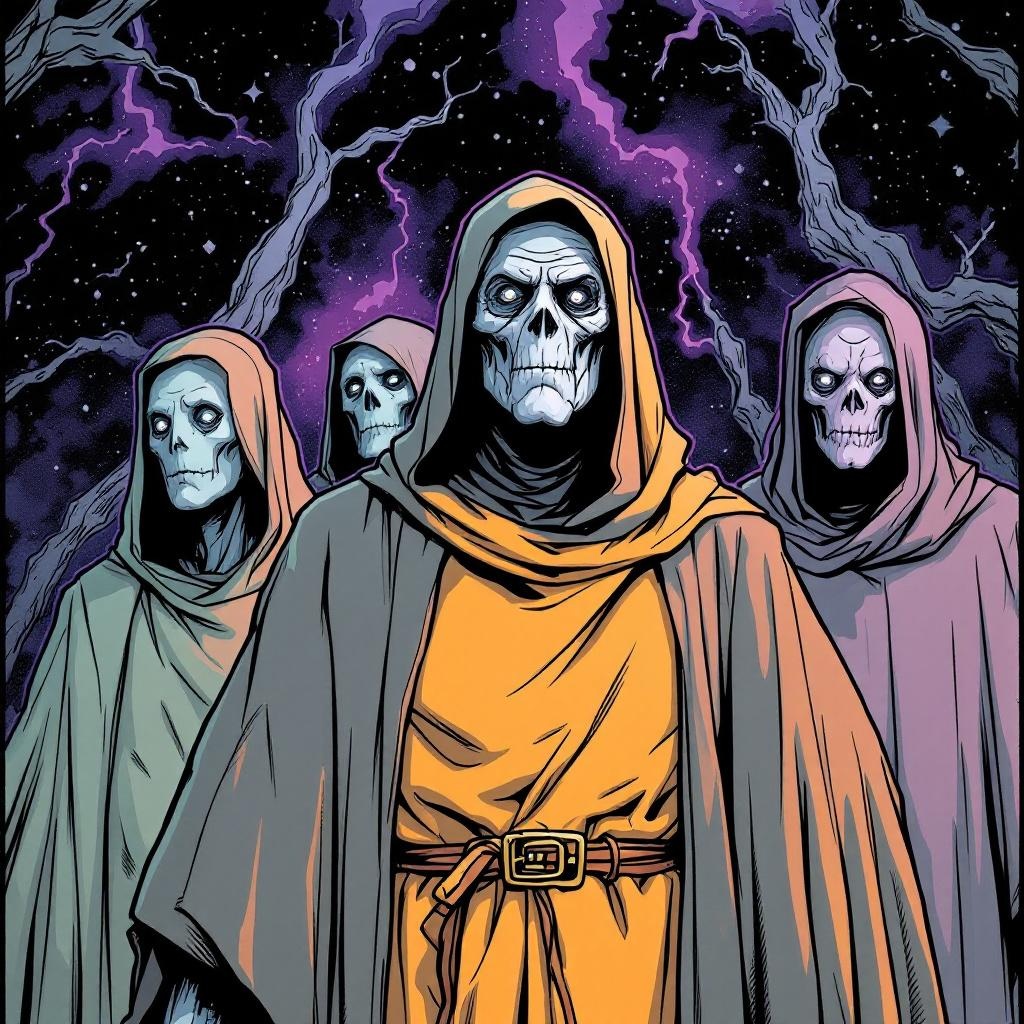
Here's the final turn of Pratchett's argument: Death says you need to believe in things that aren't true so they can become.
This isn't mysticism. It's a description of how human culture actually works.
Justice wasn't true until people started acting as if it were. Now we have courts, laws, rights. Mercy wasn't true until people decided cruelty was wrong. Now we have hospitals, charities, international aid. These things became real—not in the sense of being discovered, but in the sense of being created through belief and action.
The Hogfather speech is ultimately optimistic. Yes, justice doesn't exist in atoms. Yes, mercy has no weight or mass. But that means we get to make them. The universe handed us blank canvas, and we're painting meaning onto it.
That's the gift of being human. That's what the rising ape reaches for as the falling angel descends.
And somewhere in the middle, in that meeting point, we create worlds.
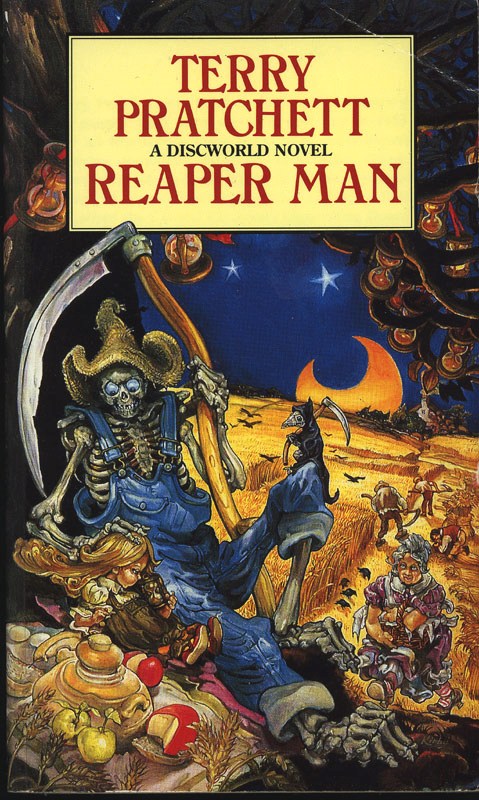
For more on Death's philosophy, read about his time as Bill Door in Reaper Man, where he learned what mortality means from the inside. Or explore his relationship with Susan, the granddaughter who inherits his literal-mindedness along with his powers.