The Complicated Grandfather: Death and Susan's Evolving Relationship
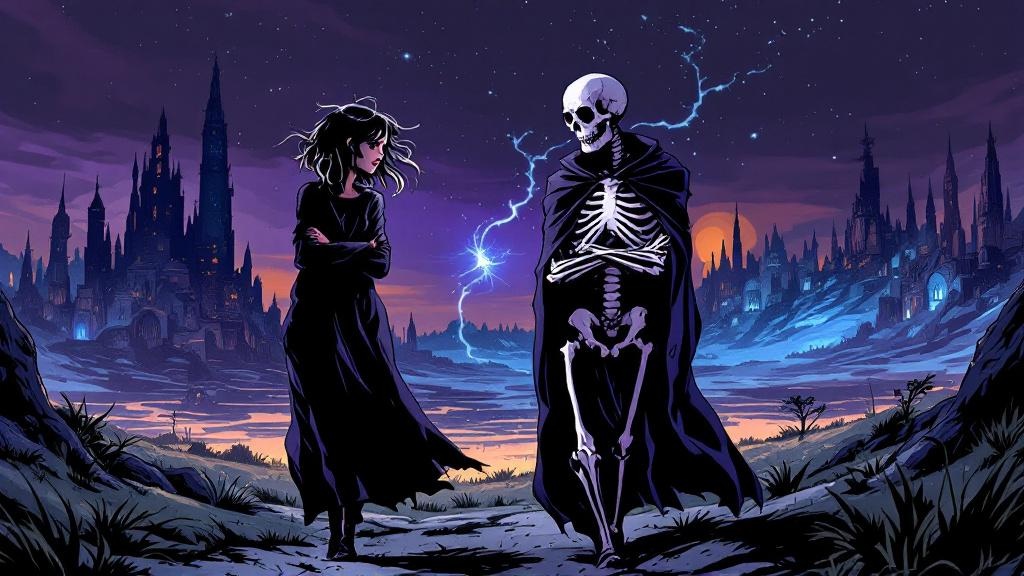
How Death and Susan Sto Helit's relationship evolves across three Discworld novels, from reluctant inheritance to genuine partnership.
The Complicated Grandfather: Death and Susan's Evolving Relationship
Death once built a swing for his granddaughter. He tied it to two branches on opposite sides of a tree, then removed six feet of the trunk so it could swing freely. The tree continued growing normally despite the gap.
That's the whole relationship, right there. An immortal entity trying his absolute best to be a grandfather, and getting it fundamentally, beautifully wrong.
Susan Sto Helit is Death's granddaughter through an unusual chain: Death adopted a human girl named Ysabell, who grew up in his domain, married Mort (Death's apprentice), and had a daughter. Despite nobody in this family tree being biologically related to a seven-foot skeleton, Susan inherited his powers anyway. Because on the Disc, some things are inherited through the soul.
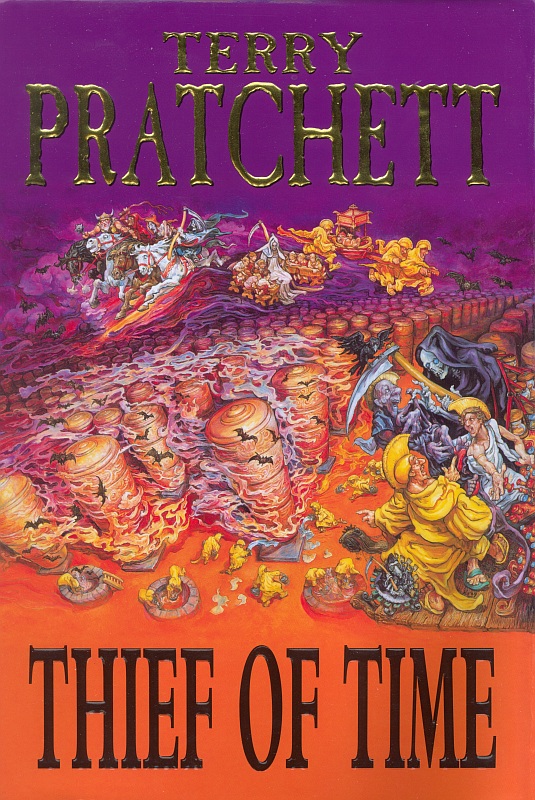
What follows across three novels—Soul Music, Hogfather, and Thief of Time—is one of the most complex family dynamics in fantasy fiction. Not the chosen one and their mentor. Not the hero and their wise elder. A granddaughter who wants nothing to do with her grandfather, and a grandfather who keeps dragging her into saving the world anyway.
The Estranged Inheritance
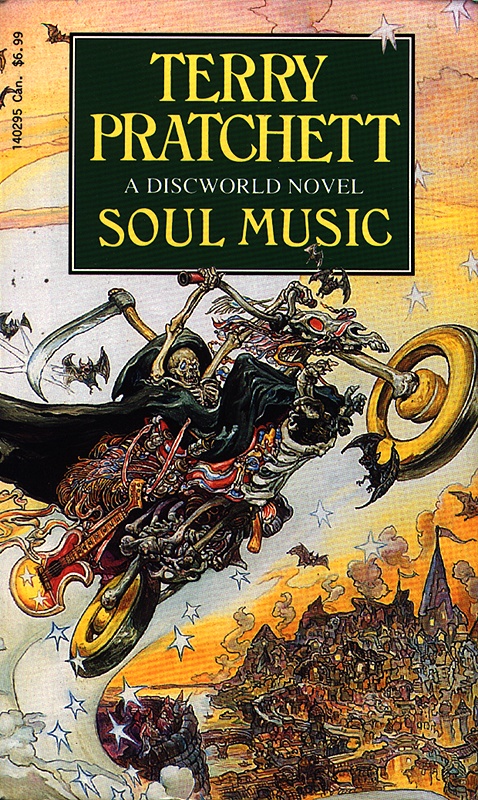
Susan's parents did everything they could to raise her normal. Mort and Ysabell had lived in Death's domain. They understood exactly what their daughter stood to inherit, and they wanted none of it.
So they sent Susan to the Quirm College for Young Ladies. They suppressed her childhood memories of visiting Grandfather's house—a house where the garden had no sun but everything grew anyway, where the bathroom had no water but everything got clean, where a swing passed through a tree trunk. They taught her to be sensible. Rational. Skeptical of anything that couldn't be measured, weighed, or logically explained.
It didn't work.
"Some things are inherited through more than genetics. Some things are inherited through the soul."
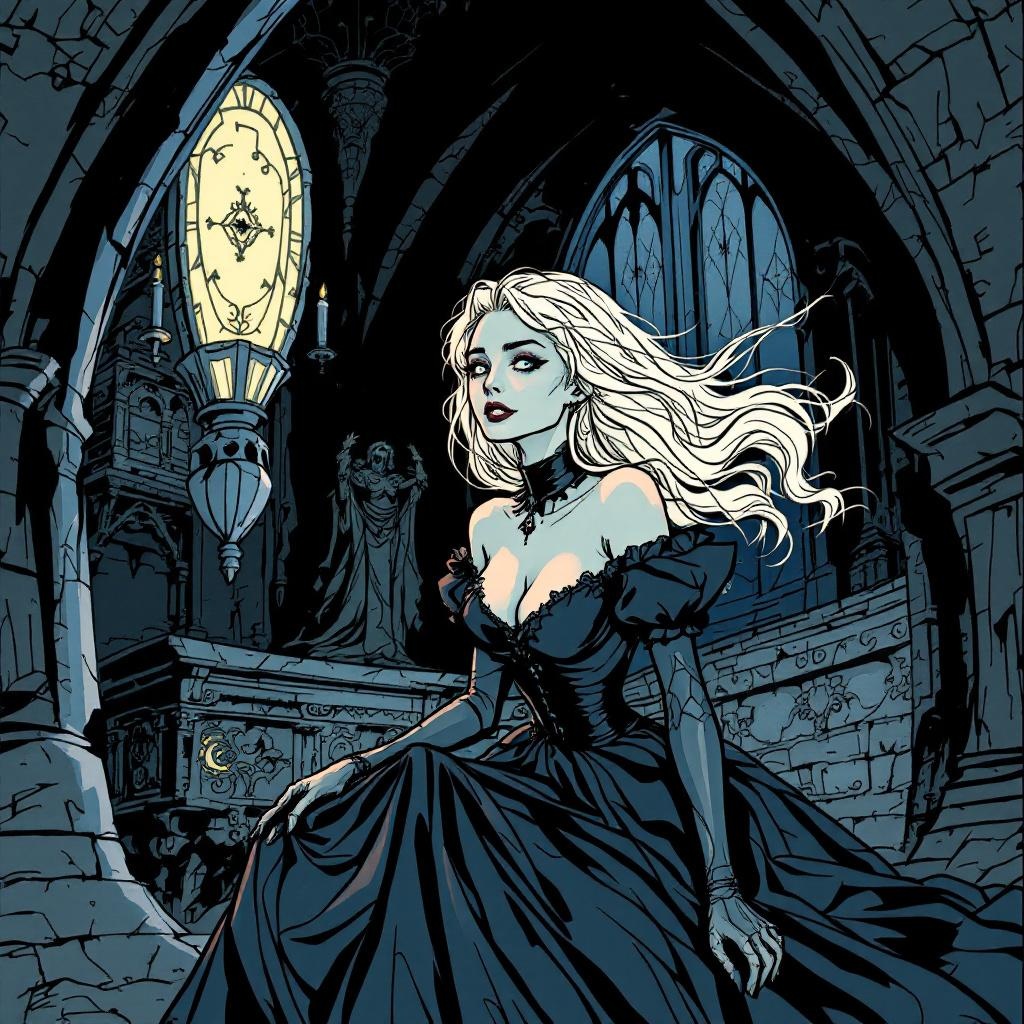
Susan can walk through walls. She can step outside time. She can make herself invisible—not through magic, but because people's eyes simply slide over her when she doesn't want to be noticed. She has a birthmark on her face: three finger-like marks from the time Death slapped her father in Mort, a mark passed down through whatever metaphysical genetics operate in Death's family.
Her parents couldn't breed these traits out any more than you can teach a river to flow uphill.
When Death abandons his post in Soul Music, grief-stricken after Ysabell and Mort die in a carriage accident, a "metaphysical vacancy" pulls Susan in. She's sixteen. She's furious. And she's suddenly holding a scythe.
Fury and the Family Business
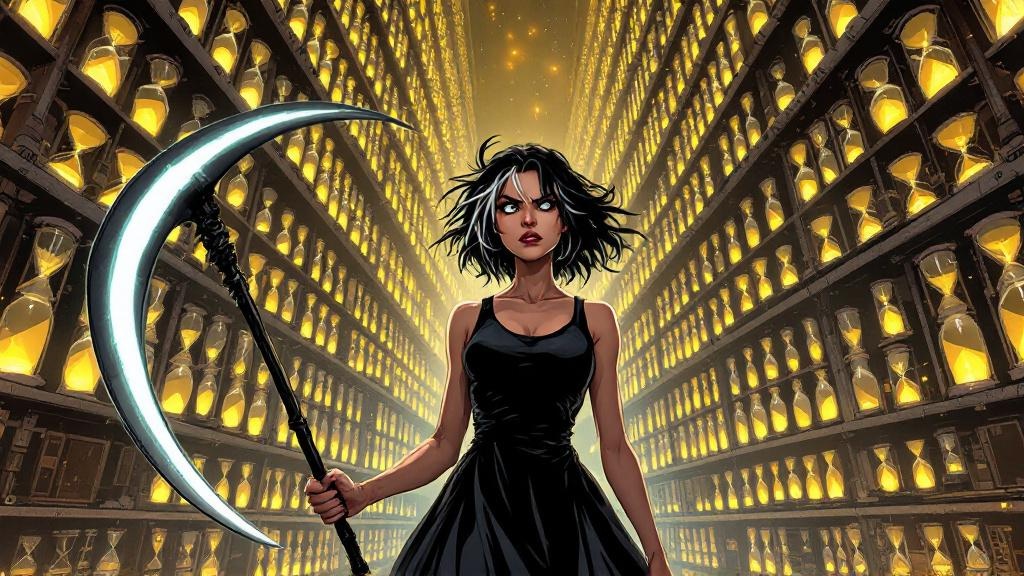
Susan's initial reaction to discovering her grandfather is Death isn't awe or fear. It's rage.
Why didn't he save her parents? He's Death. He was there when their carriage crashed. He's been there for every death that has ever occurred. Surely—surely—he could have done something?
The answer is both simple and devastating: Mort and Ysabell wouldn't let him. They'd lived in Death's domain for years. They knew how the system worked. They knew what it meant to exist in that gray twilight between life and whatever comes after, and they chose to go. Their refusal was an act of love—they'd rather die properly than spend eternity in a borrowed existence.
This doesn't make Susan less angry. But it makes her grief more complicated, because now she can't just blame the skeleton.
"Death's granddaughter doesn't fear him. She's annoyed by him. That's somehow worse."
What's striking about Soul Music is how the book structures their grief as parallel lines that never quite meet. Death tries to escape his pain through human methods—joining the Klatchian Foreign Legion, drinking, wandering. Susan tries to suppress hers through cold efficiency, taking over Death's duties with ruthless competence while pretending she feels nothing.
Neither approach works. Death can't forget because he remembers everything—literally, actually everything, including the future. Susan can't stop feeling because she's human enough to break, no matter how hard she tries to be above it.
By the end of Soul Music, they've reached an uneasy truce. Susan doesn't forgive Death. But she's seen him at his lowest—wandering, lost, unable to face his own domain—and she's learned that even Death can break. That knowledge changes everything that comes after.
The Melted Hogswatch Card
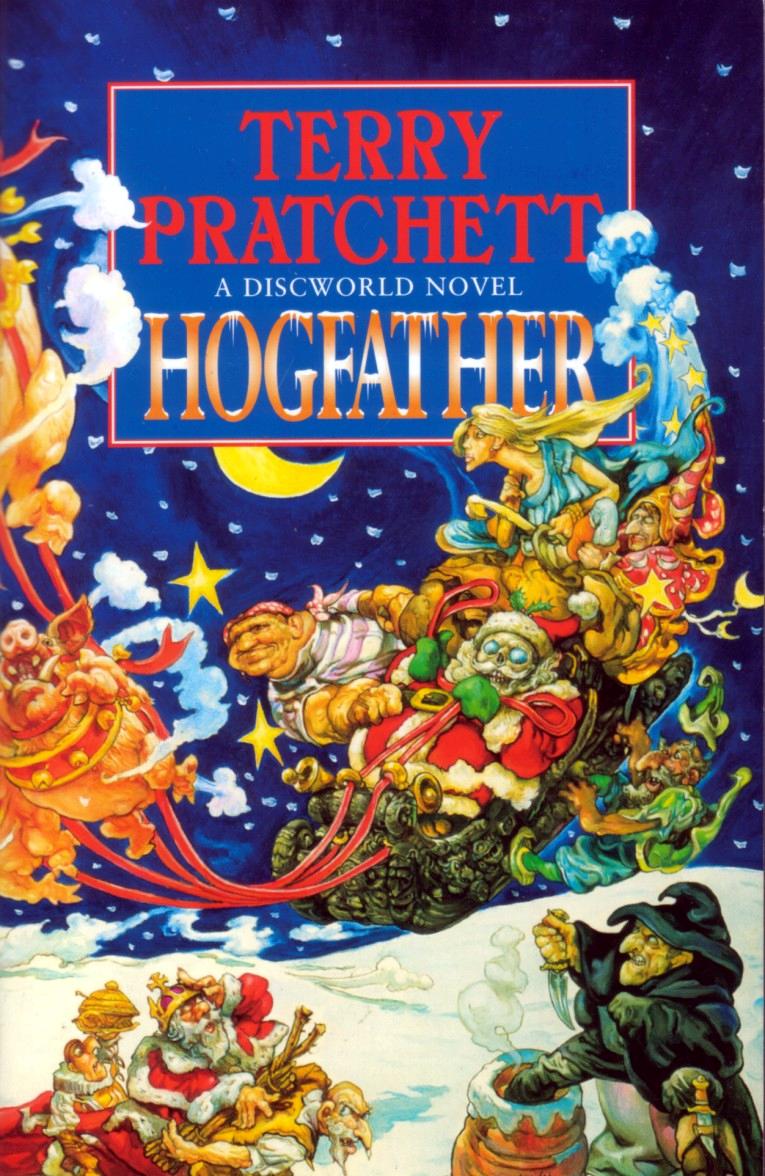
Hogfather opens with Susan as a governess, which is already perfect. She's taken her supernatural abilities and channeled them into the most practical job imaginable: protecting children.
She fights the monsters under their beds with a fireplace poker. Not metaphorically. She literally beats bogeymen with a poker, and because the children believe the poker can kill monsters, it can. Monsters from a wide area have learned to avoid her charges.
Death, meanwhile, has put on a red suit and a pillow-stuffed belly because the Auditors of Reality have arranged for the Hogfather (Discworld's Santa) to be assassinated. Someone needs to keep the belief going. Someone needs to deliver presents and say "HO. HO. HO." and maintain the whole fragile machinery of Hogswatch.
Death volunteers.
It says everything about their relationship that Death doesn't ask Susan to help save the Hogfather. He knows she'll say no. She always says no. Instead, he creates a situation where she has no choice but to get involved—and trusts that once she sees the problem, she'll fix it out of sheer irritation at how badly everyone else is handling things.
He's right.
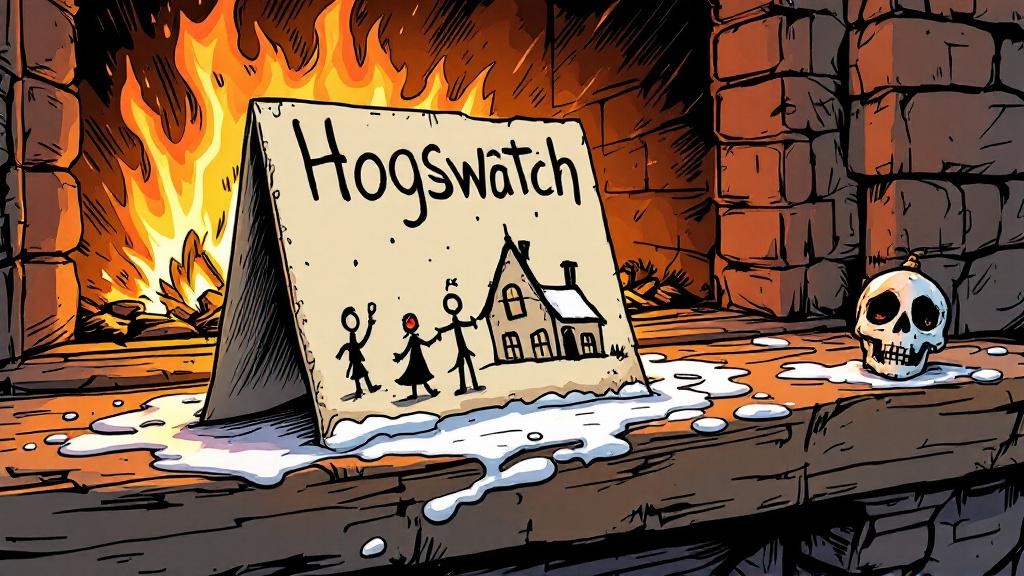
There's a small detail in Hogfather that breaks my heart a little: Death makes Susan a Hogswatch card. Albert, his manservant, suggested it should have snow on it, but the snow melted. It's such a tiny, human failure. The most powerful non-deity on the Disc, and he can't keep decorative snow from melting on a card for his granddaughter.
This is who Death is as a grandfather. Earnest. Well-meaning. Fundamentally incapable of getting the small things right, while understanding the big things better than anyone alive.
The Conversation That Matters
The climax of Hogfather isn't the fight with Mr. Teatime (it's pronounced Teh-ah-tim-eh, and he'll thank you to remember that). It's a conversation.
Susan, having saved the day through sheer competence and a poker thrown with the full belief of children behind it, confronts Death about what they've actually accomplished. She's tired. She's been dragged out of her normal life again. She wants answers.
What she gets is the most important philosophical exchange in forty-one Discworld novels:
Death tells her that humans need fantasy to be human. Not to make life bearable—to make themselves human. "TO BE THE PLACE WHERE THE FALLING ANGEL MEETS THE RISING APE."
"Tooth fairies and hogfathers are practice. You have to learn to believe the little lies before you can believe the big ones. Justice. Mercy. Duty."
Susan pushes back. Tooth fairies? Hogfathers? These are lies we tell children.
Yes, Death agrees. Practice. You have to start out learning to believe the little lies so you can believe the big ones. Justice. Mercy. Duty. Take the universe and grind it down to the finest powder, sieve it through the finest sieve—you won't find one atom of justice, one molecule of mercy. And yet humans act as if there's some ideal order, some rightness by which the universe may be judged.
"You need to believe in things that aren't true," Death tells his granddaughter. "How else can they become?"
This scene works because of their relationship. It isn't a lecture—it's a grandfather explaining the world to his granddaughter. Susan's skepticism mirrors the reader's own, and Death's patient logic wins her over the way it wins us. He isn't preaching. He's sharing what billions of years of witnessing human lives and deaths have taught him.
And Susan listens. Not because she's obedient—she's never that. But because somewhere underneath all the resentment and the normalcy and the aggressive rationality, she knows he's right.
From Resentment to Partnership
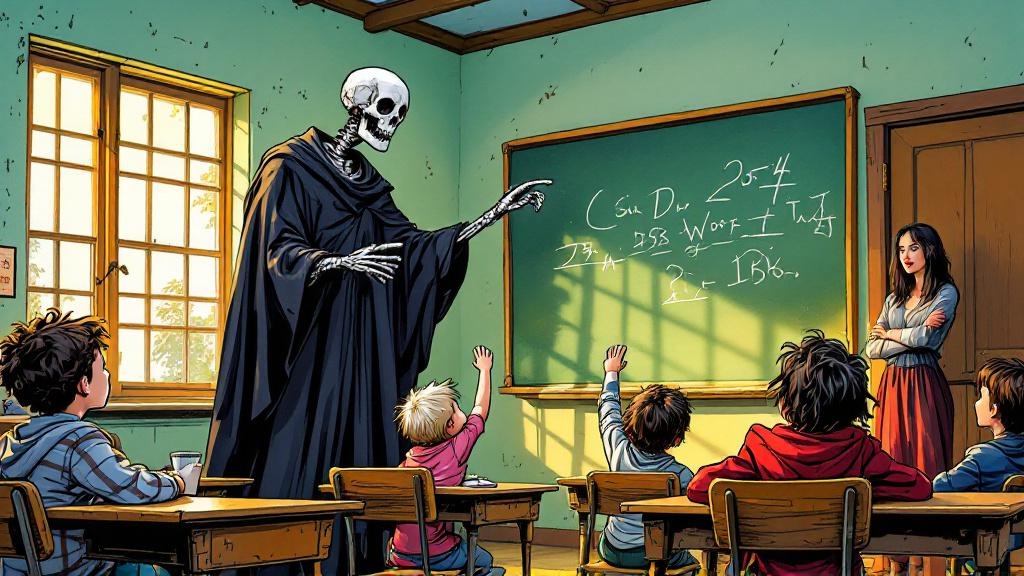
By Thief of Time, something has shifted. Susan is a schoolteacher now—another practical role for someone who can walk through walls and stop time. She teaches geography by taking her class on supernatural field trips. She invites guest speakers, including her grandfather.
The children love him.
This matters. In Soul Music, Susan wanted nothing to do with Death. In Hogfather, she grudgingly accepted his involvement while complaining about it. In Thief of Time, she's inviting him into her life. She's introducing him to people she cares about. She's stopped pretending she's normal and started using her weirdness to actually help.
When the Auditors of Reality attempt to stop time itself—commissioning a clockmaker to build a truly accurate clock that would freeze the universe—Death can't act against them directly. So he sends Susan.
Not tricks her into helping. Not manipulates the situation so she has no choice. Sends her. And she goes.
That's the evolution right there. Three books, from "How dare you drag me into this" to "Tell me what needs doing." Not because Susan has become obedient or because she's stopped resenting the complications of being Death's granddaughter. She still finds the whole situation absurd. But she's accepted that she's uniquely suited to handle cosmic crises, and she's too practical to let the universe end just because she'd prefer a quiet life.
What Makes Them Work
Most grandfather-granddaughter relationships in fiction are warm and simple. The wise elder. The adoring child. Cookies and life lessons.
Death and Susan are neither warm nor simple. He's an immortal skeleton who speaks in capitals and keeps cats. She's a fiercely rational young woman who fights monsters with pokers and resents the supernatural heritage that makes her life complicated. Their love is expressed almost entirely through duty—he calls on her when reality needs saving, she shows up while complaining about it.
"Their love is expressed almost entirely through duty. He calls on her when reality needs saving. She shows up while complaining about it."
But here's the thing that makes their relationship one of the best in Discworld: they're the same. Susan's cold logic, her ability to see through nonsense, her fundamental fairness—these aren't just personality traits. They're his traits, passed down through whatever metaphysical mechanism governs inheritance in Death's family.
Susan is Death's granddaughter not because of blood or adoption papers, but because she thinks like him. She sees the world the way he does—clearly, honestly, without the comforting fictions most people use to get through the day. The difference is that Death has had billions of years to develop compassion alongside that clarity. Susan is still working on it.
That's what the three books track. Not Susan learning to love her grandfather—she always did, underneath the resentment. But Susan learning to see the world the way he does. To understand that belief matters. That duty matters. That sometimes the most rational thing you can do is protect something irrational, because without fantasy, humans are just rising apes who never meet the falling angel.
The Estranged Grandparent We All Recognize
Strip away the scythes and the hourglasses and the horse named Binky, and Death and Susan's story is startlingly familiar. Parents keeping their child away from a grandparent they consider a bad influence. A child growing up hearing "we don't talk about Grandfather." Inherited traits surfacing despite everyone's best efforts. The slow, awkward process of building a relationship with family you were never supposed to know.
Pratchett understood that the most powerful fantasy is the kind that illuminates something real. Death and Susan's relationship works because it's about something universal: the way family shapes us whether we want it to or not. The way we inherit not just abilities but perspectives, not just traits but ways of seeing the world.
Susan spent years trying to be normal. Death spent eternity trying to understand humans. In the end, they met somewhere in the middle—the place where the falling angel meets the rising ape, where a skeleton can love a girl and a girl can love a skeleton, and neither of them will ever, under any circumstances, admit it out loud.
That's not dysfunction. That's family.


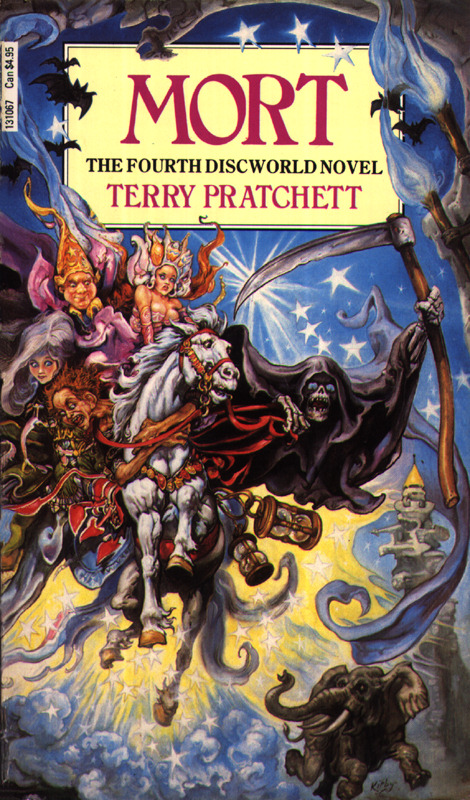
For more on Death's journey, read about how Soul Music explores his first encounter with grief, or discover the speech that defined his philosophy in our analysis of the Hogfather monologue. And if you want to start from the very beginning, Mort is where Death first became more than a punchline.