Death's Grief: How Soul Music Explores an Immortal's First Encounter with Loss
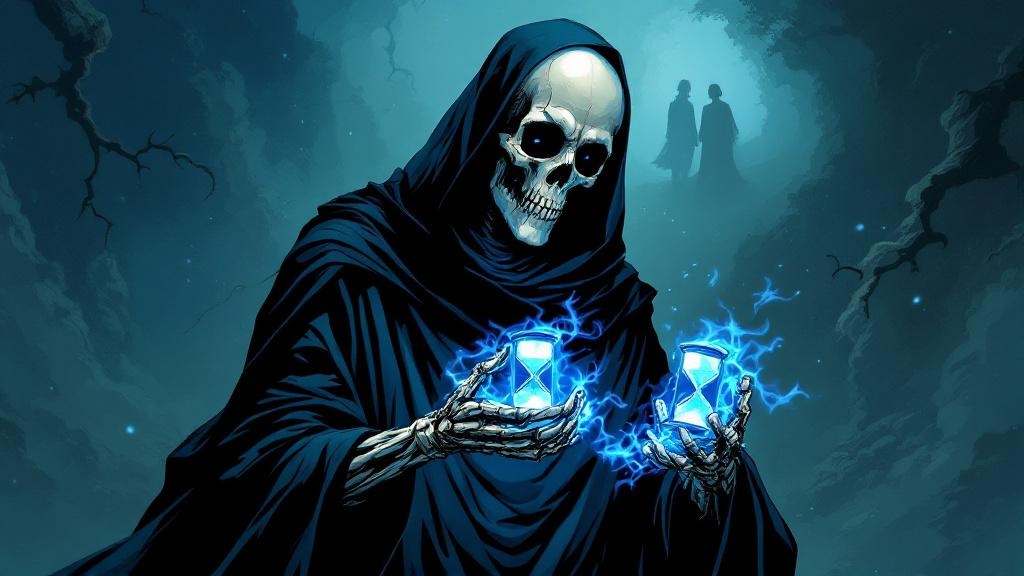
When Death loses Ysabell and Mort in Soul Music, he tries the impossible: to forget. This Discworld novel explores grief through an entity who remembers everything.
Death's Grief: How Soul Music Explores an Immortal's First Encounter with Loss
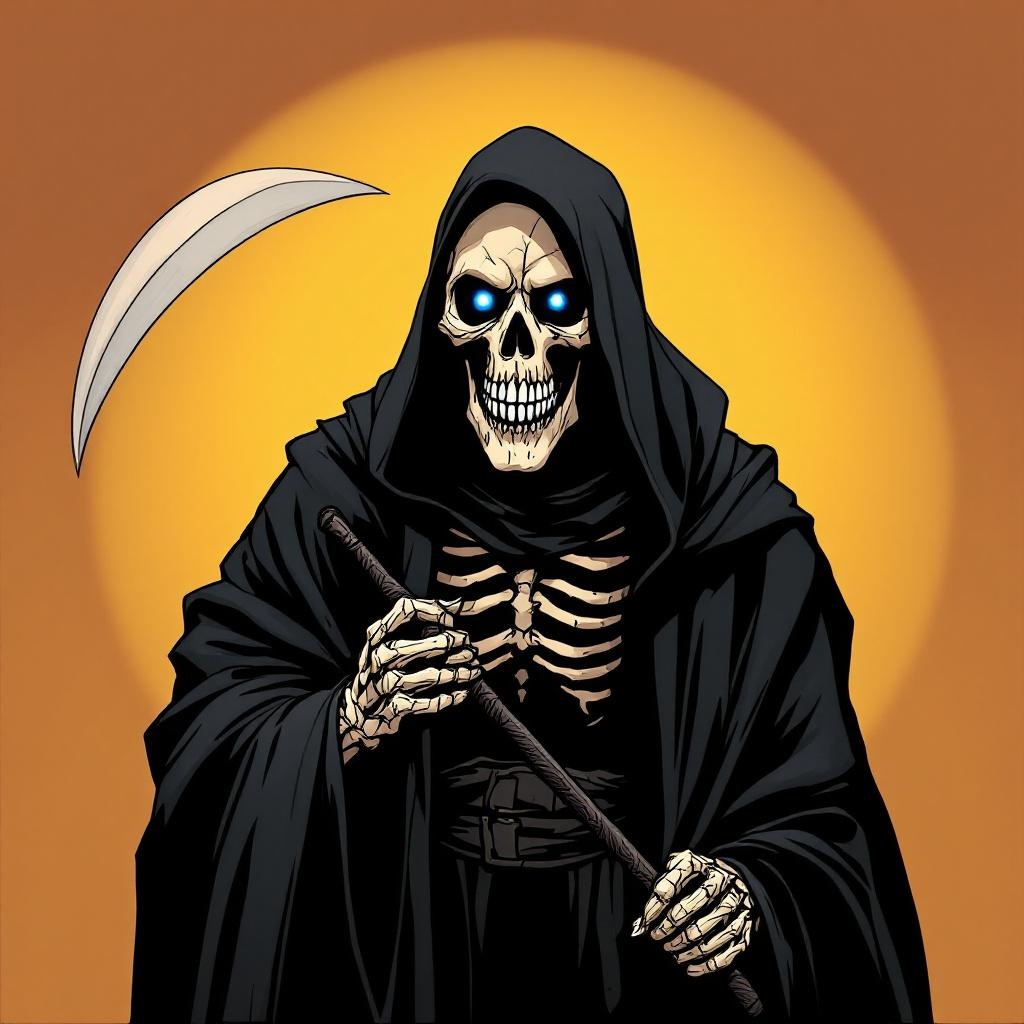
Here's the thing about Death: he has witnessed every death that has ever occurred. Every mother losing a child. Every soldier falling in battle. Every peaceful passing in sleep. For billions of years, he has stood at the transition point between existence and whatever comes after, scythe in hand, professional and necessary.
And then his daughter dies.
Not just any death—his daughter. Ysabell, the girl he adopted, raised in his dark domain, watched grow into a woman who married Mort, his only apprentice. And when their carriage crashes on a mountain road, Death is there as he always is, because he has to be.
Soul Music is about many things—the addictive power of rock and roll, the birth of Death's granddaughter Susan as a main character, parodies of music history that range from subtle to sledgehammer. But underneath the guitars and the jokes about drummers, it's a meditation on something devastating: what happens when an immortal being with perfect memory experiences grief for the first time?
The Setup: A Family Destroyed
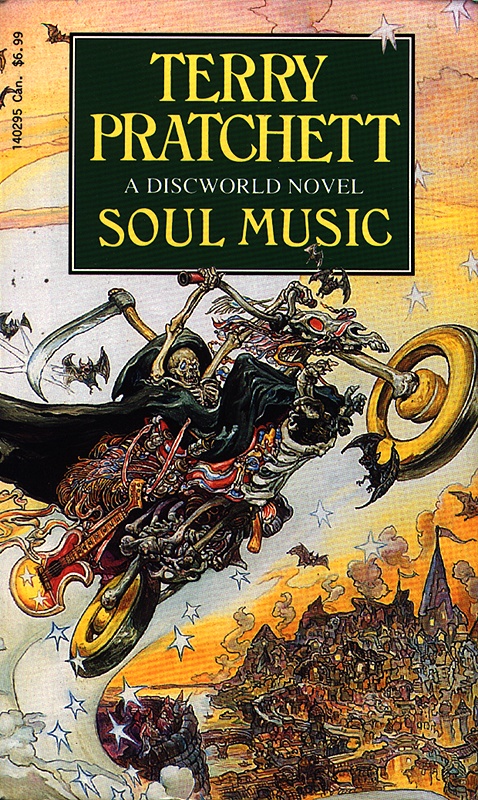
Mort and Ysabell are dead before the book properly begins. Their carriage accident happens off-page, a deliberate choice by Pratchett—we don't need to see it. What matters is the aftermath.
Death processes them. He has no choice. It's his job, his purpose, his function. And in that moment, something breaks inside the anthropomorphic personification of death itself.
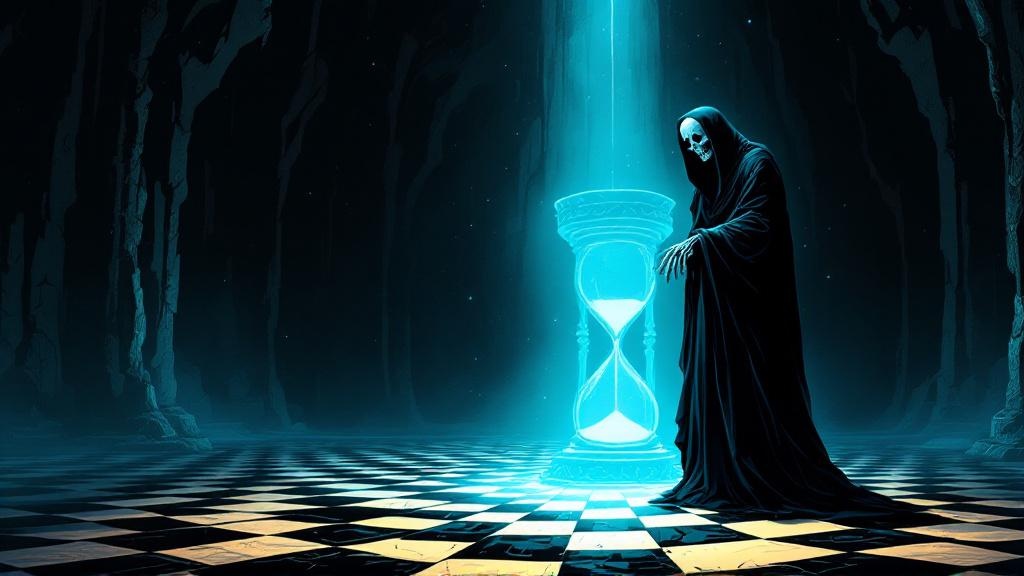
Here's the cruel irony: Death could see it coming. He always can. The hourglasses in his domain show everyone's remaining time. He knew when his daughter would die before she was even born. He knew his son-in-law's expiration date the moment they met.
Imagine living with that knowledge. Imagine loving with that knowledge.
The Impossibility of Forgetting
Death decides to cope the way humans do—by trying to forget.
"I MAY HAVE ALLOWED MYSELF SOME FLICKER OF EMOTION IN THE RECENT PAST... BUT I CAN GIVE IT UP ANY TIME I LIKE."— Death
There's just one problem: Death remembers everything. Not metaphorically. Actually everything. Every death. Every face. Every moment of his eternal existence. For humans, grief eventually fades because memory is imperfect—time smooths the sharp edges of loss, softens the pain into something bearable.
Death doesn't have that luxury.
So he does the only thing he can think of: he leaves. Abandons his post. Walks away from the job he has performed since the beginning of existence itself. If he cannot forget, he will at least stop remembering—stop being present for the endless parade of deaths that now remind him of the two he cannot process.
The Foreign Legion (Yes, Really)
Pratchett, being Pratchett, doesn't let Death wallow in dignified solitude. Instead, Death tries every clichéd remedy for heartbreak that humans have invented:
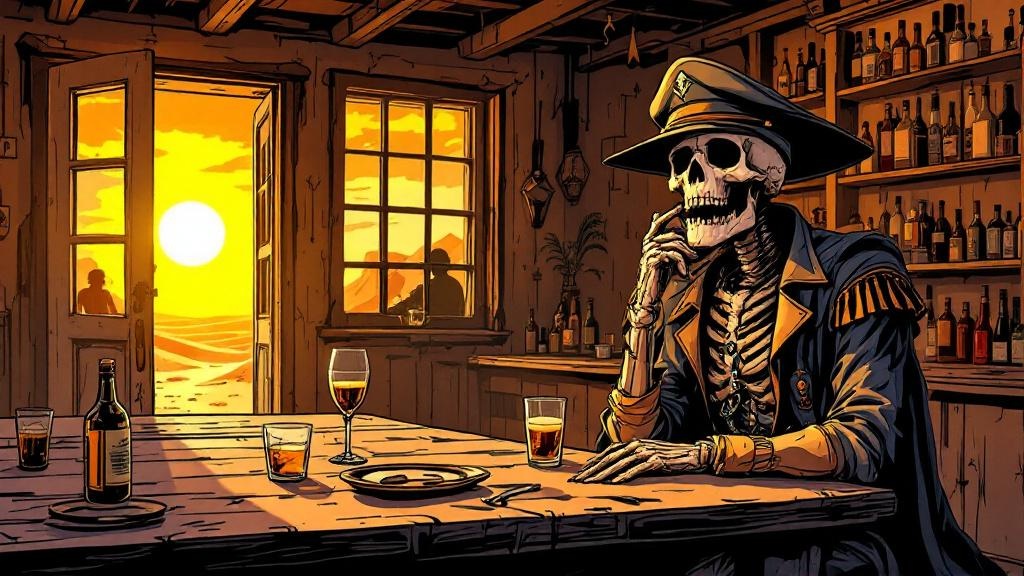
He joins the Klatchian Foreign Legion—the Discworld equivalent of running away to forget. Except, of course, the Legion's famous for helping people forget, and Death already can't forget, so it doesn't help. He drinks everything in the bar. He gets thrown in the river. He joins a group of invisible beggars called the Canting Crew.
None of it works.
There's something both absurd and heartbreaking about these scenes. Death is trying to be human in his grief—to use human remedies for an inhuman problem. It's like watching someone try to cure immortality with aspirin.
Susan Steps In
Back in Death's domain, there's a problem. When Death stops doing his job, people don't stop dying—they just don't die. The whole cosmic system begins to break down.
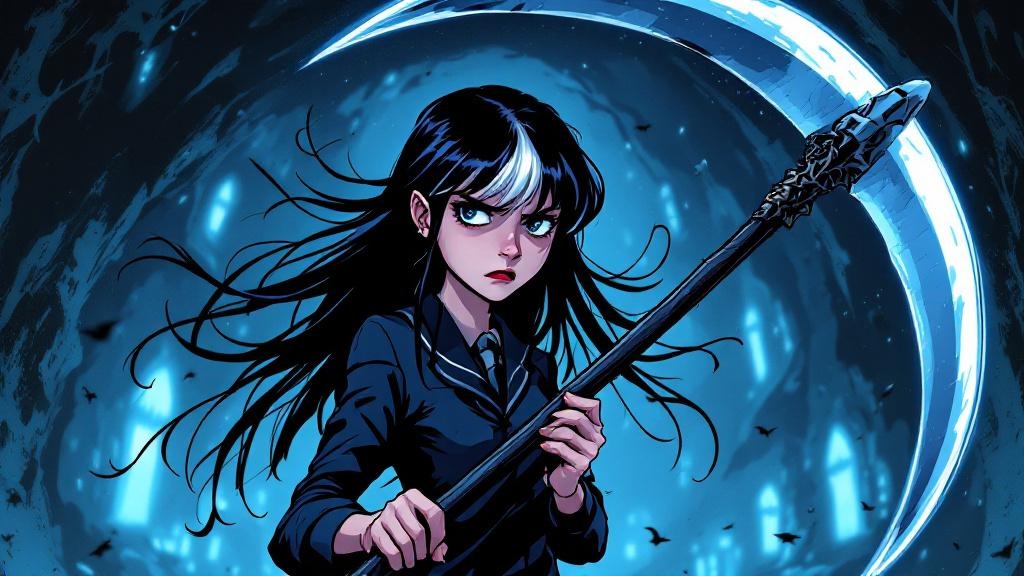
Enter Susan Sto Helit: sixteen years old, raised to be aggressively normal by parents who hid her supernatural heritage, currently studying at the Quirm College for Young Ladies and very much not interested in taking calls from skeletal ravens.
The Death of Rats and Quoth (the raven who refuses to say "nevermore") track Susan down. She's next in line, you see. Death's granddaughter. Someone has to take over the family business.
Susan's initial reaction is fury. Not just at being dragged into this chaos—though that annoys her plenty—but at Death himself. Why didn't he save her parents? He's Death. Surely he could have done something?
"Grief is supposed to fade. That's how humans survive it. But what happens when you're incapable of forgetting?"
The answer, as Susan learns, is that he couldn't. Not because of some arbitrary rule, but because Mort and Ysabell themselves refused to let him. They'd lived in Death's domain. They knew how the system worked. They chose to go, rather than spend eternity in that gray twilight, waiting for someone to break the rules for them.
This doesn't make Susan less angry. But it does make her grief more complicated—and more human.
Two Kinds of Grief
Soul Music structures itself around a parallel: Death's grief and Susan's grief, running alongside each other, rarely intersecting.
Death tries to escape his grief. He runs. He drinks. He attempts to submerge himself in noise and company and distraction. He wants oblivion.
Susan tries to suppress her grief. She bottles it up, channels it into cold efficiency. She takes over Death's duties with ruthless competence, but her rage leaks out in small ways—irritation at the "inefficiency" of how dying works, impatience with the stupidity of mortals who don't appreciate their limited time.
Neither approach works. Death can't forget, and Susan can't stop feeling. They're both trying to be something they're not: Death trying to be human enough to use human coping mechanisms, Susan trying to be immortal enough to be above human emotion.
The Music as Escape
The "Music with Rocks In" that gives the book its central plot isn't just Pratchett's excuse to make rock and roll jokes (though he makes a lot of those). It's another form of escapism—parallel to Death's flight from grief.
Imp y Celyn, the young bard who becomes a rock star, is running from his own past. The music gives him a new identity, a way to be someone else. It's addictive. It's consuming. It promises to make you more than you are, to fill the emptiness inside.
Sound familiar?
Death finds himself drawn to the music too. There's a scene where he sits in the Mended Drum, watching the band play, lost in the noise. For a moment, he seems almost... peaceful.
But the music is a lie. It takes as much as it gives. The performers burn out, their life force consumed by something that doesn't care about them as individuals—only about being played.
The Return
Death eventually comes back. Not because he's healed—immortals don't heal the way humans do—but because he's needed. Susan is doing her best, but she's not meant for this role, not yet. And somewhere in his wanderings, Death accepts something he'd been running from.
He cannot forget. He will never forget. Ysabell's face is carved into his eternal memory, permanent as the stars. Mort's laugh. The way they looked at each other.
And maybe... that's not the worst thing.


What Death Learns About Grief
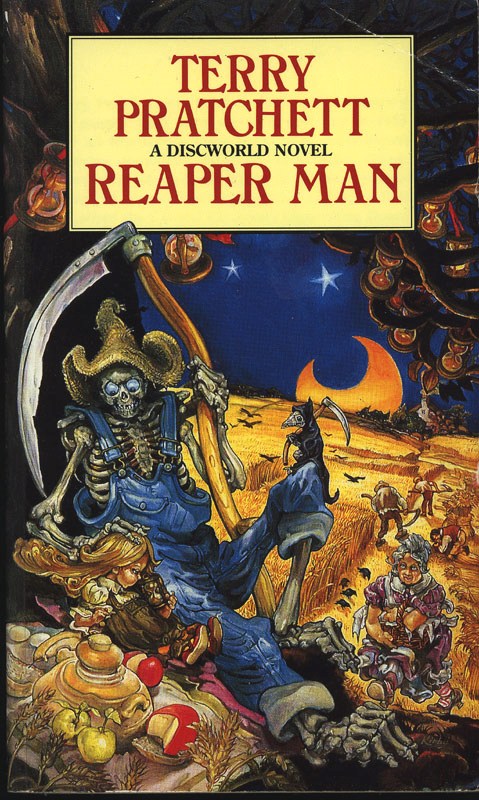
In Reaper Man, Death learned what it meant to live by becoming mortal himself. In Soul Music, he learns something harder: how to grieve when you can never forget.
The answer, it turns out, isn't forgetting at all. It's accepting that the memory stays. That the pain doesn't go away—it just becomes part of who you are. Death, who is supposed to be unchanging, discovers that he has been changed by love. And by loss.
This is, in its way, a hopeful message. Not the hope of healing or closure—Pratchett was too honest for that. But the hope that grief, properly carried, doesn't have to destroy you. Even an immortal. Even Death himself.
Susan's Legacy
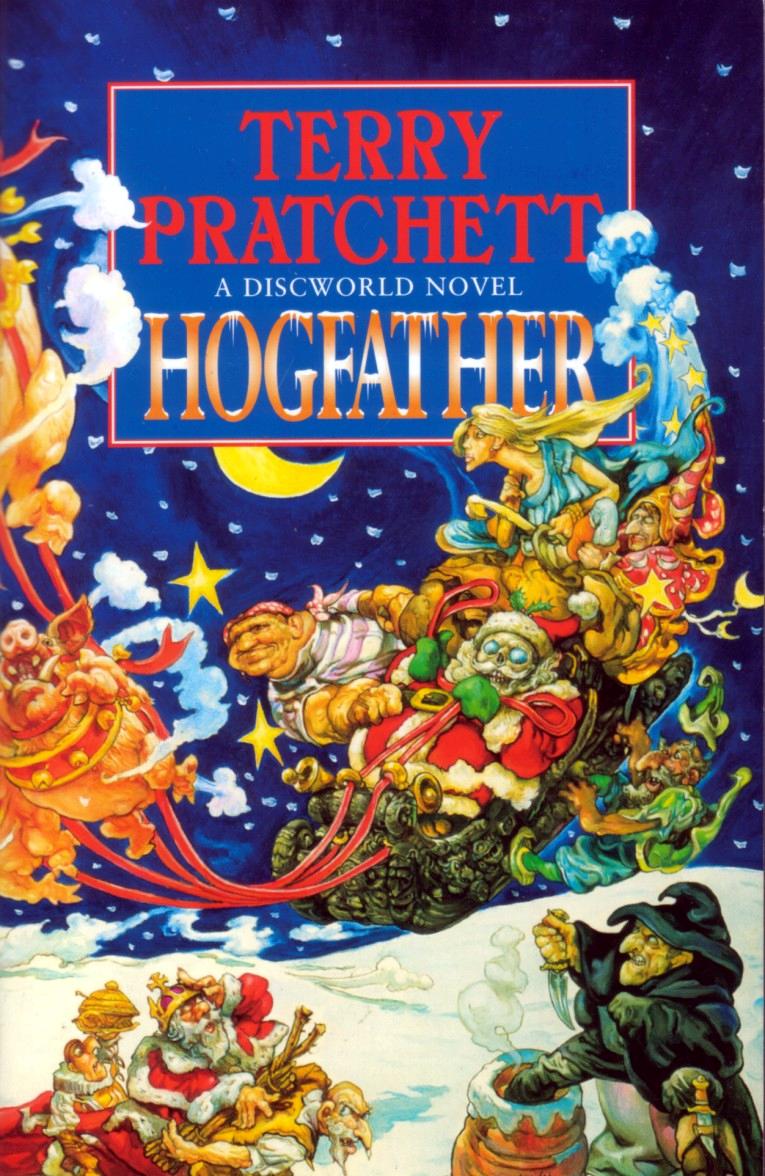
Soul Music introduces Susan as a character who will anchor the next two Death novels: Hogfather and Thief of Time. She becomes Pratchett's lens for examining death from a different angle—not the personification, but someone caught between human and immortal, feeling too much and seeing too clearly.
By the end of Soul Music, Susan has come to an uneasy peace with her grandfather. She doesn't forgive him, exactly. But she understands him better. She's seen him at his lowest—wandering, lost, unable to face his own domain. She's learned that even Death can break.
That knowledge shapes everything that comes after. In Hogfather, when Death needs someone to help save the Hogfather, he turns to Susan. Not because she's obedient—she's never that—but because she understands duty. She's seen what happens when someone walks away from it.
The Weight of Memory
Near the end of Soul Music, there's a quiet moment. Death is back at work. Susan has returned to school. The music has burned itself out, leaving behind a few puzzled survivors who can't quite remember why they thought rock and roll was so important.
And Death is still standing at the transition point, still doing his job, still remembering everything.
But something is different. He's carrying Mort and Ysabell with him now, not as a burden but as... well, Pratchett doesn't give it a name. How do you name what an immortal feels for the mortals he's loved and lost?
Whatever it is, it makes him more human, not less. The Auditors—those gray bureaucrats who hate Death's personality—would say this is a flaw. That Death shouldn't feel anything.
But readers know better. Death's grief in Soul Music is what makes him the character we love. Not despite his pain, but because of it.
"I REMEMBER," Death says at one point, and it's not a complaint. It's a statement of purpose.
What else could the keeper of souls hope for, if not to remember those he's lost?
Want to see what Death does with this grief? Read Hogfather, where he channels his understanding of human emotion into saving humanity's capacity to believe—and don't miss the previous story of his mortality in Reaper Man, where Bill Door first learned what living truly means.