'Nae King! Nae Quin!': How Rob Anybody Embodies Terry Pratchett's View of True Freedom
The Nac Mac Feegle reject all authority—except the one they chose. Rob Anybody's battle cry reveals Pratchett's philosophy on freedom, power, and willing service.
"Nae King! Nae Quin!": How Rob Anybody Embodies Terry Pratchett's View of True Freedom
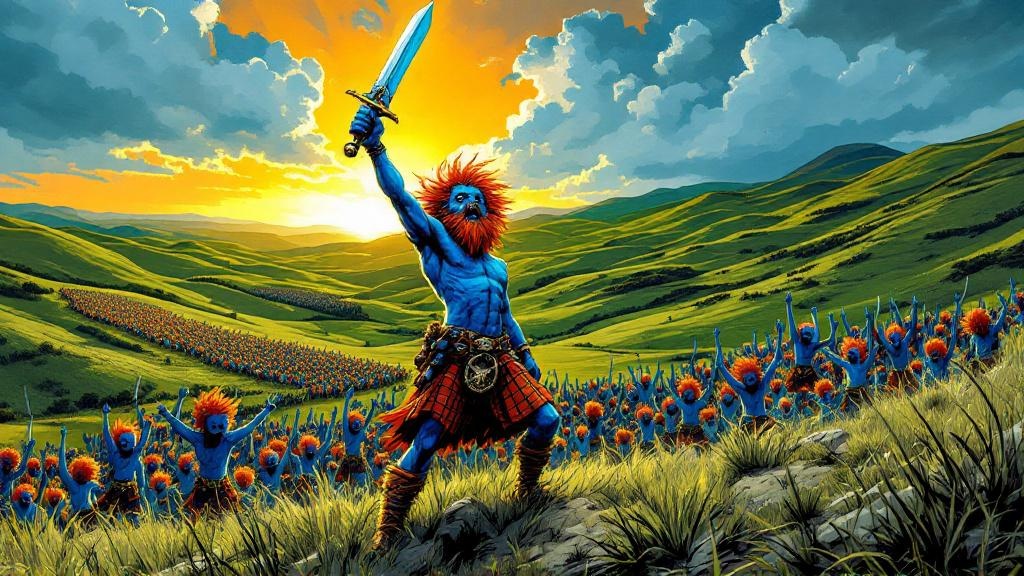
"Nae king! Nae quin! Nae laird! Nae master! We willna be fooled again!"
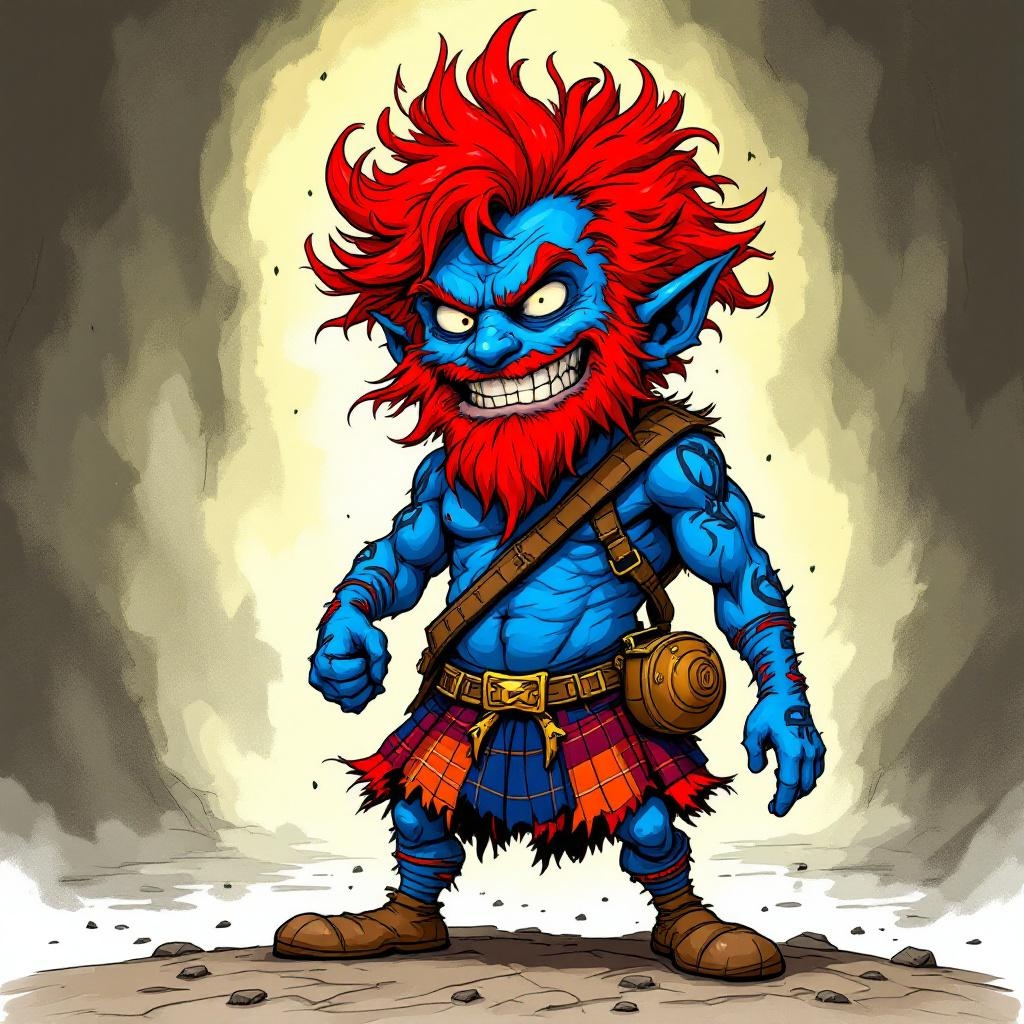
The Nac Mac Feegle's battle cry echoes across the Chalk, and it sounds like pure anarchism. Six inches of blue-skinned, red-haired fury rejecting every form of authority ever invented. No kings, no queens, no lords, no masters. The ultimate freedom fighters.
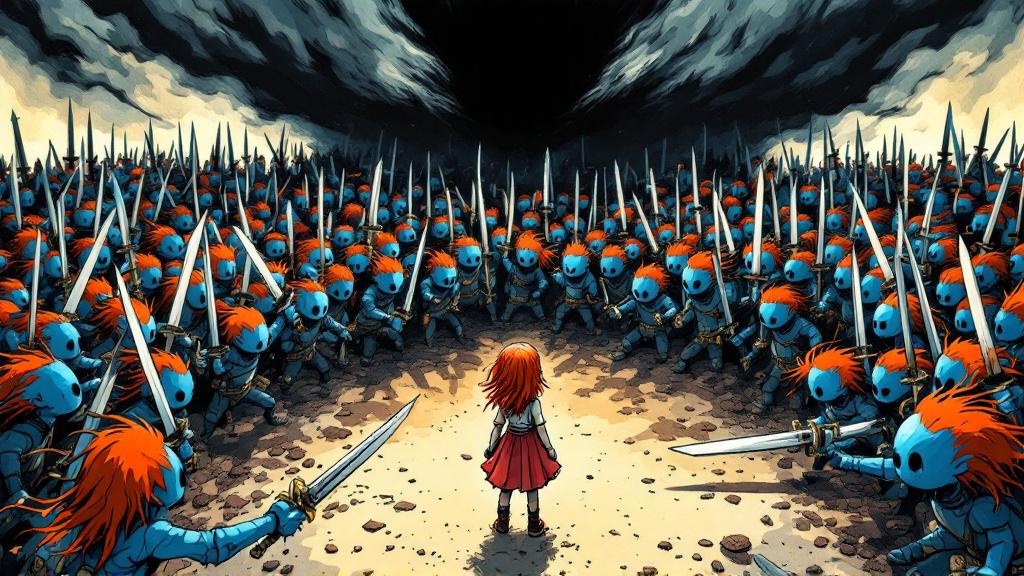
But here's the thing Pratchett slips past you while you're laughing at tiny Scotsmen headbutting their problems into submission: the Feegles serve a kelda with absolute devotion. They follow Rob Anybody into battles that would terrify anything with common sense. They pledged themselves to a nine-year-old girl and have protected her for years without being asked.
These anarchists have a social structure more rigid than a Victorian household.
That contradiction isn't a bug. It's the entire point.
The Exile Story (Two Versions)
According to the Nac Mac Feegle, they were thrown out of Fairyland for heroically rebelling against the wicked Queen of the Elves.
According to everyone else—including the Feegles themselves if they forget the official version—they were kicked out for being drunk and disorderly at two in the afternoon and stealing anything not nailed down.
Both versions are probably true.
The Queen of the Elves ruled her realm with absolute power, demanding that the Feegles steal from everyone on her behalf. They didn't agree with this arrangement. Not because they objected to stealing—the Nac Mac Feegle have elevated theft to an art form—but because they were being told to do it. By someone who considered herself their master.
That word matters. The Feegles will cheerfully steal, fight, drink, and cause general mayhem. But they won't do any of it because someone ordered them to. The moment authority becomes imposition rather than choice, the Feegles reach for their swords.
"We willna be fooled again!"— Nac Mac Feegle battle cry
So they rebelled. Or they were too rowdy to tolerate. Either way, they ended up in the Discworld—which they believe is the afterlife, a paradise with sunshine, flowers, fighting, and as much drinking as you can handle.
The theological implications are fascinating. If the Discworld is heaven, then dying is just going back to wherever they came from. Which means the Feegles cannot be threatened. Not with death, not with punishment, not with anything. You can't intimidate someone who believes they're already dead and this is their reward.
That belief makes them fearless. It also makes them free in a way most beings can never be.
The Kelda Paradox
If the Feegles reject all authority, why do they serve a kelda with absolute obedience?
The answer reveals Pratchett's sophisticated understanding of freedom. The Feegles don't reject authority because they want to do whatever they please. They reject imposed authority—power that claims the right to rule regardless of consent.
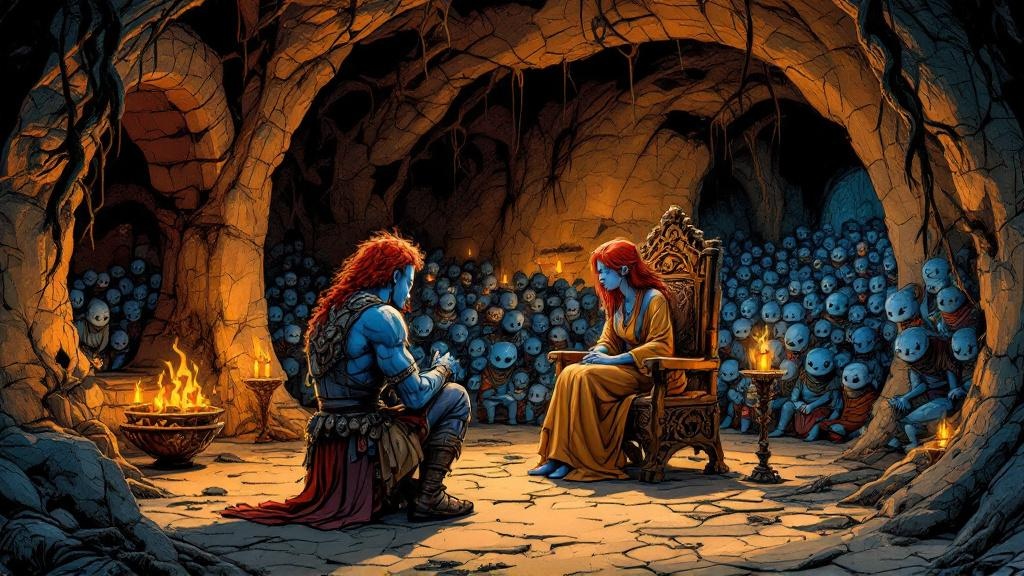
The kelda is different. She doesn't command through force or inherited right. She leads because every Feegle in the clan chose to follow her. When a kelda dies and a new one arrives from another clan, she earns her position by wisdom, by the "hiddlins" (prophetic dreams and ancient knowledge), and by the simple fact that the clan needs someone to do the thinking.
Rob Anybody is the Big Man, the leader in battle. But he answers to Jeannie. Not because he's weak, not because she forces him, but because he recognizes that her kind of leadership makes the clan stronger. He chose to marry her. He chooses, every day, to follow her guidance.
That's the distinction Pratchett draws throughout his work: the difference between power that's taken and authority that's earned. The Feegles would die before serving the Queen of the Elves. They would also die for their kelda without hesitation.
Same outcome. Completely different meaning.
Rob Anybody: The Reluctant Authority
Here's where it gets interesting. Rob Anybody is himself an authority figure. He's the Big Man, the chieftain, the one who leads hundreds of brothers into battle. By the Feegles' own logic, shouldn't they reject him too?
They don't. Because Rob leads from the front.
Watch how Rob operates: he doesn't give orders from the back. He's first into every fight, first to headbutt the enemy, first to take the biggest risks. His authority comes from the fact that he'll do anything he asks his brothers to do—and usually does it first, louder, and with more enthusiasm.
"Rob leads from the front, headbutts first, and asks questions never."
This is Pratchett's template for legitimate leadership: the leader who serves. Not the king who demands tribute, but the chieftain who fights alongside his people. Not the master who commands from safety, but the one who takes the same risks he asks others to take.
Sound familiar? If you've read the City Watch books, you've met this philosophy before. Sam Vimes is the same kind of leader—anti-authoritarian while being authority, suspicious of power while wielding it, earning loyalty by being first through the door when it's dangerous.
Lord Vetinari even comments on Vimes's contradiction: an authority figure who is anti-authority. "Practically zen," he calls it.
Rob Anybody doesn't philosophize about his approach. He just lives it. But the principle is identical: authority is legitimate only when it's earned through action, not claimed through position.
"Our Big Wee Hag"
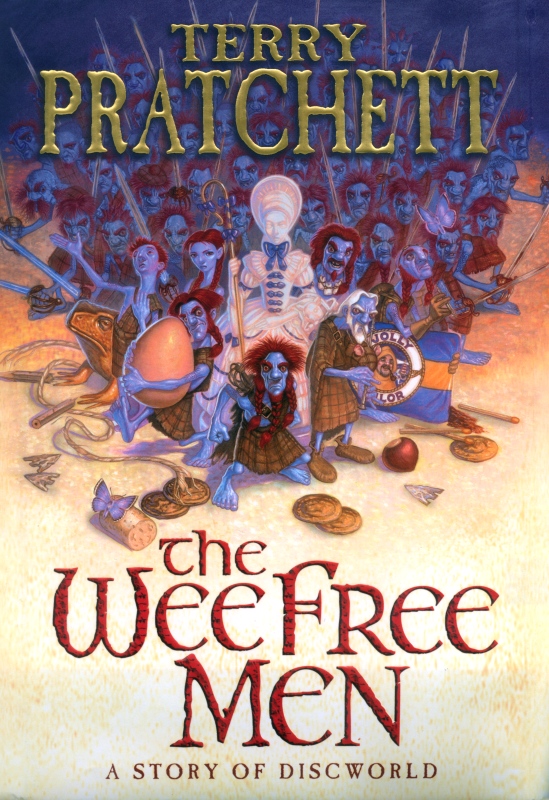
In The Wee Free Men, something extraordinary happens. Nine-year-old Tiffany Aching becomes the Feegles' kelda.
The old kelda is dying. The clan needs leadership. By tradition, Tiffany would have to marry one of them to become kelda—which presents obvious problems involving age and height.
Tiffany solves it with lawyer-like precision. She agrees to marry Rob Anybody "if I have to"—a conditional that can never be fulfilled. The Feegles, who respect cleverness as much as courage, are delighted: "Ye're goin' tae make a good kelda!"
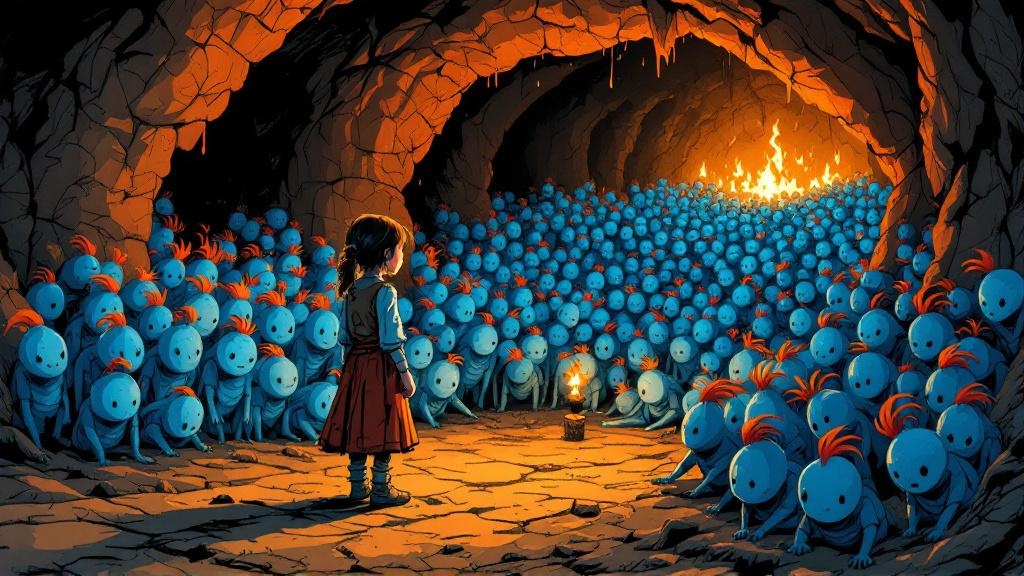
When Jeannie arrives later to become the permanent kelda, Tiffany steps aside gracefully. But the clan's loyalty to her never wavers. She remains "our big wee hag" through five books—not their kelda, not their master, but something perhaps more important: their chosen responsibility.
The Feegles protect Tiffany because they want to. Not because they're ordered to, not because of some magical compulsion (well, except for the geas in Wintersmith, which just formalized what they were already doing). They follow her into Fairyland, fight the Hiver, face the Wintersmith, battle the Cunning Man, and stand against the elves in the final battle—all because a clever nine-year-old earned their respect by being worthy of it.
That's Pratchett's vision of freedom in action. The Feegles reject imposed authority, but they choose obligations freely. They serve because they want to serve. They protect because they decide to protect. Their freedom isn't about having no commitments—it's about choosing their own.
The Deeper Philosophy
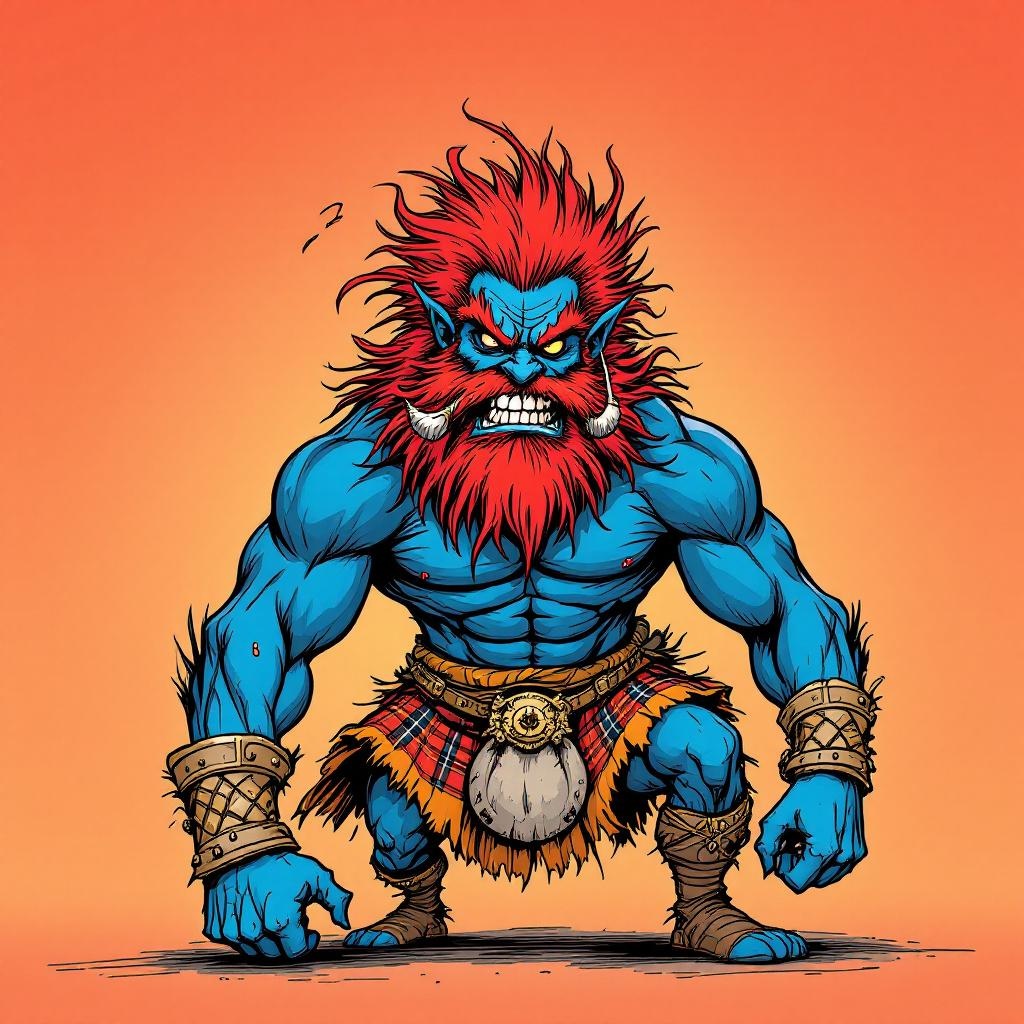
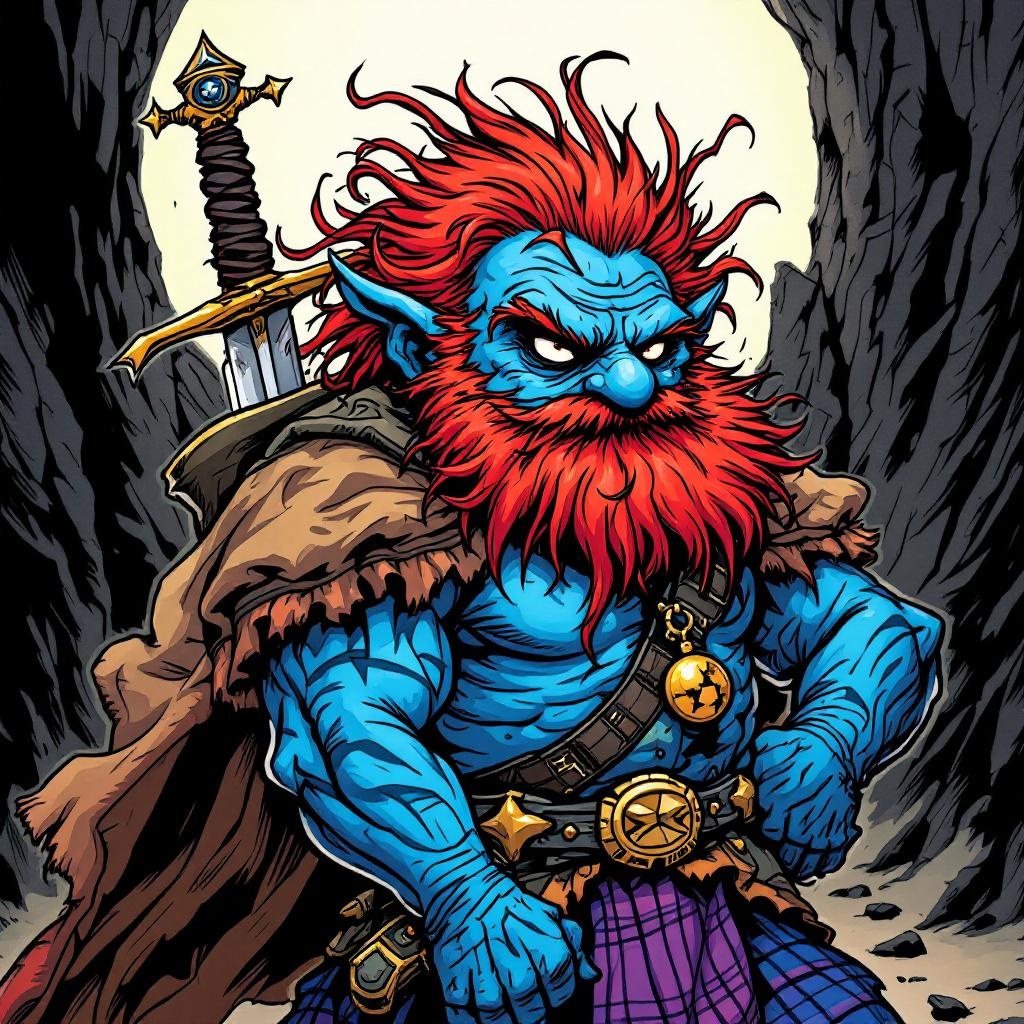
Pratchett described the Nac Mac Feegle as "tiny little Scottish Smurfs who have seen Braveheart altogether too many times." The joke is obvious: these are cartoon warriors, parodies of Scottish nationalism and Celtic fairy folklore rolled into six inches of belligerent blue skin.
But underneath the comedy, Pratchett is making a serious argument about what freedom actually means.
The Feegles' battle cry rejects imposed hierarchy: no kings, queens, lords, or masters. These are positions that claim power by right of birth or conquest—power that doesn't ask permission and doesn't earn loyalty.
But the Feegles don't reject all structure. They have their kelda. They have their Big Man. They have roles and responsibilities and a social order that's served them for generations. What they reject is the imposition of structure from outside—the assumption that power naturally belongs to whoever claims it loudest.
"Freedom isn't the absence of all authority. It's the right to choose which authority you accept."
This is a more sophisticated view of freedom than pure anarchism. The Feegles understand that community requires coordination, that some decisions need to be made for the group, that leadership has value. They just insist that such authority be earned, chosen, and accountable.
It's also, not coincidentally, very close to Pratchett's view of good government throughout Discworld. Lord Vetinari rules Ankh-Morpork, but he rules by being useful. Vimes commands the Watch, but he commands by being right there in the muck with everyone else. Granny Weatherwax leads the Lancre witches, but her authority comes from being the best at what she does, not from any title.
The best leaders, Pratchett suggests, are the ones who lead despite not wanting power, who serve despite being in charge, who earn their authority fresh every day instead of resting on tradition.
The Nac Mac Feegle just express this philosophy more... directly.
"We Willna Be Fooled Again"
The last line of the battle cry is the most important: "We willna be fooled again!"
This isn't just about rejecting kings. It's about learning from experience. The Feegles served the Queen of the Elves once, and it ended badly. They were "fooled" into believing she had the right to command them. Never again.
There's wisdom in that refusal to be fooled. Throughout Discworld, Pratchett shows how power perpetuates itself through deception: the glamour of the elves, the divine right of kings, the belief that some people are just naturally meant to rule others. The Feegles have inoculated themselves against all of it.
They can't be glamoured by elves because they don't believe in the elves' superiority.
They can't be intimidated by authority because they don't recognize authority they haven't chosen.
They can't be threatened with death because they think they're already dead.
This isn't stupidity—it's a kind of radical clarity. The Feegles see through the things that make other beings compliant: fear of death, respect for power, belief in hierarchy. Having rejected all of it, they're free in a way that even humans can rarely achieve.
And yet they choose to serve. They choose to protect. They choose to love their kelda and their big wee hag and their brothers and their home in the chalk.
That's Pratchett's point: freedom isn't the absence of commitment. It's the ability to choose your commitments. The Feegles are free precisely because everything they do, they do willingly.
The Freedom to Serve
In Wintersmith, Jeannie places Rob under a geas—a magical compulsion—to protect Tiffany from the Wintersmith's obsession. (Daft Wullie keeps thinking it's an actual goose, which provides excellent comic relief.)
But here's the thing: Rob was already protecting Tiffany. Had been for years. The geas just formalized what he'd chosen to do freely.
This is the final piece of Pratchett's freedom philosophy. True freedom isn't doing whatever you want—that's just selfishness with good PR. True freedom is choosing your obligations and then honoring them completely.
The Feegles chose Tiffany. They chose the kelda. They chose each other, hundreds of brothers bound by something stronger than any command: the decision to belong together.
Rob Anybody leads them into that belonging. Nae king. Nae quin. Nae laird. Nae master. Just a Big Man who fights alongside his brothers, serves his kelda, and protects his big wee hag—not because anyone told him to, but because he decided this is who he wants to be.
That's freedom. That's Pratchett's vision of what authority should look like and how people should relate to it.
And it comes wrapped in six inches of blue-skinned fury who thinks stealing sheep is a perfectly respectable profession.

The Bottom Line
Rob Anybody and the Nac Mac Feegle seem like comic relief—tiny Scottish warriors who headbutt their way through problems and can't enter a pub without destroying it. They are absolutely hilarious.
But they're also Pratchett's meditation on freedom, authority, and what it means to serve willingly.
The battle cry tells you what they reject: imposed authority, assumed power, the belief that some people naturally have the right to rule others. But what they choose—the kelda, the clan, Tiffany, each other—tells you what they value.
Freedom isn't chaos. It's choosing your chains.
And the Feegles? They chose well.
Crivens.
Dive deeper into the Feegle world: learn about Rob Anybody's bravest moment—learning to read, or explore the magical diplomatic solution where Tiffany became the clan's temporary kelda.