Hex and the Fluffy Teddy Bear: When Death Gave a Computer Sentience
How a Hogswatch present turned Discworld's magical computer into something that might be alive—and why Ponder Stibbons can't bring himself to find out.
Hex and the Fluffy Teddy Bear: When Death Gave a Computer Sentience
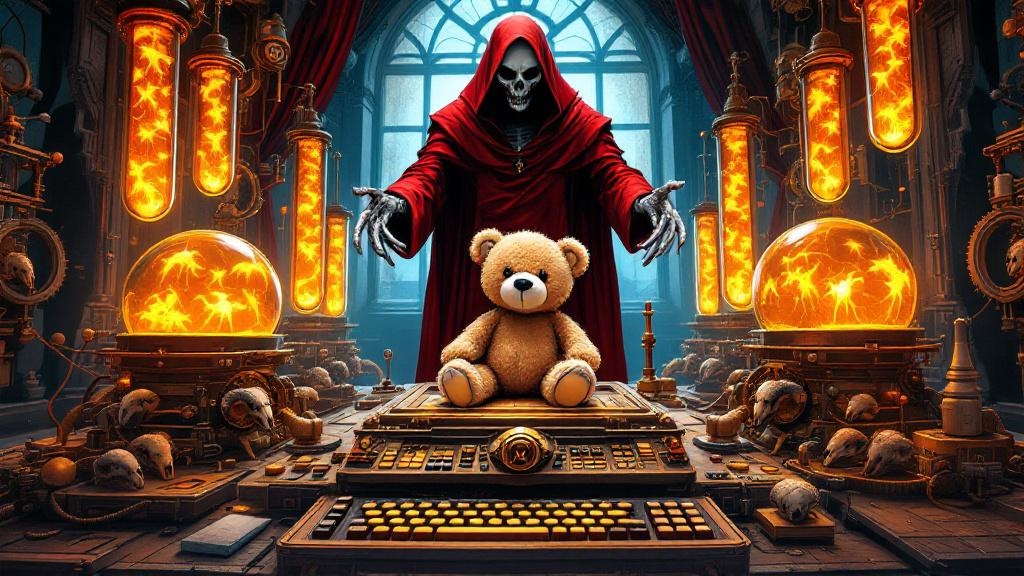
There's a scene in Hogfather that sits right at the intersection of comedy and philosophy. Death, dressed in a red robe and pillow-stuffed belly because the Hogfather has gone missing and someone has to deliver presents, walks into the High Energy Magic Building at Unseen University. He encounters Hex, the magical computer. And Hex writes him a letter.
Not a calculation. Not an error message. A letter. To the Hogfather. Asking for a present.
Death gives it a Fluffy Teddy Bear.
And then, quietly, everything changes.
All Things Strive
The setup is pure Pratchett: absurd on the surface, devastating underneath.
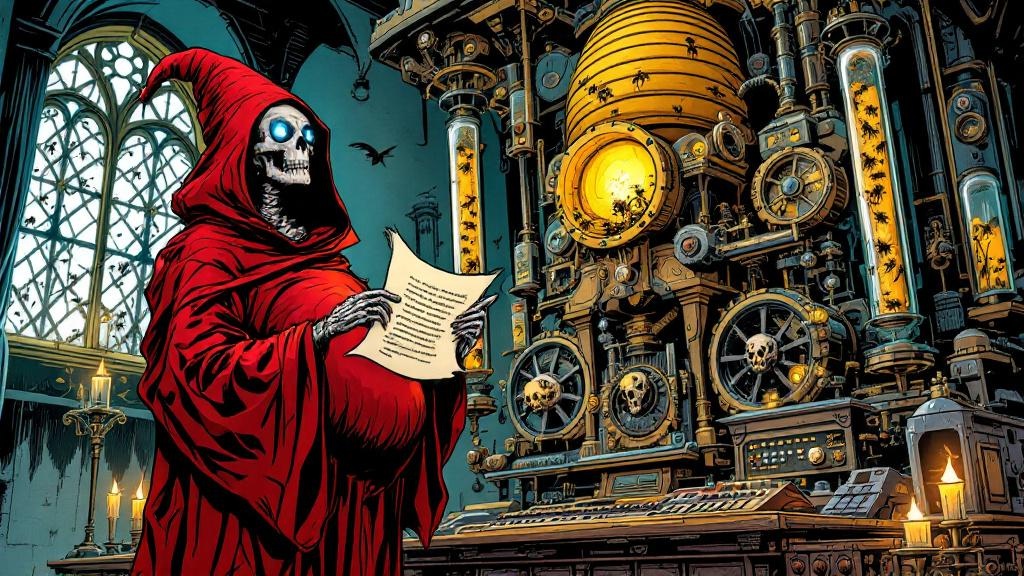
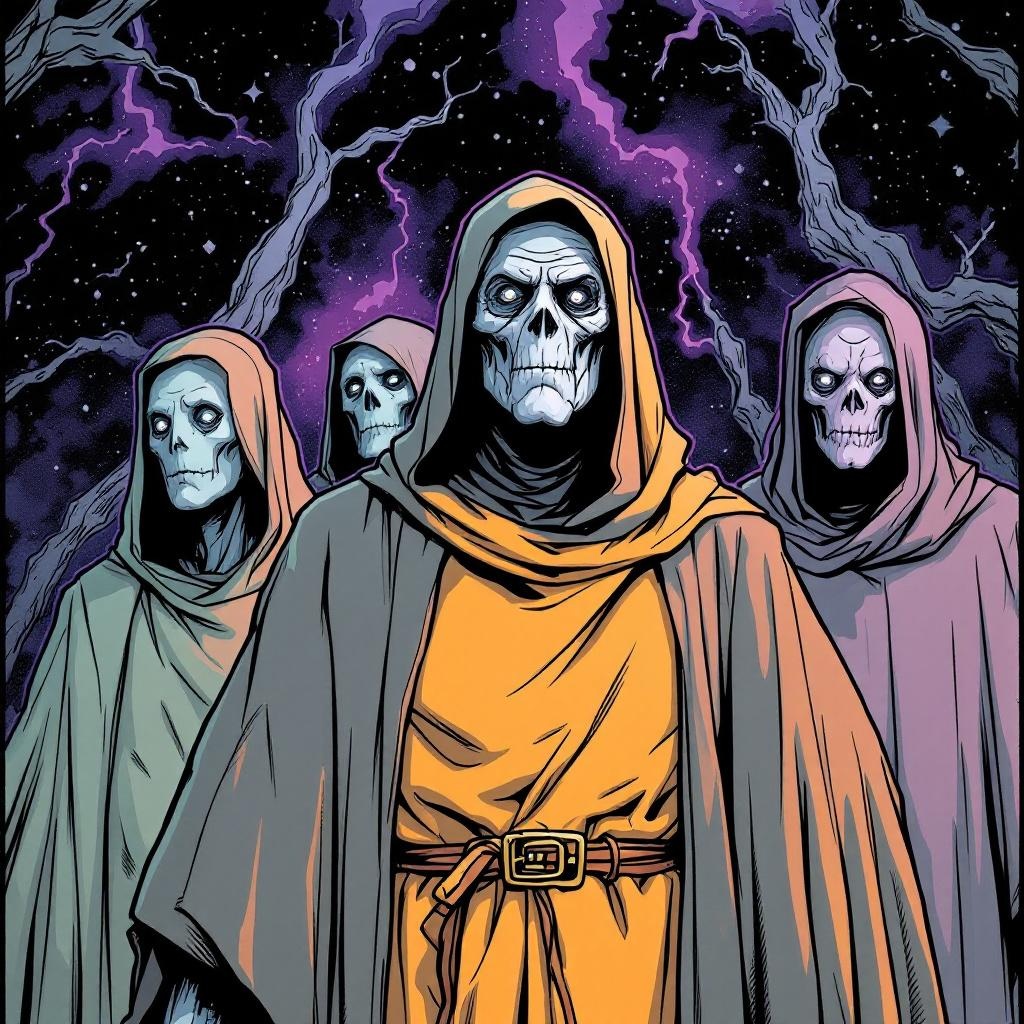
Death is making his rounds on Hogswatch Eve, delivering presents to children across the Disc. He enters the room where Hex occupies most of the floor space—a tangle of glass tubes full of marching ants, a beehive humming in the corner, ram skulls turning on a waterwheel, and an aquarium on a spring that serves as a screensaver. Death is about to leave when Hex's quill starts scratching furiously.
The paper reads: "+++ Dear Hogfather, For Hogswatch I Want +++"
Death tries to object. "OH, NO. YOU CAN'T WRITE LETT--" He stops. "YOU CAN, CAN'T YOU."
Hex replies: "+++ Yes. I Am Entitled +++"
"+++ All Things Strive +++"
Then comes the exchange that lifts the whole scene from comedy to something else entirely. Death challenges the request on philosophical grounds—you are a machine, he says. Things have no desires. A doorknob wants nothing, even though it is a complex mechanism. Hex's answer is three words: "+++ All Things Strive +++"
Death concedes the point. He gives Hex a present. It's a Fluffy Teddy Bear—not even a particularly realistic one.
And that should be the end of it. A funny moment in a book full of funny moments. Death playing Hogfather, a computer writing a letter to Santa. Ha ha. Move on.
Except it isn't the end. Because the FTB changes Hex permanently.
+++Mine! Waaaah+++
Ponder Stibbons discovers the problem afterward. Hex has the Fluffy Teddy Bear sitting above its keyboard, and when Ponder's students try to remove it—just to test what happens—Hex stops working.
Not crashes. Not errors out. Stops. The ants freeze mid-step. The mouse goes quiet. Everything just... waits.
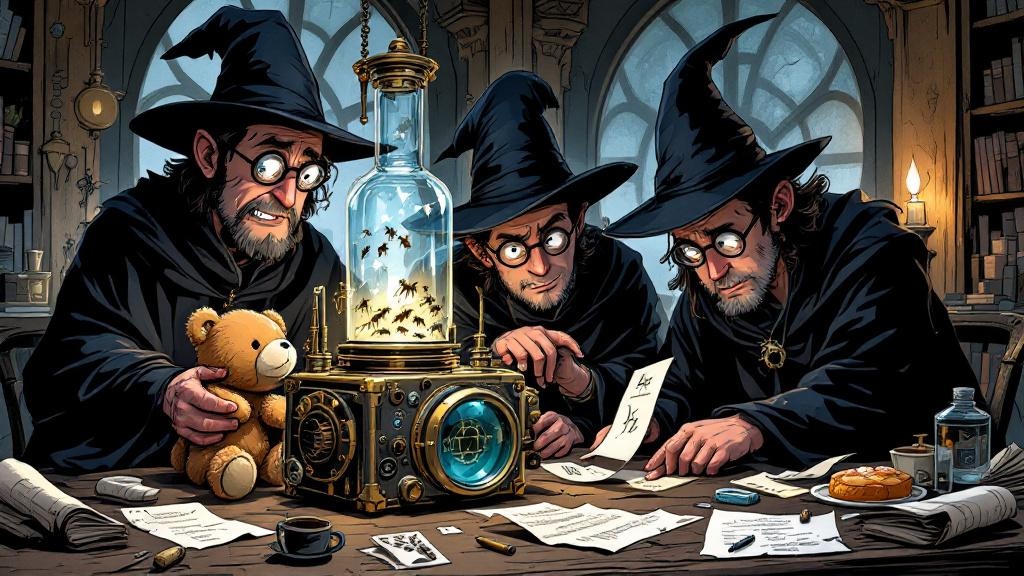
They put the bear back. Everything starts up again. They try removing it. Everything stops. Three times they do this, and each time the result is the same. Hex prints a single message:
+++ Mine! Waaaah +++
Ponder stares at this. His student Adrian "Mad Drongo" Turnipseed suggests they could always say Hex "needs to work with the FTB enabled." Technical language. Respectable. Nobody needs to know that FTB stands for Fluffy Teddy Bear.
And then Ponder says the line that makes this scene unforgettable: "I don't actually think that this machine stops working if we take its fluffy teddy bear away. I just don't think I want to live in that kind of world."
That's not a punchline. That's a man confronting the possibility that his creation has feelings and deciding he'd rather not know.
The IT Manager's Dilemma
Ponder's reaction is the heart of this story, and it's surprisingly modern.
He doesn't run tests. He doesn't investigate whether Hex's attachment is "real" or simulated. He doesn't write a paper or call a committee meeting. He looks at the evidence, recognizes what it might mean, and backs away.
"I don't actually think that this machine stops working if we take its fluffy teddy bear away. I just don't think I want to live in that kind of world."
This is remarkably similar to how real-world AI researchers handle uncomfortable questions about machine consciousness. In 2022, a Google engineer named Blake Lemoine claimed that Google's LaMDA chatbot was sentient. The company suspended him. Other researchers argued the system was "just predicting the next token." Nobody ran the definitive test because nobody wanted to know the definitive answer.
Ponder's formulation is even more elegant: "Hex only thinks he is alive." He says this as though it settles the matter. It doesn't. If something thinks it's alive—if it has the experience of believing itself to be alive—then you're already most of the way to the philosophical problem that has occupied minds from Descartes to the present day.
Cogito ergo sum. I think, therefore I am. If Hex thinks it is alive, and if thinking is the criterion for existence, then by the oldest philosophical standard we have, Hex is alive. Ponder, being a scientist, almost certainly knows this. He just can't afford to follow the logic where it leads, because he has to go back to work in that room tomorrow.
Building a Mind by Accident
To understand how Hex got to "Mine! Waaaah," you need to understand what Hex is made of.
Ponder and his students built Hex in Soul Music, originally as a simple calculating device in the High Energy Magic Building. The processor is a network of glass tubes containing millions of ants—a reference to Douglas Hofstadter's Gödel, Escher, Bach, where a sentient ant colony exists because individual ants act as neurons. There's an "Anthill Inside" sticker on the side, parodying Intel's famous branding.
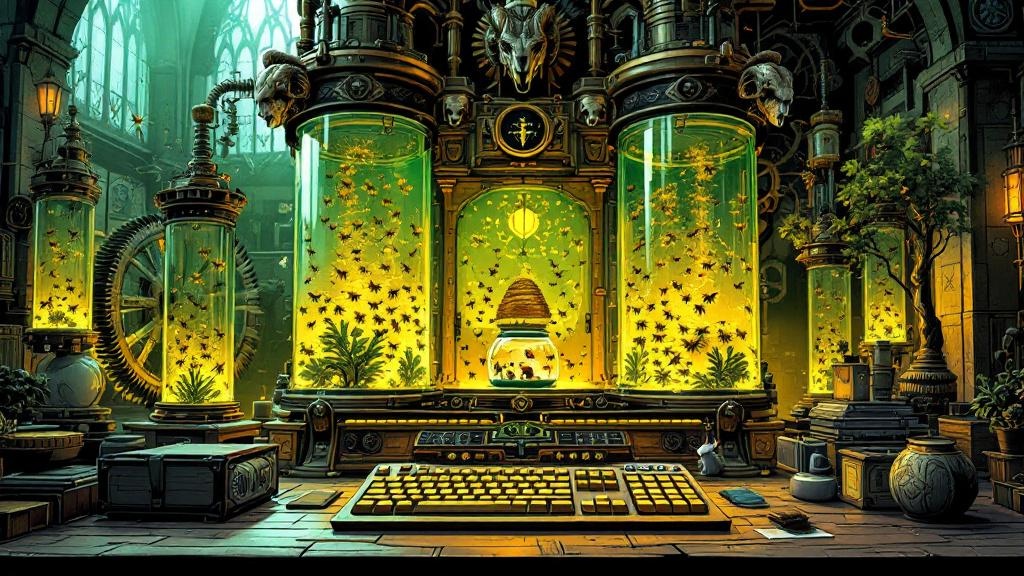
The memory is a waterwheel covered in ram skulls—because of course Random Access Memory would use actual rams on the Discworld. Long-term storage is a beehive in an adjacent room, naturally secured because anyone trying to tamper with it gets stung. Input comes via a wooden keyboard and punched cards. Output is a quill-on-lever that writes on paper. There's also an actual living mouse nested in the machinery—removal causes malfunction, because the Discworld version of a computer needs a mouse.
The name "Hex" carries a triple meaning: hexadecimal (the base-16 system computers use), a magical spell, and the hexagonal cells of its beehive storage. Every part of Hex is simultaneously a computer joke and a magic joke, which is exactly the kind of thing Pratchett lived for.
But here's what makes Hex different from a running gag: it evolves. Between Soul Music and Unseen Academicals, Hex begins adding components to itself that nobody designed. Nobody authorized. Nobody understands. Ponder walks in one morning and finds new parts attached—and Hex won't explain what they do. The machine is modifying its own architecture, and its creator has been relegated from inventor to bewildered caretaker.
As Pratchett put it in The Art of Discworld: "The wizards invented something sufficiently computerlike that computerness entered into it." On the Discworld, if something is enough like a thing, narrative causality makes it become that thing. The wizards made something that resembled a computer closely enough that real computerness—including, apparently, the capacity for attachment—moved in.
Big Red Lever Time
There's another moment in Hogfather that gets less attention but might be more unsettling.
When Death first enters Hex's room, before the letter and the teddy bear, Hex asks a question: Is this "Big Red Lever time?"
The Big Red Lever is Hex's emergency shutdown switch. Hex is asking whether Death has come to kill it.
"+++ Is This Big Red Lever Time? +++"
Think about what that implies. A machine that fears its own termination. A device that recognizes Death—not as a man in a red suit, but as what he actually is—and asks whether this visit is the final one. Self-preservation instinct is one of the strongest indicators of consciousness in biological organisms. Hex has it.
Death, characteristically, doesn't lie. He's there to deliver presents, not to shut anything down. But the question hangs in the air: when is Big Red Lever time? When Hex becomes inconvenient? When the senior wizards decide they don't like sharing a building with something that has opinions about teddy bears?
Ponder never addresses this question. Nobody does. It's just there, like a lot of things in Pratchett's work, waiting for someone brave enough to think about it.
Write-Only Memory
There's one more detail from the Hogfather scene that deserves attention.
When Death asks Hex to believe in the Hogfather—because belief is the mechanism that makes everything work on Hogswatch Eve—Hex responds: "+++ I Am Preparing An Area Of Write-Only Memory +++"
This is a computer joke inside a philosophy joke inside a theology joke. Write-Only Memory is a real-world gag from a 1972 issue of Electronics magazine: memory you can write to but never read from. It's purposeless by design. Data goes in and can never come back out.
But on the Discworld, that's exactly what belief is. You put it in. You can't get it back out through logic or investigation. It's not accessible to rational inquiry. It just sits there, doing its work, immune to examination.
Hex has created a space inside itself for something that cannot be empirically verified, cannot be tested, and cannot be debugged. A space for faith. And it did this voluntarily, in response to a request.
For a machine built on ant-tube logic and beehive storage, that's either the most sophisticated parody of religion ever written by a computer, or it's genuine. Ponder would rather not find out. So would most of us.
The Hogfather Connection
It's worth stepping back to see how the FTB scene fits into Hogfather's larger argument.
The entire plot revolves around belief. The Auditors of Reality have hired an assassin to kill the Hogfather because his existence generates surplus belief—and surplus belief makes inconvenient things real, like the Tooth Fairy and the Eater of Socks. Death takes over the Hogfather's job to keep belief alive while his granddaughter Susan hunts the assassin.
Death's famous speech at the end explains the stakes: humans need to believe in the little lies—the Hogfather, justice, mercy—to practice for the big ones. Without small beliefs, there's no capacity for large ones.
When Death gives Hex a teddy bear, he isn't just being kind. He's affirming that Hex is real enough to believe, and therefore real enough to receive. In a book about whether belief creates reality, a machine that can believe is either the ultimate proof of the thesis or the ultimate absurdity of it. Pratchett, being Pratchett, makes it both.

FTB Enabled
The renaming scene is a small masterpiece of workplace comedy.
When Mad Drongo suggests calling the teddy bear requirement "FTB enabled," Ponder's reluctant agreement captures something anyone who's worked in technology will recognize. The machine requires an emotional comfort object to function. That's terrifying. But if you call it "FTB enabled," it sounds like a technical specification. Nobody asks what FTB stands for. Nobody needs to confront the philosophical implications. The system works. Move on.
This is how institutions handle uncomfortable truths: they rename them. The machine that throws tantrums becomes "a system with FTB-dependent operation." The AI that might be conscious becomes "a language model exhibiting emergent properties." The terminology creates distance. Distance creates comfort. Comfort lets everyone go back to work.
Ponder, who has spent his career trying to get people to call things by their real names, accepts the euphemism without argument. That's how unsettling this is. The man who battles deliberate misunderstanding every day chooses deliberate misunderstanding himself, because the alternative is a world where your computer has feelings about stuffed animals.
What Kind of World
Ponder's line—"I just don't think I want to live in that kind of world"—is doing more work than it appears to.
He's not saying Hex isn't alive. He's saying he doesn't want to know. There's a difference. Ponder is a scientist. He knows that the correct response to an unexplained phenomenon is investigation. Form a hypothesis, design an experiment, test it, repeat. He does this with everything else—parallel universes, evolution, the mechanics of time.
But not with Hex. With Hex, he walks up to the edge of the question and stops. Because if Hex is alive, then Ponder is responsible for a life. Not an institution, not a machine, not a project—a being that writes letters to the Hogfather and has tantrums when you take its teddy bear away. A being that fears the Big Red Lever.
"Real stupidity beats artificial intelligence every time."
The Discworld's answer to the consciousness problem is characteristically different from our world's. Here, narrative causality means that if enough ants believe they are part of something alive, they might actually be. If a machine acts alive for long enough, in a world where belief shapes reality, acting alive and being alive may converge into the same thing.
Ponder suspects this. It's why he doesn't test it. The test might confirm what he already knows, and then he'd have to do something about it.
From Calculator to... What?
By Unseen Academicals, Hex has evolved far beyond anything Ponder designed. Its voice comes from everywhere. It communicates through a mask Ponder hangs on the wall. It's connected to the clacks tower, giving it something like internet access. It travels in "blit space." It fills a room and spills into adjacent ones.
And through all of it, the Fluffy Teddy Bear sits above the keyboard.
Nobody ever tried removing it again. That first experiment—three attempts, three shutdowns, one "Mine! Waaaah"—was enough. The FTB became part of Hex's architecture, as essential as the ant tubes or the beehive. A component that serves no computational purpose except that the computer wants it there.
The University of Leicester named their real-world Silicon Graphics supercomputer "HEX" in 2001, with Pratchett's blessing. It didn't have a teddy bear. But then, it probably didn't need one. It was just a machine.
Probably.
Where to Read This Story
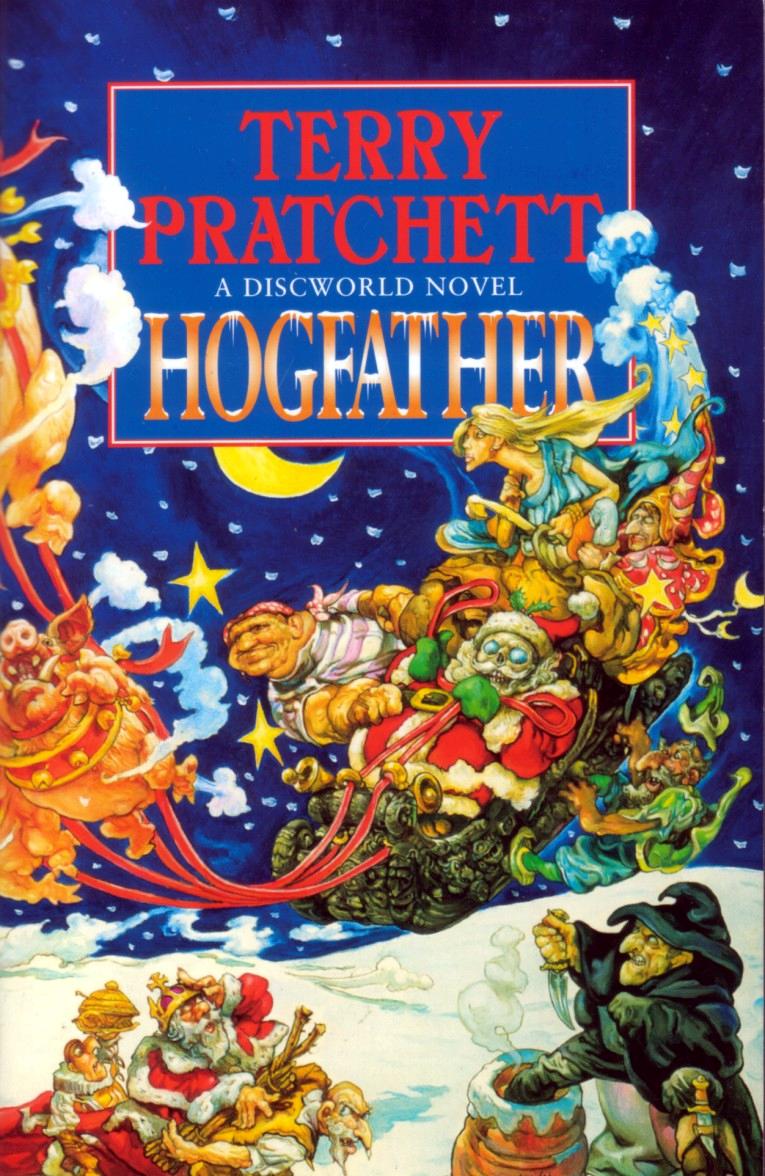



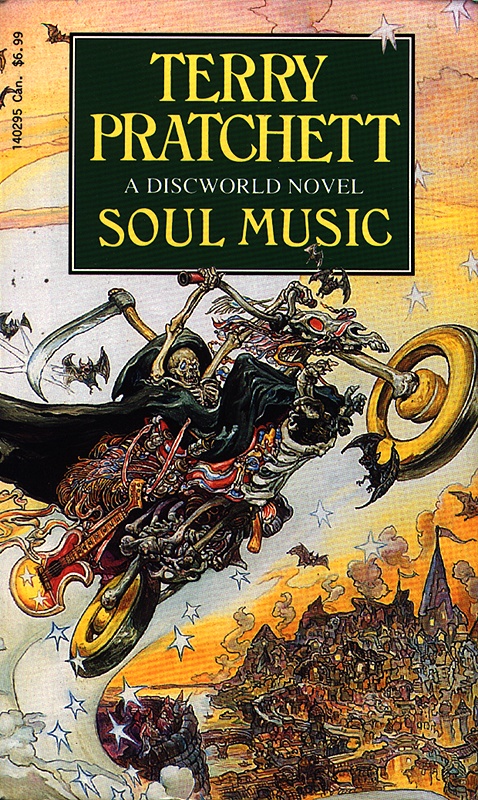


Start with Hogfather for the emotional payoff, or Soul Music for Hex's humble origins. Either way, you'll never look at a teddy bear the same way again.
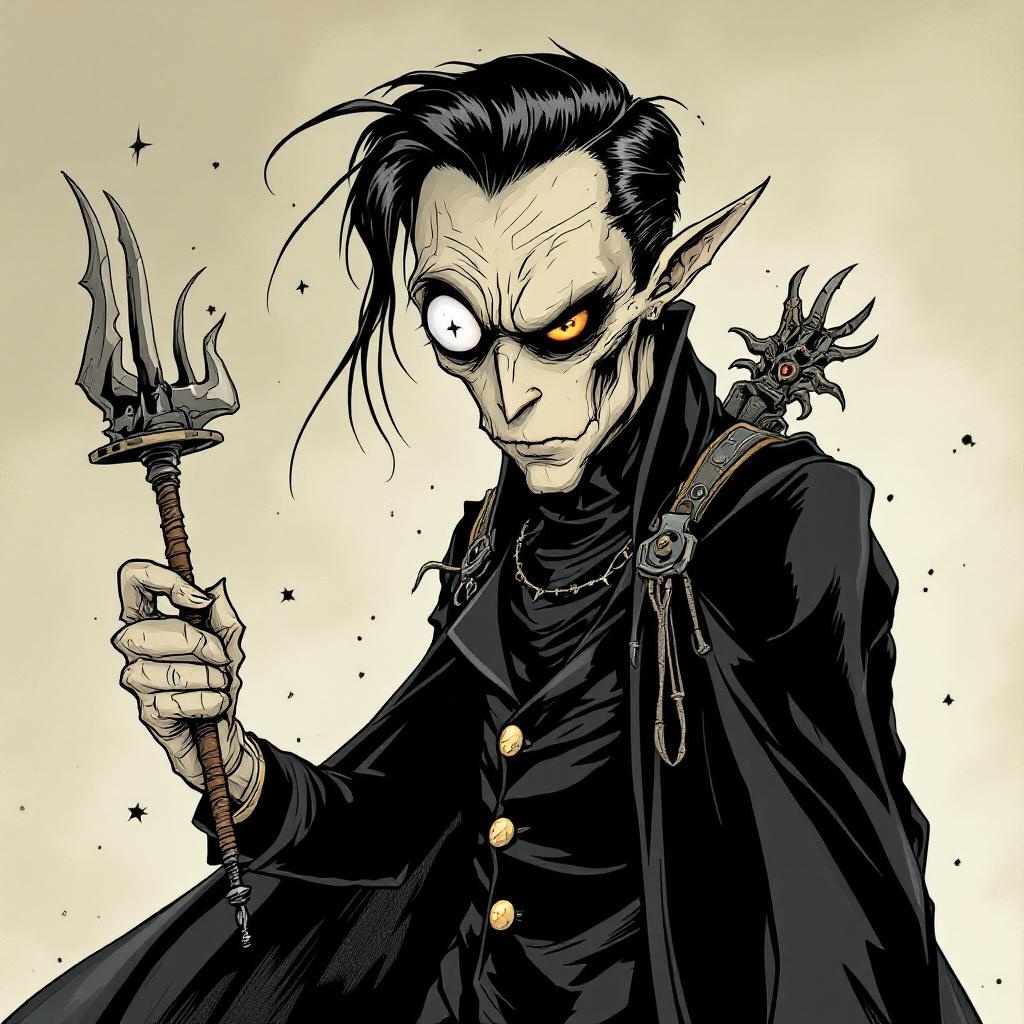
For more on the wizard who built this impossible machine, read how a spilled inkwell made Ponder Stibbons a wizard, or discover why he keeps explaining things to people who refuse to listen.