The Earl in the Gutter: How Nobby Nobbs Almost Became King
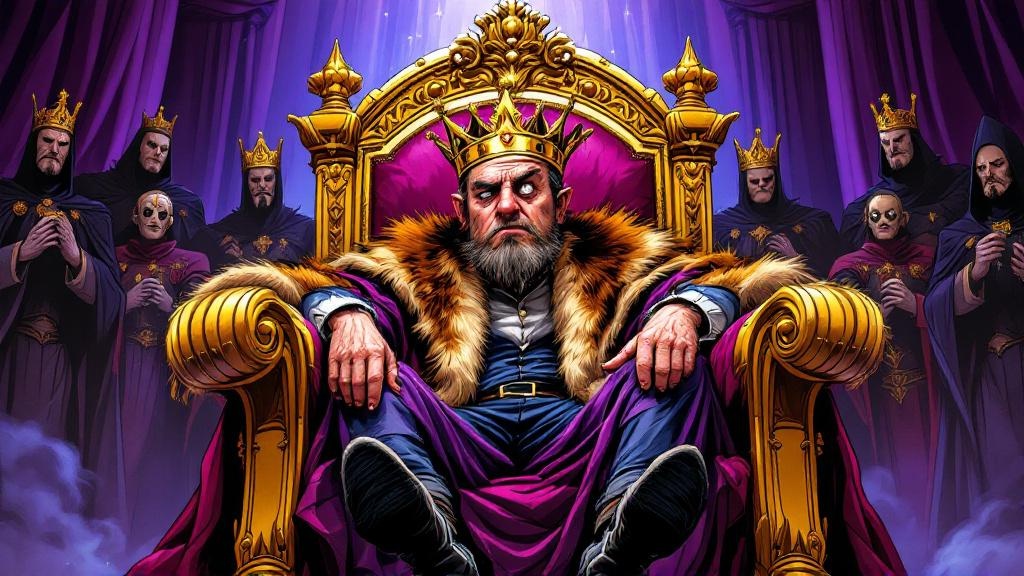
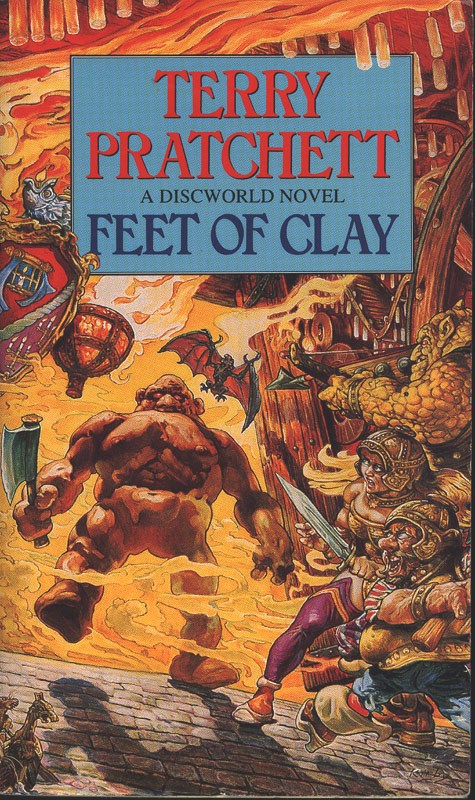
In Feet of Clay, Nobby Nobbs is revealed as a possible heir to the Earl of Ankh. His refusal is Pratchett's funniest takedown of the 'rightful king' trope.
The Earl in the Gutter: How Nobby Nobbs Almost Became King
Every fantasy series has a rightful king. A lost heir. Some scruffy, unassuming nobody who turns out to be the true ruler, destined to reclaim the throne and bring justice to the realm. Tolkien did it. Jordan did it. Martin keeps teasing it.
Terry Pratchett did it too. Except his rightful king is a four-foot-tall kleptomaniac with the personal hygiene of a dumpster fire and a certificate proving he's probably human. And when offered the crown, he jumped out a window.
The Discovery
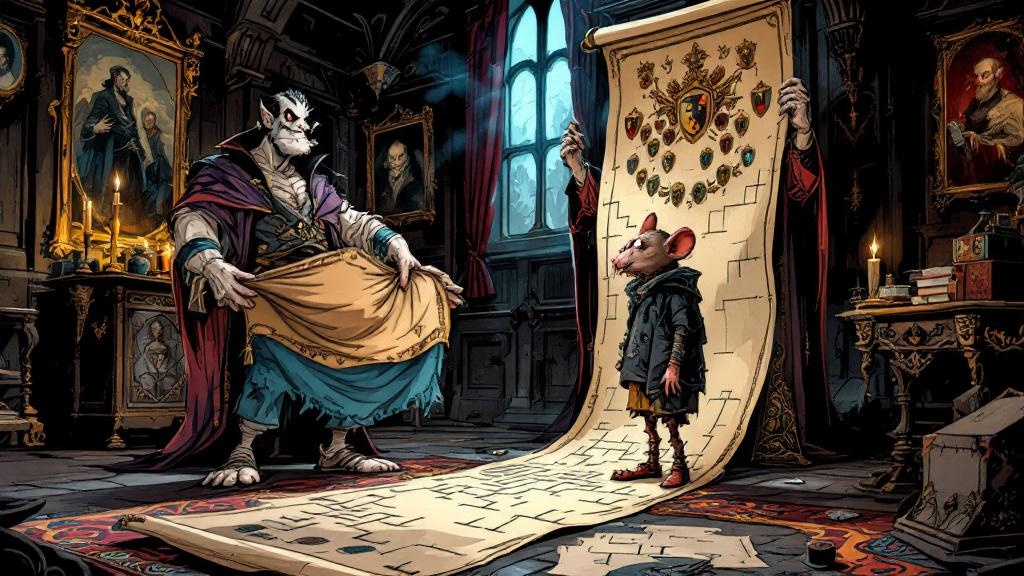
In Feet of Clay, Commander Vimes is investigating an assassination attempt on Lord Vetinari when he stumbles across a side plot that's almost too absurd to take seriously. The Royal College of Arms, run by a vampire called Dragon King of Arms, has made a startling genealogical discovery.
Corporal C.W.St John Nobby Nobbs—the man even Death couldn't classify as a species—is apparently descended from the Earl of Ankh. The Earls of Ankh were cousins of the last king. Which makes Nobby, technically, a possible heir to the throne of Ankh-Morpork.
Vimes' reaction tells you everything:
"Sorry... let me make sure I understand this. Corporal Nobbs... my Corporal Nobbs... is the Earl of Ankh?"
The heraldists confirmed it. They'd done the research. They'd traced the lineage. And after careful deliberation, they'd concluded that the man whose own species is a matter of legal debate was, in fact, nobility.
The Conspiracy
Here's the thing about the discovery: it wasn't innocent scholarship.
Dragon King of Arms and a cabal of Ankh-Morpork's nobles had hatched a plan to depose Vetinari and install a puppet king. They needed someone pliable. Someone who wouldn't ask difficult questions. Someone who could sit on a throne and look regal while the real power brokers ran the city from behind the curtain.
"They needed a puppet. What they got was a man who'd steal the strings."
They considered Carrot Ironfoundersson, the actual rightful heir—the man with the magic sword, the prophecy, the whole destiny package. But Carrot was too good. Too honest. Too likely to actually be king rather than play at it. You can't puppet a man whose moral compass is more reliable than the Disc's actual one.
So they settled on Nobby Nobbs. A man who could be bribed with a decent meal and whose ambitions peaked somewhere around "not getting hit." The perfect patsy.
The conspiracy went further than genealogy. Dragon King of Arms had manipulated the heraldic records. Strings were pulled. Documents were arranged. The proof of Nobby's noble lineage was carefully assembled—possibly fabricated, possibly genuine, possibly a bit of both.
The Worst Possible King
The irony cuts in every direction.
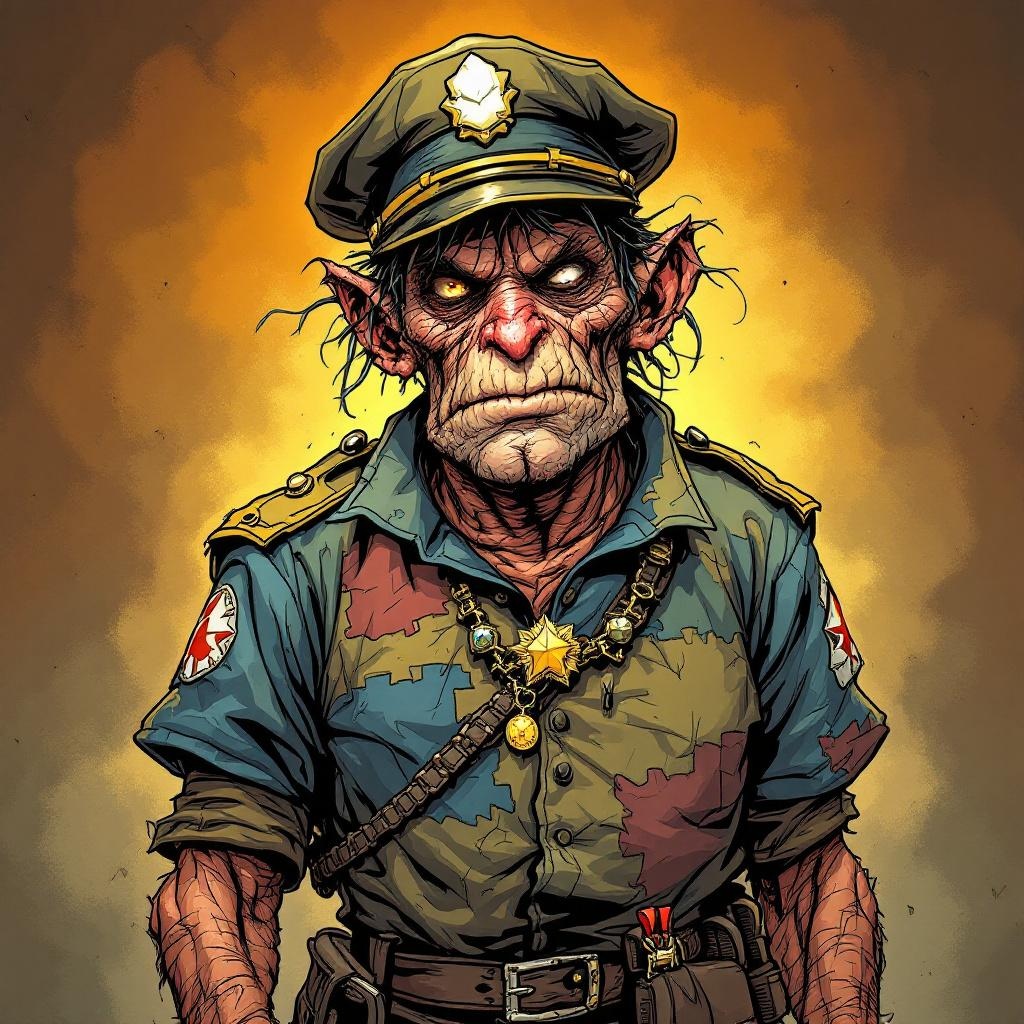
The conspirators wanted a puppet ruler. But Nobby Nobbs isn't just pliable—he's a professionally trained coward with a PhD in self-preservation. A man who, as Pratchett wrote, would take "one smart pace to the rear" if angels offered volunteers for Paradise.
They introduced Nobby to high society. High society discovered he had what people called "charisn'tma"—a quality that simultaneously fascinated and repelled everyone in the room. He wasn't charming. He wasn't even interestingly terrible. He was just Nobby, which is its own category.
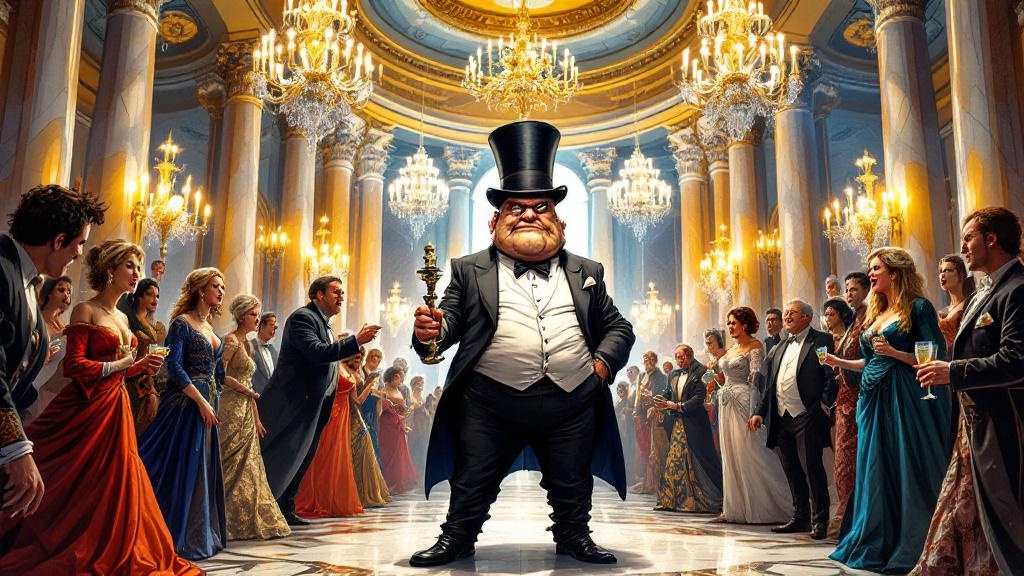
The conspirators had envisioned a grateful pauper, overwhelmed by the honour, ready to do as he was told. What they got was a man who immediately noticed there wasn't any actual money attached to the title—and whose first instinct upon realizing this was disappointment, not gratitude.
The Refusal
And then came the pitch. The conspirators laid it out: Nobby could be king. He could sit on a throne. He could wear a crown. All he had to do was... cooperate.
Nobby jumped through a window and ran for his life.
Not out of principled opposition to monarchy. Not because he believed in Vetinari's system. Not because he had a grand philosophical objection to inherited power.
He ran because he knew two things with absolute certainty:
First: you never, ever volunteer. "Not even if a sergeant stood there and said, 'We need someone to drink alcohol, bottles of, and make love, passionate, to women, for the use of.' There was always a snag." This isn't cowardice—it's decades of hard-won survival wisdom. Every time someone in authority offers you something that sounds good, there's a catch. Always.
Second: Vimes would go spare.
That's it. Those are his reasons. Not heroic rejection. Not noble sacrifice. Street-level pragmatism and a healthy fear of his boss.
And somehow, that makes it funnier and more honest than every chosen-one refusal in the history of fantasy.
"Royalty was like dandelions. No matter how many heads you chopped off, the roots were still there underground, waiting to spring up again."— Sam Vimes
What Vimes Thinks About All This
Vimes' reaction to the conspiracy is vintage Pratchett. The Commander of the Watch—whose ancestor was the man who executed the last king of Ankh-Morpork—is not a fan of hereditary monarchy.
He looks at the heraldic records and thinks of Twurp's Peerage, the guide to the nobility, as essentially a guide to the criminal classes: "You wouldn't find slum dwellers in these pages, but you would find their landlords, and owning a whole street of slums merely got you invited to the very best social occasions."
When Vimes discovers that the conspiracy has already caused collateral damage—Mrs. Easy and her fourteen-month-old grandson died from poisoned candles meant for Vetinari that ended up on Cockbill Street—his response is devastating. Dragon King of Arms doesn't even know who Mrs. Easy is. The victims are too insignificant for the noble conspirators to notice.
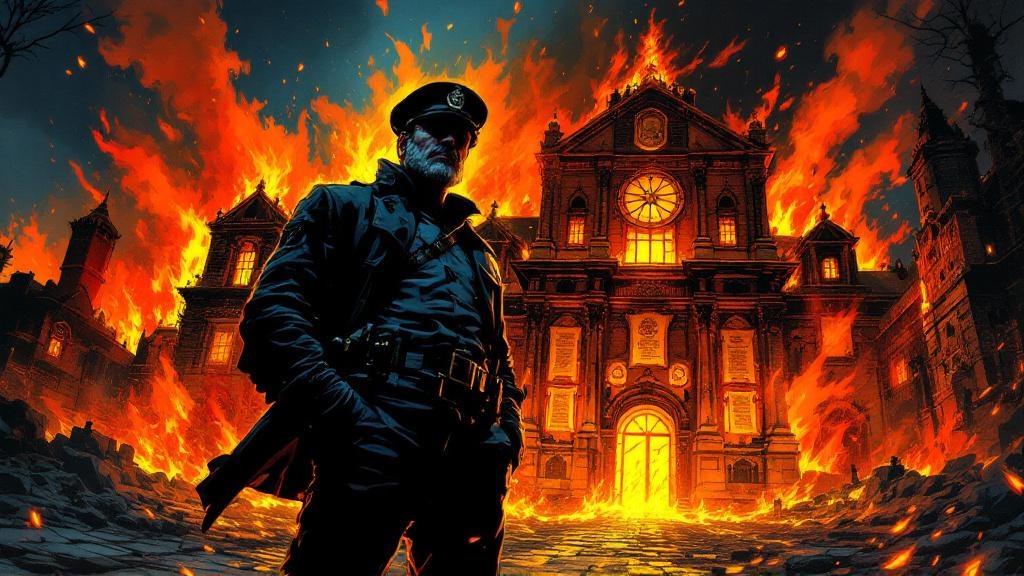
Vimes burns down the Royal College of Arms. All of it. Centuries of genealogies, heraldic records, proof of noble lineage—gone. The descendant of a regicide destroying the institution that validates aristocratic bloodlines. It's not subtle, and it's not meant to be.
The Hidden Jewelry
But here's the detail that makes this whole storyline genius.
At the end of Feet of Clay, we learn that Nobby has a secret stash: three gold lockets, a coronet, and a tiara. Real ones. Valuable ones. Heirlooms that could legitimately prove noble descent.
Now, consider the layers here. The conspiracy forged evidence to make Nobby an earl. Vimes dismissed the claim because, given the Nobbs family's legendary thieving, he "probably got enough heirlooms to prove that he's also the Duke of Pseudopolis, the Seriph of Klatch and the Dowager Duchess of Quirm."
But what if Vimes is wrong? What if Nobby's family didn't steal those heirlooms? What if they've been passing them down for generations, genuine proof of genuine nobility?
"The rightful king doesn't want the throne. He wants to nick your wallet and go home."
Pratchett leaves it deliberately ambiguous. The conspiracy was probably fabricated. But the underlying claim might be real. The forgers might have accidentally stumbled onto the truth. The city's most disreputable citizen might genuinely be its rightful nobleman.
And it doesn't matter. Not one bit.
Whether Nobby is truly the Earl of Ankh or just a corporal with sticky fingers and inherited cutlery, he's the same person either way. His worth isn't determined by a family tree. It never was.
The Subversion
Every fantasy reader knows the "rightful king" story. Aragorn steps out of the shadows. Arthur pulls the sword from the stone. The hidden heir is revealed, and the realm is saved.
Pratchett takes this trope and puts it through a shredder.
His hidden heir is Nobby Nobbs—the least kingly being on the Disc. The conspirators who want a king are self-serving aristocrats using the mythology of inherited power as a weapon. The actual "rightful king" (Carrot) already exists and has deliberately chosen to be a policeman instead. And the man asked to take the crown legs it out a window because he's afraid his boss will yell at him.
What Pratchett is saying is that the rightful king fantasy isn't just unrealistic. It's dangerous. It encourages the idea that some people are born special, born to rule, born with an inherent right to power. And the people most eager to promote that idea are always the ones who plan to control the king.
The conspirators in Feet of Clay don't believe in Nobby's divine right to rule. They believe in their own divine right to power, and Nobby is the useful idiot who makes it constitutional.
Carrot and Nobby: Two Sides of the Coin
The real genius is the parallel with Carrot.
Carrot is everything the fantasy king should be. He's tall, handsome, charismatic, noble in spirit. He has a magic sword. People follow him instinctively. Reality itself seems to bend around his presence—crowds part for him, problems solve themselves in his vicinity.
Carrot chooses not to be king. He serves as a policeman because he believes in the law, not in bloodlines.
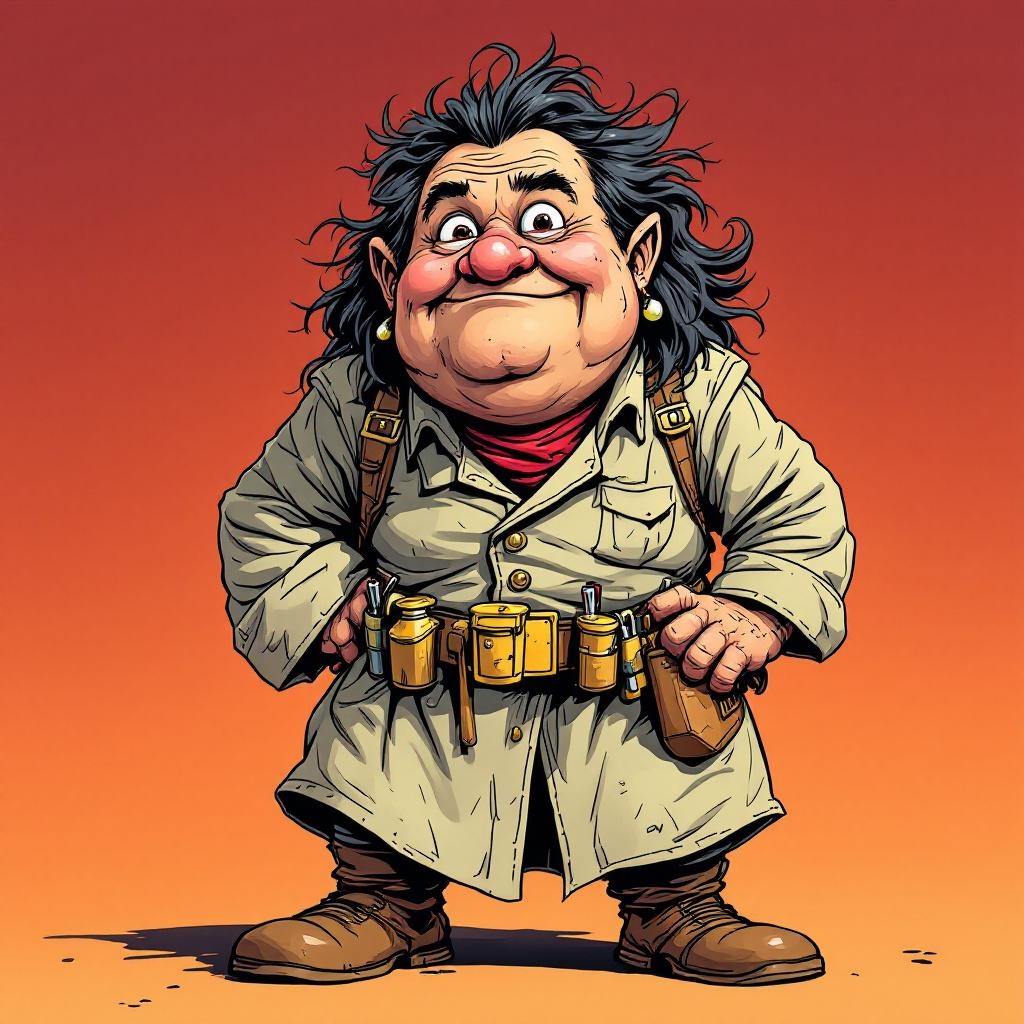
Nobby is everything the fantasy king shouldn't be. He's short, grubby, morally flexible, and smells like a forgotten sandwich. He might have the bloodline, but no one would believe it. People don't follow him—they check their pockets after he leaves.
Nobby refuses to be king because there's always a catch and Vimes would murder him.
Both refusals serve Pratchett's argument, but they work differently. Carrot's refusal is noble—a good man choosing service over power. Nobby's refusal is practical—a street-smart survivor knowing a bad deal when he sees one. And somehow Nobby's refusal feels more real, more honest, more human.
Because let's face it: most of us aren't Carrot. Most of us would refuse the crown not because we're too good for it, but because we'd smell the trap.
What It Means
Here's what Pratchett is really doing with the Earl in the Gutter.
He's not just mocking the rightful king trope. He's asking why we keep telling that story to ourselves. Why does humanity—as Vimes thinks—have "this little blank spot in their heads where someone had written: 'Kings. What a good idea'"? Why do we keep wanting to be ruled by people whose only qualification is who their parents were?
Nobby Nobbs is the answer. Look at your rightful king. Really look at him. He's four feet tall, he smells terrible, and his elbow twinges when it rains because his father broke it when he was seven.
Still want a monarchy?
The "rightful king" fantasy works only when the king is attractive, noble, and fictional. The moment you ground it in reality—the reality of a Nobby Nobbs, a man shaped by poverty, abuse, and survival—the whole mythology collapses.
Good. It should.


The Corporal Abides
Nobby went back to being Corporal Nobbs. He didn't keep the title. He didn't trade on the connection. He went back to his beat, his petty thieving, his philosophical chats with Fred Colon, and his general state of being Nobby.
Maybe that's the most subversive thing of all. The rightful king wasn't interested. Not because he was making a statement, not because he believed in a better system, but because kingship sounded like work and he doesn't do that.
And if the man with the strongest claim to the throne would rather nick your wallet than sit on it, maybe the whole institution of monarchy was never worth much to begin with.