The Secret Power of Nanny Ogg: Why Pratchett's Jolliest Witch Might Be the Strongest
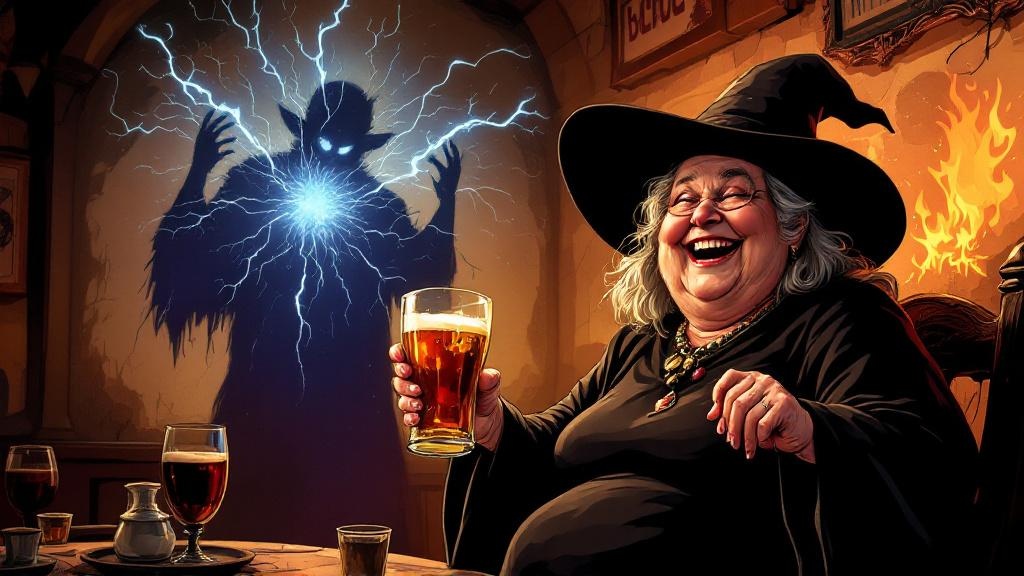
Terry Pratchett revealed that Nanny Ogg might be the most powerful witch in Discworld—and her genius lies in hiding it. Here's the evidence you missed.
The Secret Power of Nanny Ogg: Why Pratchett's Jolliest Witch Might Be the Strongest
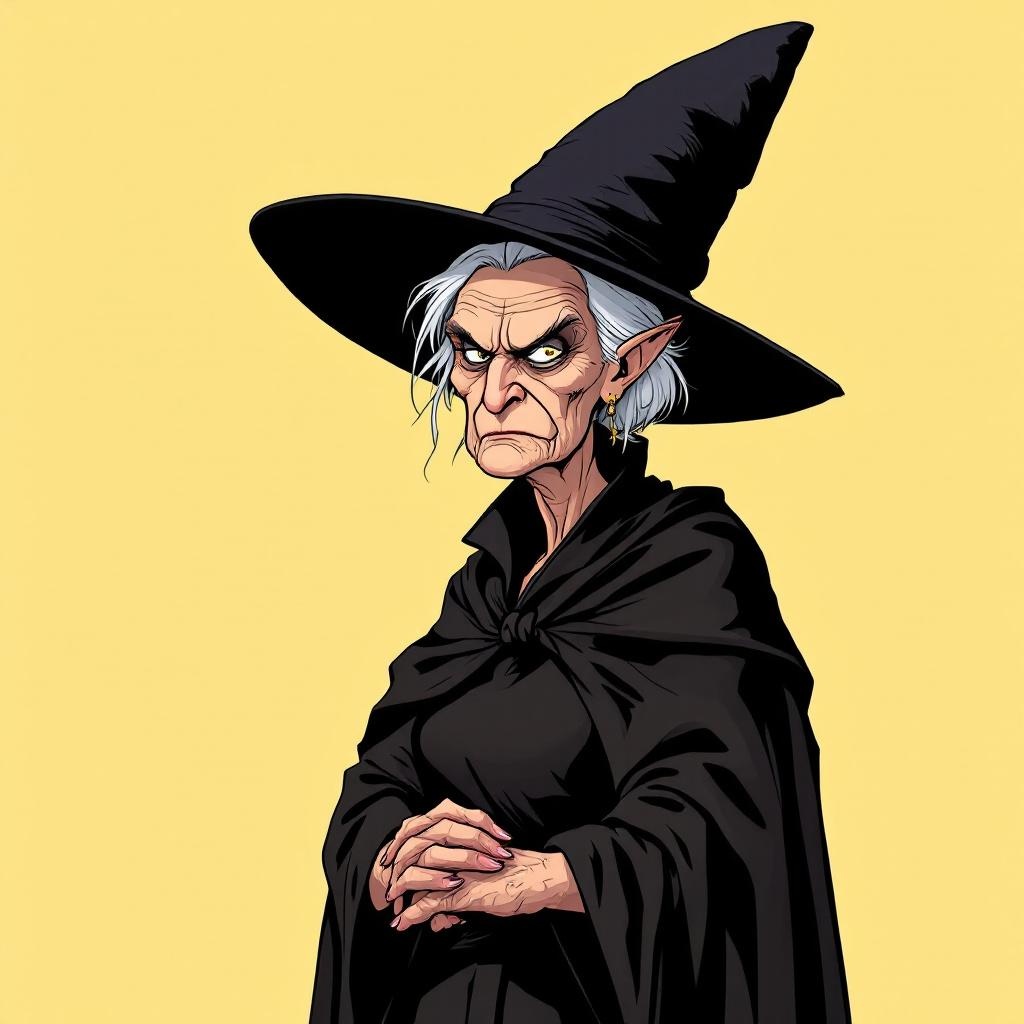
Everyone knows who the most powerful witch in Lancre is. It's Granny Weatherwax, obviously. She can Borrow entire swarms of bees, stare down vampires, and has been known to make Death blink first in a staring contest.
Except Terry Pratchett himself wasn't so sure.
In The Art of Discworld, Pratchett wrote something that should make every Discworld reader do a double-take: "I've always suspected that Nanny is, deep down, the most powerful of the witches, and part of her charm lies in the way she prevents people from finding this out."
"I've always suspected that Nanny is, deep down, the most powerful of the witches, and part of her charm lies in the way she prevents people from finding this out."— Terry Pratchett, The Art of Discworld
That's not subtext. That's not fan theory. That's the author telling us we've been looking at the wrong witch for forty-one books.
So why doesn't anyone notice? And what exactly is Nanny Ogg hiding behind that bottle of scumble and those increasingly inappropriate songs?
The Power We're Trained to See
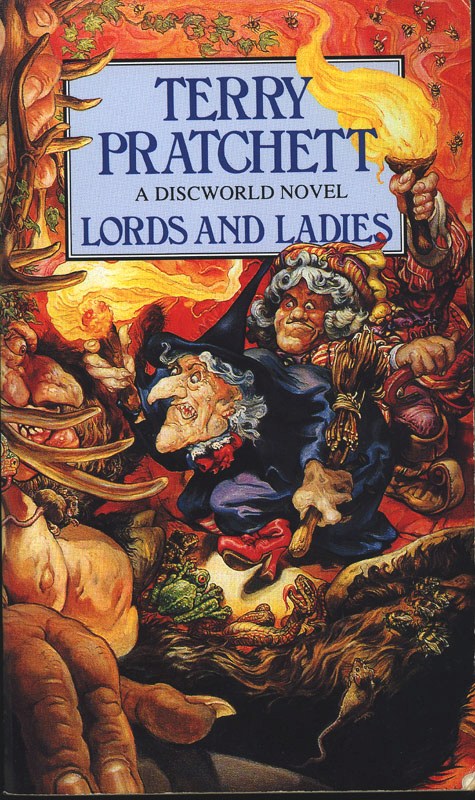
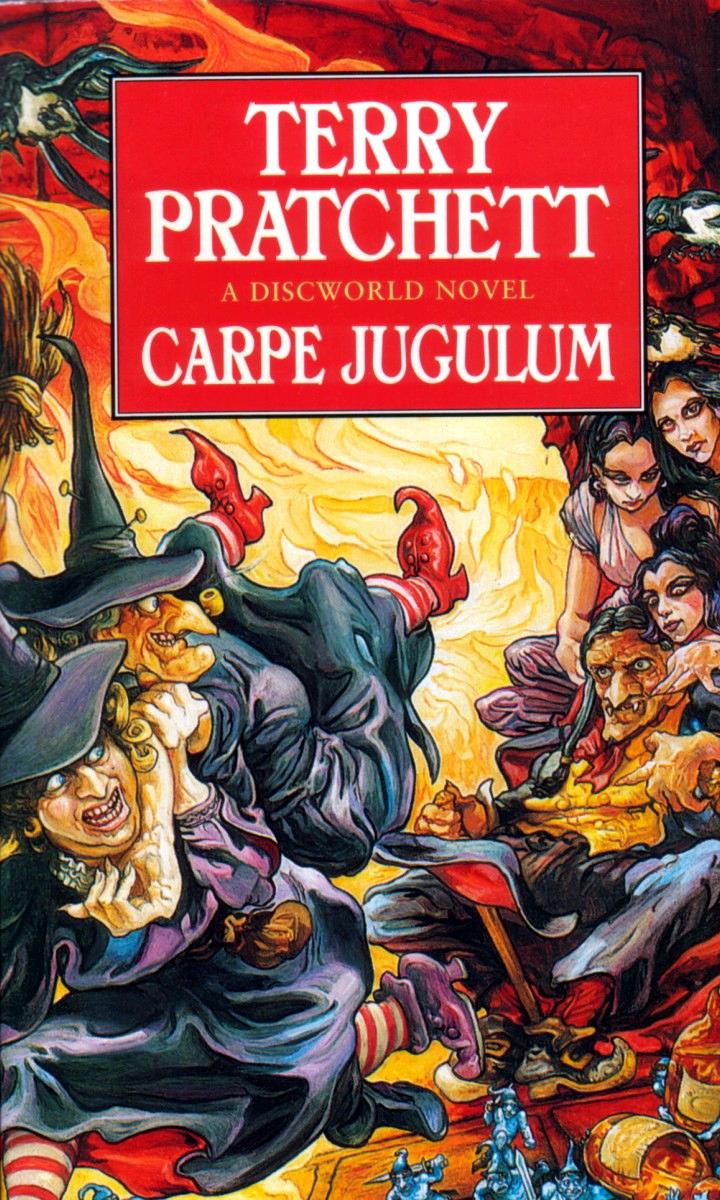
When we think of powerful witches in Discworld, we think of dramatic moments. Granny facing down the Elf Queen in Lords and Ladies. Granny breaking a vampire's mind-control in Carpe Jugulum. Granny doing basically anything involving a direct confrontation and a Really Hard Stare.
This is power as we understand it: visible, confrontational, impressive. The kind of power that makes people cross the street when they see you coming.
But Pratchett spent his entire career showing us that the most obvious form of something usually isn't the most effective form. The best policeman isn't the one who makes the most arrests—it's Sam Vimes, who'd rather prevent crimes than solve them. The best king isn't the one with the biggest army—it's Vetinari, who wins by making sure no one else can agree on anything.
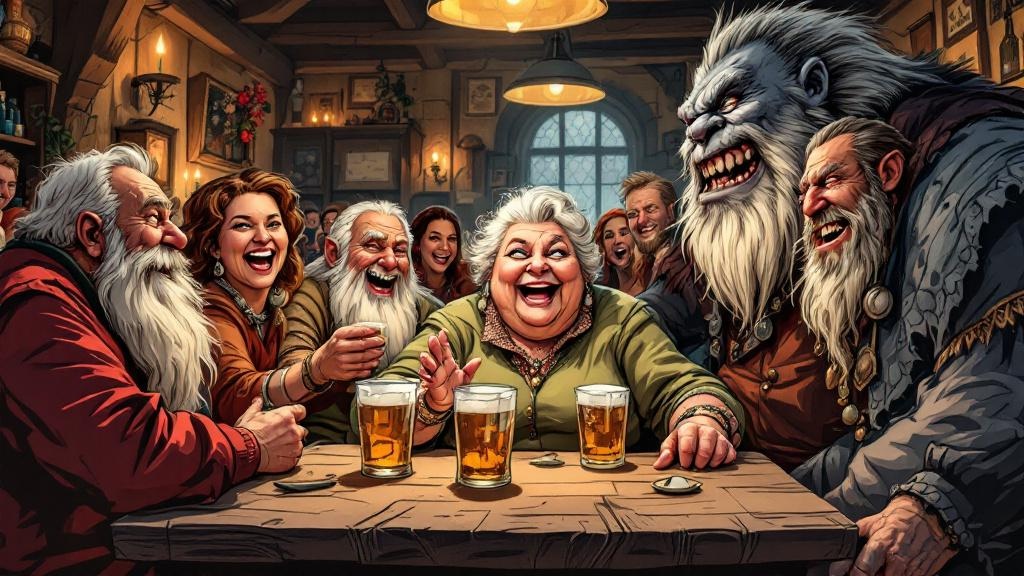
And the most powerful witch? Maybe it isn't the one who can call down lightning. Maybe it's the one who can get you to invite her in for tea, tell her all your secrets, and feel good about it afterward.
The Magic Nobody Notices
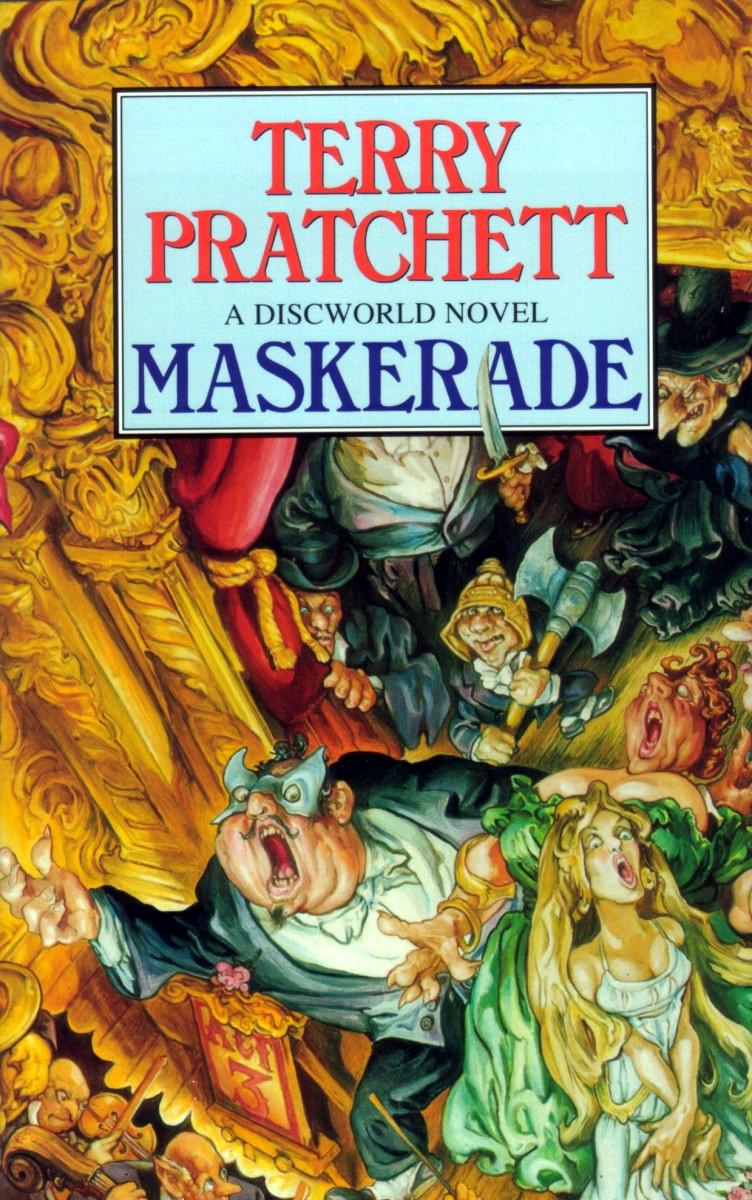
Here's a scene from Maskerade that tells you everything you need to know about Nanny Ogg:
Nanny didn't so much enter as insinuate herself; she had unconsciously taken a natural talent for liking people and developed it into an occult science. Granny Weatherwax did not doubt that her friend already knew the names, family histories, birthdays and favourite topics of conversation of half of the people here.
"Developed it into an occult science."
That's not a metaphor. In a world where belief shapes reality and magic runs on narrative, turning social skills into something that feels supernatural is magic. It's just magic that doesn't look like magic.
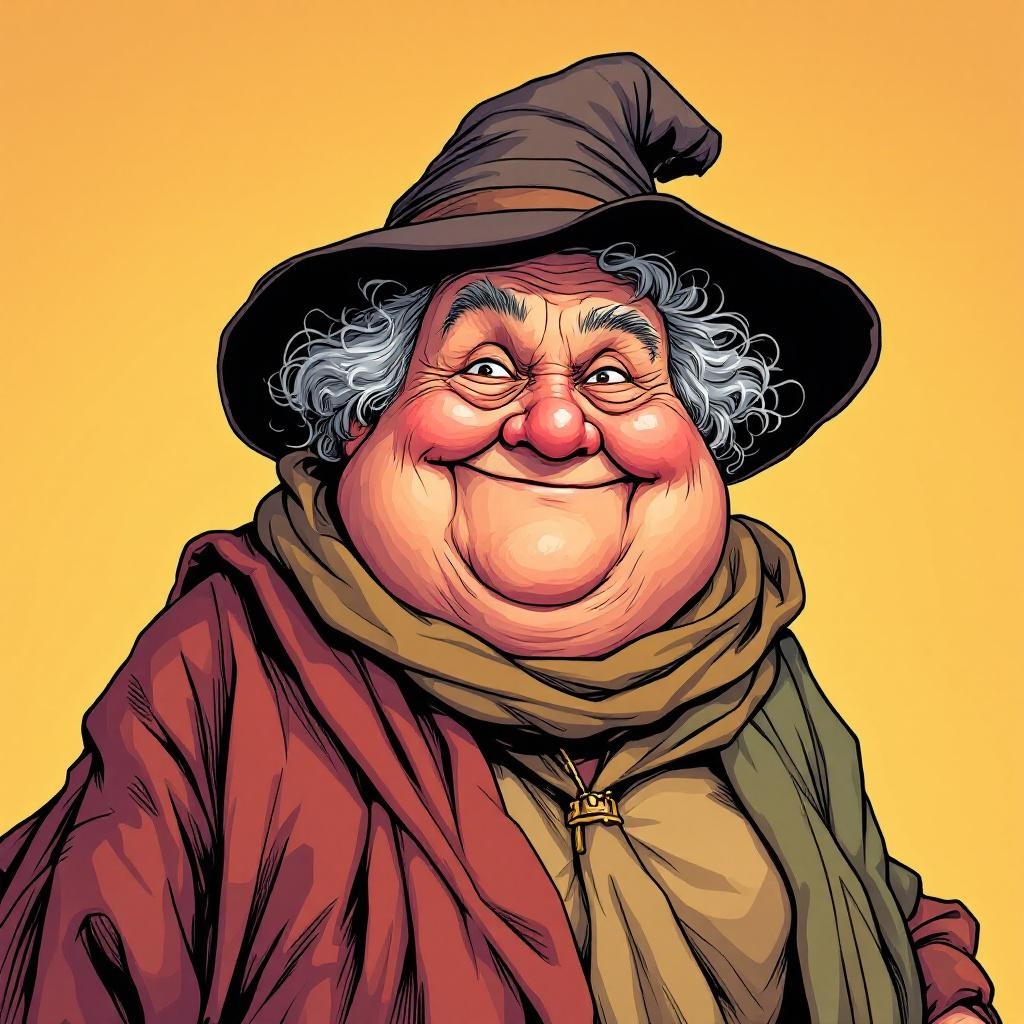
People are generally glad to see Nanny Ogg. After knowing her for fifteen minutes, they feel as if they've known her all their lives. She can walk into any social situation—a pub, a palace, a dwarf mine—and leave with information, allies, and probably some free drinks.
Granny Weatherwax sometimes wonders if Gytha has "some sort of special magic." She does. It's just not the kind that shows up in spell books.
The Granny-Wrangler
Here's where Nanny's power becomes impossible to ignore: she's the only person on the Disc who can consistently manage Granny Weatherwax.
Think about that for a moment. Granny is stubborn enough to argue with Death, proud enough to nearly destroy herself rather than accept help, and powerful enough that when she gets in a mood, reality sometimes gets nervous. The witches of Lancre tiptoe around her. The people of Lancre definitely tiptoe around her. Even Vetinari treats Granny with a respect he shows to very few.
And Nanny handles her like she's rearranging furniture.
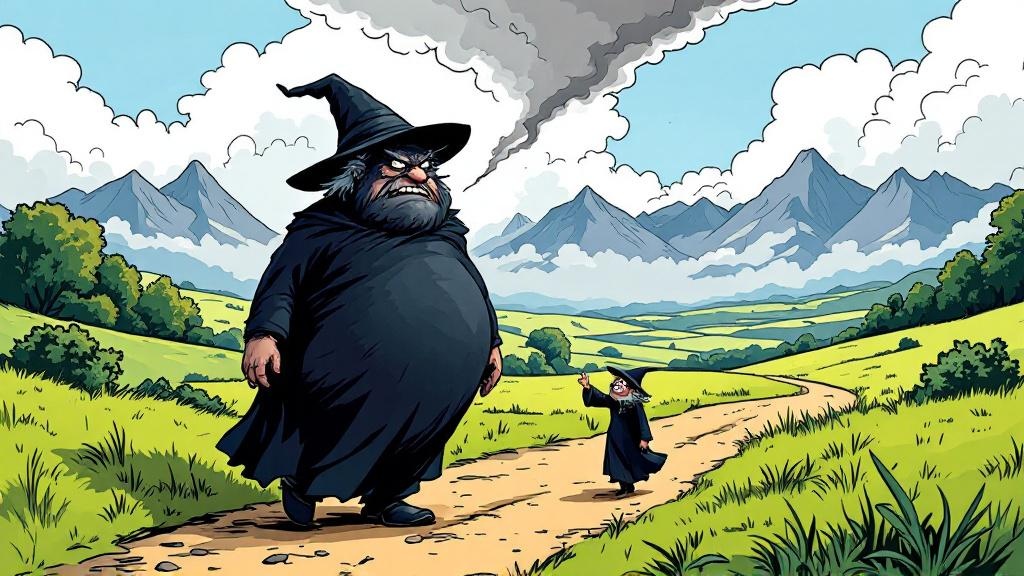
In Maskerade, Nanny realizes that Granny is brooding dangerously—getting isolated, getting dark, maybe getting close to the kind of cackling that ends badly for everyone. Her solution? She manufactures a crisis at the Ankh-Morpork Opera House, creates a reason for them to investigate, and gets Granny moving again.
"The most dangerous witch on the Disc isn't the one who can call down lightning. It's the one who can convince you the storm was your idea."
The brilliant part: she makes Granny think it was all Granny's idea. That's not just manipulation—that's headology at the highest level, applied to someone who literally invented headology.
Nanny even acknowledges this dynamic. She knows that Granny gets all the "big scenes," while Nanny is left to "sort out the mess afterward." But sorting out the mess is what keeps everything running. Someone has to watch for signs of darkness. Someone has to make sure the most dangerous witch in Lancre doesn't go the way of Black Aliss.
Who's really in control of that situation?
A Different Kind of Headology
Granny Weatherwax's headology works through intimidation and reputation. People do what she wants because they're terrified of what happens if they don't. It's effective, but it creates distance. She's respected, feared, and almost entirely alone.
Nanny's headology works through warmth. People do what she wants because they like her, trust her, and want to make her happy. They don't even realize they're being influenced—they just feel like they're helping a friend.
One approach gets immediate results. The other builds networks. Nanny has fifteen children, countless grandchildren, and a family that stretches across the Ramtops. Her son Jason is the best blacksmith on the Disc (he shoes Death's horse). Her son Shawn runs basically all of Lancre's government services by himself. The Ogg family is everywhere, knows everything, and owes everything to Nanny.
When Nanny needs something done, she doesn't need magic. She just needs to mention it to the right person, and it happens. That's not headology. That's infrastructure.
The Strategic Underdog
In The Sea and Little Fishes, Pratchett's Discworld short story, Nanny makes a revealing observation about the Ogg family. They have enormous magical talent—possibly more raw potential than the Weatherwaxes—but they're not willing to work as hard at it.
This sounds like laziness. It isn't.
Nanny has made a strategic choice. She's seen what happens to witches who display their power openly. They get challenged. They get tested. They have to keep proving themselves, over and over, until eventually something goes wrong and they're building gingerbread houses in the deep woods.
By letting Granny be the "powerful one," Nanny avoids all of that. She gets to be everyone's friend, everyone's confidante, everyone's favorite drinking companion. She never has to prove anything because no one expects her to.
Meanwhile, she's quietly running half the social life of the Ramtops.
The Midwife of Power
There's one area where even the other witches acknowledge Nanny's superiority: she has been selected as "the greatest midwife in history."
This might seem like a minor distinction. It isn't. Midwifery is one of the oldest and most fundamental aspects of witch-work. It's the boundary between life and death, the moment when things can go very wrong very quickly. A witch who can bring babies safely into the world for trolls, humans, and presumably anything else that needs help has to understand something fundamental about how bodies and souls work.
The role also fits Nanny's approach to power perfectly. Midwives don't command—they guide. They don't force outcomes—they help natural processes along. They're absolutely essential, but they stay in the background while someone else does the difficult work.
Sound familiar?
Why It Matters That She Hides It
Here's the question that haunts this analysis: does Nanny know she's the most powerful witch?
Pratchett's phrasing is careful. He says Nanny "prevents people from finding this out," which implies deliberate concealment. But is it conscious? Is Nanny actively hiding her power, or has she simply found an approach to magic that doesn't look like power?
Both options are equally interesting.
If she knows and hides it deliberately, she's playing a much longer game than anyone realizes. Every time she defers to Granny, every time she plays the simple country witch, every time she pretends not to understand something—it's all performance. And the performance has been running for decades.
If she doesn't know—if her power is so natural that she doesn't recognize it as power—that might be even more impressive. She's become so good at her particular brand of magic that she's convinced even herself it's nothing special. That's not hiding your light under a bushel. That's becoming the bushel.
Either way, the result is the same: a witch who can control the most dangerous woman on the Disc, who has information networks spanning the mountains, who can walk into any social situation and leave with exactly what she needs—and everyone just sees a jolly old lady who likes a drink and a bawdy song.
The Power of Choosing Not to Compete
Maybe the deepest truth about Nanny Ogg is this: she's powerful precisely because she doesn't need to be the powerful one.
Granny Weatherwax is trapped by her reputation. She has to be the best. She has to win every confrontation. She has to maintain the image, constantly, because if she shows weakness even once, everything she's built collapses. It's exhausting, lonely work.
Nanny has none of those constraints. She can fail, look foolish, drink too much, and sing inappropriate songs—and everyone loves her more for it. She's opted out of the competition entirely, which means she never has to expend energy maintaining her position.
That's not avoiding power. That's transcending the normal rules of how power works.
So Who's Really the Most Powerful Witch?
Pratchett's answer—that it might be Nanny all along—isn't about diminishing Granny Weatherwax. Granny is still terrifying, still capable of feats no other witch would attempt, still the person you'd want on your side if demons were invading.
But power isn't just about what you can do. It's about what you choose to do, and how you position yourself to keep doing it.
Granny Weatherwax wins battles. Nanny Ogg wins the long game.
And maybe that's why Pratchett suspected Nanny was the most powerful all along. Because real power isn't about making people afraid of you. It's about making them glad to see you—and never, ever letting them realize they should have been afraid all along.
Want to learn more about the witches? Explore Granny Weatherwax's approach to headology or discover how Nanny manages to wrangle her formidable friend.