"I Can't Start Repenting": Nanny Ogg's Philosophy of Joyful Living

Nanny Ogg refuses to repent, regret, or apologize. Here's how Terry Pratchett's jolliest witch became a manifesto for living fully at any age.
"I Can't Start Repenting": Nanny Ogg's Philosophy of Joyful Living
Fantasy literature loves its wise crones. You know the type—ancient women dispensing cryptic wisdom from remote cottages, their years of accumulated suffering lending gravity to every pronouncement. They've renounced the pleasures of the flesh, transcended mortal desires, and achieved something approaching sainthood through decades of dignified restraint.
Nanny Ogg has had three husbands, fifteen children, and an intimate familiarity with a song about hedgehogs that cannot be printed in full. She drinks other people's alcohol, wrote a bestselling aphrodisiac cookbook, and once flirted her way through an entire diplomatic mission to the King of the Elves.
When someone suggests she should repent, she doesn't even consider it.
The Quote That Says Everything
The moment comes in Carpe Jugulum, when the Reverend Mightily Oats—a young priest wrestling with his own faith—encounters Nanny Ogg during Lancre's vampire crisis. The suggestion of repentance hangs in the air, and Nanny dismisses it with the cheerful finality of someone swatting a fly:
"I can't start repenting at my time of life. I'd never get any work done. Anyway, I ain't sorry for most of it."
"I can't start repenting at my time of life. I'd never get any work done. Anyway, I ain't sorry for most of it."
Read that again. It's not defiance. It's not rebellion. It's something much more dangerous to the forces of conventional morality—it's contentment. Nanny Ogg has looked back over a life of bawdy songs, multiple marriages, strong drink, and cheerful interference in everyone else's business, and she's concluded that she'd do it all again.
That "most of" is doing quiet work, too. She's not claiming perfection. She's not saying she never made a mistake. She's saying that on balance, taking everything into account, the ledger comes out positive. And she's too busy living to waste time auditing it.
Memories Over Money
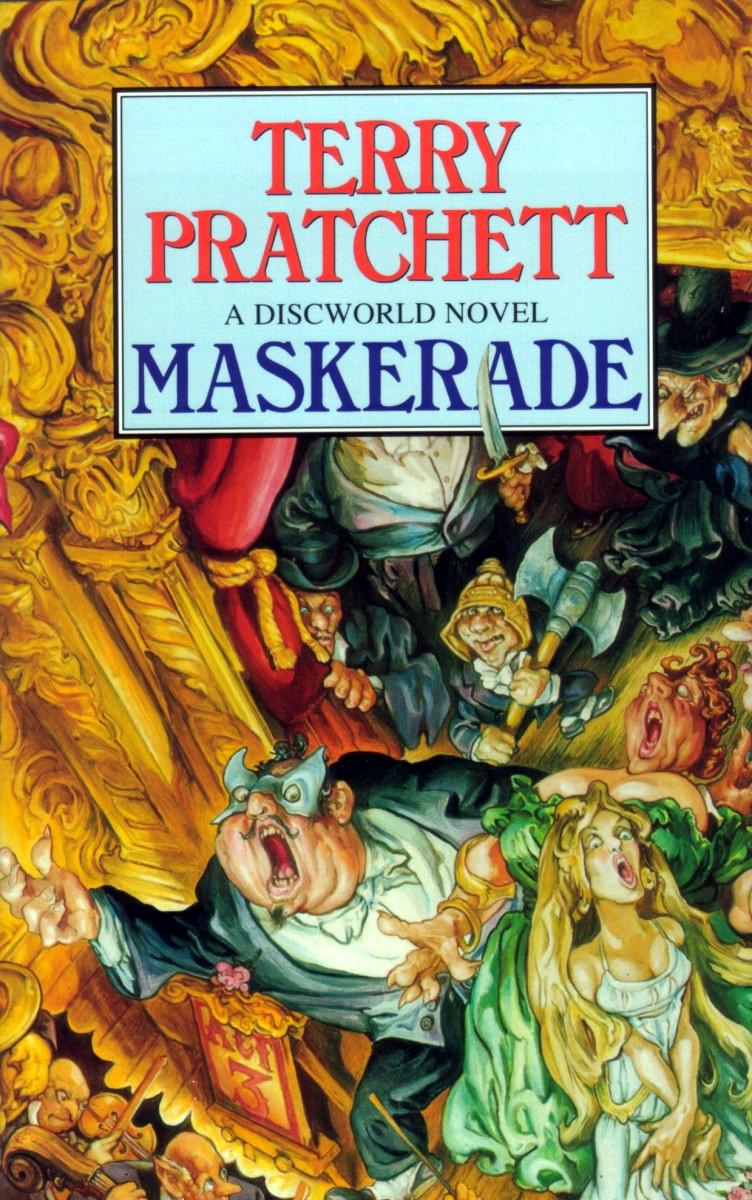
In Maskerade, Pratchett gives us the line that serves as the operating principle behind everything Nanny does: "Other people salted away money for their old age, but Nanny preferred to accumulate memories."
It sounds like a greeting card. It isn't.

Think about what this actually means in practice. Nanny's cottage is maintained by a rotating schedule of terrorized daughters-in-law. Her financial situation is cheerfully precarious—until the cookbook royalties come in, she's essentially living off the goodwill of the Ogg clan. She has no savings to speak of, no contingency plans, no careful investment portfolio for a comfortable retirement.
What she has instead is a life so full of experience that she can walk into any situation—foreign country, opera house, fairy realm, vampire invasion—and find something familiar to work with. She's been everywhere, done everything, and the accumulated knowledge of a life lived at full volume turns out to be far more useful than a pension.
This isn't recklessness. It's a different kind of investment strategy. One that pays dividends in competence, in stories worth telling, and in the kind of bone-deep confidence that comes from knowing you've already survived worse.
The Hedgehog Song and Other Unmentionables
No discussion of Nanny's philosophy of pleasure is complete without addressing her music.
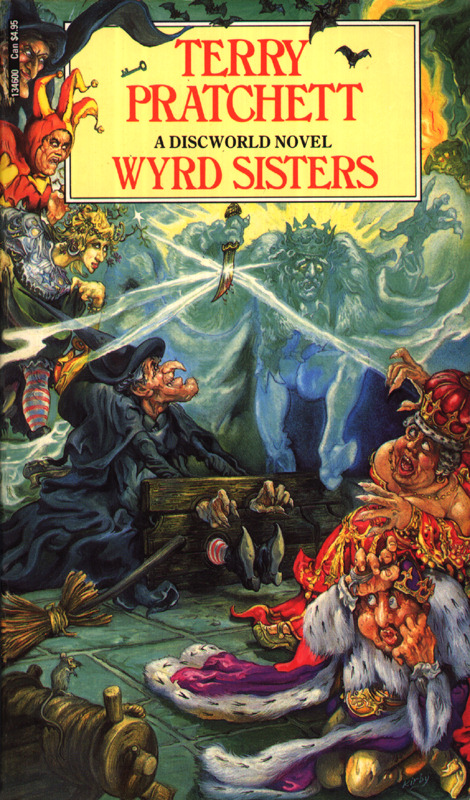
"The Hedgehog Can Never Be Buggered At All" first appears in Wyrd Sisters, where Nanny's singing voice is described as capable of curdling milk while it's still inside the goat. Pratchett never printed the full lyrics. He didn't need to. The title alone tells you everything about Nanny's relationship with propriety—she has one, and it's adversarial.
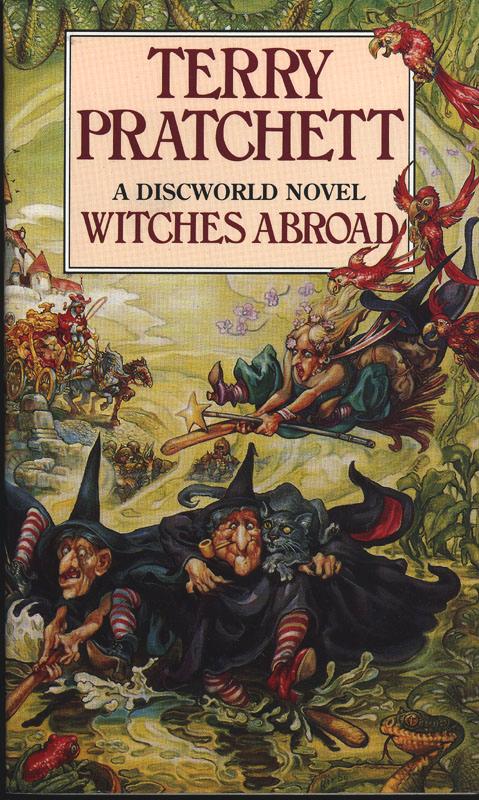
"To all those people—and why not?—who, after the publication of Wyrd Sisters, deluged the author with their version of the words of 'The Hedgehog Song.' Deary deary me..."— Dedication, Witches Abroad
What happened next is one of the great examples of a fictional character escaping the page. Fans wrote their own versions of the Hedgehog Song. Dozens of them. So many that Pratchett dedicated the UK paperback of Witches Abroad to the people who sent them in, with a weary "Deary deary me..." The song became real because Nanny's energy was infectious enough to make people want to participate.
Then there's "A Wizard's Staff Has a Knob on the End," her other signature number, which is exactly as subtle as it sounds. And The Joye of Snackes, her aphrodisiac recipe collection masquerading as a cookbook, which became a Disc-wide bestseller and eventually spawned a real-world publication—Nanny Ogg's Cookbook, co-credited to Pratchett, Stephen Briggs, and Tina Hannan.
The pattern is consistent. Nanny takes the things polite society would prefer she keep quiet about—sex, drinking, bodily functions, the earthier aspects of human existence—and drags them into the center of the conversation while singing loudly and off-key. She doesn't do this to shock. She does it because she genuinely believes these things are worth celebrating.
Three Husbands, No Apologies
Nanny Ogg has been married three times. Her first husband was described as "a good man." Her second husband, she barely mentions. Her third, she remembers with particular fondness in Maskerade: "Cryin' helps sometimes. No shame in tears for them as you've loved. Sometimes I remember one of my husbands and shed a tear or two. The memories're there to be treasured, and it's no good to get morbid-like about it."

There's no guilt here. No tortured soul-searching about whether she should have tried harder with any of them. Nanny loved them, lost them, mourned them, and moved on—not because she's cold, but because she understands that grief and joy aren't opposites. They're the same capacity, pointed in different directions.
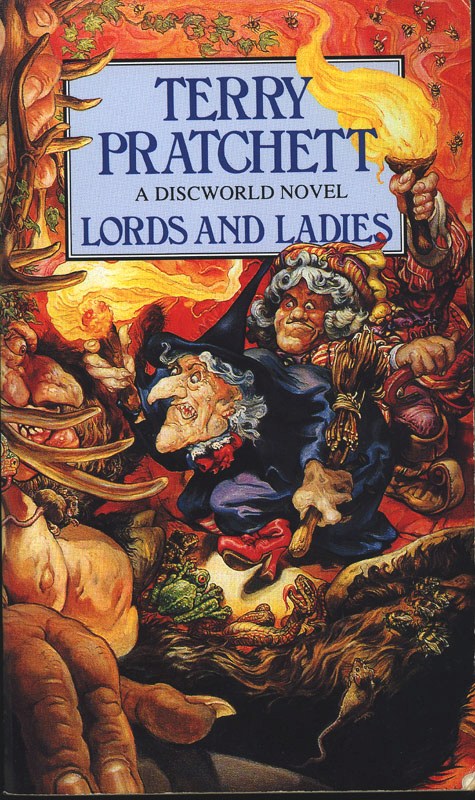
And then there's Casanunda, the self-proclaimed second-greatest lover on the Disc (and its greatest liar), who courts Nanny in Lords and Ladies. He takes her to an intimate dinner—and Pratchett tells us that "never, in a long history of romance, had Nanny Ogg ever been taken out for an intimate dinner." He kisses her hand. "No one had ever kissed her hand before."
This is the devastating detail that makes Nanny's philosophy more than comic relief. She'd been married three times, had fifteen children, lived a life that most people would consider wildly eventful—and no one had ever treated her with that particular kind of romantic attention. She'd been a wife, a mother, a lover, but never the object of courtship. And rather than being bitter about it, she receives Casanunda's attention with delight.
That's not a woman who regrets anything. That's a woman who's still open to new experiences at an age when most fictional characters have been reduced to dispensing advice from a rocking chair.
The Anti-Crone
Here's what makes Nanny Ogg genuinely radical, and not just within fantasy literature.
Western storytelling has exactly two models for elderly women. There's the Wise Grandmother—dignified, asexual, existing primarily to offer guidance to younger characters. And there's the Wicked Witch—bitter, envious, defined by the pleasures she's been denied. In both cases, the older woman exists in relation to her desires: either she's transcended them (good) or she's consumed by them (evil).
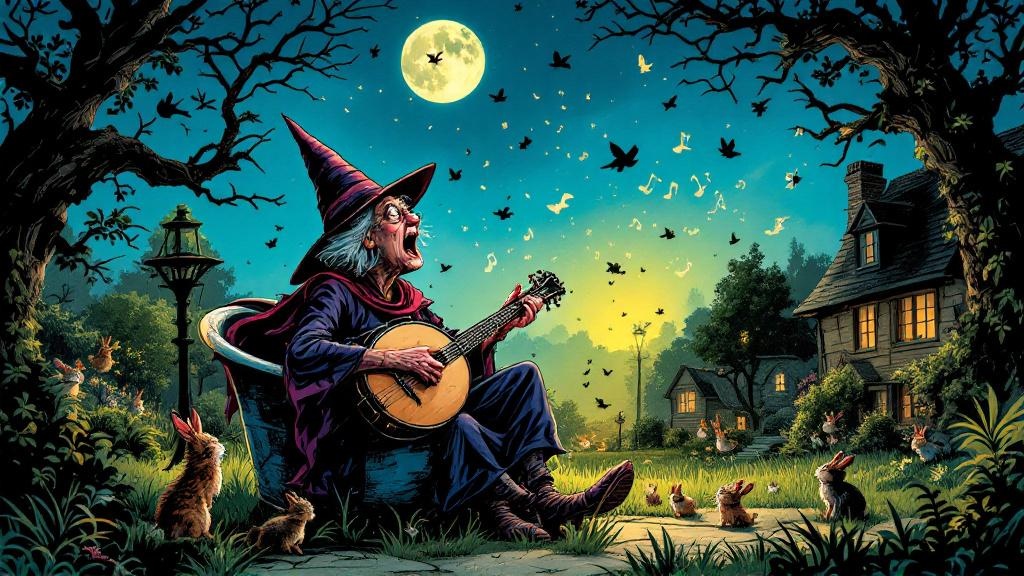
Nanny doesn't fit either model. She's wise, but she's not dignified. She's sensual, but she's not wicked. She enjoys food, drink, song, male attention, and the company of her terrifying cat, and none of these pleasures have been earned through suffering or renunciation. She just... likes them. And sees no reason to stop.
"Other people salted away money for their old age, but Nanny preferred to accumulate memories."
Pratchett understood something that most fantasy writers miss: there's nothing inherently wise about self-denial. Granny Weatherwax's asceticism makes her powerful, but it also makes her lonely, rigid, and dangerously close to the darkness she fights against. Nanny's indulgence makes her comfortable, connected, and almost impossible to corrupt—because what would you tempt her with? She already has everything she wants.
In Carpe Jugulum, when the modern vampires arrive with their sophisticated psychological manipulation, they struggle with Nanny. Their power works by finding what people suppress and using it against them. But Nanny doesn't suppress anything. She's a locked door with no lock—there's nothing hidden to exploit.
Scumble and Survival
It would be easy to dismiss Nanny's philosophy as simple hedonism. Eat, drink, be merry, and let someone else worry about the consequences. But that's missing the sophistication of what Pratchett built.
Nanny Ogg isn't just having a good time. She's having a good time strategically. Her warmth isn't weakness—it's the most effective tool in her arsenal. People tell her things they'd never tell Granny Weatherwax, because Granny judges and Nanny listens. People help her freely, because she's spent decades building relationships through genuine affection rather than fear. Her famous scumble—distilled from apples, well, mostly apples—is as much a social lubricant as it is a drink.
"One of Nanny Ogg's hidden talents was knowing when to say nothing. It left a hole in the conversation that the other person felt obliged to fill."
That's not the technique of someone who's simply along for the ride. That's a woman who's been paying attention for seventy-odd years and has learned exactly how to get what she needs without anyone feeling pressured. The joyful living isn't in spite of her effectiveness. It's the source of it.
What Nanny Teaches Us About Getting Older
There's a reason Nanny Ogg resonates with readers in a way that transcends the usual fantasy character fandom. She's aspirational—not in the way that warriors or wizards are aspirational, with their impossible skills and dramatic sacrifices, but in a way that feels achievable.
She teaches by example that getting older doesn't mean getting smaller. That experience is an asset, not a burden. That the pleasures you enjoyed at twenty don't have to be renounced at seventy. That a life well-lived isn't measured by what you denied yourself but by what you embraced.
And she teaches, with that devastating line in Carpe Jugulum, that regret is a choice. Not a moral obligation.
"I ain't sorry for most of it."
Most of it. Not all. She's honest enough to acknowledge imperfection. But she's wise enough to know that cataloguing your failures and apologizing for your pleasures is just another form of self-indulgence—one that doesn't even have the decency to involve singing or scumble.
Living the Nanny Way
Here's the thing about Nanny Ogg's philosophy: it only works if you're genuinely kind. Strip away the warmth, the generosity, the real affection for people, and what you'd have left is just selfishness. Nanny gets away with drinking other people's beer and never paying for anything because she gives back in ways that money can't measure—comfort, laughter, midwifery, advice, and the particular kind of acceptance that comes from someone who's seen everything and judges nothing.
The "no regrets" philosophy isn't a license for carelessness. It's the reward for living a life where your pleasures don't come at other people's expense—or at least, not at the expense of anyone who doesn't deserve it. Nanny's daughters-in-law might disagree, but then, nobody's perfect.
Not even Nanny. Especially not Nanny. And that's precisely the point.
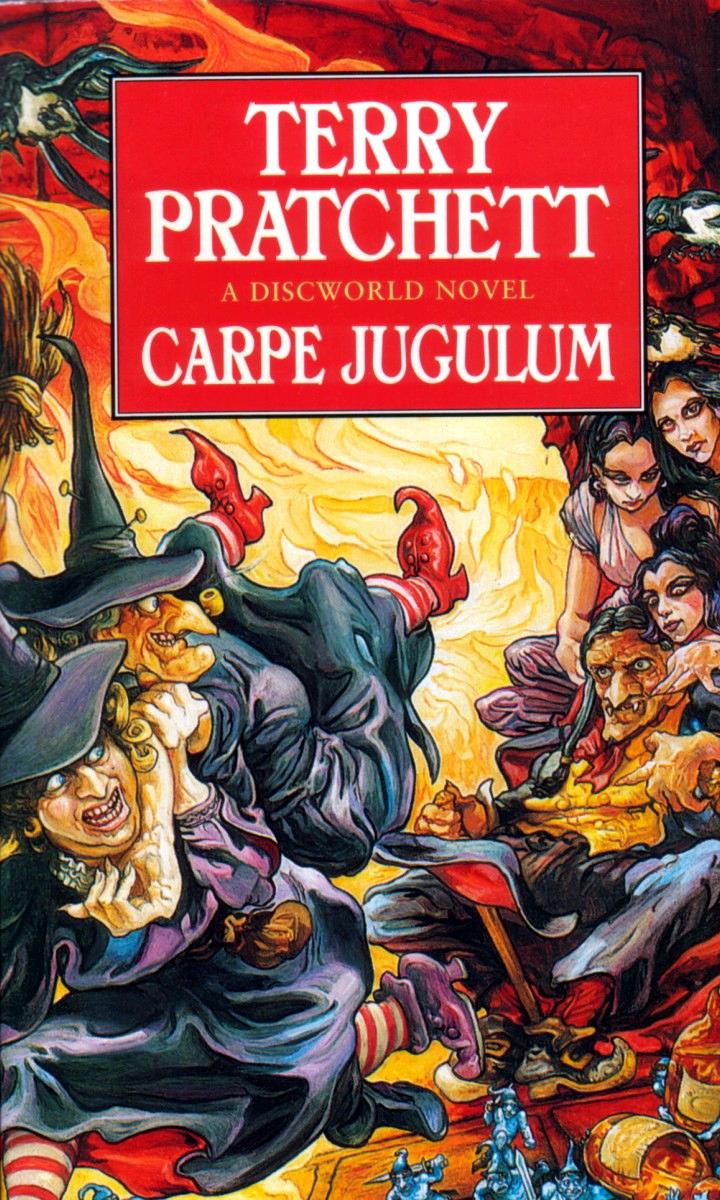





Read about the secret power behind Nanny's jolly exterior, or discover how she manages the most formidable woman on the Disc.