"The Hedgehog Can Never Be Buggered At All": Nanny Ogg's Infamous Song
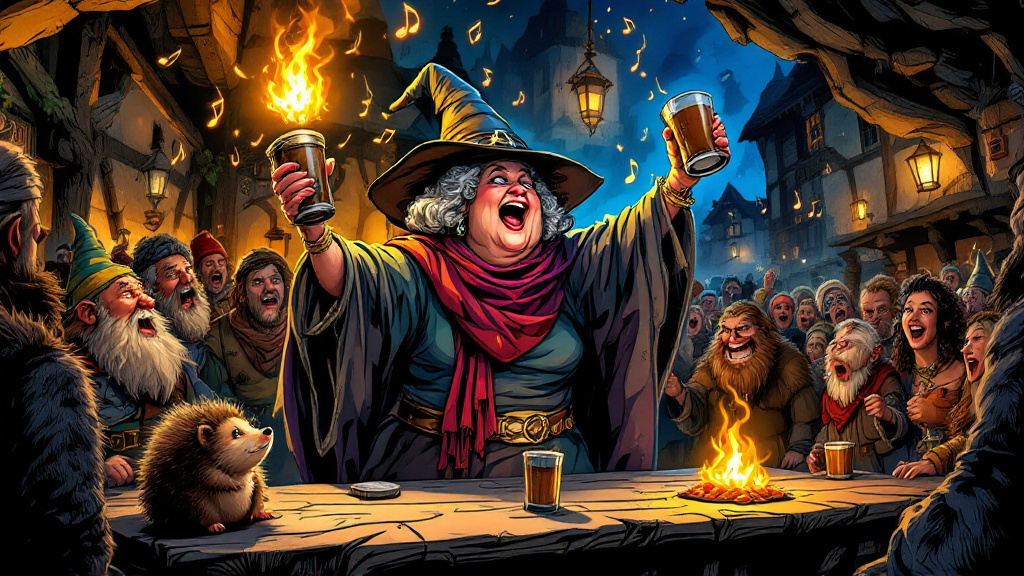
Terry Pratchett never wrote Nanny Ogg's Hedgehog Song, only fragments. So fans wrote it for him. How a joke title in Wyrd Sisters became a real drinking song.
"The Hedgehog Can Never Be Buggered At All": Nanny Ogg's Infamous Song
Terry Pratchett wrote more than forty Discworld novels, and one of the best-known songs in all of them doesn't exist.
There's no complete text, sheet music or official verse anywhere. Pratchett gave us a title, a couple of half-overheard fragments and the cackle of an old woman with one tooth and a glass in her hand. It was enough. For more than thirty years, readers have been finishing the song for him, in newsgroups, folk clubs, convention bars and the back rooms of pubs.
This is the story of the Hedgehog Song, Nanny Ogg's signature number, and how a joke Pratchett never told became one of the most widely sung things he ever wrote. If you want to know why a single chorus line beat whole books of lyrics, read on.
Where the Hedgehog Song Comes From
The song first turns up in Wyrd Sisters (1988), the book that gathered Granny Weatherwax, Nanny Ogg and Magrat Garlick into the Lancre coven. Nanny is the witch who drinks, laughs, has outlived three husbands, and sings whenever she's had a drink or is in the bath. The song she sings is "The Hedgehog Can Never Be Buggered At All".
And that's about all Pratchett hands over. The Annotated Pratchett File, the fan-maintained annotation project on L-Space, puts it bluntly:
Terry invented this title; he has not written any words to it (apart from the fragments that appear in the novels)
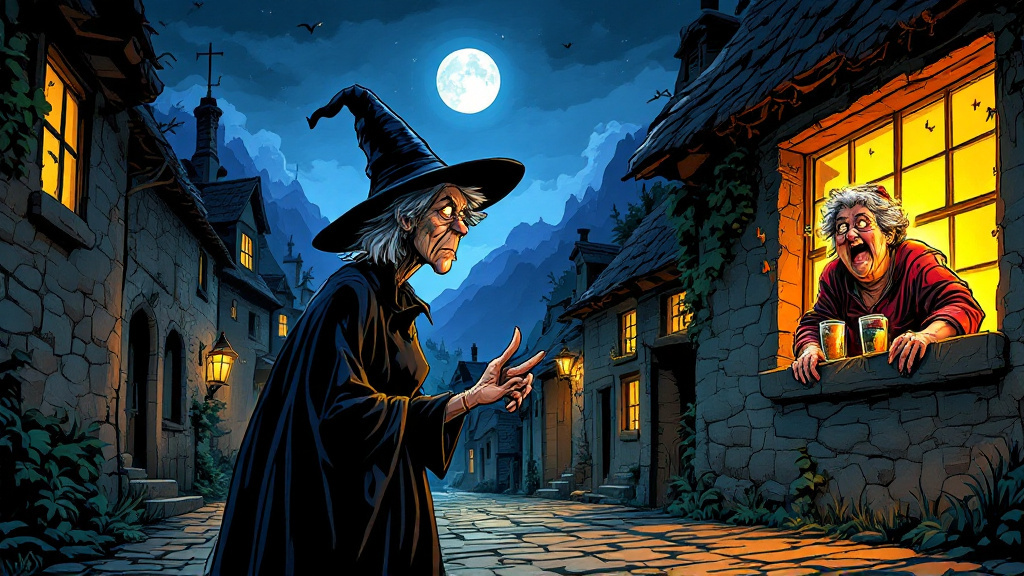
The best-known fragment is a gloriously cut-off moment. Granny Weatherwax, backed into a delicate conversation she has no intention of finishing, gives in and suggests a quiet word with Nanny Ogg instead. Then, from a window behind them, comes a cackle of laughter, the chink of glasses, and a thin voice raised in song:
—with a giraffe, If you stand on a stool. But the hedgehog—
Granny stops listening, and so does the book, long before the song can go anywhere. (Meanwhile Magrat, the coven's youngest and most easily embarrassed member, is exactly the audience this song was never meant for.)
That cut-away is the whole trick. Pratchett gives you the setup (some poor creature, a stool, a certain amount of ambition) and lets your imagination supply the rest. Whatever you came up with is filthier than anything he could have printed, and he knew it.
Why One Line Is Funnier Than a Whole Song
Let's be honest about what the title is doing. In British English, "buggered" pulls double duty. It's the crude literal meaning, obviously, but it's also everyday slang for broken, exhausted or beaten: "the car's buggered", "I'm buggered after that walk".
So the chorus is two jokes stacked on top of each other:
- The literal joke: a hedgehog is a ball of spines, so the obvious thing can't be done. It's anatomy as punchline.
- The slang joke: the hedgehog is indestructible. Whatever life throws at it, it curls up and survives. It can never be buggered, never beaten.
That second meaning is why the song suits Nanny Ogg so well. She's prickly when she needs to be, impossible to embarrass and unbeatable in a fight, mostly because she never seems to be in one. You can see her in the hedgehog.
"Pratchett didn't write a dirty song. He wrote the title of one, and let every reader write the rest in their head."
There's also a craft lesson here that Pratchett used all through Discworld. Implication is funnier than explicitness. A complete bawdy song on the page would be a novelty. It would be read once, chuckled at and forgotten. A title and two fragments are an invitation. Every reader hears a slightly different song, and every one of those songs is perfectly tuned to that reader's sense of humour.
It's the same reason the most frightening monster in a horror film is the one behind the door. Nanny's song lives behind the door.
The Song That Was Already Out There
Here's the twist: the hedgehog line may not have been entirely Pratchett's invention.
The Annotated Pratchett File's chapter on songs points to an old bawdy number, "The Sexual Life of the Camel", collected in Michael Green's 1967 anthology Why Was He Born So Beautiful and Other Rugby Songs and thought to date back to the 1920s or 30s. Buried in its verses is a claim that scientific researches have conclusively proved the hedgehog has never been buggered at all. A later verse adds that, according to research at Oxford, the hedgehog alone enjoys comparative safety.
So did Pratchett borrow it? He said not. According to the APF annotation, Terry "pleads parallel evolution", and adds a line that is pure Pratchett:
"There is a certain, how shall I put it, natural cadence to the words."— Terry Pratchett, via the Annotated Pratchett File
He has a point. Say the title out loud and it scans like a chorus already: anapestic, bouncy, practically begging for a pint glass to bang on the table. Two people inventing it independently isn't hard to believe. The line is built to be sung.
Either way, it doesn't matter much. Folk songs have always worked like this, passed from mouth to mouth and rewritten by whoever's singing. Pratchett loved that tradition and folded it into his books constantly. It's fitting that Nanny's song lands somewhere in the middle of it: half old rugby-club ballad, half Discworld invention, and nobody quite sure where one ends.
How the Fans Finished the Song
Pratchett's readers were not about to leave a song unfinished.
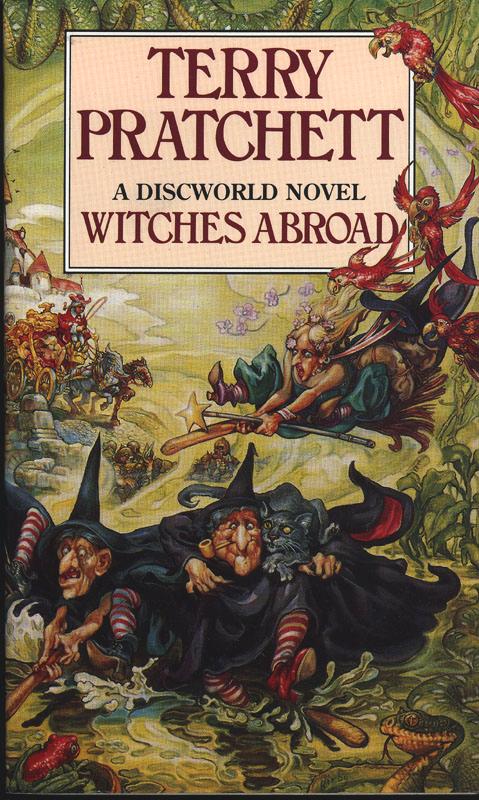
After Wyrd Sisters came out, fans started sending him their own lyrics. Lots of them. By the time Witches Abroad reached paperback, Pratchett had dedicated the UK edition to the people who had deluged him with their versions of the Hedgehog Song after Wyrd Sisters, signing it off with a weary sigh. Few authors dedicate a book to the readers who flooded their post with obscene verse. Pratchett did, and he managed to sound fond and exasperated at the same time.

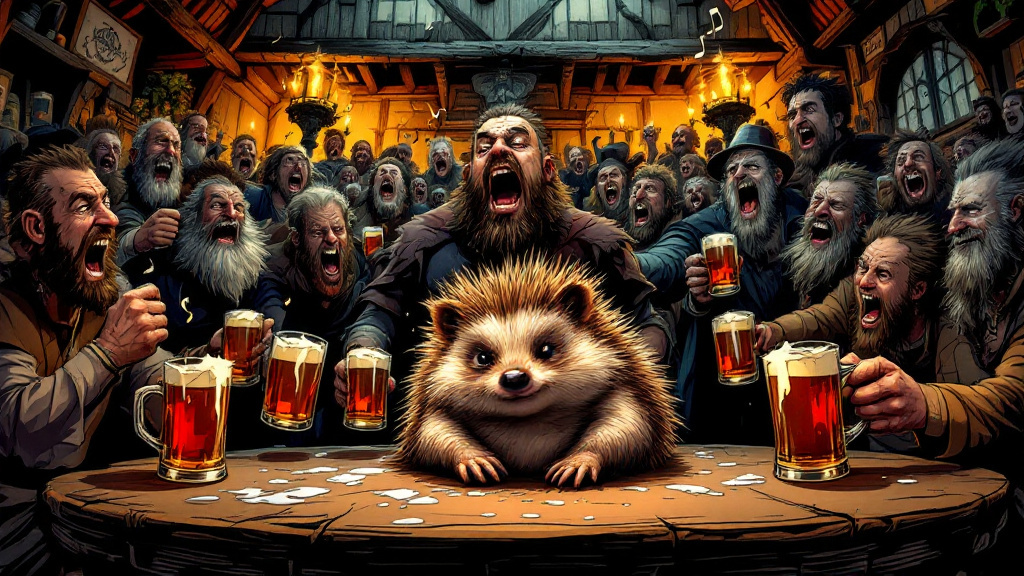
Meanwhile, the internet was getting organised. On the alt.fan.pratchett newsgroup, a reader named Matthew Crosby wrote a first full version that tried to fit in every fragment from the novels, and other readers kept adding verses. The result, "The Hedgehog Can Never Be Buggered At All v1.5", still sits on L-Space, credited as reconstructed "by Matthew Crosby and alt.fan.pratchett". It has a dozen verses, two alternating choruses, and enough zoology to worry a vet.
Crosby's note at the bottom gives the game away. He admits he knows the giraffe verse in the book is "if you stand on a stool", but that it doesn't really rhyme, so the fan version fixes it. That's real fan scholarship: treating a few half-heard fragments like the surviving lines of a lost manuscript and arguing over the scansion.
The Folk Singer's Version
The fans weren't all amateurs. The APF notes that one of the people who wrote words for the song was the folk singer Heather Wood. Her version, dated "1993 or thereabouts", runs to nineteen verses. It's marked "As alluded to in Terry Pratchett's WYRD SISTERS" and suggests singing it to the tune of "Bonnie Dundee".
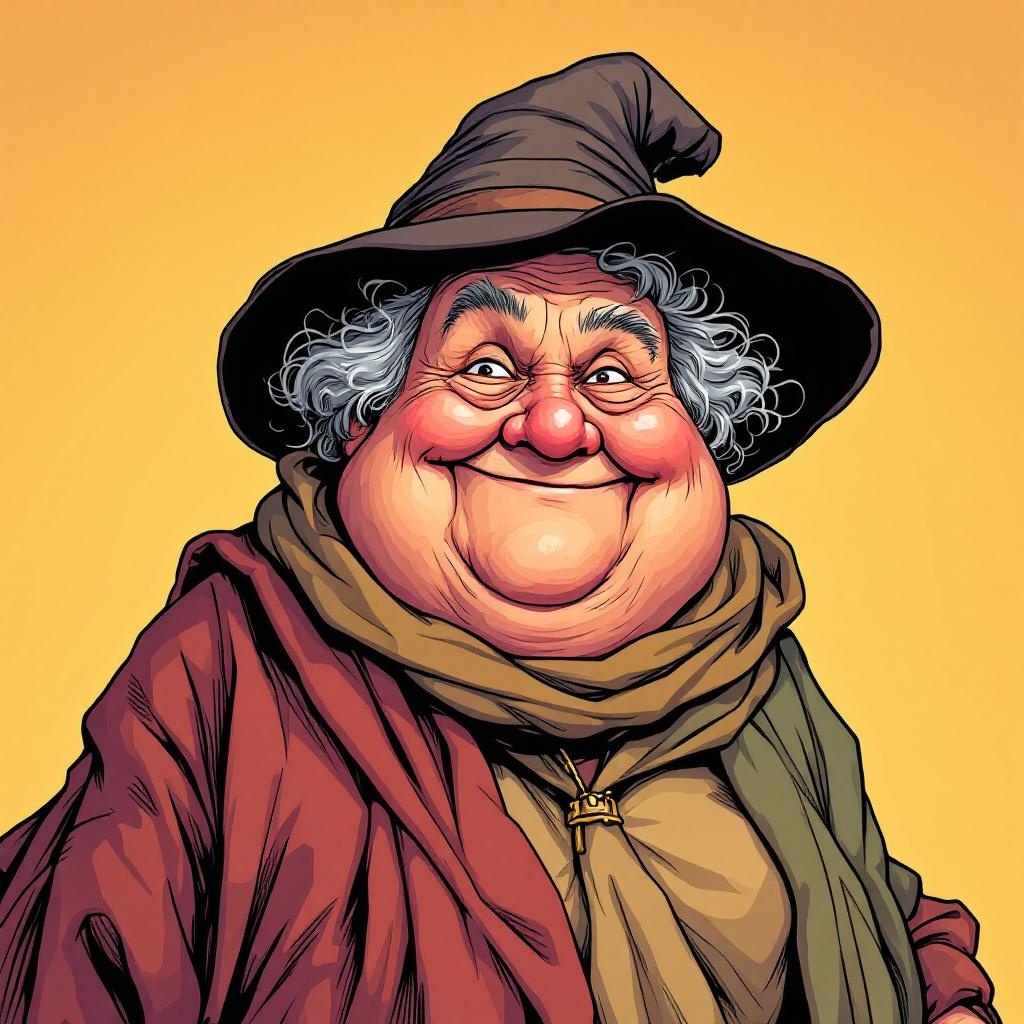
Hers is the most literate take on the joke you'll find. It finds rhymes for "vulpologists" and "herpetologists", and gives the hedgehog himself a cameo as Mr. Tiggy. At the bottom she has added a dry note: "Funny, no one's recorded this one yet . . ."
Wood didn't stop at hedgehogs. According to Wikipedia's Nanny Ogg article, she also wrote a version of Nanny's other signature song, "A Wizard's Staff Has a Knob on the End", set to music by the composer Dave Greenslade. Even more than the hedgehog, that one is a title that tells you the whole song.
The Hedgehog Escapes Into the Wild
The clearest sign that the Hedgehog Song has escaped the page is that some of the people singing it may not know where it came from.
Hash House Harriers, the worldwide "drinking club with a running problem", keep a library of drinking songs for their post-run "down-downs". The Hedgehog Song is in it, and the verses are recognisably the alt.fan.pratchett ones, with the same two choruses ending "the hedgehog can never be buggered at all". The entry lists the tune as "Unknown" and, as far as the page shows, doesn't credit Pratchett at all.
"The song has done what folk songs do. It has lost its author and kept its chorus."
That's a remarkable journey: a rugby song from the 1920s, half-remembered in a 1988 fantasy novel, reconstructed by a 1990s newsgroup and sung by runners who may never have heard of Lancre. It has gone from folk tradition to fiction and back to folk tradition.
Pratchett would have loved that. His witches spent whole books arguing that stories have a life of their own, that narrative pushes people into shapes and will happily run away with you if you let it. Nanny's song ran away.
Why It Matters That It's Nanny's Song
It's no accident that this song belongs to Nanny Ogg and not to anyone else on the Disc.
Granny Weatherwax would never sing it. Magrat would blush herself unconscious. The wizards of Unseen University would set up a committee to study it. Nanny just sings it, loudly and out of tune, as if it's the most natural thing in the world, which to her it is. As we explored in Nanny Ogg's philosophy of joyful living, she treats the earthy parts of life as worth celebrating rather than hiding. The Hedgehog Song is that philosophy with a chorus.
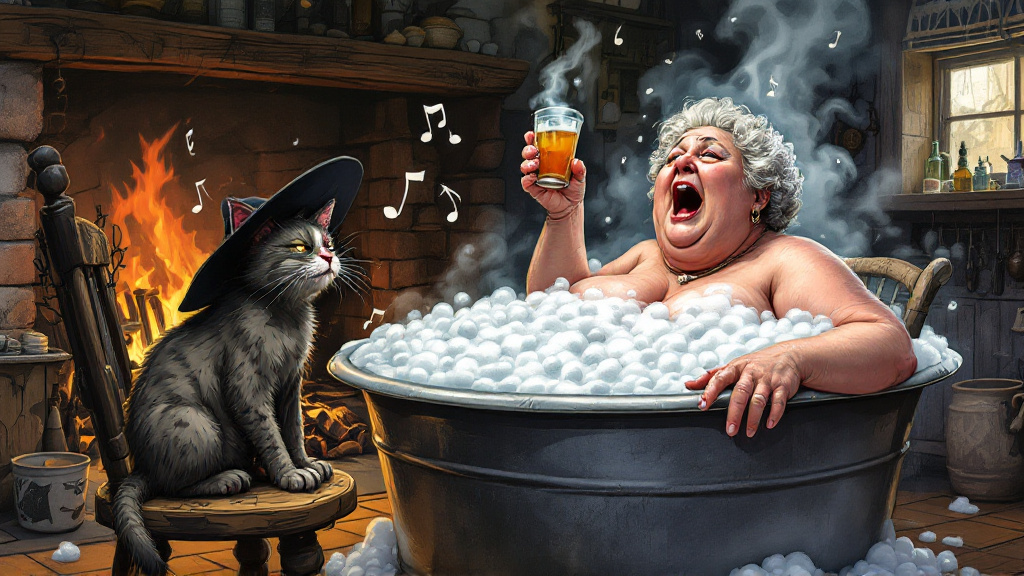
There's a deeper point too. Nanny is the witch people underestimate: the jolly granny with the bawdy songs who, as we argued in The Secret Power of Nanny Ogg, may quietly be the most powerful of them all. The song is part of the camouflage. Nobody suspects the woman singing about hedgehogs of anything.
And, like the hedgehog, Nanny can't be beaten. Elves, vampires and an opera ghost have all tried. She curls up, shows her prickles, and carries on singing.
Where to Hear Nanny Sing
If you want to meet the Hedgehog Song where it started, go back to the source.
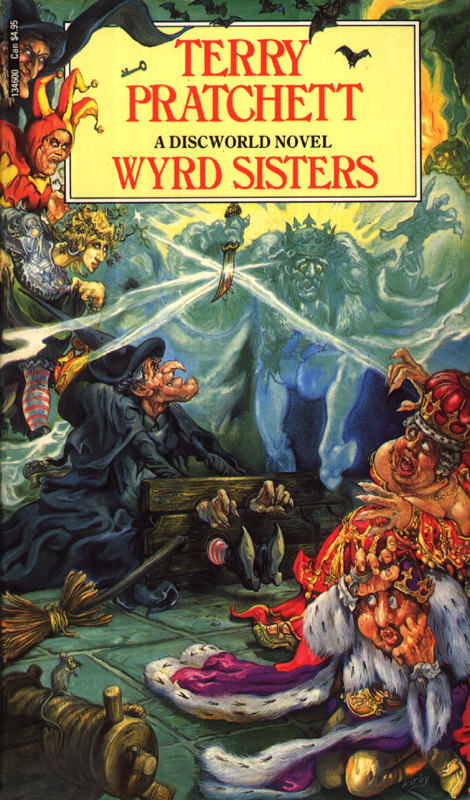
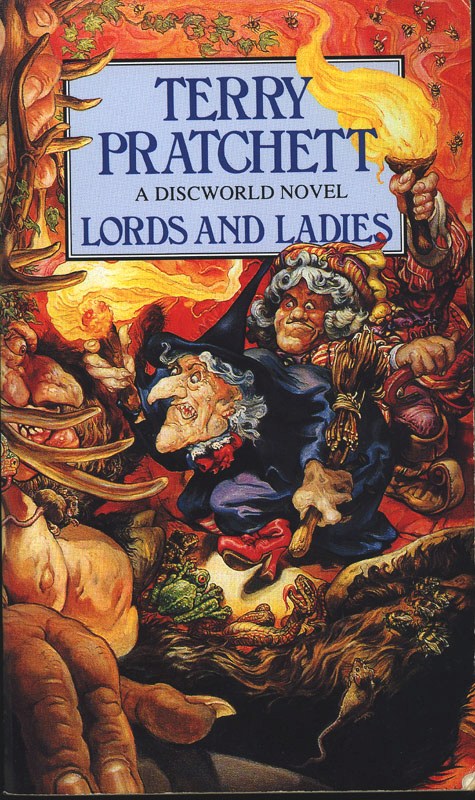
After that, Witches Abroad takes Nanny abroad (look for that dedication in the UK paperback), and Lords and Ladies shows her at her bawdy, brilliant best back home. If you're new to the witches, our Witches reading order guide will set you on the right path.
Then go and look up the fan versions. Read Heather Wood's nineteen verses, try them to "Bonnie Dundee", and notice how naturally the chorus comes. Pratchett was right about the natural cadence.
The hedgehog can never be beaten, and nor, it turns out, can his song.