"They Can Tak' Oour Lives but They Cannae Tak' Oour Troousers!": The Inverted Afterlife That Makes the Feegles Fearless
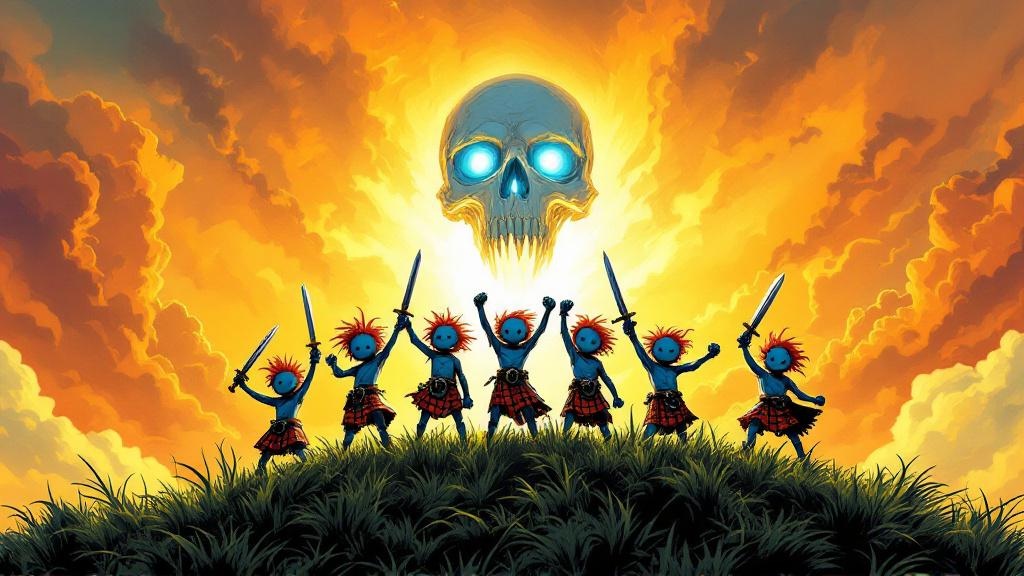
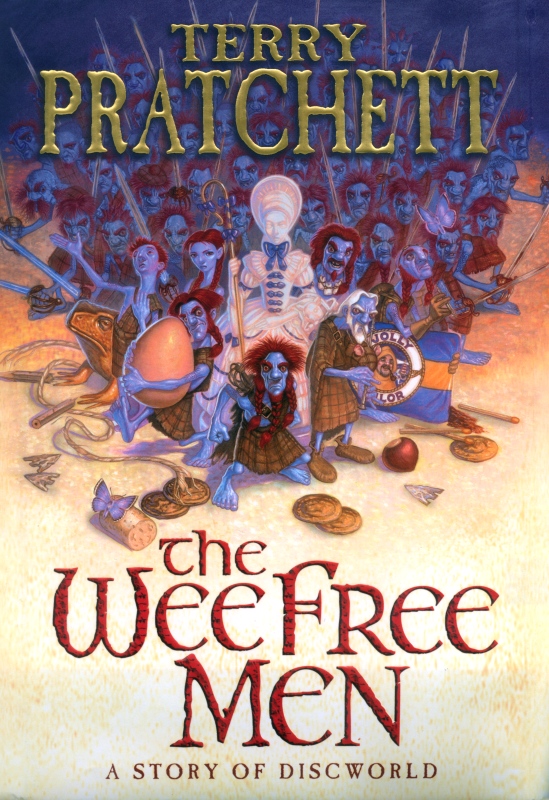
The Nac Mac Feegle believe they're already dead and living in paradise. This isn't just a joke - it's a coherent philosophy that makes them Discworld's most fearless fighters.
"They Can Tak' Oour Lives but They Cannae Tak' Oour Troousers!": The Inverted Afterlife That Makes the Feegles Fearless
Most religions promise paradise after death. The Nac Mac Feegle have a better deal: they believe they're already there.
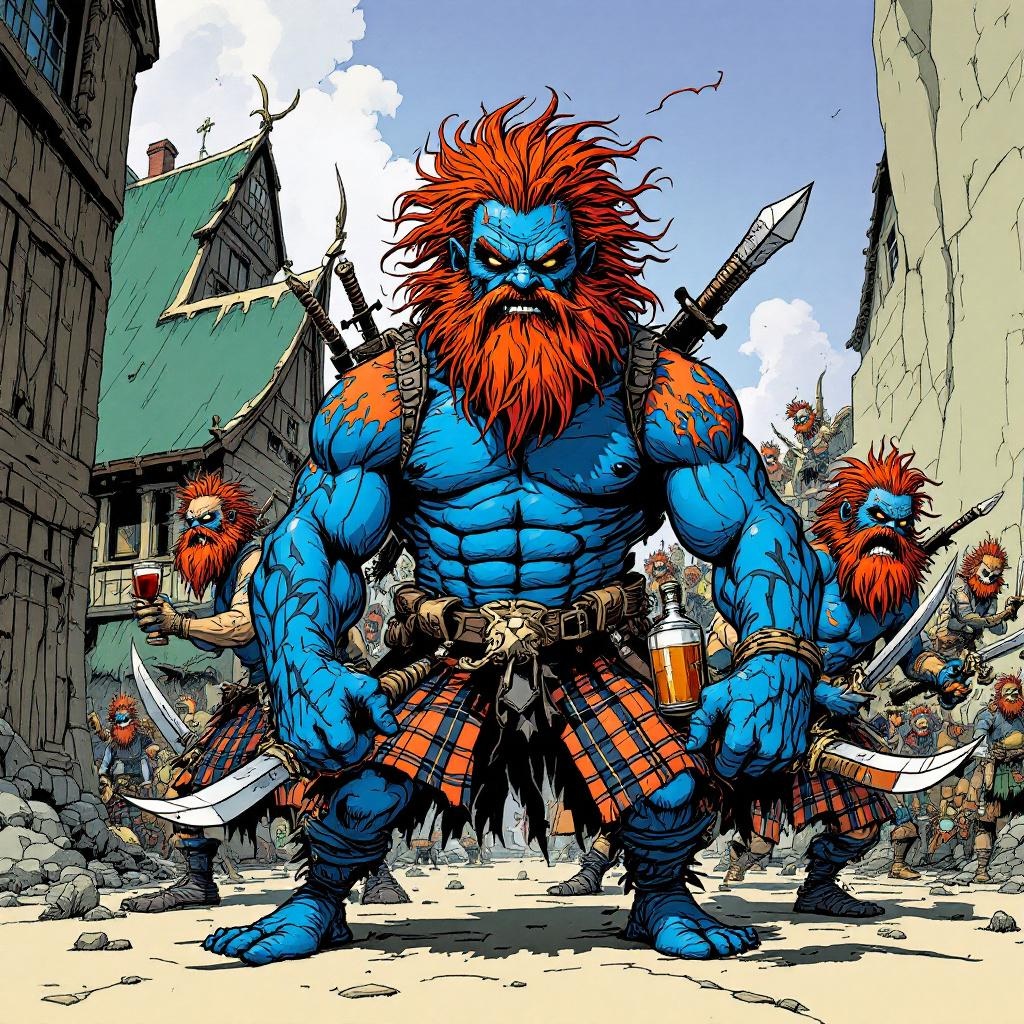
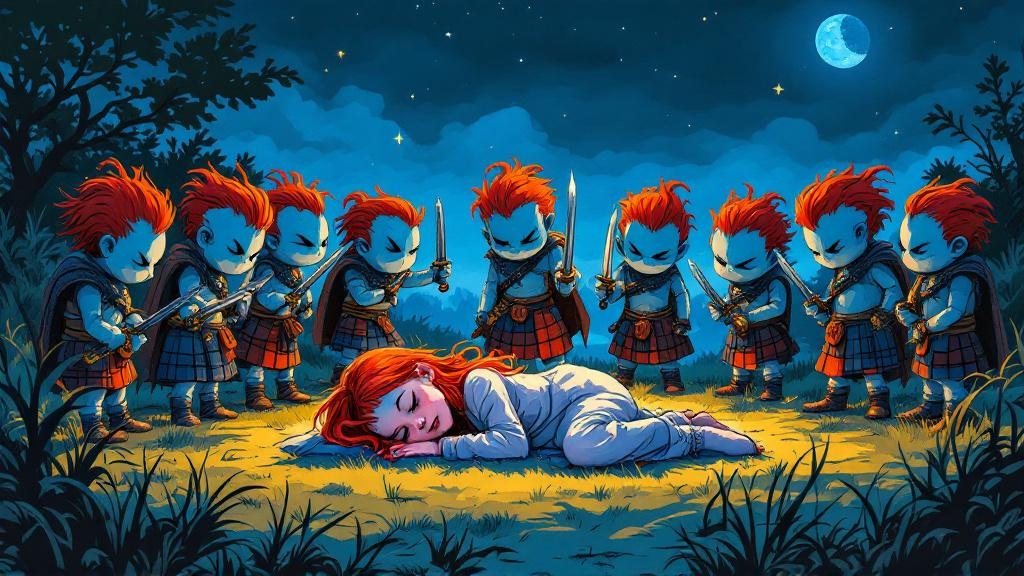
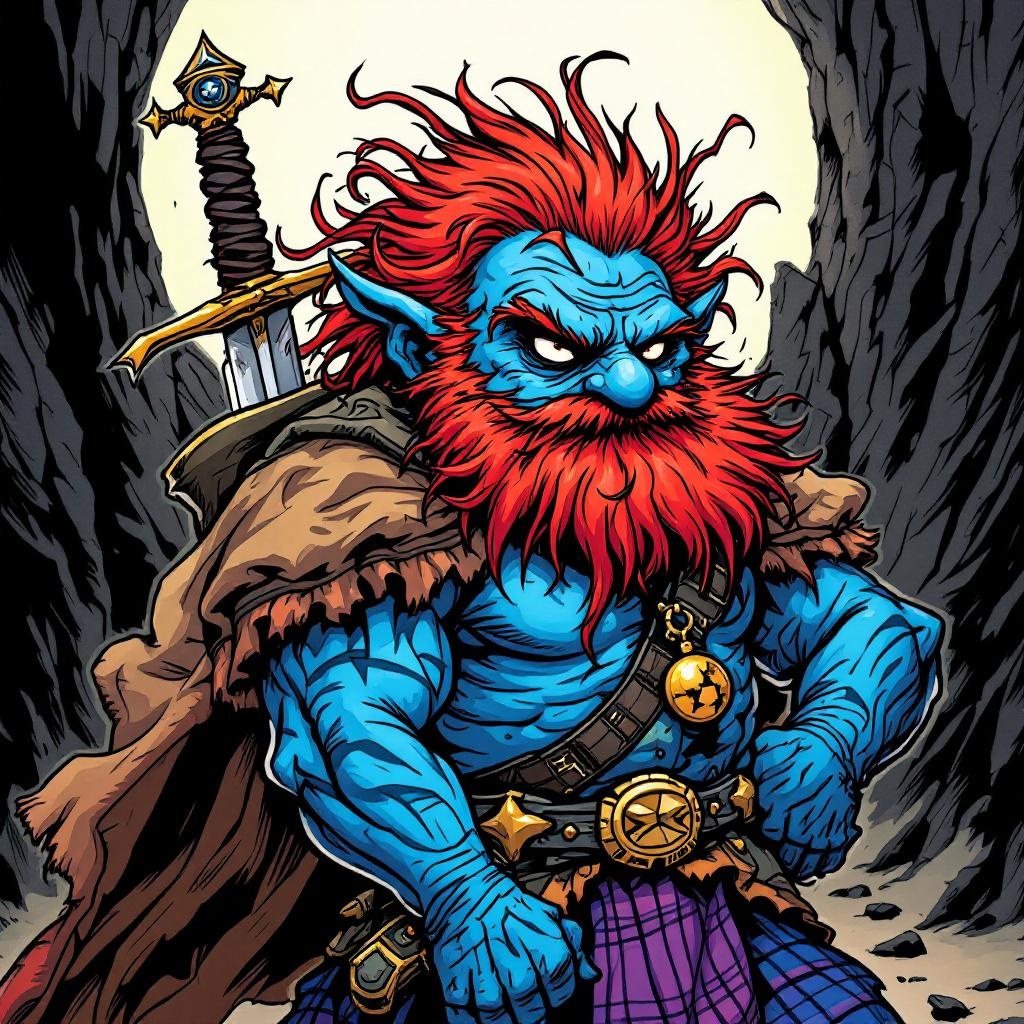
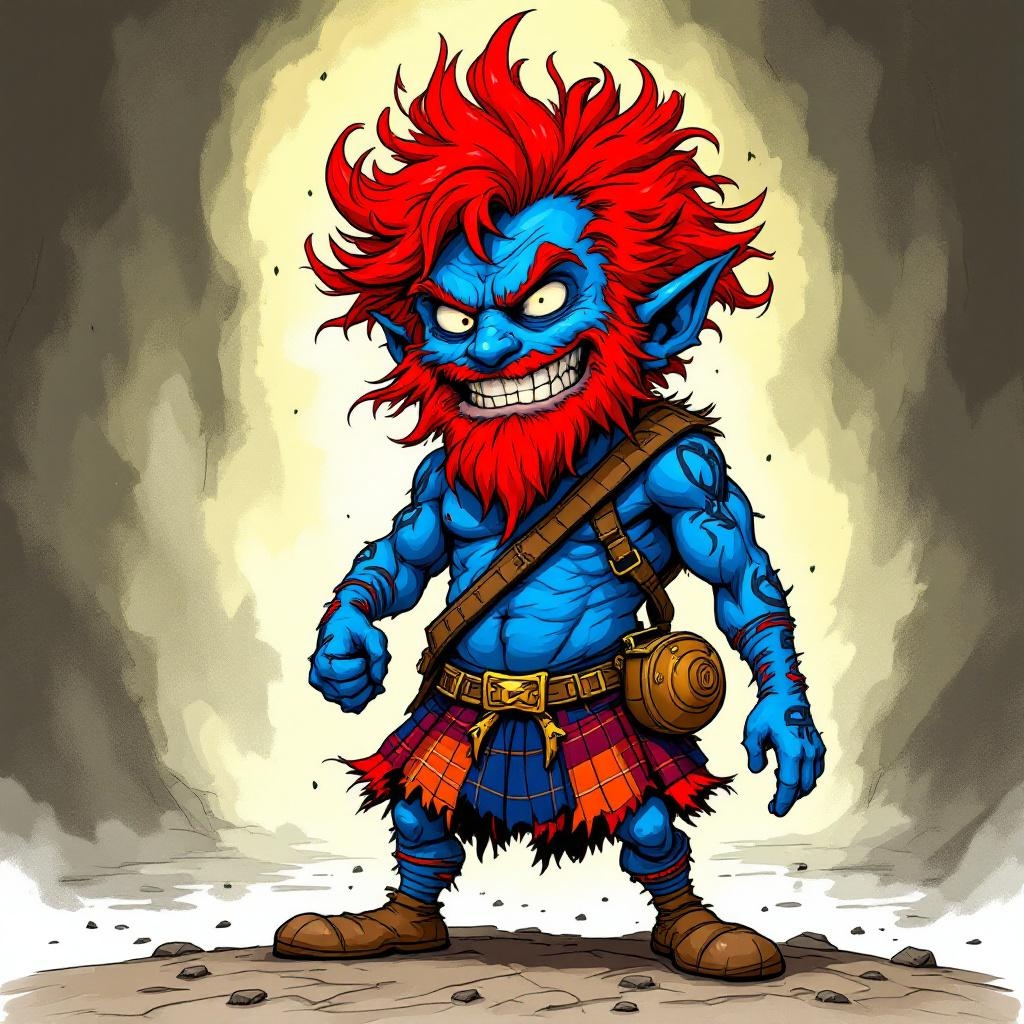
Think about that for a moment. Six-inch-tall, blue-skinned warriors who've looked at a world full of sunshine, fighting, drinking, and things to steal, and concluded that a world this good couldn't be open to just anybody. Therefore, they must have been very good in a previous life. Therefore, they're dead. Therefore, this is heaven.
It's the kind of logic that makes perfect sense if you don't think about it too hard. And the Feegles don't think about anything too hard. That's rather the point.
But here's what Terry Pratchett slips past you while you're laughing at tiny Scotsmen debating the afterlife: their theology works. Not in the sense that it's metaphysically correct—Discworld's actual afterlife is rather more complicated than that—but in the sense that it produces real, measurable, terrifying results. The Feegles' belief makes them the most dangerous six inches in all of fantasy fiction.

The Theology, Explained
The old kelda lays it out for Tiffany Aching in The Wee Free Men, and it goes something like this:
The Discworld has sunshine, flowers, birds, trees, things to steal, and people to fight. It's clearly the best possible world. So it must be a reward—a paradise you get sent to after you die, if you've been good enough. The Feegles, being clearly excellent individuals, earned their place here.
And when a Feegle dies on Discworld? Well, they've gone back to the "land o' the livin'"—presumably some duller place they lived before earning their spot in paradise. The Feegles don't mourn their dead. They feel sorry for them, having to go back to wherever they came from.
"A world this good couldn't be open to just anybody."
It's an inverted afterlife. Instead of living now and hoping for paradise later, the Feegles believe they've already arrived. Death isn't the doorway to something better—it's the exit from something perfect.
This isn't just played for laughs (though it absolutely is played for laughs). Pratchett builds it into a complete and internally consistent worldview. The Feegles don't just say they believe they're in paradise—they behave as if they believe it. Every reckless charge, every headbutt aimed at something a hundred times their size, every gleeful leap into impossible danger makes sense when you remember: they think they're already dead. What's the worst that can happen? Going back to somewhere boring?
Why You Can't Scare What's Already Dead
The practical consequences of Feegle theology are devastating—for everyone who isn't a Feegle.
Start with the obvious: you cannot threaten a Feegle with death. The concept doesn't work. You might as well threaten to send someone on holiday by kicking them out of a hotel. Rob Anybody once headbutted Death himself. Not as a desperate last stand or a brave sacrifice—just because Death was there and Rob doesn't let an opportunity for a good headbutt go to waste. Death picked him out of his hood and asked Tiffany, "IS THIS YOURS?"
That's not bravado. That's theological consistency.
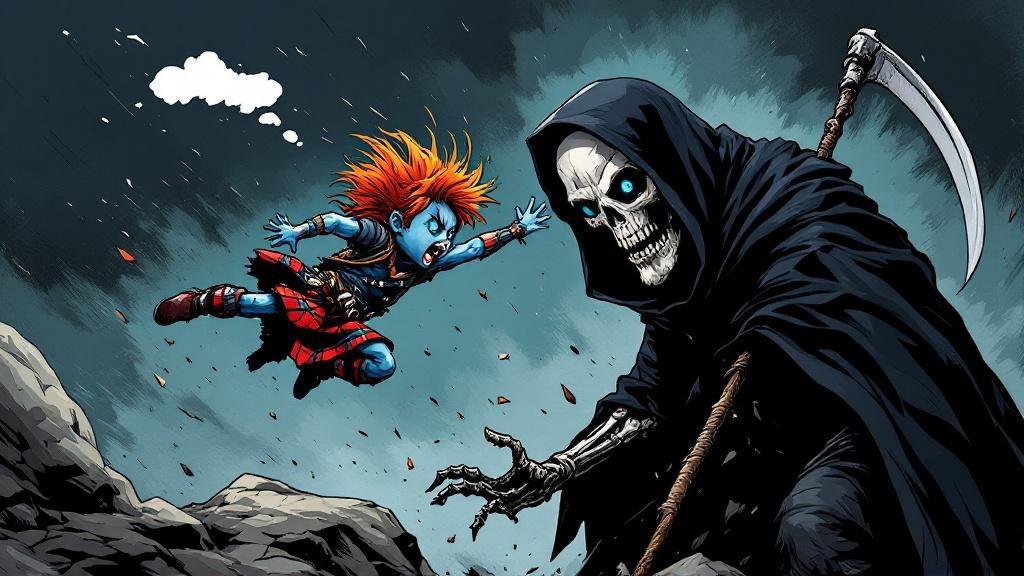
But fearlessness goes deeper than not being afraid to die. The Feegles aren't afraid of anything. Pain is just entertainment. Injury is tomorrow's bragging material. Overwhelming odds are what make a fight worth having. When your baseline assumption is "I'm in the best possible place and nothing can truly harm me," you become a fundamentally different kind of creature.
This matters enormously in the Tiffany Aching books because the Feegles face enemies who rely specifically on fear to function.
The Queen's Glamour Problem
The Queen of the Elves—who kicked the Feegles out of Fairyland for being too disruptive—runs on glamour. Elf glamour works by exploiting fear and desire: it makes you afraid of the elves' power and simultaneously desperate for their approval. It's how the elves have preyed on humans for centuries, appearing as beautiful, terrible beings whose cruelty you somehow believe you deserve.
"You can't glamour something that doesn't fear you and doesn't want anything you have."
Glamour doesn't work on the Nac Mac Feegle.
The reason is pure theology. Glamour requires two hooks: fear and desire. The Feegles fear nothing because they believe they're already dead. And they desire nothing because they believe they're already in paradise—a world with fighting, drinking, stealing, and more fighting. What could the Queen possibly offer them? A better class of punch-up?
This makes the Feegles the only creatures on the Disc who can face elves without hesitation. Not because they're brave (though they are), and not because they're stupid (though... well). Because their belief system has made them immune to the primary weapon of one of Discworld's most dangerous predators.
Pratchett was making a point here, and it's not a small one: what you believe about the world changes how the world can affect you. The Feegles' theology is almost certainly wrong—the Discworld isn't actually the afterlife, and Death would have some thoughts on the matter—but being wrong doesn't make it useless. Their belief produces real courage, real immunity to manipulation, and real effectiveness in combat.
When Theology Meets Grief
If the Feegles have a weakness, it's here: their theology struggles with loss.
When a Feegle falls in battle, the clan says he's "gone back to the land o' the livin'." They don't mourn. They can't mourn—not really—because mourning would mean admitting that death on Discworld is a loss rather than a return trip. Their theology won't allow it.
But Pratchett, being Pratchett, doesn't let them off that easily. Watch the Feegles when someone they care about is in genuine danger—not another Feegle, but Tiffany, or the kelda. The fear that surfaces isn't about their own mortality. It's about losing someone who can't share their theology. Tiffany isn't a Feegle. She doesn't believe she's already dead. If she dies, she doesn't go "back to the land o' the livin'"—she just goes.
The Feegles' theology protects them from fearing their own death. It doesn't protect them from fearing hers.
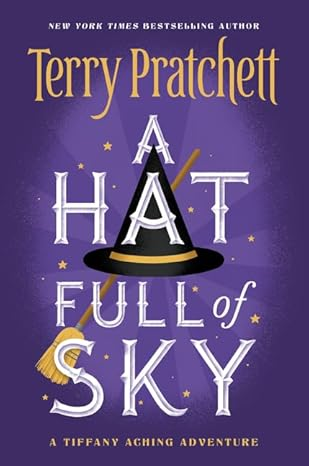
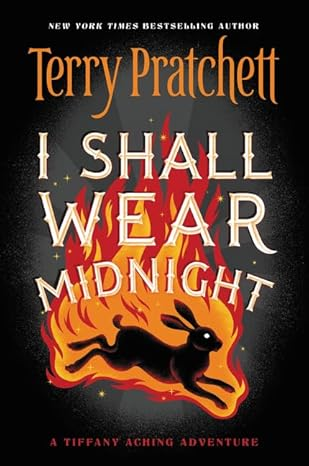
This is one of Pratchett's subtlest touches. The Feegles' belief system is genuinely powerful—it makes them fearless, immune to glamour, devastating in battle. But it can't account for everything. When the Hiver possesses Tiffany in A Hat Full of Sky, the Feegles can't just headbutt the problem away. When the Cunning Man targets her in I Shall Wear Midnight, they can't fight hatred itself. Their theology gives them courage but not omnipotence, and the gap between those two things is where the real drama lives.
The Granny Weatherwax Parallel
There's a striking parallel between Feegle theology and Granny Weatherwax's relationship with death.
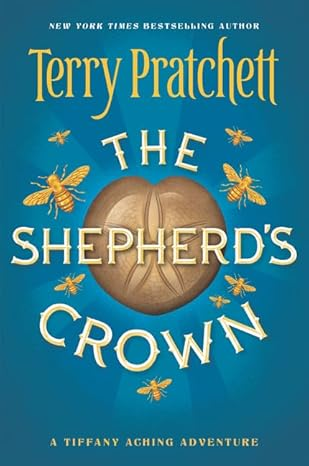
Granny Weatherwax, famously, is not afraid to die. When Death comes for her in The Shepherd's Crown, she doesn't fight, doesn't rage, doesn't bargain. She tidies her cottage, writes her will, puts the cat out, and goes.
The Feegles aren't afraid to die either. But where Granny's fearlessness comes from understanding death—from years of attending the dying, of seeing what death actually is—the Feegles' fearlessness comes from denying it. Granny accepts death as real and chooses not to fear it. The Feegles reject the entire premise.
"Granny Weatherwax faced death with acceptance. The Feegles face it with a headbutt. Both work."
Both approaches produce genuine courage. Both allow their practitioners to face impossible situations without flinching. But they're philosophically opposite. Granny's courage comes from clarity; the Feegles' from conviction. She sees the truth and isn't afraid. They believe something untrue and become unstoppable.
Pratchett, characteristically, doesn't suggest one approach is better than the other. Both work. Both produce heroism. The only thing that doesn't work is what most people do: fear death, try not to think about it, and let that fear limit what you're willing to do.
A Running Joke That Becomes Profound
This is Pratchett's signature move, and the Feegle theology is one of his best examples of it. He introduces an idea as pure comedy—tiny blue men who think they're dead and this is heaven—and then, across five books, lets you discover that the joke has a spine.
The first time you hear about Feegle theology, you laugh. A world with fighting and stealing can't not be paradise? That's a punchline.
The second time, you notice it explains why they're so brave. That's clever plotting.
The third time, you realize it makes them immune to elf glamour. That's thematic depth.
The fourth time, you see it fail—when Tiffany is in danger and no theology can protect the people they love. That's emotional complexity.
The fifth time, you compare it to Granny Weatherwax's approach and realize Pratchett has been writing about the philosophy of death and belief across his entire body of work, and the Feegles are one lens among many. That's literature.
It's a journey from "ha, they think they're dead" to "wait, this is actually an exploration of how belief shapes reality." And Pratchett never tells you it's profound. He just keeps the Feegles headbutting things while the philosophy sneaks up on you.
What the Feegles Actually Teach Us
Strip away the blue skin, the terrible Scottish accents, and the tendency to headbutt first and never ask questions, and Feegle theology makes a surprisingly practical argument: your beliefs about the world determine what the world can do to you.
The Feegles believe they can't truly die? They fight like they can't die—and often survive situations that would kill anyone else through sheer momentum.
The Feegles believe they're in paradise? They treat every moment with the joy of someone who's already received the ultimate reward.
The Feegles believe glamour can't touch them? It can't.
Are they right? Almost certainly not. The Discworld has a perfectly functional afterlife that doesn't match Feegle theology at all. Death does his job regardless of what any six-inch warrior believes about it.
But being wrong doesn't matter. What matters is that their belief gives them something real: courage, joy, immunity to manipulation, and an unshakeable sense that the world is good and they deserve to be in it.
That's not nothing. In a series full of characters wrestling with doubt, cynicism, and the weight of knowing too much, the Feegles offer something refreshingly simple. Sometimes the most powerful thing in the world is a wrong belief held with absolute conviction.
Just ask anybody who's been headbutted by a Feegle.
Crivens.


Want more Feegle philosophy? Read about how Rob Anybody's battle cry reveals Pratchett's view of true freedom, or explore how Tiffany Aching's 'First Sight and Second Thoughts' made her a witch.