From Wet Hen to Warrior Queen: Magrat Garlick's Complete Transformation
Tracking Magrat Garlick's evolution across five Discworld books—from coven joke to fierce protector. One of fantasy's most satisfying character arcs.
From Wet Hen to Warrior Queen: Magrat Garlick's Complete Transformation
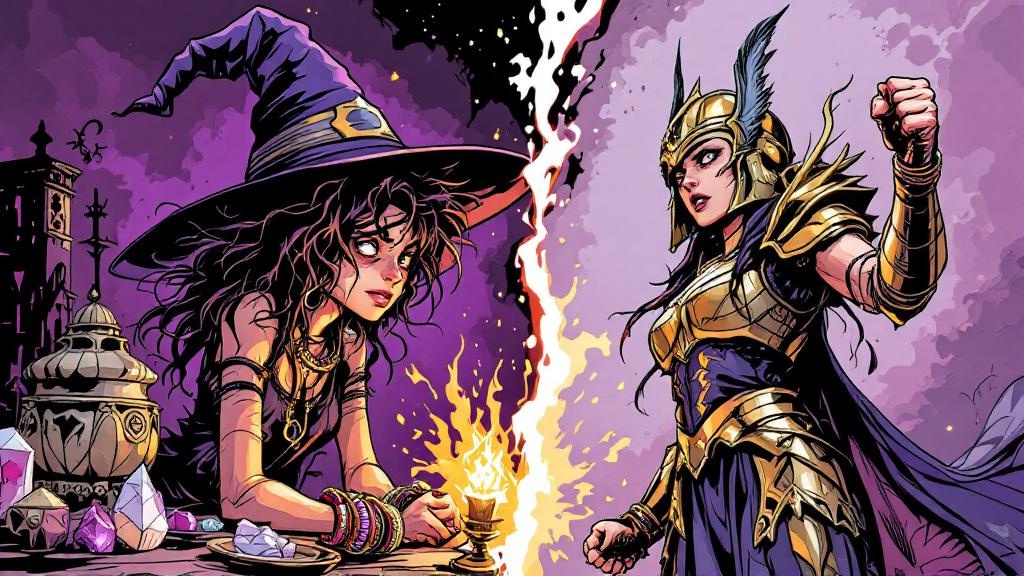
Here's a character who gets called a wet hen in her first book and punches the Queen of the Elves in the face by her third.
That's not a glow-up montage. That's not a training arc. There's no wise mentor handing Magrat Garlick a special sword and telling her she was the Chosen One all along. What Terry Pratchett wrote across five Witches novels is something rarer and more honest: a woman everyone underestimated—including herself—who became exactly what they said she couldn't be. And she did it without becoming someone else.
If you've ever felt like you're failing at everything, that nothing you try quite fits, that the people around you see you as a joke—Magrat's story might be the most satisfying thing you'll ever read.
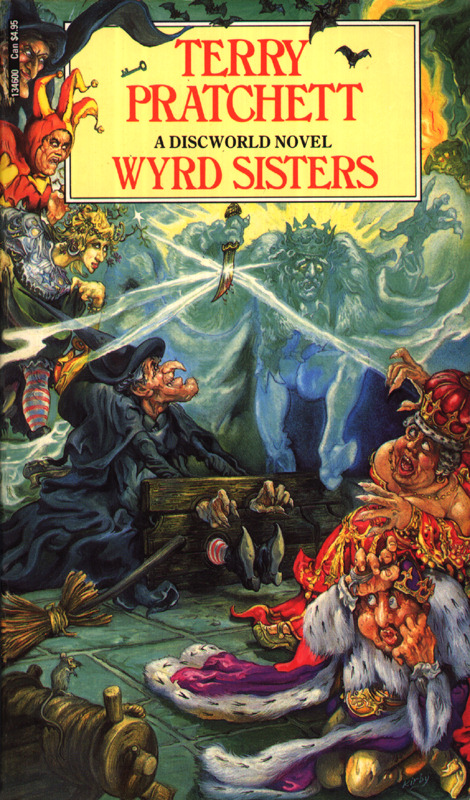
The Wet Hen: Wyrd Sisters
When we first meet Magrat in Wyrd Sisters, she is, by almost every measure, the wrong kind of witch.
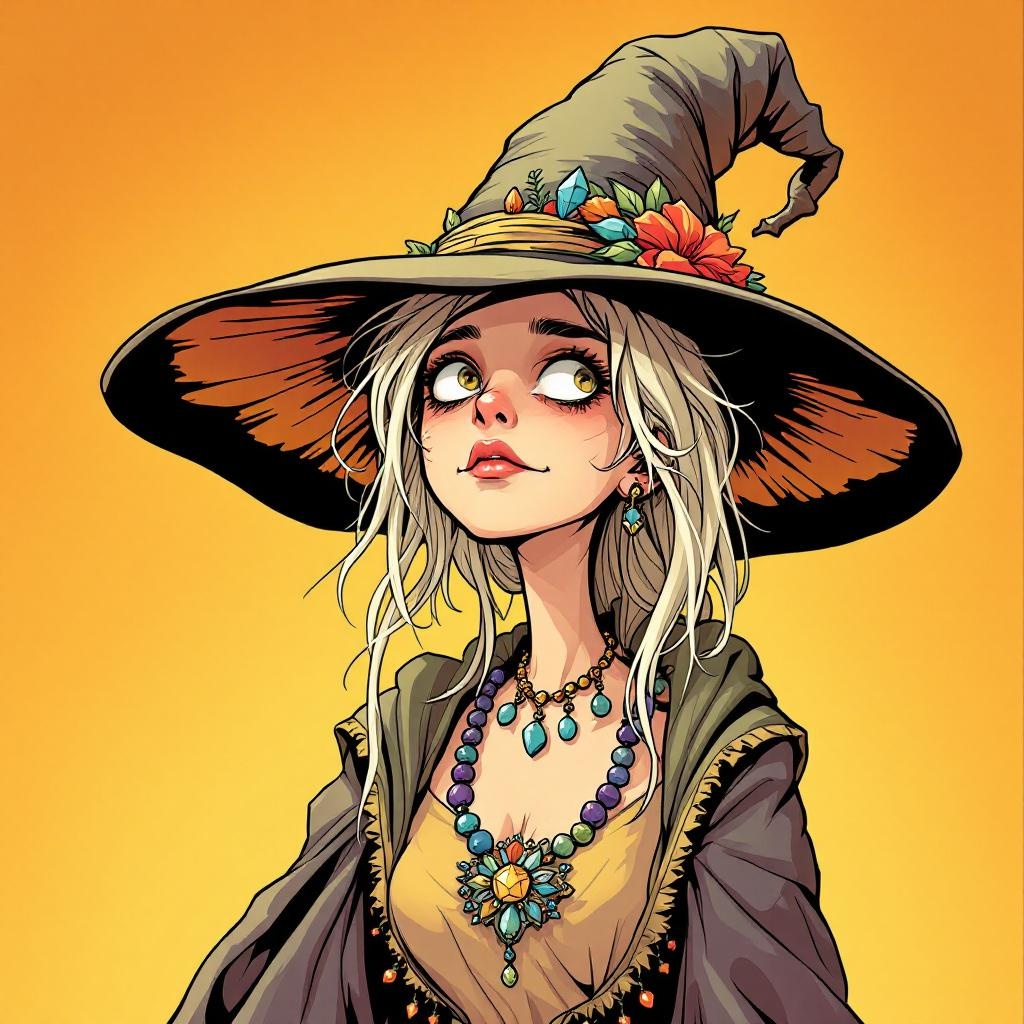
She believes in crystals. She wears occult jewelry. She thinks witchcraft should involve proper candles and the right colored robes and respect for the great cycles of nature. Granny Weatherwax thinks witchcraft involves not being a wet hen, and makes her opinion abundantly clear.
"She's the kind of witch who believes in the goodness of nature while nature is busy being tooth and claw behind her back."
The thing is, Granny isn't entirely wrong. Magrat is uncertain. She's the youngest of the three, slotted into the Maiden role in the coven's triple-goddess dynamic, and she acts like it—tentative, eager to please, forever suggesting they do things properly and being overruled by two women who've been doing things improperly for decades.
But here's what you notice on a reread: Magrat has real power. When Nanny Ogg is imprisoned in the castle dungeon, it's Magrat who transforms the old wooden door into a rising oak tree—a display of genuine, raw magic that impresses even Granny Weatherwax. The wet hen can do things the other two can't. She just doesn't believe it yet.
That's the key to Magrat's entire arc. It was never about ability. It was always about belief.
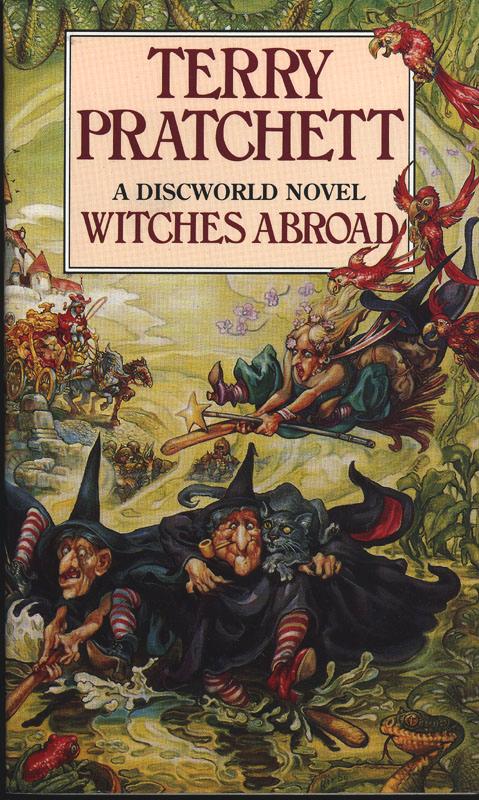
Still Searching: Witches Abroad
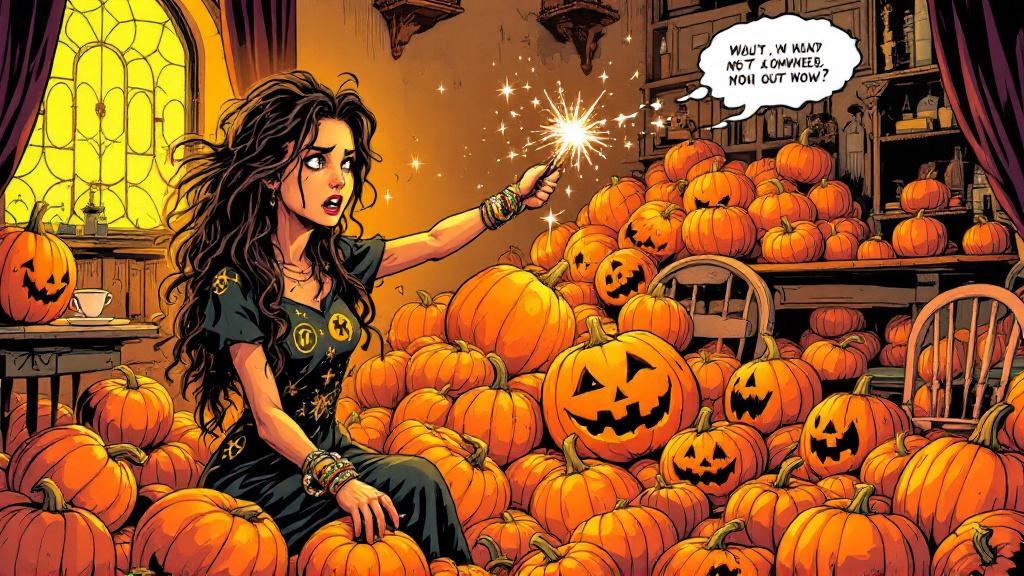
Witches Abroad sends the three witches to the distant city of Genua, and it gives Magrat a fairy godmother's wand she absolutely cannot control. Everything she points it at turns into a pumpkin. She can't figure out the adjustable dials. The magic belongs to someone else's system, someone else's story, and Magrat can't make it work because it isn't hers.
This is Pratchett being quietly brilliant about identity. Magrat spends the entire journey trying to be a fairy godmother—a role literally bequeathed to her by the dying Desiderata Hollow—and failing spectacularly. She attends the ball in Genua dressed as Cinderella (the glass slippers don't fit). She tries to use borrowed magic and borrowed identities, and none of it sticks.
At the end, she throws the wand in the river.
It reads like defeat, but it's actually progress. Magrat is learning what she isn't. She isn't a fairy godmother. She isn't Granny's obedient student. She isn't the passive Maiden who does what the story demands. She doesn't know yet what she is, but she's crossing options off the list.
"Witches... We live in harmony with the great cycles of Nature, and do no harm to anyone, and it's wicked of them to say we don't. We ought to fill their bones with hot lead."— Magrat Garlick
And there's a wonderful moment in Witches Abroad where you see the mongoose underneath. When Magrat finally loses her temper—really loses it—there's a flash of something dangerous. Not dangerous like Granny, who is always dangerous. Dangerous like a small furry animal that's been backed into a corner and suddenly isn't small anymore.
Pratchett is planting seeds. Everything Magrat tries in Witches Abroad fails. But every failure is teaching her something about who she actually is.
The Breakthrough: Lords and Ladies
Then comes Lords and Ladies, and everything changes.
The elves are coming back to Lancre. King Verence is captured. Granny Weatherwax is locked in psychic combat. And Magrat—abandoned at her own wedding preparations while the world falls apart—does something no one expected.
She stops waiting to be rescued.
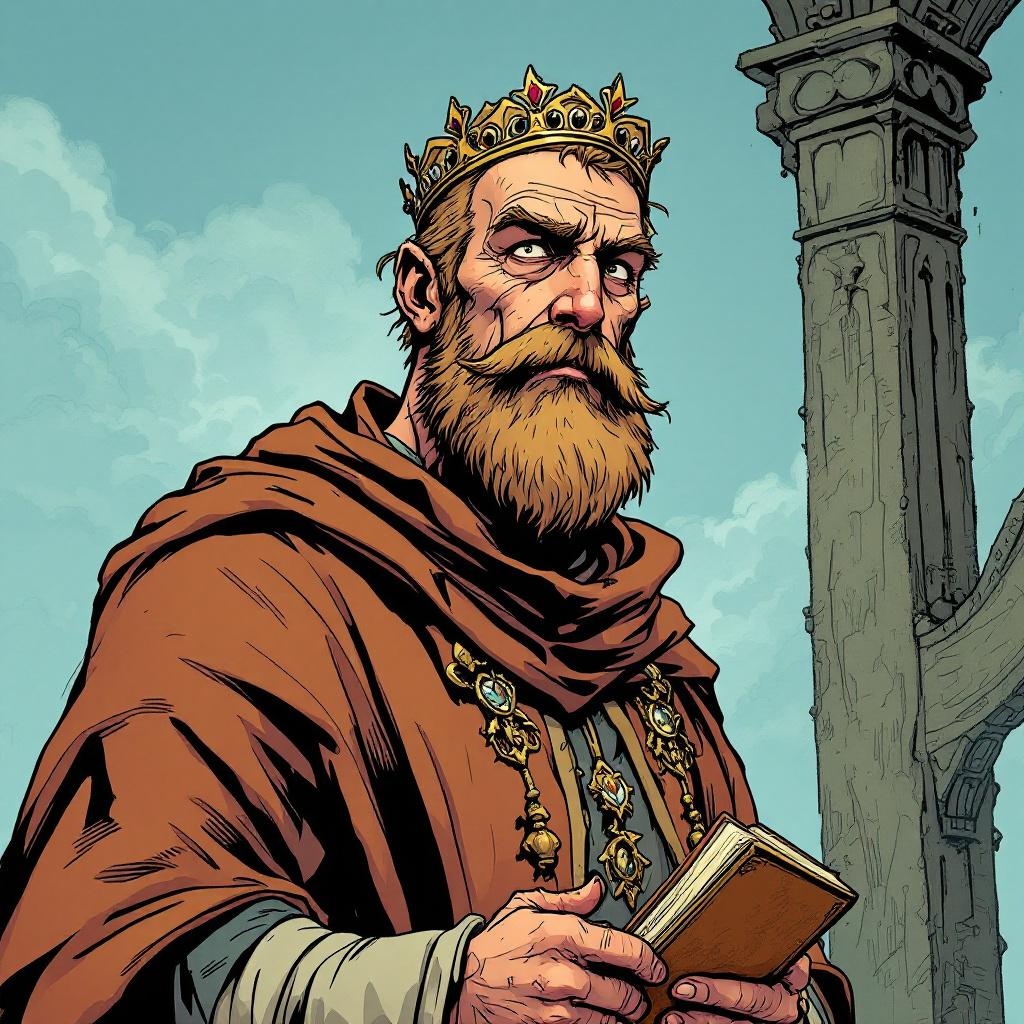
Fighting her way through the infiltrated castle, she finds herself in the armory, staring at a portrait of Queen Ynci the Short-Tempered, Lancre's only warrior queen. Below the portrait hangs ancient armor. Magrat puts it on.
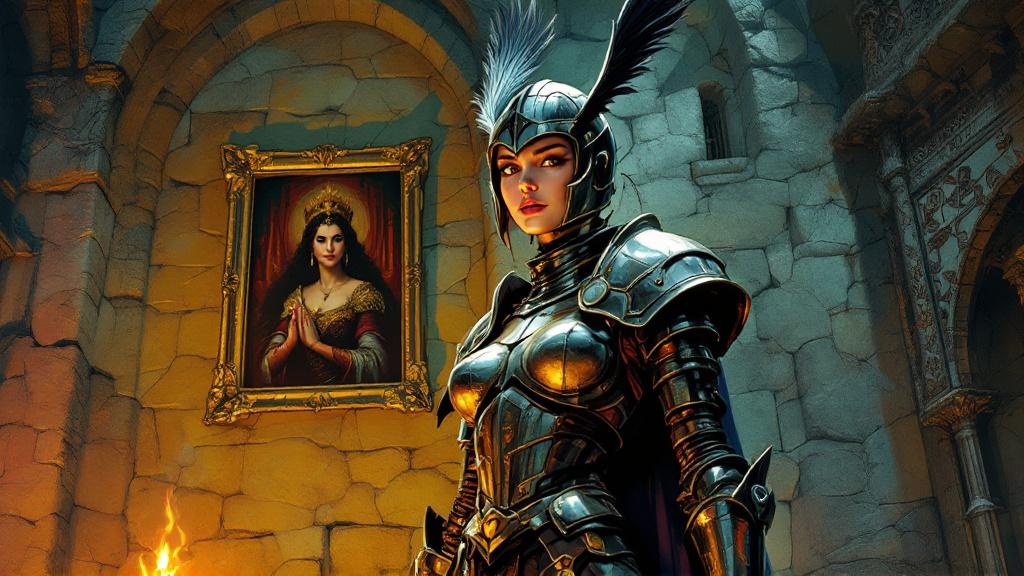
The transformation is instant and total. She isn't pretending to be Ynci. She is Ynci. She rescues hostages. She fights elves. She marches out to confront an army of creatures who've been the terror of Lancre for centuries—and she does it without hesitation.
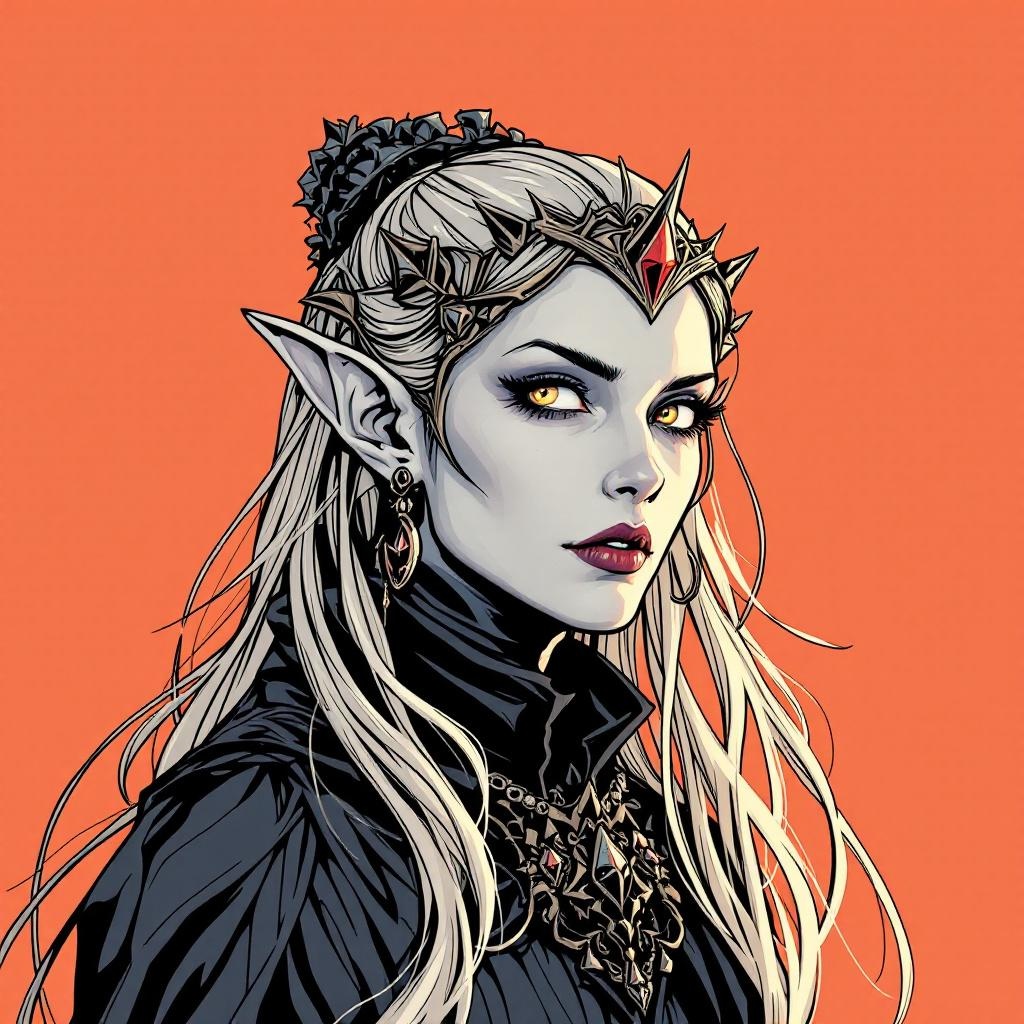
Then comes the confrontation with the Elf Queen at the Dancers. The Queen uses her glamour to strip away Magrat's identity layer by layer, trying to find the hollow center, the nothing she can fill with despair.
She doesn't find nothing.
"And the ablation of Magrat Garlick roared on, tearing at the strata of her soul... exposing the core."
What the Queen finds is "the unexpectedly valorous core of Magrat's being." She's been peeling away self-doubt, uncertainty, the identity of "the wet hen"—and underneath all of it is steel. Magrat punches the Elf Queen in the face.
"Only one queen in a hive!"
The magnificent twist? Ynci never existed. The armor was made from cookware. The legend was fabricated for tourists. Magrat walked into battle dressed in pots and pans, channeling a queen who was fiction, and she won anyway—because the strength was never in the armor. It was always in her.
And here's what makes it perfect: Granny Weatherwax isn't surprised. She'd been "deliberately stoking, aggravating and provoking" Magrat for years. Every "wet hen" comment, every dismissal, every implication that Magrat wasn't a real witch—it was all tempering. Granny saw the warrior queen long before the armor. She'd been forging her for exactly this.
The Mother: Carpe Jugulum
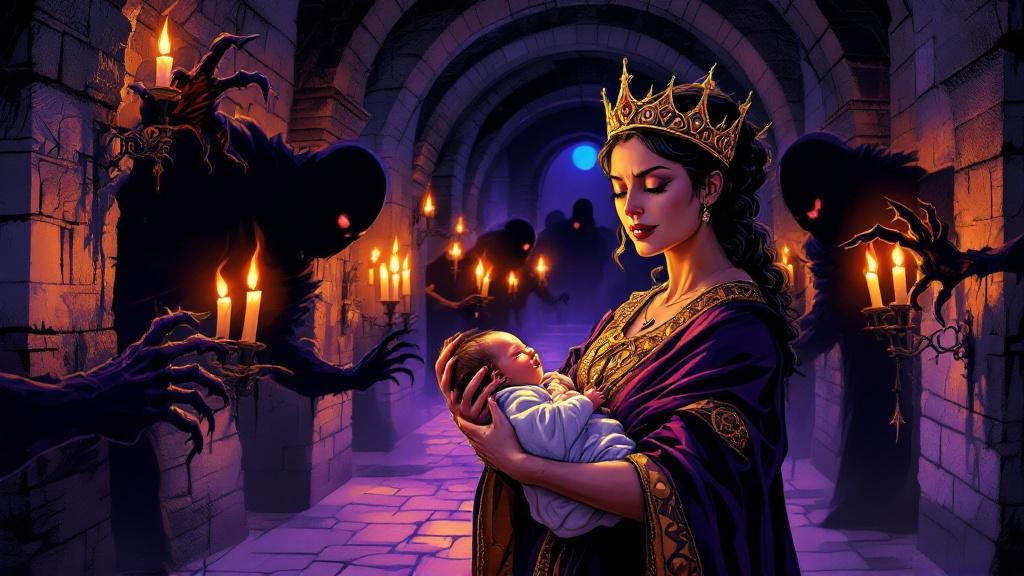
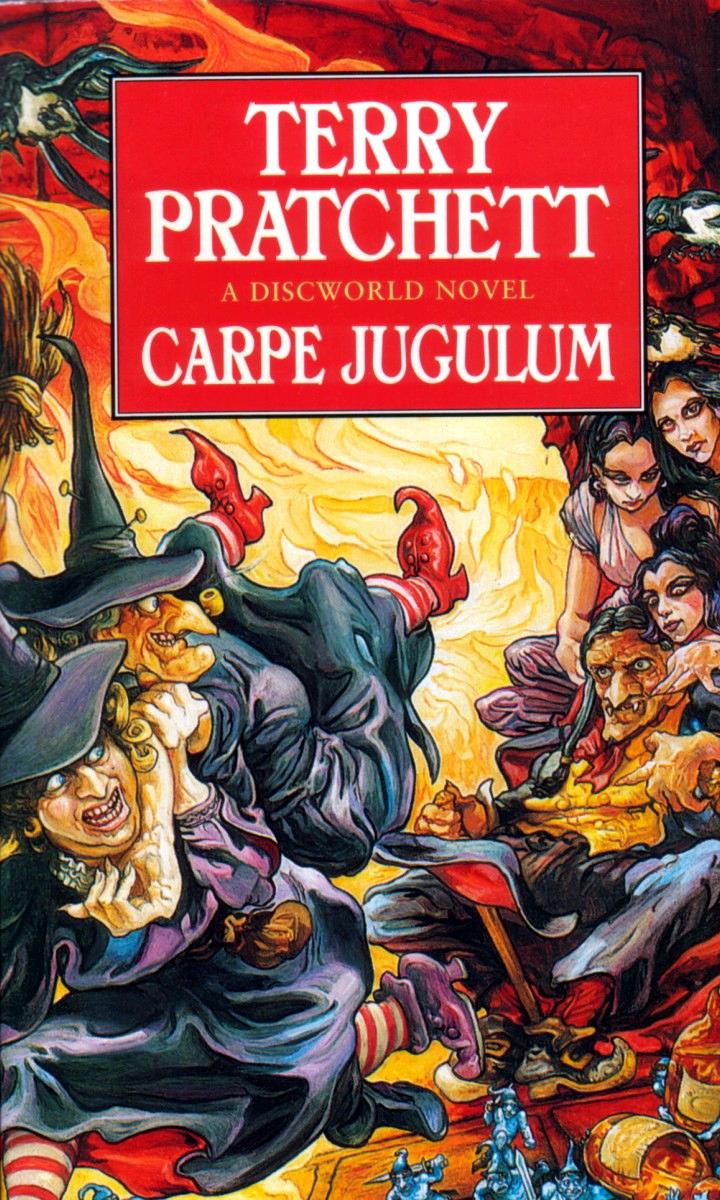
By Carpe Jugulum, Magrat is Queen of Lancre and mother to Esmerelda Margaret Note Spelling (named with "Note Spelling" to prevent anyone making the same mistake Simplicity Garlick made with "Magrat"). She's no longer part of the coven. She's settled into her role.
And then vampires invade Lancre.
The Magrat of Carpe Jugulum is a different creature from the one we met in Wyrd Sisters. When her daughter is threatened, there's no hesitation, no self-doubt, no waiting for Granny to handle things. Motherhood hasn't softened her—it's given her something new to fight for, and she fights with the kind of iron-clad resolve that makes the wet hen nickname seem like it belonged to someone else entirely.
"Motherhood didn't change who Magrat was. It finished what the armor started—it gave her something worth being fierce about every single day."
Fans consistently point to Carpe Jugulum as the book where Magrat's transformation feels complete. The Lords and Ladies breakthrough was dramatic—a single explosive moment of revelation. But Carpe Jugulum shows something harder and more impressive: sustained confidence. Not a one-time eruption of courage, but a woman who has genuinely become what she always had the potential to be.
The wet hen, at most, is "only slightly damp."
The Elder Stateswoman: The Shepherd's Crown
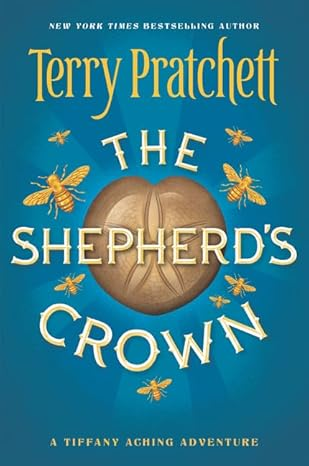
In The Shepherd's Crown, Terry Pratchett's final novel, the elves return to threaten Lancre once more. Granny Weatherwax is gone. The barriers between worlds are weaker than ever.
Queen Magrat puts on Queen Ynci's armor again.
This time, she knows Ynci never existed. She knows the armor is beaten cookware. She doesn't care. Twenty years after Lords and Ladies, she wears it as a symbol—not of borrowed strength, but of her own history. She first became a warrior queen in this armor. Now she's choosing to be one again.
She leads an army of witches into battle against the elves. She fights. She wins. It's a callback to her greatest moment, and proof that it wasn't a fluke, wasn't a one-time thing. The warrior queen wasn't a phase. It's who Magrat became.
What Makes This Arc Work
Here's the thing about Magrat's transformation: Pratchett didn't change who she fundamentally was.
Magrat in The Shepherd's Crown still has the same heart as Magrat in Wyrd Sisters. She still cares deeply. She still believes in doing right. She's still the witch who nursed fallen baby birds and thought about the great cycles of nature. The difference is that now she also knows she can punch an elf queen in the face if the situation requires it.
Most character arcs in fantasy follow a pattern: the hero discovers hidden power, trains to use it, and becomes someone impressive. Magrat's arc inverts that. She doesn't discover hidden power. Everyone else discovers what was always there. Granny knew. Nanny probably knew. The Elf Queen found out the hard way.
The only person who didn't know was Magrat.
And that's why fans connect with her so deeply. As one reader put it: "Her storyline of not really knowing who she is or what she actually wants in life, thinking she's failing at everything, trying loads of different hobbies and none of them fitting." That's not a fantasy trope. That's a Tuesday.
Lords and Ladies is cathartic because Magrat finally stops trying to be what other people want and discovers what she already is. She doesn't become a warrior queen by studying or training or finding the right mentor. She becomes one by being pushed into a corner and discovering she was, as Pratchett puts it, "slightly more mongoose-y than previously thought."
The mongoose was always there. It just needed the right snake to come along.
The Cultivation of Strength
There's one more thing that makes Magrat's arc remarkable, and it's not about Magrat at all. It's about Granny Weatherwax.
Granny's relentless criticism—the wet hen comments, the dismissals, the constant implication that Magrat wasn't good enough—looks cruel from the outside. From the inside, it was gardening. Granny was cultivating something. Every provocation was designed to build the pressure, to stoke the fire underneath, to ensure that when the moment came, Magrat wouldn't hesitate.
Granny couldn't fight the elves for her. That's not how strength works. You can't give someone courage. But you can make sure they have it when they need it, by testing it over and over and over again until it becomes something they can rely on.
The wet hen label wasn't an insult. It was a dare.

Where to Read Magrat's Journey
If you want the full experience of Magrat's transformation, here's the path:
Wyrd Sisters — Meet the wet hen. Watch her struggle as the youngest witch in the coven, and catch the first hints that there's more to her than anyone suspects.
Witches Abroad — See Magrat trying on identities that don't fit, wielding borrowed magic that won't work, and slowly learning what she isn't.
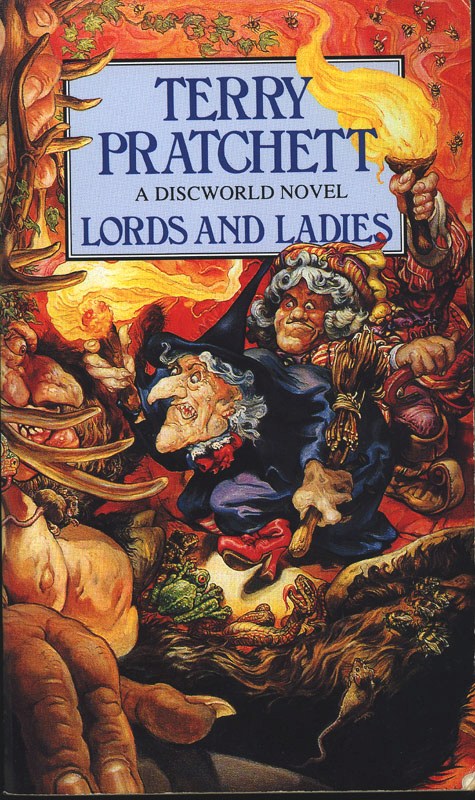
Lords and Ladies — The main event. If you read one Magrat book, make it this one. The armor scene alone is worth the price of admission.
Carpe Jugulum — Magrat as queen and mother, proving that Lords and Ladies wasn't a fluke. The wet hen is now, at most, slightly damp.
The Shepherd's Crown — The armor returns in Pratchett's final novel. Twenty years later, Magrat leads witches into battle one more time.
Want to dive deeper into Magrat's defining moment? Read about the armor of Queen Ynci and how a fictional warrior queen revealed a real one. Or explore another character who refuses to be underestimated: Nanny Ogg's secret power.