The Redemption Factory: How Vetinari Transforms Criminals into Civil Servants

Lord Vetinari doesn't punish talented criminals—he employs them. How Moist von Lipwig reveals the Patrician's genius for turning wrongdoers into public servants.
The Redemption Factory: How Vetinari Transforms Criminals into Civil Servants
There's a moment early in Going Postal that should make your blood run cold. Not because of what happens—a condemned man is offered a job instead of execution—but because of what it reveals about the man making the offer.
Lord Vetinari sits in the Oblong Office, looks at Moist von Lipwig—a con man, forger, and thief responsible for ruining lives he's never even met—and says something extraordinary. He asks Moist to think of him as "an angel."
That's not mercy. That's a recruitment pitch. And it's the opening move in one of the most efficient systems of human resource management in all of fantasy literature.
The Angel Speech
The full quote is worth sitting with:
"The first interesting thing about angels, Mr. Lipwig, is that sometimes, very rarely, at a point in a man's career where he has made such a foul and tangled mess of his life that death appears to be the only sensible option, an angel appears to him, or, I should say, unto him, and offers him a chance to go back to the moment when it all went wrong, and this time do it right."
"Think of me as... an angel."
That's beautiful. It's also a lie—or rather, it's a truth wrapped in a lie wrapped in an understanding of human psychology so precise it borders on cruelty. Vetinari isn't offering Moist a chance to "do it right." He's offering a choice between running the Post Office and walking through a door that opens onto a bottomless pit.
The genius is in the framing. Moist could simply be forced. Vetinari has the power. He has the executioner. He has the bottomless pit. But forcing people is crude, and crude is inefficient. What Vetinari wants isn't obedience—it's investment. He needs Moist to believe, on some level, that he chose this. That the angel speech meant something. That redemption is genuinely on the table.
Because people who think they're being redeemed work harder than people who know they're being coerced.
The Weight of 2.338 Deaths
If Vetinari's angel speech is the carrot, Mr. Pump is the stick—though "stick" doesn't quite capture a golem who can track you across continents and doesn't need to sleep.

Mr. Pump is Moist's parole officer, and he carries a piece of information that changes everything. Moist von Lipwig has killed 2.338 people. Not with a knife or a weapon—Moist has never directly harmed anyone in his life. But when banks fail, it's not bankers who starve. When pensions evaporate, real people lose real lives. Mr. Pump has done the maths. The fractional death toll of Moist's "victimless" crimes adds up to something uncomfortably close to murder.
This is Vetinari's second lever. The angel speech appeals to Moist's vanity—the idea that he's special enough to deserve a second chance. The golem appeals to his conscience—the part of him that knows, however deeply he's buried it, that the con artist's creed of "no real victims" was always a lie he told himself.
Together, they create a psychological trap more secure than any cell. Moist can't leave because Mr. Pump will find him. But more importantly, Moist can't leave because running would mean admitting that the 2.338 deaths don't matter to him. And for all his flaws, Moist isn't quite that person.
"When banks fail, it's not bankers who starve."
Vetinari understood this before Moist did. That's what makes it terrifying.
The Principles of the Con Applied to Honest Work
Here's where Vetinari's genius becomes genuinely impressive. He doesn't try to reform Moist. He doesn't lecture him about morality or demand that he change his fundamental nature. He just... redirects him.
Moist von Lipwig is, at his core, a man addicted to the thrill of deception. He needs the buzz of making people believe in something, of spinning something from nothing, of standing on a stage and convincing the world that the impossible is not only possible but already happening. Take that away and he withers. Lock him in a cell and he'll pick the lock, not because he wants freedom but because the lock is there.
So Vetinari gives him the Post Office—a ruined institution full of undelivered letters, staffed by eccentrics, and competing against the Grand Trunk clacks system run by a villain arguably worse than Moist ever was. It's an impossible job. It's exactly the kind of challenge a con man can't resist.

And Moist does what Moist does. He invents stamps. He creates limited editions that collectors go mad for. He stages dramatic stunts. He turns the Post Office into a spectacle—and somewhere in the middle of all that showmanship, actual mail starts getting delivered. Real problems get solved. The city gets a functioning postal service.
The con artist becomes a public servant, and the extraordinary thing is that he uses exactly the same skills for both. The difference is that now, when Moist makes people believe in something, the thing they're believing in is actually real.
The Progression: Post Office, Bank, Railway
Vetinari doesn't stop at one redemption. He has a system, and the system has stages.
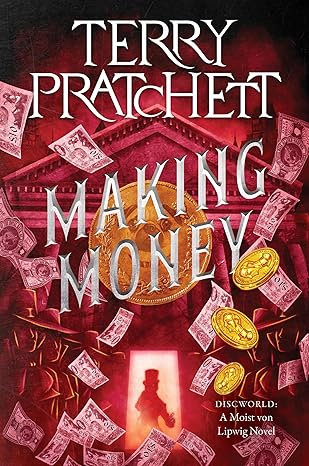
After the Post Office, there's the Royal Mint and the banking system in Making Money. The exchange when Vetinari proposes this new assignment is one of the most revealing in the entire series:
"I don't know anything about running a bank," Moist protests.
"Good. No preconceived ideas," Vetinari replies.
"I've robbed banks!"
"Capital! Just reverse your thinking."
"I've robbed banks! — Capital! Just reverse your thinking."
That last line is funny, but it's also the entire philosophy in three words. Vetinari doesn't see criminals and honest citizens as fundamentally different categories of people. He sees them as people whose talents are pointed in different directions. A man who can rob a bank understands banking better than most bankers do. He just needs his thinking reversed.
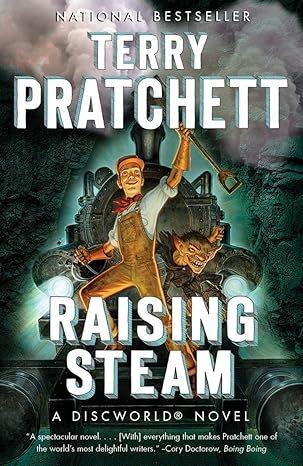
And then comes Raising Steam, where Moist champions the railway—technology that will reshape the entire Disc. Each assignment is bigger than the last, more dangerous, more consequential. Vetinari keeps raising the stakes because he understands that Moist's addiction isn't really to crime. It's to excitement. Give him enough legitimate excitement and he'll never need to steal again.
It's the same logic behind giving a hyperactive child something challenging to do. Channel the energy; don't try to suppress it.
The Gilt Test: When Redemption Fails
But here's the part that makes Vetinari's system more than just clever management. Not everyone gets redeemed.
At the end of Going Postal, Reacher Gilt—the clacks magnate who murdered and defrauded his way to power—is offered the same deal Moist got. A new identity. A challenging job. An angel's second chance.
Gilt chooses the door. The one over the bottomless pit.

Vetinari's response is chilling in its mildness: he says he has to admire a man who really believes in freedom of choice. But what the scene actually reveals is the selection mechanism behind the redemption factory. Vetinari doesn't offer second chances to everyone. He offers them to people he's already profiled as redeemable. Moist accepted because beneath the con artist was someone who wanted to matter. Gilt refused because beneath the businessman was someone who only wanted to win.
The angel speech isn't compassion. It's an interview. And the door isn't punishment. It's the exit for candidates who fail.
The Broader Pattern
Moist is the most visible product of Vetinari's factory, but he's not the only one. Look at the pattern across the series and you'll see it everywhere.
Sam Vimes was a drunk in a failing Watch that Vetinari had deliberately run into the ground—stuffed with misfits and underfunded to the point of irrelevance. Then Vetinari wound Vimes up and pointed him at the city's problems. The result is the most effective law enforcement officer Ankh-Morpork has ever seen. As Vetinari's secretary Drumknott once observed, "If Commander Vimes did not exist you would have had to invent him." Vetinari's reply: "I rather think I did."
William de Worde was a disaffected nobleman's son writing a newsletter. Vetinari let the free press happen because controlling information flow was more valuable than suppressing it—and because de Worde, properly directed, would do the controlling for him.
"If Commander Vimes did not exist you would have had to invent him. — I rather think I did."
The Thieves' Guild. The Seamstresses' Guild. The Assassins' Guild. Even the Dark Clerks—those shadowy civil servants recruited from Assassins' Guild graduates who lack the family wealth to practice independently. Every one of them represents the same principle: take something dangerous, give it a structure, and turn its energy toward something useful.
Vetinari runs Ankh-Morpork the way a river engineer manages a flood. You don't build a wall and hope for the best. You dig channels and let the water do the work.
The Successor Question
There's a fan theory that won't go away, and it's worth taking seriously: Is Vetinari grooming Moist as his replacement?
The evidence is suggestive. Each assignment gives Moist more responsibility, more public visibility, more experience running institutions. Post Office taught him operations and public relations. The Mint taught him finance and the fragile illusions that underpin economies. The railway taught him infrastructure and politics. Stack those up and you've got a pretty comprehensive crash course in running a city.
Moist is also, crucially, the right kind of person for the job. He's not an idealist—idealists burn out or become tyrants. He's not a soldier—soldiers think in terms of force. He's a man who understands that governance, like a con, depends on making people believe in something. The only difference is that Vetinari's con is a city that actually works.
But there's a counterargument, and it's equally compelling. Moist thrives on reinvention. He's been Albert Spangler, he's been a dozen other identities, he's been the Postmaster General and the Master of the Royal Mint. Being Patrician would trap him in one identity forever. The job would kill the thing that makes him useful.
Maybe Vetinari knows that too. Maybe the point was never succession. Maybe the point was simply that talented people shouldn't be wasted—and that the most dangerous thing you can do with a criminal is nothing.
The Philosophy Behind the Factory
Strip away the jokes and the fantasy setting, and Vetinari's redemption factory is making a serious argument about justice.
Most systems of criminal justice are built on one of two ideas: punishment or rehabilitation. Punishment says you did wrong, so you suffer. Rehabilitation says you did wrong, so we'll fix you. Vetinari rejects both. He doesn't punish Moist—execution would waste a useful asset. And he doesn't rehabilitate him—Moist is still fundamentally a con man at the end of Raising Steam.
What Vetinari does is something stranger and more pragmatic. He repurposes people. He treats criminal talent as misallocated talent, and misallocation as a problem to be solved through better incentive design. It's not moral. It's not immoral. It's amoral—driven purely by the question of what produces the best outcome for the city.
And that's what makes it so effective, and so unsettling. The redemption factory works. Moist genuinely does more good as Postmaster General than he ever did harm as a con artist. The city genuinely benefits. But the factory doesn't run on mercy. It runs on leverage—guilt, surveillance, the carefully maintained illusion of choice—and the man running it has never, not once, pretended otherwise.
Vetinari is an angel. He said so himself. He just never claimed to be a kind one.
Where to See the Factory in Action
Start with Going Postal. It's the complete redemption arc in one book—the angel speech, Mr. Pump's moral reckoning, the transformation of a con man into something better (or at least more useful), and the Gilt comparison that shows what happens when the factory rejects an applicant. It's also one of the funniest Discworld novels, which helps when the subject matter gets this dark.
Then read Making Money to see the system working at scale—Vetinari doesn't even need to force Moist this time, because he knows Moist will come willingly. The con man has been conned into wanting to be good. Or at least wanting to be useful, which in Vetinari's philosophy amounts to exactly the same thing.






The door is always there. Moist could walk through it any time. The fact that he never does tells you everything about the angel who offered him the choice.