Learn the Words: Vetinari's Hatred of Mimes and the Art of Strategic Cruelty
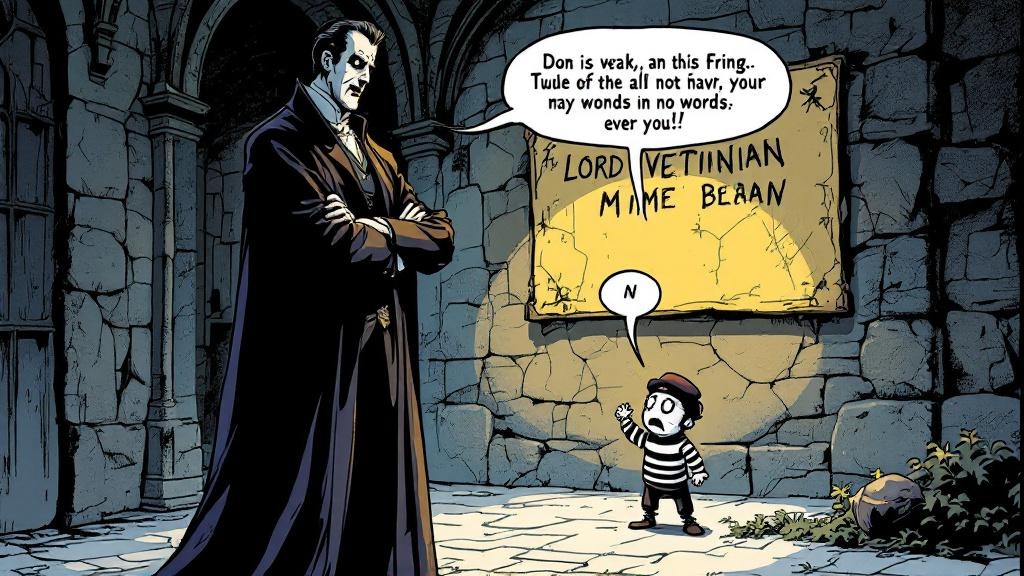
Lord Vetinari's ban on mime artists seems like a quirk. But the scorpion pit with its 'Learn The Words' sign reveals a masterclass in political control.
Learn the Words: Vetinari's Hatred of Mimes and the Art of Strategic Cruelty
Every tyrant needs a quirk.
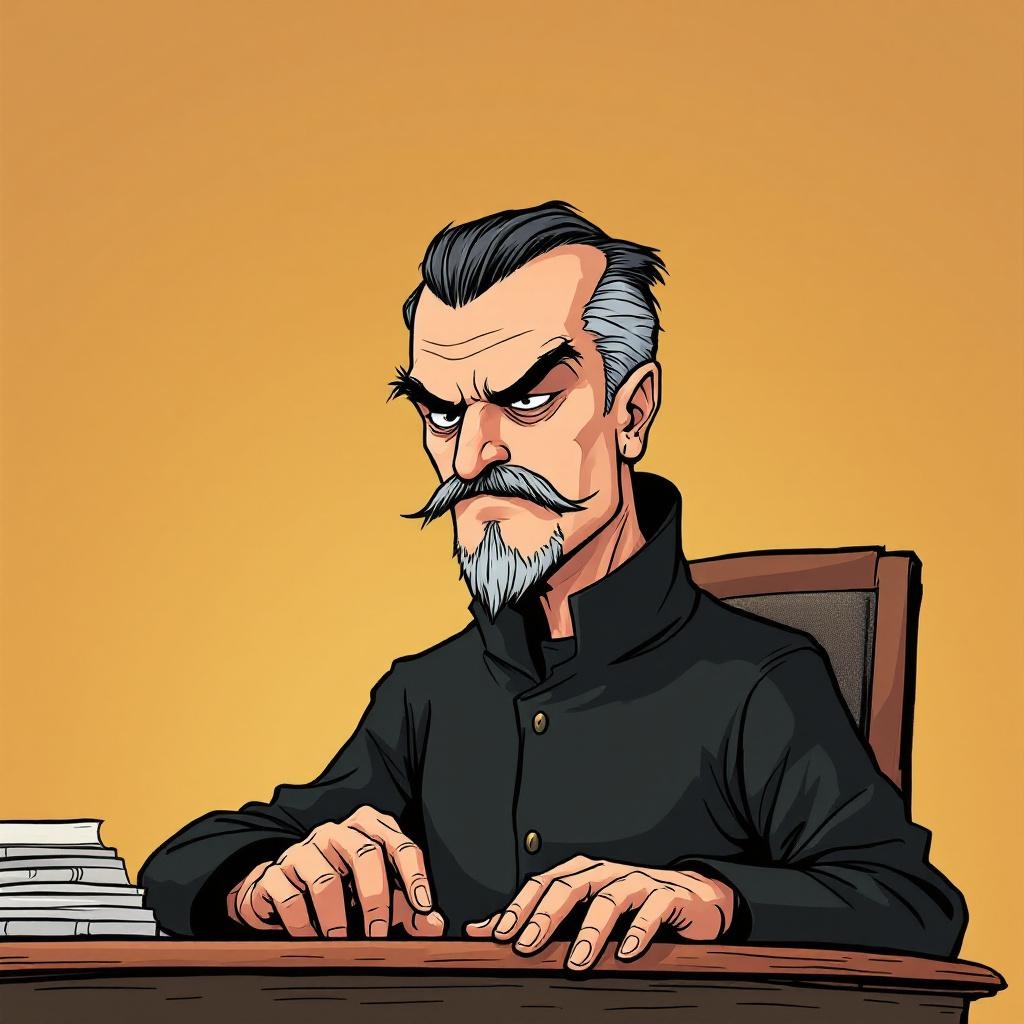
Not the scary kind—the charming kind. The one detail that makes citizens shake their heads and chuckle rather than sharpen their pitchforks. For some dictators it's a fondness for gold-plated bathrooms. For others it's an obsession with astrology. For Lord Vetinari, the Patrician of Ankh-Morpork, it's this: he really, genuinely, profoundly hates mime artists.
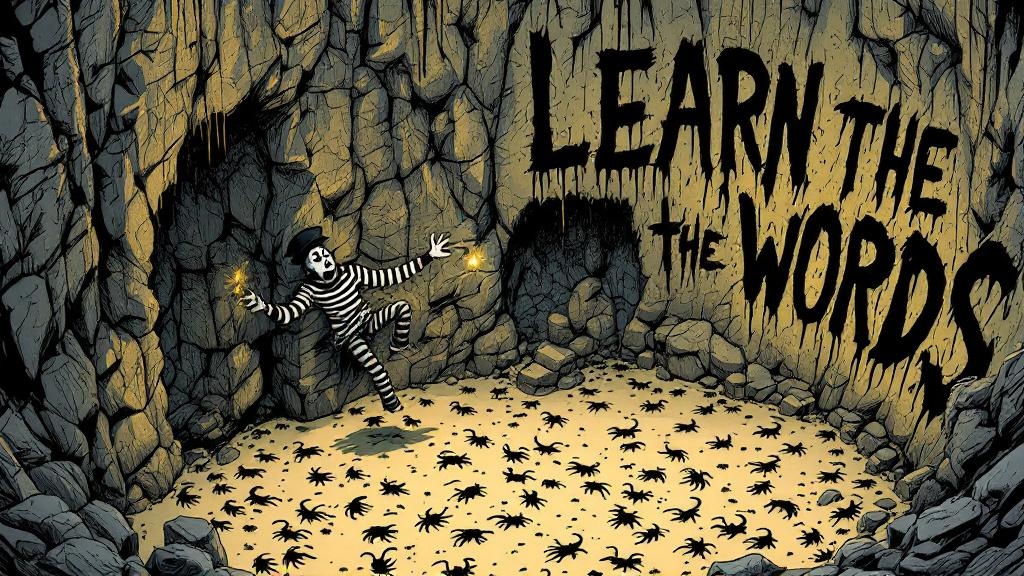
Anyone in baggy trousers and a white face who tries to ply their art anywhere within the city walls will find themselves in a scorpion pit. On one wall of that pit is painted a sign reading: "Learn The Words."
That's funny. It's supposed to be funny. But if you've been paying attention to how Vetinari operates across forty-one Discworld novels, you should be asking a different question: is a man who does nothing without purpose really banning mimes because he finds them annoying?
The Scorpion Pit and Its Punchline
Let's start with what the books actually tell us. The mime ban appears most prominently in Feet of Clay, where Pratchett lays it out with characteristic precision:
"Lord Vetinari would tolerate absolutely anything apart from anything that threatened the city, and mime artists."
"Learn The Words."
That "and" is doing a lot of work. It places mime artists alongside existential threats to the city—alongside dragons and invading armies and guild coups. The phrasing is deliberately absurd, which is exactly how Vetinari wants you to read it.
The scorpion pit itself is darkly elegant. You're a mime. You've been thrown into a pit with scorpions. On the wall, someone has painted the words "Learn The Words." The joke is obvious: if you'd just talk instead of pretending to be trapped in an invisible box, you wouldn't be in this mess. But there's a deeper layer. The pit is escapable. You can get out by speaking—by abandoning mime. The punishment isn't death. It's conversion.
And then there's this exchange from the guild leaders, discussing Vetinari's governance in Feet of Clay:
Mr. Boggis: "He does have all street-theater players and mime artists thrown into the scorpion pit."
Mr. Potts: "True. But let's not forget that he has his bad points too."
The population doesn't just tolerate the ban. They approve of it. In Ankh-Morpork, strolling players are considered no better than criminals, and mimes are "just plain freaky." Vetinari's persecution of mime artists is, by popular consensus, one of the best things about his regime.
Which should make you suspicious.
The Emperor Who Also Hated Mimes
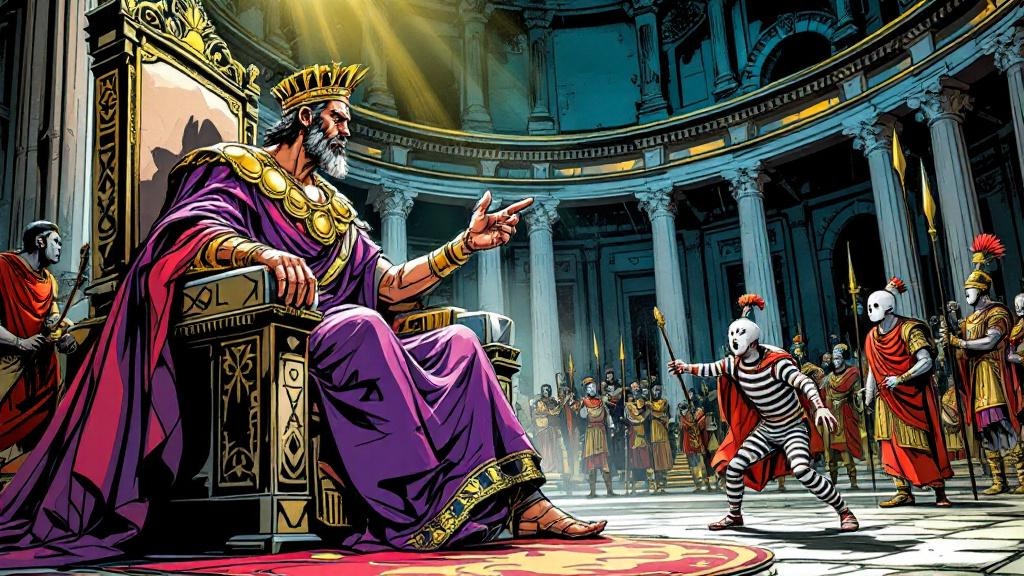
Here's where Pratchett's historical knowledge—the man was a voracious reader—becomes relevant. The Emperor Domitian, who ruled Rome from 81 to 96 AD, also banned mime performers from appearing in public. In 85 AD, he appointed himself perpetual censor and began systematically controlling public expression. A senator was expelled from the Senate for the crime of acting and dancing.
Domitian's reasoning was straightforward: mime artists could mock the government. Their performances were based on exaggeration and improvisation, impossible to censor in advance. They worked with gesture and expression rather than scripted words—which meant you couldn't screen their material before it reached an audience. For an authoritarian ruler obsessed with controlling public discourse, mimes were a surveillance nightmare.
The parallel isn't coincidence. Pratchett built Vetinari from spare parts of history—a dash of Machiavelli's philosophy, a pinch of the Medici family's name (look at "Vetinari" and "de' Medici" side by side), and apparently, Domitian's specific paranoia about nonverbal performance.
But here's where Vetinari diverges from Domitian. Domitian banned mimes because he feared them. Vetinari bans mimes because he uses them.
The Calculus of a Harmless Ban
"The mime ban creates the illusion of arbitrary tyranny while being functionally harmless."
Think about what the mime ban actually costs. Not in moral terms—in political terms.
Who's affected? Mime artists. A tiny, universally disliked subgroup of an already marginalised profession. Nobody in Ankh-Morpork is rallying to the defence of people who pretend to walk against the wind for a living. The Fools' Guild quietly dropped "Mime Artists" from their official name—they were originally the "Guild of Fools, Joculators, Minstrels, Buffoons and Mime Artists"—and while Brother Upsett still teaches mime behind closed doors, everyone involved understands that you don't practise it on the other side of the gates.
Who benefits? Everyone else. The mime ban gives citizens something to like about their dictator. It transforms Vetinari from "the tyrant who controls every aspect of city life" into "the tyrant who controls every aspect of city life but also throws mimes into scorpion pits, which is frankly hilarious." The ban is taken, as Pratchett puts it, "as simply an amusing character trait."
And that's the trick. Every tyrant needs to be feared, but a tyrant who is only feared is a tyrant waiting to be overthrown. The mime ban gives Vetinari something more valuable than fear: it gives him personality. A relatable quirk. The kind of thing people mention at dinner parties—"Did you hear about the mime who tried to perform in Sator Square? Scorpion pit!"—and laugh about, and in laughing, make peace with everything else the Patrician does.
What Vetinari Actually Bans
Let's look at what Vetinari doesn't ban.
He doesn't ban the Thieves' Guild, which mugs citizens according to a carefully regulated schedule. He doesn't ban the Assassins' Guild, which kills people for money. He doesn't ban the Seamstresses' Guild, which—well, you know. He doesn't even ban the Fools' Guild, despite the fact that their graduates are, by all accounts, substantially less funny than a scorpion pit.
Vetinari legalised organised crime. He tolerates murder-for-hire. He runs a city where you can get a receipt for being mugged. But performing an invisible box routine near the Palace? That's the line.
The incongruity is the point. In a city that tolerates everything, the mime ban stands out as the one apparently irrational prohibition—the one thing that marks Vetinari as having a personal prejudice rather than just a political agenda. It makes him seem human. And for a man whose greatest weapon is the perception that he's three moves ahead of everyone, appearing to have an inexplicable weakness is itself a calculated move.
Consider: if Vetinari had no visible quirks at all, people would be terrified. A perfectly rational, emotionless autocrat with no discernible vices or preferences? That's not a ruler; that's a machine. And machines, people will eventually try to dismantle. But a man who has one silly, harmless obsession? That's someone you can live with. That's someone whose tyranny comes with a punchline.
The Fools' Guild's Quiet Capitulation
The Fools' Guild's response to the mime ban is a miniature case study in how Vetinari controls institutions without ever giving direct orders.
"Brother Upsett still teaches mime—very, very cautiously—behind the Guild walls."
Nobody ordered the Guild to change its name. There was no decree requiring them to remove "Mime Artists" from the charter. Vetinari didn't send a threatening letter or have Drumknott deliver an ultimatum. What happened was more subtle and more effective: the Guild looked at the scorpion pit, assessed the political climate, and made its own decision.
That's the Vetinari method in miniature. You don't need to control people if you can control the environment in which they make decisions. The Fools' Guild still teaches mime—Brother Upsett conducts lessons behind closed doors, warning students not to try their skills outside the gates—but publicly, officially, mime doesn't exist. The Guild polices itself. Vetinari didn't have to lift a finger.
This pattern repeats across every institution in Ankh-Morpork. The guilds regulate their own members. The Watch maintains order. The Times publishes information. And everyone understands, without being told, which lines they shouldn't cross. The mime ban is just the most visible example of a governance philosophy that works through implication rather than enforcement.
A Random Cruelty or a Chosen One?
There's a theory—popular among fans and arguably supported by the text—that Vetinari needed a random-seeming prohibition. Every authoritarian regime requires one: a rule that appears arbitrary, that keeps people slightly off-balance, that reminds them the person in charge can do things that don't make sense and nobody can stop him.
But Vetinari is a careful shopper. If you're going to pick one arbitrary cruelty, you want one that:
-
Targets a group nobody likes. Mimes are universally unpopular. No political faction will rally to their defence. No guild will risk capital on their behalf.
-
Doesn't affect anything important. Banning mimes has zero economic impact. No trade routes are disrupted. No tax revenue is lost. The seamstresses keep seamstressing. The thieves keep thieving.
-
Entertains the populace. The scorpion pit is theatrical. The "Learn The Words" sign is genuinely witty. People repeat the joke. They enjoy it. The ban generates goodwill.
-
Establishes unpredictability without real danger. Citizens know Vetinari can do irrational things. But the irrational thing he chose is so harmless that nobody worries they'll be next—unless they happen to own a striped shirt and some face paint.
If you were designing the perfect arbitrary prohibition from scratch, you'd struggle to do better than a mime ban. It's cruel enough to remind people you're a tyrant, funny enough that they don't mind, and pointless enough that it never threatens the systems that actually keep the city running.
The Words He Wants You to Learn
The sign in the scorpion pit says "Learn The Words." On the surface, it's a joke about mimes needing to talk. But there might be something else going on.
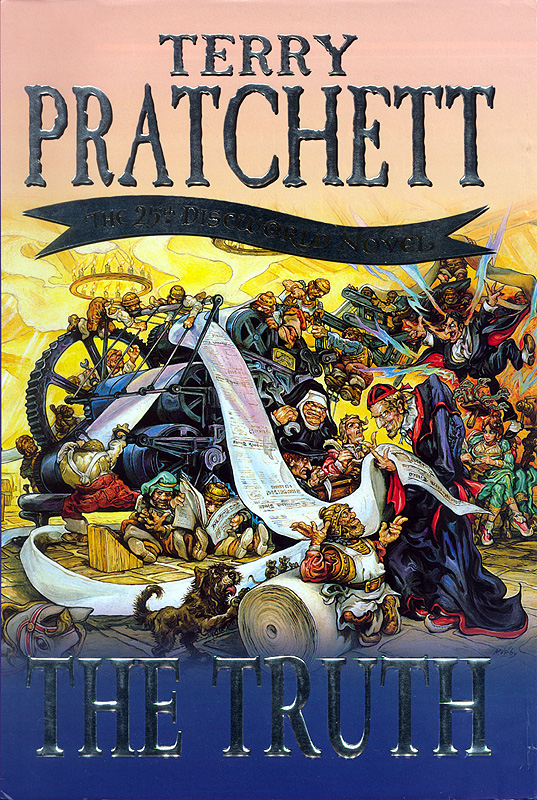
Vetinari's Ankh-Morpork runs on language. On negotiation, on contracts, on the carefully worded agreements between guilds and the Palace that keep the entire fragile system balanced. The Truth introduces a free press. Going Postal revives a communication network. Even the guild system depends on written charters and verbal agreements that everyone understands and respects.
"In Vetinari's city, you say what you mean. You mean what you say. Or you deal with the consequences."
Mimes don't use words. They communicate through gesture and implication, through exaggerated emotion and interpretive movement. For a ruler who prizes precision above all else—who crafts sentences the way other men craft swords—there's something genuinely offensive about a form of expression that refuses to be pinned down.
When a mime pretends to be trapped in a box, what are they saying? Depends who's watching. Depends on the context. Depends on interpretation. There's no record, no transcript, no exact text you can hold them accountable for. In a city where Vetinari controls information flows with surgical precision, mime is the one medium that can't be quoted, cited, or used as evidence.
"Learn The Words" isn't just a punchline. It's a political philosophy. In Vetinari's Ankh-Morpork, you say what you mean and you mean what you say. Ambiguity is for people who want to end up in scorpion pits.
The Real Joke
Here's the thing Pratchett never spells out but absolutely wants you to understand: the mime ban works precisely because nobody takes it seriously.
The guild leaders laugh about it. The citizens approve of it. Even fans of the Discworld series treat it as one of those charming Pratchett jokes—Vetinari hates mimes, ha ha, isn't that funny, what a character. And in treating it as a joke, everyone misses the machinery underneath.
That's Vetinari's entire governing philosophy in a single policy. Make the control invisible by making it entertaining. Give people something to laugh about so they don't notice what they should be worried about. The mime ban is the showpiece cruelty, the visible "flaw," the one thing you can point to and say "well, at least he's not perfect"—while behind the scenes, every guild, every institution, every power structure in the city bends to his will.
It's the political equivalent of a stage magician's misdirection. Look at the scorpion pit. Laugh at the sign. Don't look at the hand that's reshaping the city while you're distracted.
The best part? Even if you figure this out—even if you see through the joke to the calculation beneath—it doesn't help. Knowing the mime ban is strategic doesn't give you any leverage against it. You can't rally support for mimes. You can't argue the ban is harmful. You can't even be offended by it without looking ridiculous. The system is airtight because the mechanism is the joke, and the joke is the mechanism, and by the time you understand both, you're already laughing.
"Learn The Words," says the sign in the scorpion pit.
But the real lesson isn't for the mimes. It's for everyone else: pay attention to what the tyrant is actually saying. Because it's never just about the mimes.
Where to Watch the Mime Show
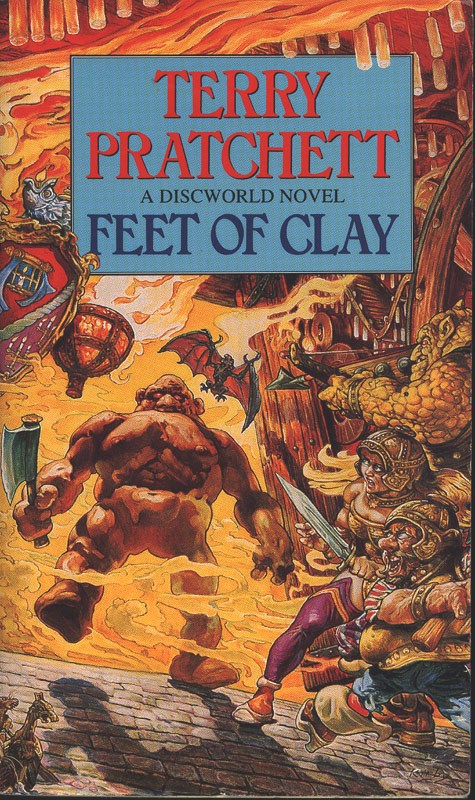

Start with Feet of Clay, which contains the most famous description of the scorpion pit and "Learn The Words." It's also the novel that best demonstrates how Vetinari operates—the poisoned candles, the chess match with Vimes, the quiet manipulation of every institution in the city. The mime ban isn't the main plot, but it's the perfect key to understanding everything else Vetinari does.
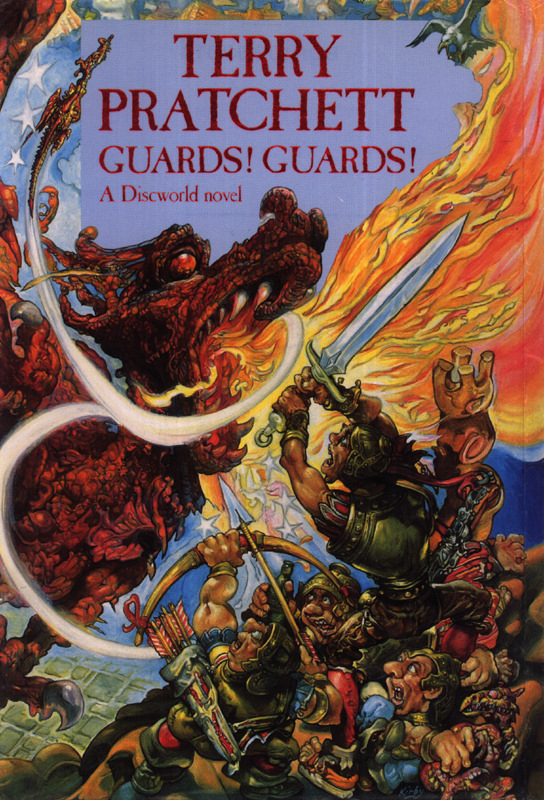
Then read Guards! Guards! for the first major Vetinari appearance, where you'll see a man who tolerates a dragon terrorising his city because he knows it'll resolve itself if he's patient enough. And try The Truth, where Vetinari's relationship with the free press reveals another dimension of his obsession with controlling how information moves through the city.
The scorpion pit is still there. The sign is still painted on the wall. And somewhere in Ankh-Morpork, a mime artist is weighing up whether the art is worth the scorpions.
Spoiler: Vetinari already knows the answer.