If It Ain't Broke: How Vetinari's Family Motto Became Ankh-Morpork's Operating System
Lord Vetinari's philosophy of stability over justice transformed Ankh-Morpork from chaos to functionality. Explore how his family motto guides everything.
If It Ain't Broke: How Vetinari's Family Motto Became Ankh-Morpork's Operating System
Every great ruler has a philosophy. Some believe in divine right. Others preach manifest destiny or revolutionary change. Lord Havelock Vetinari, the Patrician of Ankh-Morpork, built his entire system of governance on something far more pragmatic: the family motto "Si non confectus, non reficiat."
If it ain't broke, don't fix it.
"Ankh-Morpork had dallied with many forms of government and had ended up with that form of democracy known as One Man, One Vote. The Patrician was the Man; he had the Vote."— Terry Pratchett, on Ankh-Morpork's government
That Latin phrase—rendered in the Discworld's dog-Latin "Latatian"—sounds almost lazy. Complacent, even. But in Vetinari's hands, it becomes something far more sophisticated: a revolutionary approach to tyranny that actually works. While his predecessors terrorized the city into submission, Vetinari discovered something profound about human nature. People don't actually want justice. They don't really want freedom. What they want, deep down, is for tomorrow to look pretty much like today.
And he's spent his entire reign making sure it does—while secretly dragging Ankh-Morpork into the future.
The Chaos Before Vetinari
To understand Vetinari's genius, you have to understand what came before him. Ankh-Morpork didn't stumble into functional tyranny. It clawed its way there through a succession of rulers who made "chaotic evil" look organized.
Homicidal Lord Winder lived up to his name with paranoid enthusiasm. In fairness, he really was the target of numerous assassination plots—but his solution was to create the Cable Street Particulars, a secret police force that terrorized ordinary citizens. His final days were marked by such extreme paranoia that even opening a door required an elaborate safety ritual.
Mad Lord Snapcase came to power promising change after the Glorious Revolution of the 25th of May. He delivered it, in a sense—his particular brand of sadism was more creative than Winder's. Where Winder was paranoid, Snapcase was simply cruel, taking pleasure in torture and maintaining his predecessor's oppressive apparatus while adding his own psychotic touches.
Both rulers operated on the same flawed assumption: that fear equals control. Terrorize the population enough, and they'll stay in line.
It worked, sort of. People certainly stayed in line—the ones who survived. But neither Winder nor Snapcase created anything functional. The city lurched from crisis to crisis, held together by terror rather than any actual system.

The Vetinari Difference: Stability as Strategy
When Vetinari rose to power, he didn't dismantle the apparatus of tyranny. He refined it. And his first insight was deceptively simple: rather than stamping out crime, he decided to manage it.
His immediate predecessor's reign ended in blood and revolution. Vetinari's response? Invite the criminals to the palace for a chat.
The major gang leaders of Ankh-Morpork found themselves summoned to meetings where Vetinari made an offer they couldn't refuse—not because of threats, but because of logic. Crime will happen regardless of laws. Attempts to eliminate it merely drive it underground, making it more violent and unpredictable. So why not bring it into the open?
The Thieves' Guild became the city's first legalized criminal organization. The Seamstresses' Guild followed shortly after, transforming the world's oldest profession into a regulated industry with union protections and, crucially, tax obligations.
"They think they want good government and justice for all, Vimes, yet what is it they really crave, deep in their hearts? Only that things go on as normal and tomorrow is pretty much like today."— Lord Vetinari to Sam Vimes
This wasn't tolerance. It was brilliance. By legalizing crime, Vetinari achieved several goals simultaneously. He brought criminal activity into the light where it could be monitored. He made criminals responsible for policing their own ranks—unlicensed theft became the Guild's problem, not the city's. And perhaps most importantly, he turned the underworld into taxpayers.
A significant portion of everything the Thieves' Guild steals each year goes directly to the city as Guild Tax. Vetinari enjoys all the benefits of taxation without the unpopularity of collecting it. The criminals do that work for him.
The Receipt System: Bureaucracy as Crime Prevention
The most elegant expression of Vetinari's philosophy is the Thieves' Guild receipt system. It sounds absurd—getting a receipt for being mugged—but it's actually a masterpiece of social engineering.
Here's how it works: wealthy citizens can pay an annual premium to the Guild, guaranteeing they won't be targeted. For everyone else, licensed thieves conduct polite robberies that don't result in serious injury. After each encounter, the victim receives an official receipt guaranteeing they won't be inconvenienced again for a specified period.
The results speak for themselves. Violent street crime plummeted. Muggings became predictable, almost scheduled affairs. Citizens could plan around them. The chaos of random victimization transformed into something almost... manageable.
Is it just? Absolutely not. A system where the wealthy buy immunity while the poor get robbed on schedule isn't anyone's idea of fairness. But it's stable. And stability, in Vetinari's philosophy, trumps justice every time.
This is where critics—including Sam Vimes, who serves as Vetinari's conscience whether the Patrician likes it or not—get uncomfortable. Vetinari isn't building utopia. He's building functionality. The difference between those goals shapes everything about how Ankh-Morpork operates.
Secretly Dragging the City into the Future
Here's the paradox that makes Vetinari fascinating: his entire philosophy centers on stability and maintaining the status quo, yet under his rule, Ankh-Morpork has transformed more dramatically than under any previous Patrician.
The key is his method. Vetinari never imposes progress. He creates conditions where progress becomes inevitable, then steps back and lets it happen.
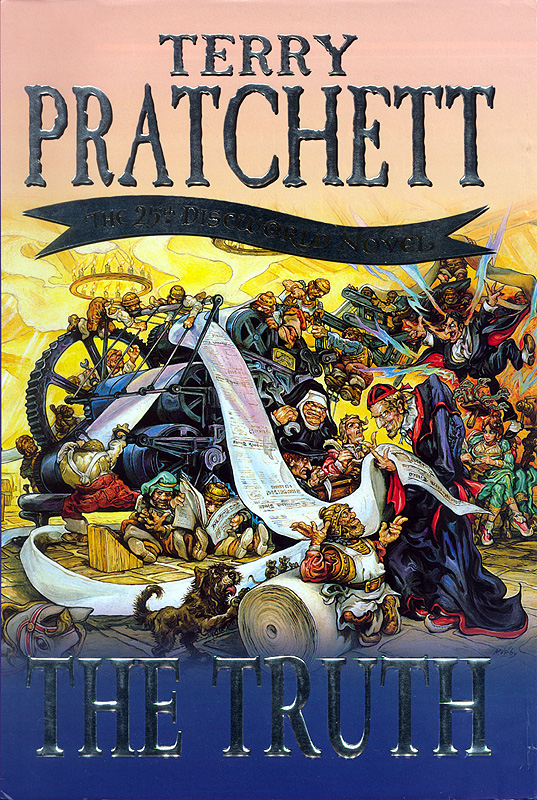
Consider the Ankh-Morpork Times, the city's first newspaper. In The Truth, we see how Vetinari responds to the arrival of movable type and the printing press. A traditional tyrant would suppress it—free press threatens autocracy, after all. Vetinari does something more subtle. He lets it flourish, understanding that a newspaper he can monitor is less dangerous than underground pamphlets he can't.
When conspirators frame him for attempted murder and embezzlement, it's the newspaper—specifically William de Worde's dogged journalism—that exposes the plot and restores him to power. Vetinari didn't plan that outcome, but he created the conditions for it to happen. The free press he tolerated became the instrument of his vindication.
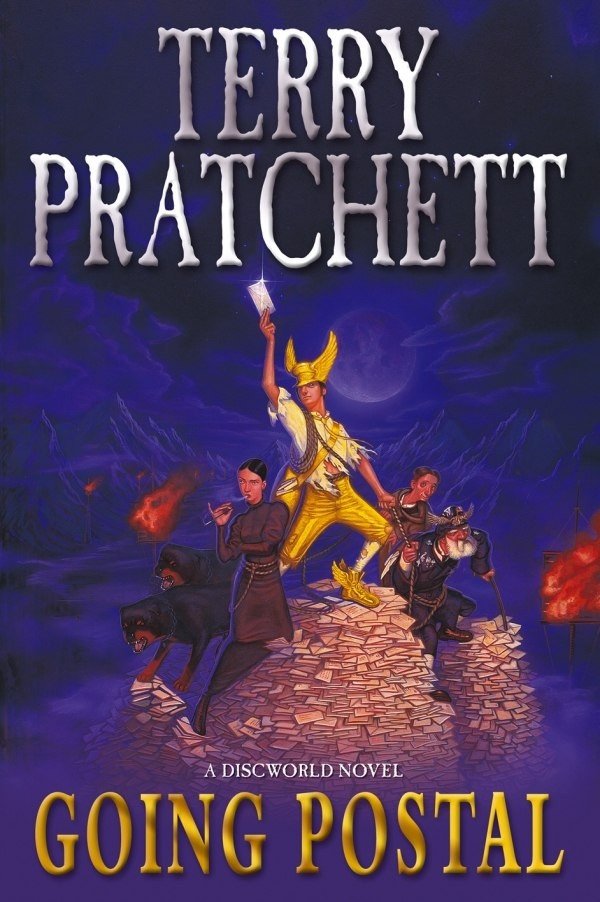
The same pattern repeats with the postal service revival in Going Postal, the banking reforms in Making Money, and the railway in Raising Steam. Each time, Vetinari finds the right person—often someone with questionable moral qualifications—and gives them just enough rope to succeed. Or hang themselves. Either outcome suits him.
The Moist von Lipwig Model
Moist von Lipwig represents Vetinari's philosophy in miniature. A con man sentenced to hang, Moist receives an offer: run the decrepit post office, or walk through a door that leads to certain death.
It's not really a choice. But Vetinari presents it as one, and that matters. "The job, or the alternative," he says, positioning himself as what he sarcastically calls the "angel of redemption."
Vetinari's insight is that talent is talent, regardless of how it was previously employed. Moist's skills—manipulation, persuasion, the ability to make people believe in impossible things—work just as well selling postage stamps as they did running cons. The difference is what they're applied to.
By the end of Going Postal, Moist has revolutionized the postal service, introduced stamps, and bankrupted a corrupt clacks company. Vetinari didn't do any of that directly. He just put the right criminal in the right position and let human nature take its course.


Why It Works: The Defense of Pragmatic Tyranny
Vetinari's greatest defense against assassination isn't the Assassins' Guild's AM$1,000,000 price on his head (so high that accepting the contract would bankrupt most assassins). It's simpler than that.
He carefully ensures that reality with him as Patrician is slightly better than one without him.
No one plots against Vetinari out of genuine oppression. The guilds are prosperous. The streets are safe enough. Tomorrow resembles today. There's simply no compelling reason to risk the chaos that would follow his removal—and everyone remembers the chaos that preceded his rule.
This is the philosophical heart of the "if it ain't broke" approach. Vetinari doesn't ask people to love him. He doesn't require loyalty or ideology. He just makes the alternative seem worse. Given a choice between known stability and unknown chaos, humans reliably choose stability.
Even Vimes, who despises everything Vetinari represents, grudgingly admits the city works. Not perfectly—no city does—but it works. The Watch can police the streets. Guilds can conduct business. Citizens can live their lives. After Winder and Snapcase, that's practically utopia.
The Limits of Stability
None of this means Vetinari's philosophy is flawless. The system he created explicitly favors the wealthy, the connected, the already powerful. The receipt system protects the rich and targets the poor. The guild structure reinforces existing hierarchies. Tomorrow resembling today is comforting if today is comfortable—and devastating if it isn't.
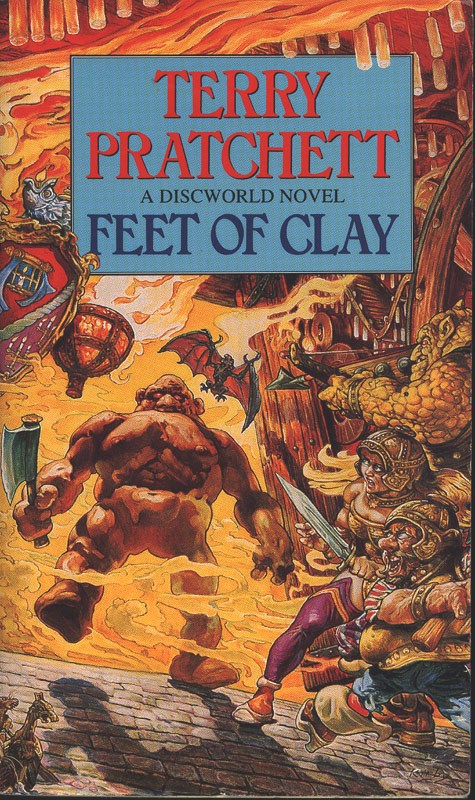
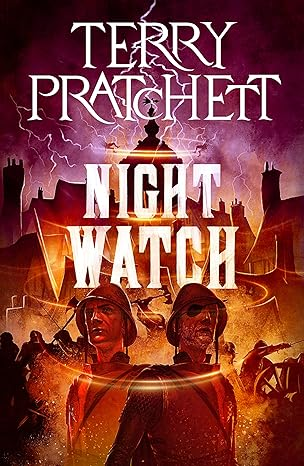
Vimes sees these contradictions more clearly than anyone. Throughout the Watch novels, particularly Feet of Clay and Night Watch, we see Vimes wrestling with his role in Vetinari's system. He enforces laws that maintain order but not justice. He serves a tyrant who makes the city function precisely because he doesn't try to make it fair.
The tension between them—Vimes's moral absolutism against Vetinari's moral pragmatism—drives some of Discworld's most compelling moments. Vetinari needs Vimes because sometimes the system needs someone who will do the right thing regardless of consequences. Vimes needs Vetinari because... well, because someone has to make sure tomorrow happens at all.
The Family Motto in Practice
"Si non confectus, non reficiat." If it ain't broke, don't fix it.
But Vetinari's genius lies in his flexible definition of "broke." Crime wasn't broken—it was just mismanaged. The postal service wasn't broken—it just needed a con man to run it. The banking system wasn't broken—it just needed someone who understood that money is a shared fiction.
In each case, Vetinari looked at systems that appeared functional and realized they could function better with minor adjustments. He never tore anything down. He never started from scratch. He tweaked, refined, and repositioned until institutions that seemed adequate became genuinely effective.
That's not conservatism. It's certainly not radicalism. It's something more interesting: pragmatism elevated to an art form.
The Tyrant Who Served
Perhaps the most subversive aspect of Vetinari's rule is captured in his unpublished manuscript, "The Servant." While other rulers wrote (or commissioned) treatises on power—how to acquire it, how to wield it, how to keep it—Vetinari wrote about service.
His insight: power is a bauble. Any thug can have power. The true prize is control, and control comes not from domination but from making yourself indispensable. By serving the city's interests, Vetinari made himself the one person Ankh-Morpork couldn't do without.
The Patrician who understood that people want stability. The tyrant who realized that tyranny works best when subjects don't feel tyrannized. The ruler who legalized crime to prevent it and tolerated dissent to control it.
If it ain't broke, don't fix it. And if it is broke? Well, that's what con men and newspaper editors and reluctant heroes are for. Vetinari just provides the opportunity.
Tomorrow will look like today. That's a promise, and a threat, and the foundation of the most effective government Discworld has ever seen.
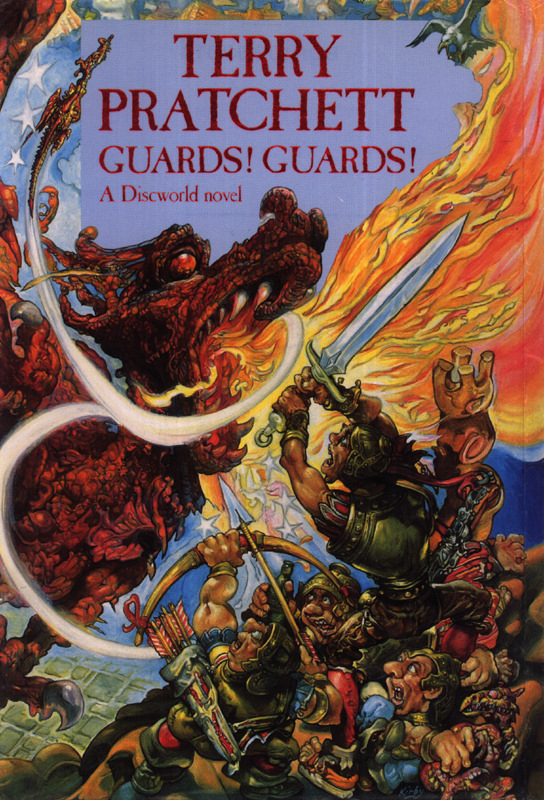
Ready to see Vetinari in action? Start with Guards! Guards! where his relationship with Vimes begins, or The Truth to see how he handles a real threat to his rule.