The Arsenic in the Candles: How Vetinari Weaponized His Own Assassination Attempt
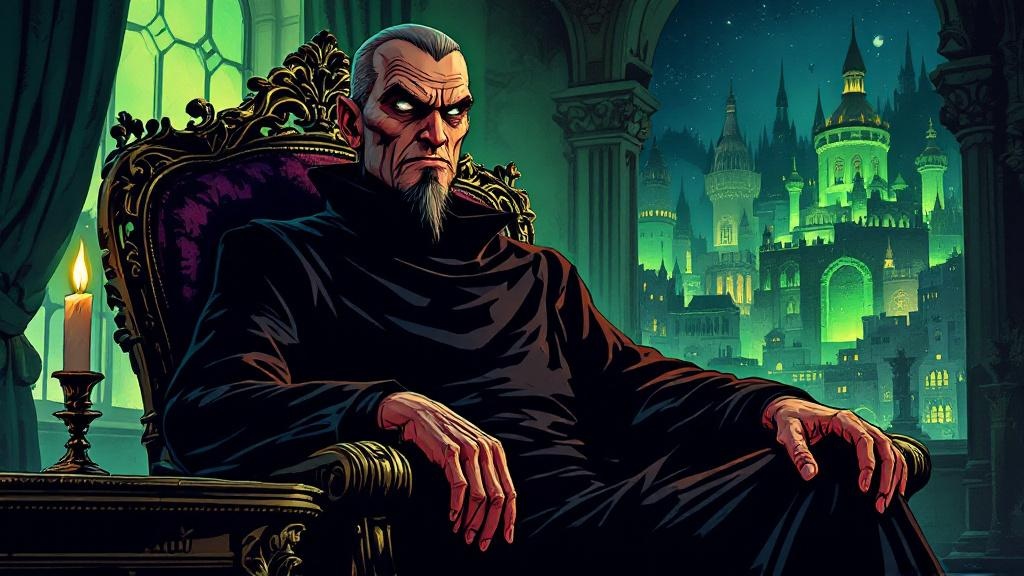
Lord Vetinari was being slowly poisoned through arsenic-laced candles in Feet of Clay. But the real genius was how he turned the entire plot against the plotters.
The Arsenic in the Candles: How Vetinari Weaponized His Own Assassination Attempt
Here's a question that should keep you up at night: what kind of person gets slowly poisoned, figures out exactly how it's happening, and decides to let it continue?
Not out of despair. Not because they can't stop it. But because being poisoned is more useful than being healthy.
That's Lord Vetinari in Feet of Clay, and it might be the single most revealing thing he does in the entire Discworld series. Forget the Leshp gambit. Forget the Moist von Lipwig recruitment speech. If you want to understand how the Patrician of Ankh-Morpork actually thinks, you need to understand the candles.
The Poison No One Could Find
The setup is deceptively simple. Vetinari is dying. Slowly, visibly, inexplicably dying—growing weaker by the day while Commander Vimes tears the city apart trying to figure out who's responsible.
"We return to arsenic like an old, old friend."
The Watch locks down the palace. They source food from outside. They replace the linens. Vimes personally brings cutlery from his own home. Nothing works. The Patrician keeps getting sicker, and the method remains invisible—because nobody thinks to check the candles.
Arsenic in the candle wicks. When the candles burn, the poison vaporises and Vetinari breathes it in. It's practically undetectable through conventional means, and it's inspired by a real historical assassination attempt—the 1671 plot against Emperor Leopold I of Austria, where two and a half pounds of arsenic were discovered in the imperial bedchamber candles.
Pratchett even plants a red herring. The green wallpaper in Vetinari's chambers is mentioned repeatedly, nodding to the theory that Napoleon was slowly killed by arsenic in the green pigment of his wallpaper on St. Helena. It's the kind of detail that rewards rereading—and the kind of misdirection that Vetinari himself would appreciate.
It takes Cheery Littlebottom, the Watch's forensic alchemist, to finally identify arsenic as the toxin. But even then, finding the delivery method remains agonisingly elusive. The candles are so ordinary, so invisible, so much a part of the furniture that no one questions them.
Which is, of course, exactly how the best assassinations work. Not with dramatic poisons or obvious sabotage, but with something so mundane that it's beneath suspicion.
The Vampire with a Breeding Programme
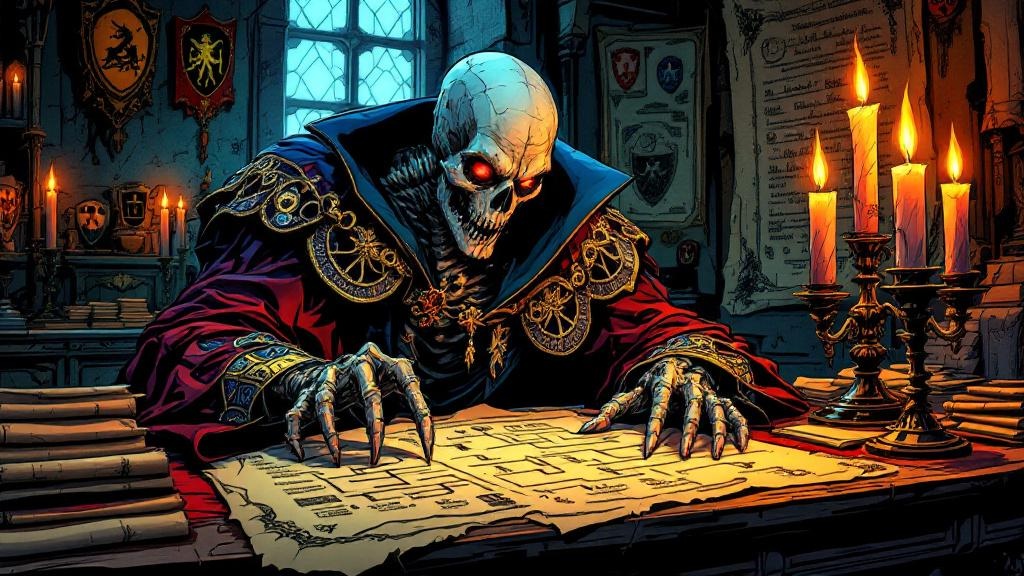
Behind the poisoned candles is Dragon King of Arms—the Chief Herald of Ankh-Morpork's College of Heralds and a very old vampire. His motivations run deeper than simple political ambition. Dragon views the city's noble families as breeding stock, their genealogical records as "stockbooks for successful breeding." He's less interested in blood as sustenance than in blood as lineage.
Dragon leads a cabal of nobles and guild leaders who want Vetinari gone and a controllable puppet installed in his place. The plan has an almost comic elegance: slowly poison the Patrician through the candles while simultaneously preparing a candidate to install as king.
The candidate selection reveals the cabal's real priorities. Captain Carrot—the man with the most plausible claim to the throne—is rejected precisely because he's "genuinely fair and just" and therefore impossible to manipulate. Dragon also worries about Carrot's relationship with Angua, fearing children of "uncertain nature." A part-werewolf royal line doesn't suit his breeding programme.
"The cabal didn't want a leader. They wanted a puppet—and they chose accordingly."
So Dragon fakes genealogical evidence to make Corporal Nobby Nobbs appear to be the Earl of Ankh, since the Earls of Ankh were cousins of the last king. Nobby Nobbs—quite possibly the least regal figure on the entire Disc, a man who carries a certificate proving he's probably human—as the next king of Ankh-Morpork.
That's not stupidity. That's the point. The cabal doesn't want a leader. They want a figurehead so pliable that the real power stays exactly where it's always been: with the nobles and the guilds.
The Collateral Damage
Here's where the plot gets genuinely dark. The poisoned candles don't only reach Vetinari's chambers. Mrs. Mildred Easy, a palace maid, takes some of the candles home. Her grandmother Flora Easy and her baby grandson William die from the arsenic exposure.
These deaths are what initially bring the Watch into the investigation—the murders that give Vimes his legal justification to go rampaging through the city's power structures. But they also raise the most uncomfortable question about Vetinari's handling of the entire affair.
Because Vetinari figured it out. He figured it out early, and he said nothing.
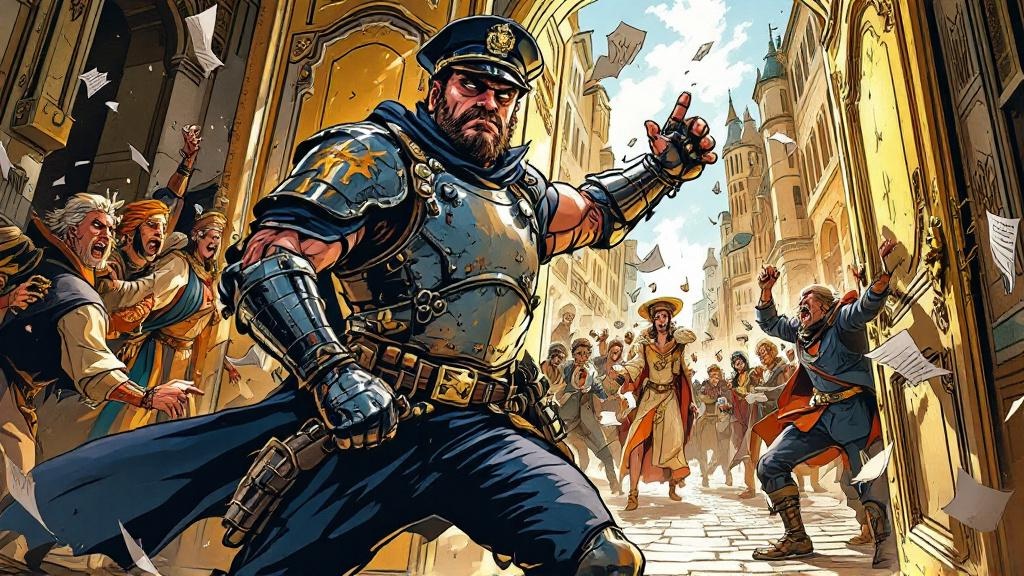
At one point during his apparent delirium, Vetinari delivers a speech about poisons that, on rereading, is clearly a hint disguised as rambling:
"Arsenic is a very popular poison. Hundreds of uses around the home. Crushed diamonds used to be in vogue for hundreds of years, despite the fact that they never worked... Mercury is for those with patience, aquafortis for those without... But we return to arsenic like an old, old friend."
A sick man rambling about poisons? Or a trained Assassin Guild graduate—a Master Assassin, no less—telling his Watch commander exactly what to look for while maintaining plausible deniability? The fact that he ends with arsenic isn't coincidence. It's a breadcrumb trail, laid by a man who can't resist being the cleverest person in the room even when he's supposed to be dying.
The Candle He Cut Short
The reveal comes near the end of the book, in a quiet scene between Vetinari and his secretary Drumknott. Vetinari hands him a length of candle:
"Dispose of this somewhere safely, will you?"
"It's the candle from the other night."
"It's not burned down, my lord? But I saw the candle end in the holder..."
And then the line that reframes the entire novel:
"Oh, of course I cut off enough to make a stub and let the wick burn for a moment. I couldn't let our gallant policeman know I'd worked it out for myself, could I? Not when he was making such an effort and having so much fun being... well, being Vimes. I'm not completely heartless, you know."
"I couldn't let our gallant policeman know I'd worked it out for myself, could I?"
Read that again. Vetinari cut the candle. He staged a burned-down stub so that Vimes would think the poisoned candle had been used as normal. He feigned worse illness than he was actually experiencing. He let the Watch investigation continue—let Vimes barge through guilds and noble houses, terrify the powerful, upset every comfortable arrangement in the city—because a rampaging Vimes was more useful than a quick, quiet resolution.
When Drumknott protests that Vetinari could have "sorted it out diplomatically" rather than letting Vimes go around "upsetting things and making a lot of people very angry and afraid," Vetinari's silence is the answer.
That was precisely the point.
The Preview of Chaos
This is the masterstroke, and it's worth spelling out because it's easy to miss.
Vetinari's greatest defence has always been the same principle: "He carefully sees to it that a reality with him as Patrician is slightly better than one without him." He's said as much to Vimes himself:
"They think they want good government and justice for all, Vimes, yet what is it they really crave, deep in their hearts? Only that things go on as normal and tomorrow is pretty much like today."
The poisoning plot threatened to remove Vetinari. So Vetinari turned the investigation into a demonstration of what removal actually looks like. Not in theory. Not as a diplomatic warning. As a lived experience for every guild leader, noble, and power broker in the city.
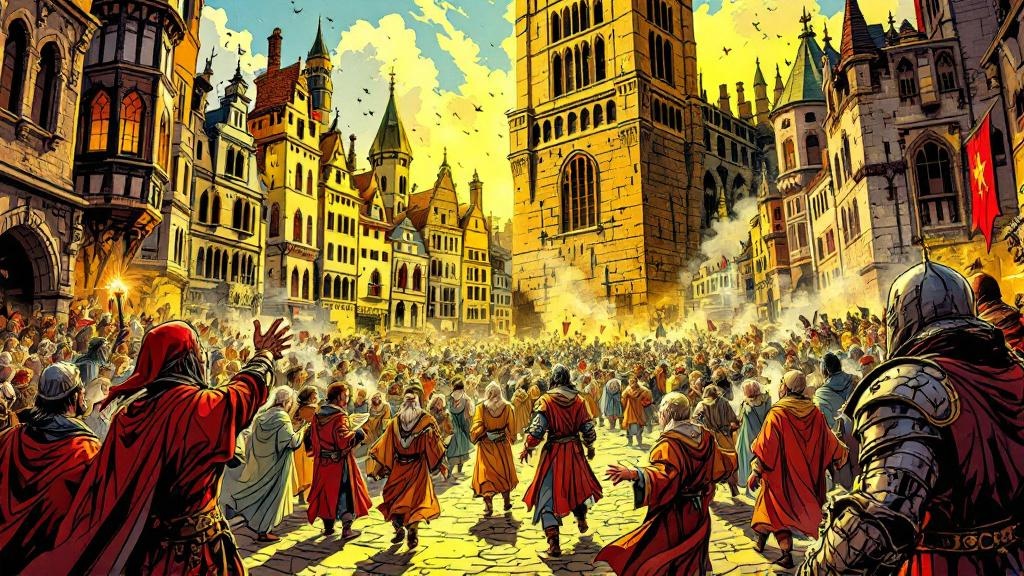
What does Ankh-Morpork without Vetinari look like? It looks like Sam Vimes, unchained. It looks like seventeen demands for a Watch Commander's badge because he won't stop investigating, won't be polite, won't respect the comfortable agreements that keep the city's elite in their positions. It looks like chaos—not the destructive kind, but the kind that exposes everyone's dirty laundry at once.
After the case is solved, Vetinari reports to Vimes:
"In all I've had seventeen demands for your badge. Some want parts of your body attached. Why did you have to upset everybody?"
"I suppose it's a knack, sir."
And despite those seventeen complaints, Vetinari gives Vimes a raise. Because the complaints aren't a problem. They're proof that the lesson landed.
The Million-Dollar Man
There's a detail about Vetinari that puts the entire poisoning plot in context: his official assassination fee is AM$1,000,000—the highest for any living being. But the Assassins' Guild no longer accepts contracts on the Patrician at all. He's been taken off the register entirely.
"One can't help feeling that it would cost a lot more than that to make sure he stayed dead."
The Guild's reasoning is disarmingly practical: "The Patrician has been taken off the register in recognition that his death would be damaging to the interests of both the city and the Guild." When Lord Rust suggests that it would "cost a lot more than that to make sure he stayed dead," he's not being dramatic. He's being realistic about a man who has made himself so structurally necessary that even professional killers have concluded he's worth more alive.
Vetinari is one of only two people to have been removed from the register. The other is Sam Vimes—which tells you something about how these two men are perceived by the people who make a living out of death.
Dragon King of Arms understood none of this. He saw a city that could be steered by replacing one man at the top. What he failed to grasp is that Vetinari isn't a man sitting on top of the system. He is the system. Remove him and you don't get a controllable puppet on the same throne. You get a different city entirely—one where every balance of power he spent decades calibrating comes crashing down at once.
Feet of Clay
It's worth noting the thematic connection that gives the novel its title. Running parallel to the assassination plot is the story of the golems—clay workers who build a king golem called Meshugah, loading it with their hopes for freedom and justice. Meshugah is the tool Dragon exploits to manufacture the poisoned candles.
Both plots ask the same question: what happens when you try to create a controllable ruler? The golems build a king overloaded with contradictory commands who goes insane. The nobles try to install a puppet who would have been a disaster. Both attempts at engineered authority fail because you can't programme freedom, and you can't control what you set in motion.
The title isn't just about the golems being made of clay. It's about the fundamental weakness—the feet of clay—in every attempt to manufacture power from above. Even Vetinari's power has its vulnerabilities. He can be poisoned. He can be weakened. But his response to that vulnerability is what separates him from every other ruler in Discworld's history: he turns it into a weapon.
When the free golem Dorfl has his instructions physically removed and is asked how he can still function, his answer is one of the novel's most powerful lines: "Words in the heart cannot be taken." It's a statement about the kind of authority that can't be engineered or removed—the kind Vetinari has spent a lifetime building.
The Uncomfortable Question
Fan discussions about the poisoning plot always circle back to the same problem: the Easy family. Mrs. Easy. Flora Easy. Baby William.
If Vetinari recognised the arsenic symptoms early—and as a Master Assassin graduate, he almost certainly did—then he chose to continue the charade while innocent people were dying from the same candles. He didn't know the candles had been taken home by staff. Probably. But "probably" does a lot of heavy lifting when a baby is dead.
This is the edge that makes Vetinari more than a charming political chess player. He's a man who will sacrifice pieces to win the game, and while he might genuinely prefer not to, preference isn't the same as principle. The city comes first. It always comes first. And sometimes "the city" is an abstraction that swallows individual lives whole.
It's the same quality that makes him indispensable. A leader who wouldn't make that calculation couldn't hold Ankh-Morpork together. A leader who makes it easily isn't worth following. Vetinari exists in the uncomfortable space between—a man who knows the cost of everything he does and pays it anyway, because the alternative costs more.
As Drumknott observes at the end: "If Commander Vimes did not exist you would have had to invent him."
And Vetinari's reply: "I rather think I did."
That line isn't just about Vimes. It's about everything. The crisis. The investigation. The chaos. The lesson. Vetinari didn't just survive the assassination attempt. He directed it, conducted it, and used it to reinforce the very power structure the plotters were trying to dismantle.
The arsenic was in the candles. But the real poison—the slow, deliberate kind that seeps into the foundations of a conspiracy and dissolves it from within—was Vetinari himself.
Where to See the Candles Burn
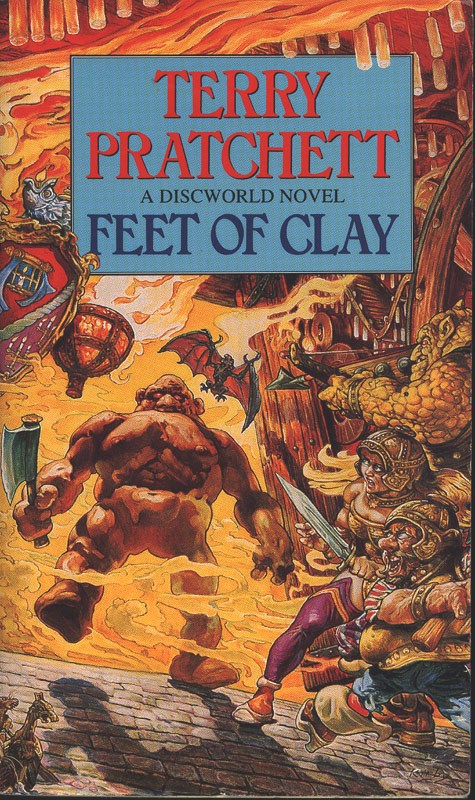




Start with Feet of Clay. It's the City Watch at their best—Vimes investigating, Cheery doing forensics, Carrot being Carrot—but it's also the novel where Vetinari most fully reveals how he operates. Every other book shows you what Vetinari does. This one shows you how he thinks.
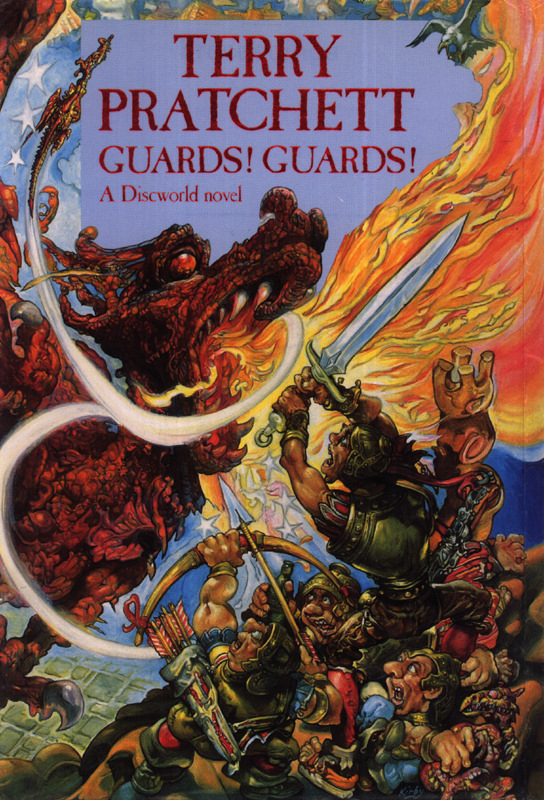
Then revisit Guards! Guards! to see how he handles a more direct threat—a dragon and a would-be king—and notice how different his approach is when the danger is public rather than private. The contrast tells you everything about adaptability as political philosophy.
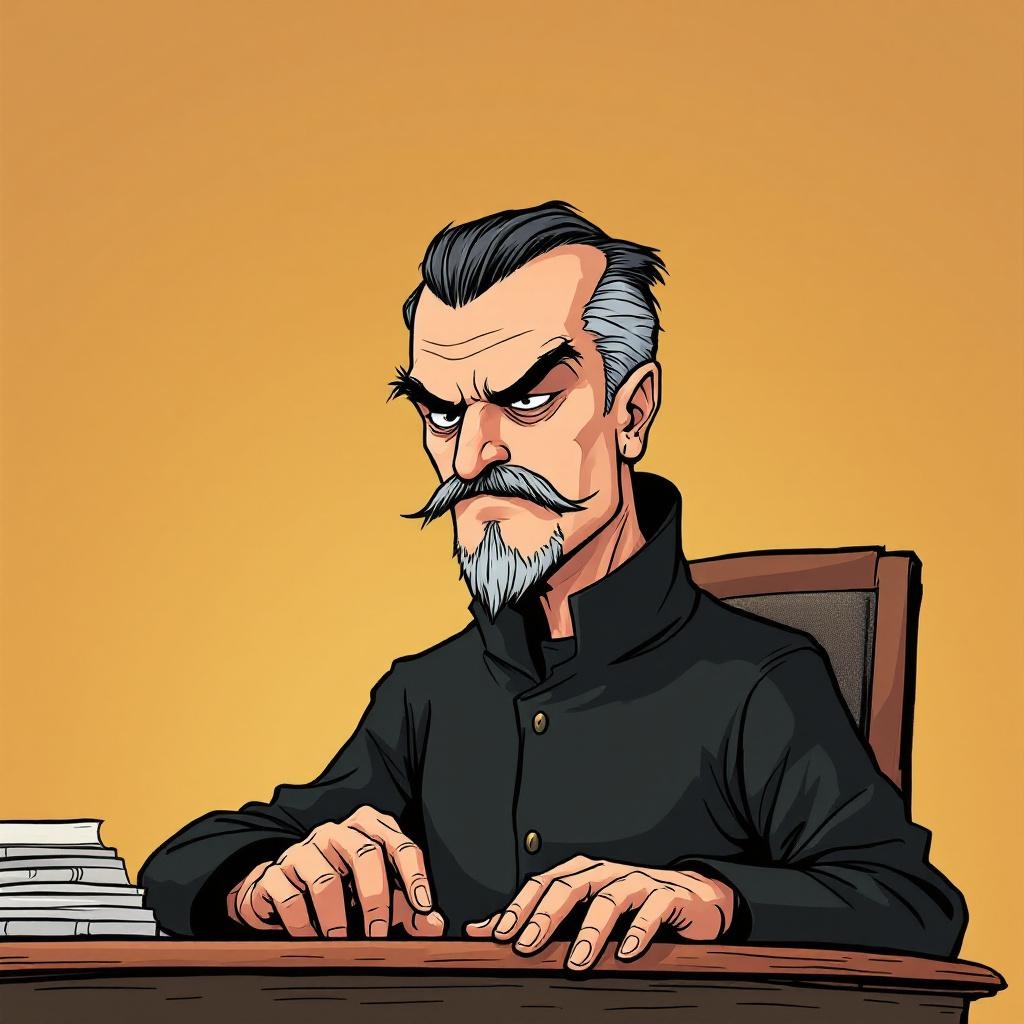
The candles burned. The Patrician survived. And every power broker in Ankh-Morpork learned a lesson they'd never forget: the most dangerous version of Vetinari isn't the one sitting healthy behind his desk. It's the one lying in bed, apparently helpless, apparently dying, watching you through half-closed eyes and thinking three moves ahead.