Ridcully and Granny Weatherwax: The Greatest Love Story Never Told

The secret romance between Archchancellor Ridcully and Granny Weatherwax is Discworld's most bittersweet love story—one where both characters chose duty over each other.
Ridcully and Granny Weatherwax: The Greatest Love Story Never Told
Terry Pratchett rarely wrote romance. When he did, he wrote it sideways—through con artists and chain-smokers, through golems and stamps, through people who'd rather eat their own hat than admit they had feelings.
But once, just once, he wrote a love story that stretches across fifty years, two vocations, and an infinite number of parallel universes. And it's between two people who never say the word "love" to each other at all.
A Summer in the Ramtops
We don't see it happen. We only hear about it decades later, in fragments and silences.

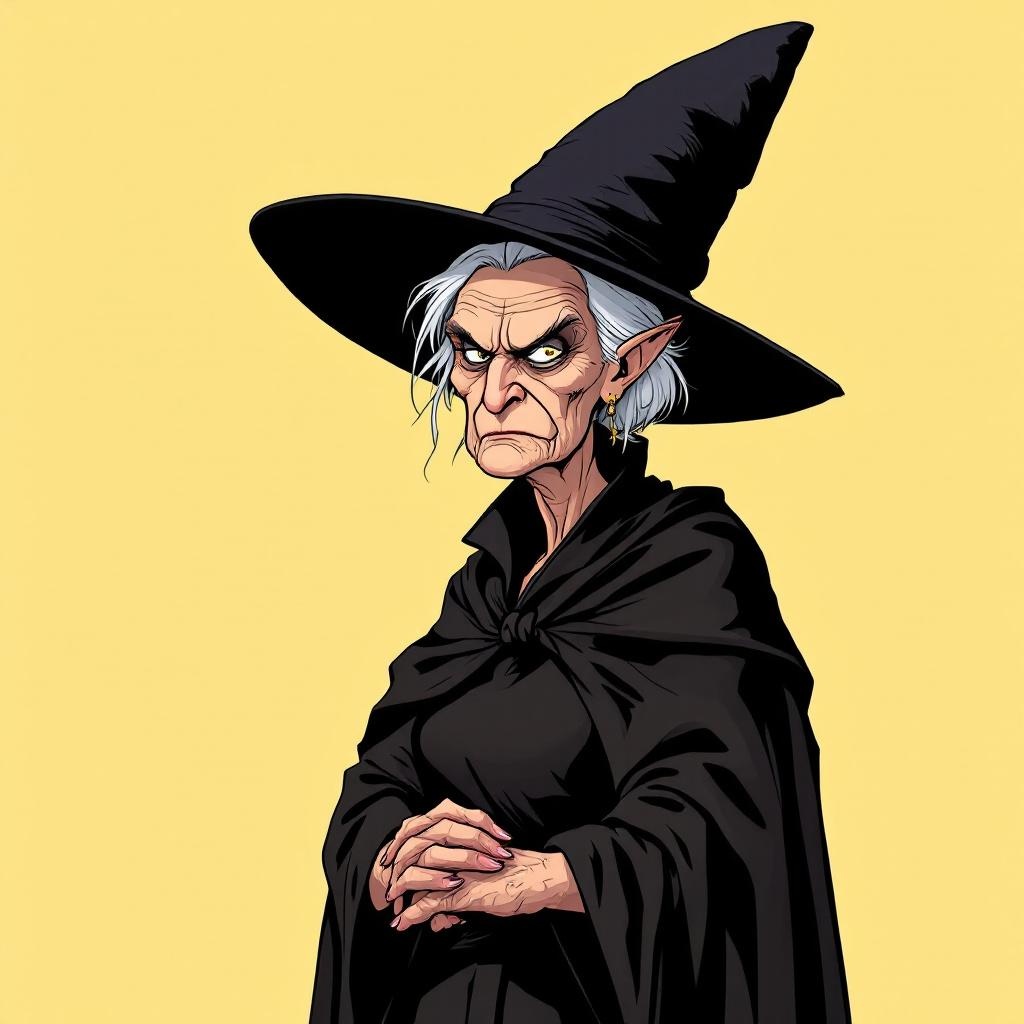
Somewhere in the Ramtop Mountains, a young wizard named Mustrum Ridcully fell in love with a young woman named Esmerelda Weatherwax. He was a student wizard, possibly already showing signs of the boisterous energy that would later terrify his faculty. She was young Esme—not yet the formidable Granny Weatherwax, not yet the woman who stared down vampires and elves and Death himself.
They had a summer together. Maybe more. Pratchett never tells us exactly how long, because the details aren't the point. What matters is that it ended—and it ended because both of them chose something else.
"They didn't break up. They chose. And the choosing is what made them who they are."
Mustrum chose wizardry. He went off to Unseen University, eventually becoming the most unkillable Archchancellor in its history. Esme chose witchcraft—and more than that, she chose to be good, in the way that requires giving up everything soft and warm and comfortable.
Neither of them chose wrong. That's what makes it devastating.
Fifty Years of Not Mentioning It
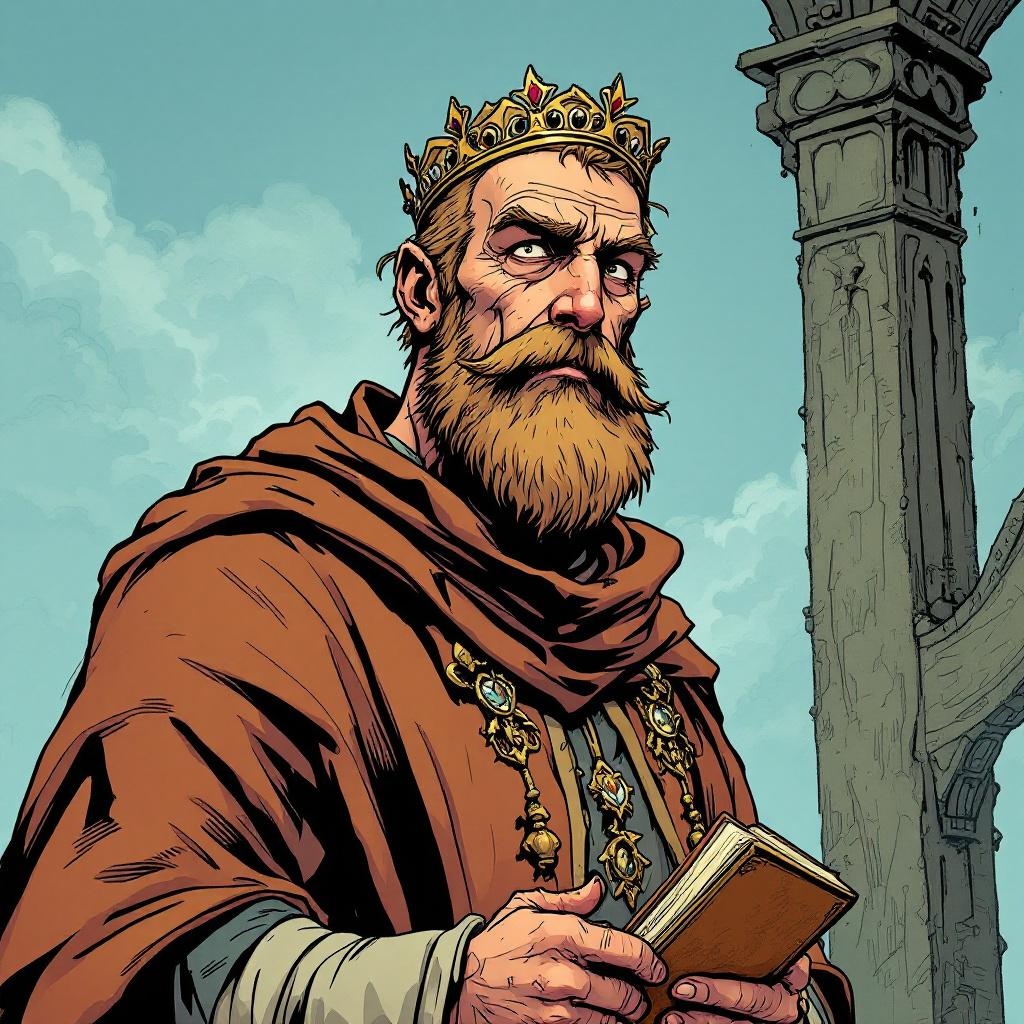
After that summer, Ridcully spent decades away from Lancre. He rose through the ranks at Unseen University (mostly by being impossible to assassinate), became Archchancellor, and built a life centered on cold baths, crossbow hunting, and shouting at people. Granny Weatherwax became the most powerful witch on the Disc—feared, respected, and fundamentally alone.
They didn't write. They didn't visit. They got on with things.
But Granny kept a wooden box. And in that box, among a few other keepsakes, was a bundle of letters. The text never confirms who wrote them, but the implication is unmistakable. Somewhere in Esme Weatherwax's cottage, through all those decades of being the terrifying witch of the Ramtops, she kept Mustrum Ridcully's letters.
She never threw them away. She never mentioned them. She just kept them.
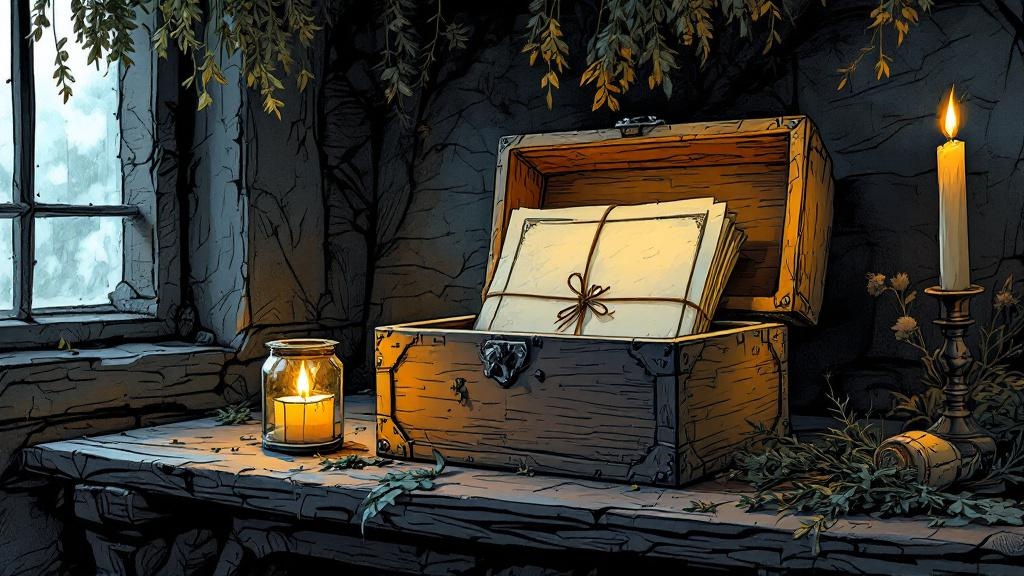
That single detail tells you everything about Granny Weatherwax's relationship with sentiment. She doesn't indulge in it. She doesn't display it. But she doesn't destroy it either.
The Reunion Nobody Wanted
In Lords and Ladies, Ridcully comes to Lancre for King Verence's wedding to Magrat Garlick—and he arrives full of fifty years' worth of "what might have been."
"You can't cross the same river twice. "Why not? This is a bridge.""
He's sentimental about it. Rose-colored. The kind of nostalgia that smooths out all the edges and leaves you with a warm glow that has very little to do with what actually happened. He teleports Granny to the Lancre Bridge for some privacy, clearly expecting... something. A conversation, at least. An acknowledgement.
What he gets is Granny Weatherwax being furious.
Not because she doesn't care. Because she understands something Ridcully doesn't: dwelling on what might have been is dangerous. In fact, it's exactly the weapon the elves use.
The Elf Problem
Here's where Pratchett does something brilliant. He takes a romantic subplot and makes it thematically essential.
The elves in Lords and Ladies feed on glamour—the ability to make you see what isn't there, to make you long for a beautiful fantasy instead of dealing with ugly reality. They thrive on "what might have been" thinking. The whole book is about the danger of preferring a beautiful lie to an imperfect truth.
And Ridcully, standing on that bridge, is doing exactly what the elves want. He's romanticizing the past. He's imagining alternate timelines. He's looking at the most powerful witch on the Disc and seeing the girl from fifty years ago.
Granny shuts it down not because she's cold, but because she recognizes the pattern. Nostalgia is glamour by another name. The moment you start thinking "if only things had been different," you've opened a door that things like elves can walk through.

This is Pratchett at his sharpest. The love story isn't separate from the plot—it IS the plot. Granny's refusal to indulge in fantasy is the same quality that makes her the only person who can resist the Elf Queen's glamour.
"Do You Think That Somewhere It All Went Right?"
But Pratchett isn't cruel. He doesn't leave it there.
Near the end of Lords and Ladies, after the elves have been defeated and the wedding has finally happened, Ridcully asks the question he's been carrying for fifty years:
"Do you think that... somewhere... it all went right?"
He's asking about parallel universes. About the Trousers of Time. About whether there's a version of reality where young Mustrum and young Esme chose each other instead of their vocations.
Granny's answer is perfect. First: "Yes. Here."
""Do you think that somewhere it all went right?" "Yes. Here. But there, too.""— Granny Weatherwax
Meaning: this is the right timeline. The one where they both became who they were meant to be. Where she became the greatest witch and he became the unkillable Archchancellor. Where they chose duty and vocation and the hard path.
Then, relenting just slightly: "But there, too."
Meaning: yes, somewhere, another Mustrum married another Esme and they had children and a home and all the ordinary things. And that's real too. And that's fine.
It's one of the most emotionally devastating exchanges in all forty-one Discworld novels. In six words, Granny acknowledges that she made a sacrifice, that the sacrifice was worth it, and that she's at peace with it—while also admitting, in the smallest possible way, that she knows what she gave up.
Why Granny Was Right
Granny's refusal to dwell on the romance isn't emotional repression. It's wisdom.
She understood something fundamental: you can't become the person you need to be while mourning the person you might have been. Granny Weatherwax needed to be hard, incorruptible, and alone. She needed to be the witch who chose good when evil would have been so much easier—and she needed no distractions from that choice.
Ridcully's sentimentality, charming as it is, would have weakened that. Not because love is weakness, but because longing is. The moment Granny started thinking about the cottage and the children and the life she didn't have, she'd have lost the edge that made her who she was.
It's the same reason she keeps the letters but never reads them aloud. The same reason she goes through life without romantic attachment—not because she can't love, but because she understands the cost of divided attention when you've chosen to be the person who stands between your community and everything that threatens it.
Ridcully's Side of It
What's remarkable about Ridcully is that he respects her choice—eventually.
He arrives in Lancre full of sentimental longing, but he doesn't push. When Granny shuts him down, he doesn't sulk or scheme or try to change her mind. He fights alongside her against the elves. He goes back to Unseen University. He gets on with things.
Because Ridcully, for all his bluster and selective hearing and locomotive intellect, understands something important: Esme Weatherwax didn't reject him. She chose something bigger than both of them. And he did the same thing, even if he's not always honest with himself about it.
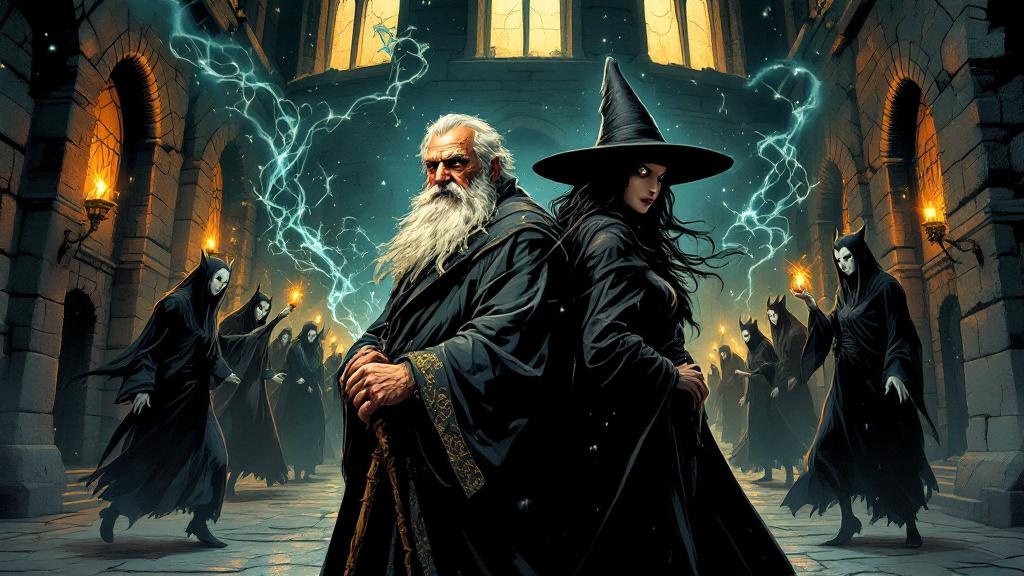
They're two people who understand each other perfectly and will never be together, and neither of them is willing to pretend otherwise. That's not a tragedy. That's mutual respect at a level most fictional couples never reach.
The Final Goodbye
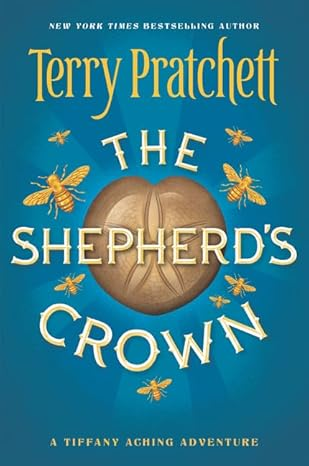
In The Shepherd's Crown—Pratchett's final novel—Granny Weatherwax dies. She does it on her own terms, naturally. Sets everything in order, leaves instructions, walks into Death's company like she's keeping an appointment she scheduled herself.
"He was still in love with her, even after all those years."
Ridcully comes to pay his last respects. The text tells us simply that he was still in love with her, even after all those years. He visits briefly. He doesn't make a scene.
It's the quietest moment in Ridcully's literary existence. A man who communicates primarily by shouting and banging heads in doors, standing in silence over the death of the woman he loved fifty years ago and never stopped loving.
And then he goes back to Unseen University. Because that's what they do, both of them. They get on with things.
What It Means
Pratchett wrote forty-one Discworld novels, and in almost all of them, love is something that happens between people who are too busy or too awkward or too weird to do it properly. Sam Vimes and Lady Sybil. Moist and Adora Belle. Carrot and Angua.
But Ridcully and Granny are different. Their love story works because it never happens. Because the point isn't that they belong together—it's that they belong to their vocations, and they're both honest enough to admit it.
That's not a sad ending. That's two people choosing to be extraordinary rather than merely happy.
And somewhere, in some other leg of the Trousers of Time, another Mustrum and another Esme are sitting by a fire with grandchildren. And that's fine too.
But here—in this timeline, on this Disc—we got Archchancellor Ridcully and Granny Weatherwax. And the world is better for it.
Where to Read This Story
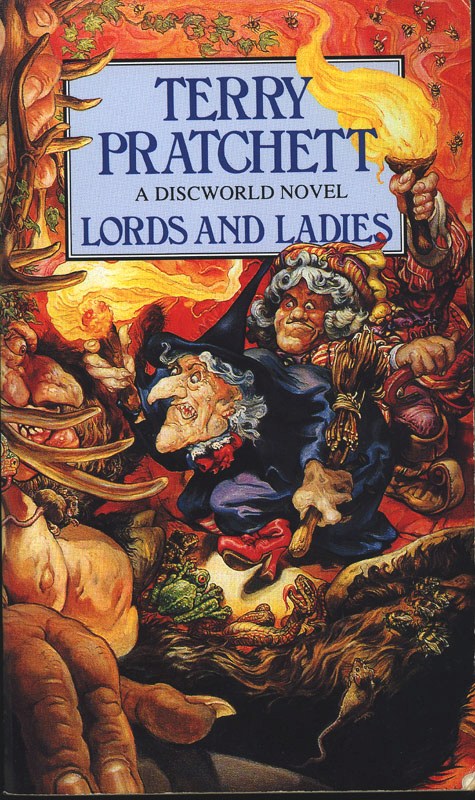







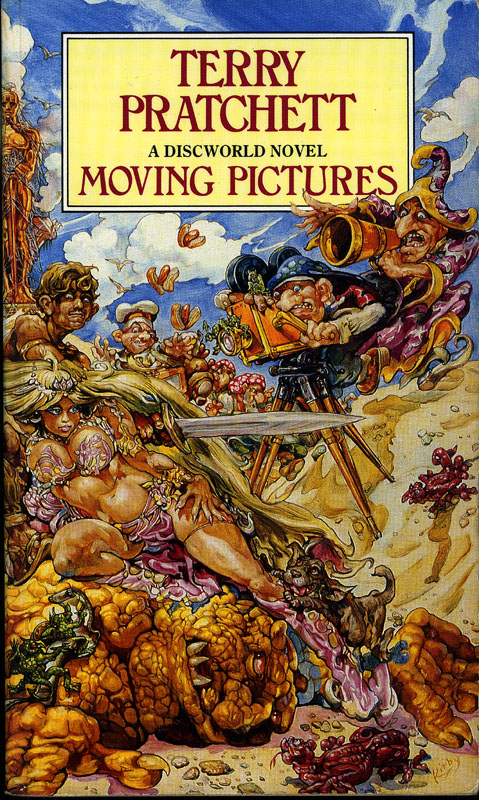
For the full Ridcully experience, start with Moving Pictures to see him take the Archchancellor's chair, then read Lords and Ladies for the romantic revelation. After that, every witch or wizard book carries echoes of this relationship in the background, waiting for anyone who knows where to listen.
Read more about Ridcully's unkillable approach to university management, or explore Granny Weatherwax's greatest impossible feat.