The Archchancellor Who Survived by Being Impossible to Kill
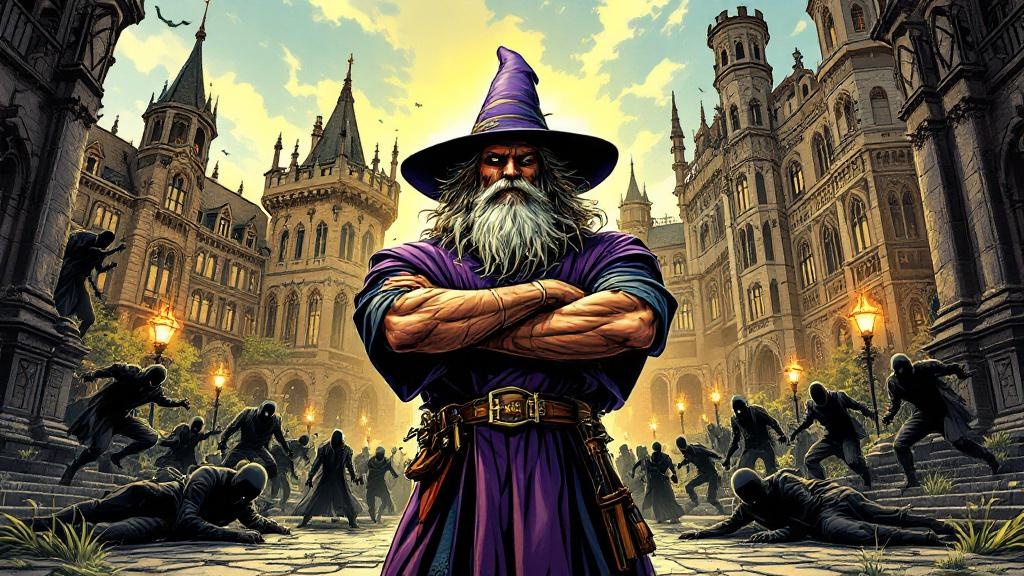
How Mustrum Ridcully's sheer unkillability ended centuries of wizard assassination and transformed Unseen University into a functioning institution.
The Archchancellor Who Survived by Being Impossible to Kill
Before Mustrum Ridcully, being Archchancellor of Unseen University was roughly as survivable as being a man in wet copper armor standing on a hilltop in a thunderstorm, shouting "All gods are bastards."
The position came with a nice office, a pointy hat, and a life expectancy measured in meals rather than years. Ambitious wizards had long understood that the path to the top ran through "dead men's pointy shoes"—and they kept a sharp dagger handy to create vacancies.
Then came Ridcully. And everything changed.
The Tradition of Dead Men's Pointy Shoes
To understand why Ridcully matters, you need to understand what Unseen University was like before him.
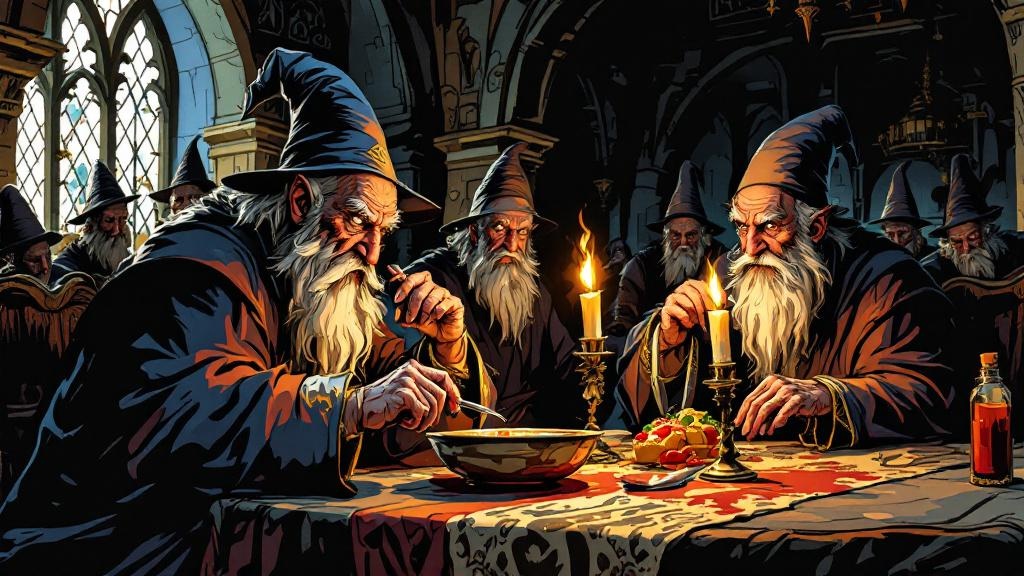
Wizards advanced through murder. Not metaphorical career-killing backstabbing, but actual stabbing—plus poisoning, magical incineration, mysterious "accidents" involving heavy bookcases, and the occasional transformation into something that couldn't hold the Archchancellor's staff. The system was so institutionalized it had its own nickname: Klingon Promotion.
The faculty spent more time watching their backs than reading books. Archchancellors rarely made it past their inaugural dinner without someone slipping something fatal into the soup. The position attracted exactly the kind of paranoid, scheming, backstabbing wizards you'd expect—which meant the university was perpetually run by people more interested in survival than scholarship.
"Truly stupid wizards have the life expectancy of a glass hammer."
Galder Weatherwax got eaten by the Luggage. Virrid Wayzygoose died before his inaugural dinner even began. The wizards watching the succession learned to treat each Archchancellor as temporary furniture.
Then the faculty made what they thought was a clever decision: they'd appoint someone easy to control. Someone who'd been out of university politics for decades, living in the country. A pushover.
They chose Mustrum Ridcully.
The Miscalculation
The senior wizards had heard about "Ridcully the Brown"—a wizard who'd retreated to the countryside, apparently communing with nature. They imagined a gentle Radagast type, someone who'd be grateful for the position and easily manipulated.
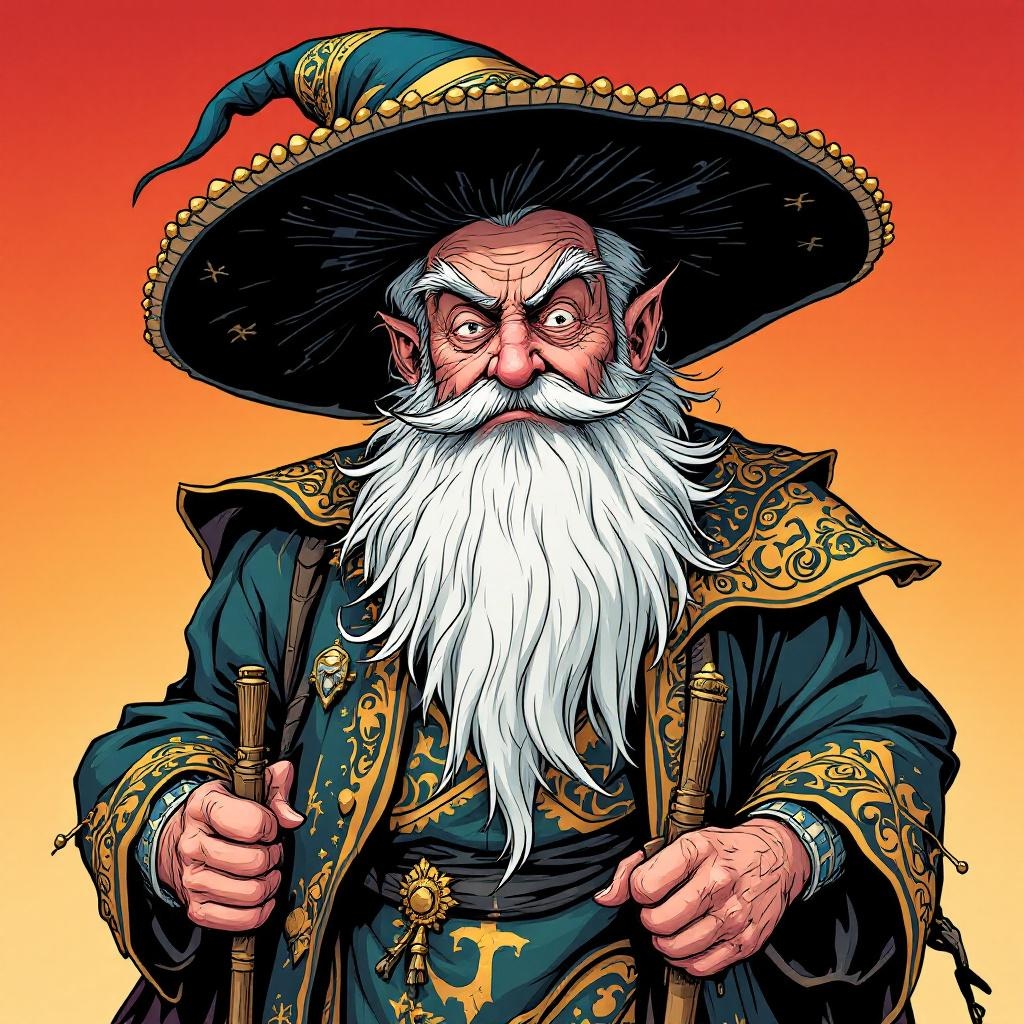
What they got was a six-foot-something force of nature who communes with animals primarily by shooting them.
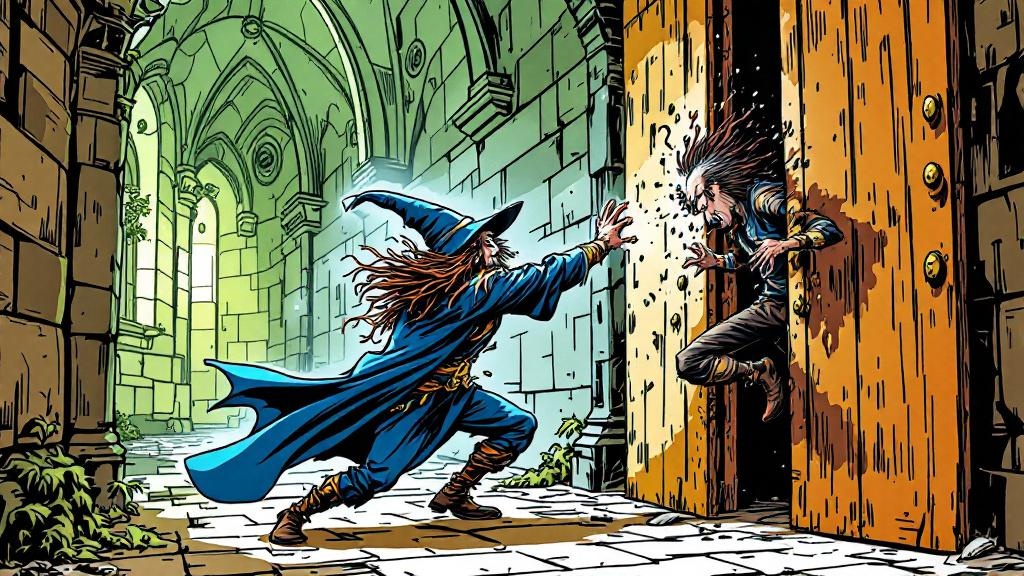
Ridcully didn't just survive assassination attempts. He prevented them through sheer physical presence and an approach to would-be murderers that involved considerable door-related violence. As Pratchett put it, he had "the habit of springing up behind would-be assassins, shouting loudly at them and banging their heads repeatedly in the door."
He gets up at dawn. He takes cold baths. He exercises. He keeps a small crossbow in his hatband. He once went a few rounds with Detritus the troll and arm-wrestled the Librarian—losing, of course, but keeping his arm.
The other wizards, who considered rising before noon a form of torture and regarded any physical activity more strenuous than lifting a fork as grounds for a lie-down, found themselves hopelessly outmatched.
The Accidental Reformation
Here's the brilliant part: Ridcully didn't reform Unseen University through policy. He didn't outlaw assassination or create new rules about succession. He just made it too much trouble.
When murdering the Archchancellor requires getting up before he does (impossible—he rises at 5 AM), outrunning him (he jogs), or overpowering him physically (the man arm-wrestles orangutans for fun), the ambitious wizard starts reconsidering his career plans.
"He didn't reform the institution. He just made murder too much effort."
The result was unprecedented: a stable faculty.
Before Moving Pictures, where Ridcully first appears, the senior wizards changed almost every book. Pratchett would introduce a new Archchancellor, a new Bursar, a new Dean—because they kept dying. The university was a revolving door of paranoid megalomaniacs.
After Ridcully's appointment, the same cast remained across more than a dozen books. The Dean, the Senior Wrangler, the Lecturer in Recent Runes, the Chair of Indefinite Studies, and the perpetually nervous Bursar all survived long enough to become actual characters rather than temporary obstacles.
This is Pratchett's sly observation about institutional change: sometimes the most effective reform isn't a new policy or a grand vision. It's just one person being too stubborn—or in this case, too unkillable—to let the old system continue.
The Locomotive Intellect
If you're thinking Ridcully sounds like a simple man, Pratchett is careful to correct that assumption.
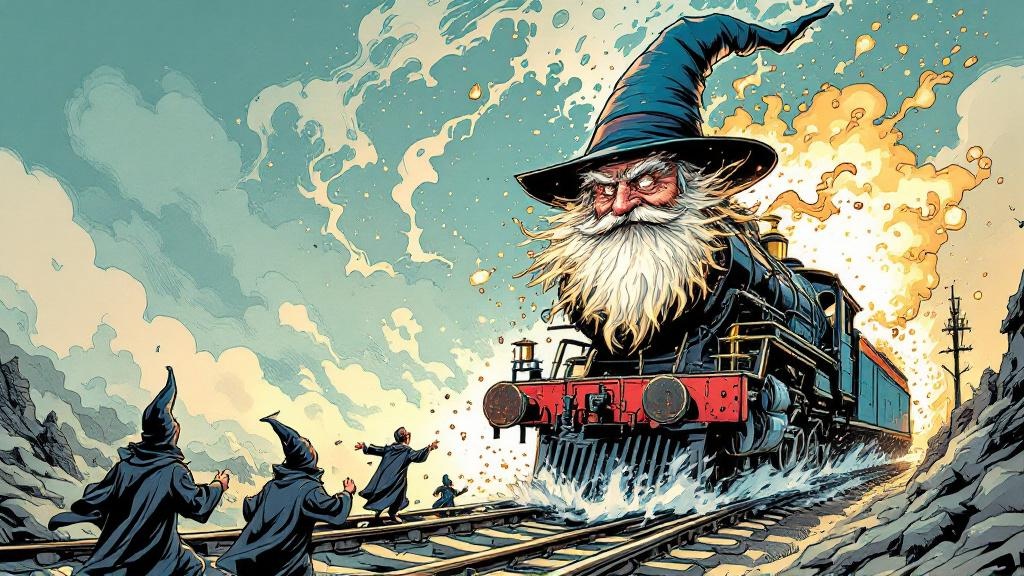
"It wasn't that Ridcully was stupid. Truly stupid wizards have the life expectancy of a glass hammer. He had quite a powerful intellect, but it was powerful like a locomotive, and ran on rails and was therefore almost impossible to steer."
Ridcully isn't dumb. He's unstoppable. Once he decides something, arguing is pointless. His mind moves in one direction with tremendous force, and the only way to change his course is to wait until the track naturally curves somewhere else.
This makes him uniquely suited to surviving wizard politics. While his colleagues scheme and plot and consider angles, Ridcully has already decided what he's doing and is halfway through doing it. By the time anyone's worked out a clever assassination plan, he's moved on to the next thing.
His selective hearing is legendary. "Good point, well made," he'll say, dismissing any argument he doesn't want to engage with. It's not that he can't understand complex ideas—it's that he's already decided they're not worth his time.
The Paradox of Terrible Management
Here's the strangest part of Ridcully's legacy: "Ridcully was to management what King Herod was to the Bethlehem Playgroup Association."
He's a terrible manager. He doesn't listen. He doesn't engage with faculty concerns. He dismisses problems with cheerful obliviousness. He once drove the Bursar slowly insane through sheer personality, and the poor man now requires dried frog pills just to "hallucinate that he's sane."
And yet, paradoxically, this makes him the most effective Archchancellor in living memory.
Previous Archchancellors engaged with university politics—and got consumed by them. They listened to factions, considered arguments, tried to balance competing interests. This made them vulnerable. Every concession created enemies, every decision created losers plotting revenge.
Ridcully simply doesn't engage. He can't be manipulated because he's not listening. He can't be outmaneuvered because he's already doing whatever he was going to do anyway. The political machinery that produced generation after generation of murdered Archchancellors grinds uselessly against someone who doesn't acknowledge it exists.
The Faculty Ensemble
The most lasting impact of Ridcully's survival isn't institutional reform—it's creative opportunity.
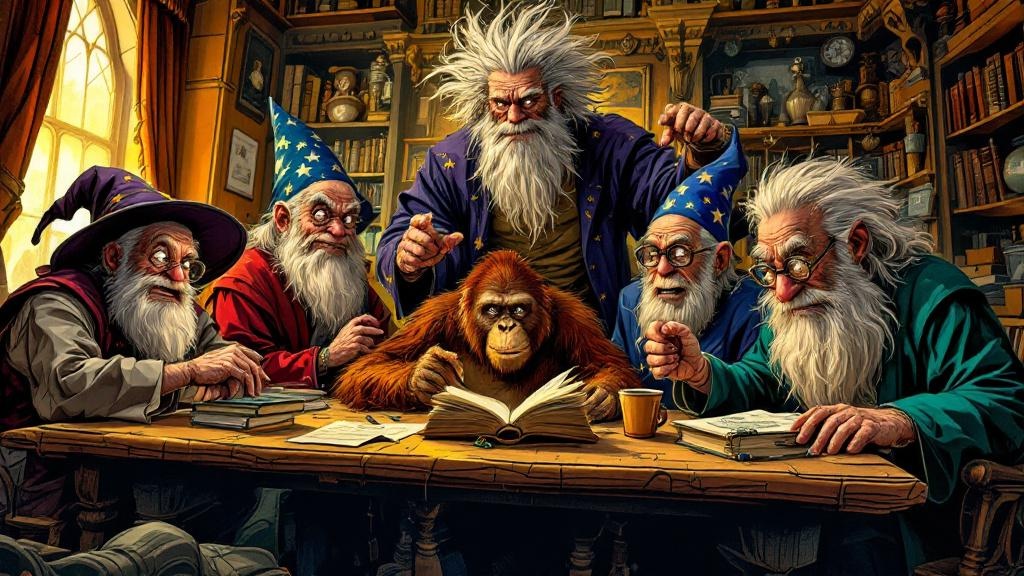
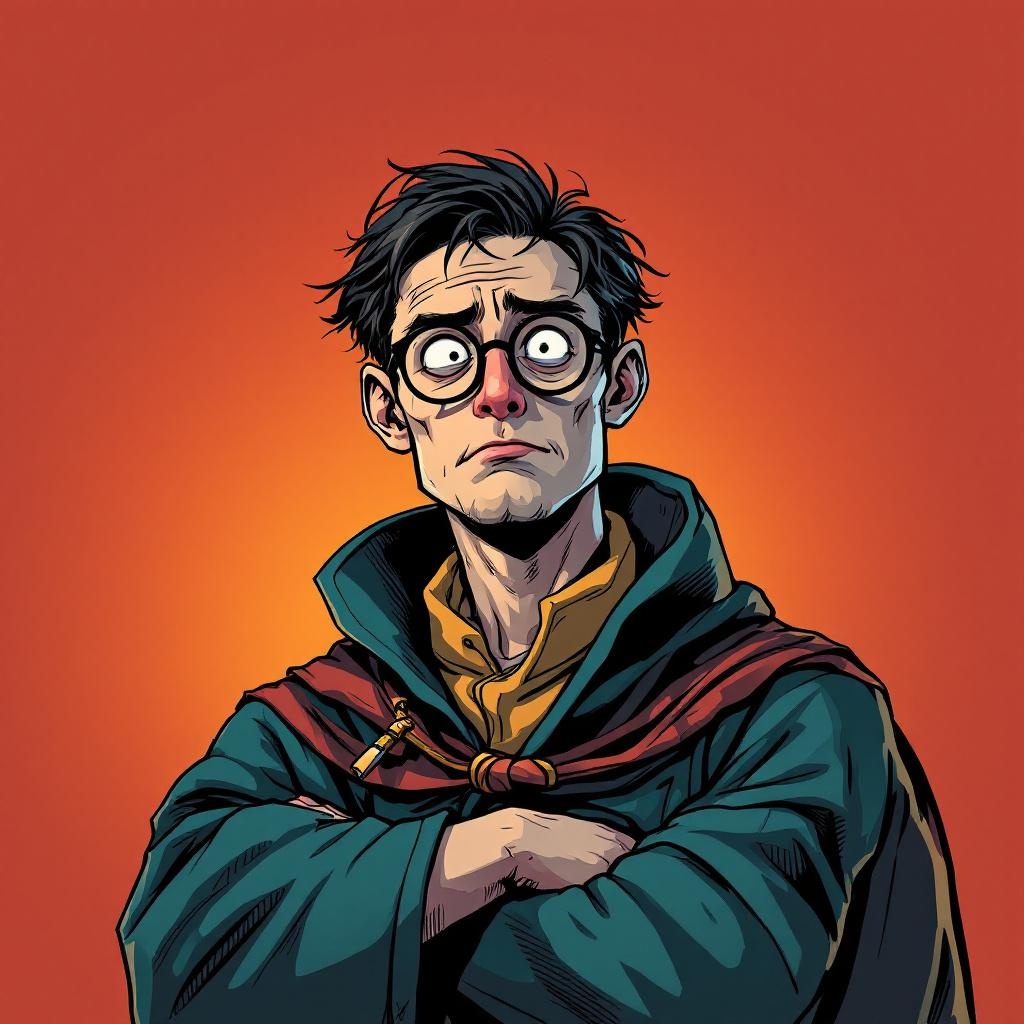
With a stable faculty, Pratchett could develop the wizards as an ensemble comedy. The pompous Dean, the trembling Bursar, the pedantic Ponder Stibbons, the mysterious Librarian—these characters only exist because Ridcully kept them alive long enough to matter.
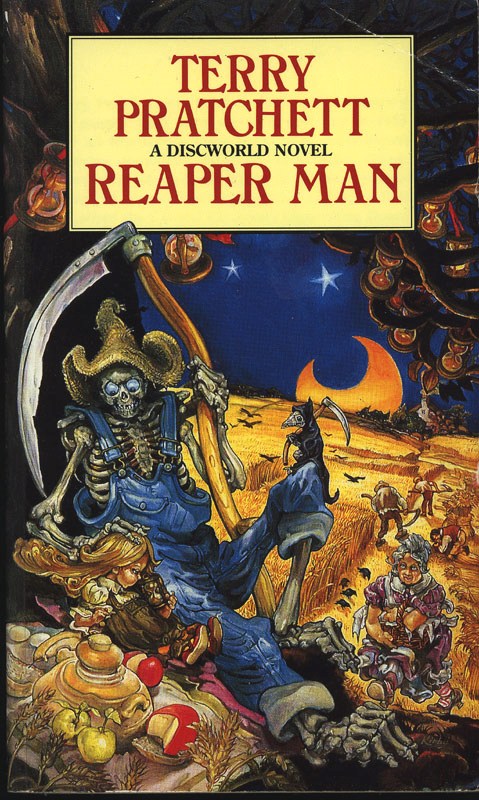
The wizards' adventures in Reaper Man, their susceptibility to rock and roll in Soul Music, their encounter with evolution in The Last Continent, their forced football team in Unseen Academicals—none of this works without the same characters returning. Pratchett needed recurring players, and Ridcully made that possible.
In a way, Ridcully is Pratchett's solution to a structural problem. The early books kept changing wizard characters because the assassination tradition made continuity impossible. Ridcully is the in-universe explanation for why the same faces kept appearing.
What He Represents
Beyond the comedy, Ridcully embodies a specific kind of wisdom: the knowledge that sometimes the best approach to a complex problem is to refuse to treat it as complex.
University politics were a deadly tangle of alliances, grudges, and schemes. Ridcully's response? Ignore them entirely. Go for a morning run. Shoot some things. Be impossible to assassinate through sheer physical robustness and early rising.
It's not sophisticated. It's not clever in the traditional sense. But it works.
Sam Vimes, Discworld's other great pragmatist, gets along well with Ridcully precisely because they share this philosophy. As Pratchett notes, both believe "the most important thing about magic is knowing when not to use it." They're practical men who prefer action to theory.
In a world full of schemers and philosophers, Ridcully proves that sometimes the right answer is just showing up early, staying alert, and being too much trouble to bother with.
The Legacy
Mustrum Ridcully appears in seven Discworld novels, from Moving Pictures through Unseen Academicals. In every one, he's essentially the same: loud, athletic, oblivious to subtlety, and utterly indestructible.
He never grows much as a character—but that's the point. Ridcully is a fixed point, a stable foundation around which everything else can develop. The faculty's antics, Ponder's technological innovations, Hex's growing sentience, the university's gradual integration into Ankh-Morpork society—all of this happens because one man refused to die on schedule.
When he finally learns that Granny Weatherwax has died in The Shepherd's Crown, it's one of the few times we see Ridcully genuinely affected by anything. Their long-ago romance, revealed in Lords and Ladies, adds unexpected depth to a character who usually seems impervious to sentiment.
But even that moment passes quickly. Ridcully isn't the type to dwell. He's already moving on, locomotive mind running forward on its tracks, impossible to stop or steer.
Where to See Ridcully in Action
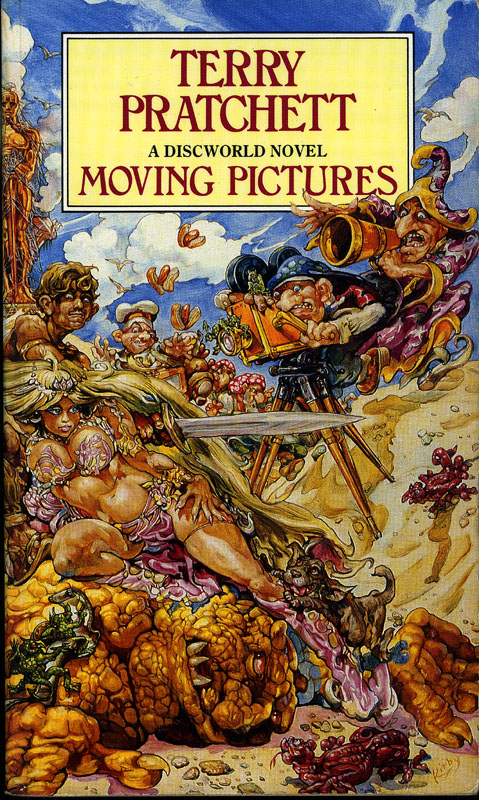



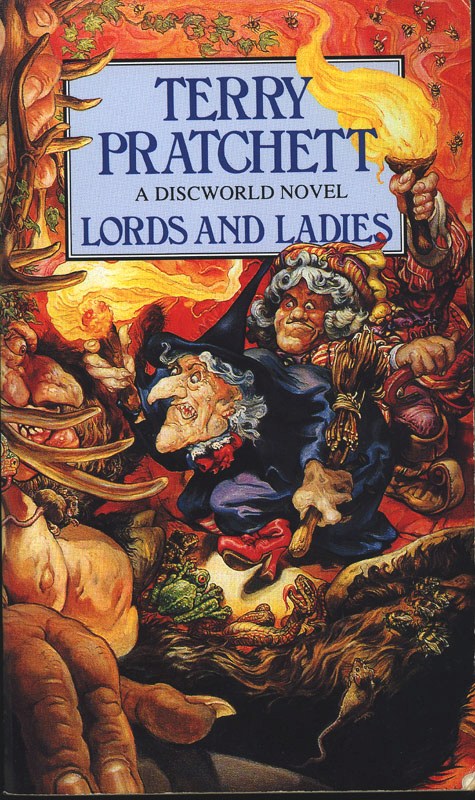
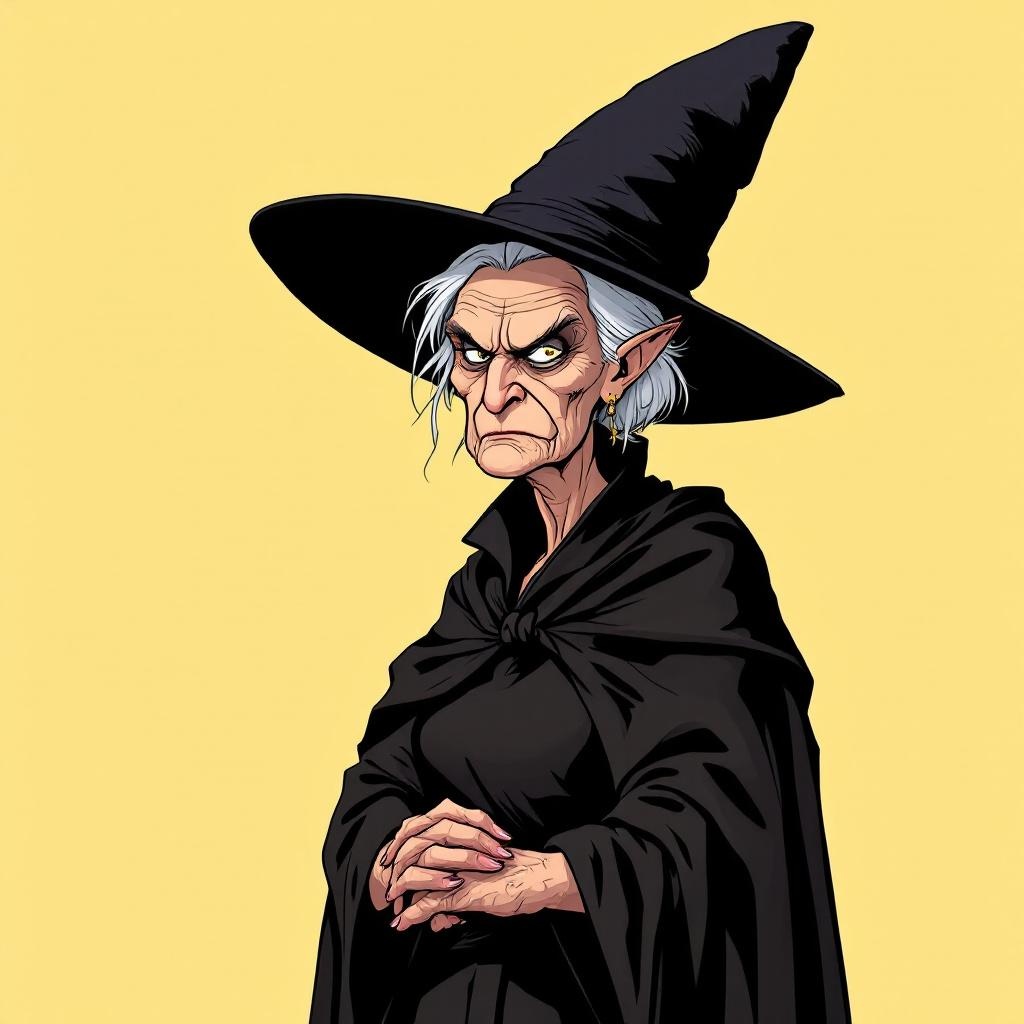


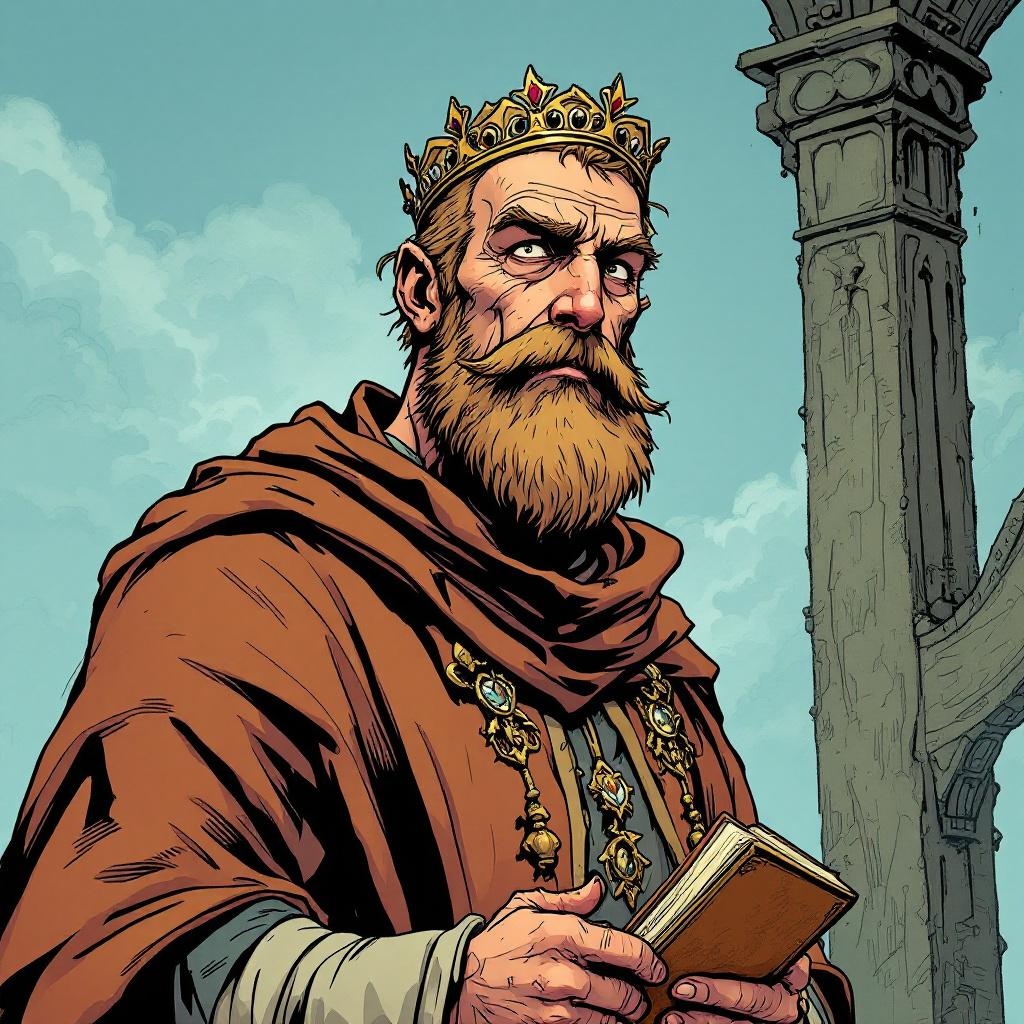

Start with Moving Pictures to see how Ridcully transforms the university dynamic, then move to Lords and Ladies for the romantic revelation and some genuine action. After that, any wizard book will show you the ensemble he made possible.
The Bottom Line
Mustrum Ridcully didn't set out to reform Unseen University. He didn't have a vision for institutional change or a policy agenda. He just showed up, refused to die, and kept doing things his own way regardless of what anyone else thought.
And somehow, that was enough.
The wizard who was supposed to be a pushover became the longest-serving Archchancellor in modern history. The institution built on murder became a functioning (if eccentric) academic establishment. The rotating cast of paranoid schemers became a beloved comic ensemble.
All because one man got up too early, exercised too much, and kept banging would-be assassins' heads in doors.
That's institutional reform, Discworld style.
Want to explore more of Ridcully's adventures? Read about his relationship with Granny Weatherwax, or see how he handles rock and roll hitting the university.