"Born to Rune": When Rock and Roll Hit Unseen University
How Soul Music turned Discworld's most sedentary wizards into greased-up rock rebels - and why Archchancellor Ridcully was completely immune.
"Born to Rune": When Rock and Roll Hit Unseen University
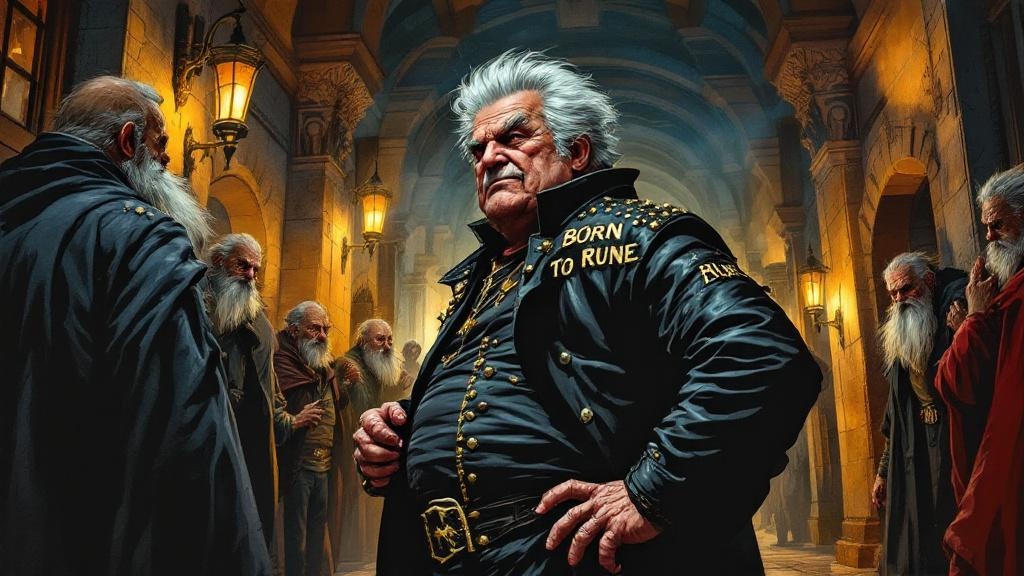
Picture the Dean of Unseen University. Portly. Elderly. A man whose idea of rebellion is taking a second helping of pudding without asking. A wizard who regards standing up too quickly as vigorous exercise.
Now picture him in a leather jacket with "Born to Rune" spelled out in studs on the back, his hair greased into a quiff that could take out an eye, mumbling defiantly about how nobody understands him.
That's Soul Music in a single image. And it's one of the funniest things Terry Pratchett ever wrote.
The Music That Wouldn't Stay Dead
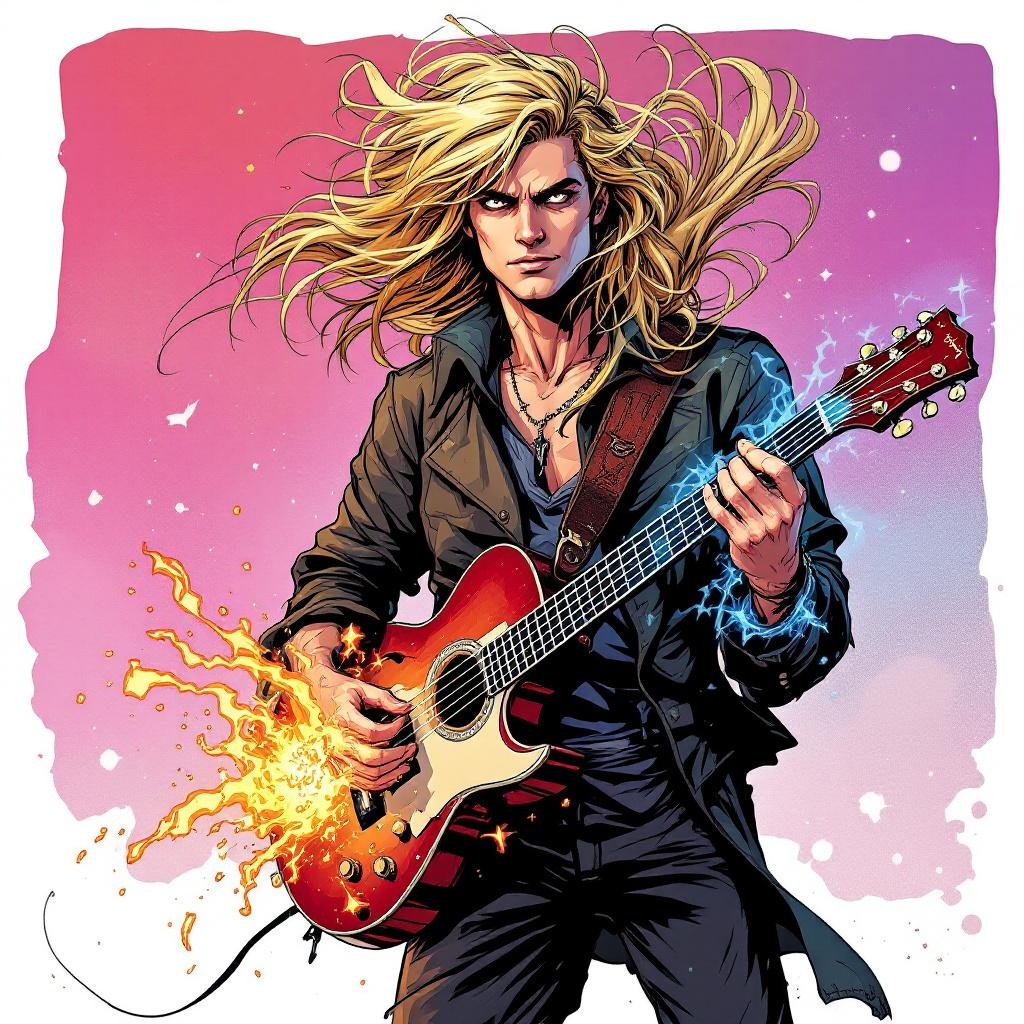
The wizards' subplot in Soul Music starts with a premise that sounds deceptively simple: "Music with Rocks In" arrives on the Discworld. It's rock and roll, essentially, carried by a sentient force that wants desperately to exist—to be played, to be heard, to survive through willing vessels.
The main story follows Imp y Celyn (whose name translates, appropriately, as "Bud of the Holly") and his band as the Music takes hold of Ankh-Morpork. But Pratchett, being Pratchett, understood that the best way to satirize a cultural phenomenon isn't just to show it happening. It's to show what happens when it hits people who should be utterly immune to it.
Enter the faculty of Unseen University—a collection of men whose favourite sports are, canonically, "Competitive Eating and Extreme Napping." Men who view rising before noon as a human rights violation and consider any physical effort beyond fork-lifting as grounds for a lie-down.
These are the last people on the Disc who should be forming rock bands. Which is exactly why it's so brilliant when they do.
The Dean's Magnificent Transformation
Nobody falls harder for Music with Rocks In than the Dean.
It starts small—tapping a foot here, humming there. But within days, the Dean has undergone a transformation so complete it makes Buddy Holly's band look like amateurs. He greases his hair into a duck's-arse quiff. He makes himself a leather jacket—a leather robe, technically, because he's still a wizard—and hammers "Born to Rune" across the back in studs. He adds "Live Fats Die Yognu" for good measure, which is meant to say "Live Fast Die Young" but has been filtered through a brain more used to magical inscriptions than rock slogans.
"A rebel without a pause."— Terry Pratchett, Soul Music
He paints his door black. He mumbles defiantly in the manner of James Dean, becoming, as Pratchett puts it, "a rebel without a pause." When Ridcully questions his new riveted trousers, the Dean fires back: "If history comes to name these, they certainly won't call them 'Archchancellors.'" He's hoping for "Deans." Close enough to jeans to count.
The comedy works on multiple levels simultaneously. On the surface, it's the visual absurdity of a portly, middle-aged wizard in greaser gear. Below that, it's Pratchett's observation about how music hijacks identity—how a beat and a guitar riff can make someone completely reimagine who they are. And deeper still, it's a satire of middle-aged rebellion, the universal human tendency to discover counterculture about thirty years too late and embrace it with all the embarrassing enthusiasm of someone who's just heard of punk rock at age sixty.
The Dean doesn't just listen to Music with Rocks In. He becomes it. He builds a cargo-cult motorcycle. He practises guitar. He adopts a permanent sneer. He talks about his "need to recapture the teenage sense of rebellion"—which is particularly funny because there's no evidence the Dean was ever rebellious as a teenager. He was probably always exactly the sort of person who went straight from school to wizarding, with a brief detour through excessive pudding consumption.
The Faculty Falls
The Dean isn't alone. The Music doesn't discriminate among the elderly and sedentary.
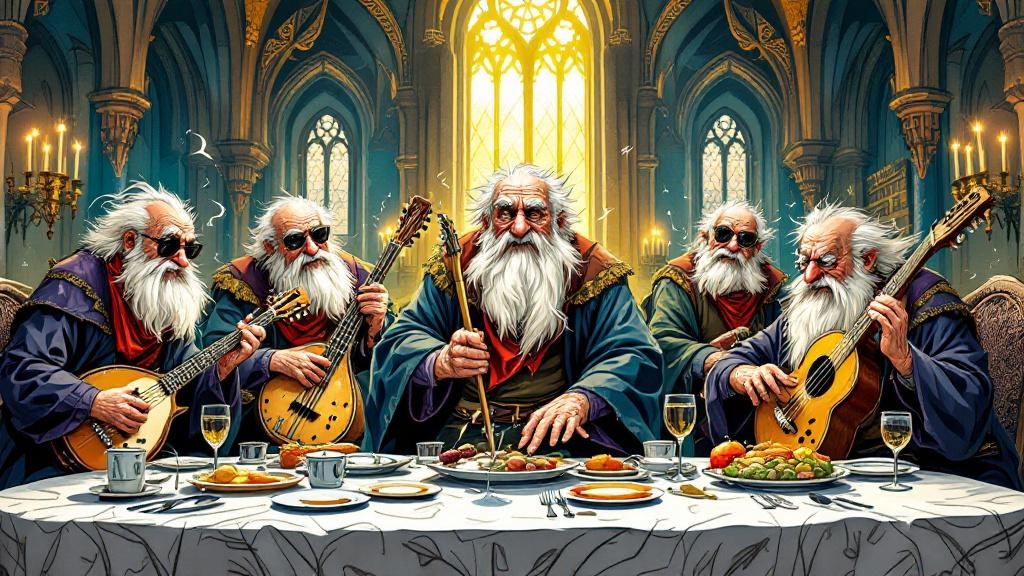
The Lecturer in Recent Runes takes up drumming on the dining hall tableware, snapping his fingers past midnight with an intensity that suggests he's channelling a very polite Keith Moon. The Senior Wrangler succumbs. Even the Librarian—who, to be fair, was already somewhat countercultural by virtue of being an orangutan—gets swept up, building a motorised vehicle he can't quite explain the purpose of.
Pratchett captures the phenomenon beautifully: "Unseen University was used to eccentricity among the faculty. After all, humans derive the notions of what it means to be a normal human being by constant reference to the humans around them, and when those humans are other wizards the spiral can only wiggle downwards."
The wizards aren't just affected by the Music. They're possessed by it in a way that mirrors exactly how rock and roll swept through post-war culture. Every generation has its moment when the establishment looks at what the young people are doing and says, "What on earth is that?" Pratchett's genius is to show what happens when the establishment skips the disapproval phase entirely and goes straight to buying a leather jacket.
"It made you want to kick down walls and ascend the sky on steps of fire."
The Music's power is described in terms that capture exactly why rock and roll felt dangerous to the generation that first encountered it: it "made you want to kick down walls and ascend the sky on steps of fire. It made you want to pull all the switches and throw all the levers and stick your fingers in the electric socket of the Universe to see what happened next. It made you want to paint your bedroom wall black and cover it with posters."
That's not just a description of rock music. That's a description of being young—of the first time something makes you feel like the world could be different. The fact that these feelings are hitting wizards who haven't felt young since the Century of the Fruitbat makes it simultaneously hilarious and oddly poignant.
The Immovable Archchancellor
And then there's Ridcully.
While his entire faculty is greasing their hair and forming bands, the Archchancellor remains magnificently, stubbornly unmoved. The Music with Rocks In bounces off him like spells off a troll's skull.
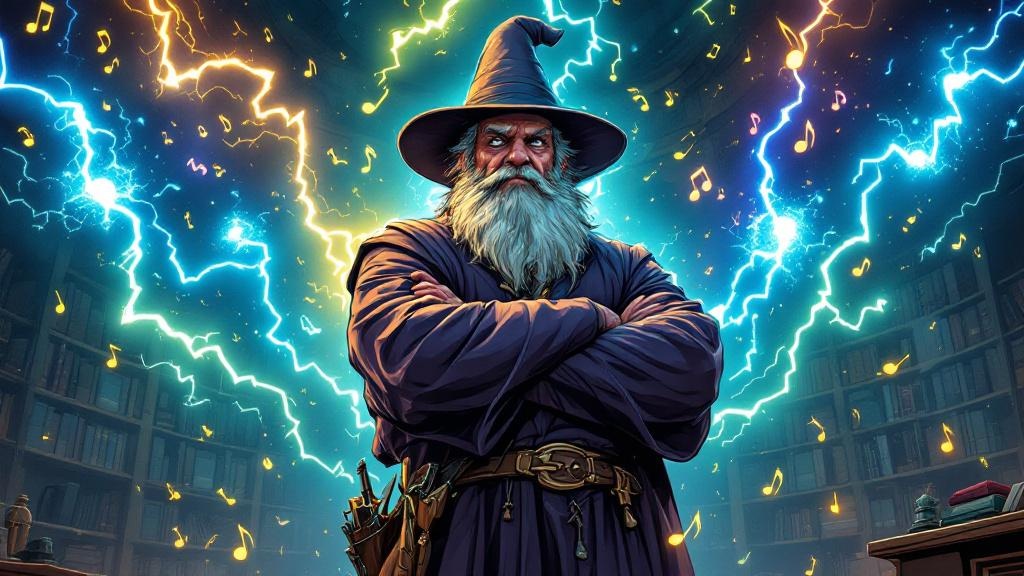
Why? Because Ridcully is, in every sense that matters, the dad of Unseen University. And as every teenager who has ever tried to explain their music to a parent knows, dads don't get it. They never get it. They weren't designed to get it.
Ridcully's view of music is revealing: "It ruined music, in his opinion, to torment it by involving it on dried skin, bits of dead cat, and lumps of metal hammered into wires and tubes. It ought to stay written down, on the page, in rows of little dots and crotchets all neatly caught between lines. Only there was it pure."
There it is. Ridcully believes music should stay on the page—neat, controlled, contained. He's the man who thinks the definitive version of any song is the sheet music. The idea of music as a living, breathing, dangerous force isn't just wrong to him. It's incomprehensible. And you can't be possessed by something you can't even conceptualise.
Ponder Stibbons, the faculty's one young member, is equally immune—but for different reasons. Ponder is the nerd. He doesn't feel music; he wants to analyse it. While the Dean is building a motorcycle and painting things black, Ponder is feeding data into Hex and trying to understand the phenomenon scientifically. He's the kid in 1956 who responded to Elvis not by screaming but by asking how the recording equipment worked.
Together, Ridcully and Ponder form a perfect comedy duo: the dad who can't hear the Music and the nerd who can hear it but doesn't care. Between them, they're the only people in the university still functioning rationally—which is exactly the kind of irony Pratchett loved, since Ridcully's rationality is usually his weakest quality and Ponder normally can't get anyone to listen to him at all.
The Real Satire
Soul Music was published in 1994, but Pratchett was satirizing a phenomenon that repeats with every generation. The book isn't just about rock and roll. It's about what happens when any new cultural force meets an establishment that can't cope with it.
The authorities in Ankh-Morpork respond to Music with Rocks In exactly the way authorities have always responded to disruptive art: with alarm, confusion, and heavy-handed attempts at suppression that only make it more appealing. The Musicians' Guild tries to shut it down. The Watch gets involved. Everyone who should be in charge flails uselessly while the beat goes on.
But Pratchett's satire cuts both ways. He doesn't just mock the people who fear rock music—he also gently skewers the pretensions of rock itself. The Music with Rocks In isn't a liberating force. It's a parasite. It doesn't care about the people it possesses; it needs them as vessels. The rebel pose the Dean adopts isn't authentic rebellion—it's a costume, a set of pre-packaged attitudes that the Music provides ready-made.
That's Pratchett at his sharpest. Rock and roll was revolutionary—but it also became, very quickly, a product. The leather jacket and the sneer and the "Live Fast Die Young" attitude stopped being genuine expressions of dissent and became things you could buy at a shop. The Dean isn't rebelling against anything real. He's performing rebellion from a script he didn't write, for an audience of one sentient musical force that views him as a useful amplifier.
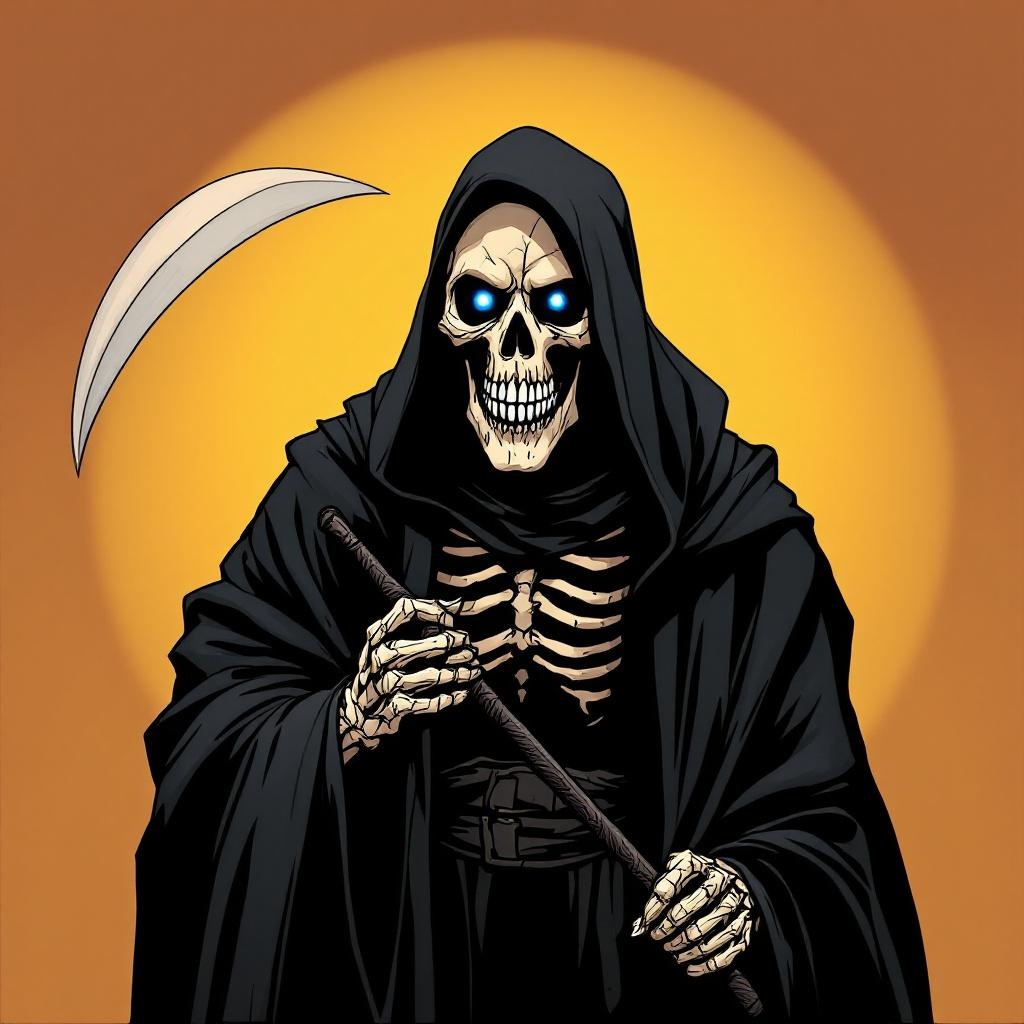
Death Plays the Empty Chord
The subplot connects to the larger story through one of Pratchett's most profound images: the empty chord.
Death himself ultimately confronts the Music, and the only chord he can play is "the musical equivalent of mathematical zero." As Pratchett writes: "There are millions of chords and millions of numbers, and everyone forgets the one that is a zero. But without the zero, numbers are just arithmetic. Without the empty chord, music is just noise."
It's a stunning metaphor. Silence gives music meaning, the way zero gives mathematics meaning. And Death—the ultimate silence, the final rest—is the only one who can provide the counterpoint that the Music's relentless beat requires.
Ridcully's immunity, in this light, takes on an additional dimension. He's not just the dad who doesn't get it. He's an example of someone who values silence and stillness—cold morning baths, quiet countryside shooting, the simple pleasure of not being consumed by something. In a book about the overwhelming power of Music, Ridcully represents the necessity of being able to shut it out.
Why the Faculty Scenes Work
The wizards' subplot could easily have been a throwaway joke—elderly men in leather jackets, ha ha, move on. But Pratchett sustains it across the entire novel because it serves a genuine purpose beyond comedy.
First, it shows the Music's power. If it can get the Dean—the Dean—into a leather jacket, imagine what it does to actually impressionable people. The faculty's transformation is the evidence that this isn't just a catchy tune. It's something dangerous.
Second, it provides the emotional contrast the main plot needs. Imp y Celyn's story is about fame, death, and the price of artistic genius. That's heavy material. The Dean practising air guitar in his study is the pressure valve that keeps the book from becoming too serious.
And third, it's Pratchett's most sustained and loving pastiche of rock culture—not from the perspective of the musicians or the screaming fans, but from the people who shouldn't be screaming fans but somehow are anyway. The Dean discovering rock and roll at seventy-something is funnier and truer than any number of fictional rock stars, because everyone knows someone who found their musical awakening embarrassingly late and went all in.
The Morning After
The Music, eventually, is defeated. Death plays his empty chord. The band is saved—or not saved, depending on how you read the ending. And the faculty of Unseen University slowly, sheepishly, returns to normal.
The Dean removes his leather jacket. The Lecturer in Recent Runes stops drumming on the tableware. The Senior Wrangler stops whatever it was the Senior Wrangler was doing. And Ridcully, who never changed in the first place, carries on exactly as before: rising at dawn, taking cold baths, and being magnificently oblivious to what just happened to everyone around him.
It's one of the most perfect demonstrations of who Ridcully is. He's the fixed point. The rock (no pun intended) that doesn't roll. While everyone else gets swept up in the latest craze—whether it's Music with Rocks In, or moving pictures, or football—Ridcully remains himself. He's the same man at the end of every book that he was at the beginning, not because he can't change but because he won't. His locomotive mind stays on its rails, and no amount of catchy music is going to derail it.
Where to Experience the Music
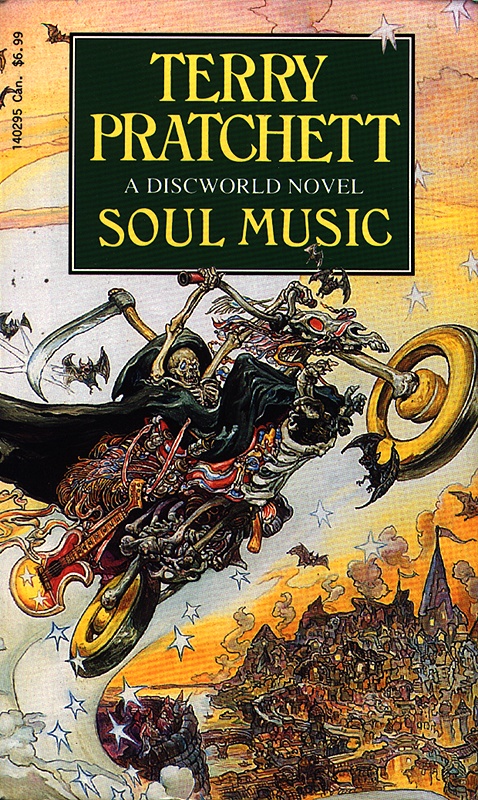


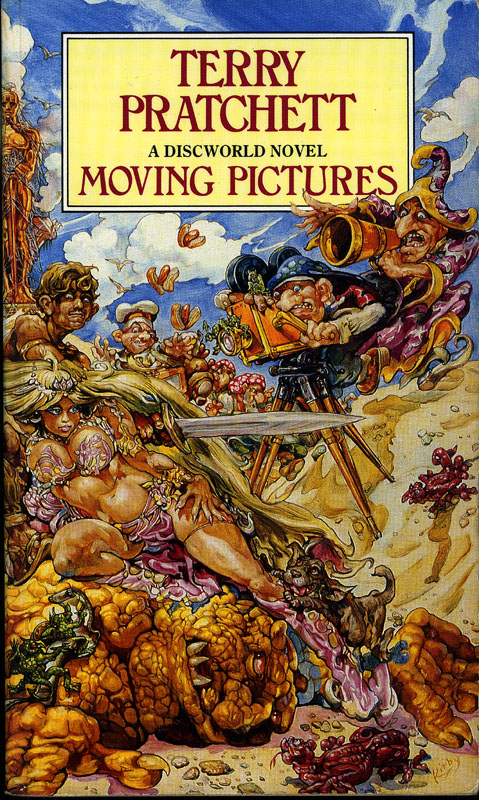


Start with Soul Music for the full Born to Rune experience, then read Moving Pictures to see the earlier version of the same dynamic. Between them, you'll understand why the Unseen University faculty is one of the great comic ensembles in fantasy literature—and why Ridcully is the immovable object that holds them all together.
Want more Ridcully? Read about how he survived by being impossible to kill, or discover the greatest love story never told between him and Granny Weatherwax.