The Vegetarian Werewolf's Dilemma: How Angua Pays for Her Chickens
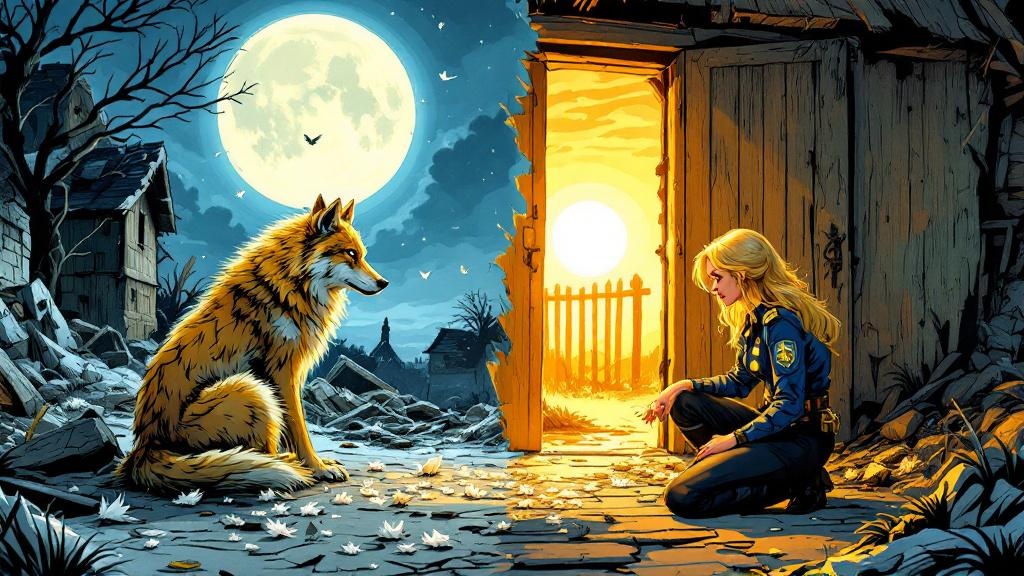
Angua von Uberwald is a vegetarian who hunts chickens by moonlight—then pays for them. This small ritual reveals Pratchett's deepest insight into free will and moral responsibility.
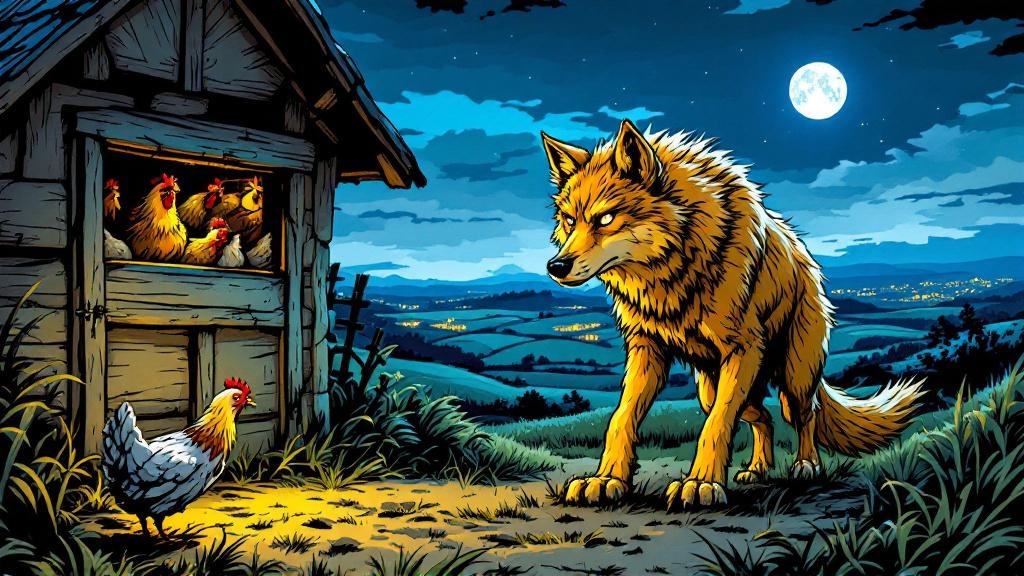
Somewhere on the outskirts of Ankh-Morpork, a farmer wakes up to find one of his chickens missing. The coop is wrecked. Feathers everywhere. Classic fox damage—except there's money under his door.
He can't explain it. He never will. But it keeps happening, roughly once a month.
Welcome to Angua von Uberwald's moral philosophy, expressed entirely through poultry economics.
The Morning After
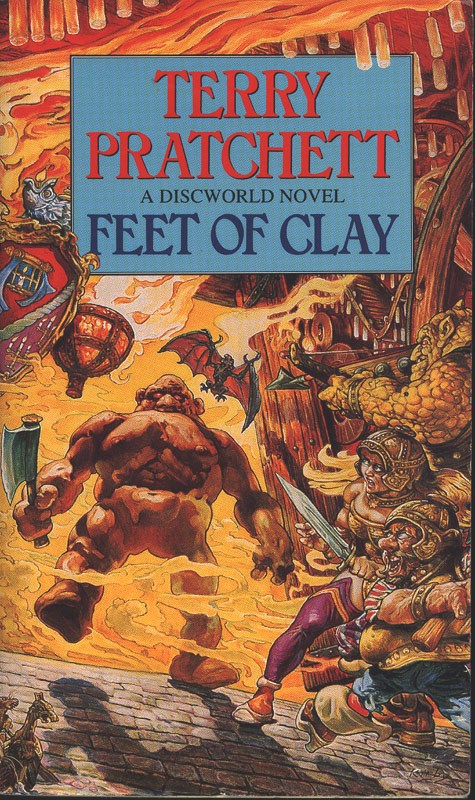
In Feet of Clay, Pratchett gives us one of the most quietly devastating passages in Discworld. Angua reflects on her condition: "It was hard to be a vegetarian who had to pick bits of meat out of her teeth in the morning."
"It was easy to be a vegetarian by day. It was preventing yourself becoming a humanitarian at night that took the real effort."
Think about that for a second. Here's a woman who has chosen, deliberately and with full conviction, not to eat meat. She's made a moral decision about how she wants to live. And every full moon, her body overrides that decision completely. She wakes up with feathers in her hair and blood on her teeth, and she has to deal with it.
Her solution isn't denial. It isn't self-flagellation. She goes back to the farm, slips money under the door, and gets on with her day.
The reason is devastating in its simplicity: she pays because "animals don't." That's the whole philosophy in four words. The act of compensation is what separates a person from a predator.
The Pun That Contains a Thesis
Pratchett being Pratchett, the heaviest philosophical point comes disguised as wordplay. Angua reassures herself that she's "definitely on top of it"—that it's her mind prowling the streets at night, not the wolf's. Because "a werewolf wouldn't stop at chickens, not by a long way."
Then the kicker: "It was easy to be a vegetarian by day. It was preventing yourself becoming a humanitarian at night that took the real effort."
"Humanitarian." A being that eats humans. The word works because it means two opposite things simultaneously—a person who cares about human welfare, and a creature that consumes them. Angua, by refusing to become a humanitarian in the literal sense, is actually being one in the conventional sense. The pun contains the entire moral argument of her character in a single word.
This isn't a throwaway joke. It's a thesis statement wearing a funny hat.
What the Chickens Actually Mean
Here's the thing about the chickens: they represent the boundary between what Angua can control and what she can't.
She can't stop the wolf from emerging during the full moon. She's tried. The transformation is biological, involuntary, as unstoppable as a sneeze. When the moon is full, the wolf hunts. That's not a choice—it's a fact of her physiology.
But she can go back the next morning. She can leave payment. She can choose to eat no meat during the rest of the month. She can restrict the wolf's territory to areas where the worst she'll do is raid a henhouse rather than wander through populated streets.
"She was definitely on top of it, though. Definitely, she reassured herself."— Terry Pratchett, Feet of Clay
That distinction—between the instinct you can't prevent and the response you choose—is the entire foundation of Angua's moral code. And it's Pratchett's answer to one of philosophy's oldest questions: if you can't fully control your nature, are you still a moral agent?
His answer, through Angua, is unequivocal. Yes. Because morality isn't about never doing wrong. It's about what you do afterward.
There's a gorgeous uncertainty in how Pratchett writes it, too. "She was definitely on top of it, though. Definitely, she reassured herself." That repetition of "definitely" undermines itself. She's "almost entirely sure" that her mind controls the wolf at night. Almost entirely. The doubt is the engine of her vigilance. If she were certain she was in control, she might stop trying.
The Wolfgang Problem
To understand why the chickens matter so much, you need to meet Angua's brother.
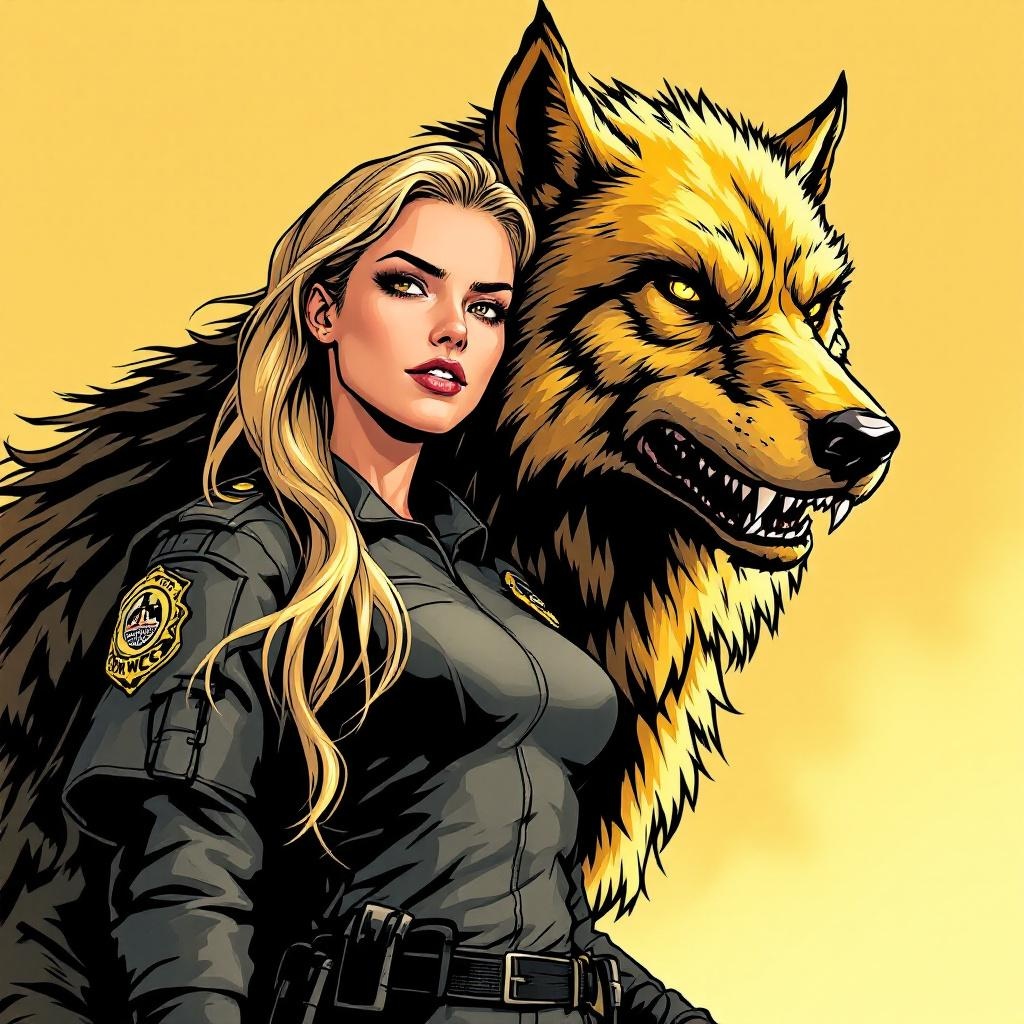
Wolfgang von Uberwald is what happens when a werewolf decides that the predator is the point. He believes werewolves are the supreme species—born to rule, born to hunt, born to treat humans as prey. He plays "The Game," giving human victims a head start before running them down for sport. He killed his own sister Elsa for the crime of being a yennork—a werewolf stuck in human form, unable to transform. He drove their brother Andrei away (who, in a detail of perfect Pratchett irony, became a champion sheepdog in Borogravia—a wolf protecting sheep).
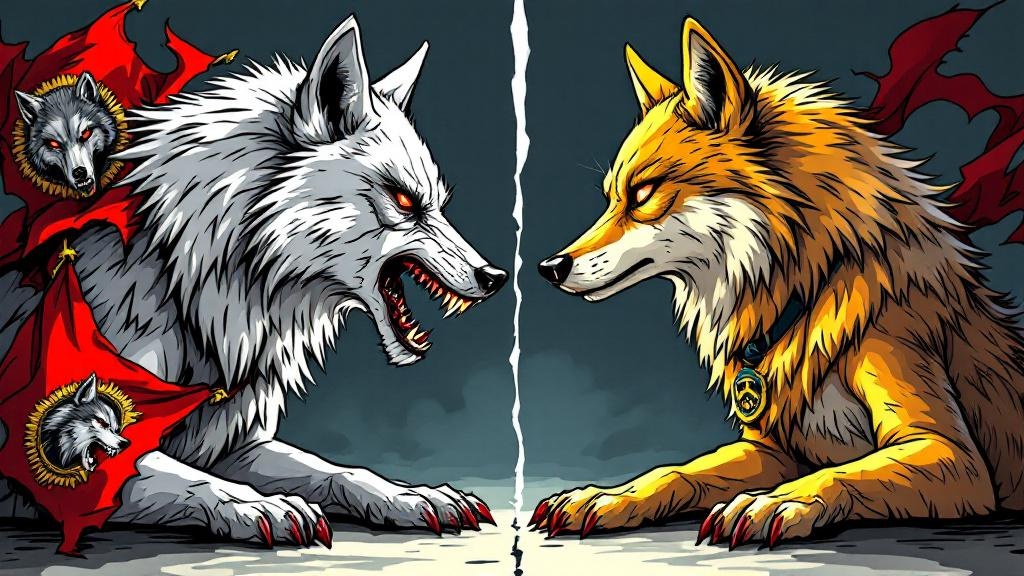
Wolfgang's crimson banner with the silver wolf's head and lightning insignia isn't subtle—he's a fascist in wolf's clothing. His philosophy is simple: werewolves are apex predators, and apex predators don't pay for chickens. They take what they want because they can.
Angua and Wolfgang share the same blood, the same transformation, the same fangs. The difference isn't biological. It's moral. Wolfgang uses his nature as permission. Angua uses hers as a test.
When she slips coins under a farmer's door, she's not just compensating for poultry. She's making a statement that Wolfgang would find incomprehensible: power doesn't grant you the right to take. It grants you the responsibility to give back.
A Vegetarian Among Carnivores
There's a practical absurdity to Angua's vegetarianism that Pratchett clearly relishes. She's a werewolf—a creature evolved for hunting, with senses designed to track prey and teeth built for tearing flesh—who orders the salad.
But it makes perfect sense for who she is. Every meatless meal is a small act of defiance against her own biology. Every day she goes without meat is a day she's proven that her human mind, not her wolf instincts, is making the decisions.
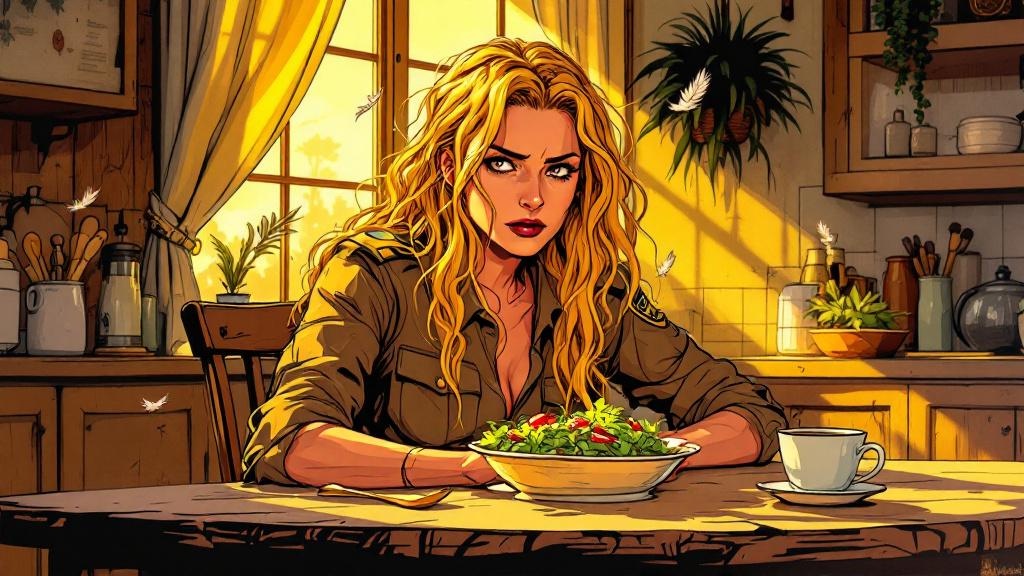
It's also deeply practical. If she ate meat in human form, she'd be feeding the wolf's appetites. Keeping her human diet plant-based is a way of maintaining the boundary between her two selves. The wolf gets the full moon. The woman gets the rest of the month. And the chickens are the only overlap she permits.
This is a character who treats self-control as a daily practice, not a permanent achievement. She doesn't wake up one morning and declare herself "cured" of being a werewolf. She wakes up every morning and chooses, again, to be the kind of werewolf who pays for her chickens.
The Philosophy of the Slipped Coin
There's a tradition in moral philosophy that goes back to Immanuel Kant: the idea that moral worth comes from doing the right thing despite inclination, not because of it. A person who's naturally generous doesn't deserve moral credit for being generous—they're just doing what comes easily. The person who has to fight their own nature to be kind? That's real virtue.
By this standard, Angua might be the most moral character in all of Discworld.
She has every biological reason to hunt. Her body transforms against her will. Her senses are designed to find prey. The wolf in her doesn't understand vegetarianism or property rights or the social contract. And every single month, she fights that nature—not perfectly, not completely, but consistently. She accepts what she can't prevent and takes responsibility for its consequences.
"Power doesn't grant you the right to take. It grants you the responsibility to give back."
Compare this to characters who are "good" because they never face real temptation. Captain Carrot is honest and decent and true—but he's naturally that way. It costs him nothing. Angua has to earn her decency every morning she picks chicken feathers out of her teeth.
That's what makes the slipped coin such a powerful image. It's not grand. It's not heroic. Nobody sees her do it. There's no audience, no reward, no recognition. It's just a person doing the right thing because they've decided that's who they are, even when their own body disagrees.
Pratchett's Answer to Determinism
At its core, the vegetarian werewolf dilemma is about free will. If your biology compels you to act in certain ways—if you literally transform into a predator against your will—can you still be held morally responsible? And if you can't be blamed for what the wolf does, why bother paying for the chickens?
Pratchett's answer is characteristically practical. He's not interested in whether Angua has metaphysical free will in some abstract philosophical sense. He's interested in what she does.
She can't prevent the transformation. Fine. She can limit its damage. She can't stop the wolf from hunting. Fine. She can make sure it hunts chickens instead of people. She can't undo what the wolf has done. Fine. She can pay for it.
This is moral agency defined not by the absence of compulsion but by the response to it. You're not responsible for the cards you're dealt, but you are responsible for how you play them. The wolf is the hand. The slipped coin is the play.
It's a deeply humanist position—ironic, given that it's articulated through a character who's only human about 75% of the time.
The Chickens and the Watch
There's one more layer to this story. Angua's moral code isn't just personal—it's what makes her an extraordinary police officer.
She joined the City Watch at a time when it was barely functional, a joke, a collection of misfits nobody else would hire. She chose law enforcement. A werewolf—a creature that could hunt and kill with impunity—voluntarily put herself in the business of protecting people from predators.
The same instincts that make her dangerous also make her invaluable. Her nose can track a criminal across the city. Her wolf form can pursue suspects no human could catch. She experiences smell as color, a synesthetic ability that makes her the Watch's greatest investigator for certain crimes.
But the instincts only work for justice because she has the moral framework to direct them. Without the chicken-paying philosophy—without the daily practice of restraint and responsibility—those same abilities would make her Wolfgang. The tools are identical. The user's manual is different.
Where to Experience Angua's Moral Code
The next time you find yourself making excuses for bad behavior—blaming your temper, your upbringing, your circumstances—think about Angua. She turns into a literal predator every full moon, and she still pays for the chickens.
For more on Angua's philosophy, read about how her Homo Homini Lupus speech redefines werewolf mythology, or explore her unlikely friendship with Cheery Littlebottom.