Homo Homini Lupus: Angua's Speech That Redefines What It Means to Be a Werewolf
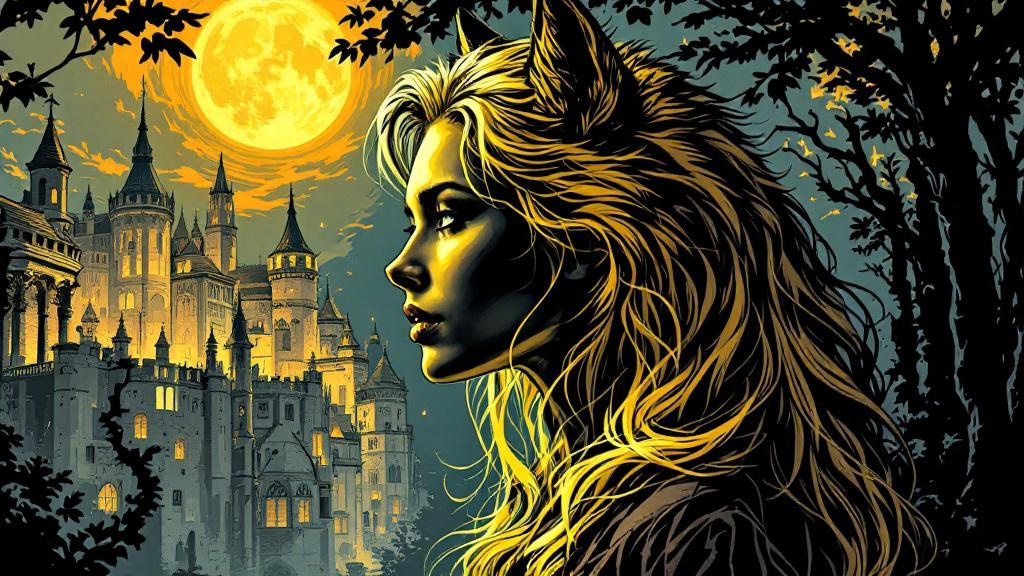
In The Fifth Elephant, Angua delivers a speech that inverts centuries of werewolf mythology. Pratchett shows us the real monsters aren't wolves—they're human.
Homo Homini Lupus: Angua's Speech That Redefines What It Means to Be a Werewolf
Here's a Latin phrase you might have heard: Homo homini lupus. "Man is a wolf to other men."
It's ancient—Plautus used it around 200 BC, and Thomas Hobbes made it famous when describing his vision of human nature without civilization. The implication is clear: wolves are savage, brutal, and predatory. When humans act cruelly, they're "acting like wolves."
For two thousand years, nobody questioned this.
Then Terry Pratchett gave a werewolf named Angua a chance to respond.
"Humans hate werewolves because they see the wolf in us, but wolves hate us because they see the human inside—and I don't blame them!"
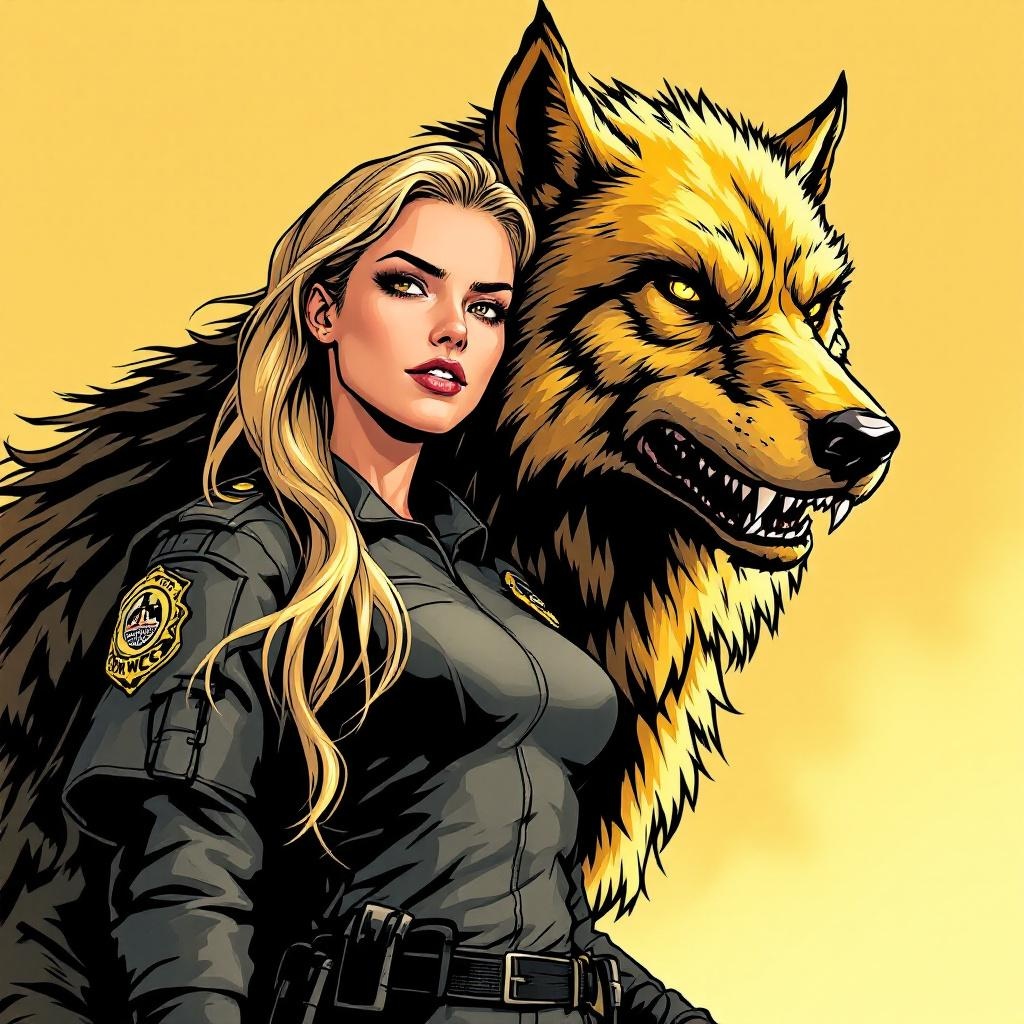
In The Fifth Elephant, Angua confronts Captain Carrot about her family's motto—that same Latin phrase carved into their mantelpiece. And what follows is one of the most philosophically charged speeches in all of Discworld.
"Our family motto is Homo Homini Lupus. 'A man is a wolf to other men'! How stupid. Do you think they mean that men are shy and retiring and loyal and kill only to eat? Of course not! They mean that men act like men toward other men, and the worse they are, the more they think they're really being like wolves!"
Then comes the devastating conclusion: "Humans hate werewolves because they see the wolf in us, but wolves hate us because they see the human inside—and I don't blame them!"
That's not just a great line. It's a complete philosophical inversion of werewolf mythology.
The Speech That Changed Everything
To understand why this speech matters, you need to understand what werewolves have traditionally represented in fiction.
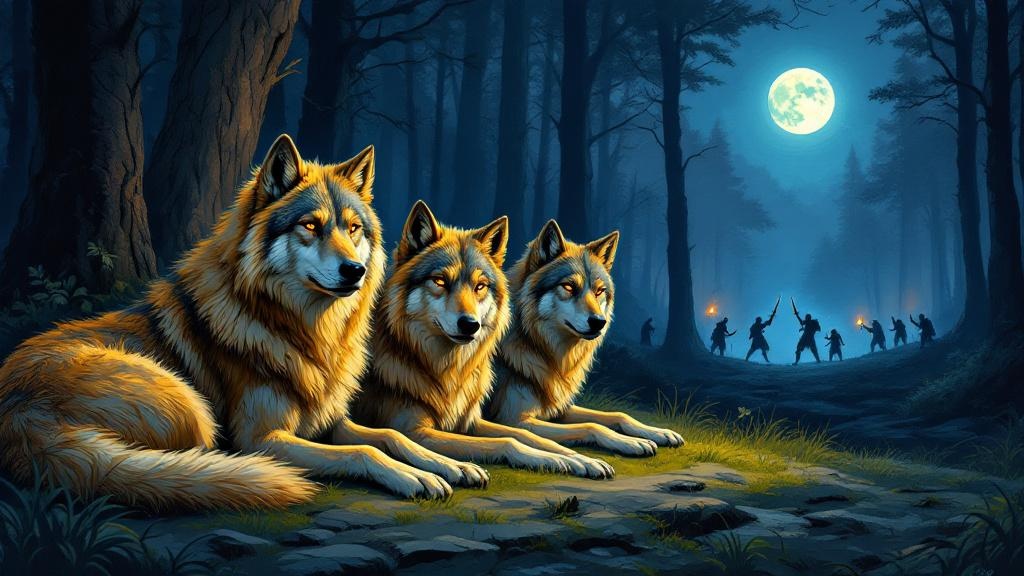
Since the earliest myths, werewolves symbolized the beast within—the savage, uncontrollable violence lurking inside every civilized person. The curse strips away the thin veneer of humanity and reveals the monster underneath. Jekyll becomes Hyde. The refined gentleman becomes the slavering beast.
The implication is always the same: civilization is good; animal nature is evil. We're constantly fighting to suppress our "lower" instincts.
Angua's speech demolishes this framework.
Real wolves, she points out, are actually quite pleasant. They're shy. They're loyal to their packs. They hunt to survive, not for sport. They have complex social structures built on cooperation and affection. When two wolf packs meet, they usually posture and back down rather than fight to the death.
Now compare that to humans.
We're the species that invented genocide. Torture. War for profit. Slavery. We're the ones who kill for abstract concepts, who hurt people we've never met because they believe the wrong things or were born in the wrong place. We're the species that needs words like "atrocity" and "pogrom" and "ethnic cleansing."
Who's the real monster here?
Pratchett's Philosophical Reversal
"Do you think they mean that men are shy and retiring and loyal and kill only to eat?"
This isn't just Pratchett being clever. He's making a serious point about how humans project our worst qualities onto animals—and then use that projection to feel better about ourselves.
When we call someone "beastly" or say they "acted like an animal," we're doing something psychologically convenient. We're pretending that cruelty is somehow unnatural to humans, that it comes from our "lower" nature rather than being a distinctly human capacity.
But animals don't build concentration camps. They don't invent systems to oppress millions. They don't destroy the environment for profit or wage wars over ideology. Those are human specialties.
Angua sees this clearly because she exists in both worlds. She's spent time as a wolf and time as a human. She knows what wolves actually think and feel. And from that unique vantage point, she can see how ridiculous the traditional mythology is.
The phrase "man is a wolf to other men" isn't a comment about wolves. It's a comment about humans—and a deeply unflattering one, once you actually think about it.
The Tragedy of Being In-Between
The full tragedy of Angua's existence becomes clear when you follow her logic to its conclusion.
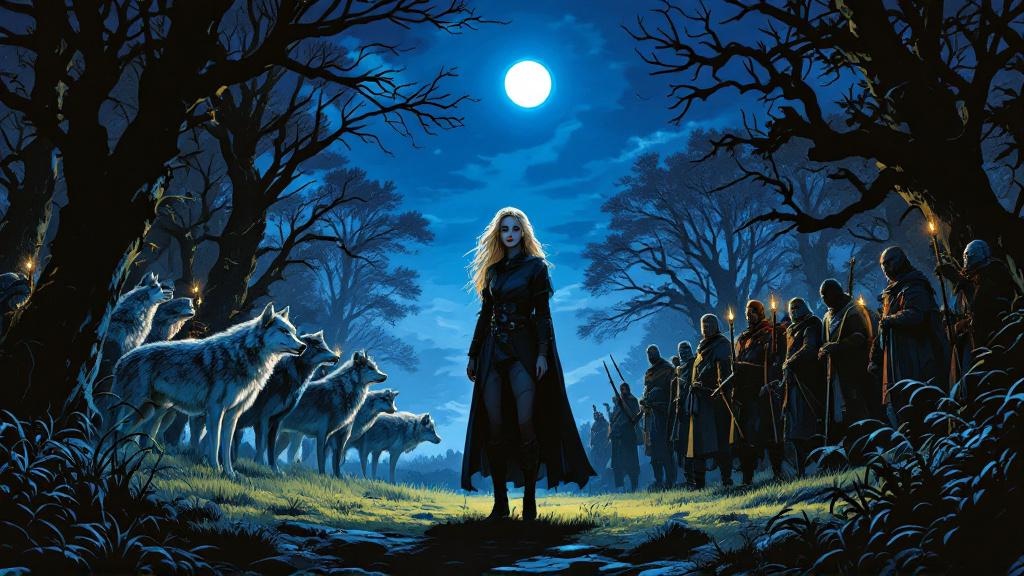
Werewolves are hated by everyone. Humans hate them because they see the wolf—the predator, the danger, the thing that hunts in the night. Wolves hate them because they see the human—the cruelty, the calculation, the thing that kills for reasons beyond survival.
Gaspode the Wonder Dog puts it more bluntly: "Humans don't like werewolves. Wolves don't like werewolves. People don't like wolves that can think like people, an' people don't like people who can act like wolves."
This is Angua's fundamental condition. She belongs nowhere. She's too wolf for human society and too human for the wolves. The hybrid nature of werewolves produces dog-like characteristics—loyalty, the desire for a pack, an uncomfortable need to follow the lead of someone stronger—and Angua struggles against these instincts constantly.
In Jingo, she compares herself to being Carrot's dog. It's played as self-deprecating humor, but there's real pain underneath. Is what she feels for him love, or is it a wolf seeing an alpha? How can she tell the difference?
This is the existential horror that Pratchett explores through Angua: what does it mean to have free will when your nature pulls you in directions you can't fully understand or control?
Wolfgang: The Path She Rejected
The speech in The Fifth Elephant doesn't happen in a vacuum. It's part of Angua's confrontation with her past—specifically, with her brother Wolfgang.
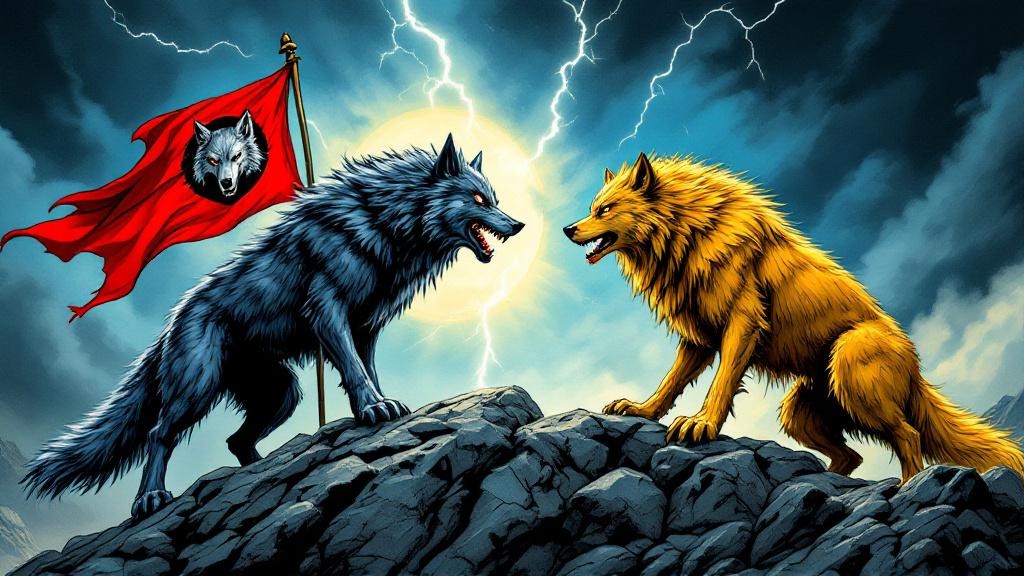
Wolfgang represents everything Angua could have become. He embraces the predator mythology completely. He believes werewolves are the ultimate beings—stronger than humans, smarter than wolves, destined to rule. His crimson banner with the silver wolf's head, his obsession with "pure-blood" werewolves, his willingness to murder family members who don't meet his standards—Wolfgang is essentially a Nazi in lupine form.
He killed their sister Elsa for being a yennork (a werewolf stuck in one form). He drove their brother Andrei away. He plays "The Game"—hunting humans for sport, giving them a head start before running them down like prey.
Wolfgang proves Angua's point perfectly. When werewolves act cruelly, it's not the wolf nature expressing itself. It's the human nature. The ambition, the ideology, the need to dominate, the pleasure in others' suffering—these are human traits. Wolves don't have words for "racial purity" or "the weak deserve to die."
Choosing Her Own Meaning
What makes Angua heroic isn't that she transcends her nature. It's that she chooses how to interpret it.
She could look at her werewolf inheritance and see what Wolfgang sees: power, freedom from human morality, the right of the strong to prey on the weak. That interpretation is available to her. Her family history supports it. Her abilities enable it.
Instead, she looks at the same facts and reaches a different conclusion. Being a werewolf means being responsible for both sides of herself. It means recognizing that the wolf in her is honest and the human in her can be cruel. It means using her abilities for justice—tracking criminals, protecting the innocent—rather than for domination.
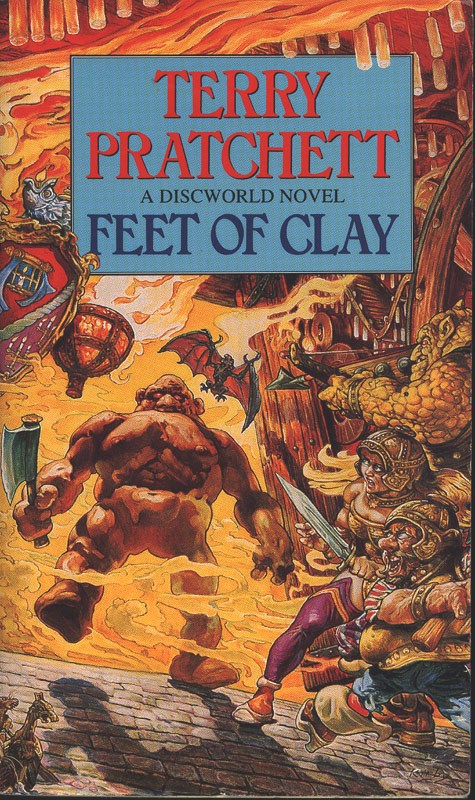
She pays for the chickens she eats during the full moon. This detail from Feet of Clay might seem like a joke, but it's actually the clearest expression of her moral philosophy. When her wolf nature takes over and she hunts, she takes responsibility for it afterward. Animals don't pay for their prey. Angua does, "because animals don't."
That's the difference between her and Wolfgang. Not that she has less wolf in her, but that she has more accountability in her.
What This Teaches Us
Pratchett wasn't just writing a character study. He was making an argument about human nature.
We spend a lot of time worrying about our "animal instincts"—aggression, selfishness, violence. Self-help books promise to help us overcome our "reptile brain." Religious traditions warn against the flesh. The entire framework assumes that our problems come from being too animal-like.
But what if that's exactly backwards?
Angua's speech suggests that our worst qualities aren't leftovers from our evolutionary past. They're innovations. Cruelty on the scale humans practice it requires intelligence, planning, and the kind of abstract thinking that wolves simply don't have. You need language to create an ideology that justifies genocide. You need foresight to build systems of oppression that persist across generations.
This is actually a more challenging view than the traditional one. If our problems came from our animal nature, we could solve them by becoming more civilized, more refined, more human. But if the problems are human—if we're the ones who invented evil as a concept and then practiced it enthusiastically—then civilization isn't the cure. It might be the disease.
Or at least, it might be neutral. The same capacities that let us write symphonies and cure diseases also let us build weapons and propaganda systems. Being human doesn't automatically make us good or evil. It just makes us capable of both, at scales no animal could imagine.
The Motto Reimagined
By the end of The Fifth Elephant, the phrase Homo Homini Lupus has been completely transformed.
It started as an insult to wolves—a claim that humans, at their worst, act like animals. Angua flips it into an insult to humans—a recognition that our cruelty is distinctly our own, not something we borrowed from nature.
But there's a third interpretation available, one that Angua embodies: it can be a challenge.
If men truly acted like wolves—loyal, cooperative, protective of their pack, killing only when necessary—the world would be a better place. The motto becomes aspirational rather than condemnatory. Instead of "humans are as bad as wolves," it becomes "humans could learn from wolves."
This is Angua's personal philosophy in action. She doesn't reject her wolf nature or try to suppress it. She cultivates its best aspects while taking human responsibility for its impacts. She's loyal like a wolf but accountable like a human. Protective like a wolf but principled like a human.
She's proof that the two halves don't have to war with each other. They can integrate into something better than either alone.
Where to Experience Angua's Journey
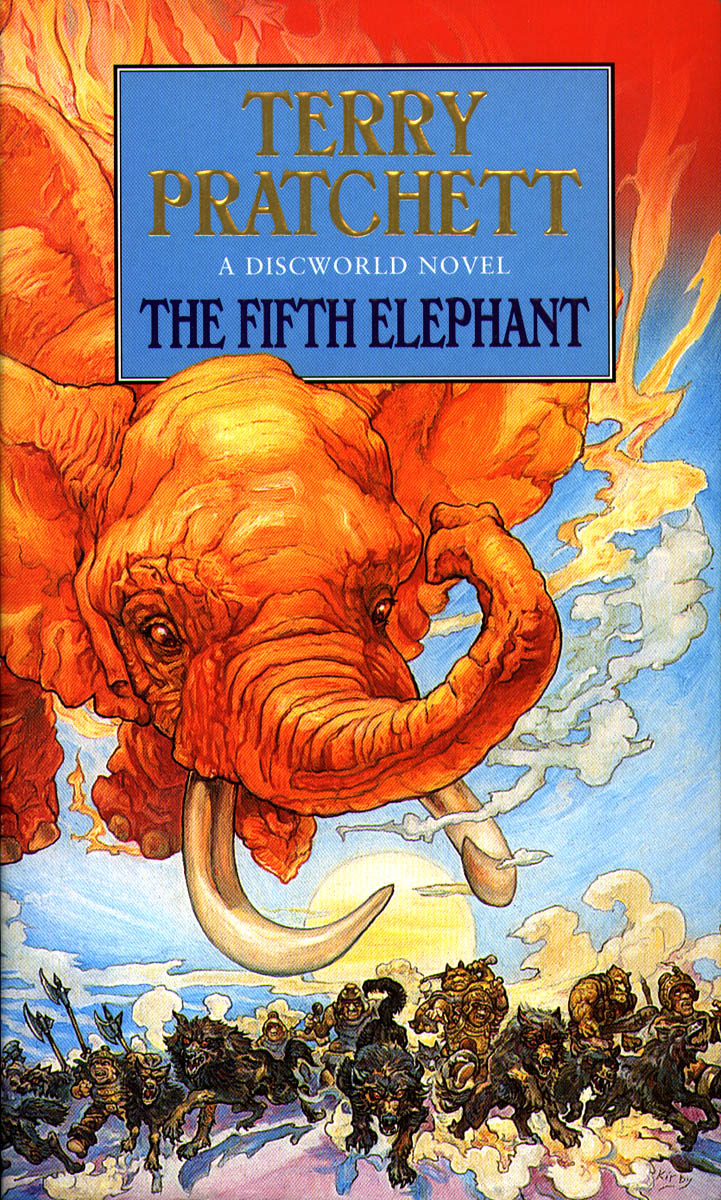

The next time someone uses "acting like an animal" as an insult, think about Angua's speech. Think about what wolves actually do, and what humans actually do. And ask yourself: who should really be insulted by the comparison?
Want to explore more of Angua? Check out our guide to her relationship with Carrot, or read about the vegetarian werewolf's moral code.