Reality vs. Seeming: Agnes Nitt and the Opera House's Cruelest Joke
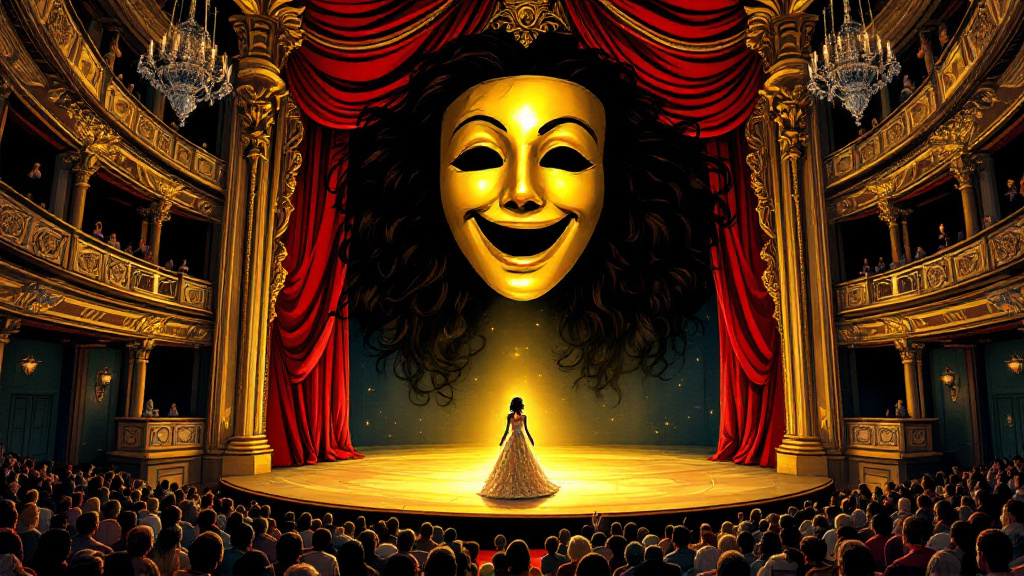
In Maskerade, Agnes Nitt has the best voice in the Opera House and sings from behind a curtain. Why Pratchett's Phantom parody refuses her a Cinderella ending.
Reality vs. Seeming: Agnes Nitt and the Opera House's Cruelest Joke
You know how this story is supposed to go. A plain girl with a golden voice turns up at the big city opera house. Nobody takes her seriously. Then, on opening night, the star falls ill, the plain girl steps into the spotlight, and the audience rises to its feet. Curtain. Applause. Happily ever after.
Terry Pratchett knew that story too. In Maskerade he set it up beat by beat, handed the golden voice to Agnes Nitt, and then refused to deliver the ending.
Agnes never gets her standing ovation. She gets a curtain to stand behind. And the longer you think about that choice, the clearer it becomes that the whole book is built around it.

A Phantom Parody With the Roles Swapped
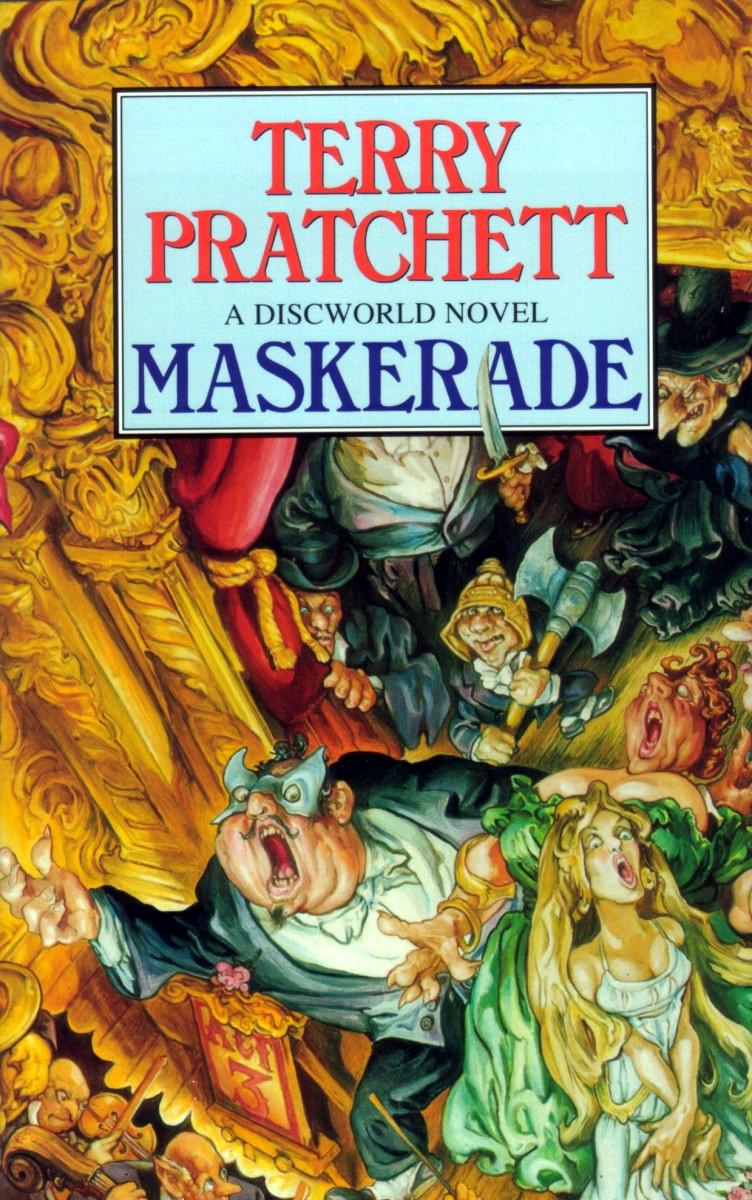
Maskerade is Pratchett's take on The Phantom of the Opera, and it borrows the furniture: a haunted opera house, a masked ghost, a falling chandelier, a young singer called Christine. But the L-Space annotators spotted the crucial change. In Andrew Lloyd Webber's version, Christine is the new star with a voice that needs training. In Pratchett's, as the annotation puts it, "Christine can't sing, but looks pretty, so both the owners and the Phantom fall for her. Agnes, with the voice, is merely utilised."
Merely utilised. That's the book in two words.
Agnes arrives in Ankh-Morpork having run away from Lancre, from witchcraft, and from Granny Weatherwax's obvious interest in her. She's done with being sensible. She's going to sing. And she can. Her voice ranges from a low rumble to a glass-rattling soprano, and she can sing in harmony with herself, which is the sort of thing that shouldn't be physically possible and probably isn't, entirely, without a bit of latent magic leaking through.
The Opera House recognises it immediately. Then it does the sums.
The Wrong Shape for a Prima Donna
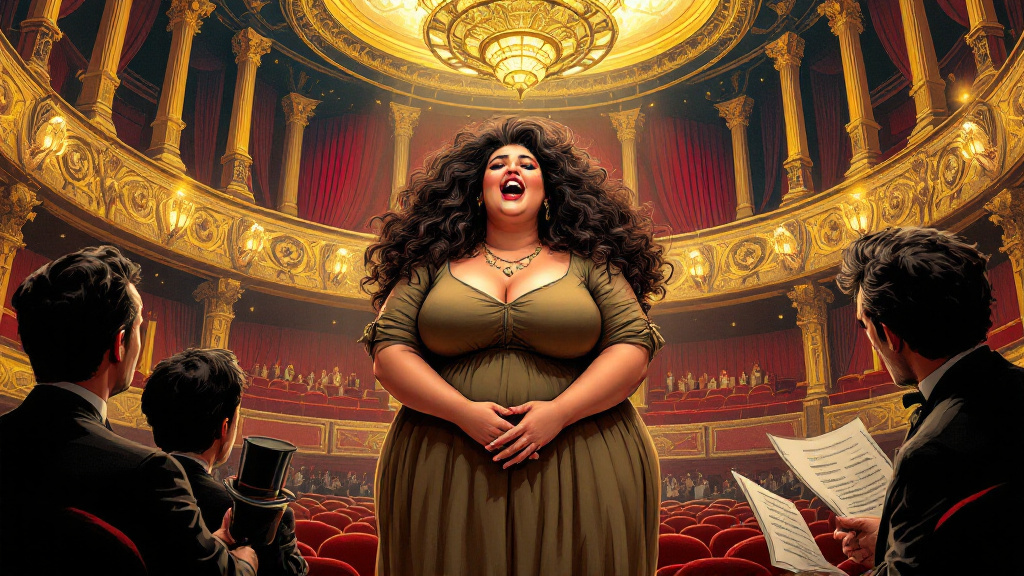
Here's the problem, as far as the management is concerned. Opera sells a fantasy, and the heroine of the fantasy is meant to be slender and luminous. Agnes is big, round-faced and buried under an enormous quantity of hair. So she goes into the chorus, and the lead roles go to Christine.
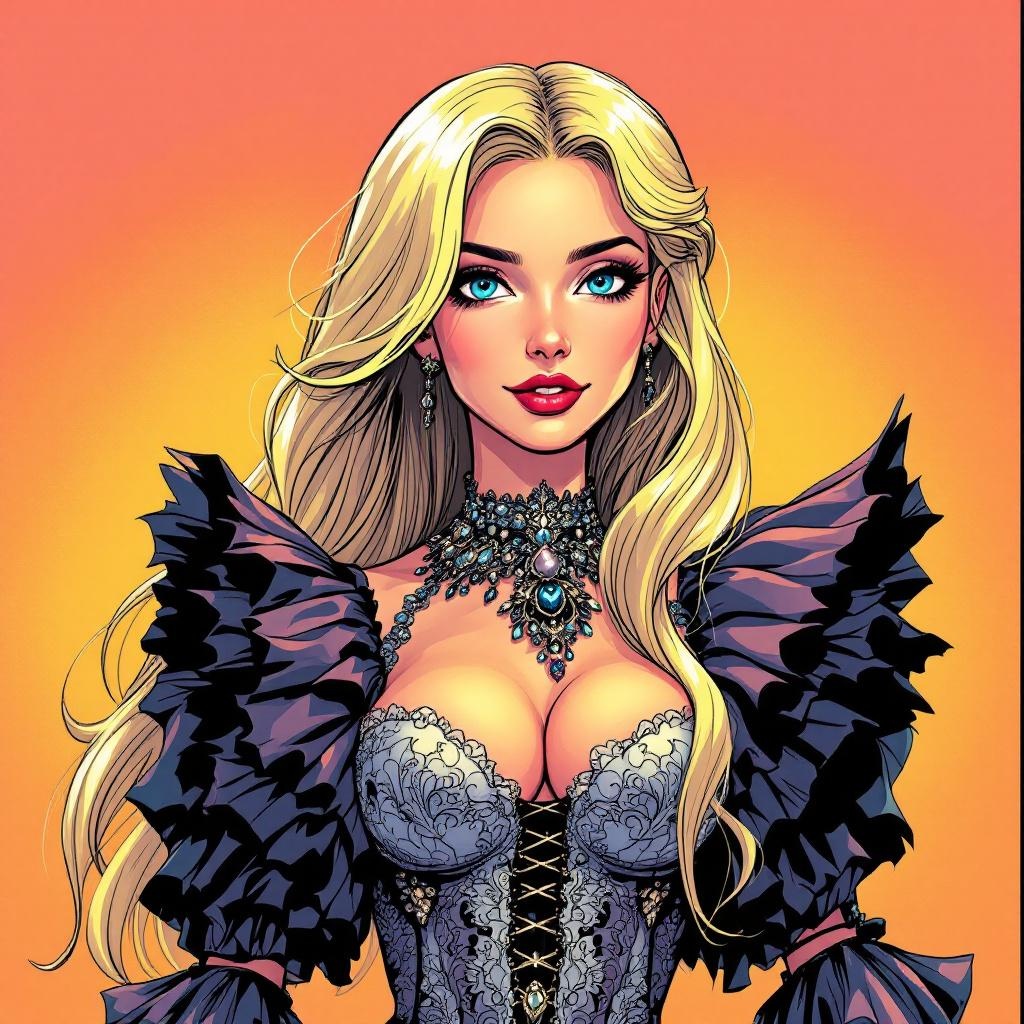
Christine is thin, blonde, beautiful and sweet-natured, and she cannot sing. She also talks in double exclamation marks, which tells you a fair amount about the depth of her inner life. Pratchett gives her one of his most devastating descriptions:
"After you'd known Christine for any length of time, you found yourself fighting a desire to look into her ear to see if you could spot daylight coming the other way."
It helps that, according to the plot, her father has lent the new owner a great deal of the money he used to buy the place. Talent is one consideration. Appearance is another. Money settles the matter.
What makes this sting is how little villainy is involved. Nobody in Maskerade decides to crush Agnes. The managers aren't monsters; they're just running a business in a world that pays for seeming over being. The ghost who coaches "Christine" at night is actually coaching Agnes, because the two girls have swapped rooms. Even the Phantom, the one person in the building obsessed with music, is in love with the wrong girl.
Ghosting: Singing So Someone Else Can Be Applauded
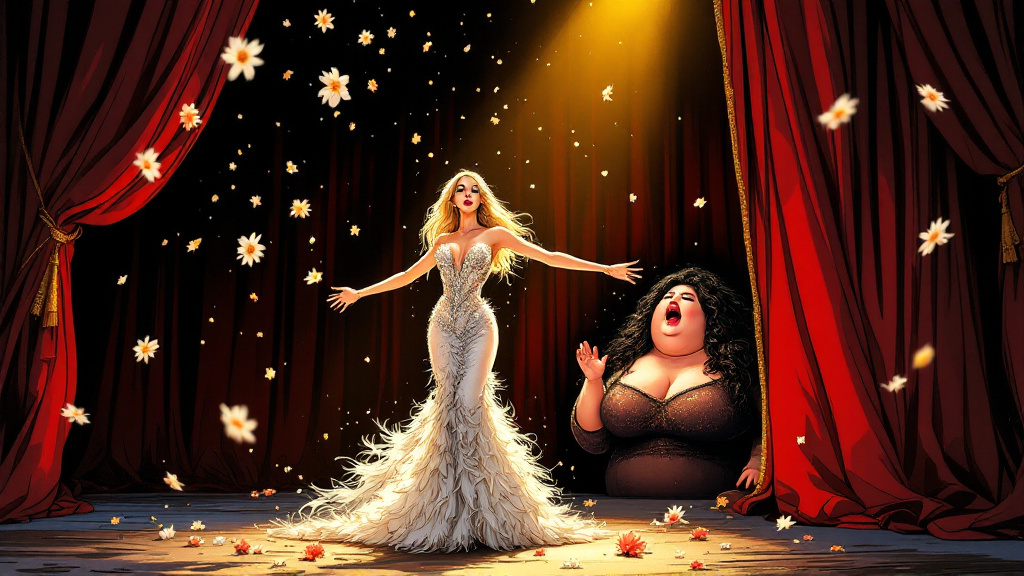
Then comes the arrangement at the heart of the book. Christine will play the leading role. Agnes will stand behind her, out of the light, and sing it. Christine will open her mouth. Agnes's voice will come out.
The theatre calls this ghosting, and Pratchett didn't invent it. He explained that he took it from real theatrical practice: when a star has gone on stage jetlagged or with a sore throat, someone has been put behind them in the chorus to carry the part. It's a practical solution to a practical problem. In Maskerade, it becomes a permanent one.
Think about what that means for Agnes. Every note of praise for the voice goes to Christine. Every bouquet lands at Christine's feet. The better Agnes sings, the more completely she disappears, because the whole point of the trick is that nobody notices she's there.
"The better Agnes sings, the more completely she disappears."
And Agnes goes along with it. That's the part that tends to annoy readers most. She's polite, she's professional, she tells herself it's a start. Her inner voice, Perdita, is considerably less gracious about it, which we covered in our piece on Agnes's two voices. But it's Agnes who's in charge here, and Agnes has spent her whole life being told what she is.
Pratchett sums up that life in a single bitter line from Agnes's point of view:
"It was no fun at all, having a wonderful personality. Oh. . . and good hair."
If you've ever been the person people describe that way, you know exactly what she means. It's a compliment that works as a door being closed politely in your face.
The Emperor of Klatch Test
The most quoted moment between the two girls is also the cleverest. Christine, chattering away in their shared world of costumes and dressing rooms, asks Agnes to tell her something about herself. Agnes realises the question is just noise, something to fill the gap until Christine can talk again. So she tests it:
"...my father is the Emperor of Klatch and my mother is a small tray of raspberry puddings."— Agnes Nitt, Maskerade
Christine doesn't notice a thing. She says something pleasant and carries on as before.
It's a great joke. It's also the book's thesis in miniature. Christine isn't cruel. She would be genuinely hurt to hear she'd been rude. She simply doesn't register Agnes as a person whose words might carry information. Agnes is part of the room, like the wardrobe.
And notice who's doing the clever thing here. Agnes is sharp, observant and funny. She runs rings around everyone she talks to. None of that counts for anything, because the Opera House only looks.

Why Pratchett Won't Let Agnes Win at the Opera
So here's the question the book leaves you with. Why doesn't Agnes get her moment?
Pratchett loved a triumphant ending when he thought one was earned. Vimes gets his moments. So do Carrot and Tiffany. He could easily have written the scene where Christine's voice fails, Agnes steps out from the curtain, and the house goes silent before erupting. Readers would have cheered.
He didn't, and I think it's because that scene would let everyone off the hook.
A Cinderella ending says the system works in the end. Talent rises. The cream comes to the top. All you have to do is wait for your lucky break. Maskerade is about a place that will never give you that break, because it isn't designed to. The Opera House doesn't overlook Agnes by accident. It uses her precisely because she can be kept out of sight. If she stepped into the light and won the crowd, the satire would collapse into a reassuring fairy tale.
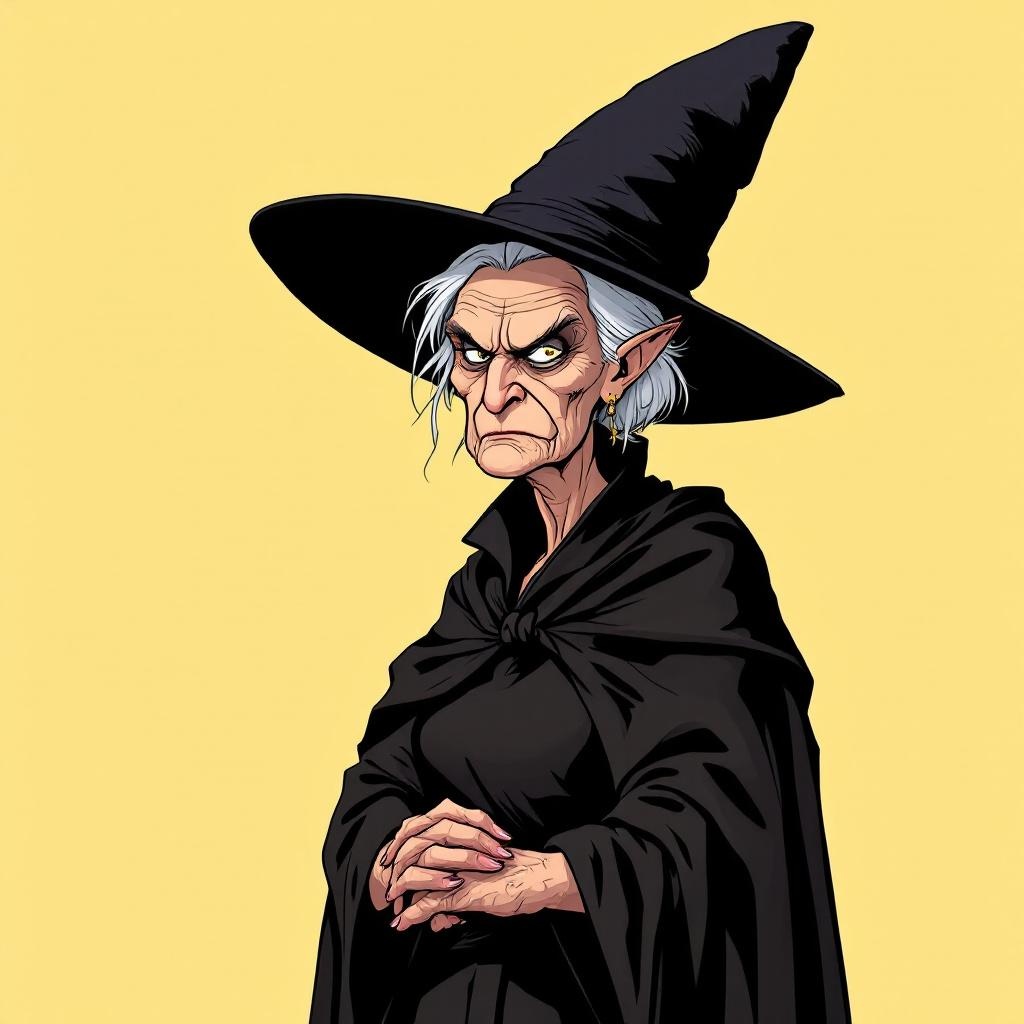
Instead, the book ends with Agnes doing something more interesting. She unmasks the real ghost, Walter Plinge, the shy odd-job man who turns out to be another person the building looks straight through. She's there when the genuine villain is exposed. And then she leaves. She goes back to Lancre to learn witchcraft from Granny and become the third member of the coven.
When Agnes, with a sarcastic edge, asks whether Granny is offering to teach her something, the reply is perfectly pitched:
"Teach? No," said Granny. "Ain't got the patience for teaching. But I might let you learn."
That isn't a consolation prize. It's an exit. Granny is one of the very few people in the book who looks at Agnes and sees what she can do, and witchcraft is the one profession on the Disc where nobody cares whether you look like the poster.
The Discomfort Is the Point
Not every reader enjoys Maskerade's treatment of Agnes, and it would be dishonest to pretend otherwise. The narration returns to her size again and again. On the Terry Pratchett Forums, one reader put the complaint bluntly: "Pterry never stopped making really cruel jokes about her weight over and over and over." The hosts of The Truth Shall Make Ye Fret podcast liked Agnes a lot but raised a related worry: fat characters in fiction slide into lazy stereotypes all too easily.
That criticism is fair, and some of the jokes have aged badly. But it's worth separating the narrator's gags from the book's argument, because the argument is firmly on Agnes's side.
"The satire isn't aimed at Agnes. It's aimed at everyone who looks at her and stops looking."
Look at how the plot is built. Agnes is the most talented person in the building, and the best listener, and one of the cleverest. She's the one who works out what's going on. Every single person who judges her on appearance turns out to be wrong about something important, and the book makes you watch them being wrong. You're not invited to laugh at Agnes behind the curtain. You're invited to get angry about the curtain.
That's the trick of the whole novel. It's a comedy about something deeply unfunny, and the jokes are there partly to make the injustice easier to swallow, so it can work on you after you've closed the book. The Phantom parody is lovely, the opera gags are excellent, and Nanny Ogg is on top form. But the thing most readers remember years later is Agnes, singing her heart out to an audience applauding somebody else.
It's a theme that runs through the whole book's title. Maskerade is about masks, and Christine's beauty is just one more mask. The Opera House would rather keep it on than look at what's underneath.
How Agnes's Story Continues
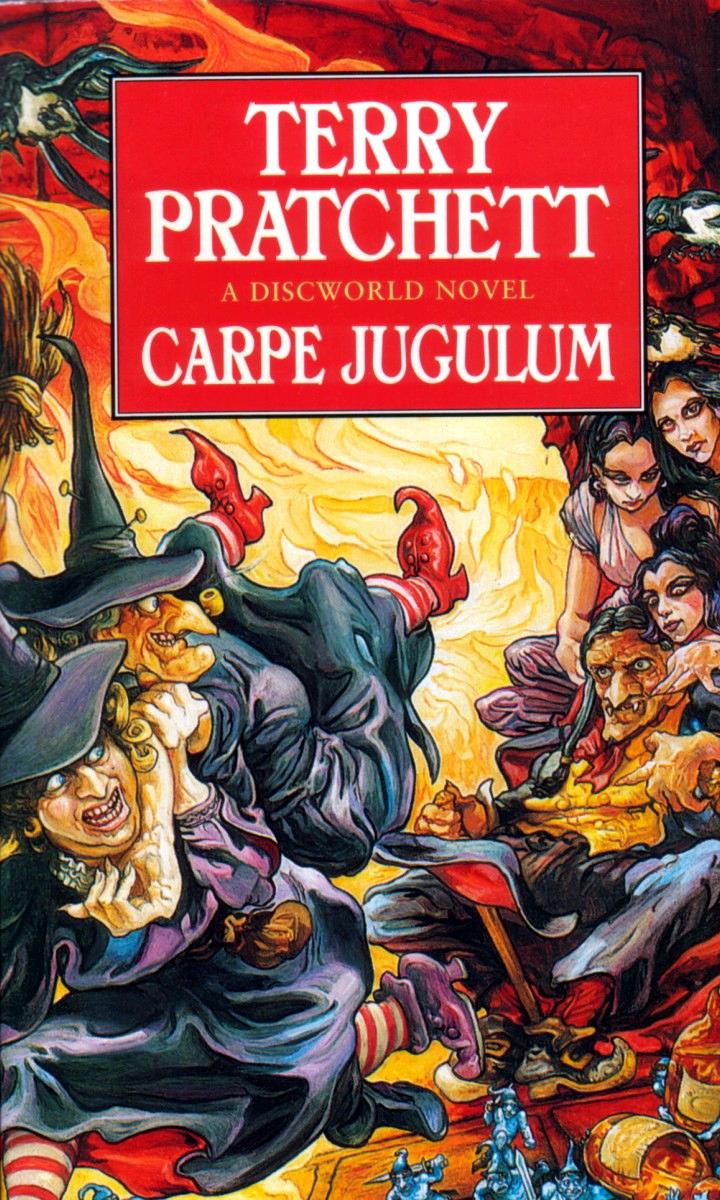
The Opera House is the low point, not the end. Agnes takes her talent, her temper and Perdita back to the mountains, where the coven turns out to need exactly what the city ignored. In Carpe Jugulum she becomes essential, and the internal conflict that made her life miserable turns into the thing that protects her. By the end of the series, she has managed what no other Lancre witch pulls off: a singing career and a broomstick at the same time.
So Agnes does get her happy ending, eventually. She just doesn't get it from the institution that wronged her, and Pratchett is quietly making a point there too.

If you want to see the opposite side of Agnes, where her voice and her stubbornness finally count, go straight on to Carpe Jugulum. And if you want to understand the voice in her head that kept muttering through every humiliation at the Opera House, read our deep dive into Agnes and Perdita.
Explore more: meet the rest of the coven in Granny Weatherwax vs. Nanny Ogg, or visit the Agnes Nitt character page for her full story across the books.